It’s possible that I shall make an ass of myself. But in that case one can always get out of it with a little dialectic. I have, of course, so worded my proposition as to be right either way (K.Marx, Letter to F.Engels on the Indian Mutiny)
Sunday, January 18, 2026
Trump sets process to secure critical minerals after trade probe
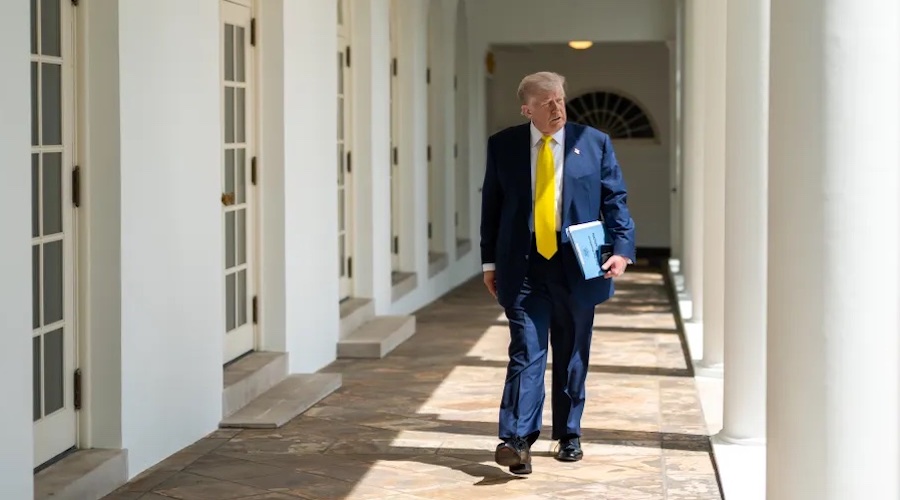
US President Donald Trump (Image courtesy of White House.)
President Donald Trump moved to set up a new process to secure access to imports of critical minerals, capping a months-long review to determine whether foreign shipments threaten US national security.
“What it does is it sets up a mechanism, a process by which the United States will seek to secure its international supply chain of critical minerals and critical mineral derived products,” White House Staff Secretary Will Scharf said at a signing ceremony Wednesday at the White House.
Neither Trump nor Scharf clarified if the mechanism would increase tariffs on rare earth elements, and the pair did not immediately provide additional details on how the effort would work. The White House is expected to provide additional detail later Wednesday.
Trump has been under pressure to respond after China, the world’s largest processor of many critical minerals, constrained access to rare earths crucial to advanced technologies during a trade spat last year.
Industry watchers for months have awaited the decision on the critical minerals investigation, which the Commerce Department launched last April under Section 232 of the Trade Expansion Act. That authority is seen as a way the administration could rebuild its tariff regime if the Supreme Court strikes down Trump’s global levies.
But additional duties could destabilize the trade truce Trump and Chinese President Xi Jinping agreed to last fall, under which the sides agreed to lower import-tax rates and ease export controls.
It may also have implications for uranium, which has growing appeal as the US looks to build out nuclear power as quickly as possible to keep up with the massive power needs for artificial intelligence.
A major hurdle the administration will need to address, if tariffs are imposed, is the lack of domestic production the US has for most of these raw materials.
Traditionally, trade lawyers have argued that tariffs are needed to protect an existing domestic industry that can prosper with appropriate controls that prevent foreign nations from oversupplying the US market to take down American companies.
Given China processes more than 80% of the world’s rare earths, and Kazakhstan accounts for the majority of the world’s uranium, it isn’t clear how US companies will benefit as paltry domestic production forces them to rely on foreign supplies.
(By Joe Deaux)
Mkango launches rare earth plant in Britain using recycled materials
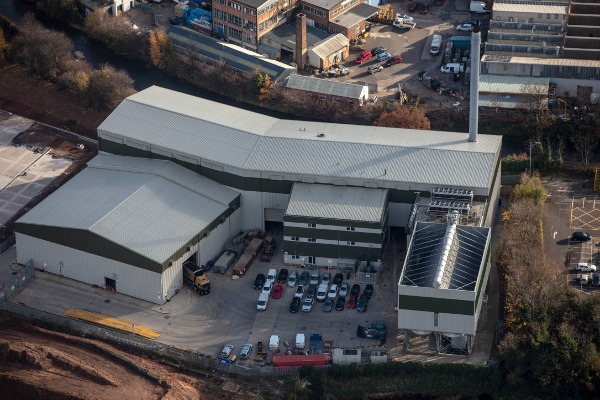
The facility at Tyseley Energy Park has enabled the first commercial rare earth magnet production in the UK in 25 years. Credit: Tyseley Energy Park
Canadian rare earths group Mkango Resources on Thursday opened Britain’s first commercial plant in 25 years to produce permanent magnets from recycled materials, as the West seeks to loosen China’s “stranglehold” over critical minerals.
Western countries have pledged to reduce reliance on China, which dominates mining and processing of rare earths, used in electric vehicle motors, wind turbines and consumer electronics. But new production outside China has been slow to scale up, leaving supply tight and making recycling one of the few options available to expand access to these materials in the short term.
The plant, in Birmingham in central England, is operated by Mkango’s subsidiary HyProMag. It uses a hydrogen-based process developed at the University of Birmingham to strip magnets from end-of-life products and turn them into new rare earth material with far lower emissions than conventional mining and refining.
Britain and its G7 partners aim to reduce China’s dominance through new domestic capacity, Industry Minister Chris McDonald told Reuters. China accounts for about 70% of rare earth mining and 90% of refining.
“Fundamentally, that’s the stranglehold on the supply chain that we’re aiming to break,” he said.
The new plant adds to Britain’s strategy to increase critical minerals supply, aiming to meet 10% of domestic demand from local mining and 20% from recycling by 2035, backed by up to 50 million pounds ($66.86 million) in funding.
Britain previously had magnet-making capacity but this ceased about 25 years ago as production moved overseas.
The plant has the capacity to produce 100-300 metric tons of magnets a year, depending on the number of work shifts, using the new technology that has a low-carbon footprint, the company said.
McDonald said that the facility was already drawing strong interest from automakers, and the technology was starting to be rolled out in the United States and Germany. HyProMag has previously said it was developing similar plants in these two countries.
($1 = 0.7478 pounds)
(By Sam Tabahriti and Eric Onstad; Editing by Jane Merriman)
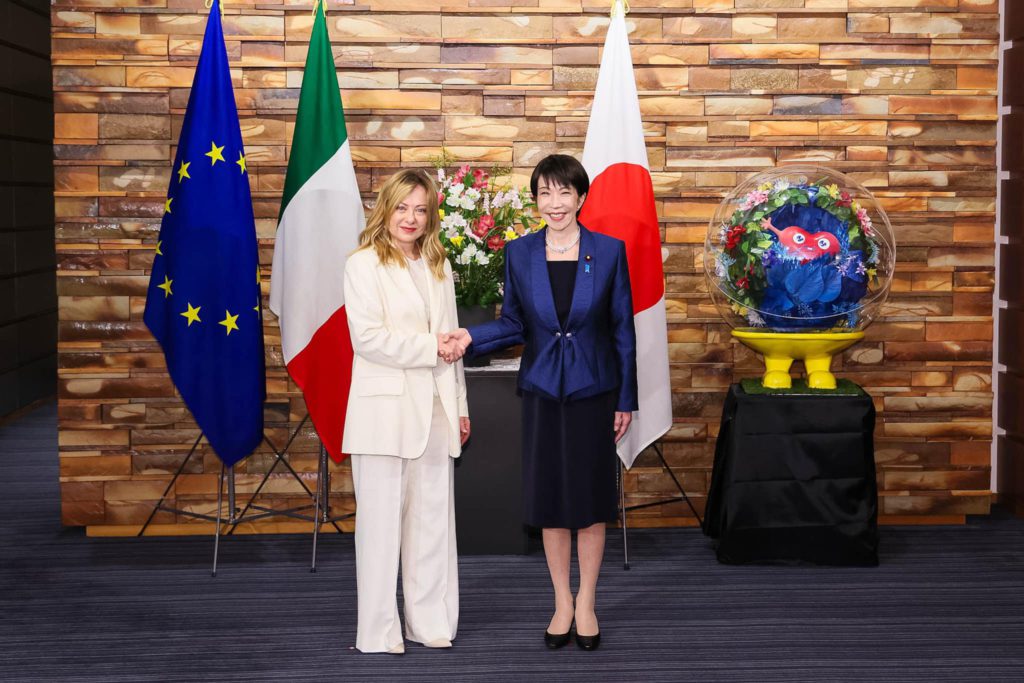
Italian Prime Minister Giorgia Meloni (left) and Japanese Prime Minister Sanae Takaichi (right). Credit: Prime Minister’s Office of Japan
Japanese Prime Minister Sanae Takaichi and Italian Prime Minister Giorgia Meloni agreed to work together on critical mineral supply and elevate their relationship to a new level.
“We agreed that cooperating to strengthen the resilience of our critical mineral supply chains is of utmost urgency,” Takaichi told reporters in Tokyo after their meeting on Friday.
The push for closer ties comes as Japan seeks to strengthen its supply chain resilience, with a diplomatic standoff raising uncertainties over China’s rare earths supply to Japan.
Takaichi added that the two countries would launch a dialogue on space issues, and that ties between them would be raised to a new level of “special strategic partnership”.
Meloni said through a translator that there is alignment between Japan and Italy in seeking a peace achieved through a free and open order. A joint statement with more details is set to be released later in the day.
State-run China Daily reported earlier this month that Beijing is considering tighter export license reviews for certain medium and heavy rare earth–related items bound for Japan. Such a move would be a blow to Japan’s economy given the reliance of its huge autos industry on such minerals.
Deeper ties between Japan and Italy may reflect the personal affinity between the two leaders.
Takaichi and Meloni are both the first female premiers of their respective nations. They went viral last year for an enthusiastic embrace captured in videos from the sidelines of the Group of Twenty summit held in South Africa.
They again emphasized their closeness on Friday, with Takaichi wishing Meloni a happy birthday as she opened her speech. The two were set to huddle with female cabinet ministers later in the day.
(By Sakura Murakami)
Saudi Public Investment Fund plans to spin off mining firm Manara
Saudi Arabia’s Public Investment Fund plans to spin off its mining investment firm Manara Minerals, the kingdom’s mining minister said, as it seeks to revive its pursuit of investments abroad.
Saudi Arabia, in common with other Middle Eastern economies, is working to secure critical minerals such as copper and lithium, essential for electric vehicles and renewable energy, as part of its efforts to reduce dependence on oil.
Manara, a joint venture between the Saudi Arabian Mining Company, also known as Maaden, and the $925 billion PIF, was established in 2023 to invest in critical minerals abroad.
But, although it has bid for assets across Africa and Asia, it has so far completed only one deal: a $2.5 billion 10% stake in Vale Base Metals, which was spun off from Brazilian iron ore giant Vale in 2024.
Industry and Mineral Resources Minister Bandar Al-Khorayef said spinning off Manara from the PIF would sharpen its focus.
“This will change the culture of the company from being only an investment vehicle to having more technical capability,” Al-Khorayef told Reuters in an interview on the sidelines of the Future Investment Forum event.
“PIF is a large investor, but they don’t have mining expertise.”
He did not give any timing on a spin-off, but said discussions over new shareholders in Manara were ongoing, adding that they could be Saudi or foreign investors.
In Saudi Arabia, the pursuit of international investments and the development of mining are part of Crown Prince Mohammed bin Salman’s broader plan to diversify the economy away from oil.
Riyadh estimates its untapped mineral resources, including phosphate, gold, bauxite and rare earth elements, at about $2.5 trillion.
Maaden is also exploring for rare earths and developing technology to extract lithium from seawater.
(By Clara Denina; Editing by Veronica Brown and Barbara Lewis)
Column: Europe falling behind in critical minerals race
Sweden’s LKAB has identified significant deposits of rare earth elements in the Kiruna area. Credit: LKAB
The European Union has taken action to strengthen critical mineral supply chains that support the energy transition but the US is moving faster and offering greater support, leaving Europe vulnerable to China’s dominant position.
China already dominates the global supply of solar power components and Europe has minimal production and processing capacity for key materials used in battery storage like lithium, nickel, cobalt, manganese, high-purity graphite, as well as rare earths and permanent magnets for wind turbines and electric motors, Ruben Davis, senior policy officer at Cleantech for Europe, told Reuters Events.
For clean power developers, over-reliance on dominant suppliers of critical minerals increases the risk of project delays due to licensing issues, export controls or other sudden supply disruptions.
In 2024, 95% of EU rare earth imports came from just three countries: China, Malaysia and Russia, according to Eurostat. China hosts 32% of global lithium production and Chinese companies control another 18% based in other countries, including Zijn’s Tres Quebradas scheme in Argentina and Gangfeng Lithium’s Sonara project in Mexico, according to Wood Mackenzie.
Importantly, China dominates critical minerals processing, holding 81% of global capacity, Wood Mackenzie said.
Critical minerals production – share of top three countries
In a bid to speed up investment, the EU adopted the ResourceEU action plan in December 2025 which aims to expand the primary extraction and refining of critical minerals on EU territory, promote recycling and reduce dependence on dominant suppliers.
Funded by 3 billion euros ($3.5 billion) from the EU’s 2024 Critical Raw Materials Act (CRMA), the action plan includes measures to speed up project permitting and ban scrap exports and sets a target of extracting 10% of EU critical minerals needs on home territory and hosting 40% of processing capacity on EU soil by 2030, while setting a minimum recycling threshold of 15%.
The CRMA comes from existing financing sources and “falls short of a fully funded industrial strategy,” Arthur Leichthammer, geoeconomics policy fellow at the Jacques Delors Centre, told Reuters Events.
European policymakers have understood the importance of diversification but current efforts are too slow and policymakers have not focused enough on promoting processing, Luc Pez, chief commercial officer at Viridian Lithium, said.
“Investment momentum has weakened globally because of low prices,” Pez noted.
According to Davis, the EU’s regulations “have not yet fundamentally shifted the bankability or business case of most projects.”
Huge challenge
Europe and the US have a long way to go to reduce their reliance on dominant critical mineral suppliers. For copper, lithium, nickel, cobalt, graphite and rare earth elements, the average market share of the top three producers increased from about 82% in 2020 to 86% in 2024, according to the IEA in May 2025, with almost all supply growth coming from the single top supplier: Indonesia for nickel, and China for all other minerals.
In one example, the EU sources 93% of its permanent magnets for wind turbines from China, according to the Centre for Strategic and International Studies.
Critical minerals projects that have stalled in Europe include the Chvaletice manganese project in the Czech Republic, which hit long delays in permitting and grid access despite Strategic Project designation by the European Commission. The fast-track permitting provisions in the CRMA have not yet been incorporated into Czech law.
Venture, growth investments in critical minerals innovation
In November, the UK updated its national critical mineral strategy to reduce permitting hurdles, accelerate diversification of supplies and support more recycling of waste.
“Our Critical Minerals strategy will see us collaborate with the EU as we look to build more secure and resilient supply chains”, a spokesperson for the UK’s Department for Business and Trade, told Reuters Events.
The UK strategy provides just 50 million pounds ($67.4 million) in funding and lacks “credible instruments to shift investment decisions in new projects or mandatory diversification,” Leichthammer warned.
Europe has historically looked to market forces to solve supply issues but “we’re now reassessing that,” Cillian O’Donoghue, policy director at European Electricity Association Eureletric, told Reuters Events.
The EU should create a single market for the recycling of PV and battery storage systems to help diversify critical raw material supply, a spokesperson for industry group SolarPower Europe said.
This market would help build a circular economy and allow recycling businesses to scale up, the spokesperson said.
Europe trails US
Projects underway in Europe include Swedish group LKAB’s $800 million demonstration plant for processing phosphorous and rare earth elements. The facility is scheduled to become operational in 2026 and will be scaled up with additional processing facilities to achieve “full operation during the 2030s,” the company said in a statement.
But the US is moving faster to diversify its critical mineral supply, pursuing a more “security-driven and deal-based” strategy, Davis noted.
The Trump administration has enacted policies to ramp up the supply of critical minerals in the US and from allied countries, while engaging in a high-stakes trade and tariff battle with China.
Measures in President Joe Biden’s 2022 Inflation Reduction Act and President Trump’s 2025 One Big Beautiful Bill provides private companies with tax credits, loans, price floors, grants and offtake guarantees.
This range of incentives will help to “build mine-to-magnet or mine-to-battery chains at speed,” Davis said.
The US has also used the Defense Production Act to provide supplier guarantees that help make projects commercially viable.
In contrast, many European strategic minerals projects are shelved by private companies before the final investment decision stage, Davis said.
“Europe’s challenge is that, compared with the US or China, public tools to de-risk projects are still relatively small,” he said.
(Opinions expressed are those of the author, Neil Ford, an energy reporter for Reuters Events.)
 US President Donald Trump (Image courtesy of White House.)
 Stock image (by DevinSuperTramp | Adobe Stock.)
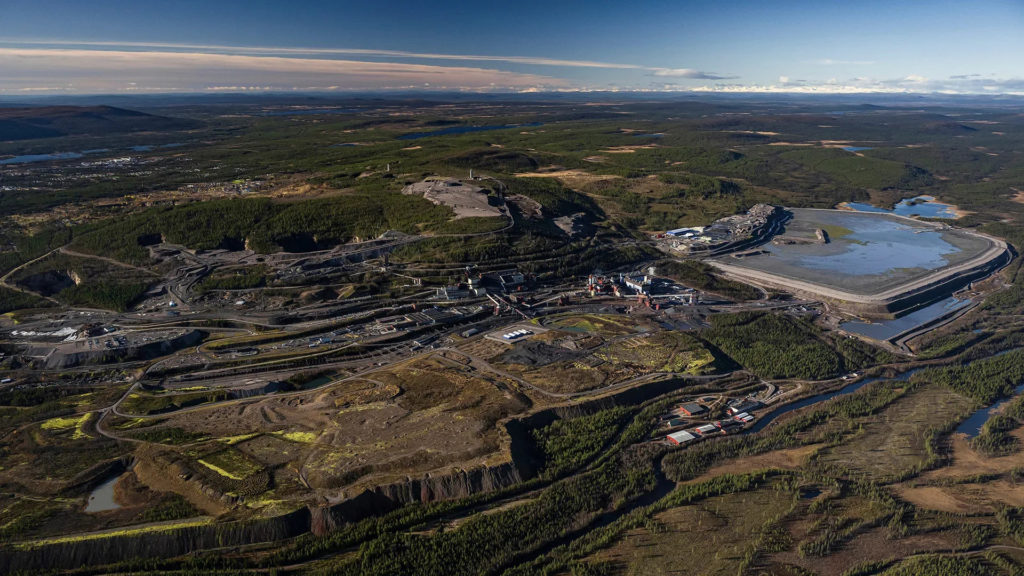 Sweden’s LKAB has identified significant deposits of rare earth elements in the Kiruna area. Credit: LKAB


No comments:
Post a Comment