ABB to Build World’s Largest Shore Power Capability for Port of Rotterdam
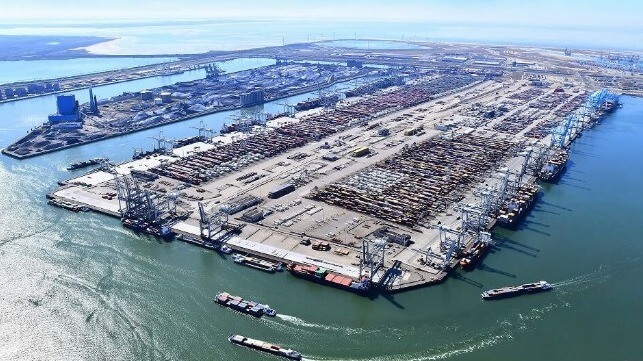
Europe’s largest port, Rotterdam, is among the ports that faced criticism last year over sluggishness in investing in shore power infrastructures, despite pending EU regulations requiring ships to turn off engines and generators in port. Only days into the new year, however, Rotterdam is making a huge statement after awarding global technology company ABB a contract to construct and maintain what are expected to be the largest to date shore power capabilities in the world.
Rotterdam Shore Power (RSP), a joint venture between Port of Rotterdam Authority and Eneco, said that it selected ABB through a competitive tendering process, with ABB clinching the deal owing to its clear track record and the high quality of its solution. The companies did not reveal the cost of the project.
The project will involve the installation of shore power solutions at APM Terminals Maasvlakte II, Hutchison Ports ECT Delta, and Hutchison Ports ECT Euromax, where a total of eight kilometers of quay will get shore power. The systems are expected to provide power at 35 connection points that will be able to connect some 32 container ships simultaneously while at berth. The combined system is based on a total capacity of over 100 megavolt-amperes (MVA).
The solutions are scheduled to begin operations in the second half of 2028, two years ahead of the 2030 deadline set by the EU requiring ports in the bloc to invest in the provision of onshore power supply (OPS). According to the FuelEU Maritime Regulation, all container and passenger ships above 5,000 gross tonnage are required to use shore power or equivalent zero-emission technology in EU ports from 2030.
The systems will allow vessels calling at the Port of Rotterdam to turn off their engines while at berth, a development that is critical in cutting down on emissions. RSP estimates that by facilitating vessels to use shore power for at least 90 percent of moored time, the port expects to reduce annual carbon dioxide emissions by an estimated 96,000 metric tonnes from 2030. Plugging into the local electricity grid while at berth will also eliminate noise pollution and significantly improve air quality in the harbor area.
“We are excited to work together with ABB on these breakthrough projects for RSP,” said Ina Barge and Tiemo Arkesteijn, RSP co-CEOs. “With their expertise and proven track record, we can help make shore power available to all vessels calling at the APMT and ECT terminals in the Rotterdam port, preventing large amounts of CO2 emissions. Rotterdam is a frontrunner with electrification on this scale.”
Apart from designing, delivering, and installing the shore power systems, ABB will also be responsible for commissioning and testing on-site. The contracts also cover a multi-year maintenance per terminal.
In July last year, Rotterdam was among EU ports that faced criticism from activist NGO Transport & Environment (T&E) for slow investments in shore power despite being the largest port in Europe. Over the nine months from January to September last year, Rotterdam handled 320.2 million tonnes of cargo. Container throughput stood at 10.7 million TEU.
“We are proud to contribute to the Port of Rotterdam’s decarbonization journey in what represents a significant step towards realizing the EU’s ambition for emission-free ports,” said Rune Braastad, President, ABB’s Marine & Ports division.
Installation of shore power systems at the three terminals is expected to start in the second half of next year, subject to final investment decisions and granting of permits. The Dutch government has granted subsidies to the projects under the Temporary Climate Subsidy Scheme for shore power for seagoing vessels.
PortsToronto Returns to its Roots as the Toronto Port Authority
Rebrand marks 115 years of city-building and reinforces role of its business units, including Billy Bishop Toronto City Airport, as a critical economic engine and urban connector
[By Toronto Port Authority]
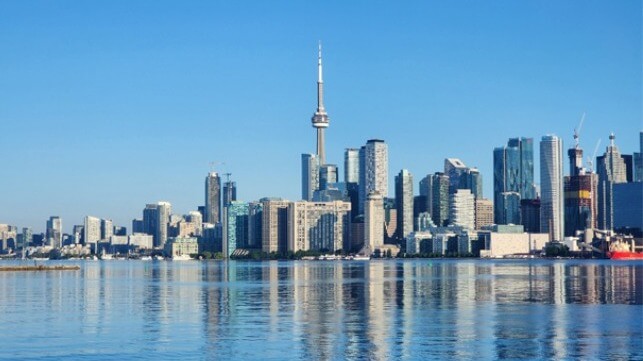
After operating as PortsToronto for a decade, the organization that owns and operates Billy Bishop Toronto City Airport and is responsible for stewardship of Toronto's harbour is returning to its roots and will once again be known as the Toronto Port Authority. This rebrand marks a return to its legal name and historic federal identity and signifies a renewed commitment to its legacy as a city builder, economic catalyst for the region and country, and owner and operator of Toronto's national, multi-modal transportation gateways.
This rebrand comes at a pivotal moment. The Toronto region is growing rapidly and Canada is placing new urgency on resilient supply chains, modernized infrastructure and sustainable urban mobility. At the heart of this shift is Billy Bishop Toronto City Airport, one of the country's most important urban airports and major contributor to the region's economic dynamism, the Port of Toronto and the Cruise Ship Terminal, all of which are strategically positioned to support growth and strengthen Canada's interconnected infrastructure network.
"Reintroducing the Toronto Port Authority name is more than a rebrand –- it's a powerful affirmation of our foundational purpose and our future vision," said RJ Steenstra, President and CEO, Toronto Port Authority. "We honour our 115-year legacy as a city builder and steward of Toronto's harbour, shaping the waterfront and enabling the city's evolution. As the owner and operator of Billy Bishop Toronto City Airport which provides critical business connectivity and a significant economic engine, as well as the Port of Toronto which plays a vital role in ensuring resilient supply chains through imports of essential materials, the Toronto Port Authority plays a key role in economic growth for the future. This renewed identity reflects our commitment to modernization, sustainability, and public value for Toronto, Ontario, and Canada."
Strengthening a growing regional economy
The Toronto Port Authority's transportation gateways deliver substantial benefits to the region and the country:
• Billy Bishop Toronto City Airport generates approximately $2 billion in annual economic output and supports more than 4,500 jobs, making it a key driver for Toronto's economy.
• Billy Bishop is set to launch U.S. CBP Preclearance in early 2026, facilitating bilateral trade, with additional destinations expected in 2026.
• The Port of Toronto generates more than $460 million in economic activity for Ontario, importing critical materials like steel, cement, sugar, and road salt, securing resilient supply chains for the region.
• Marine shipping through the Port removes more than 51,000 truckloads annually from GTA roads, significantly reducing congestion and greenhouse gas emissions.
• The Port of Toronto Cruise Ship Terminal welcomes nearly 20,000 visitors annually and contributes to a regional $280-million Great Lakes tourism economy, directly supporting Toronto's hospitality, retail and cultural sectors.
• Located 10 minutes from downtown, The Outer Harbour Marina is one of Canada's largest freshwater marinas and holds a Diamond designation in the Boating Ontario Clean Marine EcoRating Program, one of the highest ranking attainable for marinas that follow environmental best practices.
Together, Billy Bishop Toronto City Airport and the Port of Toronto position Toronto as a truly multi-modal economic gateway. The Toronto Port Authority links Canada's largest city to major North American business centers while delivering diversified, resilient supply lines from Europe, Asia, Central and South America and the South Pacific. This integrated system supports business mobility, ensures the steady flow of essential goods and reinforces the economic foundation of Canada's fastest-growing urban region.
The Toronto Port Authority's integrated assets create a waterfront mobility network that moves people, goods, and visitors in ways few global cities can match. As the only port authority in Canada to own and operate an airport, Toronto Port Authority is uniquely positioned to pilot new approaches to harbour mobility and connectivity--mirroring innovations seen in leading waterfront cities around the world. This multi-modal approach not only drives economic growth and competitiveness but also advances sustainable, integrated urban transportation across the region.
Operating under a federal mandate, the Toronto Port Authority is financially self-sustaining, reinvesting revenues into critical infrastructure, harbour management initiatives, and community programs. This model ensures independent oversight, financial accountability, and decision-making aligned with the public interest.
The rebrand underscores the Toronto Port Authority enduring commitment to long-term planning, responsible stewardship, and balancing commercial activity with environmental protection and community access, preparing Toronto's transportation infrastructure for the next century.
The products and services herein described in this press release are not endorsed by The Maritime Executive.

No comments:
Post a Comment