Showing posts sorted by relevance for query TARIFFS ARE A TAX. Sort by date Show all posts

Thursday, February 20, 2025

Trump’s Tariffs Are a Gift to Capital, Not Workers

Donald Trump has championed tariffs as a way to revive American manufacturing. But without a real industrial strategy, Catalyst editor Vivek Chibber argues, they’re little more than a handout to capital.
February 16, 2025
Source: Jacobin


Image by Gage Skidmore, Creative Commons 2.0

Within weeks of assuming the presidency, Donald Trump announced tariffs on Mexico, Canada, and China. It’s a centerpiece of a turn toward protectionism that the White House has touted as a way of supporting American workers.

In the latest episode of the Jacobin Radio podcast Confronting Capitalism, Catalyst editor Vivek Chibber and Jacobin contributor Melissa Naschek discuss how nineteenth and twentieth-century protectionist trade policies helped build domestic manufacturing bases around the world, but why Trump’s twenty-first century tariffs are very different. While decades of global free trade have contributed to deindustrialization, workers are not likely to benefit from Trump’s tariffs.

Confronting Capitalism with Vivek Chibber is produced by Catalyst: A Journal of Theory and Strategy and published by Jacobin. Subscribe to Jacobin Radio to listen to all of our podcasts here.

Melissa Naschek: Can you start by explaining what tariffs are and how they’re used by capitalist states?

Vivek Chibber: At its most basic level, a tariff is just a way of raising the price of imports. Imports are goods from other countries that are coming into your country. They essentially allow the government to put a tax on each one of those goods so that the importer is paying a higher price to bring it into the country.

You often hear that tariffs raise the price of goods in the market and consumers have to pay more. That’s the second step in the process. The person who actually has to pay more is the one who made the import order, and that’s almost never a customer. That’s going to be either a retailer or a firm.

There’s also confusion. Sometimes people think tariffs are a tax on the country on which they’re placed.

I don’t know how Trump has made that argument, and literally every single economist who studies trade has pointed out that that’s wrong.

What a tariff does is this: An importer, let’s say a car retailer, orders a Chinese car. When the car comes into the country, the customs office adds another, let’s say 10 percent, to that, and that 10 percent is then paid by the importer. That means the importer is in the position of having their profit margins squeezed. Now, their preferred option is to pass on that extra 10 percent to the customer — and oftentimes they do that.

But it’s going to depend on how the competition in that market is. If they’re the only person selling that good, then they can raise the price. But if they’re competing with others who are bringing in goods from other countries, it’s going to be much more difficult for them. So what happens is the importer absolutely pays an additional cost, and then they, to the extent that they can, try to pass it on to the customer. In the event that they are successfully able to do so, you get price rises, and that is then the possibility of an inflationary impact of imports.

Historically, how have countries used tariffs and other protectionist trade policies as part of their economic policies?

Tariffs are primarily used for two purposes. One, as I said, is to raise the prices of imports so that they become more prohibitive domestically. Now, that has two advantages. One is it gives additional revenue to the government because that tax goes into the government’s coffers. So the first function of a tariff is to raise revenues. In the United States, up until the early twentieth century, almost all the government revenue came from import tariffs because it didn’t have an income tax. If you don’t have an income tax, how are you going to raise money? It’s going to be through some sort of value-added tax, some sort of sales tax, and a tariff is essentially a sales tax on imported goods. You can also have sales taxes on domestic goods. So when countries didn’t have income taxes, they had to rely on sales taxes of some kind, and a tariff on imports was one such tax.

The second way tariffs are used is to protect domestic industry. For developing countries in the nineteenth and twentieth centuries, a big additional function of tariffs — that is, in addition to raising revenues for the government — was to protect domestic industry. “From whom?” is the question. From more advanced, more competitive firms in the countries that were already embarking on industrialization. In the nineteenth century, fundamentally, that was England. England was the first industrializer, and all across Europe, governments, in order to protect their domestic industries, kept British goods out.

Why would they need to be kept out? If you’re trying to start up a new factory, a new firm of some kind, you want to sell on the market. Inevitably, if you’re a start-up firm in a poor country, you’re going to be handicapped by two things. One is you may not have access to the best technology, because the best technology is housed in the more advanced countries and they don’t give that stuff away. So you have to try to acquire whatever expertise you can, and it’s going to take a while to get technology that’s competitive with the more advanced countries. That means you’re not going to be able to compete in the market very well. And the second thing is that you’re not as efficient even in using technology. You don’t have the managerial skills, you don’t have a skilled labor force, you don’t know the markets very well — all of which means that when you go to sell your products in the market, you’re going to charge a higher price because your cost is higher than the costs faced by firms in the more advanced countries. Since you’re selling at a higher price, you can’t break in. You’re in this very difficult situation where you’re trying to start up a manufacturing industry, but it can’t even break into the markets in its own country because foreign goods are swamping it and they outcompete it. So in order to move up the industrializing process, what countries did was to say, “The only way we’re going to get our domestic industries on board is if we keep imports out.”

That was the protection, and we call it that because you’re protecting domestic industry from foreign competition. That was, in addition to the revenue race, the basic precondition to industrialization. If you don’t do that, you’re stuck being an agricultural producer forever.

How successful were those historical efforts at using protectionist policies to grow domestic manufacturing capabilities?

Very successful. There is no case that we know of of a successful late industrializer ― a country that embarked on industrialization after some early developers were already on the scene ― where they were able to do so except through protection, except through some kind of tariffs. So the record of tariff protection by and large is quite positive.

It’s true that there was a fair amount of waste involved, because when you’re protecting domestic industry against competition, you’re also removing the one incentive that they have to be efficient. And there’s a lot of inefficiencies that come with it. That’s what a lot of neoliberal economists and more classically oriented economists pointed out. But the alternative is you don’t industrialize at all, which is even worse. So it was kind of a public subsidization of industries, and while the overall record has a positive association, it absolutely does come with pitfalls.

What about in the United States? You mentioned that protectionism is key to the success of a lot of late developers, but Trump has talked a lot about historical figures like William McKinley, who he says successfully utilized protectionist policy in order to grow the US economy.

The United States is an interesting case. Throughout the nineteenth century, what we saw was that late-developing countries across Europe used tariffs. Now, what was the level of those tariffs? They ranged from about 8 to 10 percent on foreign goods, all the way up to 12 to 18 percent, sometimes peaking in the early 1900s at maybe 20 percent.

The US throughout the nineteenth century relied on tariffs, and the interesting thing is it wasn’t unanimous. Throughout the nineteenth into the early twentieth century, the US actually had two economies. There was a Southern economy, which was primarily agrarian and produced primary goods, like cotton obviously. Then there was a Northern economy, which was a rapidly industrializing manufacturing-based economy. The two regions had very different attitudes toward tariffs. The North was much more committed to protectionism because it had industry. And since it had industry and it wanted to foster industry, the North wanted to protect it from British imports coming in.

The South was much less worried about protecting its domestic industry because it had very little. What it was worried about was that if the United States hid behind a tariff wall, it would be hit with retaliatory tariffs from Europe. It had to worry because it was very dependent on exporting cotton to Europe. In the event, the North won the battle on tariffs, and here’s the interesting thing — the US was like tariffs on steroids. While the rest of the European world, the developing world, relied on 12 to 16 to 18 percent tariff walls, the United States’ tariffs ranged from 30 percent to 40 percent. It was twice the level of Europe.

So the US was not only relying on tariffs — it was the most brazenly committed to tariffs of any of the advanced countries. That remains true all the way up until the late 1920s or early 1930s, and then it switches very rapidly.

That addresses the earlier American development in the nineteenth century, but for most of the twentieth century, the United States has been the standard-bearer of free trade and globalization. Why has recent US trade policy favored free trade over tariffs?

Whenever you see a country dramatically changing its trade policy, it’s going to be linked to how its firms are positioned in the global economy. As long as the United States was not the leader in technology, the leader in manufacturing efficiency and productivity, it was afraid of opening up its economy to foreign imports, and that’s why it relied on tariffs. We’re talking about the years from about 1880 to the 1920s.

In those years, US firms are growing rapidly, but they are not yet ready to take on the global market, and they are not yet ready to let foreign imports come in and threaten them. So they’re selling all of their goods on the domestic market. And the United States had an advantage in this. It’s a continental-sized economy, and after the 1870s, the Northern economy was growing very rapidly, which means the market for manufactured goods is growing very rapidly. That’s a godsend to American firms because it means that they don’t have to rely on exports to foreign countries to make their profits. They can just rely on a rapidly growing domestic market.

What happened by the 1930s is that under the tariff walls, these new sectors, these new manufacturing firms, have been incubating and are much more internationally oriented; they have much more confidence in moving outward. They’re firms around a cluster of large industrial and banking families. They’re located in chemical industries, in heavy manufacturing, and in the financial industry, and they’re ready to take on the world.

From the 1930s onward, you start getting pressure to radically change America’s stance on trade, and FDR actually is the political arm of that change. The rapidly growing, highly productive and competitive firms, which you might call internationalizing firms, are the ones that now become the economic basis of a new political coalition. That political coalition tries to now put into place a freer trade — I’m not saying free but freer trade agenda. That’s what remained in place from about 1945 onward. So that’s the economic foundation of it.

There was also a political foundation for this, which is that the leading lights of the American capitalist class and also the leading lights of the political elite were convinced that one of the factors that led to two world wars in rapid order, especially World War II, was the fragmentation of the world into trading blocs — trading blocs organized around capitalist powers in different parts of the world, and these were all imperial powers.

England had its own colonial imperial bloc where it traded especially closely with its colonies. France had its own. Japan had its own. And because you had economic interests contained inside these imperial blocs, each imperial bloc felt that it didn’t have anything at stake in the fortunes of the other imperial bloc. If that’s the case, you can go to war with them because you don’t have investments in those countries — you don’t trade with them; you don’t rely on them for profits. There isn’t labor coming from them for you.

So the United States thought, for the development of its own capitalist classes’ profitability, it needed a stable global political order. That stability would come by breaking down all these barriers to trade and investment, and thereby creating a mutuality of interests between the most advanced economies, which would not only allow American firms to go out into the world and conquer the markets, but it would also undermine or at least mitigate the tendency toward economic competition between nation-states that was leading to political warfare and political competition.

It was trying to create an integrated economic order so that you would have a kind of a peaceful political situation for profit making. And that’s been the foundation. The American state took up the responsibility, as it were, to create a stable global political order for the accumulation of capital and the advancement of profits.

I want to follow up on one of the things you pointed out. When we were talking about the history earlier, you mentioned that the late-developing countries utilized protectionist policy in order to develop their manufacturing bases, despite the fact that Europe and America already had strong manufacturing bases. On the other hand, now you’re talking about this policy that America had, for the middle of the twentieth century, of trying to keep trade as open as possible. How did those two things coexist?

There is this view out there that the United States has always tried to ram free trade down the throats of the Global South, and it’s absolutely not true. It’s an interesting empirical puzzle, which is, you had two things happening at the same time in the postwar era: the United States trumpeting the importance of an integrated global economic order, and at the same time, the Global South was turning toward some kind of protectionist regime — imports behind tariffs. That model was called import-substituting industrialization.

All over South America, North Africa, parts of the Middle East, and all of East and South Asia, you have a turn toward import substitution — at the heart of which is tariffs. So how is the United States doing both things? How is it, on the one hand, vying for an integrated economic order, and on the other hand, accommodating tariffs? The key to it is the word “accommodation.”

Basically, after 1945, all over the Global South, you have a recent turn toward independence, a recent freedom from colonial yokes, and in the case of Latin America, the Great Depression disrupted old patterns of trade — and thereby forced on them, and created an opening for, some kind of domestic industrialization process. Now, what the United States saw all over the world is, you have middle-income countries like India, Brazil, Argentina, Mexico, even Egypt moving toward import substitution. The choice the US had was essentially to declare war on all the Global South and in doing so push them into the arms of the Soviet Union, or to accommodate it. What the United States did was to say, there’s not much we can do, so what we’re going to have to do is figure out ways of folding these countries’ economic strategies into the global order.

As it happens, there was a domestic constituency in the United States that didn’t really have a problem with this, and that was the same internationalizing, large firms that were wanting to go out into the world that had pushed for the integrated economic order anyway. And this is another puzzle: How is it that the same firms that want a globalizing world are also the ones that are fine with countries in the South turning to import substitution? The answer to that puzzle is, what are these firms selling? The ones who want to go into the Global South, what are they trying to sell in the South? They’re not selling consumer goods. What they’re selling is capital goods.

So let me introduce the distinction. When countries in the South are trying to industrialize, the first thing they do is try to develop their own consumer goods industries: shirts, textiles, shoes, maybe automobiles. All of these industries are developed by pushing out foreign competition, right? That should piss off the firms in the West because they’re the ones who are selling shoes and shirts and cars, but they’ve lost those markets. So you would think now that the government of the United States, in being beholden to its capitalist class, would also follow its directives and say, no, we can’t allow tariffs because our patrons, these capitalists, are angry. But there’s also another section of American capital that produces capital goods.

Now, the thing in the Global South is, when they turn to producing textiles and our cars and or television sets, they’re producing them using machinery. Where do they get this machinery from? Well, it doesn’t grow on trees. They clearly don’t have a capital goods industry. Their turn toward import substitution blocks out American consumer goods, but it creates a massive market for American capital goods. So actually, import substitution is not crazy from the standpoint of the United States because A) it creates a market in the Global South for capital goods, which it can sell to them, and B) capital goods manufacturers happen to be the hegemonic sections of capital in the United States anyway. Those are the ones that have real political entrĂ©e into the foreign policy regime.

Therefore, what you have is an integrated policy of bringing the advanced sectors of global capital — Europe and Japan, basically — into the economic order where you have tremendous opening up of trade and investment. That’s the lifeblood of the global order, and there the United States really pushes hard to break down investment barriers and trade barriers.

The one part of the world where the United States really was pretty hostile to economic nationalism was the Middle East. People have generalized from that example, I think wrongly, to the other parts of the world. The reason it was more hostile to it in the Middle East was oil. The US could not allow for the possibility that economic nationalists would seek to control the flow of oil on their own terms, and thereby threaten not the US’s fate — the United States was confident about its access to oil — but Japan’s and Europe’s. It wanted to make sure that oil flew freely and flew steadily to Europe and Japan, and therefore, it was much more hostile to nationalist regimes over there.

In the rest of the Global South, the United States had to accept some kind of protectionist regime because the social forces pushing it were so extreme and powerful over there. At the same time, it’s also an opening for further sales of American products of a certain kind — American capital goods and American banking, American loans. So the United States does actually have a stake in that.

That means there’s an economic foundation now for both things — the opening up of trade and investment in the centers of global accumulation in East Asia and Europe, and then also the patronage that’s being given to import substitution and protection in the Global South, because America finds that both strategies play into the economic interests of its capitalist class.

The picture you’re painting of why the United States was primarily relying on free-trade policy was that it was confident in its domestic manufacturing, it was producing and selling goods, and was basically a net exporter all around the world. If you look at our economy today, the biggest thing that Trump talks about when he talks about the tariffs is the trade deficit, and the fact that US manufacturing jobs are going overseas. Do you think that the tariffs that Trump is pursuing will be effective at reversing these trends and revitalizing American manufacturing?

I’m very skeptical. I don’t see the possibility of revitalizing manufacturing through reliance on tariffs. There’s an asymmetry in the use of tariffs between poor countries that are industrializing and countries that have already industrialized. The asymmetry is this: Poor countries that haven’t yet industrialized are seeking to break into global markets, and what the government does is it tries to create a space for them so that they can act on this volition for themselves. Some of those industries will succeed; some of them will not. The ones that don’t are the basis of the waste that goes into import substitution.

What’s happening in the more advanced countries is somewhat different, which is that what you’re trying to do now is not so much create a space for eager entrants into the global market, which is what the poor countries did; what you’re trying to do now is convince your firms, who have exited from those markets, who have decided that their investment decisions are better made by moving into different sectors from the ones that you’re trying to promote, to get them to reverse those investment decisions. Essentially, they have decided they don’t want to be in certain markets, and you’re now asking them to come back to those markets. Now, that’s possible, but behind tariffs alone, it’s not going to happen, because presumably they had good reason to shift to new lines and to new sectors.

So how would you be able to reverse that process? All the tariff is doing is creating higher prices, a tax on the goods coming in. There are two issues involved here. One is, if the tariff is being put on countries, then the only way the tariff protects and creates a space for your domestic industry is if the country that you’ve hit with the tariffs is the only supplier of the goods you’re talking about.

Let’s take cars — suppose we put a tariff on Chinese cars coming into the United States. Is that going to promote American industry? No, because it just gives a leg up to Japanese, German, and Korean carmakers. They’re still there, and if they’re more efficient than the US industries to begin with, it just gives them free access to the markets. So first of all, for the tariff wall to actually protect American industry, it can’t be against countries — it has to be on products. So you have to replace the anti-China tariff with a tariff on cars. That means you’ll hit several countries, not just China. So essentially, a tariff on China is a gift to whoever the best competitor in that market is that China has been driven out of. That might be the United States, but probably it won’t be, because if it was, you wouldn’t need the tariffs in the first place.

Second, and I think equally important, capitalists make their investment decisions based on their assessment of what the most profitable sector is going to be. That may or may not line up with the state’s assessment of what the high-priority sectors are. So the state might put a tariff on cars, but American capital might think that really the way to go is oil exploration, not cars. And that means then that if they’re more interested in, say, heavy industries like steel, then you can put the tariff up, but that won’t draw capitalists into that line unless they see a guaranteed or highly probable profitability for them.

Countries that used tariffs in the Global South understood this, and therefore you never had an instance in the twentieth century when they simply relied on tariffs. Instead, they complemented tariffs with industrial strategy — with positive efforts to not only create a space for capitalists, but then to either cajole them or incentivize them through additional measures to come to the sectors that the state deemed the high-priority ones.

If Trump is really serious about revitalizing manufacturing, what he’s going to have to do is reverse decades of investment in services, in banking, in financialization in general. To reverse those decades of investment in these other lines, he will have to either complement the tariffs with massive public investment of his own to create a kind of magnetic pull for private investors to come in, or he will have to give all sorts of positive or negative incentives for manufacturers to follow the lead.

Simply putting the tariffs up and sitting back is extremely unlikely to bring manufacturers back, especially with a piddly little 10 percent tariff on China, which isn’t going to do anything.

You heard it here: more tariffs on China.

Ten percent is nothing. Chinese productivity is advancing so fast, they can probably reduce their own prices by at least 5 percent and eat the other 5 percent, if not reduce them by 10 percent altogether.

There’s also talk that China is just going to start routing its goods through other countries as intermediaries to get around it.

You mention that if you wanted to use protectionist trade policy in order to boost domestic manufacturing, you would have to pair it with other policies that then encourage capitalists into actually investing in domestic manufacturing. The overwhelming criticism right now of the tariffs is completely focused on consumer prices. It’s just saying, these are bad because they’re going to make the price of goods go up. Where are the industrialists saying, hey, give us industrial development policy too?

I’ll be honest with you, I’m not sure that the American manufacturers really see the tariffs as a first step in reindustrialization at all. It’s interesting: I was watching the financial markets when Trump levied these tariffs in the first days, and I was expecting a freak-out, because you would have thought that massive tariffs would mean, of course, more inflation, but also a kind of unraveling of these global value chains that have been built up over the past sixty years or so.

Especially with cars, and with Canada and Mexico, intermediary goods are crossing the border so often.

It’s not easy to disentangle this stuff, but what you saw was a little bit of a hissy fit, not anything like an actual market freak-out. The first thing that occurred to me was they don’t take him seriously. They don’t think this is the first salvo in a return to protectionism. They think that either he’s bluffing or his goals are different. And this takes us back, then, to what the actual goals, the actual strategy, might be.

Trump has talked about using tariffs in many different contexts, and he has explicitly said at times that he likes to bargain; he likes to throw things out there in order to get what he wants. So there’s a sense that actually these tariffs have a very prominent role, less so in Trump’s economic policy and more so in his foreign policy. Can you talk a little bit about how Trump is using these tariffs as sort of a foreign policy, almost like a bullying device?

The question is, what’s he trying to get out of it? My feeling is, he wants to have Mexico and Canada help him deal with the fentanyl crisis. I mean, really, is fentanyl streaming over the Canadian border into America?

I saw a statistic that like 1 percent of the fentanyl that makes it into the country is from Canada, so it seems bizarre.

There are two things going on here. First of all, as far as the foreign policy leverage, I think this is primarily a publicity stunt to please his base, because he ran on this so-called immigration crisis. He wants to build up this idea that there’s a crisis and that he’s doing something about it, so that he can show his base that he’s an active and a committed president.

Also remember that the legal justification for using the presidential decrees is that it can only be done if there’s a crisis situation. He has to pretend that there’s this crisis going on in order to wield the power that he has. So you could say he’s using it for foreign policy leverage. What the foreign policy payoff is is just not clear at all to me. If I had to guess — I don’t like the prediction game — I think that the one-month pause on these tariffs is going to become a full retreat from the tariffs.

I do not see any universe in which a 25 percent tariff on economies that are so thoroughly integrated as the American economies can be carried out without a capitalist rebellion. The integration is spread so far across so many sectors that I just don’t think it’d be sustainable.

So what’s he doing? In my opinion, the real target is China, not either of these other two. And then the question becomes, well, why only 10 percent? I think again, the reason for that is China is not a tiny little economic island somewhere. China’s power to squeeze the American economy and to inflict pain is also considerable. Ten percent is something that China can learn to live with, and whatever retaliation it undertakes, maybe the United States can live with that.

But it has a big payoff, and I think this is the essence of it: the real goal of these tariffs is the first thing we talked about, which is revenue generation. What Trump really wants to do is pass his tax breaks in the first budget and complement the revenue loss that comes from the tax breaks with the revenue increase that’s going to come from these tariffs that he’s implementing.

Even though there’s no way fiscally that the tariffs could possibly make up for the tax breaks that he’s going to institute, if they’re anything close to the level of his first-term tax breaks.

Yeah, that’s right. But I think that rhetorically and ideologically what he’s trying to do is to say that I understand that the tax breaks are going to be a revenue hit, but it’s going to be made up through two ways. One is the increase in revenue from the tariffs, and for the other, he’s going to concoct a story about how reducing the taxes on corporate income is going to boost investment. And his promise is going to be that through the boost in investment and through boosted revenues coming out of imports, we can afford these breaks.

As it happens, there’s a history here. The tax break he instituted in 2017 did virtually nothing to increase the rate of investment, but I think he’s going to insist that it has. He’s always said he wants tariffs. He doesn’t actually care that much about them. What he really is trying to push across is to create a constituency within the capitalist class for him and for the Republicans by giving them a gift of a tax break and being able to say that he can afford it through these tariffs and through the economic buoyancy that comes from the tax breaks.

In terms of the discussion about how Trump cobbled together his coalition to win the presidency, and in particular over the discussion of why working-class voters seem to have moved significantly toward Trump, one of the things that’s often cited is Trump’s trade policy and his favorability toward tariffs. What do you think, then, the Left should think about tariffs? Should we be supporting them? Is this something that is going to end up benefiting the working class?

There is no boilerplate left position on tariffs, and people should understand this. Tariffs are a tool in statecraft, and how they affect people’s interests depends very closely on how they’re actually instituted.

Tariffs are in the first instance a gift to capital. When a tariff is instituted and you clear out a space for your domestic industry to protect them, what you’re doing is giving them easy profits. Because what they fear is the foreign competition and more productive entrants from the foreign competition, and you’re essentially saying to them, we’ll keep your more productive and your more fearsome rivals out, and we’ll clear out a space for you to function. Now, what that’s doing is saying to them, we’re going to give you a gift, and that gift is you get to be free of competitive pressures. When you’re freeing capital up from competitive pressures, that is basically workers giving them a subsidy.

That subsidy comes in two ways. First, you’re allowing capital to charge higher prices, and charging higher prices means workers are foregoing the opportunity to buy cheaper goods from capitalists’ foreign competition, and instead they’re buying more expensive goods from the domestic producers. That’s a favor that the workers are doing for capital. Second, what you’re doing is you’re allowing, by definition, less productive firms to survive in the market. Your American firms are less productive — that’s why they need protection, right? Why should that matter? Well, less productive firms can only afford to give lower wages. Wages have to come up against the ceiling of productivity all the time. If your firm has a lower productivity, it also has a lower ceiling on the wages you can pay. That means you’re also trapping your workers in low-productivity firms.

So now they’re losing in two ways. First, they’re paying higher prices for goods, which is a favor to capital. Second, they’re stuck in lower productivity firms, which is a favor to capital. The state is getting revenue, yes, but once again, how is it going to use that revenue? Unless labor already has power, that revenue could very well go into payoffs to private firms, into subsidies, more tax cuts for them. So in and of itself, a tariff is not progressive.

The defense of tariffs, from the labor standpoint, is that it helps create jobs. Even that is not true. If it’s creating jobs, it’s going to create jobs in lower-productivity firms, and whatever job creation is going on is going to be for a small number of workers versus the inflationary impact that the working class as a whole is facing. But then there’s a third problem as well, which is, as I said earlier, unless the state actively intervenes to make sure that firms that have higher profits are actually reinvesting them in the lines that the state deemed appropriate, you may not get increases in jobs at all. What you might get is firms taking those profits and offshoring them or taking the profits and putting them in lines that you didn’t want developing in the first place.

All you’ve done is hand capitalists a bunch of money. What they do with the money is completely out of your control. So even that promise of more manufacturing jobs may not be true unless the state steps in actively to make sure that that’s the case.

So at best what we can say is that tariffs are the first step toward reshoring, toward reindustrializing. But even if it does reindustrialize, even if it does reshore, the state has to make sure its firms are using benchmark techniques and not simply relying on the luxury of protected markets, that firms are empowering workers in some way and those manufacturing jobs that are coming in are paying decent wages.

Once you realize — and this is the key point — that tariffs are a massive gift from the public to the capitalist class, all tariffs should come with conditions. They should come with, first of all, a complementary set of techniques and instruments to push capital to invest the way you want them to. And second, it should say, if we’re giving you tariffs, we expect you to do X, Y, and Z in return.

If that’s the case, the Left can support them. But if it’s not the case, it can actually be something that helps employers at the expense of workers. And until you know what that balance is, the Left’s position should be: We don’t have a dog in this fight. You tell us what the conditions of the tariffs are, and then we’ll tell you how we respond. Otherwise, we’re going to be stuck with higher prices, lower real wages, no promise of reshoring, no promise of reindustrialization, and the other side is getting free profits from us.

Sunday, March 30, 2025

'Going to raise prices': Bartiromo hits Trump adviser for enacting 'tariffs on screws'


David Edwards
March 30, 2025
RAW STORY


Fox News/screen grab

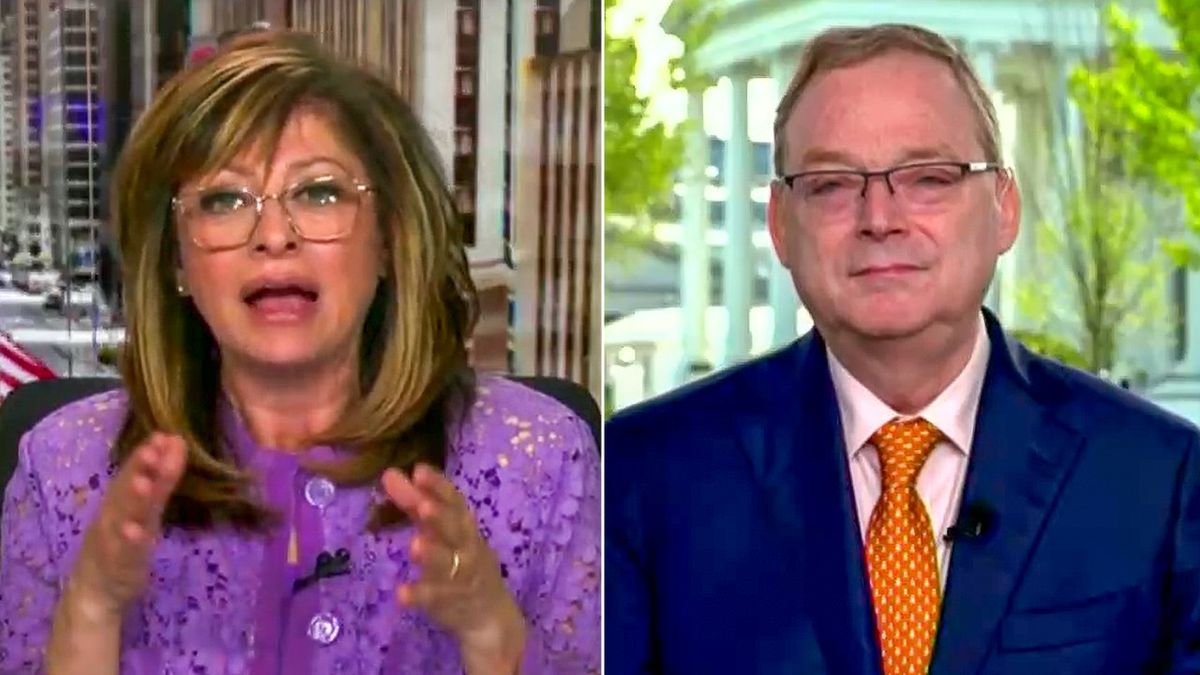
Fox News host Maria Bartiromo pressed White House economic adviser Kevin Hassett about how President Donald Trump's "tariffs on screws" were "going to raise prices" for consumers.

During a Sunday interview, Hassett admitted that he had little idea what new economic policies Trump would impose in the coming week.

"I can't give you any forward-looking guidance on what's going to happen this week," Hassett said. "The president has got a heck of a lot of analysis before him, and he's going to make the right choice, I'm sure."

Bartiromo noted that it could take companies two to three years to shift manufacturing to the U.S. despite the tariffs.

"But what do you want to say to people who are questioning this as they see the stock market sell off?" she asked Hassett. "How long would you expect this disruption to last? The Wall Street Journalout with a piece this morning."

"Tariffs on screws are already hitting manufacturers, meanwhile, meaning that they're going to raise prices," the host remarked.


For his part, Hassett argued that Republicans would pass tax cuts to help the economy in the coming months.

"We've got the biggest, most pro-worker tax cut in history that's moving forward at a breakneck speed," he asserted. "And I think the naysayers will be proven wrong if they're a little bit nervous about the blips from this week to next."

"Well, there are also questions about the tax extensions," Bartiromo replied. "How will the Congress get it done?"

"It feels like the odds of this passing sometime in the summer are extraordinarily high," Hassett insisted. "It's a golden age."

"Well, look, if you're talking about the middle of the summer, that we'll actually see this begin to materialize, we may need it by that time because it feels like the economy is slowing," Bartiromo observed.


Watch the video below from Fox News or at the link.


'How exactly?' Fox News host grills Peter Navarro after he says 'tariffs are tax cuts'

David Edwards
March 30, 2025
RAW STORY


Fox News/screen grab

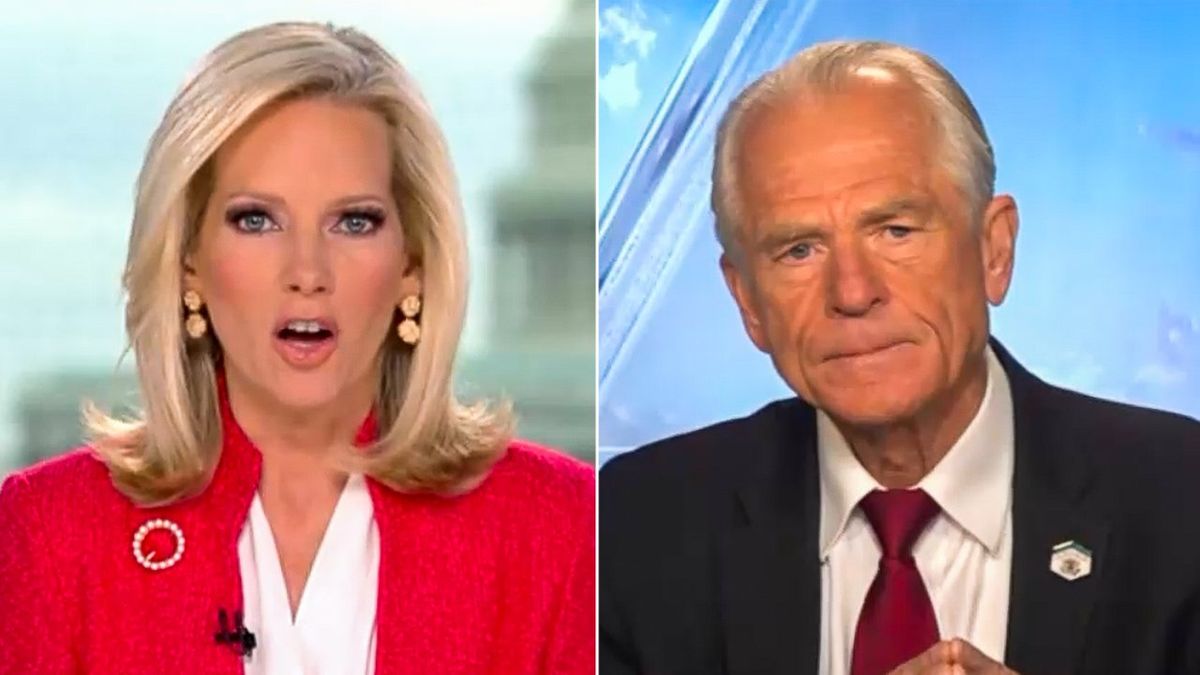
Fox News host Shannon Bream challenged White House trade adviser Peter Navarro after he insisted that President Donald Trump's tariffs were "tax cuts."

During an interview on Fox News Sunday, Bream noted that Trump had said he "couldn't care less" if car prices increase because of his tariffs.

"The U. S. Consumer message is that tariffs are tax cuts," Navarro insisted. "Tariffs are jobs. Tariffs are national security. Tariffs are great for America. Tariffs will make America great again."


"I want to clarify," Bream interrupted, "when you say a tax cut, how exactly is that going to work?"

"First of all, we're going to raise about a hundred billion dollars with the auto tariffs alone," Navarro replied. "What we're going to do is, in the new tax bill that has to pass, it absolutely has to pass, we're going to provide tax benefits, tax credits to the people who buy American cars."

ALSO READ:'Not much I can do': GOP senator gives up fight against Trump's tariffs


"This is a genius thing that President Trump promised on the campaign trail," he added. "In addition, the other tariffs are going to raise about six hundred billion dollars a year, about six trillion over a ten-year period, and we're going to have tax cuts."

"Trust in Trump," Navarro said.

Watch the video below from Fox News or at the link.


Saturday, June 21, 2025

Trump’s Big Tax Hike

 June 20, 2025

Photograph by Nathaniel St. Clair

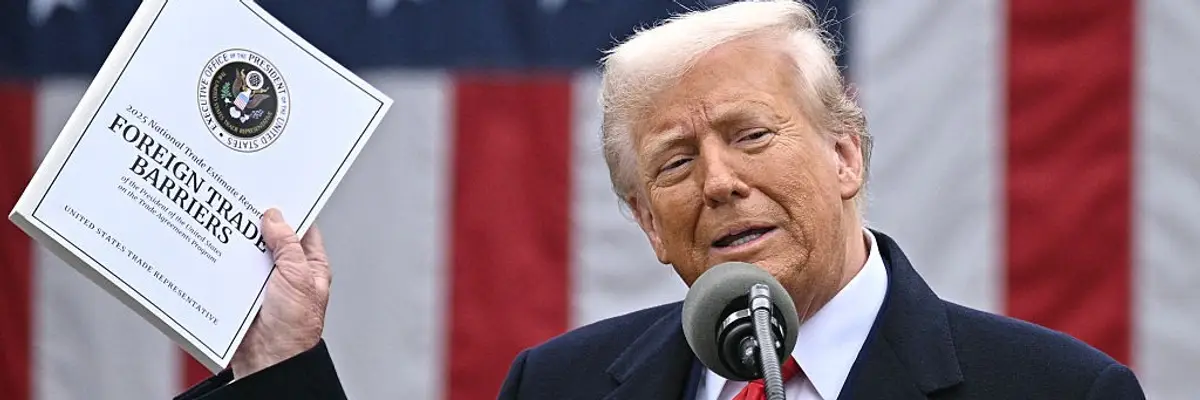
While everyone is talking about the Republicans’ big tax cuts for Elon Musk and other billionaires, he also is hitting us with one of the largest tax increases in history. This would of course be his massive Big Beautiful Import Taxes, also known as “tariffs.”

We got new evidence yesterday that we will in fact be paying the tariffs, not the exporting countries, as Trump weirdly claims. I’ll get back to this, but first we should be clear how much money is at stake.

Trump is not getting adequate credit for what could be the largest tax hike in US history. At this point, we don’t know exactly how large the tax hikes will ultimately be because Trump changes his tariff schedule almost daily. Trump also lacks the constitutional authority to impose tariffs since this authority is very explicitly granted to Congress, so it’s possible the Supreme Court will nix ultimately nix the Trump tariffs.

But we know in Donald Trump’s America, the Constitution doesn’t mean much, so the lack of authority may not prevent Trump from imposing whatever taxes on us he feels like. And it looks like that will be a lot.

His baseline import tax is 10 percent, with few items coming in with lower tax rates. He seems to have settled for taxing us 50 percent on goods we buy from China. Trump at one point threatened to tax the goods we import from Europe at a 50 percent rate as well, but then quickly backed down, or “chickened out” as they say on Wall Street.

We are sort of shooting in the dark on this, but let’s say that the average import tax ends up being 20 percent. If we applied this figure to last year’s $3.3 trillion in goods imports, that would come to $660 billion.

To make this comparable to the budget numbers we are currently hearing tossed around with the Big Beautiful Bill, we need to calculate the tax over ten years and assume the sort of growth the Congressional Budget Office projects for the economy over this period. That would get us a tax haul of more than $8 trillion over the next decade.

To be clear, this is almost certainly an overstatement, since import volumes will shrink in response to Trump’s massive tax hike. But even if they fell by half, we would still be talking about $4 trillion in new taxes from Trump’s tariffs over this period. That comes to an average of $32,000 per household.

This is about five times the amount the Republicans are proposing to cut from Medicaid. It’s more than 12 times the proposed cuts to SNAP. And if we want to compare it to Elon Musk’s great accomplishments at DOGE, it would be more than 800 times the amount he saved by nixing the AIDS program for Africa that saved tens of millions of lives. In short, Trump’s tax hike is real money.

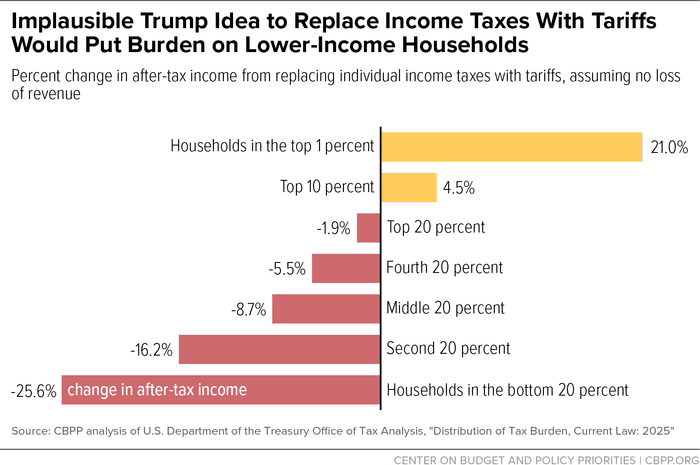
There are a couple of other points we can make about Donald Trump big tax hike. First, it is incredibly regressive. The logic of this one is very simple. A tax on imports is a tax on consumption. Low and middle-income households generally spend pretty much their entire income. Higher income people save much of their income, so the tax will be a far larger share of the income of low and middle-income households than of the rich.

Also, lower income people spend a much larger share of their income on the goods that are subject to the tariffs. Higher income people spend more money on services like restaurants, gym memberships, and travel, all items that will be much less affected by the Trump tariffs.

The other big point is that, contrary to Trump’s claims, we are paying the tariffs. In Trump’s reality TV world, exporters pay the tariff. He often talks as though the governments of China, Japan, or wherever are going to send checks to the United States government.

Whatever is the case in Trumpworld, in Realityland there is little doubt that the importers pay the tax. Just as a mechanical matter, the tax is paid when the goods are brought into customs by the party that is importing them, as in us.

The argument that the exporters pay the tax would mean that they reduce their prices in response to the tariffs. We got new data on this yesterday when the Bureau of Labor Statistics released data on import prices for May, a month in which most of Trump’s tariffs were in effect.

Nonfuel import prices rose 0.3 percent in May after rising 0.4 percent in April. Over the last year they have risen 1.7 percent. That compares to an increase of just 0.5 percent in the prior year, when we weren’t imposing big tariffs on everyone.

You would have to look at these data very hard to find any evidence that exporters are bearing any substantial portion of the tariffs. This means when Trump boasts about slapping another big tariff on China or the EU he is boasting about hitting US consumers with another big tax. I guess that might be pretty MAGA, but it’s not good news for most people’s pocketbooks.

This first appeared on Dean Baker’s Beat the Press blog.

Dean Baker is the senior economist at the Center for Economic and Policy Research in Washington, DC. 

Thursday, July 17, 2025


Trump Hits Amazon with 50 Percent Tariffs


 July 17, 2025

Photo by Nico Baum

Since we seem to again be in a tariff-crazy phase of Donald Trump’s presidency, it is worth explaining the meaning of a tariff so that even Treasury Secretary Bessent, Commerce Secretary Lutnick, and New York Times headline writers can understand what they are.

The basic point — contrary to what you read in the paper — is that tariffs are not something Trump “hits” other countries with, they are something he hits US consumers with. They are a tax on our imports. The idea of a Trump “tariff” on Amazon’s sales may help make that point.

Before going into the logic of an Amazon tariff, I realize that many readers are likely saying that Donald Trump doesn’t have the power to impose a tax on Amazon sales. That is very true, but he also doesn’t have the power to impose most of the tariffs he is now putting in place. The Constitution very clearly gives the power to impose tariffs and other taxes to Congress.

However, that may matter little given that almost all the Republicans in Congress have taken a sacred vow to do whatever Donald Trump tells them. If Trump were to catch Jeff Bezos ridiculing his idiocy, there is no reason to think he would not try to impose an Amazon tax, just as he is now planning to impose a tax on imports from Brazil because it is pressing charges against a former president who tried to overthrow the government. And virtually every Republican in Congress would say it’s just fine.

Jeff Bezos would be very unhappy about sales of Amazon being hit with a 50 percent tax. It would mean a sharp decline in his sales. But the main reason would be that the price of the goods sold by Amazon would rise by close to 50 percent. This would mean that demand for Amazon products would plummet, with most customers shifting to competitors not subject to Trump’s tax. These other companies would also raise their price somewhat, taking advantage of the fact that a low-cost competitor was being nailed by the Trump tariff.

The reason the price would rise by something very close to 50 percent is that Amazon’s profit margins are narrow on most items. If they didn’t pass along the bulk of the Trump tariff, Amazon would be losing money on its sales, and businesses don’t operate to lose money.

This means that Bezos would be extremely unhappy about a tax that would seriously downsize his company, if not put it out of business altogether. But Amazon customers would also be very unhappy because they would have to pay higher prices for Amazon products or look to buy goods from companies that charge considerably more than Amazon did before the Trump tax took effect.

This is the same story with the Trump tariffs. We already know that foreign countries are not eating the taxes that Trump is imposing on our imports from them. In May, the first month where many Trump tariffs were in effect,  the US collected over $22 billion in tariff revenues. That would come to almost $250 billion on an annual basis, or an average of roughly $2,000 per household.

If foreign countries were eating these taxes, we would see a decline in import prices, which are measured without including the tariff. In fact, non-oil import prices rose by 0.3 percent in May and are up 1.7 percent over the last year.

With Trump preparing for another massive round of tariffs he is promising to hit American households with the largest tax increase in history. And unlike tax hikes by Democratic presidents, big taxer Trump is designing his tax to primarily hit working-class families.

Working-class families spend almost their entire income. Trump’s rich friends save much of their income. Furthermore, much of what they do spend is on services like travel and expensive restaurants that are less affected by the Trump tariffs.

At this point, no one, possibly not even Trump, knows how high the tariffs will on Liberation Day III (August 1). That’s the way they like to do things on reality TV shows. But one thing we can be certain of is that consumers will be paying considerably more for many of the things we buy.

When Trump threatens to “hit” Brazil, the source of one-third of our coffee, with a 50 percent tariff on its exports, he is threatening to make us pay much more for our morning coffee. How’s that for something to start your day with?

This first appeared on Dean Baker’s Beat the Press blog.

Dean Baker is the senior economist at the Center for Economic and Policy Research in Washington, DC.