August 13, 2025
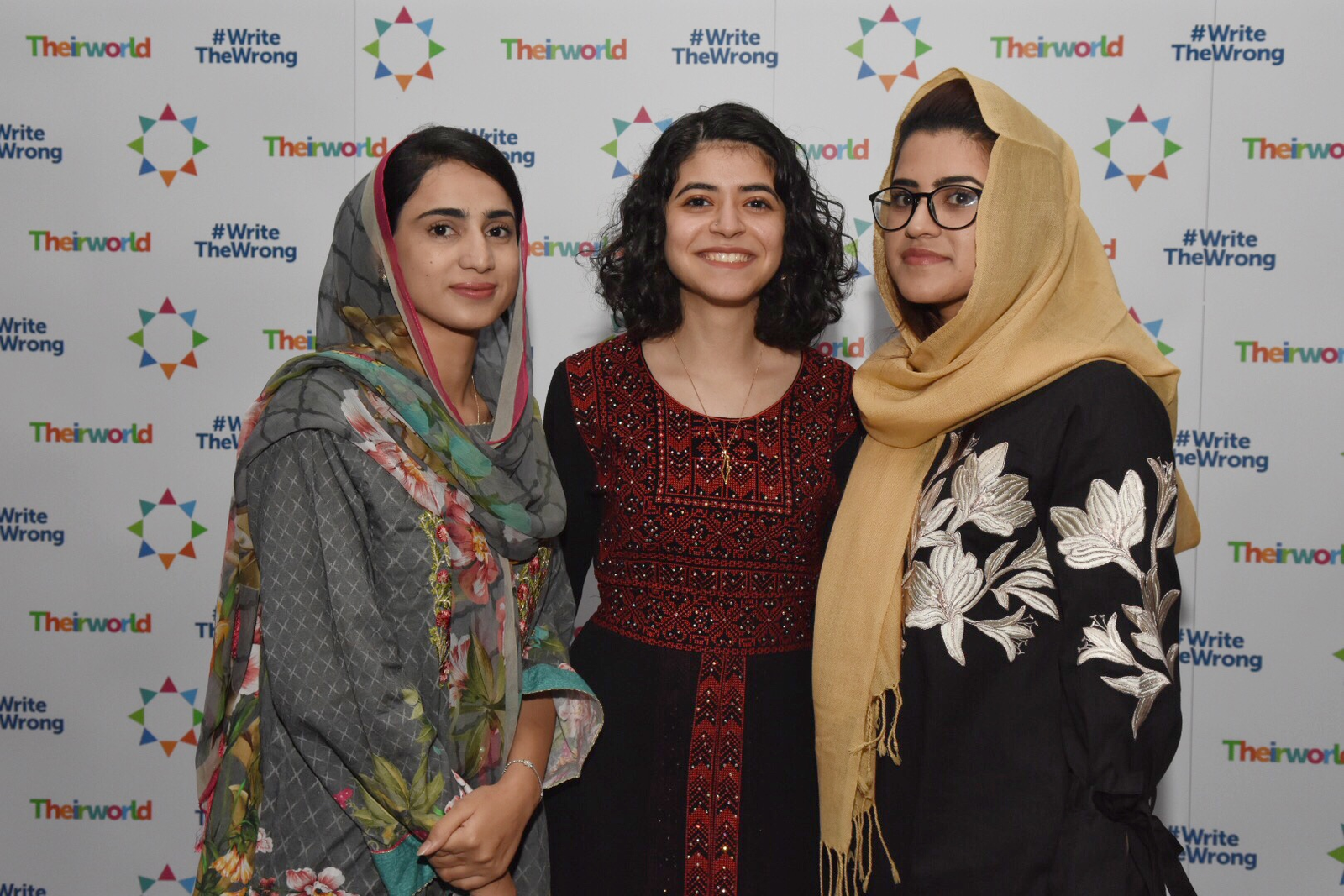
Ahead of the fourth anniversary of the ban on girls in Afghanistan going to secondary school, Shazia Ramzan - a graduate of the Theirworld Global Youth Ambassador programme and current Theirworld adviser, talks about campaigning for equal education rights.
Shazia Ramzan was on sitting on a school bus, on her way home from an exam, when her world was brutally torn apart.
The 14-year-old was with friends Malala Yousafzai and Kainat Riaz when a Taliban gunman boarded the bus and shot them. Malala was targeted because of her outspoken support for girls’ education in Pakistan’s Swat Valley.
“My life changed forever,” said Shazia, who was struck in the neck and arm. “I was shot because I was receiving an education – and because I was a girl.”
That was 13 years ago. Malala went on to win a Nobel Peace Prize for her campaigning. Shazia and Kainat moved to the United Kingdom, studied at school then university and became passionate advocates for education, joining Theirworld’s Global Youth Ambassador programme.
Girls are still being denied an education by the ruling Taliban in Pakistan’s neighbour Afghanistan. Ahead of the fourth anniversary of a ban on girls attending secondary school, Shazia has spoken about the importance of schooling for every girl in the world.
2.2 million
The number of Afghan girls who have missed out on secondary education since 2021.
Shazia said: “Education is a right. I deserve to have an education. Everyone deserves an education and nothing could have stopped me.
“I’m here today, fully educated. I have my degree from the University of Edinburgh. I realise the importance of education and want to help others all over the world access it.”
When the Afghan government collapsed on August 15, 2021, the Taliban immediately seized control of the country. Within weeks, they banned girls from education beyond primary school and women from going to university.
The ban has destroyed the hopes and dreams of millions of girls. When the new school year began in March this year, UNICEF estimated another 400,000 girls would miss out on secondary education – taking the total since 2021 to 2.2 million.
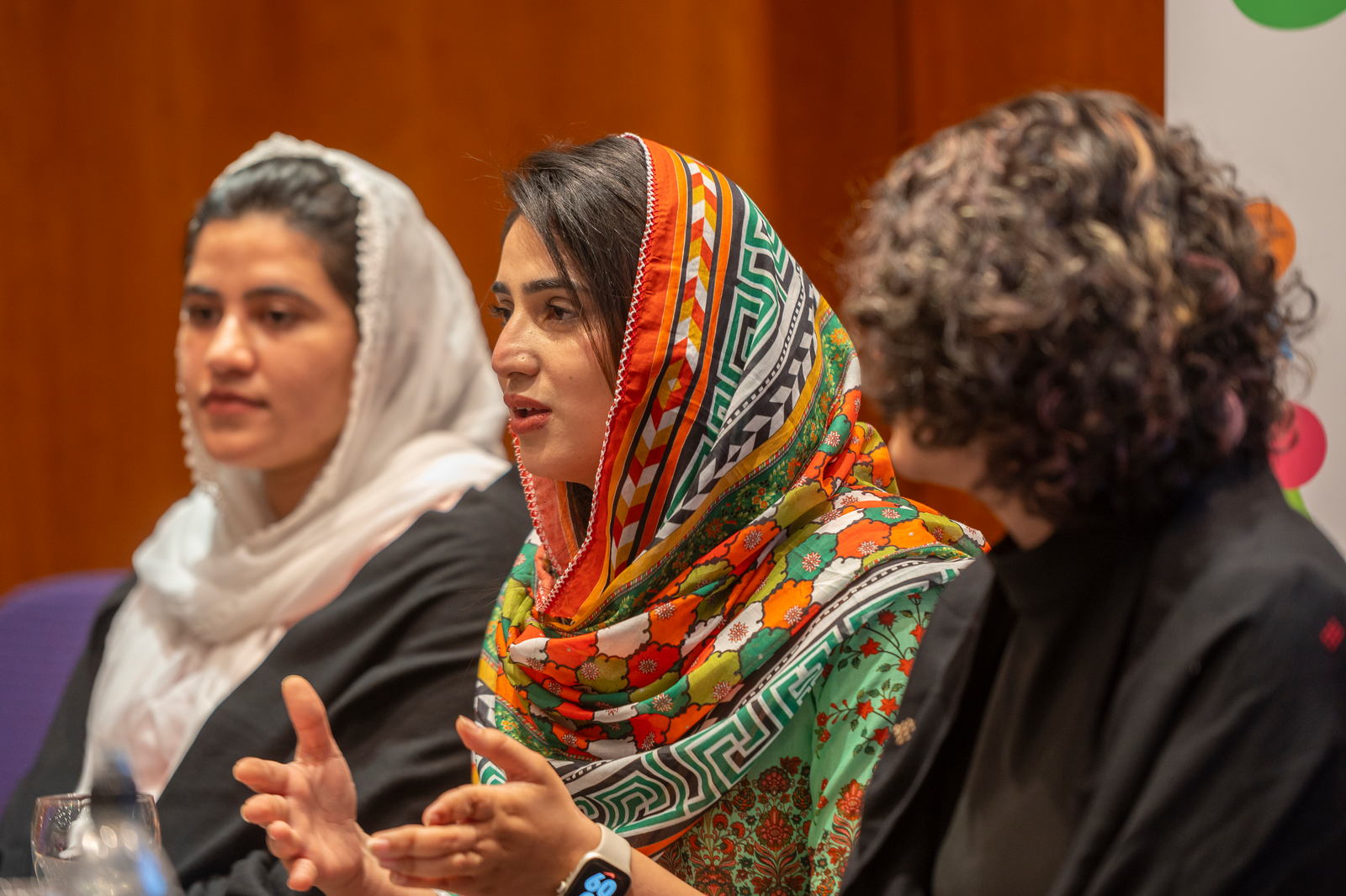
Shazia Ramzan is a passionate campaigner for the rights of girls to have a quality education (Theirworld/Phil Wilkinson)
UNICEF Executive Director Catherine Russell said: “If this ban persists until 2030, over four million girls will have been deprived of their right to education beyond primary school. If these capable, bright young girls continue to be denied an education, then the repercussions will last for generations. Afghanistan cannot leave half of its population behind.”
Theirworld President Justin van Fleet said: “The ban on girls’ education in Afghanistan is a violation of universal human rights. It deprives girls of their aspirations and dreams, and puts them in danger if they ever attempt to learn. It’s putting a generation’s entire future at risk.”
Apart from wrecking their future career prospects, depriving girls of education leaves them at risk of child marriage and early pregnancy, increased poverty and gender-based violence.
Although there has been an overall improvement in gender equality in education in recent decades, some parts of the world are falling behind. That includes Afghanistan, Pakistan and Nigeria, which have seen attacks on girls’ learning and threats to close down schools.
For me, education is like a light - without light you can’t see anythingKainat Riaz, graduate of Theirworld Global Youth Ambassador programme
The Taliban’s decision to ban education for girls after primary school dramatically unravelled decades of progress in Afghanistan. United Nations agencies and campaigners, including Theirworld, continue to advocate for Afghan girls to be allowed to return to secondary schools.
Meanwhile, Shazia amplifies the message that education unlocks opportunities for girls, allowing them to follow their dreams and fulfil their potential.
She said: “I have defeated all my thoughts, that maybe you’ll never go back to school, maybe you’ll never be anything. I have overcome them. And I want to help others who are having these thoughts know they can overcome them too.”

By Associated Press - Tuesday, July 29, 2025
ISLAMABAD — The Taliban are exporting Afghan workers to fill jobs in the Gulf nation of Qatar to ease unemployment in Afghanistan, and say talks are underway to send labor to Saudi Arabia, the United Arab Emirates, Oman, Turkey, and Russia.
Registration opened Tuesday for 2,000 skilled professionals in areas including hospitality, food and beverage, and engineering to go to Qatar under the new program. Applicants from all 34 Afghan provinces can submit their work experience and credentials before being assessed for eligibility.
The registration launch follows the forced returns of at least 1.5 million Afghans from neighboring countries, notably Iran and Pakistan, at a time of significant economic and humanitarian difficulty.
Aid agencies have warned of pressure on local services, as well as dramatically reduced flows of money flowing into the country in the form of remittances from people working abroad.
Acting Labor Minister Abdul Manan Omari described the labor export program as a “significant and foundational step.” He said talks also were under way with Saudi Arabia, the United Arab Emirates, Oman, Turkey, and Russia.
“We are committed to sending skilled, semi-skilled, and professional workers to these countries in the future as well,” Omari said Monday on the social platform X.
“We are committed to the protection of Afghan workers’ legal rights and safety abroad. Our goal is to prevent illegal migration and uphold the dignity and honor of Afghan workers,” Omari said.
Qatar, which hosts a major U.S. military base in the region, served as a crucial point for those fleing the Taliban in the chaotic days of the withdrawal of foreign forces from Afghanistan in 2021. It also hosts a diplomatic post for the Taliban and hosted peace talks in 2019-20 between them and the U.S. administration of then-President Donald Trump.
Abdul Ghani Baradar, the Taliban’s deputy prime minister for economic affairs, said the Qatar labor initiative would help to ease unemployment and help the economy - presumably through remittances.
Many Afghans depend on humanitarian assistance to survive. But deep funding cuts are worsening the situation, with aid agencies and nongovernmental organizations scaling back education and health care programs.
“The legal process of sending skilled and professional Afghan workers abroad will positively impact the national economy and help reduce unemployment,” Baradar said at the program’s launch on Monday.
He said the government had been working for four years to lower the unemployment rate through foreign and domestic investment, expanded trade relations, and infrastructure projects.
In 2023, the Taliban supreme leader Hibatullah Akhundzada met Qatari Prime Minister Sheikh Mohammed bin Abdulrahman Al Thani in Afghanistan’s southern city of Kandahar, Al Jazeera English reported. It was the first such publicly known meeting between Akhundzada and a foreign official.

The Taliban Breaks Diplomatic Isolation – Analysis

File photo of Russia's Foreign Minister Sergey Lavrov meeting with Afghanistan's Taliban Leaders. Photo Credit: Russia's Ministry of Foreign Affairs
Russia Officially Recognizes the Islamic Emirate of Afghanistan.
On April 17, 2025, the Supreme Court of the Russian Federation officially lifted the ban on the activities of the Taliban within Russian territory. This legal decision means that the Taliban is no longer formally designated as a terrorist organization in Russia.
Subsequently, on July 3, 2025, Russia became the first country in the world to officially recognize the Taliban as the legitimate governing authority of the Islamic Emirate of Afghanistan. As a result, the Taliban now operates within the framework of political dialogue and cooperation in its relations with Russia. The normalization of relations with Afghanistan represents a significant element of Russia’s foreign policy agenda. With these actions, Moscow not only opens a new chapter in bilateral ties but also positions itself as a trendsetter and initiator of a new era in political and diplomatic affairs—an essential attribute of a great power.
Even before the Taliban’s victory, Russian analysts had anticipated the collapse of the pro-American regime led by Ashraf Ghani. Russian experts were deeply informed about the domestic situation in Afghanistan and recognized the failures of U.S. policy in the region. There was growing and acute dissatisfaction within Afghan provinces regarding the American-backed government in Kabul. Consequently, Moscow was among the first to initiate contact with the Taliban, engaging in dialogue with the movement well before its military success.
Russia accurately predicted the withdrawal of U.S. and NATO forces and foresaw a swift Taliban victory. From a strategic standpoint, it would have been unwise not to engage. Moscow’s internal rationale was both logical and pragmatic: to establish working relations with those in power in Afghanistan. After weighing all regional developments, Russia concluded that the Taliban’s ascension was inevitable and therefore moved early to build relations.
Other major and regional powers are expected to follow Russia’s lead, which could result in the normalization of Afghanistan’s international status, a boost in investment, and the country’s integration into multilateral cooperation frameworks. While the United States is likely to continue applying pressure to sustain a policy of non-recognition, the impact of this pressure is expected to be limited, especially against the backdrop of growing engagement from China, Turkey, Central Asian republics, and Middle Eastern countries. Washington is unlikely to prevent regional powers from recognizing the Taliban. At the same time, the U.S. may seek to destabilize the Eurasian geopolitical landscape.
Russia’s Objectives in Afghanistan
What does Russia seek from its engagement with Afghanistan? What are the goals of Russian diplomacy? Moscow seeks a stable regional environment in which Eurasian powers can negotiate independently—without external interference—on the basis of consensus and mutual interest. A stable Afghanistan is crucial to this vision: one free of foreign military bases and insulated from serving as a haven for international terrorist organizations. Accordingly, Moscow will seek to support and promote the political evolution of the Taliban regime towards a more restrained and moderate governance model.
The Taliban’s grip on power is expected to endure, and the movement has demonstrated growing political functionality and rationality. Therefore, Russia is prepared to engage in constructive cooperation with both the Taliban and Afghanistan’s governing institutions. The overarching aim is to stabilize Afghan society and counter terrorism within its borders through collaboration with the Taliban authorities. A particular threat to Russian interests is posed by the Islamic State’s Afghan affiliate, ISIS-Khorasan, which is also viewed as a hostile force by the Taliban. Russia and Afghanistan are expected to cooperate closely in efforts to dismantle this organization.
Economic Cooperation as a Cornerstone of Bilateral Relations
Economic cooperation is another key dimension of the Russian-Afghan relationship. One of Afghanistan’s top leaders, Abdul Ghani Baradar, has openly invited Russian companies—particularly from the private sector—to invest in Afghanistan. A notable example of ongoing infrastructure initiatives is the proposed construction of a second highway tunnel through the Salang Pass. The first tunnel, built between 1958 and 1964 with Soviet expertise, was crucial for strategic mobility during the Afghan War and remains one of the country’s most vital transportation arteries. In addition to transportation, the development of social infrastructure—such as residential buildings, schools, and healthcare institutions—remains a high priority across Afghanistan.
Improving Afghanistan’s economic conditions is a priority for rational actors in the international system. The Taliban has expressed intent to expand economic ties with countries across Eurasia. As a result of Russia’s engagement, more nations are beginning to explore the possibility of cooperating with Afghanistan. Member states of the Shanghai Cooperation Organisation (SCO) are deepening bilateral ties with Kabul. Following Russia’s example, India has also begun efforts to normalize relations with the Taliban.
As of the end of 2024, the volume of bilateral trade between Russia and Afghanistan reached a modest USD 323 million. Russia imports limited quantities of Afghan vegetables and grapes, with future plans for pomegranate imports from the southern provinces. Afghanistan currently exports chromite, mineral concentrates, as well as precious and semi-precious stones such as rubies and emeralds to Russia. Additional imports include spices, non-alcoholic beverages (including energy drinks), and medicinal plants like lavender, thyme, and licorice.
Obstacles to Normalization and Regional Challenges
Several factors may hinder the normalization of Afghanistan’s political and diplomatic status. Chief among them is the desire of certain regional powers to maintain monopolistic influence over the Taliban. This especially concerns the Pakistani military, which historically served as both mentor and sponsor to the Taliban and the Haqqani Network. Pakistan’s doctrine of “strategic depth” has long relied on supporting radical Islamist factions to establish proxy networks throughout the region, particularly against its main strategic rival, India. Islamabad continues to back various militant groups that utilize terrorism as a political tool.
However, since their victory in 2021, the Taliban has increasingly distanced itself from Pakistani control. The movement now seeks to act as an independent and sovereign force, building equitable relations with all international actors. This aspiration has sparked tensions with the Pakistani military, leading to a rise in conflict and hostile rhetoric between the two neighbors. Another significant barrier to the Taliban’s international recognition is the persistent opposition from the United States, which continues to obstruct the normalization process.
In sum, the Taliban has successfully broken through its diplomatic isolation by securing its first official recognition. This marks a major milestone in the reconfiguration of Afghanistan’s international status. Russia, for its part, has demonstrated that it is a rational and ambitious global power, capable of shaping diplomatic and geopolitical realities in the Greater Middle East, Central Asia, and South Asia

Dr. Georgi Asatryan
Dr. Georgi Asatryan is an Associate Professor at Moscow State University, and author of "Talibanland - Paradise Under the Shadow of Sabers in Afghanistan"


No comments:
Post a Comment