August 13, 2025
By Todd Prince
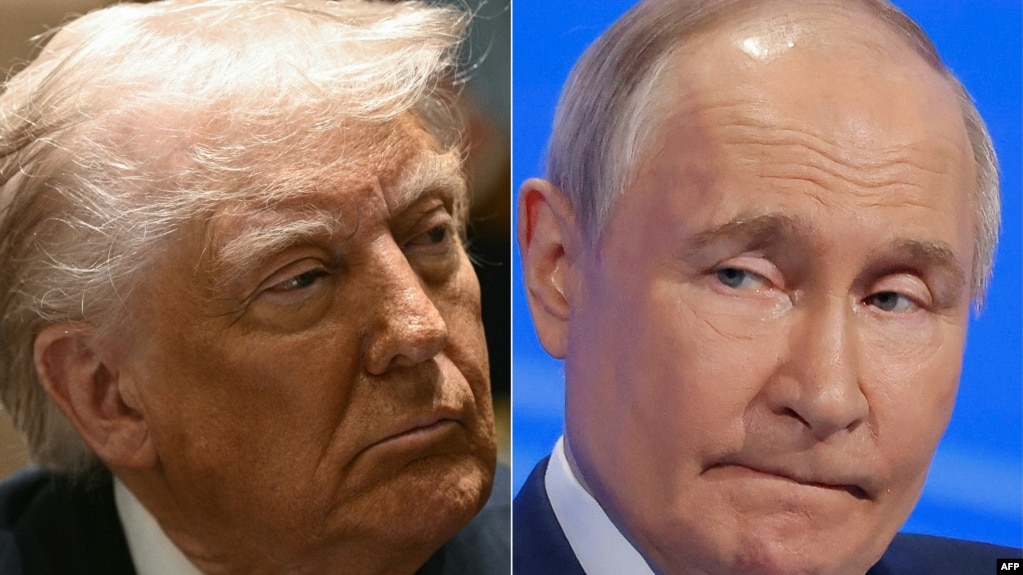
US President Trump and Russian President Putin will meet in Alaska on August 15 to discuss ending the war in Ukraine.
Alaska was chosen for its equidistant location between Washington and Moscow, its historical ties to Russia, and its logistical and security advantages.
Alaska's remote location minimizes large-scale demonstrations against Putin.
OR TRUMP
When US President Donald Trump and Russian President Vladimir Putin sit down in Alaska on August 15 to discuss ending the war in Ukraine, they will meet in a place that is at once a point of cooperation, rivalry, and deep symbolism.
In announcing the summit's location, Trump said his talks with Putin would focus on resolving the 45-month-old conflict -- the largest in Europe since the end of World War II -- through a compromise between Ukraine and Russia on territory.
"We're going to get some [land] back, and we're going to get some switched," Trump told reporters at the White House on August 8. "There'll be some swapping of territories to the betterment of both," he added.
Halfway Between Moscow Or Washington
To Bill Courtney, a former US diplomat who participated in Cold War arms talks, geography is the main appeal for choosing Alaska. The state is roughly equidistant between Washington and Moscow, a logistical convenience once sought -- but rarely found -- in US-Soviet summits, he said.
"Alaska actually offers you an opportunity to have something that looks like it's about halfway between Moscow or Washington," Courtney told RFE/RL. "Putin and Trump are making trips that are roughly comparable."
'Take Back Alaska': How Pro-Kremlin Media See The Trump-Putin Summit
For Putin, the summit's location signals a subtle but significant win, according to Matthew Schmidt, a professor of homeland security and international affairs at the University of New Haven. The Russian media, Schmidt said, has praised the choice of holding the summit in a place that was once Russian territory until it was sold to the United States in 1867 for $7.2 million.
Alaska symbolizes the ease with which powers can trade territory, ignoring those who live there, Schmidt said.
Easier To Police
Security is another important draw, according to Troy Bouffard, professor of Arctic security at the University of Alaska Fairbanks. Alaska ranks 48 out of the 50 US states in population size with about 730,000 residents. That means fewer security headaches than most places in the continental United States.

Anchorage, the state's largest city with 250,000 residents and a possible location for the summit, has top-notch logistics, he said. It is also buttressed by Joint Base Elmendorf-Richardson, which hosts thousands of active US air force and army personnel.
"It's not difficult at all to lock down routes and streets and buildings in Anchorage," Bouffard said.
Putin is deeply unpopular in the United States with a Pew Research Poll published in June showing that 84 percent of Americans have little to no confidence in the Kremlin leader to do the right thing in world affairs.
But holding the summit in a third country is complicated by the International Criminal Court's (ICC) indictment of Putin on war crimes. ICC members states -- of which there are 125 -- are required to arrest Putin should he set foot on their territory. The United States is not a signatory to the ICC.
The optics of Putin in the United States "are going to be bad, but they would be really, really bad if they tried to do this in [Washington] D.C.," Bouffard said.
Tens of millions of Americans live within several hours drive of the US capital, enabling those opposed to Putin and his war in Ukraine to easily organize large-scale demonstrations in Washington against such a visit.
To get to Alaska from the closest continental states, US citizens have to traverse thousands of miles through Canada. Domestic flights to Alaska are among the most expensive in the United States. With just a week's notice, finding available plane tickets will be difficult.
Bouffard said there is talk of protesters nonetheless gathering along roads in Anchorage with Ukrainian flags or posters with the colors of the Ukrainian flag. Courtney said he expects Putin to be "wrapped in a cocoon" to avoid any sight of protests.
From Cooperation To Confrontation
Alaska has always held a significant place in the relationship between the US and Russia. During World War II, Alaska was a vital link in the Lend-Lease program. Soviet pilots picked up US-made aircraft in Alaska and flew them across the Bering Strait to Russia. Nearly 8,000 planes took the route from Nome, a port city in western Alaska,to the Russian front.
That cooperation gave way to confrontation after 1945. During the Cold War, Alaska was militarized as a bulwark against Moscow, with bases hosting interceptors and radar sites to guard the polar approaches. Today, it remains home to America's largest fleet of advanced fighter jets and is a cornerstone of its missile defense network.
Why Xi Is Closely Watching The Trump-Putin Summit In Alaska
The old tensions are returning as great power competition in the resource-rich Arctic region heats up, driven by receding ice and the opening of transportation routes. In 2021, a senior Alaskan commander said US intercepts of Russian aircraft near or inside the Alaska Air Defense Identification Zone had reached a post-Soviet high.
Russian bombers and reconnaissance planes still probe the boundary regularly, the most recent such incursion taking place on July 22, the fifth this year. Some US officials are now pushing to reestablish Cold War military facilities on Alaska's Aleutian Islands chain to counter a growing Russian and Chinese military presence.
In his potential effort to win over Trump, Putin may focus on Alaska as a location binding Russia and the United States together. Yury Ushakov, a senior Kremlin foreign policy adviser, called Alaska a "symbolic location" that reflects the two countries' shared Arctic frontier.
"Russia and the United States are close neighbors, bordering each other," Ushakov said in a video statement. Regardless of whether or not the summit yields real progress on peace, for Alaska, it will be a rare moment in the global spotlight

Todd Prince is a senior correspondent for RFE/RL based in Washington, D.C. He lived in Russia from 1999 to 2016, working as a reporter for Bloomberg News and an investment adviser for Merrill Lynch. He has traveled extensively around Russia, Ukraine, and Central Asia.
US policy and President Trump’s understanding of the situation in Ukraine is all too often based on scant knowledge of Ukrainian history and its people. Kyiv Post speaks to a Washington insider.
by Ugo Poletti | Aug. 13, 2025
Kyiv Post
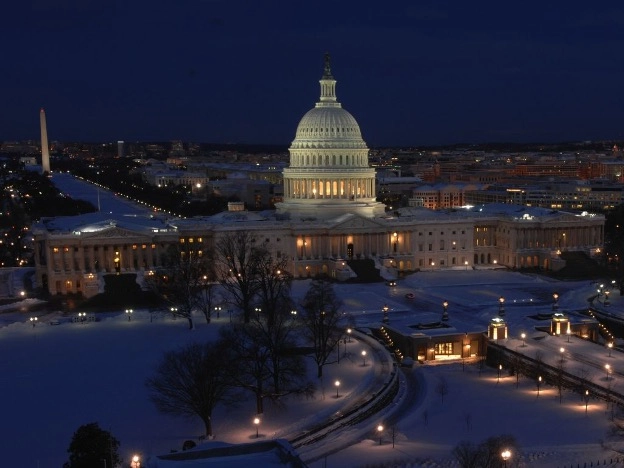
On the eve of the meeting between Trump and Putin in Alaska on Aug. 15, one might wonder what the US president’s opinion of Ukraine is. But it might be even more interesting to understand how well the US administration’s technical experts, who prepare these meetings and the information needed to make important political decisions, understand the complex situation in Ukraine.
Kyiv Post spoke with Natalia Khizhnyak, language instructor for the Pentagon-related programs and formerly BBC News Ukrainian correspondent in Washington DC, where she has lived for 18 years and has consistently promoted meetings between Ukrainian and the US politicians.
Can the lack of knowledge about Ukraine’s recent history adversely influence US policy decisions?
Most Americans do not realize what huge role 1991 played and how many Ukrainians voted for independence. Also, most Americans are unaware that Ukrainians have favored a decentralized political system throughout history, unlike that in Russia, and that they opposed Soviet rule even during the USSR.
Nor has the Trump administration tried to learn anything about these questions either. President Trump’s special envoy to Ukraine had misstated what really happened at the beginning of the war and expressed agreement with Russia’s framing of the crisis.
Only specialists who work on Ukraine issues (at the former Institute of Peace, Atlantic Council, Freedom House, NED) are aware of the Soviet and imperial legacies. Unfortunately, the role of these institutions is fading. Many of them were closed by Elon Musk’s DOGE.

Other Topics of Interest
Grain Exports From Ukraine Sharply Fell Below 2024 Levels
Ukraine’s grain exports fell due to a smaller harvest, unfavorable weather, and the suspension of EU trade preferences. This impacted export volumes and revenue, along with GDP growth.
From Washington’s perspective, is there a sufficient depth of expertise on Ukraine’s current political landscape?
No, but it is growing. When the Russians invaded in 2014, very few Americans, even public officials, had enough understanding of the country.
This has been improving due to the efforts of NGOs, such as the US-Ukraine Foundation, think tanks such as the Atlantic Council, and the active outreach of the Ukrainian embassy here in Washington. Congress has been very supportive as well, led by Congresswoman Marcy Kaptur and the leadership of the Ukraine Caucus.
The same Ukraine supporters have greatly increased the awareness of decision-makers involved in Ukraine’s nation-building. However, many Americans complain that Ukraine is a “corrupt country,” so why should they support it? This is a big challenge, and more could be done.
Do you think there is an over-reliance on Cold War-era frameworks when interpreting Ukraine today?
I don’t think so. During the last years of the war, Ukraine, thanks to President Zelensky’s lead, has made itself very well known. Many Americans – especially among military – say how fascinated they are with Ukraine’s bravery and the fight for its independence. In many ways it’s Americans who can understand Ukraine more than Europeans, taking into account their war to become independent.
Most Americans are suspicious of Russia and its ambitions. This means that many Americans are instinctively supportive of Ukraine and blame Russia for the war. Washington houses were filled with Ukrainian flags in the beginning of the war. During the Cold War experts largely ignored Ukraine’s aspirations, with the exception of figures such as Zbigniew Brzezinski and Ukrainian studies experts.
Many Americans tend to think that the breakup of the USSR was fueled by the democratic aspirations of the Soviet peoples, including Ukraine. In the US, they tended to ignore the issue of national identity which contributed to the fall of the USSR.
Has the tone or substance of US policy discussions shifted as the war has dragged on?
President Biden’s support of Ukraine and the current administration’s belief in Deals are so strongly shocking that you can’t believe we are talking about the same country.
Decisions are framed primarily as measures of national security. Another shock was how little the Democrats’ voice is heard on Ukraine after Trump’s many contradictory statements.
A billionaire becoming a politician as a head of US state without caring about the role of democratic institutions unfortunately puts Ukraine in a vulnerable position.
To what extent are decisions framed primarily around US national security and geopolitical interests rather than Ukraine’s own priorities?
It is a combination of each of those approaches. Above all, Americans support the Ukrainian people, both the general public and the majority of the members of Congress. However, their motivations seem to be different. Many support Ukraine for the suffering they have endured. Many also support Ukraine’s efforts to build democracy.
However, there is always a strong streak of isolationism in how some American view of the world. They may sympathize with Ukraine, but do not think it is our business to get involved. A very small minority tend to believe Putin’s propaganda about the war. Many of the people in these two categories support President Trump, but they are not the majority.
In your experience, how well do US political classes grasp the linguistic and ethnic diversity of Ukraine’s different regions?
Very poorly. They do not realize that Ukraine historically is a multinational society, the fascinating facts about Kharkiv and Lviv, the Donbas history, and Odesa’s uniqueness are known only to those who pay close attention to Ukraine. Coming to Washington 15 years ago and working as an RFE/RL Ukrainian correspondent, I often needed to make small briefs for British colleagues regarding what Ukraine was about, before they went to Kyiv.
In Washington DC, Freedom House, US-Ukraine Foundation, US-Ukraine business council did their best to raise awareness of Ukraine’s story. In 2017, I began working as a Ukrainian language instructor for the Pentagon-related program, which trained military advisers, who went to the Ministry of Defense in Kyiv. That was the time to explain the vital differences between Russia and Ukraine, and for many, Ukraine was an open, unread book. They fell in love with it later.
Many Ukrainians speak the Russian and Ukrainian languages without a problem. However, because so few Americans know much about Ukraine, its history, the role of Cossacks in particular, Ukrainian traditions, some can’t see through the differences between Ukraine and Russia. Nor they are aware of the many contributions that Jewish community made to the country.
What are the most overlooked aspects of Ukraine’s political culture that Americans should understand to make better-informed policy choices?
They should understand how impervious to authoritarian rule Ukraine is (for instance, the events of the Maidan). The historic, cultural, and political differences of Ukraine and Russia. They underestimate the extent to which most Ukrainians support democracy and integration into the West, especially the younger generations.

Ugo Poletti
Ugo Poletti Ugo Poletti is the Editor-in-Chief of “The Odessa Journal”, online newspaper that was launched during the Covid-19 quarantine to provide news about art, culture, history, business and social life in the maritime capital of Ukraine. He is an Italian entrepreneur, co-founder of the “Rotary Club Odessa International, dealing with charity initiatives. During the Russian invasion of Ukraine, he wrote a book for the Italian readers: “Nel cuore di Odessa”, that was published in Italy, on June 2022.
Russia’s dreams of re-Union
Since the Belavezha Accords were signed in 1991, revanchist politicians and cultural commentators in Russia have lamented the former Soviet Union’s disintegration. Revisiting provocative statements and legislative scheming from the 1990s shows how incremental manoeuvres paved the way for Putin’s colonialist drive disguised as integration.
For three decades after the Soviet Union disintegrated in 1991, political science and practical politics in Western Europe and North America very rarely addressed Moscow’s efforts to ‘reintegrate’ the ‘post-Soviet space’ (i.e., the former republics of the Union of Soviet Socialist Republics/USSR). Before Russia’s full-scale invasion of Ukraine, little attention was paid to the countless calls to restore the Soviet Union or a ‘Russian empire’ from various quarters, including communist and nationalist parties, movements and politicians. The project, it was said, would initially consist of the Russian Federation, Ukraine, Belarus and Kazakhstan, with other post-Soviet republics joining later.
By no means did this revanchist discourse begin under Vladimir Putin’s leadership since 1999 – it started in the 1990s immediately after the end of the USSR. Spurred by a feeling of bitterness in Russia over the loss of territories that for centuries had been under first tsarist and then Soviet control, this sense of grievance was not limited to the fringes of the political spectrum. It was hard to disagree with the radical nationalist Sergei Baburin when he wrote in 2000 that ‘for the majority of the Russian population, the terms “Russia” and “Russian Federation” are not identical’. The background to this attitude was then (and still is) the widespread conviction in society and among the elites of the Russian Federation that the Soviet Union was in fact nothing but ‘historical Russia’.
It was by no means only Russian nationalists and communists who claimed shortly after 1991 that the USSR had been illegally dissolved. Unsurprisingly, Russian advocates of a ‘new union state’ or a ‘Russian empire’ were also of the opinion that the collapse of the USSR could have been avoided. The desire to build a ‘new union’ often went hand in hand with allegations of betrayal and conspiracies to explain the fall of the USSR: it was often said that it had failed not because of inherent weaknesses but because of a giant collusion between a corrupt and ‘anti-patriotic’ Soviet elite and the West. The call for a ‘new union’ also resulted from a consistent failure to recognize the finality or irrevocability of the USSR’s disintegration. Those in favour of a ‘new union’ never got tired of repeating that ‘the peoples’ allegedly wanted one.
Back in the 1990s, the Kremlin never officially announced the goal of establishing a ‘new union’ or openly called for it. Instead, Moscow pushed all the more resolutely for the ‘integration’ of the former Soviet republics under Russian leadership and guidance. This ‘integration’ merits closer scrutiny, since many voices in Russia explicitly regarded it as a prerequisite or preliminary stage in the foundation of a ‘new union’.
A case of selective memory
Most of the serious opinion polls carried out in 1990s Russia revealed that clear majorities viewed the end of the Soviet Union negatively. And it very soon ceased to be the embodiment of a totalitarian regime in the minds of citizens. Instead, the USSR was increasingly associated with social security, order and a lack of corruption, as well as with superpower status. According to numerous opinion polls and assessments by independent Russian and foreign observers, this ‘Soviet nostalgia’ was rooted in the disillusionment with political and market reforms experienced by the population in the early 1990s. Russians’ high expectations of democracy were quickly and thoroughly disappointed by the unpleasant economic and social realities and political instability of the period. Even President Boris Yeltsin, whose signature is on the Belovezha Accords that sealed the dissolution of the USSR in December 1991, took this into account: he revealed that he had voted ‘yes’ in the referendum on the preservation of the USSR in March 1991. In 1996, Yeltsin publicly expressed his regret at having signed the Belovezha documents.
‘Integration’ or a ‘new union’?
In September 1993, shortly before the escalation of the constitutional conflict – with Yeltsin and the government on one side, and Vice President Alexander Rutskoi and the Supreme Soviet, presided over by Ruslan Khasbulatov, on the other – Rutskoi called for the restoration of the USSR. Khasbulatov had just written a letter to the parliaments of the other ten member states in the Commonwealth of Independent States (CIS), in which he proposed delegating unspecified powers to a ‘new parliament’ that would ‘coordinate’ political, economic and military activities in the CIS. However, the Supreme Soviet lost the dispute, which then escalated into a two-day ‘civil war’ on the streets of Moscow, thanks to an intervention by the Russian army.
Prime Minister Viktor Chernomyrdin, who was regarded as extremely moderate, said at a meeting with Russian artists in May 1994: ‘I will not accept the fact that many people want to erase our past. I sincerely regret the collapse of the USSR and am convinced that we will create a union on a new basis that is worth living for’. However, Chernomyrdin died in 2010, without having seen that ‘new union’. In 1995, a Russian think tank called the ‘Institute for Defence Research’ outlined what it saw as a desirable development that could be achieved through ‘sensible policy’, namely the:
restoration of a renewed union state with Russia, Belarus, Kazakhstan, a large part of Ukraine, the Dniester region, Abkhazia and South Ossetia within five to ten years … Russia’s relations with the South Caucasus and Central Asia could be modelled on the relations that used to exist within the framework of the Council for Mutual Economic Assistance, and relations with Moldova, the Baltic states and western Ukraine could be modelled on the Soviet-Finnish relations of 1944-1991.
Russia’s policy on ‘integration’ in the CIS in the 1990s also depended on the prevailing domestic balance of power, to which Yeltsin was always quick to orient himself. Even nationalist firebrand Vladimir Zhirinovsky (1946-2022) said after the (first) elections to the State Duma (the lower house of the new Russian parliament, the Federal Assembly) in December 1993, in which his ultra-nationalist Liberal Democratic Party of Russia (LDPR) had emerged victorious, that Yeltsin had ‘recently become a different man’: ‘He is moving closer to patriotic forces’.
In December 1995, the CPRF won the Duma elections, and shortly afterwards its leader Gennady Zyuganov (who is still in office in 2025) announced that Yeltsin and Chernomyrdin’s government had ‘recently been realizing the CPRF’s programme goals’. Zyuganov guaranteed Yeltsin the support of the communists in all activities aimed at ‘integration’ within the former USSR.
In 1996, a report titled ‘Will the Union Be Restored? Prospects for the Post-Soviet Space’ by the ‘Council for Foreign and Defence Policy’ (a Russian non-governmental association of politicians, scientists, businessmen, etc. under the leadership of Sergei Karaganov, still an influential political advisor today) caused a stir. According to this document, there were ‘real’ opportunities to ‘unite’ several former Soviet republics into a confederation. It also outlined the ways in which Russia would benefit from the disintegration of the post-Soviet republics – namely, more favourable conditions for a ‘restoration of the Union of post-Soviet republics’:
Unification can also be brought about by the imminent or actual disintegration of some new states (Ukraine, Kazakhstan, Georgia; a chain of disintegration of the Central Asian states is almost inevitable with the withdrawal of Russian troops from Tajikistan) as well as the problem of ‘unnatural borders’ and ‘disputed territories’, which can be solved either by maintaining the status quo for a long time or by reunification. … Many problems that arose in the wake of the collapse of the USSR are practically unsolvable in the context of the disintegration of the post-Soviet space but will disappear or be much easier to solve if the Union is reconstituted. For example, the problems of Crimea, the Dniester region, eastern Ukraine, the Black Sea Fleet, etc. will disappear. It will be much easier to solve the problems of Chechnya for Russia, Abkhazia for Georgia, Nagorno-Karabakh for Armenia and Azerbaijan, etc. if the Union is re-established.
A unifying idea
Communist Party leader Zyuganov has repeated on countless occasions since 1992 that the Russian Federation is ‘not yet the whole of Russia’ and that ‘Russia extends further than its borders’. He has demanded the restoration of the USSR and promoted it in many election campaigns. In a campaign brochure for the 1996 presidential elections, Zyuganov outlined that the dissolution of the USSR was also ‘illegal’ because ‘25 million compatriots’ – meaning ethnic Russians – ‘had suddenly become foreigners on their own land. … For the first time in its history, the Russian people became a divided people’. The Russian people, according to Zyuganov, should not be denied the ‘right to self-determination’, and this could only be realized through the ‘reunification of a single Union state’.
As for the nationalists, for many years Zhirinovsky and his party had territorial ambitions on three levels. The first concerned a ‘Russia within the borders of the USSR’, the second an annexation of territories that had once belonged to the Tsarist Empire (in particular Finland, Poland and Alaska), and the third a ‘last dash to the south’ propagated in a book of the same name in 1993, which was intended as a military conquest of countries separating Russia from the Mediterranean and the Indian Ocean. This was ‘truly a task for the salvation of the Russian nation’ and meant a solution to ‘Russia’s internal problems and a reassurance of the peoples from Kabul to Istanbul’. Zhirinovsky dreamed of ‘Russian soldiers washing their boots in the warm waters of the Indian Ocean’. The LDPR’s 1998 party programme called for Russia’s ‘reunification’ with other former republics of the USSR ‘into a unified and indivisible state’.
On 12 December 1991, Baburin was one of seven deputies who voted against the ratification of the Belovezha Accords in the Russian Supreme Soviet (188 deputies were in favour). Later he served twice as a member of the State Duma, from 1993-2000 and 2003-2007. Baburin advocated the creation of a ‘Russian Union’ (Rossiyskiy soyuz) on the territory of the former USSR, emphasizing that he and his party, the ‘Russian People’s Union’, denied the legality of the dissolution of the USSR by means of the Belovezha Accords. The main goal of the ‘Russian People’s Union’ was a ‘vigorous movement to restore a new unified state on the territory of the former USSR’. According to Baburin in a newspaper article in 1996, it was about the ‘gradual formation of a federal Union, the Russian Union’. In a book published in 1997, he wrote: ‘The unity of culture, and above all the existence of the Russian language, remains the main prerequisite for restoring the unity of the people’ within the borders of the former USSR.
Another feature of this revanchist movement was its Eurasianist philosophical underpinning. Eurasianism was a movement in Russian geopolitics that initially flourished among anti-communist Russian emigrants in the 1920s. In the post-Soviet period, increasing attention has been paid to so-called Neo-Eurasianism, whose best-known exponent in Russia and abroad was, and remains, Alexander Dugin. His book The Foundations of Geopolitics (1st edition 1997) achieved the status of a standard work – despite (or maybe because of) the sometimes bizarre geopolitical fantasies presented there – and was used as a textbook in Russian universities and military academies. Dugin imagined a ‘new Eurasian empire’ or a ‘great Russian empire’ that would become a ‘super superstate’ and according to geopolitical logic, he argued, should ‘strategically and spatially surpass the previous variant (the USSR)’. In Dugin’s view, this new Eurasian empire is to be global in perspective. ‘The Russians’ battle for world domination is not yet over’, he wrote.
The Belovezha Accords in the State Duma
Following the establishment of the State Duma in 1993, communists and nationalists immediately began agitating for the cancellation of the Belovezha Accords and for the ‘integration’ into Russia of at least those post-Soviet republics that were home to many ethnic Russians. It was no surprise then when, on 15 March 1996, in the run-up to the presidential elections in 1996, the State Duma, dominated by the CPRF and allied groups (the Agrarian Party of Russia, Power to the People!) and the LDPR, passed a resolution ‘on deepening the integration of the peoples united in the USSR and repealing the decree of the Supreme Soviet of the RSFSR of 12 December 1991’ (which had revoked the 1922 Union Treaty establishing the USSR). It stated that:
the legislative and other normative legal acts resulting from the decision of the Supreme Soviet of the RSFSR of 12 December 1991 ‘On the denunciation of the Treaty on the Formation of the USSR’ shall be corrected in accordance with the development of the fraternal peoples on the path of ever deeper integration and unification.
On the same day, 15 March 1996, the majority of the State Duma adopted a resolution ‘On the legal force of the results of the referendum of the USSR on 17 March 1991 on the issue of preserving the USSR for the Russian Federation – Russia’, which Baburin had played a key role in drafting. It stated that the results of the referendum on the continued existence of the USSR should remain in force and that the agreements signed by Yeltsin on the establishment of the CIS on 8 December 1991 ‘had and have no legal force in the part relating to the dissolution of the USSR’, as they had not been confirmed by the Congress of People’s Deputies of the RSFSR. However, the significant fact that the vote in March 1991 (to which all critics of the dissolution of the USSR and supporters of its restoration pointed without exception) was merely consultative in nature was not mentioned or taken into account. And Article 72 of the Soviet constitution of 1977 contained a clause guaranteeing the right of any republic to withdraw from the Union.
Yeltsin publicly denied that the two Duma documents of 15 March had any legal force. Nevertheless, hectic activity developed ‘behind the scenes’ in his presidential administration. Yeltsin even considered dissolving the Duma, banning the CPRF and postponing the upcoming presidential elections. Employees and confidants advised him against this in a memorandum dated 17 March and expressed the suspicion that the Duma wanted to provoke Yeltsin into taking harsh measures; such action could even carry the risk of civil war. Yeltsin was persuaded by these arguments and there was no escalation.
‘Integration’ in the CIS: Path to a ‘new Union’?
In 1991-92, the CIS helped to steer the disintegration of the USSR into controlled channels and prevent a ‘Yugoslav scenario’ on a (post-)Soviet – and therefore much larger – scale. Relatively speaking, the post-Soviet republics had plenty of room for manoeuvre immediately after the dissolution of the Soviet Union. In the opinion of the leading foreign and security policy analysts of the time, Russia was externally ‘weak’, being primarily concerned with internal problems and economic reforms. However, Moscow soon began attempting to instrumentalize the CIS in a bid to strengthen its influence over the other former Soviet republics. Following the collapse of the ‘external empire’ (i.e., the Warsaw Pact, which became redundant in 1989 and was dissolved in 1991) and the Soviet Union, the aim was that at least the former ‘internal empire’ (i.e., the republics of the USSR/CIS that were distinct from the RSFSR and the Russian Federation) should be kept under Moscow’s control as far as possible.
Under Yeltsin, Moscow aspired to ‘integration’ in as many fields as possible – under its own guidance, of course. This was facilitated by the fact that Russia accounted for around three-quarters of the territory of the CIS, made up around half of its population and was stronger in practically all respects than the other post-Soviet republics combined. In fact, Russia’s political, economic, military, scientific and cultural predominance was so vast that ‘integration’ in the CIS, at least on an equal footing with the other republics, would have been difficult even if Moscow had sought or at least tolerated it politically.
The basic document ‘Russia’s Strategic Course towards the CIS Member States’ from 1995 stated: Russia’s ‘bilateral relations with the CIS states are organized by taking into account the specific characteristics of each of these states and their readiness for various forms of deeper integration’. In other words, those post-Soviet republics that were sceptical about ‘integration’ or tried to resist it had to expect that Moscow would cause them political, economic and diplomatic difficulties (which happened in several cases). At the same time, Moscow presented its initiatives for ‘integration’ in the CIS as if they were fully in line with an international trend, citing the EU as a comparable example. However, the only thing CIS ‘integration’ had in common with EU integration was its name – partly because there was never a country in the EU that was as large and dominant as Russia in the CIS. For all these reasons, the term ‘integration’ is used here in inverted commas.
From Moscow’s perspective, ‘closer integration’ amounted to increased control over the policies of the other CIS republics or their active co-determination by Russia – via multilateral ties (through the CIS, but also the Collective Security Treaty Organization (CSTO, a mutual defence alliance similar to NATO), a customs union, a single economic space, etc.), as well as bilateral treaties, Russian investments and purchases of key economic and infrastructure assets, the assumption of Russian positions in foreign and security policy, Russian military bases, and the recognition of Russian ‘special interests’.
Article 79 of its 1993 constitution stipulates that Russia ‘may participate in intergovernmental organizations’ – meaning the CIS’ – and transfer part of its powers to them in accordance with international treaties’. This was significant insofar as Moscow has been striving since the 1990s to create ‘supranational bodies’ within the CIS and as part of other ‘integration’ initiatives, to which the members would delegate national powers. This would have enabled Russia to exert a quasi-institutionalized influence on the domestic, foreign and economic policy of the other CIS states.
In the CIS, Russia assumed a de facto political, economic and military role that was similar to that played by the USSR in the Warsaw Pact. In the summer of 1992, the prominent publicist, political scientist and Yeltsin adviser Andranik Migranyan wrote in the government newspaper Rossiyskaya Gazeta that members of the CIS should neither have the right to enter into military-political alliances with third (i.e., non-CIS) states nor to join forces with each other without Russia. And the aforementioned document ‘Russia’s Strategic Course’ already openly stated that ‘in cooperation with third countries and international organizations, an understanding should be reached on their part’ that the CIS ‘is above all Russia’s zone of interest’. Russia’s ‘main vital interests in the fields of economy, defence, security, protection of the rights of Russians … are concentrated on the territory of the CIS’.
Numerous statements from Russia left no doubt that it saw the CIS as a region in which Kremlin and ‘Western’ influences overlapped and competed with each other. Russia did not want its (military) political and economic influence to be diminished by (Western) European and Euro-Atlantic organizations. For Russia, the CIS countries were to keep as far away as possible from NATO, the US and the EU, and instead orient themselves politically and militarily towards Moscow, within both the framework of greater ‘integration’ in the CIS and bilateral cooperation with Russia.
The persistence of memory
The memory of an ‘empire’ (in tsarist and/or Soviet times) did not fade in the collective recall of the political elite and large parts of the population of post-Soviet Russia after 1991 but intensified as the 1990s progressed.
The communists and nationalists were far from the only ones to invoke the danger of Russia’s disintegration and call for the restoration of the USSR, or at least the greatest possible ‘integration’ of the CIS republics around the ‘Russian core’. And this was especially the case in the 1990s – in other words, before Putin. Many of the declarations made in that decade already demonstrated that Moscow essentially did not recognize the territorial status quo that formally came into effect in 1991 (i.e., the independence of the former Soviet republics within the borders that had been defined in Soviet times, albeit only as administrative divisions).
Baburin warned publicly as early as 1992: ‘Either Ukraine reunites with Russia or there will be war’. Leonid Kravchuk, Ukraine’s president from 1991-1994 and a communist functionary for three decades before that, said in 1996 that Zyuganov’s communists could try to resurrect the USSR by force if they came to power (which seemed particularly possible in the second half of the 1990s). But that would, according to Kravchuk, trigger a war ‘in comparison with which Yugoslavia’ – meaning the wars of 1991-1995 – ‘would be just a storm in a teacup’. This is what happened much later – albeit without a communist return to the Kremlin. But in Western Europe and North America, there was no interest in the 1990s or subsequent years in such (yet verbal) post-Soviet controversies, though alarm bells should have been ringing even then.
Published 21 July 2025
Original in English
First published by Eurozine
Contributed by Institute for Human Sciences (IWM) © Martin Malek / Institute for Human Sciences (IWM) / Eurozine
PDF/PRINT
No comments:
Post a Comment