Spanish PM Sánchez: Ceuta migrant crisis 'a violation of territorial integrity'
 Copyright AP Photo
The prime minister slammed the massive influx of migrants crossing over from Morocco as a "violation of Spain's territorial integrity", which he said, "deserves our reproach and our condemnation at the strongest possible level".
During a TV address on Friday morning, Pedro Sánchez also vowed to "remain resolute in guaranteeing security in the face of any challenge, any eventuality and under any circumstances."
He was speaking from Ceuta, the Spanish autonomous city on the northern coast of North Africa which saw at least 60,000 migrants cross over from Morocco in recent days, according to Spanish authorities.
If the figure is confirmed, the event would be the largest single surge in irregular arrivals ever recorded on EU territory and Spain's biggest ever migrant crisis.
Most migrants came by sea, swimming from the Moroccan border town of Fnideq. They reached several beaches, especially El Tarajal, one of the closest to the border.
Sánchez also sent a message of support to the people of Ceuta, saying that "the whole of Spain stands with them" and acknowledging the "anguish" the population is going through. "We understand the emotional strain the people of Ceuta are under," he said.
He attributed the surge to migrant-trafficking networks, noting that "criminal gangs" had purposefully misinterpreted a July Spanish Supreme Court ruling, believing it banned the immediate return of sea-arrival migrants without a trial.
"What has emerged from our talks with Moroccan authorities is that trafficking mafias took a self-serving interpretation of a Supreme Court ruling," he said. That interpretation "spread like wildfire in recent hours."
The prime minister also recalled that Melilla - another Spanish autonomous city in North Africa - had experienced a similar influx of migrants in 2021 and stressed that both autonomous territories require the government's utmost attention.
The prime minister defended his government's migration policy and pointed out that Spain has managed to steadily reduce irregular migration flows. "We have seen a systematic reduction of more than 30% in irregular arrivals," he concluded.
Spain's PM blames trafficking mafia for ongoing Ceuta migrant crisis
Issued on: 31/07/2026 - FRANCE24
Spain's Pedro Sanchez criticised a sudden arrival of around 40,000 migrants from Morocco to the north African enclave Ceuta as "an attack, a violation" of Spain's national territory. The prime minister blamed the influx of immigrants on criminal networks manipulating a recent court ruling that immediate returns of migrants crossing the border illegally did not apply to those arriving by sea. FRANCE 24's Sarah Morris tells us more
Video by: Sarah MORRIS
During a TV address on Friday morning, Pedro Sánchez also vowed to "remain resolute in guaranteeing security in the face of any challenge, any eventuality and under any circumstances."
He was speaking from Ceuta, the Spanish autonomous city on the northern coast of North Africa which saw at least 60,000 migrants cross over from Morocco in recent days, according to Spanish authorities.
If the figure is confirmed, the event would be the largest single surge in irregular arrivals ever recorded on EU territory and Spain's biggest ever migrant crisis.
Most migrants came by sea, swimming from the Moroccan border town of Fnideq. They reached several beaches, especially El Tarajal, one of the closest to the border.
Sánchez also sent a message of support to the people of Ceuta, saying that "the whole of Spain stands with them" and acknowledging the "anguish" the population is going through. "We understand the emotional strain the people of Ceuta are under," he said.
He attributed the surge to migrant-trafficking networks, noting that "criminal gangs" had purposefully misinterpreted a July Spanish Supreme Court ruling, believing it banned the immediate return of sea-arrival migrants without a trial.
"What has emerged from our talks with Moroccan authorities is that trafficking mafias took a self-serving interpretation of a Supreme Court ruling," he said. That interpretation "spread like wildfire in recent hours."
The prime minister also recalled that Melilla - another Spanish autonomous city in North Africa - had experienced a similar influx of migrants in 2021 and stressed that both autonomous territories require the government's utmost attention.
The prime minister defended his government's migration policy and pointed out that Spain has managed to steadily reduce irregular migration flows. "We have seen a systematic reduction of more than 30% in irregular arrivals," he concluded.
Spain's PM blames trafficking mafia for ongoing Ceuta migrant crisis
Issued on: 31/07/2026 - FRANCE24
Spain's Pedro Sanchez criticised a sudden arrival of around 40,000 migrants from Morocco to the north African enclave Ceuta as "an attack, a violation" of Spain's national territory. The prime minister blamed the influx of immigrants on criminal networks manipulating a recent court ruling that immediate returns of migrants crossing the border illegally did not apply to those arriving by sea. FRANCE 24's Sarah Morris tells us more
Ceuta migrant surge reignites Europe's right-wing assault on Spain's migration policy
 Copyright AP Photo/ Alessandra Tarantino
Migrants storming Spain's north African enclave have sparked right-wing attacks on the Sánchez government's mass migrant regularisation. Left-wing forces have derided the attacks as opportunistic propaganda.
European right-wing figures blame the escalation in the Ceuta enclave on Spain's naturalisation policy, in what left-wing parties call opportunistic attacks.
On Thursday, thousands of migrants stormed the Spanish enclave of Ceuta, prompting Spain's Interior Ministry to declare a national emergency and mobilise troops to restore order in the autonomous city.
Leading right-to-centre figures across Europe have seized on the escalation, accusing Madrid of losing control of its border and blaming the mass illegal crossings on Spain's extraordinary regularisation of hundreds of thousands of migrants.
"Appalling situation at the Spanish border. The devastating images are the direct consequence of the pull factor of massive regularisation doubled with instrumentalisation of illegal migration," Manfred Weber, leader of the centre-right European People's Party (EPP), wrote on X.
European right-wing figures blame the escalation in the Ceuta enclave on Spain's naturalisation policy, in what left-wing parties call opportunistic attacks.
On Thursday, thousands of migrants stormed the Spanish enclave of Ceuta, prompting Spain's Interior Ministry to declare a national emergency and mobilise troops to restore order in the autonomous city.
Leading right-to-centre figures across Europe have seized on the escalation, accusing Madrid of losing control of its border and blaming the mass illegal crossings on Spain's extraordinary regularisation of hundreds of thousands of migrants.
"Appalling situation at the Spanish border. The devastating images are the direct consequence of the pull factor of massive regularisation doubled with instrumentalisation of illegal migration," Manfred Weber, leader of the centre-right European People's Party (EPP), wrote on X.
Right-wing attacks
The "pull effect" is the idea that generous reception conditions and other migration policies make a destination country more attractive, encouraging more arrivals. Here, the suggestion is that Spain raised expectations of future regularisations.
Italian Prime Minister Giorgia Meloni, of the hard-right Brothers of Italy party, went as far as proposing the suspension of the Schengen area with Spain, and announced extraordinary measures to defend Italy's border.
"On illegal immigration, we will not yield an inch: defending the borders, stopping human traffickers, and ensuring effective repatriations will continue to be the line of this Government," Meloni wrote on X.
The pull factor is not a scientifically proven phenomenon. Academic consensus holds that migration is driven primarily by "push" factors, such as war and political repression, while pull factors tend to stem from labour and welfare prospects.
Yet with most EU countries veering to the right, Spain has bucked the trend with a massive regularisation programme that drew over 1 million applicants — and the ire of right-wing politicians.
"The images coming from Ceuta show how the Madrid Government's decision to grant Spanish, and therefore European, citizenship to over 500,000 irregular immigrants is profoundly wrong and encourages human trafficking," Italian Foreign Minister Antonio Tajani wrote on X.
Right-wing politicians in other member states argue that Spain has a responsibility to defend Europe's external borders, since the resulting migratory inflows ultimately spill over into destination countries.
"Spanish authorities have recorded 50,000 illegal border crossings in Ceuta so far, with Germany likely the destination for most of these migrants," Alice Weidel, leader of the far-right Alternative for Germany, wrote on X. "Germany must prepare itself: borders must be secured and rejections rigorously enforced."
Jordan Bardella, France’s radical right leader who is the president of the Patriots for Europe Group in the European Parliament, sent a letter on Friday, seen by Euronews, asking President Roberta Metsola “to hold an urgent debate on the developments in Ceuta and on the failure of the European Union's migration policies.”
The "pull effect" is the idea that generous reception conditions and other migration policies make a destination country more attractive, encouraging more arrivals. Here, the suggestion is that Spain raised expectations of future regularisations.
Italian Prime Minister Giorgia Meloni, of the hard-right Brothers of Italy party, went as far as proposing the suspension of the Schengen area with Spain, and announced extraordinary measures to defend Italy's border.
"On illegal immigration, we will not yield an inch: defending the borders, stopping human traffickers, and ensuring effective repatriations will continue to be the line of this Government," Meloni wrote on X.
The pull factor is not a scientifically proven phenomenon. Academic consensus holds that migration is driven primarily by "push" factors, such as war and political repression, while pull factors tend to stem from labour and welfare prospects.
Yet with most EU countries veering to the right, Spain has bucked the trend with a massive regularisation programme that drew over 1 million applicants — and the ire of right-wing politicians.
"The images coming from Ceuta show how the Madrid Government's decision to grant Spanish, and therefore European, citizenship to over 500,000 irregular immigrants is profoundly wrong and encourages human trafficking," Italian Foreign Minister Antonio Tajani wrote on X.
Right-wing politicians in other member states argue that Spain has a responsibility to defend Europe's external borders, since the resulting migratory inflows ultimately spill over into destination countries.
"Spanish authorities have recorded 50,000 illegal border crossings in Ceuta so far, with Germany likely the destination for most of these migrants," Alice Weidel, leader of the far-right Alternative for Germany, wrote on X. "Germany must prepare itself: borders must be secured and rejections rigorously enforced."
Jordan Bardella, France’s radical right leader who is the president of the Patriots for Europe Group in the European Parliament, sent a letter on Friday, seen by Euronews, asking President Roberta Metsola “to hold an urgent debate on the developments in Ceuta and on the failure of the European Union's migration policies.”
Left-wing pushback
For left-wing politicians in Spain and abroad, these attacks are opportunistic. The Ceuta crisis, they say, has simply given critics an excuse to target the only alternative to right-wing migration policy left standing in Europe.
"In Europe, right-wing attitudes have prevailed in picturing migrants as a threat," said MEP Juan Fernando López Aguilar (Spain/S&D), a former justice minister under the Zapatero government.
"Meaning that the humanitarian approach, which is the characteristic response of left-wing-led governments, as is the case of the Spanish government led by Pedro Sánchez, is not only being marginalised, it's increasingly isolated," López Aguilar said.
Experts such as Haizam Amirah Fernández, director of the Centre for Contemporary Arab Studies, point out that the current influx of irregular migrants into Ceuta could hardly have happened without the tacit approval of Moroccan authorities.
Another explanation points to human traffickers exploiting a Spanish Supreme Court ruling that pushbacks cannot be applied to migrants intercepted at sea while swimming into Ceuta or Melilla, as opposed to those climbing the border fence.
Spanish authorities say the recent regularisation applied only to people already on Spanish territory six months before applications opened, meaning new arrivals would not benefit from the measure.
For MEP Cecilia Strada (Italy/S&D), the attacks from the centre to the far-right reflect a clear intent to target Spain, since the Sánchez government has shown it is possible to have a credible progressive leader capable of managing migration flows by tackling its causes rather than its effects.
"This is right-wing propaganda at its worst. Before a humanitarian emergency with tens of deaths and an unknown number of missing people, one would expect European solidarity rather than instrumental attacks aimed at political profiteering," Strada told Euronews.
Vincenzo Genovese contributed to the reporting.
For left-wing politicians in Spain and abroad, these attacks are opportunistic. The Ceuta crisis, they say, has simply given critics an excuse to target the only alternative to right-wing migration policy left standing in Europe.
"In Europe, right-wing attitudes have prevailed in picturing migrants as a threat," said MEP Juan Fernando López Aguilar (Spain/S&D), a former justice minister under the Zapatero government.
"Meaning that the humanitarian approach, which is the characteristic response of left-wing-led governments, as is the case of the Spanish government led by Pedro Sánchez, is not only being marginalised, it's increasingly isolated," López Aguilar said.
Experts such as Haizam Amirah Fernández, director of the Centre for Contemporary Arab Studies, point out that the current influx of irregular migrants into Ceuta could hardly have happened without the tacit approval of Moroccan authorities.
Another explanation points to human traffickers exploiting a Spanish Supreme Court ruling that pushbacks cannot be applied to migrants intercepted at sea while swimming into Ceuta or Melilla, as opposed to those climbing the border fence.
Spanish authorities say the recent regularisation applied only to people already on Spanish territory six months before applications opened, meaning new arrivals would not benefit from the measure.
For MEP Cecilia Strada (Italy/S&D), the attacks from the centre to the far-right reflect a clear intent to target Spain, since the Sánchez government has shown it is possible to have a credible progressive leader capable of managing migration flows by tackling its causes rather than its effects.
"This is right-wing propaganda at its worst. Before a humanitarian emergency with tens of deaths and an unknown number of missing people, one would expect European solidarity rather than instrumental attacks aimed at political profiteering," Strada told Euronews.
Vincenzo Genovese contributed to the reporting.
Is the Ceuta crisis the biggest single illegal border crossing ever into the EU?
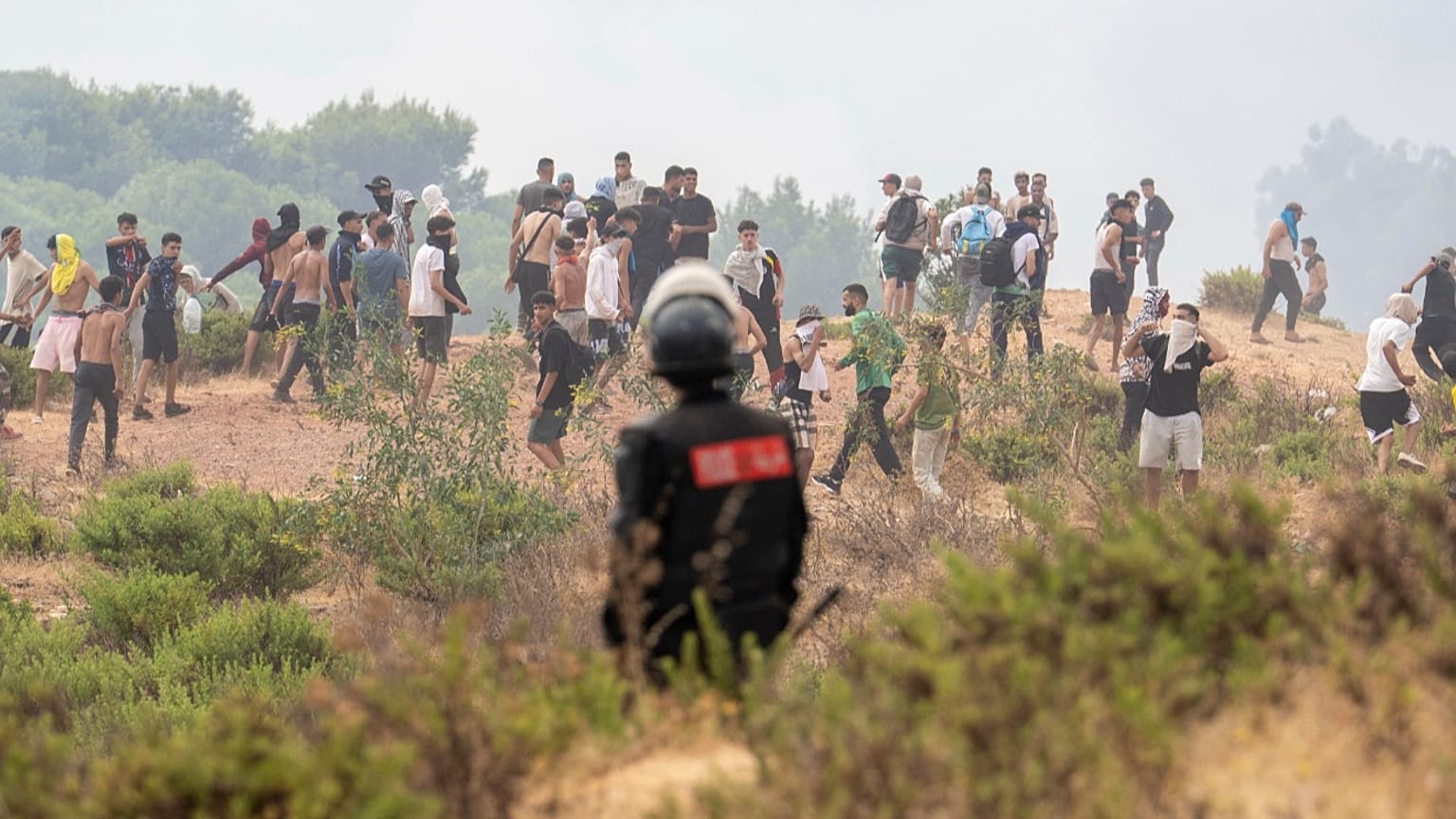
The massive migrant influx that began on Thursday could be the largest irregular crossing attempt into the EU in such a short period of time.
Since Thursday, thousands of migrants have crossed from Morocco into the North African Spanish enclave of Ceuta.
The latest estimates by the Spanish government set the number at around 60,000.
If the figures are confirmed, the event would be the largest single surge in irregular arrivals ever recorded on EU territory.
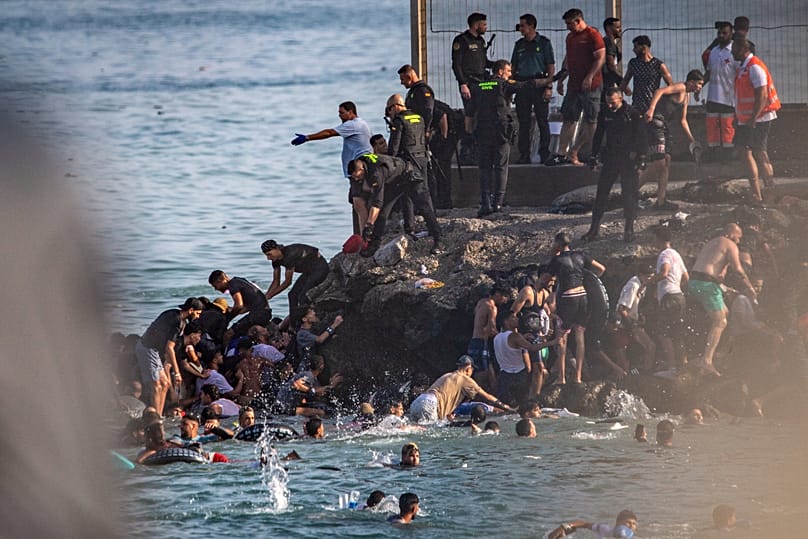
Most migrants came by sea, swimming from the Moroccan border town of Fnideq. They reached several beaches, especially El Tarajal, one of the closest to the border.
At least 18 people have died in the attempt until Friday morning, the Associated Press reports, many of whom in a stampede while trying to cross breakwater fences.
In an address to the nation, Spanish Prime Minister Pedro Sanchez called the event an attack on the country's territorial integrity," which "deserves our most resounding and energetic condemnation."
Sanchez blamed it on migrant trafficking, citing a July Spanish Supreme Court ruling, which the gangs allegedly misinterpreted as a ban on returning migrants who arrive via sea without prior trial.
How does the current Ceuta migrant crisis compare to others?
Ceuta has already experienced similar huge pressure in 2021, when around 10,000 migrants broke into the enclave in just 48 hours, between 17 and 18 May.
At the time, Morocco's reported "border relaxation" was widely interpreted as political retaliation over Spain's decision to allow into the country for medical treatment Brahim Ghali, the leader of Western Sahara's pro-independence front, Polisario.
But over the past decades, Europe witnessed several other spikes in arrivals, often linked to wars and diplomatic rifts, rather than long-term migration trends.
The last major crisis took place in 2015 and 2016, sparked by the war in Syria.
At the time, Hungary had become one of the main countries of transit, with almost 400,000 irregular crossings reported in 2015, mainly from the Western Balkan route. It prompted Budapest to erect a four-meter-high fence on its southern border with Serbia.
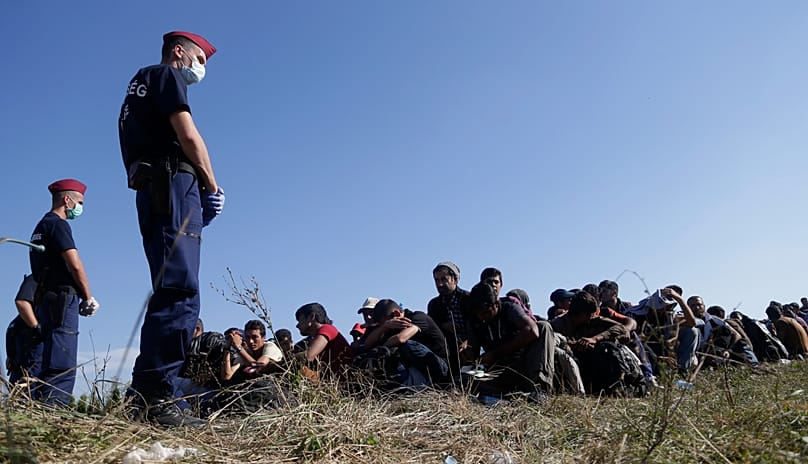
Yet, daily arrivals at the peak of the exodus - from 4,000 to over 8,000 - were nowhere near what Ceuta's been experiencing since Thursday.
During the same period, the Greek island of Lesbos also came under extreme pressure, receiving almost half a million arrivals in the same year, according to the UNHCR.
Greece faced another major challenge in 2020, when Turkey announced it would no longer prevent migrants from reaching Europe, following the killing of 33 Turkish soldiers in Syria's Idlib province during an attack by the Syrian government against rebels.
At the time, Turkey claimed it had opened the border to 80,000 migrants, who then headed towards Greece along the Evros River. The flows lasted for a month, leading to a tense standoff between Athens and Ankara.
Which other European borders are most fragile or under pressure?
Following Russia's full-scale invasion of Ukraine, new flows of illegal migrants into the EU - mainly Poland, Latvia and Lithuania - started coming from Belarus, which was accused of relaxing its border control in the context of a hybrid pro-Russia warfare
In 2025, Frontex, the EU border-control agency, detected nearly 11,000 irregular border crossings. However, figures have been declining since 2024 and remain far below the numbers recorded on the EU's busiest migration routes. Namely, the eastern Mediterranean (51,000 detections in 2025) and the central Mediterranean (roughly 66,000 in 2025), with Italy on the frontline.
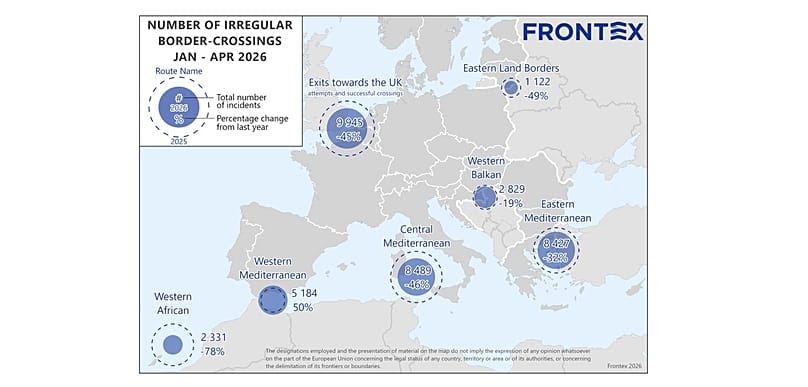
When it comes to pressure on EU borders, Italy often found itself on the frontline.
One of the most striking recent surges occurred in Lampedusa, a small island between Tunisia and Sicily, where 7,000 migrants arrived in just two days in September 2023.
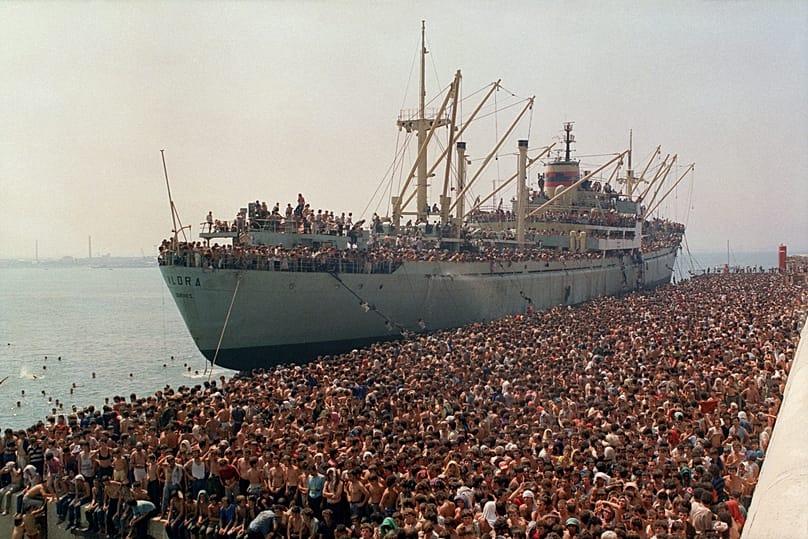
But perhaps what remains most etched in Italy's collective memory dates back to 1991, when a ship reached Bari carrying around 20,000 Albanian refugees, following the collapse of the country's communist regime.

No comments:
Post a Comment