Europe faces a season of deluges as the Mediterranean hits 33°C
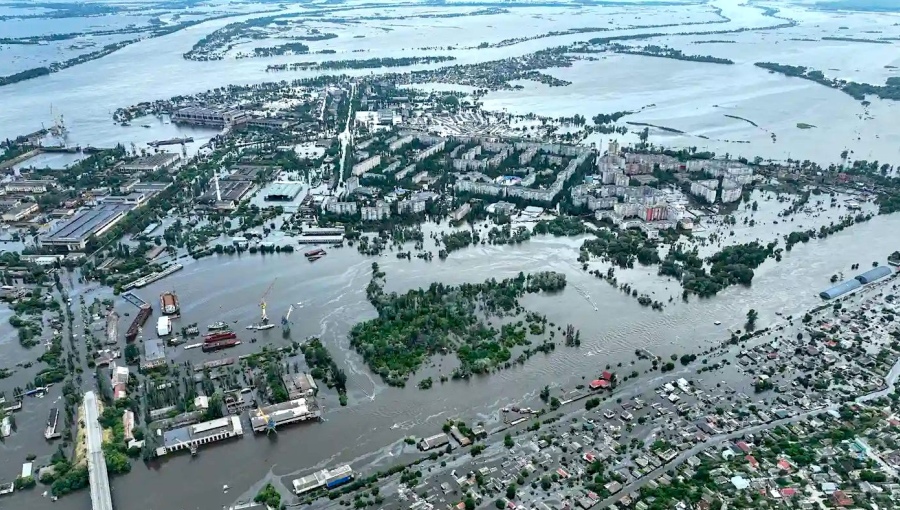
The Mediterranean has spent the summer soaking up heat. That heat will comes back as rain this autumn. A lot of rain.
With the hottest summer on record, the Mediterranean has absorbed record and sea temperatures are literally off the scale – climatologists have been forced to redraw the axes of their charts to accommodate the never-seen-before results.
Heat turns into humidity. When the temperatures begin to fall in the coming months, the humidity turns into rain. Record hot seas in the summer mean record rainfall, flooding and storms in the autumn.
Sea surface temperatures across virtually the whole Mediterranean basin are far above normal, with parts of it running between 28°C and 33°C, according to measurements circulated by meteorologist JJ Gonzalez Aleman of Spain's state weather agency.
“The Mediterranean is burning,” he wrote. “And it is not a metaphor.”
The EU’s meteorological satellite service Copernicus put the anomaly across parts of the sea at as much as 6°C above the long-term average in the first half of this year, and around 82% of the world's oceans went through marine heatwave conditions over the same period.
None of that energy has gone anywhere. It sits in the water in the air until the first autumn cold intrusions arrive to squeeze it out as precipitation. Southern Europe has been on the receiving end of that exchange in successive Septembers and Octobers of what is now an annual disaster season.
On land the summer has read as drought. Record wildfires have swept France, Spain and more recently the Balkans. France reached 43°C in the fifth major heatwave of the year, with hundreds of cities under alert. Hungary has been running its energy system around a Danube at record lows, and nuclear plants there and in Romania have been forced to shut down as river temperatures rose to the point where they can’t cool the reactors.
The heatwaves have set Europe up for flash floods and worse. Baked ground is the worst possible surface for a month of heavy autumnal rain. Water runs off hardened soil instead of sinking into it, gathers in the rivers and turns a downpour into a flash flood.
However, in the short-term some relief is expected that might take the edge off a looming disaster. Most of Europe is due significant rainfall over the coming week, with 50-100 mm possible in the areas most in deficit, according to the forecaster Ventusky. That is welcome for rivers and crops, and softening ground that has been close to zero moisture for months will take some of the edge off what follows.
Russia's Far East is already showing the wet end of the same year. Severe flooding has turned the Amur around Khabarovsk into what residents are calling an inland sea, while southern Europe is still grappling with wildfires.
Seven per cent per degree
Warmer air holds more water – the rule of thumb is 7% more per 1’C of warming, under the Clausius-Clapeyron relation. The atmosphere already carries roughly 10% more water vapour than it did 30 years ago.
Extreme rainfall rises faster than the vapour itself, closer to 15% for each 1°C, because the heaviest downpours pull moisture in from a wide area rather than wringing out only what sits overhead. World Weather Attribution's read is that current warming levels alone would be expected to lift rainfall intensity by around 10%.
Heat also holds the rain back. A warmer atmosphere hangs on to moisture for longer, which stretches the gaps between rainfall and loads more water into each event when it finally breaks.
Death by deluge
The Mediterranean has already shown how deadly the summer's stored heat can be. On September 10 and 11, 2023, Storm Daniel came ashore in eastern Libya after crossing a sea left unusually warm by climate change, and dropped a day of extraordinary rain on the hills above Derna.
Two dams above the city, Abu Mansour and Wadi Derna, gave way in the night and sent a wall of water several metres high through a sleeping town. Neither had been maintained since 2011, despite maintenance contracts worth millions of dollars that were never completed. Subsidence and cracks had been found in them as far back as the early 1990s.
The Libyan Red Crescent put the dead at as high as 11,300 in Derna alone. World Weather Attribution's own count days later was 3,958 confirmed dead in the city, a further 170 elsewhere in Libya, and more than 10,000 people still missing. Divers searched the sea because bodies were being washed back onto the beaches.
“Storm Daniel is yet another lethal reminder of the catastrophic impact that a changing climate can have on our world,” said the UN High Commissioner for Human Rights, Volker Turk.
The attribution study put the rainfall at a one-in-300 to one-in-600 year event and found that something as extreme as Libya's had been made up to 50 times more likely and up to 50% more intense by a climate 1.2C warmer than the pre-industrial one. In Libya, it noted, the magnitude sat far outside anything previously recorded.
The same low-pressure system had already crossed the northern Mediterranean. Between September 4 and 7 it flooded Greece and Bulgaria, killing 17 and four respectively; seven died in Turkey and six in Spain. Greek agriculture was written off for five years or more.
Rebuilding Derna was later costed at $1.8bn. Twelve officials were jailed over the dam collapses in 2024.
A year's rain in a day
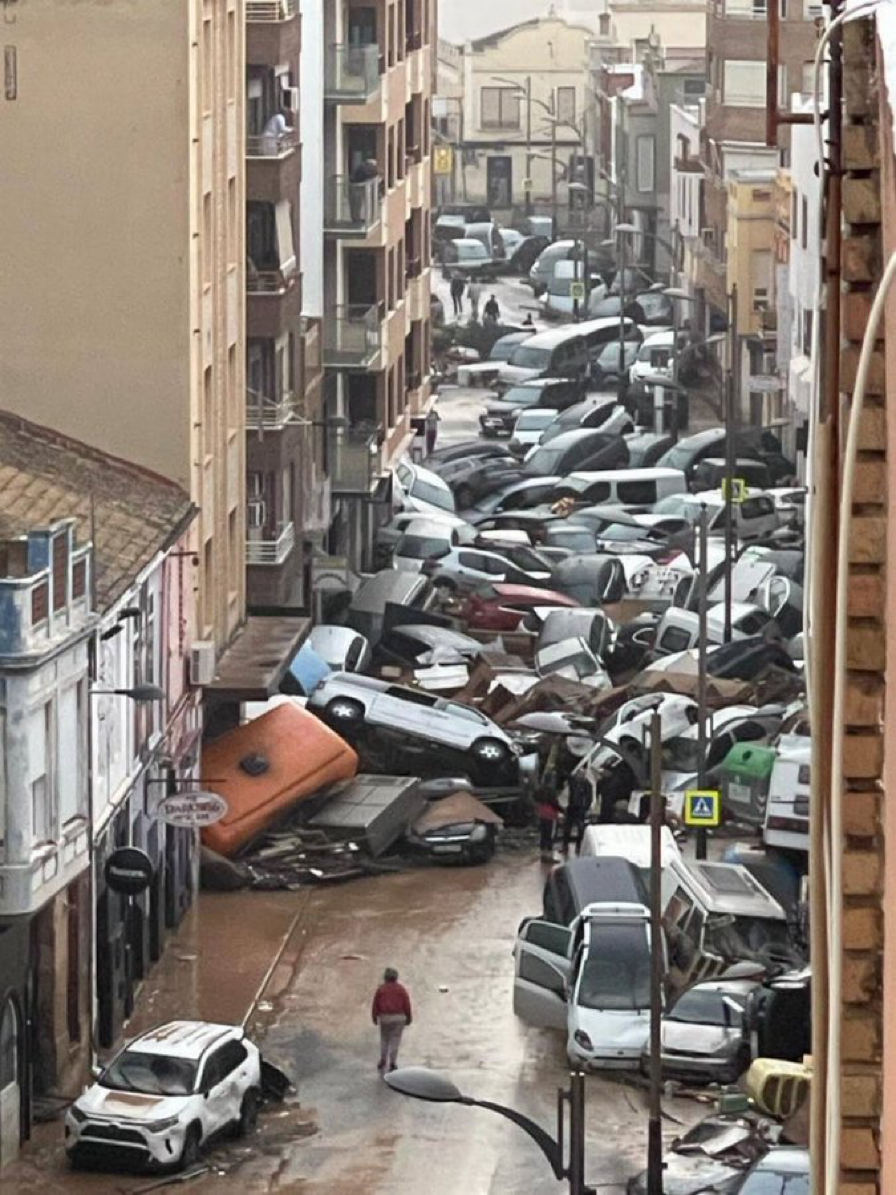
Valencia is the European version of the same event. On October 29, 2024, a year's worth of rain fell on eastern Spain in a single day and more than 230 people died.
The rain alone did not do it. Alerts reached people late; the split between regional and national authority slowed the response; and years of building on flood plain, served by an ageing drainage network, left the water nowhere to go. A city can survive the meteorology and still drown on the administration.
The ingredient Valencia needed - a sea warm enough to load the atmosphere above it - is this year present across the whole basin rather than in one corner of it.
The whole ocean is running hot
The Mediterranean is the warm corner of a warm planet rather than an outlier. July 2026 tied July 2024 as the hottest month in 176 years of record-keeping, at 1.18C above the twentieth-century average on the US National Oceanic and Atmospheric Administration's reckoning and 1.47C above pre-industrial on the Copernicus and World Meteorological Organisation numbers.
Sea surface temperatures set their own July record, running 1.02C above average - the first July past that mark - with the daily reading for the 60S-60N band closing the month at 21.05C. The Persian Gulf hit a record 36C while Iran sweltered near 50C.
Close to 40% of the world's ocean area was in a marine heatwave in June, with the hottest patches in the Mediterranean and the Pacific more than 10C above normal. The oceans absorb more than 90% of the excess heat trapped by burning fossil fuels, which is why their temperature is the cleanest single measure of how far the warming has run.
“Current conditions could indicate the beginning of a new phase, leading, once more, to uncharted territory,” said Carlo Buontempo, director of the Copernicus Climate Change Service.
The Pacific is louder
The biggest signal of the year is not in the Mediterranean at all. A super El Nino arrived early and is still strengthening. Temperatures in the benchmark Nino 3.4 region of the central Pacific are already 1.8C above average and closing on the 2C mark that defines a “super” event, and NOAA puts near-certain odds on it lasting into February 2027.
Nine of ten forecast models describe a strong-to-historic event. NOAA's Climate Prediction Center puts the chance of it reaching “very strong” by the November-January peak at around 63% - the top tier of a scale reached by only a handful of events since the 1950s.
El Nino is the warm phase of a natural Pacific cycle that recurs every two to seven years and normally emerges during the northern autumn. What makes this one different is the surface it is landing on: a record-warm global ocean, with the natural cycle stacked on top of the long-term trend rather than fluctuating around a stable baseline.
Its fingerprints show up in rainfall as much as in heat. El Nino years typically bring heavier rain to California and South America and drier conditions to Australia and Southeast Asia. Hurricanes near the United States tend to be suppressed, while cyclones elsewhere come in stronger and wetter.
The food bill
Capital Economics counts three channels of disruption from an extreme El Nino year: food price inflation, lost power generation where hydro reservoirs run dry, and logistics broken up by extreme weather.
“An El Nino in the second half of the year - as seems increasingly likely - would add to the upside pressures on food and energy prices,” wrote William Jackson, the firm's chief emerging markets economist. “The macroeconomic effects would be largest in emerging markets, particularly those most sensitive to higher food prices, including India and parts of Africa, as well as those where power generation might be curtailed such as Colombia.”
Food can account for 30% or more of the consumer price basket and over a quarter of GDP in parts of South Asia and Sub-Saharan Africa, which is where a bad harvest turns into a political problem fastest.
Soft commodities move first. Fitch Solutions expects Cote d'Ivoire's cocoa crop to come in at 1.7mn tonnes in the 2026/27 season, down 17.5% year on year, with Ghana flat at 670,000 tonnes. Smallholders dominate both, with little irrigation and no capacity to absorb an input shock.
Staples are better insulated. Wheat and corn are grown across enough geographies that a bad year in one is usually covered by another. The concentrated markets have no such cushion - cocoa, coffee, sugar and palm oil all moved sharply during the 2023-24 cycle - and neither does copper, if heavy rain interrupts mining in Chile and Peru.
Europe has spent this summer managing the drought: reservoirs down, reactors off, rivers too low to cool anything. The heat that caused it is still sitting in the sea. It has to come out somewhere, and the only thing not yet settled is which coastline is standing there when it does.
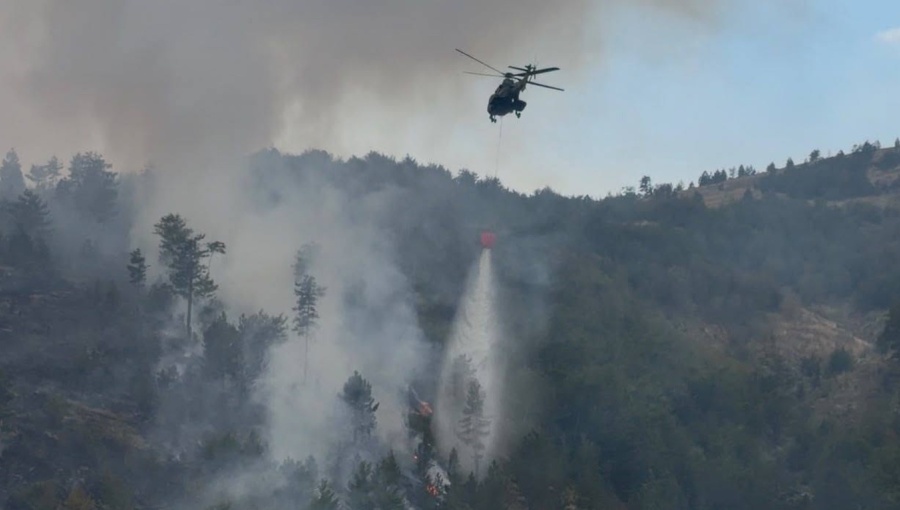
Europe has lost 606,327 hectares to wildfire so far this year, about two and a half times the 20-year average for this point in the year, according to the European Forest Fire Information System's own count, as drought and record heat intensify pressure on agriculture, energy systems and water supplies across the continent. Southeast Europe is at the sharp end of the crisis, with firefighters battling active blazes in counties across the region.
The fires are the most visible sign of a wider problem. Rivers are at exceptionally low levels, hydropower output is vulnerable, nuclear plants are facing constraints on cooling water and farmers are heading into harvests after a summer of heat and drought.
In just he last few days, Croatian firefighters have battled blazes that threatened the coastal town of Omiš as well as spreading across the Pelješac peninsula. The fires resulted in one death, at least 36 injuries and the evacuations of around 1,000 residents and tourists, according to government statements.
Croatia also sent firefighting helicopters to neighbouring Bosnia & Herzegovina, where a fire on Mount Risovac in the municipality of Bosansko Grahovo created a front of almost 15 km. Difficult terrain, a lack of forest roads, strong winds and thick smoke hampered efforts to contain the fire, just one of several wildfires across the country.
Albania's National Civil Protection Agency recorded 25 fires in the 24 hours to August 19. About 311 hectares had been affected. Around 350 firefighters and 26 vehicles were deployed, supported by 140 armed forces personnel, three helicopters and two Air Tractors.
In North Macedonia, a fire near Caniste in the Prilep area was moving towards Kruzevica on August 19, with about 30 volunteers working to slow its advance. Stojance Angelov, head of the Directorate for Protection and Rescue, said the length of the fire front meant it could not realistically be extinguished quickly.
The scale of this year's fire season puts the individual emergencies into a wider European context.
By August 18, 606,327 hectares had burned in 1,736 fires across Europe, according to the European Forest Fire Information System. The 2006-2025 average for the same date was 243,189 hectares.
That makes 2026 the second-worst year on record, behind 2025, when 957,510 hectares had burned. The two worst fire seasons in the record have therefore come consecutively.
Water under pressure
Extremely low water levels on the Danube have affected power generation and transport along the length of the river in Central and Southeast Europe.
Low water levels have reduced the amount of cargo that barges can carry and affected irrigation intakes along the river basin. The Danube is also an important source of cooling water for power plants, meaning low levels can create direct risks for electricity generation.
Reactors in Hungary and Romania have already faced interruptions linked to the drought, while Hungary launched an emergency water-control project to maintain sufficient flows for the Paks nuclear power plant.
The problem is also acute for countries that rely heavily on hydropower. Albania's electricity system has traditionally benefited from abundant hydropower resources, helping to shield the economy from external energy shocks. But the same lack of rainfall that is worsening fire conditions is putting pressure on reservoirs and future generation.
The retreating waters have also exposed remnants of the past, including scuttled German warships near Prahovo in Serbia, the wreck of Budapest's Franz Joseph bridge, the foundations of a Roman crossing near Gigen in Bulgaria and Ice Age mammoth bones near Ruse.
Economic cost rises
Scientists say the conditions are consistent with a broader shift in Europe's climate. The IPCC has Europe's heat map turning red as heatwaves become annual rather than exceptional, and the continent is warming faster than any other. This is the pattern our own disaster season coverage has been mapping since 2022.
Allianz Trade estimates that cumulative GDP losses in the most exposed European economies could reach 5-7% by 2030. It estimates losses of $240bn for France, $147bn for Italy, $131bn for Germany and $120bn for Spain.
Labour productivity falls by about 3% for every additional degree above 30 degrees Celsius, while energy demand rises by about 1.2%, according to the analysis. That creates a damaging combination for businesses: workers are less productive as temperatures rise while demand for cooling increases.
European governments have increasingly recognised the need for climate adaptation. Many countries have adaptation strategies, yet governments often rely on emergency spending after disasters rather than investing sufficiently in measures designed to prevent or limit damage. That is a poor fit for a region where cooling is becoming existential rather than a comfort, and where heat mortality is already climbing. For Southeast Europe, where governments have already been increasing disaster-response allocations, the challenge is particularly acute.
Food prices next
Agriculture is one of the main channels through which drought and extreme heat can spread into the wider economy. European harvests have been affected by the exceptionally hot summer, raising concerns about yields and commodity prices.
Capital Economics expects higher global agricultural prices to begin pushing headline inflation higher again in Central and Eastern Europe in the coming months, reversing some of the food-price declines that have supported household purchasing power.
Input costs are also a concern. Fertiliser prices have risen following the new Iran war, adding another source of pressure for farmers.
The impact of climate extremes is not new to the region. In 2023, heatwaves followed by severe storms damaged maize, sunflower and fruit crops across Serbia, Romania and Bulgaria, after drought had already reduced yields. The sequence of drought, fire, storms and crop losses is becoming less of an exceptional agricultural shock and more of a recurring pattern.
The deterioration can be seen by comparing recent summers. In 2022, firefighters battled wildfires across Southeast Europe as a heatwave moved east, while Albania's first major fire of that year burned for days on Sazan Island.
In 2026 Hungary recorded its hottest day ever, Europe's June heatwave was the most severe on record, and a Super El Nino arrived early.
The result is a growing chain of interconnected risks. Wildfires consume forests and threaten homes and infrastructure. Drought reduces river flows, restricts transport and irrigation and can threaten power generation. Heat reduces labour productivity while increasing demand for electricity. Poor harvests raise food prices, while farmers face higher input costs.
The immediate task remains putting out the fires. The longer-term challenge is adapting economies, infrastructure and agriculture to conditions that increasingly look less like temporary emergencies and more like the operating environment of the future.
Marmolada, shrinking ice and weaker permafrost: 'Dolomites under strain'
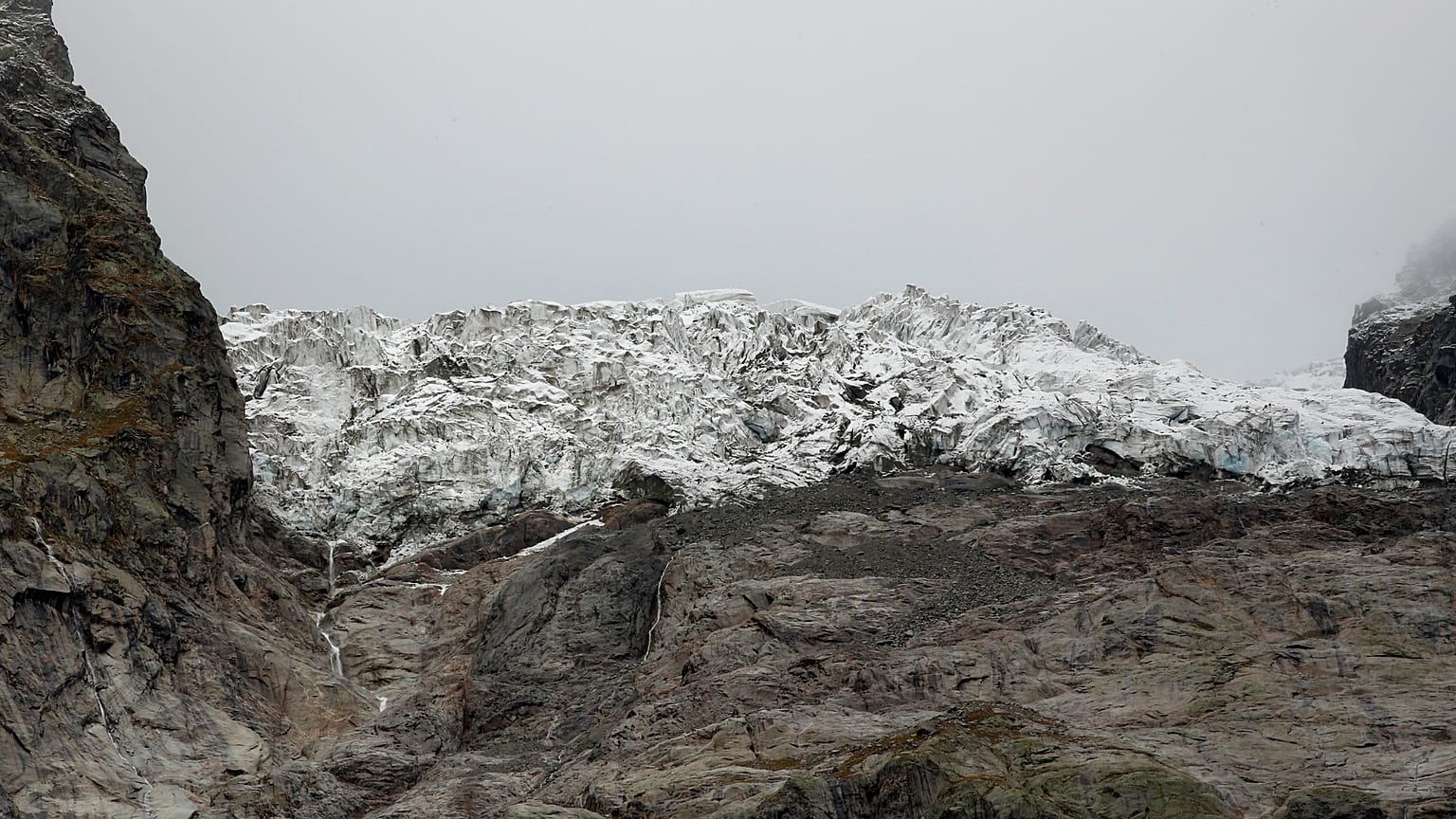
Marmolada glacier in retreat, permafrost deteriorating and high-altitude water dwindling: Legambiente warns of a crisis in the Venetian Dolomites
Marmolada is losing ice, the mountains are becoming more unstable and water at high altitude is no longer a given. That is the picture painted by Legambiente Veneto for the seventh edition of the Glacier Caravan, the international campaign that sets off from France and once again shines a spotlight on the ever faster transformation of the Alps.
Climate change in the Dolomites is no longer just a matter of landscape. What is worrying are the knock-on effects: glacier retreat, degradation of permafrost, increased slope instability and shrinking water reserves available in summer.
Marmolada, an increasingly fragile glacier
Marmolada, together with Adamello and Mont Blanc, is for Legambiente one of the emblematic cases of the fragility of the Alpine arc. Driven by the heatwaves of recent weeks, the glacier continues to lose mass.
The ice now appears grey and deeply scored by meltwater streams, while its perimeter keeps shrinking. An image that starkly illustrates a transformation which, year after year, is changing the face of the mountains.
Climate data help to sketch a particularly critical picture. In Veneto, in June 2026, temperatures were more than 3 degrees above the 1991-2020 average. In July, the heat was exceptional especially at altitude, with the freezing level rising above 4,000 metres.
Permafrost is thawing and slopes are becoming more unstable
It is not only the loss of ice that is cause for concern. Warming at high elevations is also affecting permafrost, the ground that stays frozen for very long periods and helps hold the slopes together.
On Piz Boè, according to the Arpav report updated to 31 July, the active layer has exceeded 7.4 metres in depth. The figure does not directly describe conditions in the Dolomites of Belluno, but for Legambiente it is an important signal of a phenomenon that should be monitored far more widely.
The association is therefore calling for monitoring to be extended to the Pelmo, Antelao, Sorapiss, Civetta and Tofane massifs, especially in the light of recent rockfalls recorded on Pelmo's north-west face.
According to the figures cited by Legambiente, the province of Belluno has to contend every year with 150-200 collapses and landslides. A number that gives a sense of the pressure the slopes are under.
Water is part of the problem too
The glacier crisis does not affect only the mountains themselves. Retreating ice is also likely to impact water availability during the summer months, affecting aquifers and reservoirs.
Alpine huts are feeling the effects too. High-altitude water, Legambiente explains, can no longer be taken for granted. This is why the province of Belluno and CAI Veneto have launched a specific protocol to tackle the issue of water supply in mountain refuges.
It is one of the less visible but more concrete effects of the changing Alpine climate: the mountain is changing, and with it the conditions are changing for those who live there, visit it and work there.
"The Dolomites are not just a postcard backdrop"
In the face of this scenario, Legambiente Veneto is calling on the Veneto regional authorities to speed up approval of the Regional Strategy for Adaptation to Climate Change, launched in 2021 but still awaiting final adoption.
"The Veneto Dolomites are not just a postcard backdrop, but a living system that is changing faster than public planning can keep up with," stresses Fabio Tullio, spokesperson for the Glacier Caravan in Veneto.
The campaign's message is therefore clear: it is not enough to watch the ice disappear. Slopes need to be monitored, the impact on water availability anticipated and the mountains prepared to cope with a climate that is already changing.
In this sense, Marmolada is far more than a retreating glacier: it is one of the clearest signs of how fast the Alpine environment is changing.

No comments:
Post a Comment