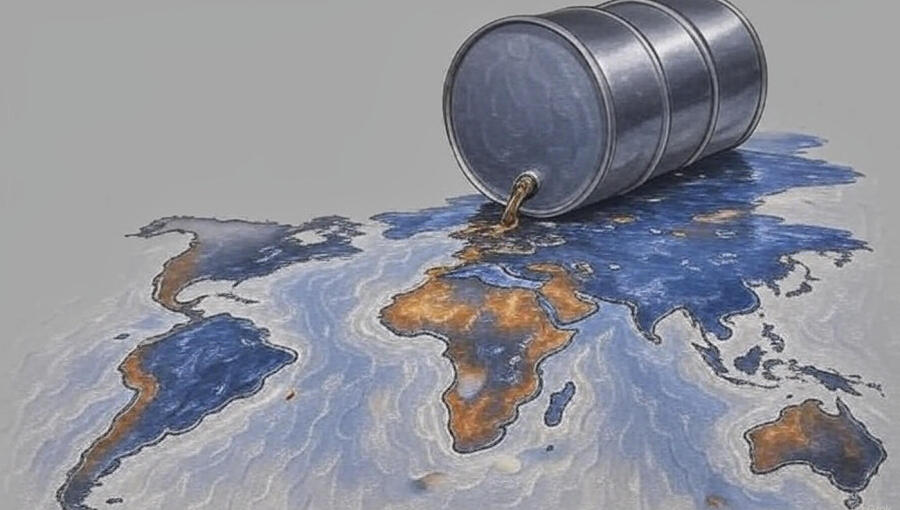
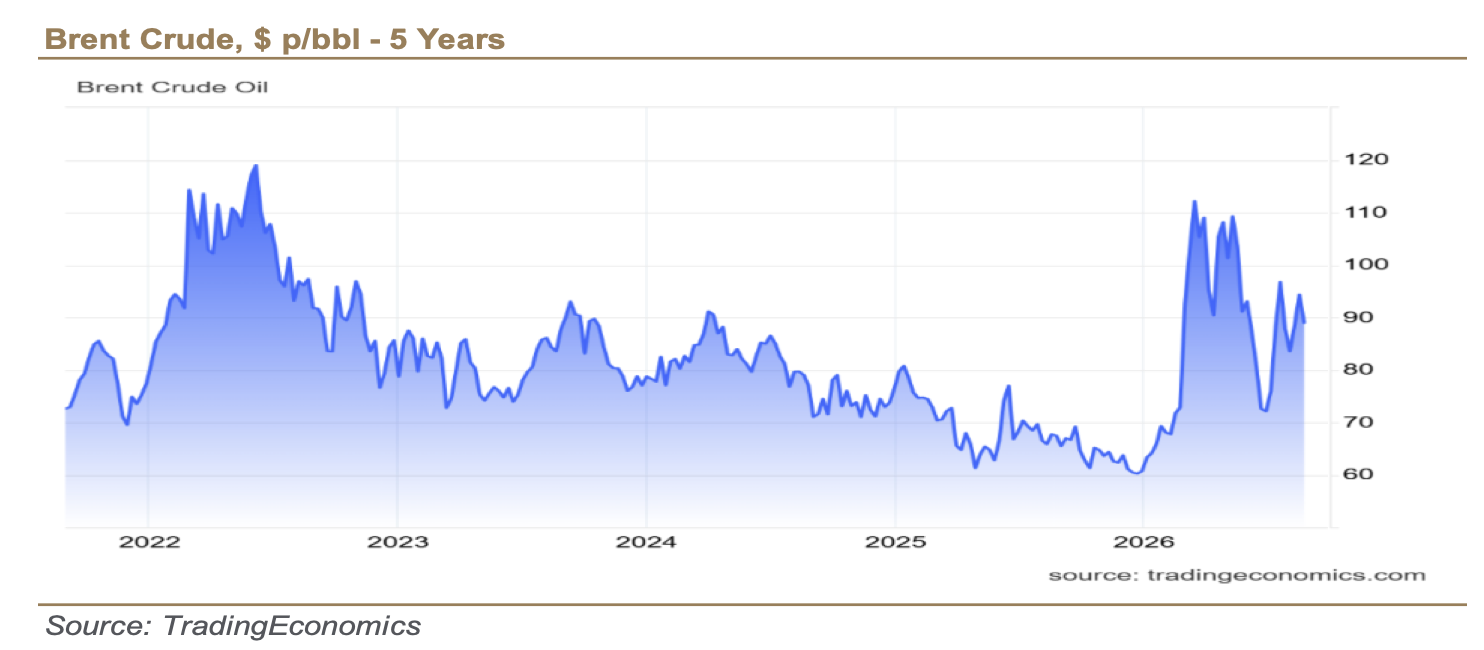
The price of oil is expected to rise steadily as “reserves dipping” is close to ending. Many traders and oil companies say that the oil price should be higher and expect it to rise in the next couple of months. The reason why the price of oil has not been higher in spring and summer is because both the U.S. and China have been drawing significant supply from their respective oil reserves. The reason to assume a higher price in the coming months is that this drawdown must end and against a backdrop of a still (mostly) blocked Strait of Hormuz.
The IEA chief recently warned that oil markets are entering a "red zone". He cited the continued blockage in the Strait and the fact that previously large global inventories have been being steadily depleted. According to the IEA, roughly 2.5-3 mln barrels per day of oil from emergency reserves are currently being supplied to the global market.
The IEA now sees global supply falling by 4.3 mbpd this year to around 102 mbpd, with growth in supply from the Americas only partly covering losses in the Middle East and Russia. The third-quarter deficit has swollen to 1.8 mbpd, more than double the roughly 800,000 bpd gap the agency saw only weeks ago.
The U.S. Energy Information Administration (EIA) agrees and is predicting a major deficit in oil supply for the full year. The EIA expects global oil and liquids supply to fall by 7.08 mln barrels per day in 2026, while demand is forecast to decline by a smaller 1.09 mbpd, resulting in a deep supply deficit as disruption in the Middle East continues to hit energy markets.
The EIA raised its 2026 Brent price (average) forecast to US$95.39 per barrel while keeping its 2027 forecast unchanged at US$79.39 per barrel. Its forecast for WTI crude (average) was raised to US$88.32 per barrel for 2026, while the 2027 outlook remained unchanged at US$74.39 per barrel.
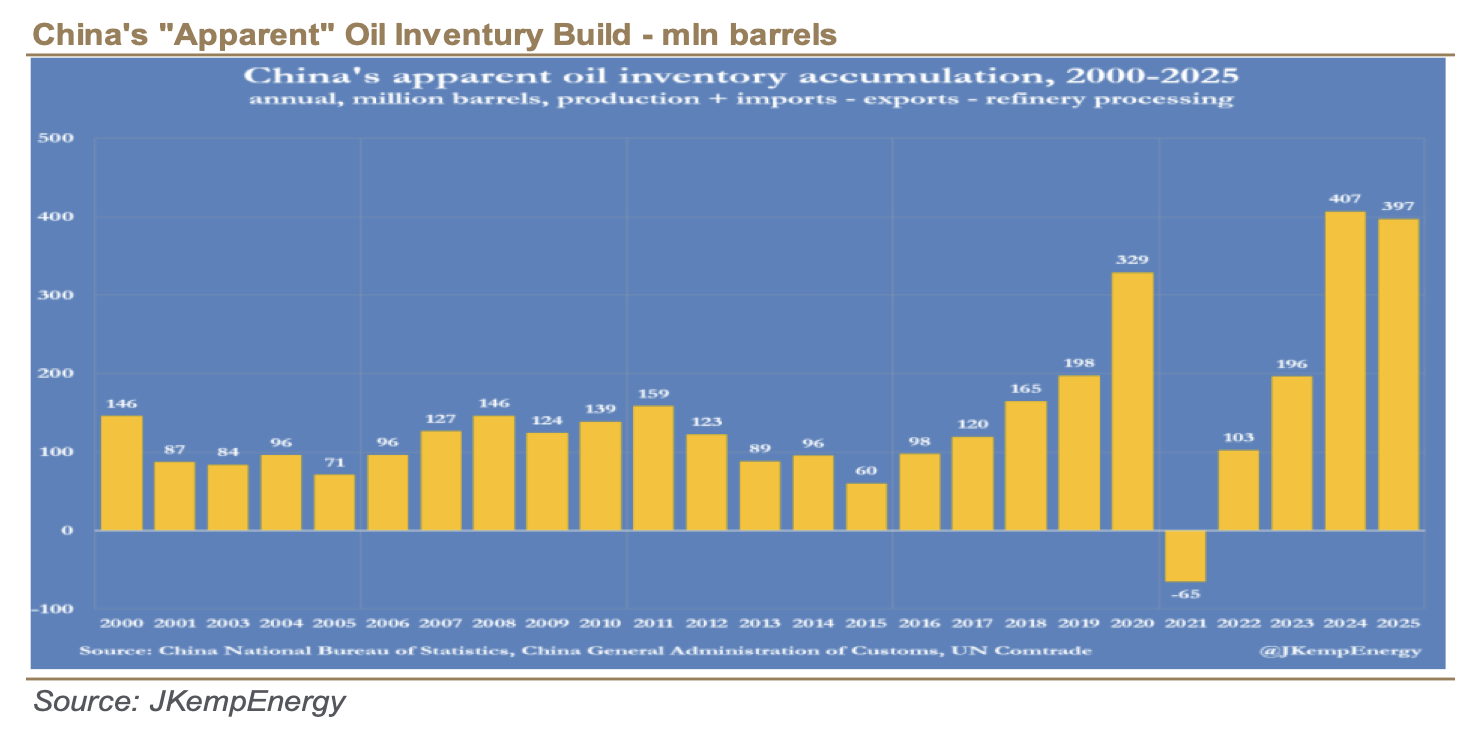
China reduced purchases and used reserves. Chinese apparent oil demand fell about 20% YoY in July. Crude imports were down close to 30% in 2Q26. Rather than pay up and risk pushing the oil price even higher, China used its 1.2 bln barrels of reserves (roughly four months of cover). It is unclear how much China’s reserves have fallen this year.
The U.S. is in a more difficult position. Strategic oil inventories in the U.S. have reached a 40-year low, and experts warn their continued depletion could damage the underground caverns where the reserves are stored. In mid-August, the Strategic Petroleum Reserve (SPR) fell below 300 mln barrels for the first time since the 1980s, when the reserves were being filled, according to the Department of Energy. That pool is expected to drain further to 243 mln barrels as the U.S. releases 172 mln barrels to manage severe supply disruptions and due to the Iran war.
U.S. reserves are kept in 60 salt caverns across two sites in Texas and two sites in Louisiana, with each thousands of feet underground. They have a total storage capacity of 714 mln barrels. But geologists are warning that, as oil is drained from these reserves, the integrity of the caverns may be at risk.
It is clear that most traders and governments thought that the Iran war and the closure of, or severe restrictions of traffic flow via the Strait of Hormuz, would be relatively short lived. That was, after all, the very clear message from the White House. Against that backdrop, no country wanted to chase the price of oil higher and, where they could, instead shifted to drawing down strategic reserves to supplement imports. But the reality of the situation is now very clear – the Iran War is not about to end anytime soon, and oil (and LNG) flows from the Gulf will remain severely restricted for many more months.
Countries, such as the U.S., China and others, now must end so-called Reserves Dipping and return to the market, not just with normal demand but with increased demand to allow them start rebuilding depleted strategic reserves

No comments:
Post a Comment