Côte d’Ivoire reclaims lead in African mineral exploration amid downturn in global miners’ exploration budgets
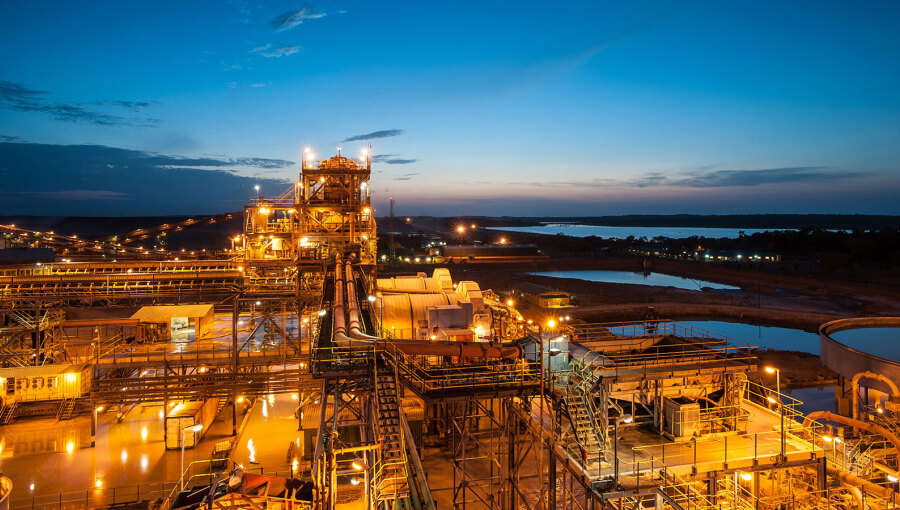
While global mining companies have cut exploration budgets for three consecutive years, Côte d’Ivoire has moved in the opposite direction. Allocations to the West African country rose to $186mn in 2025, the strongest growth in the region, restoring its position as Africa’s most explored country, according to S&P Global Market Intelligence.
The continent attracted $1.44bn in planned exploration expenditure, up 11%, even as worldwide allocations fell 0.6% to $12.40bn, S&P Global’s World Exploration Trends 2026 report showed. The Democratic Republic of Congo ranked second in Africa.
These figures cover companies’ budgets for identifying and assessing mineral deposits, rather than money necessarily spent or invested in constructing mines. Côte d’Ivoire captured nearly 13% of the African total.
Gold has been central to the industry’s resilience. Global allocations for the precious metal rose 11% to $6.15bn as higher prices strengthened producers’ cash flows and improved the economics of prospective deposits. Gold accounted for almost half of worldwide exploration budgets.
Behind the exploration surge is an expanding gold industry. Côte d’Ivoire produced 59.33 tonnes in 2025, up from 59.12 tonnes in 2024, and expects output to reach 62 tonnes in 2026 as existing mines expand, Reuters reported in June, citing the country's director general of mines, Seydou Coulibaly. The country had 14 operating gold mines, with new projects expected to lift the total to 17 by 2029.
See IntelliNews: Mali’s gold production plunges as Ivory Coast eyes record output
International miners are expanding exploration around producing mines and advancing discoveries towards development. Endeavour Mining (LSE: EDV; TSX: EDV) operates Ity and Lafigué and is developing Assafou, while Perseus Mining (ASX: PRU; TSX: PRU) runs Yaouré and Sissingué. Allied Gold (TSX: AAUC; NYSE: AAUC), which secured a $295mn strategic investment from Zijin Gold International after their proposed takeover was terminated in July, is exploring around Bonikro and Agbaou.
See IntelliNews: Chinese mining giant Zijin wins Canadian approval for $4bn takeover of Africa-focused Allied Gold
Elsewhere, Montage Gold (TSX: MAU; OTCQX: MAUTF) is exploring additional properties alongside development of Koné, while Resolute Mining (ASX: RSG; LSE: RSG) approved construction of the $516mn Doropo project in March. Doropo and Endeavour’s Assafou received mining permits in February. Doropo is forecast to produce about 170,000 ounces of gold a year over 13 years, while Assafou’s definitive feasibility study, published in April, projects an average of 257,000 ounces a year over a 16-year mine life, Ecofin Agency reported.
See IntelliNews: Barrick exits Côte d’Ivoire with $305mn Tongon gold mine sale as Atlantic Group expands mining portfolio
These projects illustrate Côte d’Ivoire’s expanding mining pipeline, although construction expenditure and projected output are not included in S&P Global’s exploration-budget figures.
Geology is only part of the attraction. In a region where insecurity and shifting mining policies have complicated investment decisions, Côte d’Ivoire’s relative stability has become a selling point.
Tiffany Wognaih of consulting firm J.S. Held told Reuters in October 2025 that the approach of the presidential election had brought a “slight pause in deal scoping ahead of the vote, but no capital flight or repricing of risk”. “Ivory Coast remains a stable anchor in Francophone West Africa,” she said.
David Whittle, chief operating officer for West Africa at Fortuna Mining (TSX: FVI; NYSE: FSM), contrasted security conditions at the company’s operations in an April 2026 interview with Canadian Mining Journal. “Côte d’Ivoire, by contrast, is considerably more stable,” he said, after describing the heavier security presence required in Burkina Faso.
See IntelliNews: Guns and gold: how two coups reshaped Burkina Faso’s mining sector
Justin Tremain, chief executive of junior miner Turaco Gold, called the country the “best place in the world” to build a gold mine at the Mining Indaba conference in February, Ecofin Agency reported. Seydou Coulibaly, director general of mines and geology, told the same event that more than $3.6bn of mining investment over the past decade reflected political stability, infrastructure and transparent governance.
The government has set its sights higher. “We want to raise the country to the rank of leading gold producer on the African continent within the next ten years,” Mamadou Sangafowa-Coulibaly, minister of mines, petroleum and energy, told Global Business Reports in March. “Over the last two years, we have recorded three discoveries of world class deposits.”
The shift has been noticed next door. “There are Ghanaians who now want to go and set up in Cote d’Ivoire,” Ken Ashigbey, chief executive of the Ghana Chamber of Mines, said in May, according to Citi Newsroom, as the chamber warned that Ghana risked losing its lead in African gold.
That advantage is not unconditional. Abidjan is reviewing its 2014 Mining Code. “The revision of the mining code aims to adapt and improve mining governance,” Sangafowa-Coulibaly said, adding that the process involved the private sector. Whether the revisions preserve the incentives that have attracted exploration companies will depend on their final compliance requirements and the predictability of permitting.
The wider industry is becoming more cautious about where it searches. Exploration around existing mines accounted for a record 45% of global budgets in 2025, while grassroots exploration, the search for new deposits, fell to a record-low 21%, according to S&P Global.
Côte d’Ivoire’s $186mn allocation does not reveal how much is directed towards either category. What it does establish is that, at a time when exploration capital is contracting globally, the country recorded the strongest growth in Africa.

No comments:
Post a Comment