More than half of Ukrainians, 55%, expect the situation in their country to get worse this winter and 71% expect the economy to deteriorate, a Rating Group poll published on October 8 found.
Some 63% of respondents expect the energy sector to get worse over the coming months. Asked about electricity at home, 47% expect supply to be about the same as last winter, 39% expect it to be worse and only 9% expect an improvement. Just 12% think the overall situation will improve, while 25% expect little change.
Few Ukrainians think either side is winning. Some 62% said neither Russia nor Ukraine currently has the upper hand, 26% said Ukraine does and 6% said Russia does. Half agreed that "any peace is more important than any victory", against 41% who said victory matters more than any peace. Rating Group noted that the share putting victory first has risen as Russian strikes have intensified in recent months.
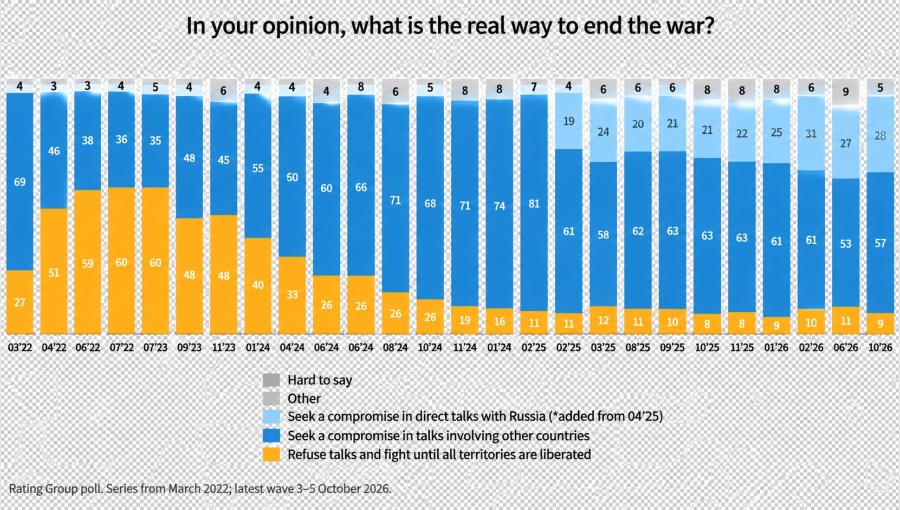
Support for ending the war at the negotiating table is overwhelming. Asked about the realistic way to end the war, 57% backed seeking a compromise in talks involving other countries and 26% a compromise in direct talks with Russia, a combined 83%. Only 9% wanted to refuse talks and fight until all territories are liberated, against 51% in April 2022, according to the pollster's tracking series.
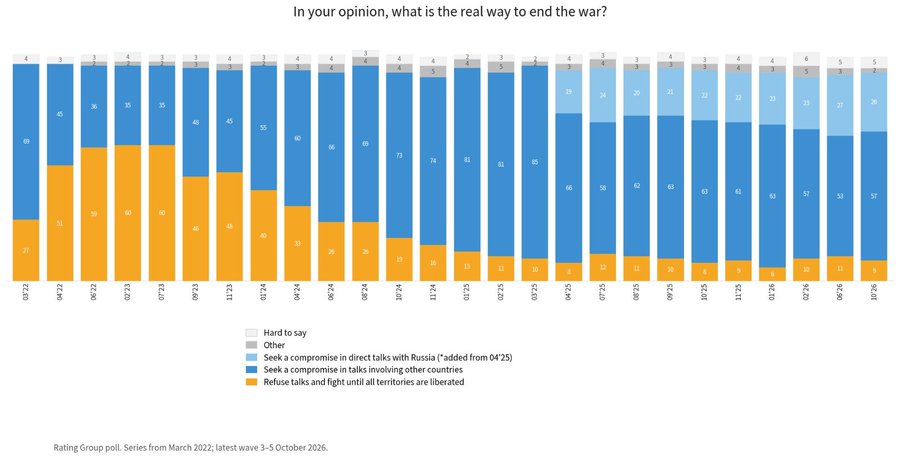
"In your opinion, what is the real way to end the war?" Rating Group tracking series, March 2022 to October 2026. Source: Rating Group
On war aims, 57% support ending hostilities and seeking a compromise through negotiations, 13% favour fighting until Ukraine restores the line of control of February 23, 2022, and 21% want to fight on until Donbas and Crimea are returned.
Territory remains the hardest question. Some 56% would accept territorial concessions to secure a lasting peace, but only if the US and European countries provide real security guarantees, including funding for Ukraine's army and the weapons it needs. A further 35% reject concessions on any terms and 3% would accept them unconditionally. In August 2025 the figures were 59% and 33%. If concessions became a condition for peace, 68% want the decision taken in a nationwide referendum, 17% would leave it to the president and 9% to parliament.
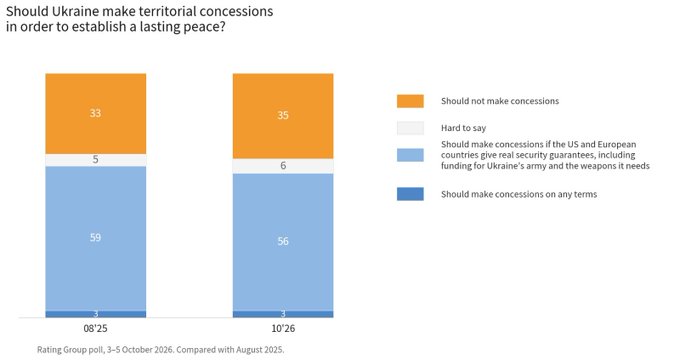
"Should Ukraine make territorial concessions in order to establish a lasting peace?" August 2025 against October 2026. Source: Rating Group
Ukraine’s Operation Vivaldi foils Russia’s plan to encircle the Donbas, ISW analysis shows
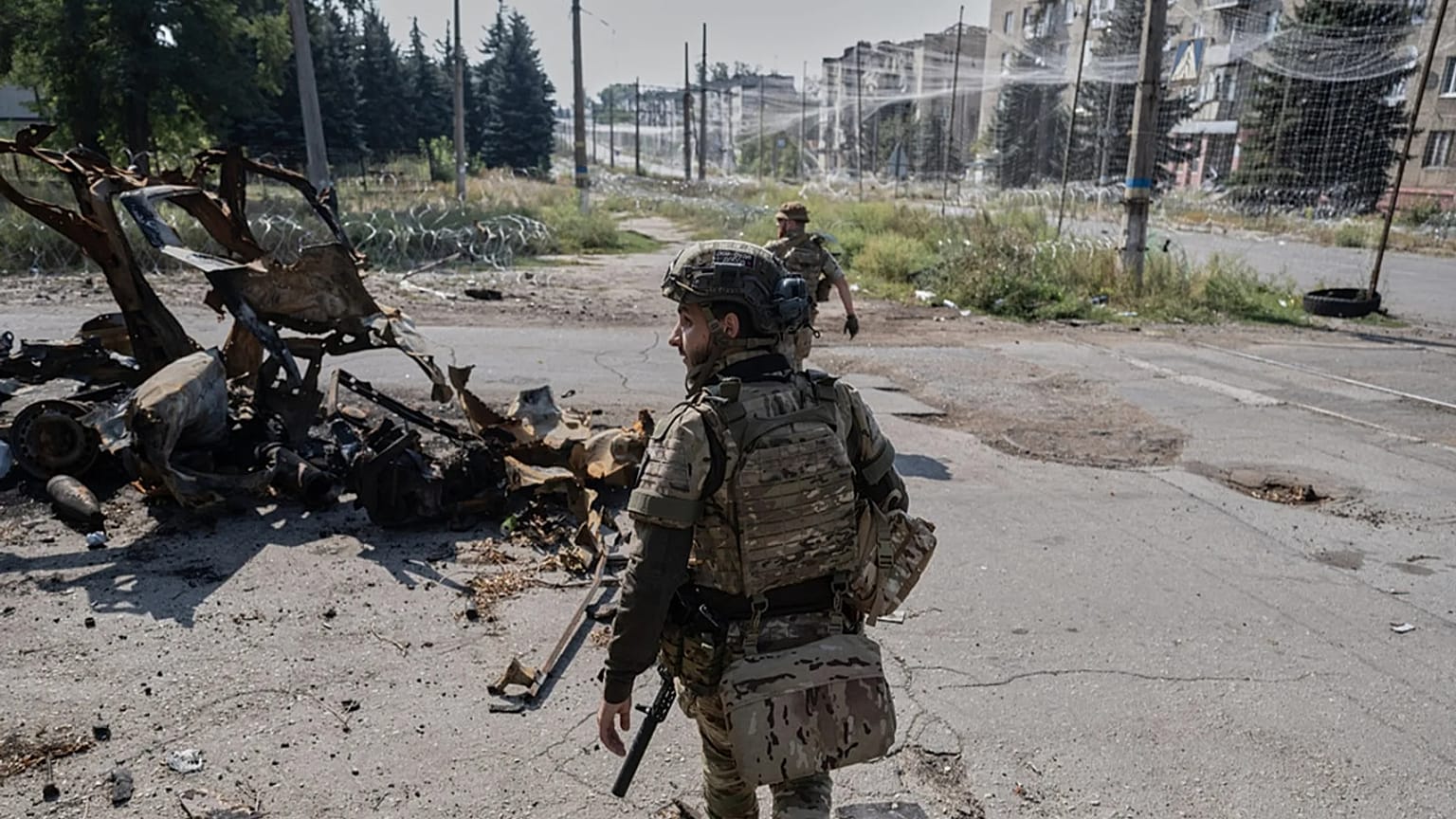
Ukraine’s counter-offensive on the Lyman axis collapsed the northern arm of a Russian pincer movement aimed at surrounding Ukrainian-held Donetsk, liberating up to 176 square kilometres and forcing Russian units onto the defensive, the Washington-based think tank said.
Ukrainian forces have derailed Russia’s plan to encircle and occupy the remaining Ukrainian-controlled territory of the Donetsk region this year, the Washington-based think tank Institute for the Study of War (ISW) concluded in an assessment based primarily on open-source intelligence
The Russian campaign centred on a deep pincer movement targeting what the report calls the “fortress belt” — a defensive and logistical network protecting the Ukrainian-held portion of the Donbas — advancing from Lyman in the north and Dobropillia in the south-west, with both arms intended to link up near Barvinkove in the Kharkiv region.
Completing such an encirclement would have gone a long way towards Moscow’s longstanding objective of occupying all of Donetsk region and would have given the Kremlin something to show Russian society for the costs of the war.
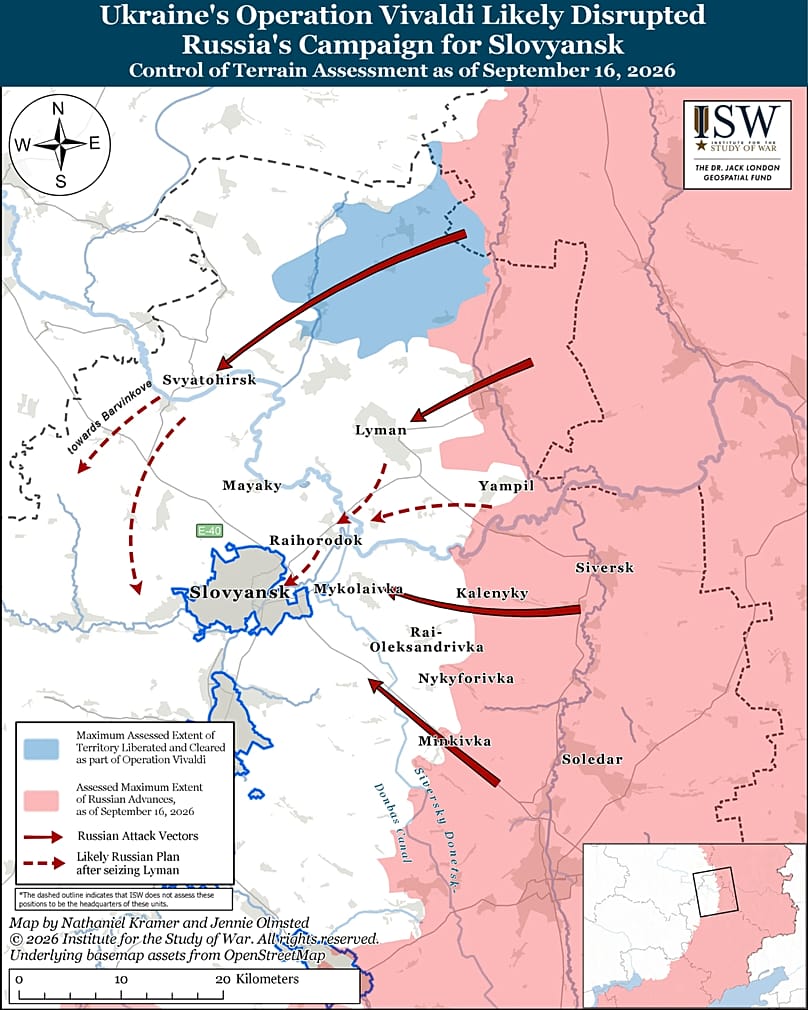
Ukraine’s counter-offensive on the Lyman axis, dubbed Operation Vivaldi, dismantled the northern arm of that pincer.
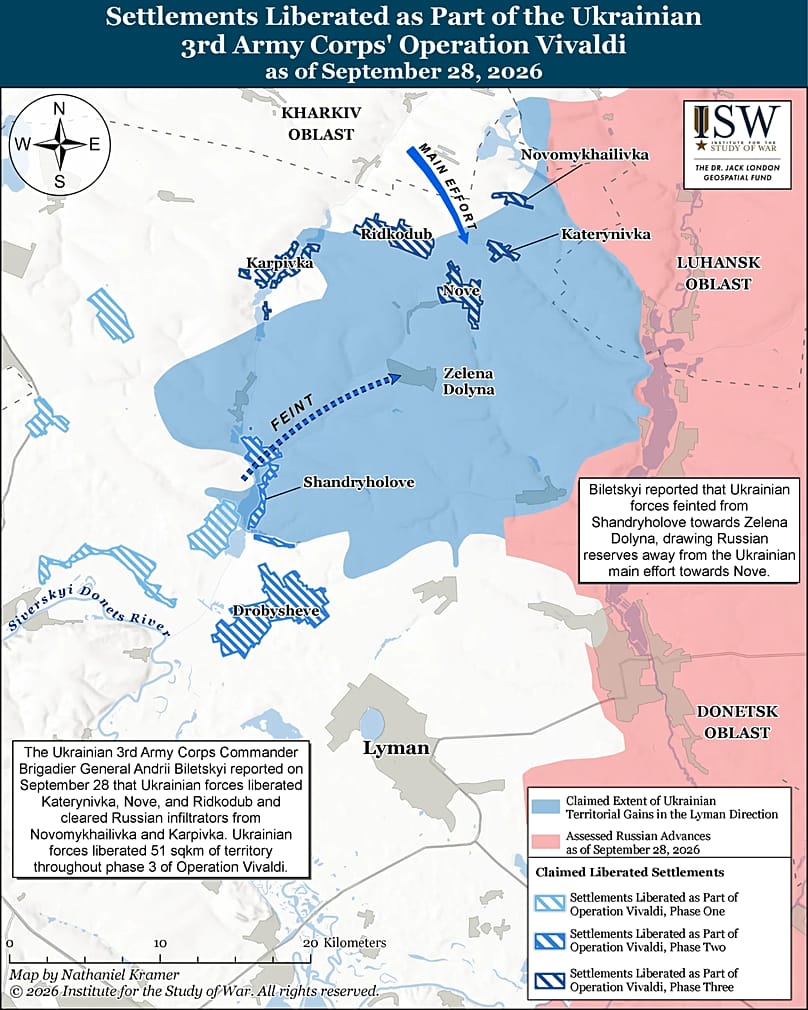
Ukrainian forces advanced along the Ridkodub–Nove–Novomykhailivka line in the north and the Yarova–Drobysheve–Stavky line in the south, collapsing the salient Russia had built to threaten Sloviansk from the north-east and forcing Russian units onto the defensive.
Commander of Ukraine’s 3rd Army Corps Andrii Biletskyi said the first three phases of the operation in mid- to late September liberated 176 square kilometres of territory.
Ukraine's President Volodymyr Zelenskyy put the figure at between 125 and 140 square kilometres as of 3 October, adding that Russian losses had risen sharply over the preceding two to three months.
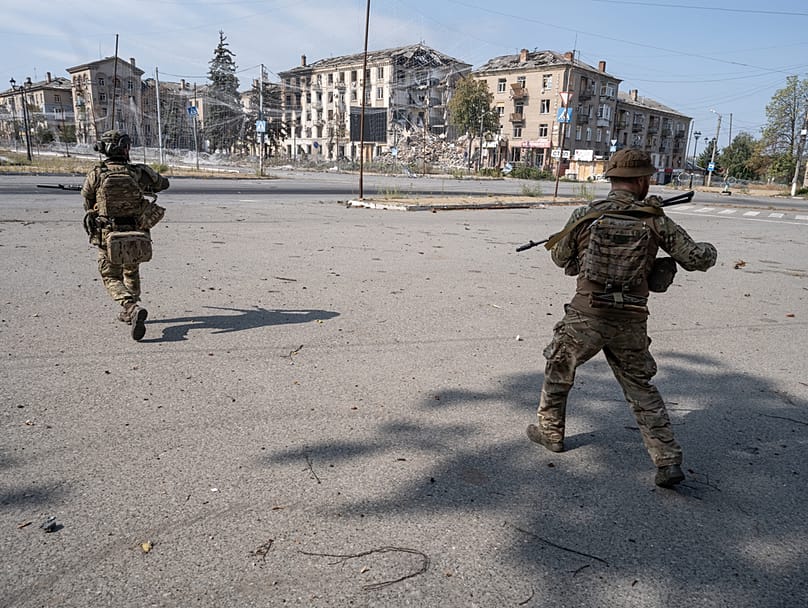
ISW suggested the operation may have been more successful than Kyiv’s official figures reflect.
The defeat of the northern pincer forced Russia to abandon its plans to advance on Sloviansk from the north-east and deprived it of positions intended to threaten northern approaches to the fortress belt.
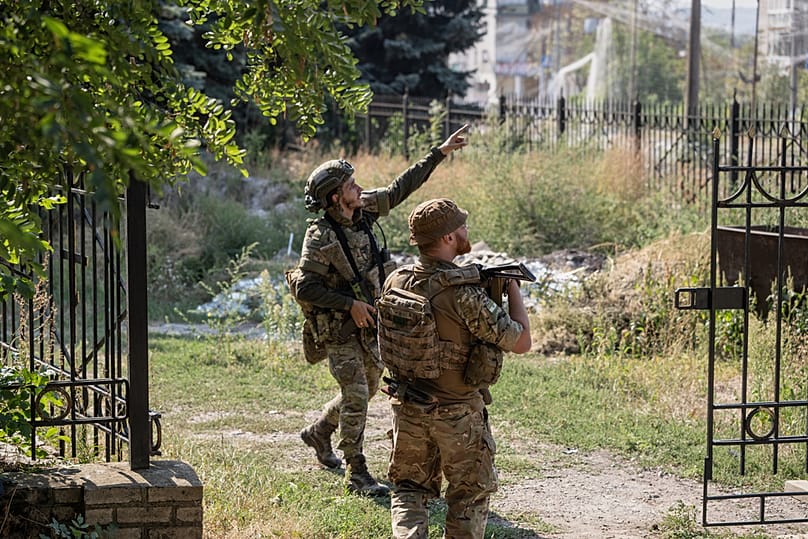
Ukraine’s retained control over the Lyman area also preserved key supply routes. Russian units on other parts of the front may have been redeployed to reinforce the northern sector.
Russia’s south-western advance from the Pokrovsk–Dobropillia area — the surviving arm of the original encirclement — now faces far more ambitious objectives on its own.
ISW regards the collapse of the northern pincer as an operational failure, as Russia has not just lost ground around Lyman but also a key component of the campaign plan for the fortress belt.
Russian forces retain limited gains around Kostyantynivka and east of Sloviansk but have struggled to sustain the pace of advance in both areas.
ISW argued that their reliance on infantry infiltration, drones and bombardment can produce gradual attrition but cannot generate the fast mechanised manoeuvres required to collapse Ukraine’s defences at the scale Moscow needs.
The situation remains fluid, the institute added, and Russian forces will probably adapt over time, but for now, Ukraine appears to have halted the advance.
A further Russian mobilisation and technological adaptation could alter the balance, although neither would necessarily enable a breakthrough.
Putin’s September figures challenged
ISW also challenged claims, widely circulated in pro-government Russian media, that Russian forces occupied further 1,301 square kilometres of Ukrainian territory in September alone, roughly two and a half times the figure reported in previous months.
Based on geolocated photo and video footage, satellite imagery and visually confirmed data, the institute calculated that Russian assault units had in reality been pushed out of at least 80 square kilometres in September.
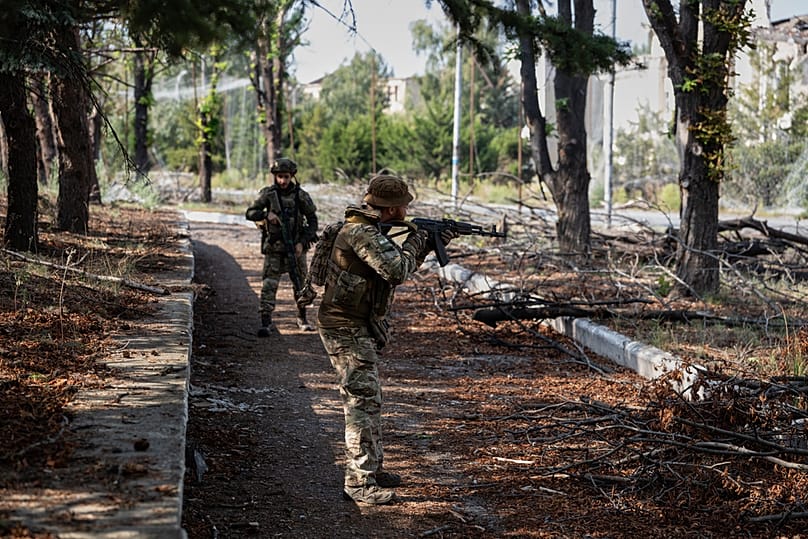
Russia's net retreat in September rose to 175.18 square kilometres, including areas it temporarily penetrated but did not hold.
Putin told the Valdai Club last week that Russia now occupies 89% of Donetsk region. ISW puts the figure of Russian-occupied territory in the Ukrainian region at no more than 81%.
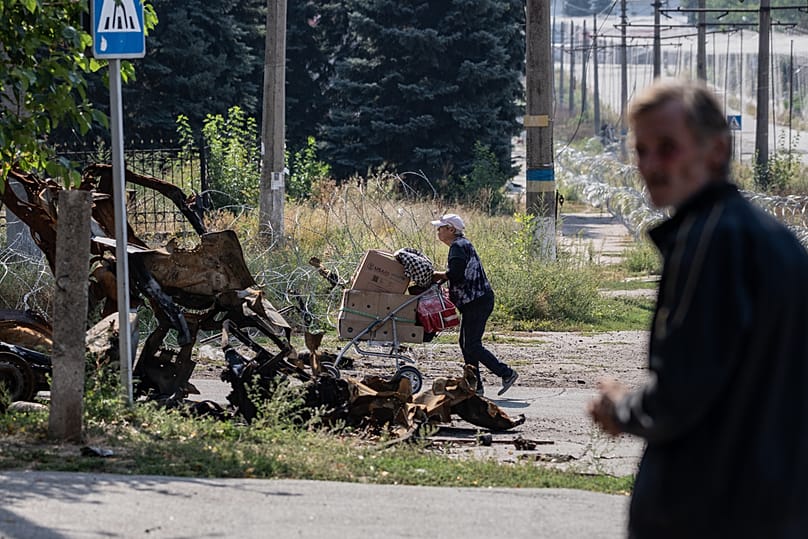
The institute assessed that Putin’s claims of Russian breakthroughs in September were “so far removed from reality that they resemble hallucinations.”
It could not determine whether Putin knows the figures he cites are false or has come to believe the fabricated frontline data he receives, a product of what ISW describes as a deeply embedded culture of dishonesty in the Russian military command.

No comments:
Post a Comment