Friday, November 05, 2021

People Are Sharing The Moment They Realized They Had To Quit Their Job, And It's Incredibly Eye-Opening

Wed, November 3, 2021,

One of the silver linings of the pandemic is that it gave everyone more time on their hands to think and possibly figure out what really makes them happy in life.
For some, that included quitting their jobs to find something else more fulfilling and rewarding.


It was reported that 4.3 million Americans quit their jobs in August — and that's not including the record-high number of people who also gave their two-week notice to their employers in the spring and early summer of this year. It's been called "The Great Resignation."Hxyume / Getty Images/iStockphoto / Via Getty ImagesMore
Hearing these numbers sparked our curiosity, so we turned to the BuzzFeed Community and asked them to explain what prompted them to quit their jobs within the last year or two —and what they are doing now instead. Here are their stories.

1."I have changed jobs twice during the pandemic. The first was being planned before the pandemic started because I was getting no opportunity for career growth, but the second I only stayed in for nine months."


"My boss was a monster and the highest-ranked leader for our market. He consistently berated people for having any responsibility outside of work and did not understand why anyone would be unwilling to work 60–80 hours a week. I switched careers and am now extremely happy and working for a company who puts culture above all else, plus I was able to get a small raise in the process."

jessiem11Ljubaphoto / Getty Images / Via Getty ImagesMore
2."I left my job as a high school math teacher in December 2020. I had been teaching for five years in an inner city school and was already struggling with stress and anxiety."

"When I began teaching over Zoom, I reached my breaking point. I’m sure other teachers can relate to the immense workload we were given with very little resources. It was beyond exhausting.

"The environment in my school had always been toxic, but the pandemic really pushed it over the edge. I now work for a publishing company as a math editor. I use all the same skills I learned while teaching, but I now apply it to designing curriculum instead of teaching it. Leaving teaching was 100% the best decision I’ve ever made. I’m so much happier and healthier now. Not to mention, my benefits are way better."

abat123
3."I worked at a popular grocery chain, Publix, here in Florida for nine years. When the pandemic hit and the customer service industry turned into utter madness — panic buying, rude customers, corporate management’s lack of concern for their associates' safety and well-being (written up and reprimanded for calling out sick) — I made the decision to leave customer service behind. It was the best decision I could have made for myself."


"I now work for a medical cannabis company and I couldn’t be happier or more stress-free. The pandemic may be horrible in many ways, but it did give me the push I needed to get out of a thankless and dead-end career."

lummis7Jeff Greenberg / Education Images/Universal Images Group via Getty Images / Via Getty ImagesMore
4."I was in the healthcare field, not front lines but still coming into contact with patients every day. The amount of abuse we had to take from patients because the new owners of the company didn't think COVID was a big deal or didn't want us to lose patients by telling them to put on a mask was not worth it."

"My company tried to give me a raise to stay. That's when I found out they had been underpaying me the two years I worked for them. No thanks. Now, I work in telecommunications. I get to sit at home and work from a laptop. I will never work with the general public again."

dc5216_52
5."I had been stuck in a hospitality job for years in a very toxic workplace."


"When we shut down for COVID, it was the kick I needed to say ‘I’m never coming back.' I enrolled in school to get my bachelor's in archaeology, and I absolutely love the challenge and the prospect of a more stimulating career (with less asshole customers and colleagues!)."

ashapeckKemal Yildirim / Getty Images / Via Getty ImagesMore
6."I left my job because I had a baby and even though people were working remotely, my company was pretty rigid and wouldn’t work with me to work out a way I could cut back hours or go part-time."

"I left and started my own practice, and have never looked back! Best thing I have ever done."

beedas89
7."I was a preschool teacher. I left after they cut my full-time hours down to only three hours a day."


"I decided to take a leave because I had a 30-minute commute with two kids. I already wasn’t seeing my own kids all day. It just wasn’t worth it anymore. After being home for about four months, I began nannying for two families I knew from work and did so for almost a year. In August, I returned to work as a Montessori school assistant. I’m thrilled to be doing something new and learning a new way to be a teacher."

kdotpopOscar Wong / Getty Images / Via Getty ImagesMore
8."I'm a former nursing home employee in charge of activities. I was thinking about leaving in the spring and summer of 2021, but the deal breaker was finding out a PRN coworker was making more than me."

"I was at that place for more than a year before this coworker started. I'm making more money now. The job I have is a lot less stressful and a lot more fun."

steph44
9."I quit my job when I realized I was replaceable. I always felt like I was a valuable asset to my company, so I worked too hard and chained myself to my desk."


"I thought I was being rewarded for the 60-hour work weeks, but I was actually being taken advantage of. I started waking up with anxiety about my job, going to bed thinking about my job, only talking to friends and family about my job. It wasn't healthy. So I quit. And the company replaced me. I do the same thing now, but I set boundaries and my workload is 100 times more manageable."

shannonodowdStefan Tomic / Getty Images / Via Getty ImagesMore
10."I worked in management in a client-facing role in social care for 15 years. It was hard and thankless, and after being made to work a week in a home full of COVID-positive people, I decided to leave."

"The stress and anxiety about my own safety was crippling and something I still struggle with now. I have since begun working in social work coordination and childhood sexual trauma. I work from home and I am so much happier, more productive, and developing my career further. If you go home at the end of the day wondering if anyone is grateful that you showed up, stop showing up!"

annleonard2004
11."I was a senior veterinary nurse at the start of the pandemic and became an EMT to help the healthcare system. I was good at my previous job, but I was overworked and underpaid in a heartbreaking job."


"By becoming an EMT, I felt like I was doing SOMETHING to help with the pandemic. Now I'm making more (still under $15/hr) and have less daily stress. I'm debating upgrading to paramedic for the money. I don't take extra shifts and don't answer work calls on my day off. The pandemic has shown me that nothing is more important than my husband and our home together. It's sad that it took all of this to finally break me free of being a workaholic martyr."

lilatrainor101114Xavierarnau / Getty Images / Via Getty ImagesMore
12."I left my government job because I realized I couldn’t sit at a desk, staring at a computer screen all day, for the next 40 years of my life."

"So I’ve gone back to school to retrain as an occupational therapist. I’ll be making a real difference in people’s lives. My advice to anyone thinking about it? Do it."

lp244
13."I left my job as the general manager of a popular vegan restaurant in my city. We didn’t close a single day (other than Christmas) once the pandemic hit. We were short staffed, overworked, and expectations weren’t adjusted to match the climate we were in."


"I ended up being diagnosed with a disorder that I don’t think would have shown itself if it weren’t for the stress I was under. The last straw was when they tried to write me up for not going in on my one day off after having already worked 60+ hours that week. I called them out on it since they advocate for work-life balance and being about its people. I was leaving regardless, but they paid me out so I wouldn’t take it to any labor authorities.

"Silver lining: I used that money to get my personal training certification, which I had thought about doing for over a decade. I finally did it and got an awesome job at my favorite gym and feel like an entirely different (and happy) person."

trainerjamzLourdes Balduque / Getty Images / Via Getty ImagesMore
14."I was working in retail when the pandemic hit. My breaking point was when I came in and found out a coworker had called out. I was expected to run and close my department by myself with no one to cover my breaks."

"Which is illegal in my state, by the way. There was somebody who could have been sent over to help me that day, but management refused and basically said I was on my own. I couldn’t stop crying and having panic attacks for about five hours. Then when it came time for my lunch, I just said fuck it, left and never looked back. That was four months ago. Best decision I ever made.

I work in healthcare now, the environment isn’t toxic, and I haven’t had a work-related panic attack since."

lexie27
15."I had been in child care for five years and was even getting my degree in early learning and child care."


"Once the pandemic hit, I changed daycares. But in the end — with the pandemic and awful management not understanding the risks, and two mental health leaves — I quit it completely. I now work at a dog groomer, and I am so happy."

genny_kellingtonSouth_agency / Getty Images / Via Getty ImagesMore
16."I worked for an apartment management company for five years. During the pandemic, we were given no support at all, no real WFH options, and constant exposure to college kids who refused to wear masks."

"We also did not get hazard pay. I was already miserable, but that was my final straw. I left for a job in a completely different field and have not looked back! I will never work for an employer who doesn’t treat me with basic human dignity again."

josephineh429d0909f
17."I worked in restaurants/bars for more than 10 years. The pandemic closed my restaurant and it finally gave me a reason to never look back."


"I missed a lot of family events and catching up with friends working opposite schedules, and I have never felt more free — plus, I love my job! I never thought I’d have the heart to quit bartending, but when it closed, it gave me all the reason to start applying to other jobs. Now, I bartend weddings as a side gig on my schedule when I want to."

kelseymsWillie B. Thomas / Getty Images / Via Getty ImagesMore
18."I had worked for a company providing services to families of children with autism for five years. During the pandemic, the workplace culture kept getting more and more toxic."

"When I tried to mention my concerns to my boss and ideas to help, it was ignored. Now, I work for a county ISD supporting children with behavioral challenges. I feel appreciated again."

emilytheil
19."I worked at a childcare center for three years, splitting my shift between childcare and reception/admin work."


"I was about to receive an offer from my dream job doing admin work for a synagogue when the pandemic hit and they had to withhold the offer because they were no longer going to be able to finance my salary there. So I stayed at the childcare center, but it inspired me to start looking elsewhere. The poor pay, the extra responsibilities I was expected to take on with no increase in pay, the long, hard days with the kids, the exposure risks — it all made it very hard to stay.

"I left a year ago and am now working at a clothing manufacturer for way more money than I ever made working with the kids. And as part of my job, I've made thousands upon thousands of face masks that are helping keep people safe out there, which is extremely gratifying."

emilys197Alistair Berg / Getty Images / Via Getty ImagesMore
20."I left my job as a preschool teaching assistant because no one took COVID seriously there."

"It was before the vaccine had come out, and masks weren’t required. The last straw was when my boss said she was having her wedding with more than 100 people at her house and planned to come to work the next day. I quit the next week. Now, I work as a special education paraprofessional at a school that actually takes COVID seriously, which is a breath of fresh air."

alyssamalecha
21."I was a manager in charge of three employees. The company kept selling assets and eventually a new CEO was brought in and decided to cut all departments by 35%."


"My entire team was let go and it was expected for me to do all the work myself with no raise. I left two weeks later for a similar job in a lower level analyst position while getting paid $25K more annually."

alyciad424eeb346Peopleimages / Getty Images / Via Getty ImagesMore
22."I left my job of 10 years because I was tired of the retail industry."

"Tired of being so busy around the holidays, I would dread them instead of enjoying them. I found a similar job at a company in a completely different industry and have been much happier. I’m actually looking forward to Thanksgiving and Christmas."

maryszczapa

Note: Submissions have been edited for length and clarity.
Did you leave your job during the pandemic? If so, what are you up to now? What advice do you have for others who might want to make a similar move? Tell us in the comments below.
French hotel industry ‘on its knees’ due to staff shortage, CEO says

Issued on: 05/11/2021 - 

Text by:NEWS WIRES

The French hotel industry is on its knees, the head of the hotel group Accor said Friday, as it cannot afford to raise wages and is having trouble recruiting enough staff to handle the recovery as tourists return.

Sebastien Bazin, head of the world’s sixth-largest hotel group, said on French radio station RMC that Accor currently lacks at least 2,000 employees in France as the tourism market there begins to recover and foreign visitors trickle back, but still remains deeply below pre-pandemic levels.

He said many employees had not returned “because they thought about things during the lockdown, because they moved, changed professions, were no longer willing to accept the sacrifice of the working hours.”

The hospitality industry in numerous countries has complained of difficulty rehiring staff and some employers are trying to lure workers with higher wages.

But Bazin said that was only part of the problem.

“If I have to pay more, will that be sufficient? No. Am I capable of doing that? No. That’s the problem.”


Bazin urged the government to lower social charges on new hires to help the sector return to full activity.

“The entire hotel industry is on its knees,” he said and needs to be able to welcome returning tourists to survive.

Bazin also said the industry has to look at how it can change to make its jobs more attractive, particularly in terms of inconvenient working hours, noting that it has trouble recruiting despite full training programmes.

Accor groups luxury brands like Raffles and Sofitel, to premium Pullman and budget Ibis and F1 hotels. It employs 260,000 people in 110 countries at 5,200 hotels.

(AFP)
French bishops recognise church 'responsibility' for child abuse


French bishops acknowledged that the church allowed abuses to become 'systemic' Valentine CHAPUIS AFP

Issued on: 05/11/2021 - 

Paris (AFP) – French bishops said on Friday they accepted that the Catholic church bore an "institutional responsibility" in the many thousands of child abuse cases documented in a shock report, an admission many abuse victims had been pushing for.

The Bishops Conference at its annual meeting also recognised that the church was guilty of allowing the abuses to become "systemic", conference president Eric de Moulins-Beaufort said, a month after the report detailed the abuse of 216,000 minors over seven decades.

"This responsibility implies a duty to provide justice and reparation," the archbishop said following a vote by the bishops.

On October 5, an independent commission examining abuses between 1950 and 2020, called them a "massive phenomenon" that had been covered up for decades by a "veil of silence".

The nearly 2,500-page report found that the "vast majority" of victims were pre-adolescent boys from a variety of social backgrounds.

De Moulins-Beaufort at the time expressed his "shame and horror" at the findings, while Pope Francis said he felt "great sorrow".

In March, the bishops had already announced that the church stood ready to "accept its responsibility by asking forgiveness for these crimes and these shortcomings".

But on Friday de Moulins-Beaufort said the church was now doing so "in a stronger, clearer and more categorical manner".

Although their annual meeting was not entirely dedicated to the response to the report, the 120 bishops from across France have devoted much of their ongoing week-long meeting to "the fight against violence and sexual aggression directed at minors".

Victims of abuse, and the authors of the report, had called on the bishops to admit that, beyond the guilt of individual attackers, the church itself had been at fault as an institution.

Abuse victims had been invited to join the meeting, but many declined, denouncing the decision to make the sexual abuse scandal just one of several topics -- rather than the sole issue on the agenda.

The bishops will spend the remainder of the conference, which ends Monday, examining the other proposals in the report "on this jointly accepted basis".

The commission notably recommended that the church accept civil and social responsibility for the abuses, separately from the individual responsibility of the abusers.

It also said that financial compensation should be calculated for each individual case according to the severity of abuses suffered, instead of making flat rate payments.

The money should be taken from the personal assets of the attackers or from the church, it said, recommending against any call for donations from the Catholic faithful.

© 2021 AFP


'No desire for truth' in Spain church over child sex abuse


Victim Fernando Garcia Salmones says abuse in the Spanish Church is 'shameful' 
JAVIER SORIANO AFP


Issued on: 05/11/2021 - 

Madrid (AFP) – Unlike in other countries where child sex scandals have forced the Catholic Church towards accountability, the Spanish church has avoided investigating alleged abuses by its clergy to the fury of victims.

In recent decades, thousands have spoken out about harrowing abuses by clergy across the United States, Europe, Australia and beyond, prompting Church probes in many nations seeking redress for the victims.

In France alone, a study commissioned by the French Catholic Church found last month its clergy had abused some 216,000 minors since 1950.

But in Spain, there are no official statistics on child sex abuse.

The Church says it has counted just 220 cases since 2001, and has ruled out "actively" investigating any such allegations.

"The case of the Church in Spain is... shameful," says Fernando Garcia Salmones, who was abused as a teenager at a school run by Roman Catholic priests in Madrid.

"They have no desire to know the truth," the 60-year-old tour guide told AFP, saying the abuse destroyed his life and left him feeling "dirty", "guilty" and "like a piece of shit".

Historically, Spain has always been a deeply-Catholic country, and some 55 percent of the population identifies as Roman Catholic, a religion deeply embedded in the country's culture.

The Church in Spain has not explained why it is refusing to hold a comprehensive investigation, saying only it has put in place protocols to manage allegations of abuses by its clergy.

No accountability


For Garcia Salmones, memories of abuse still haunt him today.

"I was studying at the Claretian School of Madrid, I was 14 and one day, the priest jumped on me and continued abusing me every day for practically a whole year," he said.

On one occasion, he was "abused by the priest and another person who came into the room", leading him to conclude that the school "knew what was happening and protected" his abuser.

He didn't speak about his ordeal until he was 40 but by then, the crime was too old to be investigated.

The priest he accused of abuse died in 2009 "without any kind of accountability".

After Garcia Salmones went public in 2018, he said the school moved to prevent any fresh abuses, with a management statement stressing its "zero tolerance" of any such conduct and commitment "to always investigate any inappropriate behaviour by its members".

But he says the first reaction of the Spanish Bishops' Conference (CEE) was to dismiss his account as "a bid to seek financial compensation".

'Stonewalling and denial'


The Bishops' Conference declined an interview with AFP.

In a written response, it said it had put in place "protocols for action where cases of abuse were identified and specific training for people working with young people and children".

It "was aware of 220 cases that had been investigated since 2001", and had set up offices for "child protection and abuse prevention" in its 70 dioceses where complaints could be filed.

Such offices could also "help victims" and "investigate, where possible, the circumstances under which (abuses) occurred".

According to the CEE's website, its 2010 action protocol outlined steps such as barring anyone accused of abuses from working with children.

In 2019, a committee presented a draft child protection decree, which remains unfinished.

But the Church has ruled out any exhaustive inquiry.

"We are not going to proactively engage in a comprehensive investigation of the matter," Monsignor Luis Arguello, the CEE's secretary general said in September.

The Church "gives the appearance of doing something but it's not," says Juan Cuatrecasas, head of victims' association Infancia Robada, or 'stolen childhood' in English.

"It is doing its homework very quickly and very badly," he says, pointing to a bigger picture of "stonewalling and denial".

'Damaging human rights'

Jesus Zudaire, who runs a victims' association in the northern Navarre region and was himself abused, says Spain could "easily" have a similar number of cases to France.

He highlights the power of the Church in Spanish society and its cosy arrangement with the decades-long dictatorship of Francisco Franco, which ended in 1975.

El Pais newspaper began investigating abuse allegations in 2018 and has since received details of 932 cases.

In not taking a proactive approach, the Church "is damaging human rights" and inflicting further harm on the victims, says campaigner Cuatrecasas, whose 24-year-old son was abused by a teacher at a Catholic school in Bilbao between 2008 and 2010.

The teacher was initially handed 11 years in jail but the Supreme Court reduced his sentence to two years, and as a first offender he spent no time behind bars.

Although the Church follows abuse prevention protocols in line with those laid out by the Vatican, victims' groups want the Spanish government to step in with legislation to prevent Church cover-ups.

Earlier this year, Spain's parliament approved a child protection law extending the statute of limitations for abuse cases, meaning survivors can report abuses for up to 15 years after they turn 35.

Previously, the clock started when they were 18.

Although victims wanted the legislation to be retroactive, they hailed the step as a positive first move.

© 2021 AFP

MURDER MOST FOUL
Israel troops kill teen in West Bank: Palestinian ministry

Issued on: 05/11/2021 


Palestinian protesters run from tear gas fired by Israeli security forces, during a demonstration against the establishment of Israeli outposts on Palestinian lands, in Beit Dajan, in the occupied West Bank JAAFAR ASHTIYEH AFP

Jerusalem (AFP) – A 13-year-old Palestinian was shot and fatally wounded Friday by Israeli troops in the occupied West Bank, the Palestinian health ministry said.

It said Mohammed Daadas died in hospital after being shot in the stomach during clashes between Palestinian protesters and Israeli forces in Deir al-Hatab village, east of Nablus.

The Israeli military did not immediately comment on the report.

Two other Palestinians were injured Friday in clashes in Beita, another West Bank village where locals have struggled for months to dislodge Israeli settlers and the military from a hilltop.

The clashes come days after Israel announced it would advance plans for 3,000 more homes for Jewish settlers in the West Bank, despite international criticism.

Israel has also advanced plans to build about 1,300 homes for Palestinians in the West Bank, but critics see the move as an attempt to parry global condemnation of settlement construction.

Palestinians eye the West Bank as part of a future state, while hardline Israelis including Prime Minister Naftali Bennett say it is a heartland of Jewish history.

Israel seized the West Bank and east Jerusalem in the 1967 Middle East war.

Hundreds of thousands of Israelis have since moved into settlements that most of the international community regard as illegal.

Bennett has ruled out formal peace talks with the Palestinian Authority, saying he prefers to focus on economic improvements.

© 2021 AFP

Palestinians: 13-year-old dies by Israeli fire in West Bank yesterday


RAMALLAH, West Bank (AP) — A 13-year-old Palestinian boy was shot and killed by Israeli fire during clashes in the occupied West Bank on Friday, Palestinian health officials said.

The teen, identified as Mohammad Daadas, died as a result of a gunshot wound to the stomach during clashes with Israeli forces near the northern West Bank village of Deir al-Hatab, said the health officials’ statement. Daadas was taken to a nearby hospital, where medical staff pronounced him dead.

The Palestinian Red Crescent medical service said the Israeli army fired live ammunition, as well as tear gas and rubber bullets, at protesters while also closing off surrounding roads, preventing their ambulances from entering the site. No other serious injuries were reported.

In a statement issued later Friday, the army said dozens of Palestinians near Deir al-Hatab began hurling rocks at Israeli troops who responded with live fire.

According to Wafa, the Palestinian news agency, Daadas was from the Askar refugee camp on the outskirts of the northern city of Nablus.

Clashes between Israeli forces and Palestinians are common across the West Bank on Fridays. Over the past six months, there have been weekly clashes in the nearby town of Beita, where Palestinians hold demonstrations against the establishment of an unauthorized Israeli settlement outpost that they say was built on their land. At least five protesters have been killed in the violence.

Under a deal in June between the Israeli government and the settlers of Eviatar, the settlers left the outpost but the settlement’s buildings remain intact and under army guard. The Palestinians have rejected the deal, saying it is a step by Israel towards taking their land.

Last week, the Israeli authorities approved 3,000 new settler homes in the West Bank, while also agreeing on Thursday to build 1,300 housing units for Palestinians who live in areas of the West Bank that are under full Israeli control.

Israel captured the West Bank in the 1967 war and has established dozens of settlements where more than 500,000 settlers live. Palestinians seek the territory — along with east Jerusalem and the Gaza Strip — as part of their future state and view the settlements as a major obstacle to resolving the conflict.


Jack Ma, Trump and Xi: How Chinese billionaire flew close to the sun


Jack Ma, Alibaba Group founder, visits a Dutch flower grower Anthura in the town of Bleiswijk


Julie Zhu and Kane Wu
Thu, November 4, 2021

HONG KONG (Reuters) - This was supposed to be Jack Ma's finest hour: a year ago to the day, his Ant Group was meant to go public in a $37 billion blaze of glory. Instead Beijing reined in his empire, abruptly clipping the wings of corporate China's biggest star.

Now, to the cautious cheer of investors, the billionaire Alibaba e-commerce tycoon is taking his first tentative steps back on to the global stage with a low-key trip to Europe where he's cultivating like horticulture.

It's a far cry from the height of Ma's statesman-like powers in 2017 when he travelled to New York to meet President-elect Donald Trump for one-on-one talks in Trump Tower days before inauguration and promised to create a million American jobs.

That high-profile outing had roiled the Chinese government, which first learned of the meeting and jobs pledge along with the rest of the world when Ma held an informal televised Q&A session with reporters in the lobby of the skyscraper, according to four people close to Alibaba with knowledge of the matter and one Beijing government source.

Alibaba's government relations team was subsequently told by Chinese officials that Beijing was unhappy about Ma meeting Trump without its prior approval, two of the people close to the company said.

Ma's charitable foundation, which handles his media queries, did not respond to a request for comment.

The State Council Information Office and the Ministry of Foreign Affairs did not respond to requests for comment. All the sources declined to be named due to sensitivity of the matter.

The meeting on Jan. 9 came at a time of taut tensions between the two countries after Trump was critical of China during his election campaign, blaming it for the loss of American jobs.

A spokesperson for Trump did not respond to a request for comment.

The four people close to Alibaba said they believed the meeting was a negative turning point in the relationship between Ma and Beijing. They did not elaborate on their thinking.

Investors are hungry for clues about Ma's situation: the mere sighting of the businessman on the Spanish island of Mallorca last month, his first trip abroad in over a year, immediately saw Alibaba gain as much as $42 billion in value.

The story of his fall from official favour helps illustrate how rapidly China has transformed under Xi Jinping, as he nears what could be a precedent-breaking third term as leader of the economic powerhouse and exerts greater control over some of its most innovative companies.

'A NATURAL FIRST TARGET'

Authorities cracked down on Ma's business empire after he gave a speech in Shanghai in October last year accusing financial watchdogs of stifling innovation. Regulators suspended the $37 billion listing of his fintech firm Ant Group two days before the planned debut on Nov. 5, ordered that Ant be restructured and launched antitrust investigations into Ma's businesses, eventually leading to a record $2.75 billion fine for Alibaba in April.

The clampdown has spread across the private sector, with officials tightening oversight of companies in technology, real estate, gaming, education, cryptocurrencies and finance.

"Given that Jack appeared too provocative, out of step with the new approach to governance espoused by Xi, he was a natural first target to signal that a major change had begun," said Duncan Clark, chairman of Beijing-based investment advisory firm BDA China and author of a book on Alibaba and Ma.

"Jack was rubbing shoulders regularly with foreign presidents, prime ministers, royalty, celebrities at places like Davos or on his own visits overseas. There was a constant stream of VIP visitors to see him in Hangzhou too."

Ma's global outreach did not end after the Trump meeting, though.

Between 2018 and 2020 he held talks with a host of high-profile figures, including U.N. Secretary General António Guterres, Queen Rania of Jordan, Malaysia's veteran politician Mahathir Mohamad and then Belgian premier Charles Michel, according to Alibaba's news portal Alizila and media reports.

At Alibaba's Hangzhou headquarters, it has a building housing the company's museum where Ma and his business partner Joe Tsai would take foreign visitors and show them around, according to another person close to Ma.

Tsai did not respond to a request for comment via Alibaba.

Ma had viewed meetings with foreign politicians as "unofficial diplomacy" for China, which he enjoyed doing, the person added.

Alibaba told Reuters it had a guest reception facility widely known as Pavilion 9 that offered a visual tour of its history and an overview of its businesses. It has hosted a wide variety of guests at the exhibition hall in its headquarters, it added.

The company did not respond to other queries for this story.

'JUST LIKE YOU AND ME'


In a sign of how life has changed for one of China's most successful and influential businessmen, Ma requested an audience with at least two people in Xi's inner circle in the weeks following the blocking of Ant's listing, but his requests were turned down by both, said two separate sources briefed by those people.

The billionaire subsequently wrote directly to Xi earlier this year offering to devote the rest of his life to China's rural education, according to a government source who said the president spoke about the letter at a meeting of the country's senior leaders in May.

Reuters could not determine whether Xi approved of or responded to the offer, which has not been previously reported, or precisely when Ma, a former English teacher, penned the missive.

The Alibaba-owned South China Morning Post said last month Ma was visiting Europe on an "agriculture and technology study tour related to environmental issues", citing a person familiar with his itinerary.

Last week the paper published pictures of Ma wearing a white protective gown and holding flowerpots. It said he would continue touring European companies and research institutions involved in agricultural infrastructure and plant breeding, citing people familiar with his plans.

Tsai, the co-founder of Alibaba, played down his long-time associate's influence in a rare interview about the elusive billionaire with CNBC's Squawk Box show in June.

"He's lying low right now. I talk to him every day," Tsai said. "The idea that Jack has this enormous amount of power, I think that's not quite right," he added.

"He is just like you and me, he's a normal individual."

(Reporting by Julie Zhu and Kane Wu in Hong Kong; Editing by Sumeet Chatterjee, Paritosh Bansal and Pravin Char)

It's not just Jack Ma. More and more Chinese tech founders and CEOs are retreating from the spotlight.


  • TikTok-owner Bytedance's founder Zhang Yiming has stepped down from the board, per Bloomberg.

  • He's the most recent executive to pull back as China cracks down on the tech industry.

  • Other tech founders have made similar moves as the communist party strengthens its grip.

Jack Ma famously disappeared from the limelight after his Ant Group's planned IPO imploded- and he's not the only tech exec to do so in the past year.

Bloomberg reported Wednesday that TikTok owner Bytedance's founder Zhang Yiming has stepped down from the company's board of directors. The report comes after Yiming said in May he was retiring from his role as CEO at the company. Bytedance did not immediately respond to Insider's request for comment.

It's yet another prominent Chinese tech CEO pulling back from the public spotlight as the nation's government cracks down on homegrown tech giants. The big tech crackdown, combined with China's growing animosity for billionaires - whose wealth threatens the ruling party's communist principles - has upended how powerful businessmen are perceived in the nation and has caused them to tread lightly in the public eye.

In the months after China pulled Ant Group's IPO, rumors swirled that Ma had disappeared - a phenomenon that had occurred before with other powerful business figures that had disagreed with The Party.

In June, however, an Alibaba executive said that Ma was simply "lying low" as the government cracked down on his empire.

Other tech execs have flat-out quit:

  • Colin Huang, the former CEO and chairman of the Chinese e-commerce giant Pinduoduo exited both of those roles earlier this year.

  • Kuaishou Technology co-founder Su Hua stepped away as CEO, with co-founder Cheng Yiziao taking his place, according to Reuters.

  • The founder and CEO of the online retail giant JD.com stepped back from his day-to-day duties in September, with another executive taking his place, CNBC reported.

The internet economy has been largely unregulated in China, meaning companies have been free to grow unfettered without strict rules that apply to more traditional sectors like banking. In November 2020, China introduced new anti-competitive behavior rules designed to reel in internet giants like Alibaba, which Ma also founded.

Earlier this year, China slapped Alibaba with a fine equaling $2.8 billion over concerns that it was abusing its dominant market position.

Bytedance is not currently under any official regulatory probe, but Chinese officials do have their eyes trained on the company, which is subject to the same regulatory restrictions that the nation has placed on its tech industry at large.

As China zeroes in on the internet economy, Bytedance has attempted to pivot away from online services and toward enterprise software, as Bloomberg noted, and said recently it was reorganizing into six different business units.

GREAT RUSSIAN IMPERIALISM UNDER TSAR PUTIN
Unity Day: Putin proclaims Crimea forever a part of Russia


1 / 9

Russia Unity Day
Russian President Vladimir Putin delivers his speech at the memorial complex dedicated to the end of the Russian Civil War during marking Unity Day in Sevastopol, Crimea, Thursday, Nov. 4, 2021. 
(AP Photo/Mikhail Metzel)

Thu, November 4, 2021

MOSCOW (AP) — Russian President Vladimir Putin marked the national Unity Day holiday with a trip to Crimea, declaring the region will always be a part of Russia.

Russia annexed Crimea from Ukraine in 2014 in the wake of the overthrow of Ukraine’s Kremlin-friendly president, a move that Western countries regard as illegitimate.

Putin exalted the annexation while visiting the city that is the home port for Russia’s Black Sea fleet on Thursday.

“Our country has regained its historical unity. This living and unbreakable bond can be especially keenly felt, of course, here, in Sevastopol, in Crimea," he said. "They are with Russia forever now, as that is the sovereign, free and unbending will of the people, of all our people.”

Unity Day marks the expulsion in 1612 of Polish-Lithuanian forces that occupied Moscow; the holiday was started in 2005, replacing the Soviet-era commemoration on that date of the Bolshevik Revolution.

The day also became an occasion for anti-immigrant marches by nationalists, but Moscow authorities banned the event from taking place in the Russian capital this year.

About 20 people were detained as they tried to gather in a Moscow subway station for a nationalist demonstration, according to OVD-Info, a group that monitors political demonstrations and arrests.
Chinese Scientists Say They Can Turn Emissions Into Animal Food


Isabella Steger
Wed, November 3, 2021, 

(Bloomberg) -- Chinese researchers said they have developed the technology to turn industrial emissions into animal feed at scale, a move that could cut the country’s dependence on imported raw materials such as soybeans.

The technology involves synthesizing industrial exhaust containing carbon monoxide, carbon dioxide and nitrogen into proteins using Clostridium autoethanogenum, a bacterium used to make ethanol. The news was reported this week in the state-run Science and Technology Daily.


China is the top importer of soybeans, which are crushed to produce meal, mainly to feed its pig herd that’s the largest globally. It buys huge volumes from countries including Brazil, Argentina and the U.S. The commodity has also been a major source of friction contributing to U.S.-China trade tensions.

China faces shortages of farm commodities because of a lack of productive farmland and increasing demand from a more affluent population, and tries to boost yields and reduce wastage. The Science and Technology Daily said that 80% of China’s raw material needs for feed proteins are served by imports.

If China can produce 10 million tons of synthetic protein using the new technology, that would be equivalent to about 28 million tons of soybean imports, the researchers noted. Producing synthetic proteins for animal feed at a large scale would also help China in its decarbonization program, they added, a major policy goal for the Communist Party.

Lawmakers call on Biden to revoke medals awarded for Wounded Knee Massacre, when hundreds of Lakota people were killed by the US army

Elizabeth Warren
Sen. Elizabeth Warren (D-MA) speaks during a Senate Armed Services Committee hearing on September 28, 2021. Patrick Semansky-Pool/Getty Images
  • A group of lawmakers is asking Biden to revoke Medals of Honor given to soldiers from Wounded Knee.

  • Hundreds of unarmed Lakota people were killed during the Wounded Knee Massacre in December 1890.

  • The effort, led by Sen. Elizabeth Warren, includes 16 Democrats and Sen. Bernie Sanders, an independent.

A group of lawmakers has asked President Joe Biden to revoke Medals of Honor that were awarded for the Wounded Knee Massacre, when US army solders killed hundreds of Lakota people, including unarmed women and children, in 1890.

Led by Sen. Elizabeth Warren of Massachusetts, the lawmakers sent Biden a letter Tuesday, asserting his executive authority grants him the power to have the medals revoked, The New York Times reported. It was signed by 16 Democrats and Sen. Bernie Sanders, an Independent.

"For the families and descendants of those massacred, the revocation of these 20 Medals of Honor would have a profound and lasting impact - as has the federal government's ongoing choice to allow these wrongly bestowed honors to stand," the letter said, according to The Times.

The Medal of Honor is the highest and most prestigious decoration American soldiers can receive, and is awarded for acts of valor.

The Wounded Knee Massacre occurred on December 29, 1890, when US forces surrounded a group of Lakota people near Wounded Knee Creek on the Pine Ridge Reservation in South Dakota. The Lakota surrendered and were being disarmed by the soldiers when a shot was fired.

In the massacre that followed, hundreds of unarmed Lakota people were killed, with nearly half being women and children. Historical estimates put the Lakota death toll between 150 to 300, or even higher. It marked one of the deadliest days for Native people against US forces, and was one of the last armed confrontations between the US and the Indigenous peoples of the Great Plains.

In 2019, Warren first introduced a bill to the Senate that would revoke the medals from 20 soldiers who participated in the massacre, The Times reported. The letter urging Biden to act was sent as the bill has stalled.

In February, the South Dakota Senate unanimously supported a resolution calling on the US Congress to launch an investigation into the Medals of Honor awarded to soldiers who participated at Wounded Knee.

"It's not going to change the stain of what happened there," state Sen. Troy Heinert, a member of the Rosebud Sioux Tribe, said at the time, the Associated Press reported. "This will give us a chance to start a new history - that will recognize what we did that day was wrong."

NOW THIS SHOULD WORRY DEMS
Spending $153, Edward Durr ousts NJ Senate leader Sweeney
By MIKE CATALINI

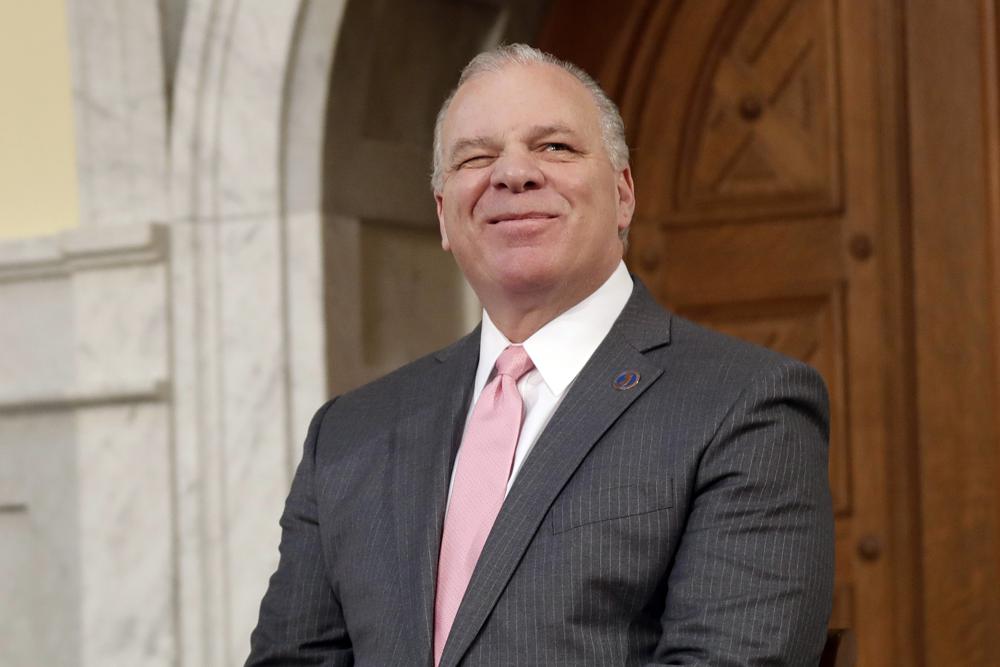
FILE — Senate President Steve Sweeney winks at someone before the start of New Jersey Gov. Phil Murphy's budget address in Trenton, N.J., Feb. 25, 2020. Sweeney, New Jersey's longtime state Senate president, has lost reelection, falling to a Republican newcomer who spent less than $200 on the race and leaving his party reeling. (AP Photo/Seth Wenig, File)

COST CHANGES FROM ABOVE
Spending $2,300, GOP newcomer Ed Durr beats top NJ lawmaker
AND IT SHOULD STILL WORRY DEMS

By MIKE CATALINI

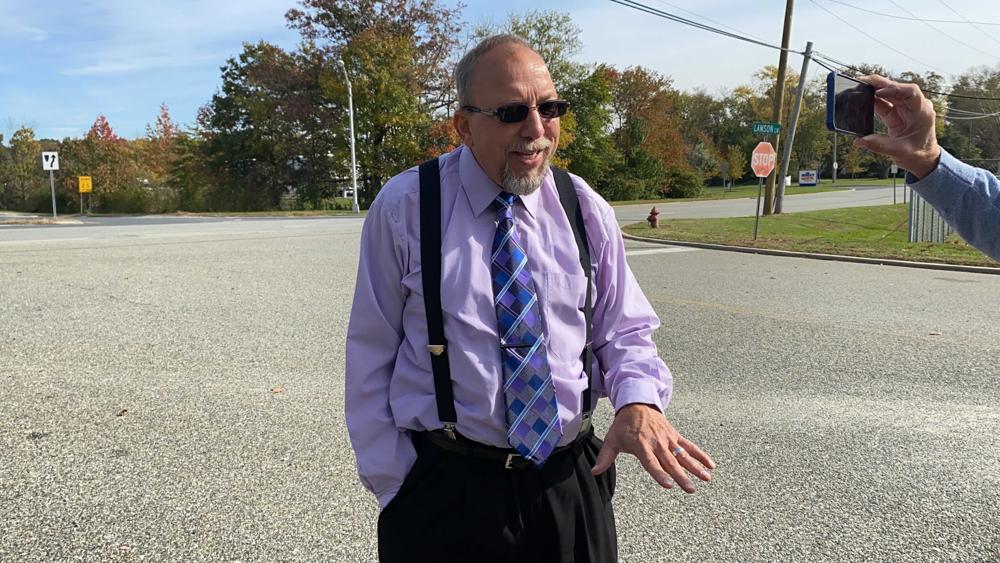
Edward Durr speaks to near his home in Swedesboro, N.J. on Thursday, Nov. 4, 2021. New Jersey's longtime state Senate president, Democrat Steve Sweeney lost reelection, falling to Durr, a Republican newcomer who spent little money and underscoring Democratic woes in the Biden era. 
(Ellie Rushing/The Philadelphia Inquirer via AP)


TRENTON, N.J. (AP) — New Jersey’s longtime state Senate president, Democrat Steve Sweeney lost reelection, falling to a Republican newcomer who spent little money and underscoring Democratic woes in the Biden era.

Edward Durr, a furniture company truck driver and first-time officeholder, defeated Sweeney in New Jersey’s 3rd Legislative District, according to results tallied Thursday.

Sweeney’s defeat was unexpected, and has cast the fate of state government into uncertainty.

“It is stunning and shocking and I cannot figure it out,” said Senate Majority Leader Loretta Weinberg said in an interview.

His loss unfolded in a politically competitive suburban Philadelphia district whose counties split their votes between Democrats and Republicans in the presidential elections in 2016 and again in 2020.

It also coincided with boosted GOP turnout even in an off-year election that saw Republicans make gains across the state. Durr’s victory Thursday netted about 3% more votes than Sweeney did in 2017 in unofficial returns.

Sweeney’s attention was also focused on tight Senate races elsewhere in the state.

“I don’t really think it was Steve Sweeney,” said incoming Republican Senate Leader Steve Oroho. “I think it had to do with the message coming from people who were just annoyed at all the executive orders and all the mandates and being sick and tired of being told what they can and can’t do.”

The loss says more about the headwinds Democrats are facing after losing the governor’s race in Virginia and winning a narrow victory in New Jersey Gov. Phil Murphy’s race against Republican Jack Ciattarelli, experts said.

“This was a protest vote against the Biden administration and Murphy,” said Montclair State University political science professor Brigid Harrison. “Steve was in many ways just how people voiced their dissatisfaction and anger with the larger political structure.”

Sweeney said in a statement Thursday he was waiting for more votes to come in before acknowledging the loss.

“While I am currently trailing in the race, we want to make sure every vote is counted. Our voters deserve that, and we will wait for the final results,” he said.

Sweeney has served as Senate president since 2010 and was responsible for shepherding Democratic Gov. Phil Murphy’s progressive agenda through the Legislature, including a phased-in $15 an hour minimum wage, paid sick leave and recreational marijuana legalization.

He is also known for his high-profile reversal on opposition to gay marriage. Sweeney said in 2011 that he made the “biggest mistake of my legislative career” when he voted against marriage equality.

Though Sweeney was a fellow Democrat, he fought Murphy at the start of his administration over raising income taxes on the wealthy and worked closely with Republican Chris Christie during his eight-year term in office ending in 2018.

A deal he worked out with Christie to overhaul public worker pension put Sweeney at odds with public sector unions, who would go on to become key supporters of Murphy.

Sweeney’s loss was cheered by progressive Democrats from southern New Jersey, who saw him as a product of transactional, machine politics.

“Today is glorious,” said Sue Altman, director of New Jersey Working Families, in a tweet. Altman is a longtime critic of Sweeney’s and saw him as focused on trying to maintain control of the Democratic party, particularly in southern New Jersey.

His allies say he was open-minded and eventually delivered for the left.

“I think he was a remarkable senator and Senate president, and as I have often reminded my progressive friends that we never could have gotten all those bills on Gov. Murphy’s desk for him to sign without the cooperation of the Senate president,” Weinberg said.

Sweeney had faced electoral opposition before. In 2017, his feud with the state’s biggest teacher’s union over retirement benefits among other issues led to a battle in which the New Jersey Education Association spent millions to try to defeat Sweeney. The union’s effort failed.

But this year, Durr defeated him, spending $2,300, according to an Election Law Enforcement Commission document filed online on Thursday. Earlier reports had shown he had spent just $153.31 on his campaign.

Messages seeking comment have been left with Durr.

Durr describes himself as a 2nd Amendment rights advocate and fiscally conservative, who wants to lower taxes. In an interview with NJ.com, he described how unlikely he viewed his victory to be. He has previously run unsuccessfully for state Assembly in 2017 and 2019, but this is his first elected position.

“I joked with people and I said, ‘I’m going to shock the world, I’m going to beat this man,’” Durr said Wednesday afternoon. “I was saying it, but really kind of joking. Because what chance did a person like me really stand against this man? He’s literally the second-most powerful person in the state of New Jersey.”

Sweeney is an ironworker by trade who has served as an executive with the International Association of Bridge, Structural, Ornamental and Reinforcing Iron Workers. He is also a key ally and friend of Democratic power broker, George Norcross, who’s widely considered to be one of the most powerful unelected people in the state.


It’s unclear who will become the next Senate president. If Democrats maintain control of the chamber, as incomplete results show they could do, then Democratic senators will meet to choose their next leader.

The 3rd Legislative District covers parts of Cumberland, Gloucester and Salem counties.

Coming into Election Day, Democrats had controlled the state Assembly with 52 seats to Republicans’ 28. In the state Senate, Democrats had 25 seats to the Republicans’ 15.

——

This article has been corrected to show that Durr is not a first-time candidate. He ran unsuccessfully for state Assembly in 2017 and 2019.

A N.J. Truck Driver Notches 'Stunning' Election Win After Spending $153 on His Campaign

Virginia Chamlee
Thu, November 4, 2021

Edward Durr

In one of the more remarkable upsets of Tuesday's elections, a New Jersey truck driver who spent less than $200 on his campaign unseated a longtime state Senate president.

While early vote tabulations led many outlets to report that Democrat Steve Sweeney had won reelection in New Jersey's 3rd Legislative District, continued counts showed that a political newcomer — Edward Durr, the Republican nominee — was actually leading by 4 points, or a little more than 2,000 votes.

The Associated Press called the race on Thursday.

Durr, with two prior unsuccessful campaigns to his name, had bested a longtime political power player — buoyed, it seems, by Republican enthusiasm and backlash to Democrats.

Speaking to NJ.com, Durr said he watched the results with his grandchildren while eating pizza in his living room.

"We kept saying: 'What if? What if? What if?' " Durr, who had reportedly run

for a city council seat and a General Assembly seat before this, told the outlet. "It got a little more real each hour."

RELATED: History in the Making and Hints About 2022: What to Watch for This Election Day

Sweeney, 62, is the longest-serving Senate president in New Jersey history and, as Politico notes, "the second most powerful official in New Jersey government," with a long history of shaping major legislation on raising the minimum wage, paid leave and others.

He was also reportedly mulling a future run for governor — a campaign that would have been launched once he served a seventh term in the state Senate.

"It is stunning and shocking and I cannot figure it out," the state Senate Majority Leader told the AP.

Sweeney has not publicly commented.

A lifelong New Jersey resident, the 62-year-old Durr describes himself as "Christian, Blue Collar, Father of 3, Grandfather to 6" on his Twitter bio. His campaign website says he has worked as a truck driver for 25 years and entered the race because he wanted to see "government return to the hands of the people."

Durr did not respond to emails or phone calls made by PEOPLE on Thursday, but he attributed his success to a local backlash against COVID-19 restrictions when speaking to Fox News Primetime Wednesday.

"I didn't beat him [Sweeney]. We beat him," Durr said on Fox. "The state of New Jersey, the people of New Jersey beat him. They listened to what I had to say and I listened to what they had to say, and it's a repudiation of Gov. Murphy [who] locked us down and ignored the people's voice and senator Sweeney chose to do nothing for those 18 months."

A fan of former President Donald Trump, Durr admitted he lacks experience in policy-making — but told Fox News he plans to learn as he goes.

"That's the key factor. I don't know what I don't know, but I will learn what I need to know," he told Fox. "And I'm going to guarantee one thing. I will be the voice and people will hear me because if there is one thing people will learn about me, I got a big mouth and I don't shut up when I want to be heard. I'm going to be heard."

Perhaps the most surprising thing about Durr's campaign success, however, was his bare-bones campaign.

RELATED: A City Hall Cleaner Becomes Mayor in Surprise Victory: 'She Was Flabbergasted'

Durr says he spent just $153 — and at least half of that, he estimates, was spent on Dunkin' Donuts.

His campaign video, he told Fox, was shot on an iPhone by one of his friend's nephews.

Durr said in an August interview he was inspired to run for the state Senate seat in 2021 after being denied a concealed carry permit.

"I guess what motivated me more than anything was I went for my concealed carry. I was told flat-out by the local sheriff, 'Don't even bother.' And that kind of angered me," Durr said then. "I'm a truck driver .... I've never been arrested and I couldn't get a concealed carry? That really angered me, so I looked into what can you do to get into politics."

Speaking to NJ.com this week, Durr said he was as surprised as anyone with the apparent results.

"I joked with people and I said, 'I'm going to shock the world, I'm going to beat this man,' " he said. "I was saying it, but really kind of joking. Because what chance did a person like me really stand against this man? He's literally the second-most powerful person in the state of New Jersey."