
How Latin American countries are responding to Cuba’s oil crisis
By AFP
February 18, 2026
Communist Cuba has been grappling with a severe fuel shortage for years, which has grown more acute since Venezuela ended supplies last month under pressure from Washington
Rigoberto Díaz con las oficinas de la AFP en América Latina
The US oil embargo on Cuba has drawn varied responses across Latin America, ranging from offers of aid and political support to silence about Havana’s economic crisis.
The Caribbean island, under communist rule for more than six decades, has been grappling with a severe fuel shortage for years.
But the crisis deepened last month when US President Donald Trump cut off critical supplies of Venezuelan oil to Cuba after he ousted leader Nicolas Maduro and threatened tariffs on any country that sells hydrocarbons to Havana.
Here is a look at how governments in the region have responded to Cuba’s plight.
– Offering aid –
Mexico, a long-standing ally of Cuba, has hit pause on oil shipments but is still leading the way in providing material support.
Two Mexican navy ships arrived in Havana on Thursday with 814 tons of food supplies. More than 1,500 tons of other humanitarian aid are expected to be delivered to the island, according to President Claudia Sheinbaum.
Sheinbaum’s leftist government sent oil to Cuba until early January. Some of that crude oil was part of a “humanitarian aid” scheme, the president said, adding that she halted those shipments but expressed her disagreement with Washington’s threat of tariffs.
“We will continue sending humanitarian aid, food and some other items requested by the Cuban government,” Sheinbaum said Tuesday.
Her administration also opened a collection center in Mexico City last week for aid for Cuba.
In Chile, the leftist President Gabriel Boric, who leaves office next month, announced a contribution of $1 million to Cuba — an initiative criticized by the president-elect, the far-right politician Jose Antonio Kast, who was endorsed by Trump and has been a critic of Maduro.
– Political support –
In Brazil, the government of leftist leader Luiz Inacio Lula da Silva, another important ally of Havana, criticized the US pressure on Cuba but has not announced any aid.
In 2025, Lula defended the Mais Medicos (More Doctors) program, which has brought Cuban healthcare professionals to Brazil through an agreement with the Pan American Health Organization.
The deployment of medical brigades abroad is Cuba’s main source of foreign currency, generating $7 billion in 2025, according to official figures.
In Venezuela, the interim government of Delcy Rodriguez has criticized Trump’s pressure and reiterated Caracas’s “solidarity” with the island.
Her government retains some 13,000 Cuban healthcare professionals in the country.
Venezuela and Cuba have been strong allies since the presidency of the late Hugo Chavez (1999-2013) — a relationship sustained by his successor Maduro until his January 3 capture by US special forces. Until then, Venezuela, which has the world’s largest oil reserves, was Cuba’s main supplier.
Nicaragua, Cuba’s only partner in Central America, has not announced any aid shipments but it has rejected the US sanctions.
However, the leftist government of Daniel Ortega has ended a visa waiver for Cubans in place since 2021. That waiver made it easy for islanders to leave Cuba, which in turn eased some pressure on the government, including after anti-government protests in July of that year when thousands departed.
– No help –
The leftist governments of Colombia and Uruguay have not announced any aid, although Uruguay has said it is studying the situation.
El Salvador, governed by right-wing Nayib Bukele, Washington’s closest ally in Central America, has shown no signs of support for Havana. Neither have Panama and Costa Rica, also led by right-wing governments.
Under pressure from Trump, Guatemala has just ended a 27-year agreement under which thousands of Cuban doctors worked in the country. The 412 Cuban healthcare professionals currently there will leave in the coming months.
Honduras, whose new president Nasry Asfura is a Trump ally, also plans to end the Cuban medical brigades.
In Ecuador, the government of Daniel Noboa, another close ally of the US president, has not announced any humanitarian aid programs for Cuba.
Last year at the UN, Quito abstained for the first time in more than three decades from voting in favor of lifting the trade and financial embargo that the United States has imposed on Cuba since 1962.
Amid the energy crisis, the Argentine government of right-wing Javier Milei, another supporter of Trump’s policies toward Cuba, warned its citizens to avoid traveling to the island.
Sun, sand and empty beaches: Trump oil
squeeze chokes Cuba’s tourism
ByReuters
Published: February 18, 2026

VARADERO BEACH, Cuba -- Cuba’s Varadero peninsula is a postcard of a tropical paradise: turquoise waters, powder-white sand and palm trees.
But the resort’s beaches, once crowded with tourists enjoying the sand and sunshine, began to clear out shortly after Cuba announced on Feb. 8 it was running out of jet fuel.
And they may not be coming back anytime soon.
A Reuters survey of hotel and travel companies, airlines and on-island tourism industry workers found virtually every sector suddenly crippled by the fuel shortage. That could sound a death knell for an already hobbled industry vital to what remains of Cuba’s devastated economy.
Air Canada, WestJet and Transat - the top carriers from Canada, the largest source of visitors to Cuba - have announced they are suspending flights to Cuba. That will lead to the cancellation of as many as 1,709 flights through April, according to analytics firm Cirium, a disruption likely to slash visitor numbers by the hundreds of thousands during the peak northern hemisphere winter season.
Russia, the third-largest visitor group, plans to fly its tourists out of Cuba in the coming days and then suspend all flights until the fuel shortage eases, aviation regulator Rosaviatsia said last week.
Hotel giant NH said on Friday it had closed all of its hotels in Cuba, and Spanish hotel chain Melia, the largest in Cuba, said the same day it had closed three of its 30 Cuban hotels and had begun concentrating tourists in better-equipped hotels with higher occupancy rates.
“There is just total uncertainty,” said Alejandro Morejon, a 53-year-old tourism guide who began work in Varadero shortly after Cuba re-opened to international tourism in the 1990s. “Everything is beginning to fall apart.”
Tourism is poised to become the first major domino to fall in a U.S. push to pressure Cuba’s government into submission by blocking shipments of oil from reaching the island nation.
U.S. President Donald Trump’s administration has declared Cuba “an unusual and extraordinary threat” to U.S. national security, cutting off the flow of Venezuelan oil to the island and threatening to slap tariffs on any nation supplying Cuba with fuel.
Tourism earned the communist-run nation $1.3 billion in foreign exchange in 2024, the last time those statistics were reported in dollars, for a total of around 10% of export earnings.
Paolo Spadoni, an economist at Augusta University in Georgia who studies Cuba’s economy, said the tourism sector combined with the export of Cuban doctors and remittances are the country’s top sources of desperately needed hard currency.
All are under renewed attack by the Trump administration, whose tough sanctions had already helped prevent the island’s resort sector from fully bouncing back from the pandemic.
“The complete collapse of Cuba’s tourism sector would create an unsustainable situation for the Cuban economy and threaten its survival,” Spadoni said.
Cuba attracted just 1.8 million visitors in 2025, down from 2.2 million the prior year, and its lowest point in more than two decades.
Visitors said they were having a hard time unwinding, anxious over Cuba’s announcement just days prior that it was fast running out of jet fuel.
“We’re just winging it, trying not to stress, because we don’t want it to ruin our trip,” said Tyler LaMountaine, an Alberta-based oil and gas industry worker who had come to Cuba with his wife to escape Canada’s cold winter but worried they could end up stranded by the canceled flights. “But you get scared because everyone else is scared.”
Cuba’s communist-run government earlier in February announced a contingency plan to protect vital services like emergency care and primary education.
Top officials initially said tourism and international flights would also be unaffected, but two days later, the government notified aviation interests that the island would shortly run out fuel.
Airlines across Europe, South America, the United States, Russia and Canada have since slashed flights or been forced to change flight patterns to deal with the fuel shortfall.
Storm clouds looming
On the surface, all appears normal in Varadero, a beach resort once a favorite wintering ground of the DuPont family prior to Cuba’s 1959 revolution, but now a favorite getaway for Europeans and Canadians during the northern winter.
Until late last week, trinket shops and most restaurants remained. Beach chairs and sun umbrellas dotted the beaches, and sunburned tourists picked up shells and swam in almost perfectly transparent water.
But at least two hotels had closed on the peninsula, Reuters confirmed.
A security guard at the Domina Marina resort, a massive complex with several towers overlooking a sprawling marina built in the early 2010s, stopped a reporter from entering the hotel and said it was closed. The hotel’s local phone number was out of service.
Keeping the doors at hotels and restaurants open will become harder as the U.S. fuel siege enters its third full week, local workers said.
Jorge Fernandez, who takes tourists for tours of the peninsula in a pink 1950s-era convertible, said late last week that he had enough fuel to last him for just one more day.
“After that, it’s back home to invent something else to do,” the 53-year-old said.
“Trump and (Cuban President) Miguel Diaz-Canel need to come to some agreement because the only ones that are suffering here are the people,” Fernandez said. “The country is shutting down.”
(Reporting by Dave Sherwood in Varadero, additional reporting by Marc Frank in Havana, Allison Lampert in Montreal, and Inigo Alexander and Natalia Siniawski in Mexico City; Editing by Christian Plumb and Alistair Bell)
Report: Fuel Tanker Arrives in Cuba as Shortages Worsen
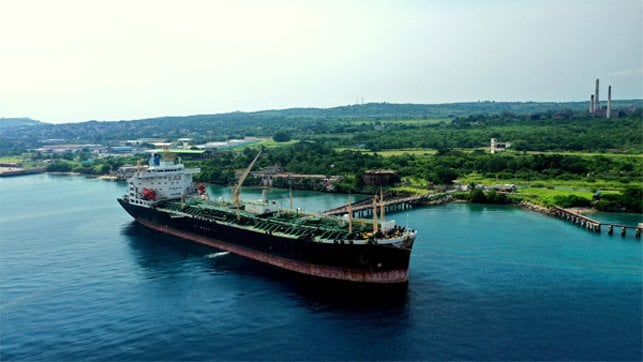
Media reports indicate that a Greek-owned fuel tanker was seen arriving at one of Cuba’s fuel terminals in the west of the country. The vessel has been operated dark (i.e., without its AIS signal), meaning it is unclear if it was coming from a foreign port, but the Spanish news outlet EFE believes the vessel was partially laden.
The product tanker Nicos I.V. (45,364 dwt) is Greek-owned and operated and has a history of transporting products to Cuba. Built in 2002, it is registered in St. Vincent and the Grenadines, and it is not sanctioned by the United States. The report says it has a capacity for more than 300,000 barrels, but that would only be a few days' supply for Cuba without an imposition of rationing.
The tanker was seen at the terminal in Matanzas, where EFE reports it arrived on Monday, February 16. The vessel’s AIS signal also shows it is docked in the port. Matanzas Bay, the reports say, is one of the strategic energy locations on the island and home to a thermoelectric power plant. In 2024, Eduardo Rodríguez Dávila of Cuba’s Ministro del Transporte emphasized the role of the port and efforts to adapt it from the sugar trade to other vital elements of the economy.
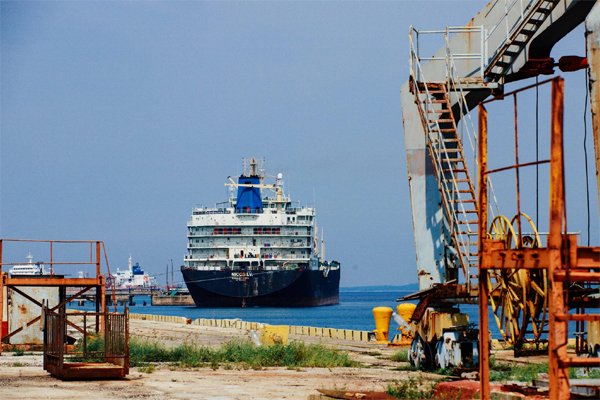
Nicos I.V., which docked in Cuba earlier this week, is seen in 2024 photos at the same port posted by Eduardo Rodríguez Dávila
If the vessel is carrying fuel, it would be the first known shipment to reach the island since the beginning of January. Another vessel, Ocean Mariner, appeared to attempt an approach to Cuba last week but made a “U” turn in the Windward Passage. Media reports suggested that a U.S. Coast Guard cutter had sailed near the vessel to discourage an attempt at reaching Cuba. The Ocean Mariner has continued to sit south of Santo Domingo, Dominican Republic, since last Friday.
The Trump administration is believed to have ordered a full embargo on fuel to Cuba to pressure the Communist government. Venezuela had been one of Cuba’s main suppliers. Media reports said the U.S. had stopped another fuel shipment in early January to Cuba. The USS Stockdale reportedly intercepted the tanker Seahorse leaving Venezuela bound for Cuba.
The U.S., however, last week permitted two Mexican ships to dock in Cuba. The ships were reported to be bringing humanitarian aid, but no fuel. Cuba thanked Mexico, and the reports said another shipment was planned.
(Video of the humanitarian aid arriving in Cuba posted by the Ministerio de Energía y Minas de Cuba)
Russia is also reported to be closely following the situation in Cuba as stories continue of emergency efforts and rationing. A Russian airline was reported to have suspended flights due to a lack of fuel, trapping tourists on the island. Kremlin spokesperson Dmitry Peskov said Russia was discussing how it could provide aid.
Russia last sent a fuel shipment to Cuba in February 2025, according to Reuters. It was 100,000 metric tons arranged under an agreement approved by Vladimir Putin. The Russian Embassy said talks were underway for Russia to send a humanitarian aid shipment of fuel to the island.
The Economist last week said the United States was considering permitting a humanitarian shipment of gas for cooking and diesel fuel to run the water supply system in Cuba.
Some reports are suggesting the island is down to under 20 days’ supply. Further concern was raised last Friday, February 13, when the Ministerio de Energía y Minas de Cuba reported a fire at the Ñico López Refinery, the main facility on the island. The Ministry later said operations were not impacted and the fire had only damaged a warehouse holding unused products.


No comments:
Post a Comment