Minnesota police called to break up bald eagle street fight
Nov. 5 (UPI) -- A Minnesota police officer was summoned to break up an unusual street fight when two bald eagles were found "stuck together" in the middle of a road.
The city of Plymouth said in a Facebook post that Officer Mitch Martinson responded to a neighborhood on "a report of two bald eagles stuck together on a Plymouth roadway."
Martinson said being called to break up a street fight between two eagles was a first for him.
"We do have de-escalation tactics, but I've never applied them to eagles or other animals," Martinson told WCCO-TV.
The officer consulted with the Minnesota Department of Natural Resources and the Raptor Center, which told him the eagles were likely in a dispute over territory.
Martinson said he was attempting to cover the birds' heads to calm them down when they decided to flee the scene.
"The eagles started going at it again and the next thing you knew, they were flying away," Martinson said.
Friday, November 05, 2021

Inside and outside climate talks, youths urge faster action
By SETH BORENSTEIN and FRANK JORDANS
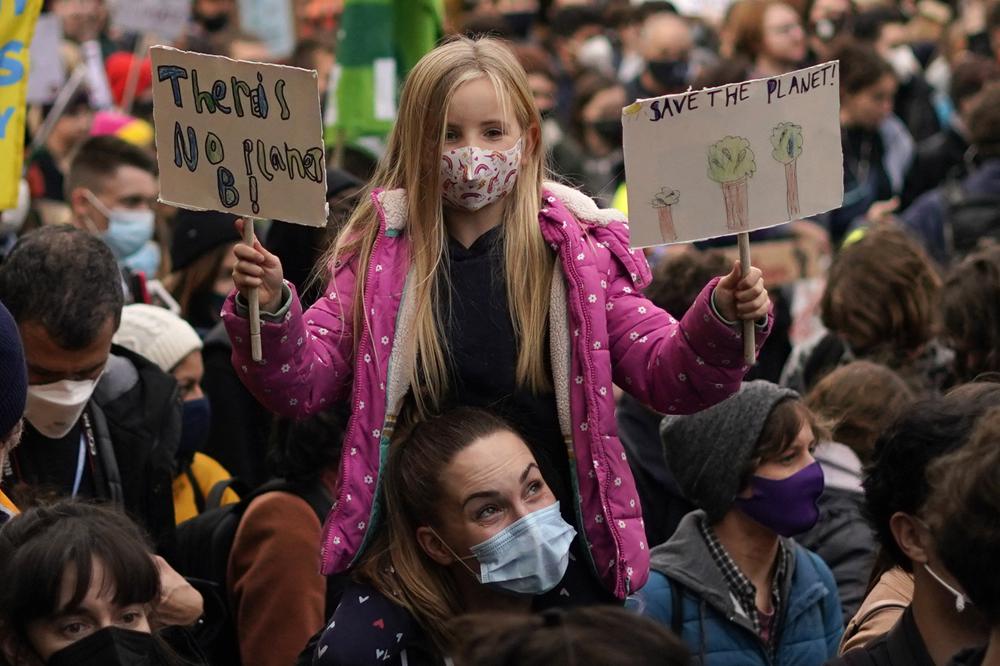
1 of 17


“When I arrived at COP26, I could only see white middle-aged men in suits,” Magali Cho Lin Wing, 17, a member of the UNICEF U.K. Youth Advisory Board, said at a press event. “And I thought, ‘Hold on is this a climate conference or some corporate event? Is this what you came for? To swap business cards?’”
And except on rare occasions, young people say they are not being listened to.
“It’s our future. Our future is being negotiated, and we don’t have a seat at the table,” said 20-year-old Boston College student Julia Horchos, who is inside the conference, but hasn’t gotten into negotiating sessions.
Still, they know it’s important to be at least near the room where it all happens.
“It’s my life,” Horchos said. “Its definitely my responsibility to step up.”
Greenpeace International Executive Director Jennifer Morgan gave the conference participants and activists under 30 credit.
“Youth have brought critical urgency to the talks,” Greenpeace International Executive Director Jennifer Morgan said. “They have emphasized what is at stake for young people if the gap to 1.5 C is not closed.”
Outside the negotiations, the worry about the future was the same, but the way it was expressed was different. During the Fridays for Future demonstration in Glasgow’s Kelvingrove Park, mostly young activists carried banners with slogans such as “I have to clear up my mess, why don’t you clear up yours?” and “Stop climate crimes.”

Speaking at the Fridays rally outside the conference venue, Greta Thunberg branded the U.N. climate talks in Glasgow so far “a failure,” accusing leaders of actively creating loopholes in the rules and giving misleading pictures of their countries’ emissions
“World leaders are obviously scared of the truth, yet no matter how hard they try, they cannot escape it,” the 18-year-old Swedish activist said. “They cannot ignore the scientific consensus, and above all they cannot ignore us - the people, including their own children.”
The Fridays For Future protest was part of a series of demonstrations being staged around the world Friday and Saturday, to coincide with the talks.
Some at the rally accused negotiators of “greenwashing” their country’s failure to curb greenhouse gas emissions by trumpeting policies that sound good but won’t do enough to prevent dangerous temperature rises in the coming decades.
Brianna Fruean, a 23-year-old activist who grew up in Samoa, a low-lying Pacific island nation that is particularly vulnerable to rising sea levels and cyclones, said: “My biggest fear is losing my country.”
“I’ve seen the floods go into our homes, and I’ve scooped out the mud,” she said.

Fruean was given the stage at the beginning of the conference, known as COP26, where she told leaders about the effects of climate change already being felt in her country.
“I feel like I’m being seen,” she said. “I will know if I’ve been heard by the end of COP.”
Natalia Gomez, 24, of Costa Rica, has been in on negotiating sessions and cheered on the outside protest from afar. Outside, youths are making important points, getting attention and putting pressure on leaders, she said. Inside, youths are helping try to get things done. She keeps asking herself which one is more important.
“I don’t know,” Gomez said.
___
Follow AP’s climate coverage at https://apnews.com/hub/climate. Follow Seth Borenstein on Twitter: @borenbears.
___
The Associated Press Health and Science Department receives support from the Howard Hughes Medical Institute’s Department of Science Education. The AP is solely responsible for all content.
Young activists, students seize focus at COP26 climate summit in Scotland
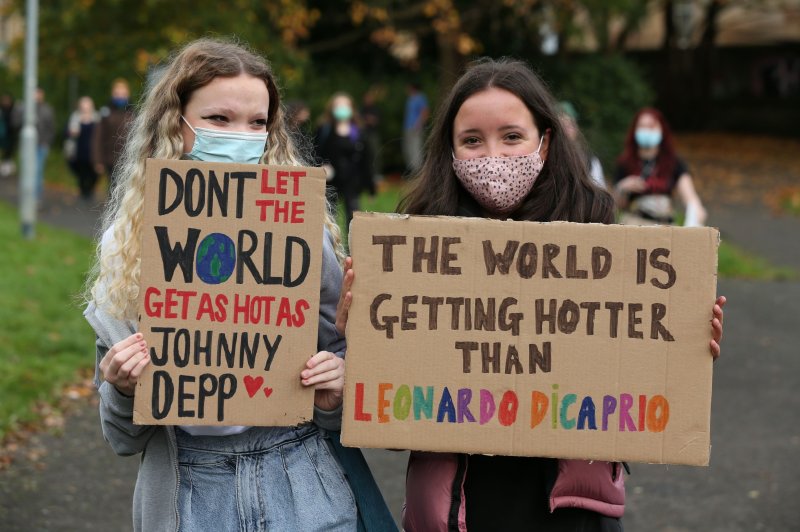
Young activists participate in a student march against climate change on Friday on the sidelines of the U.N. Climate Change Conference (COP26) in Glasgow, Scotland. Photo by Robert Perry/EPA-EFE
Nov. 5 (UPI) -- After a week of speeches, meetings and agreements, the United Nations Climate Change Conference in Scotland is focusing Friday on activists and non-government leaders.
The events in Glasgow on Friday were to include a student march, civilian presentations and Swedish climate proponent Greta Thunberg.
Thunberg joined thousands of activists in a march to capture the attention of the world leaders who are attending the COP26 summit, as well as those who aren't.
The marchers, organized by Fridays for Future Scotland, demonstrated from Kelvingrove Park to George Square in the middle of Glasgow's city center.
Thunberg, activist Vanessa Nakate and other young demonstrators were expected to speak along with local trade unionists.
Thunberg, 18, has been critical of the U.N. conference, mainly because she says it lacks real and significant action to mitigate climate change. She said leaders have celebrated future strategies, but aren't making tough decisions on what needs to be done now.
"This is no longer a climate conference. This is a Global North greenwash festival," Thunberg tweeted Thursday. "A two-week celebration of business as usual and blah blah blah."
British Prime Minister Boris Johnson's office frowned on young people leaving school Friday to take part in the march. Johnson has been hosting the summit since it began on Sunday.
"We do understand why young people feel so strongly about climate change, and we want to see them use that passion and turn it into action," a spokesman from Johnson's office said, according to The Independent.
By SETH BORENSTEIN and FRANK JORDANS
1 of 17
Climate activists march through the streets of Glasgow, Scotland, Friday, Nov. 5, 2021 which is the host city of the COP26 U.N. Climate Summit. The protest was taking place as leaders and activists from around the world were gathering in Scotland's biggest city for the U.N. climate summit, to lay out their vision for addressing the common challenge of global warming. (AP Photo/Alberto Pezzali)

Supporters of Swedish climate activist Greta Thunberg shout as she goes on the stage of a demonstration in Glasgow, Scotland, Friday, Nov. 5, 2021 which is the host city of the COP26 U.N. Climate Summit. The protest was taking place as leaders and activists from around the world were gathering in Scotland's biggest city for the U.N. climate summit, to lay out their vision for addressing the common challenge of global warming. (AP Photo/Jon Super)
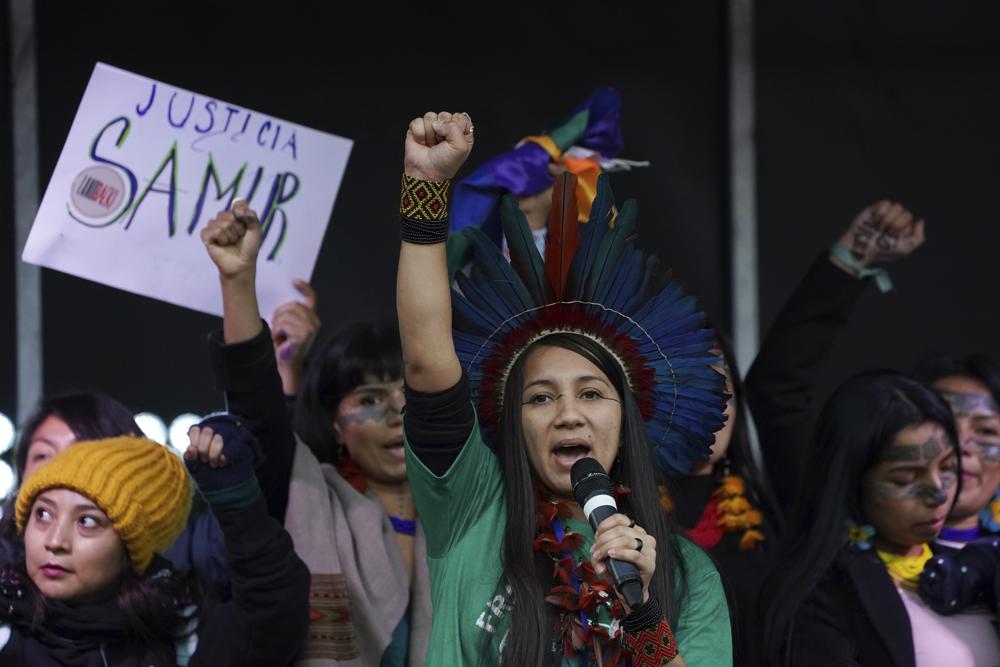
Indigenous people from Brazil speak from the stage during a demonstration in Glasgow, Scotland, Friday, Nov. Amazon tribal leader and climate activists Kreta Kaingang speaks during a demonstration in , 2021 which is the host city of the COP26 U.N. Climate Summit. The protest was taking place as leaders and activists from around the world were gathering in Scotland's biggest city for the U.N. climate summit, to lay out their vision for addressing the common challenge of global warming. (AP Photo/Jon Super)
GLASGOW, Scotland (AP) — Young people both inside and outside of the United Nations climate talks are telling world leaders to hurry up and get it done, that concrete measures to avoid catastrophic warming can’t wait.
Ashley Lashley, a 22-year-old from Barbardos who is on her country’s climate negotiation team in Glasgow, thought about how to communicate the need for urgency during a session on carbon trading. As she listened to other delegates debate the intricate and intractable topic that has baffled negotiators for more than six years, a phrase popped into her head: ’“blah-blah-blah.”
Supporters of Swedish climate activist Greta Thunberg shout as she goes on the stage of a demonstration in Glasgow, Scotland, Friday, Nov. 5, 2021 which is the host city of the COP26 U.N. Climate Summit. The protest was taking place as leaders and activists from around the world were gathering in Scotland's biggest city for the U.N. climate summit, to lay out their vision for addressing the common challenge of global warming. (AP Photo/Jon Super)
Indigenous people from Brazil speak from the stage during a demonstration in Glasgow, Scotland, Friday, Nov. Amazon tribal leader and climate activists Kreta Kaingang speaks during a demonstration in , 2021 which is the host city of the COP26 U.N. Climate Summit. The protest was taking place as leaders and activists from around the world were gathering in Scotland's biggest city for the U.N. climate summit, to lay out their vision for addressing the common challenge of global warming. (AP Photo/Jon Super)
GLASGOW, Scotland (AP) — Young people both inside and outside of the United Nations climate talks are telling world leaders to hurry up and get it done, that concrete measures to avoid catastrophic warming can’t wait.
Ashley Lashley, a 22-year-old from Barbardos who is on her country’s climate negotiation team in Glasgow, thought about how to communicate the need for urgency during a session on carbon trading. As she listened to other delegates debate the intricate and intractable topic that has baffled negotiators for more than six years, a phrase popped into her head: ’“blah-blah-blah.”

That’s the expression prominent teenage climate activist Greta Thunberg has started repeating to express her thoughts on the pace of government actions to curb global warming. The Thunberg-inspired Fridays for Future movement held a demonstration outside the conference venue to pressure the negotiators inside, drawing tens of thousands of participants.
And inside, the session Lashley attended droned on. She worries her fellow negotiators too easily become bogged down in minutiae and lose sight of the big picture: keeping emissions from exceeding 1.5 degrees Celsius (2.7 degrees Fahrenheit), which could wipe out some island nations and other vulnerable spots.
“Can’t you guys just wrap it up,” Lashley, one of the few young people sitting in on negotiations, recalled thinking on Friday.
Umuhoza Grace Ineza, 25, a negotiator for Rwanda, said she watches some sessions crawling along and hears other negotiators say “Ooh, let’s try this way, that way, and then we can come up with a decision next session.” Ineza says she wants to ask them if they understand how urgent limiting climate change is for the next generation.
“In my mind, it’s like do these people have children?” she said.
University of Michigan graduate student observers AJ Convertino and Evan Gonzalez said watching the sessions on the inside made them both more impatient but also more optimistic because they see the right things being said and done, if still way too slowly.
Friday was the day the U.N. conference said it was dedicating to youth. But the schedule didn’t reflect that, at times: a news conference where officials talked about youth had a panel with no members under 30, and the lunchtime events featured former U.S. Vice President Al Gore, 73, and 77-year-old John Kerry, the U.S. climate envoy.
“Can’t you guys just wrap it up,” Lashley, one of the few young people sitting in on negotiations, recalled thinking on Friday.
Umuhoza Grace Ineza, 25, a negotiator for Rwanda, said she watches some sessions crawling along and hears other negotiators say “Ooh, let’s try this way, that way, and then we can come up with a decision next session.” Ineza says she wants to ask them if they understand how urgent limiting climate change is for the next generation.
“In my mind, it’s like do these people have children?” she said.
University of Michigan graduate student observers AJ Convertino and Evan Gonzalez said watching the sessions on the inside made them both more impatient but also more optimistic because they see the right things being said and done, if still way too slowly.
Friday was the day the U.N. conference said it was dedicating to youth. But the schedule didn’t reflect that, at times: a news conference where officials talked about youth had a panel with no members under 30, and the lunchtime events featured former U.S. Vice President Al Gore, 73, and 77-year-old John Kerry, the U.S. climate envoy.

“When I arrived at COP26, I could only see white middle-aged men in suits,” Magali Cho Lin Wing, 17, a member of the UNICEF U.K. Youth Advisory Board, said at a press event. “And I thought, ‘Hold on is this a climate conference or some corporate event? Is this what you came for? To swap business cards?’”
And except on rare occasions, young people say they are not being listened to.
“It’s our future. Our future is being negotiated, and we don’t have a seat at the table,” said 20-year-old Boston College student Julia Horchos, who is inside the conference, but hasn’t gotten into negotiating sessions.
Still, they know it’s important to be at least near the room where it all happens.
“It’s my life,” Horchos said. “Its definitely my responsibility to step up.”
Greenpeace International Executive Director Jennifer Morgan gave the conference participants and activists under 30 credit.
“Youth have brought critical urgency to the talks,” Greenpeace International Executive Director Jennifer Morgan said. “They have emphasized what is at stake for young people if the gap to 1.5 C is not closed.”
Outside the negotiations, the worry about the future was the same, but the way it was expressed was different. During the Fridays for Future demonstration in Glasgow’s Kelvingrove Park, mostly young activists carried banners with slogans such as “I have to clear up my mess, why don’t you clear up yours?” and “Stop climate crimes.”

Speaking at the Fridays rally outside the conference venue, Greta Thunberg branded the U.N. climate talks in Glasgow so far “a failure,” accusing leaders of actively creating loopholes in the rules and giving misleading pictures of their countries’ emissions
“World leaders are obviously scared of the truth, yet no matter how hard they try, they cannot escape it,” the 18-year-old Swedish activist said. “They cannot ignore the scientific consensus, and above all they cannot ignore us - the people, including their own children.”
The Fridays For Future protest was part of a series of demonstrations being staged around the world Friday and Saturday, to coincide with the talks.
Some at the rally accused negotiators of “greenwashing” their country’s failure to curb greenhouse gas emissions by trumpeting policies that sound good but won’t do enough to prevent dangerous temperature rises in the coming decades.
Brianna Fruean, a 23-year-old activist who grew up in Samoa, a low-lying Pacific island nation that is particularly vulnerable to rising sea levels and cyclones, said: “My biggest fear is losing my country.”
“I’ve seen the floods go into our homes, and I’ve scooped out the mud,” she said.

Fruean was given the stage at the beginning of the conference, known as COP26, where she told leaders about the effects of climate change already being felt in her country.
“I feel like I’m being seen,” she said. “I will know if I’ve been heard by the end of COP.”
Natalia Gomez, 24, of Costa Rica, has been in on negotiating sessions and cheered on the outside protest from afar. Outside, youths are making important points, getting attention and putting pressure on leaders, she said. Inside, youths are helping try to get things done. She keeps asking herself which one is more important.
“I don’t know,” Gomez said.
___
Follow AP’s climate coverage at https://apnews.com/hub/climate. Follow Seth Borenstein on Twitter: @borenbears.
___
The Associated Press Health and Science Department receives support from the Howard Hughes Medical Institute’s Department of Science Education. The AP is solely responsible for all content.
Young activists participate in a student march against climate change on Friday on the sidelines of the U.N. Climate Change Conference (COP26) in Glasgow, Scotland. Photo by Robert Perry/EPA-EFE
Nov. 5 (UPI) -- After a week of speeches, meetings and agreements, the United Nations Climate Change Conference in Scotland is focusing Friday on activists and non-government leaders.
The events in Glasgow on Friday were to include a student march, civilian presentations and Swedish climate proponent Greta Thunberg.
Thunberg joined thousands of activists in a march to capture the attention of the world leaders who are attending the COP26 summit, as well as those who aren't.
The marchers, organized by Fridays for Future Scotland, demonstrated from Kelvingrove Park to George Square in the middle of Glasgow's city center.
Thunberg, activist Vanessa Nakate and other young demonstrators were expected to speak along with local trade unionists.
Thunberg, 18, has been critical of the U.N. conference, mainly because she says it lacks real and significant action to mitigate climate change. She said leaders have celebrated future strategies, but aren't making tough decisions on what needs to be done now.
"This is no longer a climate conference. This is a Global North greenwash festival," Thunberg tweeted Thursday. "A two-week celebration of business as usual and blah blah blah."
British Prime Minister Boris Johnson's office frowned on young people leaving school Friday to take part in the march. Johnson has been hosting the summit since it began on Sunday.
"We do understand why young people feel so strongly about climate change, and we want to see them use that passion and turn it into action," a spokesman from Johnson's office said, according to The Independent.
Climate activist Greta Thunberg labels COP26 a 'failure' as youth demand action
Climate activist Greta Thunberg speaks at a Fridays for Future march during the UN Climate Change Conference (COP26), in Glasgow, Scotland, on November 5, 2021.
Climate activist Greta Thunberg speaks at a Fridays for Future march during the UN Climate Change Conference (COP26), in Glasgow, Scotland, on November 5, 2021.
© Yves Herman, Reuters
Text by: NEWS WIRES|
Video by: Nicholas RUSHWORTH
Issued on: 05/11/2021 -
Swedish campaigner Greta Thunberg on Friday branded the UN climate summit in Glasgow a “failure” during a mass protest in the Scottish city demanding swifter action from leaders to address the emergency.
Thunberg said pledges from some nations made during COP26 to accelerate their emissions cuts amounted to little more than “a two-week long celebration of business as usual and blah, blah, blah”.
“It is not a secret that COP26 is a failure,” she told the thousands of people at the protest.
“This is no longer a climate conference. This is now a global greenwashing festival.”
Delegates from nearly 200 countries are in Glasgow to hammer out how to meet the Paris Agreement goals of limiting temperature rises to between 1.5 and 2 degrees Celsius.
The first week of talks saw countries announce plans to phase out coal use and to end foreign fossil fuel funding, but there were few details on how they plan the mass decarbonisation scientists say is needed.
The promises followed a major assessment that showed global CO2 emissions are set to rebound in 2021 to pre-pandemic levels.
“Our leaders are not leading. This is what leadership looks like,” she said gesturing to the crowd.
Two days of demonstrations are planned by activist groups to highlight the disconnect between the glacial pace of emissions reductions and the climate emergency already swamping countries across the world.
Some progress
Onlookers to Friday’s march lined the streets and hung out of windows to watch the stream of protesters, who held banners reading “No Planet B” and “Climate Action Now”.
“I’m here because the world leaders are deciding the fate of our future and the present of people that have already been impacted by climate crisis,” said 18-year-old Valentina Ruas.
“We won’t accept anything that isn’t real climate policy centred on climate justice.”
Students were out in force, with some schools allowing pupils to skip lessons to see the march and one young green warrior holding a placard that read: “Climate change is worse than homework”.
But environmental groups pointed out that governments, particularly wealthy polluters, have a habit of failing to live up to their promises.
Vanessa Nakate told the crowd that people in her native Uganda were “being erased” by climate change.
“People are dying, children are dropping out of school, farms are being destroyed,” she said.
“Another world is necessary. Another world is possible.”
‘Take responsibility’
Countries came into COP26 with national climate plans that, when brought together, put Earth on course to warm 2.7C this century, according to the UN.
With just 1.1C of warming so far, communities across the world are already facing ever more intense fire and drought, displacement and economic ruin wrought by the Earth’s heating climate.
“Scientists have done what they need to do, they’ve told us about the problem. Young people have done what they need to do by calling attention to this issue,” said Natalie Tariro Chido Mangondo, a Zimbabwean climate and gender advocate.
“And it’s just up to our leaders to get their act together.”
Campaigners say they expect up to 50,000 demonstrators in the Scottish city on Saturday as part of a global round of climate protests.
A spokesman from Police Scotland said there were “fewer than 20 arrests made” as of Friday night, mainly for public disorder offences.
(AFP)
Text by: NEWS WIRES|
Video by: Nicholas RUSHWORTH
Issued on: 05/11/2021 -
Swedish campaigner Greta Thunberg on Friday branded the UN climate summit in Glasgow a “failure” during a mass protest in the Scottish city demanding swifter action from leaders to address the emergency.
Thunberg said pledges from some nations made during COP26 to accelerate their emissions cuts amounted to little more than “a two-week long celebration of business as usual and blah, blah, blah”.
“It is not a secret that COP26 is a failure,” she told the thousands of people at the protest.
“This is no longer a climate conference. This is now a global greenwashing festival.”
Delegates from nearly 200 countries are in Glasgow to hammer out how to meet the Paris Agreement goals of limiting temperature rises to between 1.5 and 2 degrees Celsius.
The first week of talks saw countries announce plans to phase out coal use and to end foreign fossil fuel funding, but there were few details on how they plan the mass decarbonisation scientists say is needed.
The promises followed a major assessment that showed global CO2 emissions are set to rebound in 2021 to pre-pandemic levels.
“They cannot ignore the scientific consensus and they cannot ignore us,” said Thunberg.
“Our leaders are not leading. This is what leadership looks like,” she said gesturing to the crowd.
Two days of demonstrations are planned by activist groups to highlight the disconnect between the glacial pace of emissions reductions and the climate emergency already swamping countries across the world.
Some progress
Onlookers to Friday’s march lined the streets and hung out of windows to watch the stream of protesters, who held banners reading “No Planet B” and “Climate Action Now”.
“I’m here because the world leaders are deciding the fate of our future and the present of people that have already been impacted by climate crisis,” said 18-year-old Valentina Ruas.
“We won’t accept anything that isn’t real climate policy centred on climate justice.”
Students were out in force, with some schools allowing pupils to skip lessons to see the march and one young green warrior holding a placard that read: “Climate change is worse than homework”.
Experts say a commitment made during the high-level leaders’ summit at the start of COP26 by more than 100 nations to cut methane emissions by at least 30 percent this decade will have a real short-term impact on global heating.
But environmental groups pointed out that governments, particularly wealthy polluters, have a habit of failing to live up to their promises.
Vanessa Nakate told the crowd that people in her native Uganda were “being erased” by climate change.
“People are dying, children are dropping out of school, farms are being destroyed,” she said.
“Another world is necessary. Another world is possible.”
‘Take responsibility’
Countries came into COP26 with national climate plans that, when brought together, put Earth on course to warm 2.7C this century, according to the UN.
With just 1.1C of warming so far, communities across the world are already facing ever more intense fire and drought, displacement and economic ruin wrought by the Earth’s heating climate.
“Scientists have done what they need to do, they’ve told us about the problem. Young people have done what they need to do by calling attention to this issue,” said Natalie Tariro Chido Mangondo, a Zimbabwean climate and gender advocate.
“And it’s just up to our leaders to get their act together.”
Campaigners say they expect up to 50,000 demonstrators in the Scottish city on Saturday as part of a global round of climate protests.
A spokesman from Police Scotland said there were “fewer than 20 arrests made” as of Friday night, mainly for public disorder offences.
(AFP)
From Kenya to COP26, the teen battling 'global disaster'

Rahmina Paulette says she feels that her voice 'is starting to be heard by many people'
Issued on: 05/11/2021 -
Video by: Robert PARSONS
Thousands of young campaigners marched through the streets of Glasgow on Friday to demand that world leaders at the UN climate conference safeguard their future against climate change. Inside the COP26 conference venue in Glasgow, Scotland, civil society leaders were taking over discussions at the end of a week of government speeches and pledges, which included promises to phase out coal, slash emissions of the potent greenhouse gas methane and reduce deforestation. FRANCE 24's Chief Foreign Editor Robert Parsons gives his perspective.

Rahmina Paulette says she feels that her voice 'is starting to be heard by many people'
Paul ELLIS AFP
Issued on: 05/11/2021 -
Glasgow (AFP) – For teenage climate campaigner Rahmina Paulette, the journey to becoming an environmental activist began with a cancelled boat ride.
The young Kenyan was then around 11 years old and had been looking forward to the trip on Lake Victoria with her mother, but found the way blocked by a vast green carpet of invasive water hyacinth choking the bay near her native Kisumu.
"I went back home so sad" Rahmina told AFP at the COP26 conference in Glasgow.
She started researching the invasive weed.
"I found that actually it can be used. And it can be used for something purposeful," she said.
Her first step was to set up a business selling water hyacinth furniture, table coasters and bags.
But Rahmina, who is now 15, did not stop there.
She launched a campaign called Let Lake Victoria Breathe Again, working for the restoration of the lake's ecosystems, with online petitions and offline marches.
"I personally am being affected by climate change," she said.
"I know what people are facing, especially the people from the most affected places."
Intense rains last year swelled many of Kenya's biggest lakes to levels not seen in at least half a century, some by several metres or more this year alone, following months of extreme rainfall scientists have linked to a changing climate.
The phenomenon is causing immense flooding, driving thousands from their homes.
'Uproot the system'
In lake-side Kisumu, where Rahmina grew up, people have seen dramatic changes in the environment.
Her grandmother recalled a vast expanse of clear blue.
"You could even see the fish," said Rahmina.
Now the murky water is frequently blanketed with the water hyacinth infestation and suffers from pollution and harmful algae blooms that can be toxic to fish.
"Right now, if you can go back to Lake Victoria, you'll see many plastics, many waste and you'll see dead fish," she said.
"If we don't act, the future generation won't be able to enjoy what you are enjoying right now, or even what our ancestors used to enjoy, it will become a global disaster," she said.
Rahmina said she feels that her voice "is starting to be heard by many people", helped by the online platform she has as a model, after she won an Africa beauty pageant.
She plans to study climate policy and international relations.
"My ambition is to create a sustainable future. My other ambition is to make the world a better place," she said.
Rahmina, who will be out protesting on Friday, said she has come to Glasgow to persuade world leaders to work with young climate activists.
"We will either work with them, or uproot the system," she said.
© 2021 AFP
'Decisions have to be taken now': Young activists take the stage at COP26
Issued on: 05/11/2021
Thousands of young people marched through the streets of Glasgow Friday to protest a lack of climate action with a clear message to negotiators at the COP26 summit: "If not now, when?" Young climate activist Belle Valiulis talks to FRANCE 24's Hervé Amoric.
Issued on: 05/11/2021 -
Glasgow (AFP) – For teenage climate campaigner Rahmina Paulette, the journey to becoming an environmental activist began with a cancelled boat ride.
The young Kenyan was then around 11 years old and had been looking forward to the trip on Lake Victoria with her mother, but found the way blocked by a vast green carpet of invasive water hyacinth choking the bay near her native Kisumu.
"I went back home so sad" Rahmina told AFP at the COP26 conference in Glasgow.
She started researching the invasive weed.
"I found that actually it can be used. And it can be used for something purposeful," she said.
Her first step was to set up a business selling water hyacinth furniture, table coasters and bags.
But Rahmina, who is now 15, did not stop there.
She launched a campaign called Let Lake Victoria Breathe Again, working for the restoration of the lake's ecosystems, with online petitions and offline marches.
"I personally am being affected by climate change," she said.
"I know what people are facing, especially the people from the most affected places."
Intense rains last year swelled many of Kenya's biggest lakes to levels not seen in at least half a century, some by several metres or more this year alone, following months of extreme rainfall scientists have linked to a changing climate.
The phenomenon is causing immense flooding, driving thousands from their homes.
'Uproot the system'
In lake-side Kisumu, where Rahmina grew up, people have seen dramatic changes in the environment.
Her grandmother recalled a vast expanse of clear blue.
"You could even see the fish," said Rahmina.
Now the murky water is frequently blanketed with the water hyacinth infestation and suffers from pollution and harmful algae blooms that can be toxic to fish.
"Right now, if you can go back to Lake Victoria, you'll see many plastics, many waste and you'll see dead fish," she said.
"If we don't act, the future generation won't be able to enjoy what you are enjoying right now, or even what our ancestors used to enjoy, it will become a global disaster," she said.
Rahmina said she feels that her voice "is starting to be heard by many people", helped by the online platform she has as a model, after she won an Africa beauty pageant.
She plans to study climate policy and international relations.
"My ambition is to create a sustainable future. My other ambition is to make the world a better place," she said.
Rahmina, who will be out protesting on Friday, said she has come to Glasgow to persuade world leaders to work with young climate activists.
"We will either work with them, or uproot the system," she said.
© 2021 AFP
'Decisions have to be taken now': Young activists take the stage at COP26
Issued on: 05/11/2021
Thousands of young people marched through the streets of Glasgow Friday to protest a lack of climate action with a clear message to negotiators at the COP26 summit: "If not now, when?" Young climate activist Belle Valiulis talks to FRANCE 24's Hervé Amoric.
COP26 youth demonstrations: Activists protest against lack of action by world leaders
Issued on: 05/11/2021 -
Video by: Robert PARSONS
Thousands of young campaigners marched through the streets of Glasgow on Friday to demand that world leaders at the UN climate conference safeguard their future against climate change. Inside the COP26 conference venue in Glasgow, Scotland, civil society leaders were taking over discussions at the end of a week of government speeches and pledges, which included promises to phase out coal, slash emissions of the potent greenhouse gas methane and reduce deforestation. FRANCE 24's Chief Foreign Editor Robert Parsons gives his perspective.
INDIA'S GRETA THUNBERG?
WHO IS VINISHA UMASHANKAR, THE ENVIRONMENTALIST WHO SPOKE AT COP26

In her speech Vinisha Umashankar, who hails from Tamil Nadu, said that she is more than just a girl from India and she was a 'girl from Earth.'(Image: Youtube)
The young innovator from Tamil Nadu turned heads at Glasgow with her moving speech, but her journey is just as inspiring.
In her speech Vinisha Umashankar, who hails from Tamil Nadu, said that she is more than just a girl from India and she was a 'girl from Earth.'(Image: Youtube)
The young innovator from Tamil Nadu turned heads at Glasgow with her moving speech, but her journey is just as inspiring.
NEW DELHI
LAST UPDATED:NOVEMBER 05, 2021
She has designed a solar-powered ironing cart to replace charcoal-filled appliance. She is a finalist for the prestigious Earthshot environmental prize. She called for action and not just anger at the global platform COP26. And she is just 15. Meet Vinisha Umashankar - a young environmentalist, pegged to be India’s Greta Thunberg.
“We have every reason to be angry. But I have no time for anger. I want to act. I am not just a girl from India. I am a girl from Earth and I am proud to be so. I am also a student, innovator, environmentalist and entrepreneur, but most importantly, I’m an optimist," she said at the COP26, after being invited by Prince William to speak at the global conference on climate change, billed as the world’s last chance at reducing global temperatures.
But who is Vinisha Umashankar? Here’s a closer look at the environmentalist’s work and life so far
A native of the rural town Tiruvannamalai in Tamil Nadu, Vinisha describes herself as a ‘Chief Innovation Officer’ on her Linkedin page. The environmentalist started her journey when she was just 12 - by working on the ‘Solar Ironing Cart’. The idea came to her as she would accompany her mother to deliver clothes to an old couple for ironing, the Hindu reports. Seeing how they ironed with charcoal-filled cast-iron boxes with difficulty in the heat, she then began work to make their life, and the environment, cleaner.
“It made me think about the amount of charcoal burnt every day and the damage it does to the environment," Umashankar said, NPR reports. Producing and burning charcoal emits particulate matter, which pollutes the air, as well as greenhouse gases like carbon dioxide, which contribute to climate change.
The Solar-powered Iron-Max
She designed a cart with solar panels to power a steam iron over the course of six months in 2019. She poured over college-level physics textbooks to learn how solar panels work. Then she pitched her idea to the Indian government’s National Innovation Foundation. Engineers then assisted her in creating a full-scale working prototype and filing for a patent.
The result was Iron-Max, a blue-painted cart in the shape of an iron box, with solar panels installed on its roof. It’s attached to a bicycle, allowing vendors to move around the neighbourhood collecting clothes to press. Five hours of direct sunlight is sufficient to run the iron for six hours. The energy can be stored in a battery and used to power a device on cloudy days. The cart also has a coin-operated cellphone and a cellphone charging point where people can pay to recharge their phones, which helps vendors supplement their earnings.
However, this is not Vinisha’s sole innovation. She has also designed a smart ceiling fan, which operates by itself using motion sensors. She bagged an award for the design in 2019.
Her Parents and School Life
The Class 10 student’s father S Umashankar works as a business consultant, and her mother U. Sangeetha works as school teacher. “She (Vinisha) is class topper and her time management between studies and extracurricular activities is excellent. Her mother teaches science in our school,” SKP Vanitha International School Principal Prathiba Shyam told the Hindu.
According to Vinisha, she is interested in science experiments, stargazing, microscopy, gymnastics, cycling, swimming and gardening. “I had won many elocution, debate, quiz, essay-writing, singing, drawing and yoga competitions at the school, district, state and national levels," the innovator says.
Awards and Recognition
Vinisha has received the Children’s Climate Prize in 2020 by the Children’s Climate Foundation in Sweden, for her solar cart. Her first national award for innovation was with the Dr. APJ Abdul Kalam IGNITE Award in 2019, and the environmentalist is also the youngest recipient of the Dr. Pradeep P. Thevannoor Innovation Award in the same year for her innovation ‘the Smart Ceiling Fan’. The award was given by the SCMS School of Engineering and Technology, Kerala in association with the Kerala Startup Mission and Kalam Technical University (KTU).
Vinisha was also the recipient of the Earth Day Network Rising Star in 2021, awarded by the Earth Day Network in US.
Now, she is among the fifteen finalists on the shortlist for Prince William’s Earthshot environmental prize to reward innovative solutions to the planet’s biggest problems.
LAST UPDATED:NOVEMBER 05, 2021
She has designed a solar-powered ironing cart to replace charcoal-filled appliance. She is a finalist for the prestigious Earthshot environmental prize. She called for action and not just anger at the global platform COP26. And she is just 15. Meet Vinisha Umashankar - a young environmentalist, pegged to be India’s Greta Thunberg.
“We have every reason to be angry. But I have no time for anger. I want to act. I am not just a girl from India. I am a girl from Earth and I am proud to be so. I am also a student, innovator, environmentalist and entrepreneur, but most importantly, I’m an optimist," she said at the COP26, after being invited by Prince William to speak at the global conference on climate change, billed as the world’s last chance at reducing global temperatures.
But who is Vinisha Umashankar? Here’s a closer look at the environmentalist’s work and life so far
A native of the rural town Tiruvannamalai in Tamil Nadu, Vinisha describes herself as a ‘Chief Innovation Officer’ on her Linkedin page. The environmentalist started her journey when she was just 12 - by working on the ‘Solar Ironing Cart’. The idea came to her as she would accompany her mother to deliver clothes to an old couple for ironing, the Hindu reports. Seeing how they ironed with charcoal-filled cast-iron boxes with difficulty in the heat, she then began work to make their life, and the environment, cleaner.
“It made me think about the amount of charcoal burnt every day and the damage it does to the environment," Umashankar said, NPR reports. Producing and burning charcoal emits particulate matter, which pollutes the air, as well as greenhouse gases like carbon dioxide, which contribute to climate change.
The Solar-powered Iron-Max
She designed a cart with solar panels to power a steam iron over the course of six months in 2019. She poured over college-level physics textbooks to learn how solar panels work. Then she pitched her idea to the Indian government’s National Innovation Foundation. Engineers then assisted her in creating a full-scale working prototype and filing for a patent.
The result was Iron-Max, a blue-painted cart in the shape of an iron box, with solar panels installed on its roof. It’s attached to a bicycle, allowing vendors to move around the neighbourhood collecting clothes to press. Five hours of direct sunlight is sufficient to run the iron for six hours. The energy can be stored in a battery and used to power a device on cloudy days. The cart also has a coin-operated cellphone and a cellphone charging point where people can pay to recharge their phones, which helps vendors supplement their earnings.
However, this is not Vinisha’s sole innovation. She has also designed a smart ceiling fan, which operates by itself using motion sensors. She bagged an award for the design in 2019.
Her Parents and School Life
The Class 10 student’s father S Umashankar works as a business consultant, and her mother U. Sangeetha works as school teacher. “She (Vinisha) is class topper and her time management between studies and extracurricular activities is excellent. Her mother teaches science in our school,” SKP Vanitha International School Principal Prathiba Shyam told the Hindu.
According to Vinisha, she is interested in science experiments, stargazing, microscopy, gymnastics, cycling, swimming and gardening. “I had won many elocution, debate, quiz, essay-writing, singing, drawing and yoga competitions at the school, district, state and national levels," the innovator says.
Awards and Recognition
Vinisha has received the Children’s Climate Prize in 2020 by the Children’s Climate Foundation in Sweden, for her solar cart. Her first national award for innovation was with the Dr. APJ Abdul Kalam IGNITE Award in 2019, and the environmentalist is also the youngest recipient of the Dr. Pradeep P. Thevannoor Innovation Award in the same year for her innovation ‘the Smart Ceiling Fan’. The award was given by the SCMS School of Engineering and Technology, Kerala in association with the Kerala Startup Mission and Kalam Technical University (KTU).
Vinisha was also the recipient of the Earth Day Network Rising Star in 2021, awarded by the Earth Day Network in US.
Now, she is among the fifteen finalists on the shortlist for Prince William’s Earthshot environmental prize to reward innovative solutions to the planet’s biggest problems.
UPDATED
New Delhi wakes up to blanket of toxic smog and worst pollution all year after defying firework ban
In India, toxic air kills more than a million people annually but the government has been accused of not doing enough to curb pollution - instead prioritising economic growth.
Megan Baynes
News reporter @megbaynes
Friday 5 November 2021
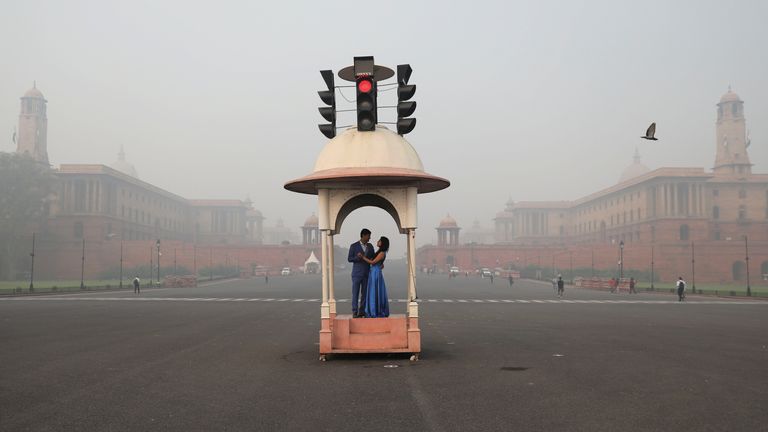 Image:Residents of New Delhi woke up to the most polluted air of the year so far
The morning after Diwali celebrations residents of New Delhi woke up to a blanket of toxic smog, breathing in the most polluted air of the year so far.
The city has the worst air quality of all the world's capitals, but Friday's reading was the highest of 2021, as people paid the price for defying the fireworks ban.
Sponsored link
The Air Quality Index (AQI) surged to 451 out of 500 - the maximum recorded this year.
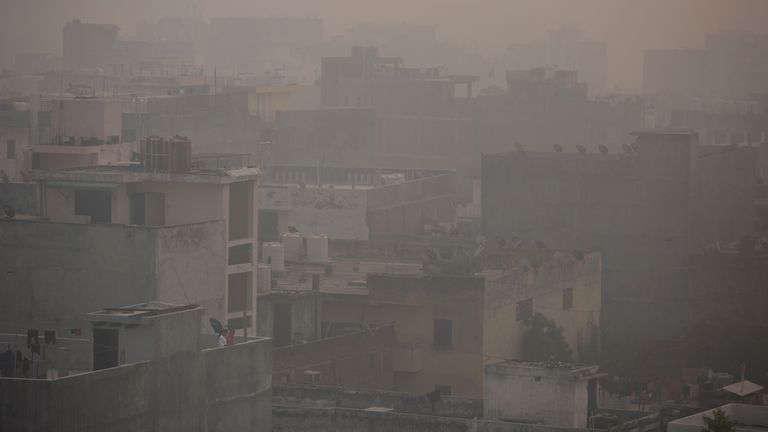
The AQI measures the concentration of poisonous particulate matter PM2.5 in a cubic metre of air.
In Delhi, the PM2.5 reading on Friday averaged 706 micrograms. The World Health Organisation deems anything above an annual average of five micrograms unsafe.
By comparison, London measured 50 PM2.5 on the AQI on Friday morning.
In India, toxic air kills more than a million people annually.
"The firecracker ban didn't seem to be successful in Delhi, which led to hazardous pollution levels adding on top of existing perennial sources," Sunil Dahiya, analyst at the Centre for Research on Energy and Clean Air (CREA) said.
The government imposes a ban on fireworks every year, but these are rarely enforced.
Stubble fires - where farmers in Delhi's neighbouring states of Punjab and Haryana burn fields to prepare for the next crop - also account for 35% of New Delhi's PM2.5 levels.
Ambrish Mithal, a doctor at the Max HealthCare hospital in New Delhi, vented his frustration on Twitter, and said: "It's terrible for those with allergies and asthma. We will continue to squabble over reasons and are doomed to suffer."
Delhi wakes to post-Diwali smogIn India, toxic air kills more than a million people annually but the government has been accused of not doing enough to curb pollution - instead prioritising economic growth.
Megan Baynes
News reporter @megbaynes
Friday 5 November 2021
Image:Residents of New Delhi woke up to the most polluted air of the year so farThe morning after Diwali celebrations residents of New Delhi woke up to a blanket of toxic smog, breathing in the most polluted air of the year so far.
The city has the worst air quality of all the world's capitals, but Friday's reading was the highest of 2021, as people paid the price for defying the fireworks ban.
Sponsored link
The Air Quality Index (AQI) surged to 451 out of 500 - the maximum recorded this year.
Image:Morning haze and smog envelops the skyline after Diwali fireworks were let off despite a ban
It indicates "severe" conditions that will affect healthy people and seriously impact those with pre-existing conditions.
It indicates "severe" conditions that will affect healthy people and seriously impact those with pre-existing conditions.
The AQI measures the concentration of poisonous particulate matter PM2.5 in a cubic metre of air.
In Delhi, the PM2.5 reading on Friday averaged 706 micrograms. The World Health Organisation deems anything above an annual average of five micrograms unsafe.
By comparison, London measured 50 PM2.5 on the AQI on Friday morning.
In India, toxic air kills more than a million people annually.
"The firecracker ban didn't seem to be successful in Delhi, which led to hazardous pollution levels adding on top of existing perennial sources," Sunil Dahiya, analyst at the Centre for Research on Energy and Clean Air (CREA) said.
The government imposes a ban on fireworks every year, but these are rarely enforced.
Stubble fires - where farmers in Delhi's neighbouring states of Punjab and Haryana burn fields to prepare for the next crop - also account for 35% of New Delhi's PM2.5 levels.
Ambrish Mithal, a doctor at the Max HealthCare hospital in New Delhi, vented his frustration on Twitter, and said: "It's terrible for those with allergies and asthma. We will continue to squabble over reasons and are doomed to suffer."
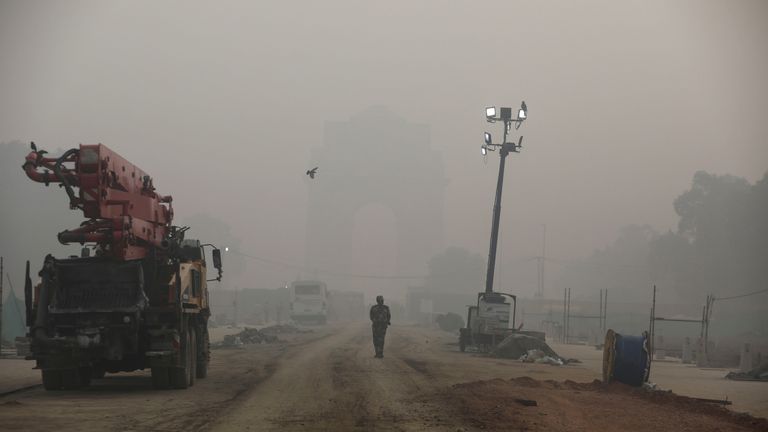
An Indian paramilitary soldier walks near India Gate which is shrouded in smog
The government has been accused of not doing enough to curb pollution, instead prioritising economic growth.
On Monday, Prime Minister Narendra Modi told the COP26 climate summit in Glasgow that India would achieve net zero carbon emissions by 2070 - two decades after the date set by other countries.
In October, intermittent rain and winds led to to a rare drop in pollution, with residents breathing the cleanest air in four years before conditions quickly deteriorated.
Pollution levels often surge in winter months, as lower temperatures and a drop in wind speed traps pollutants in the air for longer.
The government has been accused of not doing enough to curb pollution, instead prioritising economic growth.
On Monday, Prime Minister Narendra Modi told the COP26 climate summit in Glasgow that India would achieve net zero carbon emissions by 2070 - two decades after the date set by other countries.
In October, intermittent rain and winds led to to a rare drop in pollution, with residents breathing the cleanest air in four years before conditions quickly deteriorated.
Pollution levels often surge in winter months, as lower temperatures and a drop in wind speed traps pollutants in the air for longer.
India's Pledge at COP26 on Point. But Need of the Hour is Focus on Rapid Relief from Toxic Air
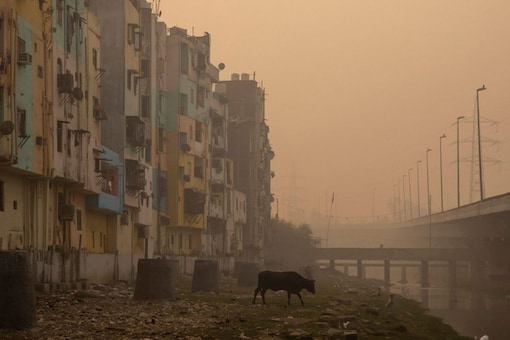
A day ahead of Diwali 2021, the average air quality in the national capital had slid into the 'very poor' category. (File picture)
India has in the recent past taken several quick measures to prevent air pollution, including the replacement of solid fuels with gas for cooking.
NEWS18.COM
LAST UPDATED:NOVEMBER 05, 2021
Environment experts have lauded India for doing more than most countries, including China, and reducing emissions. According to them, the country’s pledge at COP26 to achieve net zero carbon emissions by 2070 is “real climate action". The promises made by Prime Minister Narendra Modi to tackle climate change at the 26th international climate conference in Glasgow included achieving carbon neutrality by 2070.
While the experts said that by making the pledge, India has put the ball in the court of developed nations to fulfil the promise $1 trillion of climate finance, the move does not bring relief from the immediate problem of toxic air that the people, especially those in the national capital, are having to breath in.
Also Read: Data From 5 Years Shows AQI Shot up to Toxic Levels Each Diwali, Delhiites Learnt No Lessons
The Air Quality Index deteriorates to a new low each year around the months of October-December as stubble burning from neighbouring states intensifies and people violate norms and burst firecrackers to celebrate the festival of Diwali. This year, too, despite a Supreme Court order, several appeals by the Delhi government and other efforts in place to keep a check on bursting of firecrackers during Diwali, several areas in the city reported violations as people burst crackers all through Thursday.
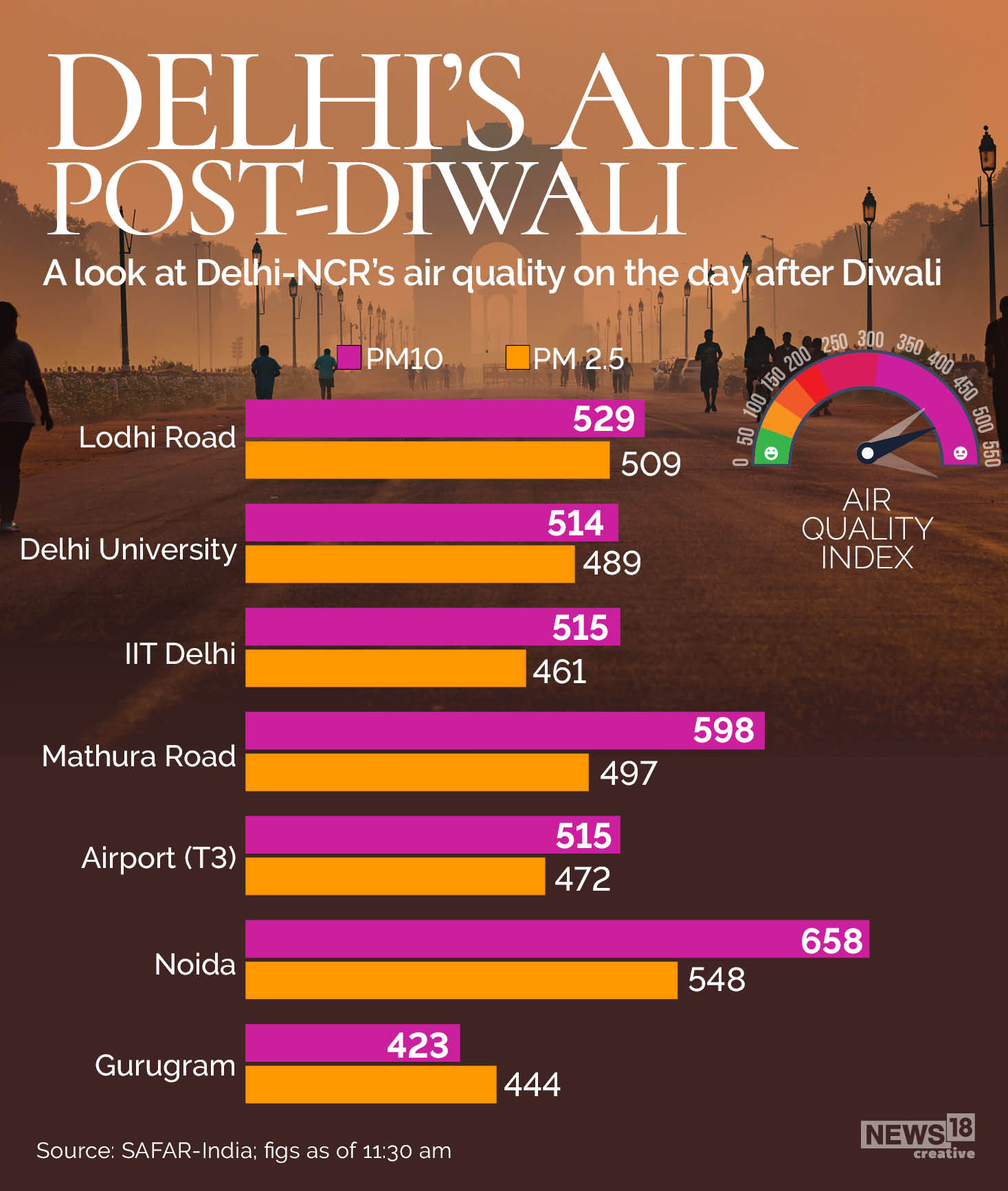
On Friday morning, Delhiites woke up to a thick blanket of smog and a worrying AQI of 617. People from several parts of the city and its suburbs complained of itchy throat and watery eyes. The city’s overall air quality index was 451 at 8 am and entered the “severe" category, according to the Ministry of Earth Sciences’ air quality forecast agency System of Air Quality and Weather Forecasting And Research (SAFAR). At around 3am, the air quality at Janpath in Delhi was in ‘hazardous’ category with PM2.5 at 655.07.
Modi, The Economist said in a piece on Friday, highlighted at Glasgow that while poor countries bear a mere fraction of the blame for creating the world’s climate mess, some, such as India, have done better at keeping environmental commitments than many rich countries.
As per the report, India, with 18% of the world’s population, is estimated to have caused just 3% of accumulated CO2 emissions. Yet even as Indian leaders repeatedly—and sometimes justifiably—take the moral high ground on climate change’s long-term challenges, their people continue to suffer and die from its immediate, home-grown causes, it says.
The Economist further points out that the problem is not faced by Delhi alone. “In winter the Himalayas trap the combined exhaust of the 600m people who populate the sprawling Indo-Gangetic Plain. From diesel pumps for irrigation to cremation pyres and from coal-fired power plants to gas-guzzling suvs, the smoke combines in a toxic stew that can hang for weeks in the season’s typically windless conditions. Big provincial cities such as Lucknow and Patna are just as sooty as Delhi. So are many rural areas,” it says.
Climate change activist and director general of Centre for Science and Environment Sunita Narain has said that India has laid out its roadmap, and targets of non-fossil fuel, renewable energy (RE) and reduction of carbon intensity are all pathways to get one billion tonnes carbon emission reduction by 2030.
“RE target of 50 per cent, non-fossil fuel 500 GW; carbon intensity of 45 per cent are all pathways to get to 1 billion tonnes carbon emission reduction by 2030. India has laid out its roadmap; this is more than OECD and certainly what China has done. India enhanced NDC (Nationally Determined Contribution) is a challenge to the world to step up," she said in a tweet.
Along with this ready roadmap, India has taken several other quick measures to prevent air pollution, including the replacement of solid fuels with gas for cooking.
It has also ramped up its solar and wind power capacity and, backed by Modi, tightened the vehicle-emissions rules. With a goal to cut pollution in 122 cities by up to 30% in the next five years, the central government in 2019 also launched a National Clean Air Programme.
A day ahead of Diwali 2021, the average air quality in the national capital had slid into the 'very poor' category. (File picture)
India has in the recent past taken several quick measures to prevent air pollution, including the replacement of solid fuels with gas for cooking.
NEWS18.COM
LAST UPDATED:NOVEMBER 05, 2021
Environment experts have lauded India for doing more than most countries, including China, and reducing emissions. According to them, the country’s pledge at COP26 to achieve net zero carbon emissions by 2070 is “real climate action". The promises made by Prime Minister Narendra Modi to tackle climate change at the 26th international climate conference in Glasgow included achieving carbon neutrality by 2070.
While the experts said that by making the pledge, India has put the ball in the court of developed nations to fulfil the promise $1 trillion of climate finance, the move does not bring relief from the immediate problem of toxic air that the people, especially those in the national capital, are having to breath in.
Also Read: Data From 5 Years Shows AQI Shot up to Toxic Levels Each Diwali, Delhiites Learnt No Lessons
The Air Quality Index deteriorates to a new low each year around the months of October-December as stubble burning from neighbouring states intensifies and people violate norms and burst firecrackers to celebrate the festival of Diwali. This year, too, despite a Supreme Court order, several appeals by the Delhi government and other efforts in place to keep a check on bursting of firecrackers during Diwali, several areas in the city reported violations as people burst crackers all through Thursday.
On Friday morning, Delhiites woke up to a thick blanket of smog and a worrying AQI of 617. People from several parts of the city and its suburbs complained of itchy throat and watery eyes. The city’s overall air quality index was 451 at 8 am and entered the “severe" category, according to the Ministry of Earth Sciences’ air quality forecast agency System of Air Quality and Weather Forecasting And Research (SAFAR). At around 3am, the air quality at Janpath in Delhi was in ‘hazardous’ category with PM2.5 at 655.07.
Modi, The Economist said in a piece on Friday, highlighted at Glasgow that while poor countries bear a mere fraction of the blame for creating the world’s climate mess, some, such as India, have done better at keeping environmental commitments than many rich countries.
As per the report, India, with 18% of the world’s population, is estimated to have caused just 3% of accumulated CO2 emissions. Yet even as Indian leaders repeatedly—and sometimes justifiably—take the moral high ground on climate change’s long-term challenges, their people continue to suffer and die from its immediate, home-grown causes, it says.
The Economist further points out that the problem is not faced by Delhi alone. “In winter the Himalayas trap the combined exhaust of the 600m people who populate the sprawling Indo-Gangetic Plain. From diesel pumps for irrigation to cremation pyres and from coal-fired power plants to gas-guzzling suvs, the smoke combines in a toxic stew that can hang for weeks in the season’s typically windless conditions. Big provincial cities such as Lucknow and Patna are just as sooty as Delhi. So are many rural areas,” it says.
Climate change activist and director general of Centre for Science and Environment Sunita Narain has said that India has laid out its roadmap, and targets of non-fossil fuel, renewable energy (RE) and reduction of carbon intensity are all pathways to get one billion tonnes carbon emission reduction by 2030.
“RE target of 50 per cent, non-fossil fuel 500 GW; carbon intensity of 45 per cent are all pathways to get to 1 billion tonnes carbon emission reduction by 2030. India has laid out its roadmap; this is more than OECD and certainly what China has done. India enhanced NDC (Nationally Determined Contribution) is a challenge to the world to step up," she said in a tweet.
Along with this ready roadmap, India has taken several other quick measures to prevent air pollution, including the replacement of solid fuels with gas for cooking.
It has also ramped up its solar and wind power capacity and, backed by Modi, tightened the vehicle-emissions rules. With a goal to cut pollution in 122 cities by up to 30% in the next five years, the central government in 2019 also launched a National Clean Air Programme.

At various hotspots, levels of harmful PM 2.5 particles topped 400 on average on the air quality index
Prakash SINGH AFP
Issued on: 05/11/2021 -
New Delhi (AFP) – New Delhi woke up to a thick blanket of toxic smog on Friday after an overnight barrage of firecrackers for the Hindu festival of Diwali in the Indian megacity, despite a ban on selling them.
At various hotspots, levels of harmful PM 2.5 particles topped 400 on average on the air quality index.
The figure is more than 15 times higher than the safe daily limit set by the World Health Organization.
India's top court has banned the sale of firecrackers in Delhi and the local government urged people to celebrate Diwali without them.
But many of the capital's roughly 20 million residents still got hold of them, setting them off all over the city until the early hours of the morning for the annual Festival of Lights.

People make their way along a street amid smoggy conditions in New Delhi

Rapid industrialisation has made China no stranger to air pollution
Issued on: 05/11/2021 -
New Delhi (AFP) – New Delhi woke up to a thick blanket of toxic smog on Friday after an overnight barrage of firecrackers for the Hindu festival of Diwali in the Indian megacity, despite a ban on selling them.
At various hotspots, levels of harmful PM 2.5 particles topped 400 on average on the air quality index.
The figure is more than 15 times higher than the safe daily limit set by the World Health Organization.
India's top court has banned the sale of firecrackers in Delhi and the local government urged people to celebrate Diwali without them.
But many of the capital's roughly 20 million residents still got hold of them, setting them off all over the city until the early hours of the morning for the annual Festival of Lights.

People make their way along a street amid smoggy conditions in New Delhi
Prakash SINGH AFP
Firecracker smoke combines with industrial and vehicle emissions and farm fires to create a putrid grey-yellow soup that envelops Delhi and other Indian cities in winter.
Sandeep, a Delhi resident, told AFP on Friday he did not think the government was doing enough to counter the pollution challenge.
"I think a great deal (more) needs to be done," he said while on a morning walk at Delhi's Lodhi Gardens.
A 2020 report by Swiss organisation IQAir found 22 of the world's 30 most polluted cities were in India, with Delhi ranked the most polluted capital globally.
The same year, the Lancet said 1.67 million deaths were attributable to air pollution in India in 2019, including almost 17,500 in the capital.
© 2021 AFP
Firecracker smoke combines with industrial and vehicle emissions and farm fires to create a putrid grey-yellow soup that envelops Delhi and other Indian cities in winter.
Sandeep, a Delhi resident, told AFP on Friday he did not think the government was doing enough to counter the pollution challenge.
"I think a great deal (more) needs to be done," he said while on a morning walk at Delhi's Lodhi Gardens.
A 2020 report by Swiss organisation IQAir found 22 of the world's 30 most polluted cities were in India, with Delhi ranked the most polluted capital globally.
The same year, the Lancet said 1.67 million deaths were attributable to air pollution in India in 2019, including almost 17,500 in the capital.
© 2021 AFP
Beijing shuts roads, playgrounds amid heavy smog after coal spike
Issued on: 05/11/2021 -

Schools in Beijing -- which will host the Winter Olympics in February -- were ordered to stop physical education classes and outdoor activities due to the smog
Issued on: 05/11/2021 -

Schools in Beijing -- which will host the Winter Olympics in February -- were ordered to stop physical education classes and outdoor activities due to the smog
JADE GAO AFP
Beijing (AFP) – Highways and school playgrounds in Beijing were closed Friday due to heavy pollution, as China ramps up coal production and faces scrutiny of its environmental record at make-or-break international climate talks
World leaders have gathered in Scotland this week for COP26 negotiations billed as one of the last chances to avert catastrophic climate change, though Chinese President Xi Jinping made a written address instead of attending in person.
China -- the world's largest emitter of the greenhouse gases responsible for climate change -- has ramped up coal output after supply chains in recent months were roiled by an energy crunch owing to strict emissions targets and record prices for the fossil fuel.
A thick haze of smog blanketed swathes of northern China on Friday, with visibility in some areas reduced to less than 200 metres (yards), according to the country's weather forecaster.
Authorities in Beijing blamed the pollution on "unfavourable weather conditions and regional pollution spread" as schools in the capital -- which will host the Winter Olympics in February -- were ordered to stop physical education classes and outdoor activities.
Stretches of highways to major cities including Shanghai, Tianjin and Harbin were closed Friday due to poor visibility.
Pollutants detected Friday morning by a monitoring station at the US embassy in Beijing reached levels defined as "very unhealthy" for the general population.
Beijing (AFP) – Highways and school playgrounds in Beijing were closed Friday due to heavy pollution, as China ramps up coal production and faces scrutiny of its environmental record at make-or-break international climate talks
World leaders have gathered in Scotland this week for COP26 negotiations billed as one of the last chances to avert catastrophic climate change, though Chinese President Xi Jinping made a written address instead of attending in person.
China -- the world's largest emitter of the greenhouse gases responsible for climate change -- has ramped up coal output after supply chains in recent months were roiled by an energy crunch owing to strict emissions targets and record prices for the fossil fuel.
A thick haze of smog blanketed swathes of northern China on Friday, with visibility in some areas reduced to less than 200 metres (yards), according to the country's weather forecaster.
Authorities in Beijing blamed the pollution on "unfavourable weather conditions and regional pollution spread" as schools in the capital -- which will host the Winter Olympics in February -- were ordered to stop physical education classes and outdoor activities.
Stretches of highways to major cities including Shanghai, Tianjin and Harbin were closed Friday due to poor visibility.
Pollutants detected Friday morning by a monitoring station at the US embassy in Beijing reached levels defined as "very unhealthy" for the general population.

Rapid industrialisation has made China no stranger to air pollution
JADE GAO AFP
Levels of small particulate matter, or PM 2.5, which penetrate deep into human lungs and cause respiratory illnesses hovered around 220 -- far above the WHO recommended limit of 15.
The smog is likely to persist until at least Saturday evening, according to city officials.
China said earlier this week it had increased daily coal production by more than one million tonnes to ease an energy shortage that had forced factories to close in recent months.
Rapid industrialisation has made China no stranger to air pollution, although severe smog episodes have become less frequent in recent years as authorities have increasingly prioritised environmental protection.
Beijing has pledged to bring emissions of planet-heating carbon dioxide to a peak by 2030 and reduce them to net zero by 2060.
China hit back Wednesday at criticism by Joe Biden, saying "actions speak louder than words" after the US president accused Beijing of not showing leadership to combat climate change.
China generates about 60 percent of its energy from burning coal.
© 2021 AFP
Levels of small particulate matter, or PM 2.5, which penetrate deep into human lungs and cause respiratory illnesses hovered around 220 -- far above the WHO recommended limit of 15.
The smog is likely to persist until at least Saturday evening, according to city officials.
China said earlier this week it had increased daily coal production by more than one million tonnes to ease an energy shortage that had forced factories to close in recent months.
Rapid industrialisation has made China no stranger to air pollution, although severe smog episodes have become less frequent in recent years as authorities have increasingly prioritised environmental protection.
Beijing has pledged to bring emissions of planet-heating carbon dioxide to a peak by 2030 and reduce them to net zero by 2060.
China hit back Wednesday at criticism by Joe Biden, saying "actions speak louder than words" after the US president accused Beijing of not showing leadership to combat climate change.
China generates about 60 percent of its energy from burning coal.
© 2021 AFP
Why China, India, Other Big Coal Users are Missing From COP26 Phase-out Deal

India used 11.6% of global coal consumption in 2020, according to BP's 2021 world energy statistical review. Pictured here is PM Prime Minister Narendra Modi.
India used 11.6% of global coal consumption in 2020, according to BP's 2021 world energy statistical review. Pictured here is PM Prime Minister Narendra Modi.
Photo: Reuters
Signatories of the COP26 agreement agreed to phase out coal-fuelled power generation in the 2030s in richer countries
Indonesia, Poland, Vietnam and other nations pledged on Thursday to phase out use of coal-fired power and stop building plants, but their deal at the COP26 climate summit failed to win support from China, India and other top coal consumers.
Britain has said one of its main aims for the United Nations summit is “consigning coal power to history". The deal saw 23 nations making new commitments, a move the president of the COP26, Alok Sharma, said put the end of coal “in sight". summit “in sight".
“Today I think we can say that the end of coal is in sight," Sharma told the Glasgow meeting.
Sharma told a news conference it had been a personal priority as COP26 president to consign coal to history and “I think you can say with confidence that coal is no longer king".
Still, some of the biggest coal-dependent nations were notable in their absence from the pledge to consign the most polluting fossil fuel to history.
China was responsible for about 54.3% of global coal consumption in 2020, while India used 11.6%, according to BP’s 2021 world energy statistical review. The United States, which also did not join the pledge, consumed 6.1%, the review showed.
Greenhouse gas emissions from burning coal are the single biggest contributor to climate change, and weaning the world off coal is considered vital to achieving global climate targets.
Signatories of the COP26 agreement agreed to phase out coal-fuelled power generation in the 2030s in richer countries, and the 2040s for poorer nations. A majority also committed to shun investment in new coal plants at home and abroad.
The line-up and pledges of countries kept changing right up until the deal was announced. The absence of China, India and Australia threw a shadow over the attempt to win global backing.
A U.S. official said President Joe Biden’s plan to decarbonize the power grid by 2035 will lessen coal dependency, as will legislation on infrastructure and social spending that Congress is haggling over.
“I think we’re going to soon have a set of bills which will have $800 billion in clean energy and climate programs that are really going to drive transformation in the United States, and that is what we are focused on," a senior U.S. Department of Energy official told reporters.
U.S. Senator Joe Manchin, a Democrat from the coal-producing state of West Virginia and the founder and partial owner of a coal brokerage, has opposed some climate measures in the legislation.
Some experts said the deal was a step forward. It came alongside an announcement by the Powering Past Coal Alliance, an international campaign, which said it secured 28 new members, including Ukraine, to pledge to quit coal.
Antony Froggatt, deputy director for the environment and society programme at London’s Chatham House think tank, said the announcements were “notable for what is absent as much as what is new".
“It highlights how uneven the transition to cleaner energy is across the globe," he said.
The commitments are not binding, and some signatories have said they will not be able to phase out coal without financial help from other countries.
“We need to have funding to retire coal earlier and to build the new capacity of renewable energy," Indonesian finance minister Sri Mulyani Indrawati told Reuters on Wednesday.
The COP26 summit has so far delivered roughly $20 billion in funding to help countries phase out coal, said Britain, which hopes the summit in Glasgow will produce enough commitments to keep within reach the target of limiting the global temperature rise to 1.5 degrees Celsius (2.7 Fahrenheit) above pre-industrial levels. That would require the world to reach net-zero carbon emissions by 2050.
Britain has largely eliminated coal from power generation, but has yet to decide on proposals for a new coal mine in Cumbria, northwest England, intended to extract coking used for steel production.
The COP26 deal covers coal-fuelled power generation, but not its use in industrial manufacturing.
The COP26 summit has so far yielded deals on coal, deforestation and methane, but a clear picture has yet to emerge on what these voluntary initiatives would add up to in terms of moderating temperature rises.
A Polish government spokesman said the country’s commitment would see it end coal use in the 2040s. Poland had previously agreed to stop mining coal by 2049.
Campaigners called for an earlier end-date and firm policies to make sure Poland delivered. “Poland must set a clear and concrete plan to phase out coal by 2030 at the latest," Joanna Flisowska of Greenpeace Poland said.
Britain said it hoped the coal deal, with its initial signatories, would spur others such as China and India to join.
Signatories of the COP26 agreement agreed to phase out coal-fuelled power generation in the 2030s in richer countries
Indonesia, Poland, Vietnam and other nations pledged on Thursday to phase out use of coal-fired power and stop building plants, but their deal at the COP26 climate summit failed to win support from China, India and other top coal consumers.
Britain has said one of its main aims for the United Nations summit is “consigning coal power to history". The deal saw 23 nations making new commitments, a move the president of the COP26, Alok Sharma, said put the end of coal “in sight". summit “in sight".
“Today I think we can say that the end of coal is in sight," Sharma told the Glasgow meeting.
Sharma told a news conference it had been a personal priority as COP26 president to consign coal to history and “I think you can say with confidence that coal is no longer king".
Still, some of the biggest coal-dependent nations were notable in their absence from the pledge to consign the most polluting fossil fuel to history.
China was responsible for about 54.3% of global coal consumption in 2020, while India used 11.6%, according to BP’s 2021 world energy statistical review. The United States, which also did not join the pledge, consumed 6.1%, the review showed.
Greenhouse gas emissions from burning coal are the single biggest contributor to climate change, and weaning the world off coal is considered vital to achieving global climate targets.
Signatories of the COP26 agreement agreed to phase out coal-fuelled power generation in the 2030s in richer countries, and the 2040s for poorer nations. A majority also committed to shun investment in new coal plants at home and abroad.
The line-up and pledges of countries kept changing right up until the deal was announced. The absence of China, India and Australia threw a shadow over the attempt to win global backing.
A U.S. official said President Joe Biden’s plan to decarbonize the power grid by 2035 will lessen coal dependency, as will legislation on infrastructure and social spending that Congress is haggling over.
“I think we’re going to soon have a set of bills which will have $800 billion in clean energy and climate programs that are really going to drive transformation in the United States, and that is what we are focused on," a senior U.S. Department of Energy official told reporters.
U.S. Senator Joe Manchin, a Democrat from the coal-producing state of West Virginia and the founder and partial owner of a coal brokerage, has opposed some climate measures in the legislation.
Some experts said the deal was a step forward. It came alongside an announcement by the Powering Past Coal Alliance, an international campaign, which said it secured 28 new members, including Ukraine, to pledge to quit coal.
Antony Froggatt, deputy director for the environment and society programme at London’s Chatham House think tank, said the announcements were “notable for what is absent as much as what is new".
“It highlights how uneven the transition to cleaner energy is across the globe," he said.
The commitments are not binding, and some signatories have said they will not be able to phase out coal without financial help from other countries.
“We need to have funding to retire coal earlier and to build the new capacity of renewable energy," Indonesian finance minister Sri Mulyani Indrawati told Reuters on Wednesday.
The COP26 summit has so far delivered roughly $20 billion in funding to help countries phase out coal, said Britain, which hopes the summit in Glasgow will produce enough commitments to keep within reach the target of limiting the global temperature rise to 1.5 degrees Celsius (2.7 Fahrenheit) above pre-industrial levels. That would require the world to reach net-zero carbon emissions by 2050.
Britain has largely eliminated coal from power generation, but has yet to decide on proposals for a new coal mine in Cumbria, northwest England, intended to extract coking used for steel production.
The COP26 deal covers coal-fuelled power generation, but not its use in industrial manufacturing.
The COP26 summit has so far yielded deals on coal, deforestation and methane, but a clear picture has yet to emerge on what these voluntary initiatives would add up to in terms of moderating temperature rises.
A Polish government spokesman said the country’s commitment would see it end coal use in the 2040s. Poland had previously agreed to stop mining coal by 2049.
Campaigners called for an earlier end-date and firm policies to make sure Poland delivered. “Poland must set a clear and concrete plan to phase out coal by 2030 at the latest," Joanna Flisowska of Greenpeace Poland said.
Britain said it hoped the coal deal, with its initial signatories, would spur others such as China and India to join.
Drought gives rebirth to Iraqi Kurd village
Issued on: 05/11/2021 -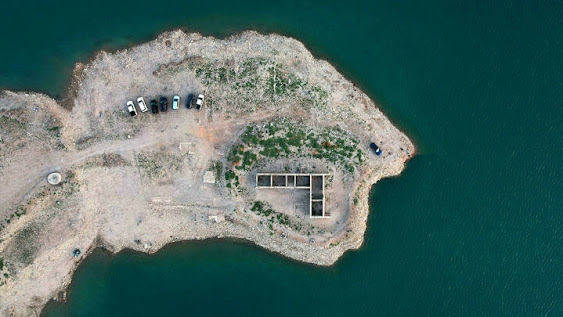
 An aerial view shows the ruins of the submerged Iraqi Kurdish village of Guiri Qasrouka which have reappeared during a drought
Issued on: 05/11/2021 -
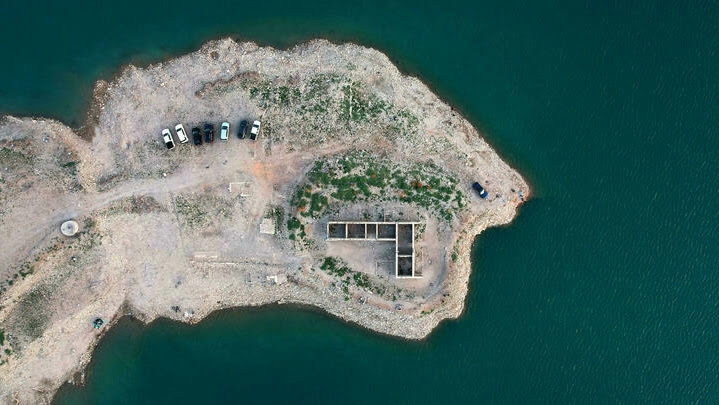 An aerial view shows the ruins of the submerged Iraqi Kurdish village of Guiri Qasrouka which have reappeared during a drought
 Ismael ADNAN AFP
Dohuk (Iraq) (AFP) – The ruins of an Iraqi Kurdish village abandoned 36 years ago and submerged under the waters of a dam, have suddenly resurfaced thanks to sinking water levels in the drought-hit country.
The construction of the dam, two kilometres (one mile) north of the town of Dohuk, started in 1985 and prompted the resettlement of Guiri Qasrouka's 50 families.
Guiri Qasrouka was then swallowed by the waters which serve to irrigate surrounding farmland.
"Because of the drought" caused by scant rainfall in Iraq, the Dohuk dam's water level dropped by seven metres (23 feet) in September and brought the village back to the surface, explained the dam's director, Farhad Taher.
"This phenomenon is certainly linked to climate change," Taher said, adding that the ruins had also reappeared in 2009, 1999 and 1992.

People visit the remains of the village, which has also reappeared three times previously when surrounding dam waters dropped sharply Ismael ADNAN AFP
Before the winter rains set in and the village goes under again, visitors on foot can now view the stone walls of a Guiri Qasrouka home that is still standing.
The algae-splattered and shell-indented ruins are set against a backdrop of the towering Kurdish mountains of northern Iraq.
With financial compensation, villagers, who had also fled between 1974 and 1976 during a Kurdish uprising, built a new Guiri Qasrouka nearby.
© 2021 AFP
Dohuk (Iraq) (AFP) – The ruins of an Iraqi Kurdish village abandoned 36 years ago and submerged under the waters of a dam, have suddenly resurfaced thanks to sinking water levels in the drought-hit country.
The construction of the dam, two kilometres (one mile) north of the town of Dohuk, started in 1985 and prompted the resettlement of Guiri Qasrouka's 50 families.
Guiri Qasrouka was then swallowed by the waters which serve to irrigate surrounding farmland.
"Because of the drought" caused by scant rainfall in Iraq, the Dohuk dam's water level dropped by seven metres (23 feet) in September and brought the village back to the surface, explained the dam's director, Farhad Taher.
"This phenomenon is certainly linked to climate change," Taher said, adding that the ruins had also reappeared in 2009, 1999 and 1992.

People visit the remains of the village, which has also reappeared three times previously when surrounding dam waters dropped sharply Ismael ADNAN AFP
Before the winter rains set in and the village goes under again, visitors on foot can now view the stone walls of a Guiri Qasrouka home that is still standing.
The algae-splattered and shell-indented ruins are set against a backdrop of the towering Kurdish mountains of northern Iraq.
With financial compensation, villagers, who had also fled between 1974 and 1976 during a Kurdish uprising, built a new Guiri Qasrouka nearby.
© 2021 AFP
Ethiopia's wartime emergency decree sets capital on edge
Robbie COREY-BOULET
Fri, 5 November 2021,

Prime Minister Abiy Ahmed, winner of the 2019 Nobel Peace Prize, sent troops to topple the TPLF last November, a move he said came in response to TPLF attacks on army camps
Robbie COREY-BOULET
Fri, 5 November 2021,
Prime Minister Abiy Ahmed, winner of the 2019 Nobel Peace Prize, sent troops to topple the TPLF last November, a move he said came in response to TPLF attacks on army camps
(AFP/Yasuyoshi CHIBA)

Conflict in Ethiopia (AFP/Gal ROMA)
![]()

Candles and flags: A memorial service for victims of the Tigray conflict, organised by Addis Ababa's city administration on Wednesday (AFP/EDUARDO SOTERAS)

![]()
Front page: The government declared a state of emergency on Tuesday (AFP/EDUARDO SOTERAS)
All week, Bisrat's phone has been buzzing with news of fellow Tigrayans caught up in a fresh round of mass arrests linked to Ethiopia's year-long war.
Police first arrested his former business partner from a shop in central Addis Ababa, then detained his uncle and brother-in-law in house-to-house searches.
Lawyers say they are among thousands of Tigrayans taken into custody since Tuesday, when Prime Minister Abiy Ahmed's government announced a state of emergency it said would protect citizens from Tigray People's Liberation Front (TPLF) rebels.
The measure -- blasted by rights groups as repressive -- has ratcheted up tensions, especially for Tigrayans, as the TPLF and its allies threaten to march on the capital.
Hoping to avoid their fate, Bisrat has deleted Tigrinya-language songs and pictures of the Tigray region's flag from his phone, and he only speaks Amharic in public.
"It's like we don't have air to breathe," he told AFP.
- Weapons searches -
Abiy's cabinet unveiled the six-month state of emergency after the TPLF claimed control of two key cities about 400 kilometres (250 miles) north of Addis Ababa.
The following day the group said it moved even further south to Kemissie, where it said it was working alongside the Oromo Liberation Army rebel group, which has predicted the capital could fall in a matter of weeks.
Abiy's government Thursday painted an entirely different picture of the current battlefield dynamic, saying the TPLF was "encircled" and close to defeat.
There were few signs of widespread panic in Addis Ababa, though security forces appear to be on edge, conducting extensive searches city-wide.
More than 100 city police officers swarmed one upscale apartment building in central Addis Ababa Friday morning, demanding to inspect tenants' identification documents and search every room for weapons.
Kenea Yadeta, head of the city's security bureau, this week directed residents to organise to defend their neighbourhoods.
The city administration has announced all firearms must be registered, a process that will continue through at least Saturday.
Outside one police station Thursday, an AFP journalist saw dozens of people -- many of whom appeared to be private security guards -- queueing to register Kalashnikovs.
- Amnesty cries foul -
Amnesty International warned Friday that calls for civilians to take up arms -- in Addis Ababa and beyond -- could fuel further abuses.
It also denounced the new emergency measures, which allow for anyone suspected of supporting "terrorist groups" to be searched and held without a warrant.
They also permit authorities to conscript "any military-age citizen who has weapons" and suspend media outlets and NGOs accused of supporting the rebels.
"The sweeping nature of this state of emergency is a blueprint for escalating human rights violations, including arbitrary detention, particularly of human rights defenders, journalists, minorities and government critics," said Amnesty East Africa director Deprose Muchena.
"And it puts detainees at heightened risk of torture and other ill-treatment."
The war in northern Ethiopia has already killed thousands, driven hundreds of thousands into famine-like conditions and given rise to gruesome massacres.
Abiy, winner of the 2019 Nobel Peace Prize, sent troops to topple the TPLF last November, a move he said came in response to TPLF attacks on army camps.
He promised a swift victory, yet by late June the TPLF had regrouped to reclaim most of the region, then pressed offensives into the neighbouring Amhara and Afar regions.
- Rising fear -
Much of northern Ethiopia is under a communications blackout and access for journalists is restricted, making it difficult to assess exactly how close the rebels might be to the city.
Nevertheless the US and UK this week urged citizens to reconsider travel to Ethiopia, and the US embassy in Addis Ababa has authorised the voluntary departure of most staff and their families.
Tigrayans told AFP they were increasingly worried about their safety and the possibility that friends and neighbours might denounce them to security forces merely because of their ethnicity.
Abiy's government has long said security forces are only going after TPLF members and supporters.
But Bisrat, who told AFP he personally knows 15 people detained this week, voiced alarm about online hate speech and a general impression that all Tigrayans are suspects.
He recalled riding in a share-taxi this week and hearing another passenger brag loudly into his phone about reporting Tigrayan neighbours to the police, saying they were then "captured".
"He was happy when he said that," Bisrat said. "He was laughing."
rcb/np/yad
Conflict in Ethiopia (AFP/Gal ROMA)
Candles and flags: A memorial service for victims of the Tigray conflict, organised by Addis Ababa's city administration on Wednesday (AFP/EDUARDO SOTERAS)
Front page: The government declared a state of emergency on Tuesday (AFP/EDUARDO SOTERAS)
All week, Bisrat's phone has been buzzing with news of fellow Tigrayans caught up in a fresh round of mass arrests linked to Ethiopia's year-long war.
Police first arrested his former business partner from a shop in central Addis Ababa, then detained his uncle and brother-in-law in house-to-house searches.
Lawyers say they are among thousands of Tigrayans taken into custody since Tuesday, when Prime Minister Abiy Ahmed's government announced a state of emergency it said would protect citizens from Tigray People's Liberation Front (TPLF) rebels.
The measure -- blasted by rights groups as repressive -- has ratcheted up tensions, especially for Tigrayans, as the TPLF and its allies threaten to march on the capital.
Hoping to avoid their fate, Bisrat has deleted Tigrinya-language songs and pictures of the Tigray region's flag from his phone, and he only speaks Amharic in public.
"It's like we don't have air to breathe," he told AFP.
- Weapons searches -
Abiy's cabinet unveiled the six-month state of emergency after the TPLF claimed control of two key cities about 400 kilometres (250 miles) north of Addis Ababa.
The following day the group said it moved even further south to Kemissie, where it said it was working alongside the Oromo Liberation Army rebel group, which has predicted the capital could fall in a matter of weeks.
Abiy's government Thursday painted an entirely different picture of the current battlefield dynamic, saying the TPLF was "encircled" and close to defeat.
There were few signs of widespread panic in Addis Ababa, though security forces appear to be on edge, conducting extensive searches city-wide.
More than 100 city police officers swarmed one upscale apartment building in central Addis Ababa Friday morning, demanding to inspect tenants' identification documents and search every room for weapons.
Kenea Yadeta, head of the city's security bureau, this week directed residents to organise to defend their neighbourhoods.
The city administration has announced all firearms must be registered, a process that will continue through at least Saturday.
Outside one police station Thursday, an AFP journalist saw dozens of people -- many of whom appeared to be private security guards -- queueing to register Kalashnikovs.
- Amnesty cries foul -
Amnesty International warned Friday that calls for civilians to take up arms -- in Addis Ababa and beyond -- could fuel further abuses.
It also denounced the new emergency measures, which allow for anyone suspected of supporting "terrorist groups" to be searched and held without a warrant.
They also permit authorities to conscript "any military-age citizen who has weapons" and suspend media outlets and NGOs accused of supporting the rebels.
"The sweeping nature of this state of emergency is a blueprint for escalating human rights violations, including arbitrary detention, particularly of human rights defenders, journalists, minorities and government critics," said Amnesty East Africa director Deprose Muchena.
"And it puts detainees at heightened risk of torture and other ill-treatment."
The war in northern Ethiopia has already killed thousands, driven hundreds of thousands into famine-like conditions and given rise to gruesome massacres.
Abiy, winner of the 2019 Nobel Peace Prize, sent troops to topple the TPLF last November, a move he said came in response to TPLF attacks on army camps.
He promised a swift victory, yet by late June the TPLF had regrouped to reclaim most of the region, then pressed offensives into the neighbouring Amhara and Afar regions.
- Rising fear -
Much of northern Ethiopia is under a communications blackout and access for journalists is restricted, making it difficult to assess exactly how close the rebels might be to the city.
Nevertheless the US and UK this week urged citizens to reconsider travel to Ethiopia, and the US embassy in Addis Ababa has authorised the voluntary departure of most staff and their families.
Tigrayans told AFP they were increasingly worried about their safety and the possibility that friends and neighbours might denounce them to security forces merely because of their ethnicity.
Abiy's government has long said security forces are only going after TPLF members and supporters.
But Bisrat, who told AFP he personally knows 15 people detained this week, voiced alarm about online hate speech and a general impression that all Tigrayans are suspects.
He recalled riding in a share-taxi this week and hearing another passenger brag loudly into his phone about reporting Tigrayan neighbours to the police, saying they were then "captured".
"He was happy when he said that," Bisrat said. "He was laughing."
rcb/np/yad
NASA Rover Has Found Previously Unknown Organic Molecules on Mars

Curiosity on Mars. (NASA/JPL-Caltech)
SPACE
CARLY CASSELLA
5 NOVEMBER 2021
Using a new on-board experiment, NASA's Curiosity rover has discovered traces of previously undetected organic molecules on Mars.
None of the organic molecules identified in the sand hold unequivocal signs of life, but they do suggest the new technique, which didn't require the rover to drill, is an effective tool when it comes to searching for evidence of carbon-based molecules, which are important building blocks for life as we know it.
The wet-lab experiment came about after Curiosity hit a figurative bump in the road while looking for signs of life on the red planet at the close of 2016.
Just as the rover was preparing to sample the Martian rock at the base of Mt Sharp, its drill suddenly stopped working.
Instead of putting a break on the mission until the issue could be fixed, researchers at NASA simply changed gears.
Rather than pulverizing rock samples into powder, a bit of loose sand that had already been scooped up on Ogunquit Beach was introduced into Curiosity's 'wet chemistry lab'.
This on-board laboratory includes just nine cups of solvent, which can only be used once each, so researchers have to be really picky about which samples they ultimately choose.
Organic compounds within Martian rock are super challenging to detect, because once they are heated, they break up into simpler molecules.
If these organic compounds, however, react with other chemicals first, they are more likely to enter a gas chromatograph and mass spectrometer for analysis without breaking down. Hence, Curiosity's nine cups of solvent.
It's a cleverly designed system that enables us to quickly analyze soil on Mars from the comfort of our own planet. Yet in late 2016, it had never been put to the test.
The team at NASA didn't expect the sand from Ogunquit to be organic rich, but they weren't sure they could keep drilling on the planet going forward, so it was worth a try.
Breaking the first seal for the Ogunquit sand, researchers found several organic compounds including ammonia and benzoic acid. Some of the organic compounds had never been identified on Mars before.
Now, a couple of years later, the results have been peer-reviewed and published.
As mentioned above, the presence of these organic molecules don't definitively mean there was once life on Mars, and no amino-acid derivatives were detected in the sample.
But what's exciting is that this new technique can now be used to look for signs of life, even when without the ability to drill.
"This derivatization experiment on Mars has expanded the inventory of molecules present in Martian samples and demonstrated a powerful tool to further enable the search for polar organic molecules of biotic or prebiotic relevance," wrote the NASA research team, led by astrobiologist Maëva Millan from NASA's Goddard Space Flight Center and Georgetown University.
In the end, it took over a year before engineers on Earth were able to fix Curiosity's drill and get it back in action, but by then, we knew the wet chemistry cups could work.
By 2019, the second cup was ready to be used for a sample of clay-bearing rock from further up Mt Sharp. Other analyses are soon to follow, not only on Mars but also on Earth.
NASA plans on conducting a mission in the 2030s to collect the rest of Curiosity's samples, so that they can be more carefully analyzed back on our own planet.
The study was published in Nature Astronomy.
Curiosity on Mars. (NASA/JPL-Caltech)
SPACE
CARLY CASSELLA
5 NOVEMBER 2021
Using a new on-board experiment, NASA's Curiosity rover has discovered traces of previously undetected organic molecules on Mars.
None of the organic molecules identified in the sand hold unequivocal signs of life, but they do suggest the new technique, which didn't require the rover to drill, is an effective tool when it comes to searching for evidence of carbon-based molecules, which are important building blocks for life as we know it.
The wet-lab experiment came about after Curiosity hit a figurative bump in the road while looking for signs of life on the red planet at the close of 2016.
Just as the rover was preparing to sample the Martian rock at the base of Mt Sharp, its drill suddenly stopped working.
Instead of putting a break on the mission until the issue could be fixed, researchers at NASA simply changed gears.
Rather than pulverizing rock samples into powder, a bit of loose sand that had already been scooped up on Ogunquit Beach was introduced into Curiosity's 'wet chemistry lab'.
This on-board laboratory includes just nine cups of solvent, which can only be used once each, so researchers have to be really picky about which samples they ultimately choose.
Organic compounds within Martian rock are super challenging to detect, because once they are heated, they break up into simpler molecules.
If these organic compounds, however, react with other chemicals first, they are more likely to enter a gas chromatograph and mass spectrometer for analysis without breaking down. Hence, Curiosity's nine cups of solvent.
It's a cleverly designed system that enables us to quickly analyze soil on Mars from the comfort of our own planet. Yet in late 2016, it had never been put to the test.
The team at NASA didn't expect the sand from Ogunquit to be organic rich, but they weren't sure they could keep drilling on the planet going forward, so it was worth a try.
Breaking the first seal for the Ogunquit sand, researchers found several organic compounds including ammonia and benzoic acid. Some of the organic compounds had never been identified on Mars before.
Now, a couple of years later, the results have been peer-reviewed and published.
As mentioned above, the presence of these organic molecules don't definitively mean there was once life on Mars, and no amino-acid derivatives were detected in the sample.
But what's exciting is that this new technique can now be used to look for signs of life, even when without the ability to drill.
"This derivatization experiment on Mars has expanded the inventory of molecules present in Martian samples and demonstrated a powerful tool to further enable the search for polar organic molecules of biotic or prebiotic relevance," wrote the NASA research team, led by astrobiologist Maëva Millan from NASA's Goddard Space Flight Center and Georgetown University.
In the end, it took over a year before engineers on Earth were able to fix Curiosity's drill and get it back in action, but by then, we knew the wet chemistry cups could work.
By 2019, the second cup was ready to be used for a sample of clay-bearing rock from further up Mt Sharp. Other analyses are soon to follow, not only on Mars but also on Earth.
NASA plans on conducting a mission in the 2030s to collect the rest of Curiosity's samples, so that they can be more carefully analyzed back on our own planet.
The study was published in Nature Astronomy.
Australia’s Great Barrier Reef will survive if warming kept to 1.5°C
Reuters / 10:52 AM November 05, 2021

FILE PHOTO: Coral surrounds two small islands on the Great Barrier Reef, located off the coast of Queensland, near the town of Rockhampton, in Australia, November 15, 2018. REUTERS/David Gray
SYDNEY — A study released on Friday by an Australian university looking at multiple catastrophes hitting the Great Barrier Reef has found for the first time that only 2% of its area has escaped bleaching since 1998, then the world’s hottest year on record.
If global warming is kept to 1.5 degrees [Celsius], the maximum rise in average global temperature that was the focus of the COP26 United Nations climate conference, the mix of corals on the Great Barrier Reef will change but it could still thrive, said the study’s lead author Professor Terry Hughes, of the Australian Research Council’s Centre of Excellence for Coral Reef Studies.
“If we can hold global warming to 1.5°C global average warming then I think we’ll still have a vibrant Great Barrier Reef,” he said.
Bleaching is a stress response by overheated corals during heat waves, where they lose their color and many struggle to survive. Eighty percent of the World Heritage-listed wonder has been bleached severely at least once since 2016, the study by James Cook University in Australia’s Queensland state found.
“Even the most remote, most pristine parts of the Great Barrier Reef have now bleached severely at least once,” Hughes said.
The study found the corals adapted to have a higher heat threshold if they had survived a previous bleaching event, but the gap between bleaching events has shrunk, giving the reefs less time to recover between each episode.
Australia, which last week said it would not back a pledge led by the United States and the European Union to cut methane emissions, needs to do more to cut greenhouse gas emissions, Hughes said.
“The government is still issuing permits for new coal mines and for new methane gas deals and it’s simply irresponsible in terms of Australia’s responsibilities to the Great Barrier Reef,” he said.
The Great Barrier Reef is comprised of more than 3,000 individual reefs stretching for 2,300km (1,429 miles). The ecosystem supports 65,000 jobs in reef tourism. Globally, hundreds of millions of people depend on the survival of coral reefs for their livelihoods and food security.
“If we go to 3, 4 degrees [Celsius] of global average warming which is tragically the trajectory we are currently on, then there won’t be much left of the Great Barrier Reef or any other coral reefs throughout the tropics,” Hughes told Reuters.
FILE PHOTO: Coral surrounds two small islands on the Great Barrier Reef, located off the coast of Queensland, near the town of Rockhampton, in Australia, November 15, 2018. REUTERS/David Gray
SYDNEY — A study released on Friday by an Australian university looking at multiple catastrophes hitting the Great Barrier Reef has found for the first time that only 2% of its area has escaped bleaching since 1998, then the world’s hottest year on record.
If global warming is kept to 1.5 degrees [Celsius], the maximum rise in average global temperature that was the focus of the COP26 United Nations climate conference, the mix of corals on the Great Barrier Reef will change but it could still thrive, said the study’s lead author Professor Terry Hughes, of the Australian Research Council’s Centre of Excellence for Coral Reef Studies.
“If we can hold global warming to 1.5°C global average warming then I think we’ll still have a vibrant Great Barrier Reef,” he said.
Bleaching is a stress response by overheated corals during heat waves, where they lose their color and many struggle to survive. Eighty percent of the World Heritage-listed wonder has been bleached severely at least once since 2016, the study by James Cook University in Australia’s Queensland state found.
“Even the most remote, most pristine parts of the Great Barrier Reef have now bleached severely at least once,” Hughes said.
The study found the corals adapted to have a higher heat threshold if they had survived a previous bleaching event, but the gap between bleaching events has shrunk, giving the reefs less time to recover between each episode.
Australia, which last week said it would not back a pledge led by the United States and the European Union to cut methane emissions, needs to do more to cut greenhouse gas emissions, Hughes said.
“The government is still issuing permits for new coal mines and for new methane gas deals and it’s simply irresponsible in terms of Australia’s responsibilities to the Great Barrier Reef,” he said.
The Great Barrier Reef is comprised of more than 3,000 individual reefs stretching for 2,300km (1,429 miles). The ecosystem supports 65,000 jobs in reef tourism. Globally, hundreds of millions of people depend on the survival of coral reefs for their livelihoods and food security.
“If we go to 3, 4 degrees [Celsius] of global average warming which is tragically the trajectory we are currently on, then there won’t be much left of the Great Barrier Reef or any other coral reefs throughout the tropics,” Hughes told Reuters.
Subscribe to:
Comments (Atom)