It’s possible that I shall make an ass of myself. But in that case one can always get out of it with a little dialectic. I have, of course, so worded my proposition as to be right either way (K.Marx, Letter to F.Engels on the Indian Mutiny)
Tuesday, May 24, 2022
Skydiving salamanders live in world's tallest trees
Salamander living in redwoods is able to maneuver in freefall, suggesting adaptation to living at heights
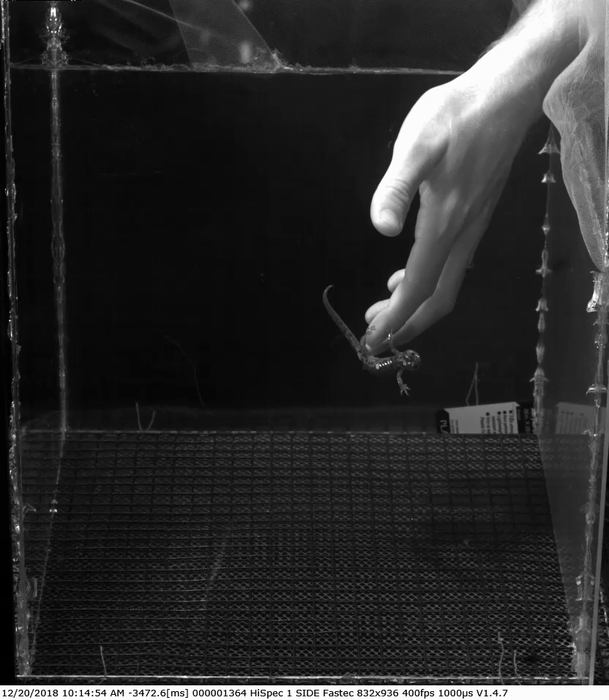
IMAGE: THE WANDERING SALAMANDER, ANEIDES VAGRANS, IS ABOUT 4 INCHES (10 CENTIMETERS) LONG AND LIVES ITS ENTIRE LIFE IN THE CROWNS OF REDWOOD TREES MORE THAN 150 FEET ABOVE THE GROUND. RESEARCHERS DISCOVERED THAT IT HAS ADAPTED TO ITS HIGH-RISE LIFESTYLE BY DEVELOPING THE ABILITY TO PARACHUTE AND GLIDE WHEN FALLING.view more
CREDIT: CHRISTIAN BROWN
Salamanders that live their entire lives in the crowns of the world's tallest trees, California's coast redwoods, have evolved a behavior well-adapted to the dangers of falling from high places: the ability to parachute, glide and maneuver in mid-air.
Flying squirrels, not to mention numerous species of gliding frogs, geckos, and ants and other insects, are known to use similar aerial maneuvers when jumping from tree to tree or when falling, so as to remain in the trees and avoid landing on the ground.
Similarly, the researchers suspect that this salamander's skydiving skills are a way to steer back to a tree it’s fallen or jumped from, the better to avoid terrestrial predators.
"While they're parachuting, they have an exquisite amount of maneuverable control," said Christian Brown, a doctoral candidate at the University of South Florida (USF) in Tampa and first author of a paper about these behaviors. "They are able to turn. They are able to flip themselves over if they go upside down. They're able to maintain that skydiving posture and kind of pump their tail up and down to make horizontal maneuvers. The level of control is just impressive."
The aerial dexterity of the so-called wandering salamander (Aneides vagrans) was revealed by high-speed video footage taken in a wind tunnel at the University of California, Berkeley, where the salamanders were nudged off a perch into an upward moving column of air simulating free fall.
“What struck me when I first saw the videos is that they (the salamanders) are so smooth — there's no discontinuity or noise in their motions, they're just totally surfing in the air,” said Robert Dudley, UC Berkeley professor of integrative biology and an expert on animal flight. “That, to me, implies that this behavior is something deeply embedded in their motor response, that it (falling) must happen at reasonably high frequencies so as to effect selection on this behavior. And it's not just passive parachuting, they're not just skydiving downwards. They're also clearly doing the lateral motion, as well, which is what we would call gliding.”
The behavior is all the more surprising because the salamanders, aside from having slightly larger foot pads, look no different from other salamanders that aren’t aerially maneuverable. They have no skin flaps, for example, that would tip you off to their parachuting ability.
"Wandering salamanders have big feet, they have long legs, they have active tails. All of these things lend themselves to aerial behaviors. But everybody just assumed that was for climbing, because that's what they use those features for when we're looking at them," Brown said. "So, it's not really a dedicated aerodynamic control surface, but it functions as both. It helps them climb, and it seems to help them parachute and glide, as well."
Among the questions the researchers hope to answer in future research are how salamanders manage to parachute and maneuver without obvious anatomical adaptations to gliding and whether many other animals with similar aerial skills have never been noticed before.
"Salamanders are sluggish, you don't think of them as having particularly fast reflexes. It's life in the slow lane. And flight control is all about rapid response to dynamic visual cues and being able to target and orient and change your body position," Dudley said. "So, it's just kind of odd. How often can this be happening, anyway, and how would we know?"
A paper describing the behavior will be published May 23 in the journal Current Biology.
Life in the canopy
Using the wind tunnel, Brown and UC Berkeley graduate student Erik Sathe compared the gliding and parachuting behavior of A. vagrans — adults are about 4 inches (10 centimeters) from snout to tip of tail — with the abilities of three other salamander species native to Northern California, each with varying degrees of arboreality — that is, the propensity to climb or live in trees. The wandering salamander, which probably spends its entire life in a single tree, moving up and down but never touching the ground, was the most proficient skydiver. A related species, the so-called arboreal salamander, A. lugubris, which lives in shorter trees, such as oaks, was nearly as effective at parachuting and gliding.
Two of the least arboreal salamanders — Ensatina eschscholtzii, a forest floor-dwelling salamander, and A. flavipunctatus, the speckled black salamander, which occasionally climbs trees — essentially flailed ineffectively for the few seconds they were airborne in the wind tunnel. All four species are plethodontid, or lungless, salamanders, the largest family of salamanders and mostly found in the Western Hemisphere.
"The two least arboreal species flail around a lot. We call it ineffective, undulating motion because they don't glide, they don't move horizontally, they just kind of hover in the wind tunnel freaking out," Brown said. "The two most arboreal species never actually flailed."
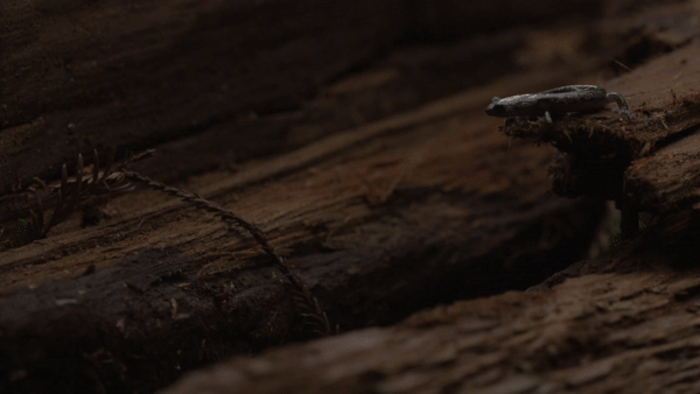
Brown encountered these salamanders while working in California's Humboldt and Del Norte counties with nonprofit and university conservation groups that mark and track the animals that live in the redwood canopy, primarily in old growth forest some 150 feet off the ground. Using ropes and ascenders, the biologists regularly climb the redwoods — the tallest of which rise to a height of 380 feet — to capture and mark wandering salamanders. Over the past 20 years, as part of a project led by James Campbell-Spickler, now director of the Sequoia Park Zoo in Eureka, the researchers discovered that most of their marked salamanders could be found in the same tree year after year, although at different heights. They live primarily in fern mats growing in the duff, the decaying vegetable matter that collects in the junctions of large branches. Brown said that few marked wandering salamanders from the redwood canopy have been found on the ground, and most of those were found dead.
Brown noticed, when picking them up to mark them, that the salamanders were quick to leap out of his hands. Even a light tap on a branch or a shadow passing nearby were enough to get them to jump from the redwood canopy. Given their location high above the forest floor, their nonchalant leaps into thin air were surprising.
"They jump, and before they've even finished toeing off, they've got their forelimbs splayed out, and they're ready to go," he said. "So, the jump and the parachute are very closely tied together. They assume the position immediately."
When he approached Dudley, who has studied such behavior in other animals, he invited Brown to bring some of the salamanders into his wind tunnel to record their behavior. Using a high-speed video camera shooting at 400 frames per second, Brown and Sathe filmed the salamanders for as long as they floated on the column of air, sometimes up to 10 seconds.
They then analyzed the frames to determine the animals’ midair posture and to deduce how they used their legs, bodies and tails to maneuver. They typically fell at a steep angle, only 5 degrees from vertical, but based on the distances between branches in the crowns of redwoods, this would usually be sufficient for them to reach a branch or trunk before they hit the ground. Parachuting reduced their free-fall speed by about 10%.
Brown suspects that their aerial skills evolved to deal with falls, but have become part of their behavioral repertoire and perhaps their default method of descent. He and USF undergraduate Jessalyn Aretz found, for example, that walking downward was much harder for the salamander than walking on a horizontal branch or up a trunk.
"That suggests that when they're wandering, they're likely walking on flat surfaces, or they're walking upward. And when they run out of habitat, as the upper canopy becomes drier and drier, and there's nothing else for them up there, they could just drop back down to those better habitats," he said. "Why walk back down? You're already probably exhausted. You've burned all your energy, you're a little 5 gram salamander, and you've just climbed the tallest tree on Earth. You're not going to turn around and walk down — you're going to take the gravity elevator."
Brown sees A. vagrans as another poster child for old growth forests that is akin to the spotted owl because it is found primarily in the crowns of the tallest and oldest redwoods, although also in Douglas fir and Sitka spruce.
“This salamander is a poster child for the part of the redwoods that was almost completely lost to logging — the canopy world. It is not there in these new-growth forests created by logging companies,” he said. “Perhaps it would help not just efforts in conserving redwoods, but restoring redwoods, so that we could actually get canopy ecosystems. Restoring redwoods to the point of fern mats, to the point of salamanders in the canopy — that would be a new bar for conservation.”
In the meantime, this denizen of old growth forests has a lot to tell us about evolution and perhaps the origin of flight, said Dudley.
"It (gliding) is a novelty, something unexpected in an otherwise well-studied group of animals, but it illustrates the urgency with which animals that are living in trees must evolve aerial capacity, even if they don't have wings," Dudley said. "Flight, in the sense of controlled aerial behavior, is very common. They're controlling their body posture, and they're moving laterally. This predisposes many, many things that are living in trees to ultimately evolve flapping flight, which is probably hard to evolve and why it has only turned up three times on the planet today."
Co-authors of the paper with Brown and Dudley are Sathe and Stephen Deban, professor of integrative biology at the University of South Florida.
JOURNAL
Current Biology
METHOD OF RESEARCH
Experimental study
SUBJECT OF RESEARCH
Animals
ARTICLE TITLE
Gliding and Parachuting by Arboreal Salamanders (Genus: Aneides)
High-speed video reveals a big difference in how salamanders react to falling. While ground-dwelling (nonarboreal) salamanders seem helpless during freefall in a vertical wind tunnel, arboreal salamanders maneuver confidently. This suggests that the tree-dwellers have adapted to routine falls, and perhaps use falling as a way to quickly move around in the canopies of the world's tallest trees. The white spots are paper disks attached with water in order to track the motion of the head, body and tail.
CREDIT
Video produced by Roxanne Makasdjian with footage courtesy of Christian Brown
VIDEO: ANEIDES VAGRANS PARACHUTING IN A VERTICAL WIND TUNNEL AT AN AIRSPEED APPROXIMATELY CORRESPONDING TO THE ANIMAL’S TERMINAL VELOCITY.view more
CREDIT: CHRISTIAN BROWN
“Wandering salamanders” live in some of the world’s tallest trees. They also are known to jump when disturbed. Now, researchers report in the journal Current Biology on May 23 that these salamanders rely on postures much like those of skydiving humans to help slow and control their fall.
“Although hundreds of species of lungless salamanders are known to climb, aerial behavior had not been described,” said Christian Brown, a doctoral candidate at the University of South Florida and lead author on the study. “Our investigation of aerial behavior revealed that highly arboreal species of salamanders, especially the wandering salamander (Aneides vagrans), reliably engage in parachuting and gliding to slow and direct their descent.”
Brown first read about the wandering salamander in a National Geographic magazine in high school, and he says that he never stopped thinking about them. Years later, while working with wandering salamanders at Humboldt State University (now CalPoly Humboldt), he saw that the amphibians would readily jump from his hand or a redwood branch before quickly and consistently assuming skydiving postures. He wanted to know whether and how this unexpected aerial behavior came into play in nature.
In the new study, he and colleagues including Erik Sathe, Robert Dudley, and Stephen Deban describe the salamanders’ aerial performance in which they maintain stable gliding postures by adjusting their legs and tail. In wind-tunnel experiments, the salamanders parachuted consistently, slowing their vertical speed by up to 10% while falling. They also coupled parachuting with undulations of their tail and torso to effect gliding at non-vertical angles about half of the time.
“To observe salamanders, which are generally associated with ponds and streams, in the air is a bit unexpected in and of itself,” Brown said. “Most surprising to us was the exquisite level of control that the more arboreal salamanders had in the vertical wind tunnel. Wandering salamanders were especially adept and seemed to instinctively deploy skydiving postures upon first contact with the airstream.
“These salamanders were not only able to slow themselves down, but also used fine-scale control in pitch, roll, and yaw to maintain upright body postures, execute banking turns, and glide horizontally. This level of aerial control was unexpected because these salamanders do not seem to possess conspicuous features for aerial control.”
Brown said what he finds most noteworthy is that the salamanders, and presumably other animals, don’t necessarily need flashy control surfaces such as webbing or skin flaps to parachute and glide. He wonders what other animals might have hidden skydiving abilities. Brown also hopes that the findings will help attract attention to this unique species and its old-growth, canopy world.
“Scientists have barely scratched the surface in studying the redwood canopy ecosystem and the unique fauna it has shaped through evolutionary time,” he says. “With the climate changing at an unprecedented rate, it is vitally important that we collect more data on animals like wandering salamanders so we may better understand, protect, and preserve this delicate ecosystem.”
In the meantime, he’s using computational fluid dynamics and 3D reconstruction software to determine how the salamanders generate lift. He says that future research should include salamanders with more diverse morphologies and examine the sensory cues that lead to their aerial behaviors.
Current Biology (@CurrentBiology), published by Cell Press, is a bimonthly journal that features papers across all areas of biology. Current Biology strives to foster communication across fields of biology, both by publishing important findings of general interest and through highly accessible front matter for non-specialists. Visit http://www.cell.com/current-biology. To receive Cell Press media alerts, contact press@cell.com.
‘Unusual’ outbreak larger and more widespread than previous outbreaks outside of Africa
Significant number of cases have occurred among men who have sex with men, though cause is unclear
FREE full text: https:// www.acpjournals.org/doi/10.7326/M22-1581
URLs go live when the embargo lifts
The current monkeypox outbreak is more widespread than previous outbreaks outside of Africa and should prompt all clinicians to be attuned to the possibility that patients presenting with febrile illness and rash may be infected, according to the authors of a new commentary from the Johns Hopkins Center for Health Security at the Bloomberg School of Public Health. The authors also note that a significant number of these new cases have occurred among men who have sex with men (MSM), though the cause is unclear. These and other important facts about the current monkeypox outbreak are explained in a new commentary published in Annals of Internal Medicine.
Currently, several dozen monkeypox cases have been reported in Europe, the UK and North America, concerning epidemiologists and public health experts around the world. What distinguishes these cases — all occurring outside of the endemic region of the virus — is that person-to-person transmission is occurring, with the majority of the cases seemingly unlinked to travel from an endemic country, with the appearance of multiple, so far unlinked clusters. In addition, a significant proportion, though not all, of the cases are occurring in MSM, and many of these cases are being diagnosed at sexually transmitted infection (STI) clinics. The authors emphasize that this does not necessarily mean that monkeypox is sexually transmitted.
As a member of the orthopox viral family, of which smallpox is also a member, it is possible that the rise in monkeypox outbreaks in recent years is related to diminished population immunity to smallpox over time. Smallpox vaccination could prevent cases and smallpox antivirals may treat monkeypox cases, as well.
Monkeypox typically presents with fever and rash that starts in the mouth, then moves to the face, followed by the extremities, including palms and soles in a tell-tale centrifugal pattern. Primary care physicians, urgent care physicians, emergency medicine physicians, dermatologists, and those working in STI clinics may be the most likely to identify new monkeypox patients should they continue to appear. Clinicians who suspect monkeypox should alert state health officials to initiate testing, as commercially available test for monkeypox.
Media contacts: For an embargoed copy, please contact Angela Collom at acollom@acponline.org. To speak with an author, please contact Margaret Miller at margaret.miller@jhu.edu.
SEATTLE—More than 43 million additional health workers are needed to meet targets for universal health coverage around the world, according to a new peer-reviewed study by the Institute for Health Metrics and Evaluation (IHME)at the University of Washington’s School of Medicinethat was published today in The Lancet. The largest gaps were observed in sub-Saharan Africa, South Asia, and North Africa and the Middle East.
“These are the most comprehensive estimates to date of the global health care workforce,” said senior author Dr. Rafael Lozano, Director of Health Systems at IHME. “Health care workers are essential to the functioning of health systems, and it’s very important to have these data available so that countries can make informed decisions and plan for the future.”
The researchers looked at shortages in four categories: physicians, nurses and midwives, dental personnel, and pharmaceutical personnel. In 2019, they estimated that more than 130 countries had shortages of physicians and more than 150 had shortages of nurse and midwives. When comparing current levels of health care workers to the minimum levels needed to meet a target score of 80 on the universal health coverage (UHC) effective service coverage index, researchers estimated a shortage of more than 43 million health care workers, including 30.6 million nurses and midwives and 6.4 million physicians.
“We found that the density of health care workers is strongly related to a nation’s level of social and economic development,” said lead author Dr. Annie Haakenstad, Assistant Professor of Health Metrics Sciences at IHME. “There are different strategies and policy approaches that may help with addressing worker shortages, and these should be tailored to the individual situation in each country. We hope that these estimates can be used to help prioritize policy interventions and inform future planning.”
The study revealed more than a 10-fold difference in the density of health care workers across and within regions in 2019. Densities ranged from 2.9 physicians for every 10,000 people in sub-Saharan Africa to 38.3 per 10,000 in Central Europe, Eastern Europe, and Central Asia. Cuba also stood out, with a density of 84.4 per 10,000 compared to 2.1 in Haiti.
Similar disparities were observed in measuring numbers of nurses and midwives, with a density of 152.3 per 10,000 in Australasia compared to 37.4 per 10,000 in Southern Latin America. Despite steady increases in the health care workforce between 1990 and 2019, substantial gaps persisted.
The researchers cited existing literature that highlights factors that contribute to worker shortages, including out-migration of health workers, war and political unrest, violence against health care workers, and insufficient incentives for training and retention. They noted that high-income locations should follow WHO guidelines on responsible recruitment of health personnel to avoid contributing to workforce gaps in lower-income regions.
These findings show how ill-prepared the world was when the COVID-19 pandemic swept across the world, taxing health systems that already were short of crucial frontline workers. Having these estimates today will help policymakers, hospitals, and medical clinics prepare for future pandemics by turning their attention to training and recruitment. The authors also note that there is still much to learn about the impact of the pandemic on the health workforce. This includes gender dynamics in human resources for health (HRH) and how the departure of women from formal employment for care-taking duties at home may have depleted the health workforce, among other stressors on HRH during the pandemic.
An independent population health research organization based at the University of Washington School of Medicine, the Institute for Health Metrics and Evaluation (IHME) works with collaborators around the world to develop timely, relevant, and scientifically valid evidence that illuminates the state of health everywhere. In making our research available and approachable, we aim to inform health policy and practice in pursuit of our vision: all people living long lives in full health.
Measuring the availability of human resources for health and its relationship to universal health coverage for 204 countries and territories from 1990 to 2019: a systematic analysis for the Global Burden of Disease Study 2019
ARTICLE PUBLICATION DATE
23-May-2022
North East experts chosen to work with Arctic communities on new climate change technology
IMAGE: PROFESSOR MIKE LIM UNDERTAKING RESEARCH IN CANADA’S INUIT NUNANGAT.view more
CREDIT: IMAGE CREDIT WERONIKA MURRAY
Northumbria University researchers are part of a unique team working on a new £1m project to better equip Indigenous communities in the Arctic against the disproportionate impacts of climate change.
The study, involving local community researchers and action groups, government agencies and decision-makers, Inuit knowledge-holders, and leading UK and Canadian academics, will investigate changing ground conditions and assess their wider implications in coastal regions of Canada’s Inuit homeland that are under threat from thawing permafrost, disappearing sea ice and high rates of erosion.
Nearly a third of Canada’s landmass and 50 per cent of its coastline is within the area of Inuit Nunangat, home to approximately 65,000 Inuit people. The researchers will work with affected local communities to co-develop appropriate new tools and solutions to the landscape changes that threaten critical infrastructure, navigation routes, food and water security, and impact physical and mental health and wellbeing. Some areas are under such threat that they may be lost in as little as 20 years.
Professor Mike Lim, who will lead the project alongside Tuktoyaktuk Community Senior Administrative Officer Shawn Stuckey, explained: “Coastal communities have demonstrated exceptional resilience to the challenges of Arctic living but are having to make increasingly difficult decisions over how to respond to the complex nature of more intense and disruptive environmental changes.
“Through Nuna we’ll combine a wealth of existing data and Indigenous knowledge with exciting technological developments, empowering communities to better identify and avoid emerging hazards related to the rapidly changing landscape.”
Changes to the Arctic environment are occurring faster than elsewhere on the planet and leading to many varied and interconnected impacts. Project Nuna will provide new data on when relocation will be needed in critical areas, develop early warning for ground subsidence, issue clear guidance on harmful dust exposure levels, and water-based threats such as driftwood or contaminants released during storms will also be addressed through new accessible community monitoring and citizen science data.
Professor Christopher Smith, UKRI International Champion and Executive Chair at the Arts and Humanities Research Council said: “The need to understand and respond to the deep and interlinked impacts of climate change in the Arctic has never been greater.
“We recognise and embrace the value and importance of doing so in genuine and mutually respectful and empowering partnership with Inuit researchers and communities. I look forward to seeing how the projects develop over the next three years and hearing the results of both their work and their partnerships.”
Chief Scientist of Québec, Rémi Quirion, added: “More than ever, the climate crisis demands strong and immediate action from all levels of decision-making and sectors of civil society. The scientific community is no exception. It must join forces to develop innovative, sustainable, and socially acceptable solutions to reduce the environmental impacts of climate changes.
“The 13 research projects co-developed by scientists and Inuit community representatives will have very concrete impacts and sow the seeds of hope that it is possible to change the course of things.”
The study is just one example of Northumbria University’s world-leading environmental research into extreme, cold and palaeo environments. The University is ranked second in the UK for its research power in Geography and Environmental Studies and is top 25 in Engineering in the 2021 Research Excellence Framework, with 90 per cent of its research in these disciplines rated as being either world-leading or internationally excellent.
Find out more about some of the world-leading research Northumbria University is undertaking in all aspects of climate change.
CAPTION
Professor Mike Lim undertaking research in Canada’s Inuit Nunangat
CREDIT
Image credit: Weronika Murray
CAPTION
Professor Mike Lim undertaking research in Canada’s Inuit Nunangat.
CREDIT
Image credit Weronika Murray
Towards having your privacy, security and exchanging crypto too
New paper outlines better privacy and security protections when swapping cryptocurrencies
Privacy and security and control of those things are paramount in the world of cryptocurrencies.
“The whole cryptocurrency decentralized business is about giving control of the digital coins to you,” says Aravinda Thyagarajan, a postdoctoral researcher in the computer science department advised by CyLab’s Elaine Shi. “You should control your coins, and you don’t want to leak any information about them.”
This week, Thyagarajan will be presenting a new paper outlining a new protocol towards better privacy and security protections when swapping cryptocurrencies. The paper, “Universal Atomic Swaps: Secure Exchange of Coins Across All Blockchains,” is being presented at the 2022 IEEE Symposium on Security and Privacy.
Right now, if two people or entities want to swap one cryptocurrency for another—say, 1 Bitcoin for 1 Ethereum—they can swap directly between themselves, but there’s always a chance one of the two parties will be dishonest and not hold up their end of the deal. Another option, then, is to have a third-party exchange service mediate the deal. But what if the exchange service is an adversary and steals both parties’ coins?
“In the wild west of cryptocurrency, no one should be trusted,” says Thyagarajan.
There’s also an issue of privacy. If an e-commerce website only accepts one specific cryptocurrency, and you only have coins in a different cryptocurrency, you must perform an exchange into the compatible currency before purchasing from the website. That exchange can reveal sensitive information.
“You lose a bit of your privacy,” says Thyagarajan. “Using sophisticated mechanisms, people can learn to some probability information about your assets.”
Thyagarajan’s paper outlines a protocol that addresses these security and privacy concerns. First, the protocol is universal—it allows for exchanges across all current and future cryptocurrencies. Second, the swap protocol ensures that the swap will happen honestly or it won’t happen at all, meaning no one will maliciously lose coins, without relying on third parties. And lastly, the protocol supports the exchange of multiple types of coins—e.g. Bitcoin, Ethereum, Dogecoin, etc.—in a single swap.
“With this protocol, you can shop on that e-commerce website using a coin that is not the coin that they accept, and keep your privacy,” says Thyagarajan. “You're able to do that because you're not relying on third-party services, and also because it doesn't rely on any special features of the underlying currency.”
All of this requires an enormous amount of computing power, Thyagarajan says, so one currently can’t do this on a laptop or phone, presenting an opportunity for future work. However, for major currencies currently, like Bitcoin, Ethereum, etc., Thyagarajan’s paper presents an efficient solution for the exchange that can be run now even on low-end devices.
IMAGE: ON THE LEFT: POPLAR SPROUTS CONTAINING CRSPR-EDITED GENE. ON THE RIGHT, POPLAR SPROUTS WITH THE SAME CRSPR EDIT PLUS GENE ENHANCEMENTS TO IMPROVE GROWTHview more
CREDIT: UMD
Ten years ago, a new technology called CRISPR-CAS9, made it possible for scientists to change the genetic code of living organisms. As revolutionary as it was, the tool had its limitations. Like the first cell phones that could only perform one function, the original CRISPR method can perform one function: removing or replacing genes in a genetic sequence. Later iterations of CRISPR were developed for another function that allowed scientists to change gene expression by turning them on or off, without removing them from the genome. But each of these functions could only be performed independently in plants.
Now, scientists from the University of Maryland College of Agriculture and Natural Resources, have developed CRISPR-Combo, a method to edit multiple genes in plants while simultaneously changing the expression of other genes. This new tool will enable genetic engineering combinations that work together to boost functionality and improve breeding of new crops.
“The possibilities are really limitless in terms of the traits that can be combined,” said Yiping Qi, an associate professor in the Department of Plant Science and Landscape Architecture and co-author of the study. “But what is really exciting is that CRISPR-Combo introduces a level of sophistication to genetic engineering in plants that we haven’t had before.”
The new research appears in the May, 2022, issue of the journal Nature Plants.
The benefits of manipulating more than one gene at a time can far outweigh the benefits of any one manipulation on its own. For example, imagine a blight raging through wheat fields, threatening farmer livelihoods and food security. If scientists could remove a gene from the wheat that makes it susceptible to the blight and simultaneously turn on genes that shorten the plant’s life cycle and increase seed production, they could rapidly produce blight-resistant wheat before the disease had the chance to do too much damage.
That’s the type of engineering Qi and his team demonstrated in four different phases of experimentation.
Step One: proving the concept:
Qi and his team had previously developed new CRISPR methods to regulate gene expression in plants, and to edit multiple genes at the same time. But to develop CRISPR-Combo, they had to establish that they could perform both of those genetic engineering functions in parallel without negative consequences. In this new paper, they demonstrated that using tomato and rice cells,.
“As a proof of concept, we showed that we could knock out gene A and upregulate, or activate, gene B successfully, without accidentally crossing over and knocking out gene B or upregulating Gene A,” Qi said.
Then Qi and his colleagues tested CRISPR-Combo on a flowering plant called rockcress (ArabidopsisI), which is often used by researchers as a model for staple crops like corn and wheat. The researchers edited a gene that makes the plant more resistant to herbicides while activating a gene that causes early flowering, which produces seeds more quickly. The result was an herbicide-resistant rockcress plant that yielded eight generations in one year rather than the ordinary four.
More Efficient Engineering
For their third experiment, the team demonstrated how CRISPR-Combo could improve efficiency in plant breeding using tissue cultures from poplar trees. Breeding programs to develop new varieties of plants generally use tissue cultures rather than seeds—consider how a plant can regrow roots and leaves from a single stalk planted in the soil. Scientists genetically modify stem cells that have the ability to grow into full plants, and when those plants mature and produce seeds, the seeds will carry on the genetic modifications made to the stem cells.
Some plants are better at regenerating from tissue cultures than others, which makes this step the single largest bottleneck in genetic engineering of crops. For some plants the success rate is just 1%.
Qi and his team addressed the bottleneck by first editing a few traits in poplar cells, then activating three genes that promote plant tissue regeneration.
“We showed in poplars that our new method could offer a solution to the tissue regeneration bottleneck, dramatically increasing the efficiency of genetic engineering,” Qi said.
Hormone-Free Short Cut
Currently, growing genetically engineered plants from tissue cultures requires the addition of growth hormones, which activate growth promoting genes. The research team shortcut this process in rice by directly activating these genes with CRISPR-Combo. The result was gene-edited rice from tissue cultures that did not require hormone supplementation. Qi and his colleagues found that tissue cultures grown with their method expressed more of the edited gene than tissue grown using hormones.
“This method results in a highly efficient genome editing process,” Qi said.
Now that the team has demonstrated their CRISPR-Combo method works in a variety of plants for multiple purposes, they intend to conduct experiments in citrus, carrots and potatoes to test its viability in a fruit, vegetable and staple crop. They are also working to create an herbicide resistant golden rice with enhanced nutritional content and red rice with increased antioxidants.
Other co-authors on the research paper from UMD include Associate Professor Gary Coleman, post-doctoral associates Changtian Pan and Gen Li, Post-doctoral scholar Filiz Gurel, graduate students Yanhao Cheng, Aimee A. Malzahn and Simon Sretenovic, Laboratory trainee and high school student Benjamin Leyson.
This work was supported by NSF Plant Genome Research Program (award nos. IOS-1758745 and IOS-2029889), the USDA-NIFA (award nos. 2020-33522-32274 and 2019-67013-29197), the USDA-AFRI Agricultural Innovations Through Gene Editing Program (award no. 2021-67013-34554), Maryland Innovation Initiative Funding (award no. 1120-012_2), the USDA McIntire-Stennis project (award no. MD-PSLA-20006), NRT-INFEWS: UMD Global STEWARDS through the NSF National Research Traineeship Program (award no. 1828910) and the Foundation for Food and Agriculture Research. This story does not necessarily reflect the views of these organizations.
IMAGE: DR JIE LI EXAMINES VITAMIN D ENRICHED TOMATOESview more
CREDIT: PHIL ROBINSON
Tomatoes gene-edited to produce vitamin D, the sunshine vitamin, could be a simple and sustainable innovation to address a global health problem.
Researchers used gene editing to turn off a specific molecule in the plant’s genome which increased provitamin D3 in both the fruit and leaves of tomato plants. It was then converted to vitamin D3 through exposure to UVB light.
Vitamin D is created in our bodies after skin’s exposure to UVB light, but the major source is food. This new biofortified crop could help millions of people with vitamin D insufficiency, a growing issue linked to higher risk of cancer, dementia, and many leading causes of mortality. Studies have also shown that vitamin D insufficiency is linked to increased severity of infection by Covid-19.
Tomatoes naturally contain one of the building blocks of vitamin D3, called provitamin D3 or 7-dehydrocholesterol (7-DHC), in their leaves at very low levels. Provitamin D3, does not normally accumulate in ripe tomato fruits.
Researchers in Professor Cathie Martin’s group at the John Innes Centre used CRISPR-Cas9 gene editing to make revisions to the genetic code of tomato plants so that provitamin D3 accumulates in the tomato fruit. The leaves of the edited plants contained up to 600 ug of provitamin D3 per gram of dry weight. The recommended daily intake of vitamin d is 10 ug for adults.
When growing tomatoes leaves are usually waste material, but those of the edited plants could be used for the manufacture of vegan-friendly vitamin D3 supplements, or for food fortification.
“We’ve shown that you can biofortify tomatoes with provitamin D3 using gene editing, which means tomatoes could be developed as a plant-based, sustainable source of vitamin D3,” said Professor Cathie Martin, corresponding author of the study which appears in Nature Plants.
“Forty percent of Europeans have vitamin D insufficiency and so do one billion people world-wide. We are not only addressing a huge health problem, but are helping producers, because tomato leaves which currently go to waste, could be used to make supplements from the gene-edited lines.”
Previous research has studied the biochemical pathway of how 7-DHC is used in the fruit to make molecules and found that a particular enzyme Sl7-DR2 is responsible for converting this into other molecules.
To take advantage of this the researchers used CRISPR-Cas 9 to switch off this Sl7-DR2 enzyme in tomato so that the 7DHC accumulates in the tomato fruit.
They measured how much 7-DHC there was in the leaves and fruits of these edited tomato plants and found that there was a substantial increase in levels of 7-DHC in both the leaves and fruit of the edited plants.
The 7-DHC accumulates in both the flesh and peel of the tomatoes.
The researchers then tested whether the 7-DHC in the edited plants could be converted to vitamin D3 by shining UVB light on leaves and sliced fruit for 1 hour. They found that it did and was highly effective.
After treatment with UVB light to turn the 7-DHC into Vitamin D3, one tomato contained the equivalent levels of vitamin D as two medium sized eggs or 28g tuna – which are both recommended dietary sources of vitamin D.
The study says that vitamin D in ripe fruit might be increased further by extended exposure to UVB, for example during sun-drying.
Blocking the enzyme in the tomato had no effect on growth, development or yield of the tomato plants. Other closely related plants such as aubergine, potato and pepper have the same biochemical pathway so the method could be applied across these vegetable crops.
Earlier this month the UK Government announced an official review to examine whether food and drink should be fortified with vitamin D to address health inequalities.
Most foods contain little vitamin D and plants are generally very poor sources. Vitamin D3 is the most bioavailable form of vitamin D and is produced in the body when the skin is exposed to sunlight. In winter and in higher latitudes people need to get vitamin D from their diet or supplements because the sun is not strong enough for the body to produce it naturally.
First author of the study Dr Jie Li said: “The Covid-19 pandemic has helped to highlight the issue of vitamin D insufficiency and its impact on our immune function and general health. The provitamin D enriched tomatoes we have produced offer a much-needed plant-based source of the sunshine vitamin. That is great news for people adopting a plant-rich, vegetarian or vegan diet, and for the growing number of people worldwide suffering from the problem of vitamin D insufficiency.”
‘Biofortified tomatoes provide a new route to vitamin D sufficiency’ appears in Nature Plants.