
Private companies seek to import fuel amid Cuban energy crisis
By AFP
February 19, 2026

Vehicles wait in line to refuel at a gas station in Havan
By AFP
February 19, 2026
Vehicles wait in line to refuel at a gas station in Havan
- Copyright AFP/File ADALBERTO ROQUE
Faced with a severe energy crisis exacerbated by US sanctions, private companies in Cuba are attempting to import fuel after the island’s government agreed to end its monopoly on the sector.
The fuel crisis, already chronic due to the communist government’s lack of foreign currency, has worsened significantly since the halt of Venezuelan oil deliveries and Washington’s threats to impose tariffs on any country selling Cuba oil.
On the island of about 9.6 million people, diesel sales are now suspended and gasoline sales are drastically rationed.
“We bought an isotank… through a state-owned importer,” the owner of a private company planning to import nearly 25,000 liters of diesel from the United States told AFP on the condition of anonymity, referencing a container used to transport diesel.
“They should deliver it this week.”
The operation is being carried out under a license issued by the US Office of Foreign Assets Control (OFAC), a branch of the Treasury Department, which allows private businesses on the island to import certain products, including fuel.
A source close to the matter confirmed to AFP that Cuban private entrepreneurs were also seeking to import diesel from countries neighboring Cuba, as well as from Europe.
This type of OFAC license was granted several years ago, but the Cuban government only recently authorized private fuel imports in response to the severity of the crisis.
While the crude oil produced in Cuba powers the country’s power plants, the island is dependent on imports for diesel and liquefied petroleum gas.
“Diesel has an impact on decentralized (electricity) production through generators,” and also on “transportation, agriculture and the water sector,” Jorge Pinon, a researcher at the Energy Institute at the University of Texas, told AFP.
– Security checks –
When announcing a series of emergency measures to conserve electricity and fuel this month, Deputy Prime Minister Oscar Perez-Oliva Fraga also mentioned a new provision allowing companies to purchase fuel, though he provided few details.
The businessman interviewed by AFP said authorities have “not set any limits” on his fuel purchases, though he noted he cannot sell it to third parties.
The state previously had a monopoly on fuel sales in Cuba, but the government, caught between the US embargo, the structural weaknesses of its centralized economy and social discontent, opened certain sectors to small and medium-sized enterprises in 2021.
Currently, however, authorities have provided no details on the conditions that private companies wishing to import fuel must meet.
Safety controls, validated by the fire department, must be implemented for the storage of this fuel, the businessman told AFP, but “the institutions themselves are not able to clearly outline all the steps.”
According to Oniel Diaz, a consultant for private businesses, some entrepreneurs are already “at a very advanced stage in the import process.”
He said the possibility to import fuel opened up new opportunities for the private sector, but he noted there are still obstacles in the process, including companies’ abilities to make foreign payments and transport the fuel.
Another main concern, Diaz noted, is the risk of clashing with the Trump administration’s push to cut off fuel sales to the island.
Faced with a severe energy crisis exacerbated by US sanctions, private companies in Cuba are attempting to import fuel after the island’s government agreed to end its monopoly on the sector.
The fuel crisis, already chronic due to the communist government’s lack of foreign currency, has worsened significantly since the halt of Venezuelan oil deliveries and Washington’s threats to impose tariffs on any country selling Cuba oil.
On the island of about 9.6 million people, diesel sales are now suspended and gasoline sales are drastically rationed.
“We bought an isotank… through a state-owned importer,” the owner of a private company planning to import nearly 25,000 liters of diesel from the United States told AFP on the condition of anonymity, referencing a container used to transport diesel.
“They should deliver it this week.”
The operation is being carried out under a license issued by the US Office of Foreign Assets Control (OFAC), a branch of the Treasury Department, which allows private businesses on the island to import certain products, including fuel.
A source close to the matter confirmed to AFP that Cuban private entrepreneurs were also seeking to import diesel from countries neighboring Cuba, as well as from Europe.
This type of OFAC license was granted several years ago, but the Cuban government only recently authorized private fuel imports in response to the severity of the crisis.
While the crude oil produced in Cuba powers the country’s power plants, the island is dependent on imports for diesel and liquefied petroleum gas.
“Diesel has an impact on decentralized (electricity) production through generators,” and also on “transportation, agriculture and the water sector,” Jorge Pinon, a researcher at the Energy Institute at the University of Texas, told AFP.
– Security checks –
When announcing a series of emergency measures to conserve electricity and fuel this month, Deputy Prime Minister Oscar Perez-Oliva Fraga also mentioned a new provision allowing companies to purchase fuel, though he provided few details.
The businessman interviewed by AFP said authorities have “not set any limits” on his fuel purchases, though he noted he cannot sell it to third parties.
The state previously had a monopoly on fuel sales in Cuba, but the government, caught between the US embargo, the structural weaknesses of its centralized economy and social discontent, opened certain sectors to small and medium-sized enterprises in 2021.
Currently, however, authorities have provided no details on the conditions that private companies wishing to import fuel must meet.
Safety controls, validated by the fire department, must be implemented for the storage of this fuel, the businessman told AFP, but “the institutions themselves are not able to clearly outline all the steps.”
According to Oniel Diaz, a consultant for private businesses, some entrepreneurs are already “at a very advanced stage in the import process.”
He said the possibility to import fuel opened up new opportunities for the private sector, but he noted there are still obstacles in the process, including companies’ abilities to make foreign payments and transport the fuel.
Another main concern, Diaz noted, is the risk of clashing with the Trump administration’s push to cut off fuel sales to the island.
Marco Rubio exposed for ‘secret talks’ amid Trump admin’s starvation campaign
Alexander Willis
February 18, 2026
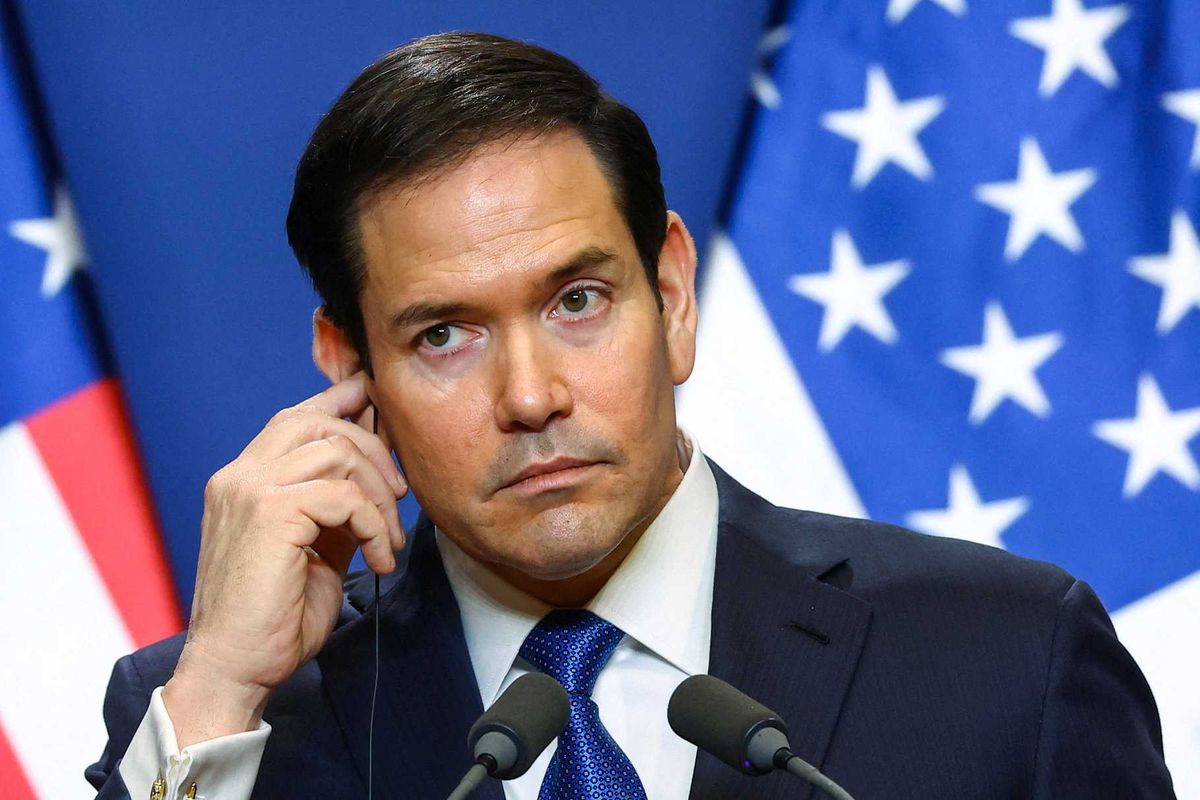
U.S. Secretary of State Marco Rubio attends a joint press conference with Hungarian Prime Minister Viktor Orban (not pictured) in Budapest, Hungary, February 16, 2026. REUTERS/Bernadett Szabo
Secretary of State Marco Rubio was revealed by Axios Wednesday to be engaged in “secret talks” with the grandson of ex-Cuban President Raúl Castro, bypassing official communication channels as part of the Trump administration’s brutal campaign to starve the Caribbean nation of resources in the pursuit of regime change.
"Our position – the U.S. government's position – is the regime has to go," one senior Trump administration official told Axios in its report Wednesday, speaking on the condition of anonymity. "But what exactly that looks like is up to [President Donald Trump] and he has yet to decide. Rubio is still in talks with the grandson."
While Cuba has faced crippling sanctions and an embargo imposed on it by the United States since the late 1950s, an executive order Trump signed last month imposed even harsher penalties on nations supplying the Caribbean nation with oil, setting off a chain reaction that’s shuttered hospitals and starved people of food.
Trump openly cheered his administration’s use of starvation as a negotiating tactic on Tuesday, calling Cuba a “failed nation” that should “absolutely make a deal.” He also refused to rule out an outright attack on Cuba similar to the United States' attack on Venezuela last month.
And on Wednesday, sources revealed to Axios that Rubio is apparently in regular contact with Raúl Guillermo Rodríguez Castro, the grandson of Raúl Castro, and the great-nephew of Fidel Castro, talks that have reportedly been "surprisingly" friendly.
“I wouldn't call these 'negotiations' as much as 'discussions' about the future," the senior Trump administration official told Axios.
Another source who was “familiar with the talks” told Axios that Rubio is “looking for the next Delcy in Cuba,” referring to acting Venezuelan President Delcy Rodríguez, who’s led Venezuela since the Trump administration abducted Venezuelan President Nicolás Maduro last month.
“There's no political diatribes about the past. It's about the future,” the source told Axios. “[Raúl Guillermo Rodríguez Castro] could be straight out of Hialeah, [Florida]. This could be a conversation between regular guys on the streets of Miami."The United States has sought to topple Cuban’s government since the late 1950s after revolutionaries – led by the Castros and Argentine revolutionary Che Guevara – ousted the U.S.-backed dictator Fulgencio Batista, whose leadership, critics say, maintained the Caribbean nation as a “virtual slave state” to the benefit of U.S. companies.
Alexander Willis
February 18, 2026
U.S. Secretary of State Marco Rubio attends a joint press conference with Hungarian Prime Minister Viktor Orban (not pictured) in Budapest, Hungary, February 16, 2026. REUTERS/Bernadett Szabo
Secretary of State Marco Rubio was revealed by Axios Wednesday to be engaged in “secret talks” with the grandson of ex-Cuban President Raúl Castro, bypassing official communication channels as part of the Trump administration’s brutal campaign to starve the Caribbean nation of resources in the pursuit of regime change.
"Our position – the U.S. government's position – is the regime has to go," one senior Trump administration official told Axios in its report Wednesday, speaking on the condition of anonymity. "But what exactly that looks like is up to [President Donald Trump] and he has yet to decide. Rubio is still in talks with the grandson."
While Cuba has faced crippling sanctions and an embargo imposed on it by the United States since the late 1950s, an executive order Trump signed last month imposed even harsher penalties on nations supplying the Caribbean nation with oil, setting off a chain reaction that’s shuttered hospitals and starved people of food.
Trump openly cheered his administration’s use of starvation as a negotiating tactic on Tuesday, calling Cuba a “failed nation” that should “absolutely make a deal.” He also refused to rule out an outright attack on Cuba similar to the United States' attack on Venezuela last month.
And on Wednesday, sources revealed to Axios that Rubio is apparently in regular contact with Raúl Guillermo Rodríguez Castro, the grandson of Raúl Castro, and the great-nephew of Fidel Castro, talks that have reportedly been "surprisingly" friendly.
“I wouldn't call these 'negotiations' as much as 'discussions' about the future," the senior Trump administration official told Axios.
Another source who was “familiar with the talks” told Axios that Rubio is “looking for the next Delcy in Cuba,” referring to acting Venezuelan President Delcy Rodríguez, who’s led Venezuela since the Trump administration abducted Venezuelan President Nicolás Maduro last month.
“There's no political diatribes about the past. It's about the future,” the source told Axios. “[Raúl Guillermo Rodríguez Castro] could be straight out of Hialeah, [Florida]. This could be a conversation between regular guys on the streets of Miami."The United States has sought to topple Cuban’s government since the late 1950s after revolutionaries – led by the Castros and Argentine revolutionary Che Guevara – ousted the U.S.-backed dictator Fulgencio Batista, whose leadership, critics say, maintained the Caribbean nation as a “virtual slave state” to the benefit of U.S. companies.
Trump Now ‘Boasting of a War Crime’ as Cuba Suffers Under Oil Blockade
“Cuba isn’t failing, it’s being suffocated,” said one anti-war group.
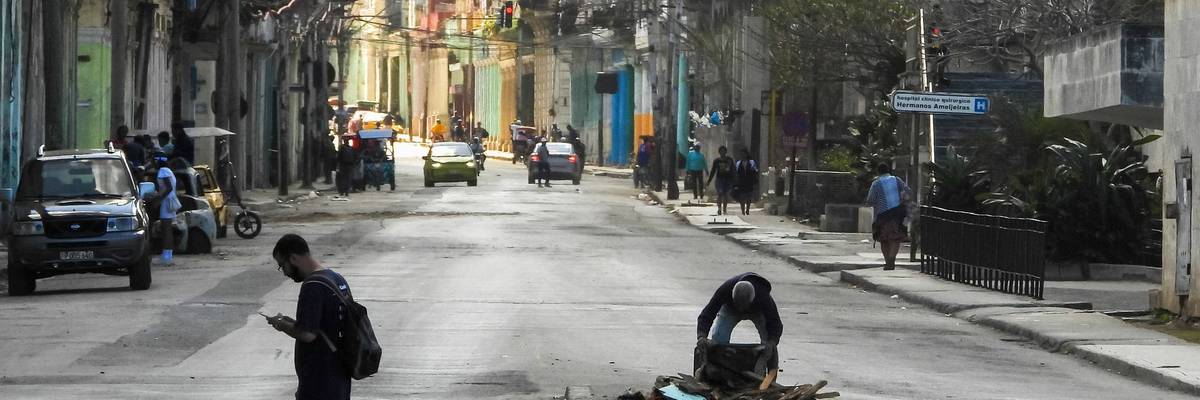
People walk along a quiet street in Havana, Cuba on February 8, 2026.
(Photo by Adalberto Roque/AFP via Getty Images)
Julia Conley
Feb 17, 2026
COMMON DREAMS
US President Donald Trump’s latest comments on his government’s blockade on Cuba Monday evening amounted to “boasting of a war crime,” one journalist said after the president told the press that the Caribbean island is a “failed nation” weeks after Trump himself cut off Cuba’s main source of energy and threatened countries with tariffs if they provided the government with oil.
Speaking to reporters on Air Force One, Trump listed some of the impacts of the blockade the White House imposed after invading Venezuela last month and pushing for control of its oil supply.
RECOMMENDED...
Pushing for Regime Change, Trump Accused of ‘Asphyxiating’ Cuba With Fuel Embargo
‘War by Another Means’: Union Movement Condemns Trump Economic Siege of Cuba
“They don’t even have jet fuel to get their airplanes to take off. They’re clogging up their runway. We’re talking to Cuba right now... and they should absolutely make a deal, because it’s really a humanitarian threat,” said the president. “There’s an embargo, there’s no oil, there’s no money, there’s no anything.”
Carlos F. de Cossio, Cuba’s deputy minister of foreign affairs, pointed out that it has been “frequent for US officials and diplomats to claim that US aggression is not responsible for difficulties in Cuba,” as the trade embargo maintained by the US for more than six decades has impeded medications, food, and other humanitarian assistance from reaching Cubans.
It seems those officials “don’t listen to their president,” said de Cossio.
Trump commented on the impact of his ramped-up blockade as Al Jazeera and Reuters reported that just 44 of Havana’s 106 sanitation trucks have been able to operate in recent weeks due to the fuel shortage, leading waste to pile up on the Cuban capital’s streets and raising fears of public health risks.
The lack of fuel has also caused blackouts in cities and rural areas, and one diplomat told The Guardian on Sunday that “it’s a matter of weeks” before the blockade could cause extreme shortages of water and food.
While appearing to express concern for the Cuban public, Trump described how he and Secretary of State Marco Rubio “are overseeing a siege on Cuba... with no discernible foreign policy objective other than sadism,” said Emma Vigeland of Majority Report.
“This is not an embargo. The US has had an embargo on Cuba for over 60 years, and it has failed” to force a regime change, said Vigeland.
The anti-war group Code Pink added: “If Cuba is a ‘failed nation’ then why has the U.S. spent 66 years trying and failing to destroy it?”
“Cuba isn’t failing, it’s being suffocated,” said the group.
Trump repeated his demand that Cuban officials “make a deal,” but Cuban officials have said they are open to coming to an agreement with the US. Meanwhile, Drop Site News reported last week that Rubio has been falsely claiming negotiations are taking place in an apparent bid to ultimately force regime change through other means.
One reporter asked the president Monday evening whether he would consider “an operation like the one in Venezuela,” where US forces last month abducted President Nicolás Maduro and his wife and killed dozens of people, including many Cuban soldiers and guards.
Trump did not confirm or deny whether he would take military action in Cuba, but issued a veiled threat: “It wouldn’t be a very tough operation, as you can figure.”
Also on Monday, over 100 Cuban artists signed on to a call for “international solidarity” against the blockade.
“The empire says that Cuba represents a threat to its national security, which is ridiculous and implausible. It has imposed an oil blockade, resulting in the paralysis of hospitals, schools, industries, and transportation. They try to prevent our doctors from saving lives; they try to paralyze our free and universal education system, to plunge us into famine, into a lack of energy to guarantee access to drinking water and cooking food; in short, they aim to slowly and bloodily extinguish a country,” reads the open letter.
“Cuba resists and will resist this inhumane aggression, but it counts on the active solidarity of all honest, humanist, and good-willed men and women of the world,” it continues. “It is about preventing a genocidal act and saving a heroic people whose only ‘crime and threat’ has been to defend their sovereignty.”
“Cuba isn’t failing, it’s being suffocated,” said one anti-war group.
People walk along a quiet street in Havana, Cuba on February 8, 2026.
(Photo by Adalberto Roque/AFP via Getty Images)
Julia Conley
Feb 17, 2026
COMMON DREAMS
US President Donald Trump’s latest comments on his government’s blockade on Cuba Monday evening amounted to “boasting of a war crime,” one journalist said after the president told the press that the Caribbean island is a “failed nation” weeks after Trump himself cut off Cuba’s main source of energy and threatened countries with tariffs if they provided the government with oil.
Speaking to reporters on Air Force One, Trump listed some of the impacts of the blockade the White House imposed after invading Venezuela last month and pushing for control of its oil supply.
RECOMMENDED...
Pushing for Regime Change, Trump Accused of ‘Asphyxiating’ Cuba With Fuel Embargo
‘War by Another Means’: Union Movement Condemns Trump Economic Siege of Cuba
“They don’t even have jet fuel to get their airplanes to take off. They’re clogging up their runway. We’re talking to Cuba right now... and they should absolutely make a deal, because it’s really a humanitarian threat,” said the president. “There’s an embargo, there’s no oil, there’s no money, there’s no anything.”
Carlos F. de Cossio, Cuba’s deputy minister of foreign affairs, pointed out that it has been “frequent for US officials and diplomats to claim that US aggression is not responsible for difficulties in Cuba,” as the trade embargo maintained by the US for more than six decades has impeded medications, food, and other humanitarian assistance from reaching Cubans.
It seems those officials “don’t listen to their president,” said de Cossio.
Trump commented on the impact of his ramped-up blockade as Al Jazeera and Reuters reported that just 44 of Havana’s 106 sanitation trucks have been able to operate in recent weeks due to the fuel shortage, leading waste to pile up on the Cuban capital’s streets and raising fears of public health risks.
The lack of fuel has also caused blackouts in cities and rural areas, and one diplomat told The Guardian on Sunday that “it’s a matter of weeks” before the blockade could cause extreme shortages of water and food.
While appearing to express concern for the Cuban public, Trump described how he and Secretary of State Marco Rubio “are overseeing a siege on Cuba... with no discernible foreign policy objective other than sadism,” said Emma Vigeland of Majority Report.
“This is not an embargo. The US has had an embargo on Cuba for over 60 years, and it has failed” to force a regime change, said Vigeland.
The anti-war group Code Pink added: “If Cuba is a ‘failed nation’ then why has the U.S. spent 66 years trying and failing to destroy it?”
“Cuba isn’t failing, it’s being suffocated,” said the group.
Trump repeated his demand that Cuban officials “make a deal,” but Cuban officials have said they are open to coming to an agreement with the US. Meanwhile, Drop Site News reported last week that Rubio has been falsely claiming negotiations are taking place in an apparent bid to ultimately force regime change through other means.
One reporter asked the president Monday evening whether he would consider “an operation like the one in Venezuela,” where US forces last month abducted President Nicolás Maduro and his wife and killed dozens of people, including many Cuban soldiers and guards.
Trump did not confirm or deny whether he would take military action in Cuba, but issued a veiled threat: “It wouldn’t be a very tough operation, as you can figure.”
Also on Monday, over 100 Cuban artists signed on to a call for “international solidarity” against the blockade.
“The empire says that Cuba represents a threat to its national security, which is ridiculous and implausible. It has imposed an oil blockade, resulting in the paralysis of hospitals, schools, industries, and transportation. They try to prevent our doctors from saving lives; they try to paralyze our free and universal education system, to plunge us into famine, into a lack of energy to guarantee access to drinking water and cooking food; in short, they aim to slowly and bloodily extinguish a country,” reads the open letter.
“Cuba resists and will resist this inhumane aggression, but it counts on the active solidarity of all honest, humanist, and good-willed men and women of the world,” it continues. “It is about preventing a genocidal act and saving a heroic people whose only ‘crime and threat’ has been to defend their sovereignty.”


No comments:
Post a Comment