Wednesday, May 25, 2022

Psilocybin Causes ‘Significant Reduction’ in Symptoms of Depression, Largest of its Kind Study Shows

COMPASS Pathways psilocybin study shows a significant improvement 
in treatment-resistant depression symptoms.

At the American Psychiatric Association (APA) 2022 Annual Meeting that began on May 21 in New Orleans, Louisiana, COMPASS Pathways unveiled the “largest randomized, controlled, double-blind study of psilocybin therapy ever completed,” according to a May 24 press release, and the data shows “significant” improvements to treatment-resistant depression (TRD) symptoms.

Participants were given a single dose of investigational COMP360 psilocybin, in doses of 25 mg or 10 mg, compared to 1 mg in patients with TRD. For the study, 233 patients with TRD received either 1 mg, 10 mg, or 25 mg COMP360 psilocybin, along with psychological support from therapists. Symptoms of depression were calculated using the Montgomery-Åsberg depression rating scale (MADRS).

The MADRS system has been used in the world of psychiatry since 1979 and measures apparent sadness (despondency, gloom), reported sadness, inner tension (discomfort, turmoil, dread), reduced sleep, reduced appetite, and concentration difficulty, typically in a ten-item questionnaire.

The people who received a 25 mg dose of COMP360 psilocybin with psychological support experienced a “highly statistically significant reduction in symptoms of depression after three weeks.” The difference between the group that received 25 mg and the group that received 1 mg was -6.6 on the MADRS depression scale at week three.

The effects also lasted very long—for three months, in some cases. The findings show that psilocybin provides “a rapid and durable response for up to 12 weeks.”

Twice the number of patients who received 25 mg (20.3%) had a “sustained response” at week 12, versus those who received 1 mg (10.1%). Tolerability and adverse effects were both reported mostly favorably, despite some reports commonly seen in people with TRD such as self-injury, but it was typically over a month after treatment.


“Treatment-resistant depression is one of the biggest challenges we face in psychiatry, and chances of success decreases with each treatment that a patient tries,” said David J Hellerstein MD, a Principal Investigator on the trial and Professor of Clinical Psychiatry at the Columbia University Irving Medical Center. “It’s rare to see such positive outcomes of clinical trials in this disease area, which is why these results are so significant. I hope this represents a major step in finding new options for people living with treatment-resistant depression.”

Columbia University’s Department of Psychiatry said last year that its study is the “largest to date using psilocybin to treat depression in people who aren’t helped by existing therapies.” Tough challenges require thinking outside the box, in this case, with the active alkaloids from psilocybin mushrooms. Even Canadian Senator Larry Campbell admitted that he takes microdoses of psilocybin for the treatment of depression.

“Our mission is all about developing mental health innovations through scientific evidence, which is why we’re so honored to present the largest study of its kind at the APA,” said Dr. Guy Goodwin, Chief Medical Officer, COMPASS Pathways. “In this study, a significant number of patients experienced improvement in their symptoms of depression after just a single dose of 25 mg psilocybin with psychological support, with effects lasting for up to three months of the study. We now need to continue our research to understand if this can be replicated in even larger trials.”

COMPASS is based in London, with offices in New York City and San Francisco, with clinical studies in North America and Europe.

There’s a divide in beliefs surrounding serotonin reuptake inhibitors (SSRIs). While some say SSRIs are a life-saver, others say they instead create an unnatural imbalance of neurotransmitters. Only a doctor can give you the final answer to that, and it’s assumed that people with TRD have already ruled out SSRI drugs like Prozac, Paxil, Zoloft, and Celexa.

The study cites data showing that over 320 million people globally suffer with major depressive disorder (MDD). About a third of these patients—a whopping 100 million people—aren’t helped by existing therapies and therefore have TRD.

And the most sobering data point? As many as 30% of them attempt suicide at least once during their lifetime.

In any case, psilocybin presents an entirely new mechanism for controlling treatment-resistant depression. The APA will also hold an online experience June 7-10 in case you missed the May event in New Orleans.

Chicago’s top fungi guy is out to save the world, one beautiful mushroom at a time

2022/5/23 
© Chicago Tribune
Blue Oyster mushrooms grown at Chicago- based Four Star Mushrooms, on May 17, 2022.
 - Terrence Antonio James/Chicago Tribune/TNS

CHICAGO — Contrary to what his profession might lead you to believe, Joe Weber hasn’t always been obsessed with mushrooms.

It’s not that he hated them either. Rather, while growing up in Hoffman Estates, Illinois, he didn’t think about mushrooms at all, beyond the rare occasion they would make an appearance at his family’s dinner table. When they did, he wasn’t impressed.

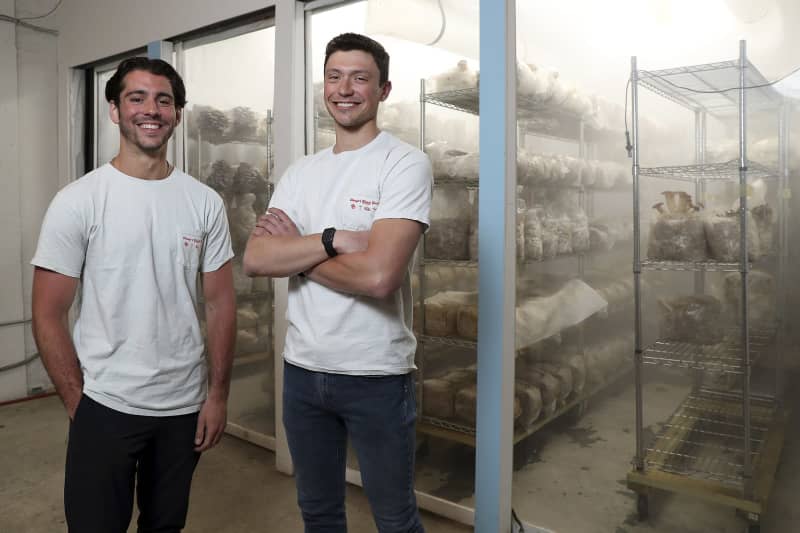
These days, as founder and CEO of Chicago’s Four Star Mushrooms, an indoor mushroom farm, it’s pretty much all the 26-year-old thinks about. For the past 2 1/2 years, Four Star Mushrooms has been supplying high-quality fungi including lion’s mane, blue oyster, black pearl, pioppino and chestnut, grown under rigorously monitored systems without the use of pesticides or fertilizers, to some of the city’s most ingredient-driven restaurants — think Alinea, Smyth, Oriole and vegan spot Fancy Plants Cafe — as well as retailers Local Foods and WhatsGood Farm Shop.

With the mid-June opening of a 11,000-square-foot state-of-the-art production facility in the West Loop’s Kinzie Corridor that will include grow rooms, a dry lab, cold storage, a retail storefront, a dining concept, and a commercial kitchen and wet lab for research and development, Weber will be spending even more time focused on fungi.

“We’re trying to revolutionize the cultivation of mushrooms and change our food system,” he said of the new facility, which will open in phases with plans to be in full operation by end of the year.

Weber’s interest in ecology began in earnest while at the University of Illinois at Urbana-Champaign, where he graduated with a Bachelor of Science in biology. It was there he learned agriculture is the largest cause of habitat and biodiversity loss. “I came at this trying to solve that problem,” he said of Four Star Mushrooms.

Mushrooms, it seems, can do some magical things for the environment. “Mushrooms are this interesting interface between life and death and nutrient recycling,” Weber said of mushrooms’ ability to feed off organic waste material. “At the end of the day, nutrient cycling is this thing that allows our ecosystem to work. If you remove that aspect of it, then everything falls flat. That’s kind of what we are experiencing now across the Great Plains with mono-crop agriculture and increasing fertilizer inputs.”

It’s mushrooms’ earth-friendly capabilities, relative ease of growth, and medicinal and health benefits that motivated Weber to action.

After a mid-2019 mushroom-focused deep dive on YouTube and podcasts and with the help of his entrepreneur-expert dad, Weber launched Four Star Mushrooms inside a rented 400-square-foot space in a multiuse Logan Square building. Soon after, a neighboring space was acquired to keep up with demand from the city’s in-the-know chefs, tripling Four Star’s footprint and increasing output to 500 pounds a week. (Picture 1,000 of those grocery store cartons.)

“At the very beginning of COVID in March 2020, Joe dropped off a flat of mushrooms, and I’ve been ordering them nearly every single week since,” said Fancy Plants Cafe chef and owner Kevin Schuder, himself an aficionado of making tempeh and koji for his vegan restaurant. “While they were always excellent, I love how the quality of the mushrooms has continually improved as Joe continues to find a better method of growing.”

Beyond the thrill of working with some of the city’s best chefs and seeing his handiwork featured on their menus and Instagram accounts, Weber is particularly excited about the multi levels of recycling his mushrooms can generate. Grown with waste products — in this case, soybean hulls and red oak sawdust — the spent substrate is then recycled even further to make a nutrient-rich compost. Early on, Weber began sharing his mushroom compost with Herban Produce, a Garfield Park farm, and the initial results have been promising.

“The faster we can turn this into a valued-added product, the faster we can use it to restore land and grow crops in these vacant lots in the South and West side communities,” he said. “There is a huge opportunity for community gardens there and for food security.”

But in order for that to happen, Four Star needed to up its production considerably. Which brings us back to the new facility. When its fully up and running, it will be able to produce between 8,000 and 12,000 pounds of mushrooms per week, which means more of that nutrient-rich compost will be available too.

To help make his dream a reality, Weber brought on childhood friend and fellow environmentalist Sean DiGioia as Four Star Mushroom’s chief operating officer. With a background in finance and corporate banking, DiGioia is a great complement to Weber’s science knowledge. “I needed to fulfill a greater ‘why’,” DiGioia said of his career pivot.

Additionally, Four Star now has a production manager and a chef, or culinary liaison, as Rudy Carboni’s role has been dubbed. Carboni also functions as Four Star’s delivery driver. “He has worked at Alinea and Esmé and understands how the kitchens work and what the chefs want to see,” DiGioia said.

With the opening of the new facility, there will be plenty more for chefs to see. “This expansion effort will allow us to grow mushrooms to the exact specification of our customers, rain or shine, 365 days a year, as well as bring lesser-known and lesser-grown fungi into the mainstream,” Weber said. “If we could offer, say, morels as fresh and flavorful in December for Christmas and New Year’s menus as in early spring, we think that would be a big value addition for our chef customers.”

It’s not by chance the new Four Star Mushrooms is in the West Loop. “We are two miles from Fulton Market, which is the best strip of restaurants in the country, if not the world, in terms of density,” Weber said.

One of those restaurants is Smyth. When they met, chef and co-owner John Shields had a request for Weber.

“I proposed some challenges I wanted as a chef and cook that I thought would be more interesting than the norm,” said Shields, who is no stranger to getting creative with ingredients for his Michelin two-star restaurant. From that discussion, Weber experimented with growing a miniature golden enoki to fit Shields’ specifications. “It opened up some cool ideas and dialogue and is a win for both for us,” Shields said. “It reinforced our future relationship and things we are going to work on.”

While Four Star’s original indoor farm had plenty of environmental controls in place to regulate and enhance the growth of its mushrooms, the new facility goes much further. “This new space will allow us to precisely control temperature, oxygen, lighting spectrum, (carbon dioxide) and humidity,” Weber said. “All those factors culminate in the way the mushroom reacts.”

And it’s not just culinary professionals who can get in on the fungi fun. Inside the cutting-edge space, visitors will get a front-row seat to the indoor cultivation process showcased through glass walls. “The entire design is behind glass, so people can come in and see exactly where their food is grown and how it is being handled,” DeGioia said. “We are changing the way we look at food transparency and truly letting people see feet in front of them where their next meal is coming from.”

A retail storefront is also in the works as well as a dining experience, utilizing mushrooms grown on-site and specifically curated for their menus. In the wet lab, Four Star will “dabble” with creating prepared food products, and tinctures and teas made from mushrooms.

Mostly, however, Weber envisions Four Star as a source of production for others wanting to explore that growing business. A demo kitchen will give interested chefs a literal taste of what Four Star offers. “We are trying to set ourselves for much success in the future as possible,” Weber said.

Mushroom-haters, consider yourselves warned.


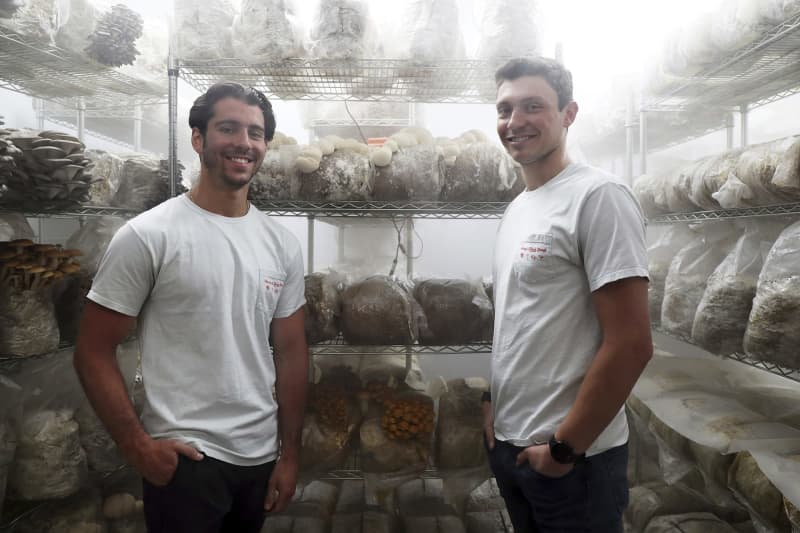
Sean DiGioia, left, and Joe Weber of Four Star Mushrooms at the company’ s indoor growing room in Chicago on May 17, 2022.
 - Terrence Antonio James/Chicago Tribune/TNS
Woody Harrelson’s film gets eight-minute standing ovation at Cannes Film Festival


By Nika Shakhnazarova

May 24, 2022 | 

Official clip for “Triangle of Sadness,” with Woody Harrelson

A standing ovation is one thing. An eight-minute standing ovation at the Cannes Film Festival is a whole new arena of praise.

Woody Harrelson’s latest on-screen venture, “Triangle of Sadness,” earned an impressive reception at the iconic festival over the weekend.

The dark comedy — directed by Swedish filmmaker Ruben Östlund — follows a model (Harris Dickinson) and his influencer girlfriend (Charlbi Dean), who embark on a luxury cruise for the ultra-rich captained by Harrelson’s Marxist character.

The film has made one of the biggest splashes at this year’s festival. At its premiere on Saturday, there were such waves of applause that Östlund compared it to a crowd at a soccer match.

The overwhelming response topped the reception of any other film at the festival so far, including “Top Gun: Maverick,” according to Variety.


Harrelson’s latest film, “Triangle of Sadness,” received an eight-minute standing ovation at Cannes Film Festival. IPA / SplashNews.com

The cast of “Triangle of Sadness” at the Cannes Film Festival premiere on Sunday, May 22.


Woody Harrelson stars in “Triangle of Sadness.”Plattform Produktion

Harrelson quickly became a fan of Östlund, telling reporters over the weekend that the making of the film was a “revitalizing” experience, and vowed to be in the director’s next film, whether he wants him or not.

“He can make you extremely uncomfortable,” Harrelson said. “He makes you think. He can give you a sense of meaning like there was a purpose to seeing the film — and perhaps more importantly, he makes you laugh throughout. Which is quite a trick.”

“What a wonderful screening,” Östlund told the audience at the premiere. “What an ensemble we had. Thank you so much.”

  A scene from “Triangle of Sadness”Plattform Produktion
“Triangle of Sadness” follows a model (Harris Dickinson) and his influencer girlfriend (Charlbi Dean), who embark on a luxury cruise for the ultra-rich captained by Harrelson’s Marxist character.
Plattform Produktion

Speaking ahead of the screening, Östlund said he “wanted to do something that’s worth leaving your home and leaving your screens, leaving the streaming services you have at home.”

“I didn’t want to get stuck in the art house part of cinema-making. I was really looking into that I felt I enjoyed watching myself. And the project I was thinking about had a wild set-up,” he added.

Östlund last appeared at Cannes with his 2017 film, “The Square,” which won him the Palme d’Or award.


The cast of “Triangle of Sadness”Samir Hussein/WireImage


CRISPR CRITTERS
A gene-editing experiment on hamsters ended up turning them into ‘aggressive' mutants


Liam O'Dell
days ago


Hamsters have long been considered adorable bundles of fluff which make for a pretty cute household pet, but scientists from Georgia State University might have accidentally caused harm to that reputation following an experiment in gene-editing.

Using the controversial technology known as CRIPSR, researchers focussed on the hormone vasopressin and its receptor - known as Avpr1a – and opted to remove the latter from the animals.

Avpr1a is understood to regulate things such as pair bonding and cooperation in the rodents, as well as dominance and aggression.

Yet, commenting on their findings, research lead Professor H Elliot Albers said: “We were really surprised at the results.

“We anticipated that if we eliminated vasopressin activity, we would reduce both aggression and social communication.

“But the opposite happened.”

Yep, they got far more ferocious.


The academics found the Syrian hamsters with an eliminated Avpr1a receptor “showed much higher levels of social communication behaviour” compared to their peers who had their receptor intact. The former group would also exhibit “high levels of aggression towards other same-sex individuals”.

If that doesn’t sound like the next budget horror movie, we don’t know what does.

According to Professor Alberts, the results suggest “a startling conclusion”.

He said: “Even though we know that vasopressin increases social behaviours by acting within a number of brain regions, it is possible that the more global effects of the Avpr1a receptor are inhibitory.

“We don’t understand this system as well as we thought we did.”

As for why the experiment was carried out on hamsters, it’s because “their social organisation is far more similar to humans than that observed in mice” – another animal more commonly used in animal testing.


Professor Albers added: “Understanding the role of vasopressin in behaviour is necessary to help identify potential new and more effective treatment strategies for a diverse group of neuropsychiatric disorders ranging from autism to depression.”

If we could avoid creating more aggressive hamsters, though, that would be great.
Guest columnist Rob Okun: Mass shootings: It’s the masculinity, people

Payton Gendron is led into the courtroom for a hearing at Erie County Court, in Buffalo, N.Y., Thursday, May 19. Gendron faces charges in the May 14, fatal shooting at a supermarket. AP

By Rob Okun
Published: 5/24/2022 

I’m beyond fed up that the gender of the murderers is still largelyabsent from conversations about America’s mass shootings crisis. In Buffalo, of course, racism and white supremacy cannot be overstated, but we ignore gender at our peril.

Let’s tighten restrictions on poisonous hate speech on social media. It’s imperative we conduct threat assessments. Absolutely, more gun control regulations. And, we must analyze racist, antisemitic, homophobic, misogynist, white supremacist manifestos. But if we do all that and continue to minimize or ignore how these murderous men were socialized as boys and young men, mass shootings will continue to plague us.

We have to start in preschool, carefully attending to how boys are socialized. We must cultivate their emotional intelligence. Who would deny the value of educating boys to examine their inner lives; to talk about their feelings?

Who in Congress is going to introduce legislation calling on the Centers for Disease Control to conduct a nationwide study on how we socialize boys? Who is going to push for a comprehensive, multiyear pilot program with preschool boys in Head Start? The data amassed will help not just to reshape our understanding of boys and men, but could ultimately transform masculinity.

The shooters’ gender remains central in my writing. Here’s a sampling of columns that, sadly, demonstrate how far we still have to go:

■Aug. 9, 2019: [In] the killing sprees in El Paso, Texas, and Dayton, Ohio… the media, politicians and pundits rarely cite the most significant common denominator of virtually every mass murder in the U.S. — the shooter’s gender. A message I’ve been repeating since Columbine and before Tree of Life, Thousand Oaks, Parkland, Sutherland Springs and Las Vegas; even before Virginia Tech, Sandy Hook and Aurora. “Gender Belongs at Center of the Gun Debate,” Ms. magazine.

May 23, 2018: Heart contracts; numbness and tears collide. Ten dead, 13 wounded; this time Santa Fe, Texas… If we’re ever to end the blood baths… highlighting the shooters’ gender is essential to gain insights to prevent future tragedies… Virtually every murderer is male, usually white. “Let’s Talk About the Obvious: Most Mass Shooter are Male,” Dallas Morning News.

■Oct. 5, 2017: Again. Worse than ever. A horrifying mass murder by a lone killer. This time in Las Vegas… [A ]clue stares us right in the face to prevent this madness and mayhem: The race and gender of the shooter. White and male. Again… Let’s organize… challenge men to chart a new course in the gun violence debate... [A]ccelerate the transformation of our ideas about masculinity and manhood — including, especially, how we raise boys. “Needed: A “Men Against Gun Violence” Campaign,” Women’s eNews.

■June 16, 2016: The massacre at the Pulse nightclub was carried out as an act of rage. By a man… [U]ntil or unless we make the murderer’s gender central… [to] not just this story, but of the larger effort to prevent mass shootings... we won’t succeed in preventing such horrors in the future. “Why is the Orlando Murderer’s Gender Not Central to the Story? CounterPunch.

Oct. 9, 2015: Again. This time a community college in Roseburg, Oregon... This time, nine people murdered... How many more lonely, alienated, disconnected, (usually) white males perpetrating murder and then committing suicide need we see before admitting the irrefutable fact that the shooters are all male?“After the Oregon Shootings: A Campaign to Raise Healthy Sons,” Ms. magazine.

Dec. 16, 2013: As we arrive at the gut-wrenching first anniversary of Newtown, I teeter back and forth between sadness and anger… [W]as it a man or a woman who killed innocent people at the Washington Navy Shipyard, the Boston Marathon, Santa Monica College, homes in Hialeah, Fla., Manchester, Ill., and Fernley, Nev.; a barbershop in New York’s Mohawk Valley; and Los Angeles International Airport? Get it? “Masculinity Question Still Missing Post Newtown,” Truthout.

The day after Adam Lanza murdered his mother, six staff and 20 six and seven year-olds at Sandy Hook in 2012… women launched “Moms Demand Action for Gun Sense.” The day after! How many more “days after” another mass shooting must we wait to launch Dads Demand Action to Raise Healthy Boys?”

The violent rampage in Buffalo was not only a racist attack against African Americans; it was also an affirmation of white supremacy. Without healthy male antibodies in a vaccine to prevent mass shootings, we’ll never reach herd immunity.

Men, men, men. It’s the toxic masculinity, people.

Rob Okun (byrob@voicemalemagazine.org) syndicated by Peace Voice, is editor of Voice Male magazine. He writes about politics and culture.


Pastor’s ‘confession’ to adultery turns into criminal probe when victim announces she was only 16

Travis Gettys
May 24, 2022


New Life Christian Church

An Indiana pastor confessed during church services to adultery years ago, but prosecutors are investigating after the woman who was involved told congregants she had been only 16 years told at the time.

Pastor John Lowe II livestreamed the confession from inside the New Life Christian Church on Sunday, and he told parishioners that he "committed adultery" nearly two decades ago, adding that he wasn't disciplined and would not "use the Bible" to defend himself, reported WNDU-TV.

“I have no defense," he said. "I committed the adultery."

Lowe announced he was stepping down from “ministry responsibilities" and asked for forgiveness, to which the congregation applauded, and the woman then admonished the pastor with her husband standing alongside her in the church.

"People knew, but were too afraid to come forward, and they have now," she said. "The lies and the manipulation they have to stop. I was just 16 when you took my virginity on your office floor. Do you remember that? I know you do, and I have plenty of other stories that I can bring to your remembrance. You did things to my teenage body that should have never been done."

The woman said other girls were abused by church leaders, but they were "sent away."

"I tried to tell someone, but all that was done was cover-up," she said. "No one ever came to me. No one ever got me counseling."

The woman's husband then gave back a necklace the ministry had given his wife as a gift and the purity ring she wore as a teenager.

"My wife -- it’s not just adultery, it’s another level when it’s a teenager, and I will not let this man talk about my wife like that," the man said. "It happened for nine years. When she was 15, 16, the sexual grooming started. It lasted until she met me and we started dating. This is the truth and that’s all we’re going to say.”

Other congregants hugged them as the couple left the church, and several voices demanded that Lowe admit to the abuse.

"Sixteen years old, okay?" Lowe said. "It was wrong."

The Kosciusko County prosecutor's office confirmed that allegations against Lowe, which took place 27 years ago, and the pastor confirmed the woman's age at the time of the relationship during the livestream.

Indiana state law sets the statute of limitations for sexual misconduct with a minor and similar offenses at the victim's 31st birthday, but legal experts say there are exceptions -- specifically for cases where a recorded confession provides enough evidence to charge a crime.

“There is one particular offense that could apply, which is called child seduction," said law professor Jody Madeira, of Indiana University. "This applies when people in positions of trust or authority of a child, law enforcement, mental health practitioners, or anyone with a professional relationship with the child,” she says “It affects children between 16 and 18 years old, again these people use their professional relationship to engage in sexual conduct with a child and that is the offense of child seduction.”


Opinion
Why is the right ignoring the Southern Baptist abuse scandal?


By Paul Waldman
Columnist
 The Washington Post
May 24, 2022 


Attendees pray together during the Southern Baptist Convention in June 2021 in Nashville. (William DeShazer for The Washington Post)

There are few things that members of the American right emphasize more often about themselves than their deep commitment to protecting children — particularly when it comes to the threat of sexual abuse. In recent months, they’ve shown how intense that commitment is by labeling just about anyone who supports equality for LGBTQ people as “groomers” who are preparing children to be sexually abused.

So when news broke this past weekend of a blockbuster report about sexual abuse (including of children) and a coverup within the Southern Baptist Convention, the GOP and conservative movement rose up in outrage. Republican politicians such as Texas Gov. Greg Abbott and Florida Gov. Ron DeSantis demanded further investigation, QAnon adherents turned their focus to this conspiracy, and conservative media couldn’t stop talking about the story.

Actually, none of that happened. QAnon and its allies in politics seem uninterested. Rep. Marjorie Taylor Greene (R-Ga.) and her QAnon-curious friends in Congress have not tweeted about it. Neither Tucker Carlson nor Laura Ingraham nor Sean Hannity brought it up on their Fox News shows the next evening.

I’ve been unable to find any signs that Abbott or DeSantis has addressed the SBC revelations. They claim to be terribly concerned that teachers or parents who are too gay-friendly might be harming children — Abbott ordered state officials to investigate parents and doctors of trans children as potential abusers — but faced with actual evidence of horrific sexual abuse that played out over decades, they seem unconcerned.

Now why might that be?

The Southern Baptist Convention story came to public attention in 2019 with an investigation by the Houston Chronicle and the San Antonio Express-News that revealed widespread sexual abuse committed by church officials in the United States’ largest Protestant denomination. (The SBC represents more than 47,000 churches and 14 million congregants.)


After those revelations, the SBC contracted with outside investigators to examine the problem; their stinging report is now public. It documents that “child molesters and other abusers who were in the pulpit or employed as church staff” were reported again and again by victims, who were met with “resistance, stonewalling, and even outright hostility” from the organization’s leadership. Rather than rooting out abusers, SBC leaders attempted to discredit and intimidate victims.

If it sounds a lot like the sexual abuse scandal within the Catholic Church, that’s no accident: Both are deeply conservative institutions committed to maintaining patriarchy where leaders demonstrated that protecting the institution itself was more important to them than stopping the horrific crimes happening within it.

You’d think the QAnon conspiracists would be all over these stories. After all, here we have an actual conspiracy to cover up actual sexual abuse, with actual victims.

But they aren’t, and the reasons aren’t hard to discern. First, the very fact that abuse within the Catholic Church and the SBC actually happened is what makes it uninteresting to conspiracy theorists, who derive empowerment from the idea that they’ve uncovered secret knowledge the rest of the world is unaware of. Only they know the truth; their eyes have been opened while everyone else is blind. But when real journalists uncover stories of real abuse, it isn’t compelling.

Second and more important, since QAnon is a right-wing conspiracy theory, it has to locate the perpetrators of its fantasy crimes on the left: Democratic politicians, Jewish financiers and Hollywood liberals. Its adherents just aren’t interested in abuse committed by a Catholic priest or Baptist minister, because — news flash — they don’t care about children per se, only imaginary children being murdered and eaten by imaginary satanic liberals.

In a slightly less deranged form, the same is true of figures such as DeSantis and Abbott. They’ll rush to sign laws to stop the “grooming” of children by a gay teacher mentioning that she’s married to a woman. But if genuine abuse is happening in churches all over their states? That’s not a good thing, but they don’t think it’s their job to do anything about it. No outraged news conferences, no fulminating on Fox and no bills rushed through Republican legislatures.

They, too, are not particularly concerned about “grooming” or abuse per se; the allegations are weapons to wield against their political enemies. Think about it this way: If the longest serving Democratic speaker of the House, who left office just 15 years ago, was an admitted child molester and convicted felon, how often do you think Republicans would invoke his name to attack Democrats? Every day? A dozen times a day? At least. Yet when was the last time you heard anyone mention Dennis Hastert?

The SBC’s internal politics are extremely complicated, with plenty of conflict between conservatives and ultraconservatives. So it remains to be seen what kind of reforms it will undertake to stop sexual abuse in its ranks.

But we can say for sure that those within the American political right won’t pay much attention. As far as they’re concerned, imaginary abuse committed by the left is a much bigger concern.


Opinion by Paul WaldmanPaul Waldman is an opinion writer for the Plum Line blog. Twitter
Top Southern Baptists plan to release secret list of abusers

By DEEPA BHARATH

A cross and Bible sculpture stand outside the Southern Baptist Convention headquarters in Nashville, Tenn., on Tuesday, May 24, 2022. On Tuesday, top administrative leaders for the SBC, the largest Protestant denomination in America, said that they will release a secret list of hundreds of pastors and other church-affiliated personnel accused of sexual abuse. (AP Photo/Holly Meyer)

Top administrative leaders for the Southern Baptist Convention, the largest Protestant denomination in America, said Tuesday that they will release a secret list of hundreds of pastors and other church-affiliated personnel accused of sexual abuse.

An attorney for the SBC’s Executive Committee announced the decision during a virtual meeting called in response to a scathing investigative report detailing how the committee mishandled allegations of sex abuse and stonewalled numerous survivors. The committee anticipates releasing the list Thursday.

During the meeting, top leaders and several committee members vowed to work toward changing the culture of the denomination and to listen more attentively to survivors’ voices and stories.

The 288-page report by Guidepost Solutions, which was released Sunday after a seven-month investigation, contained several explosive revelations. Among those were details of how D. August Boto, the Executive Committee’s former vice president and general counsel, and former SBC spokesman Roger Oldham kept their own private list of abusive pastors. Both retired in 2019. The existence of the list was not widely known within the committee and its staff.

“Despite collecting these reports for more than 10 years, there is no indication that (Oldham and Boto) or anyone else, took any action to ensure that the accused ministers were no longer in positions of power at SBC churches,” the report said.

Boto joined the Executive Committee in 1995 and became executive vice president and general counsel in 2007.

On Tuesday, the committee released a statement singling out and denouncing Boto’s words written in a communication to survivors and their advocates on Sept. 29, 2006 that “continued discourse between us (the Executive Committee and survivors’ advocates) will not be positive or fruitful.”

The committee, in its new statement, said it “rejects the sentiment (of Boto’s words) in its entirety and seeks to publicly repent for its failure to rectify this position and wholeheartedly listen to survivors.”

Gene Besen, the committee’s interim counsel, said during Tuesday’s virtual meeting that releasing the list is an important step toward transparency. The names of survivors, confidential witnesses and any uncorroborated allegations of sexual abuse will be redacted from the list that will be made public, he said.

Besen said the committee’s leaders will also look into revoking retirement benefits for Boto and others who were involved in the cover-up. He urged committee members to set aside past divisions and stay united in a collective commitment to end sexual abuse in the SBC.

Willie McLaurin, the Executive Committee’s interim president and CEO, issued a formal public apology to all those who suffered sexual abuse within the SBC, which has a membership of over 47,000 churches.

“We are sorry to the survivors for all we have done to cause pain and frustration,” he said. “Now is the time to change the culture. We have to be proactive in our openness and transparency from now.”

Executive Committee Chair Rolland Slade began the virtual meeting by acknowledging the survivors.

“Our commitment is to be different and do different,” he said. “We can’t come up with half-baked solutions.”

After the report’s release, more sexual abuse survivors have been contacting the Executive Committee to tell their stories, Besen said. He said he has asked Guidepost to open up a hotline so survivors who reach out “are directed to the proper place and receive the proper care.” The committee will publicize the hotline number as soon as it goes live, McLaurin said.

The Sexual Abuse Task Force, appointed at the demand of SBC delegates during last year’s meeting in Nashville, expects to make its formal motions based on the Guidepost report public next week. Those recommendations will then be presented to the delegates for a vote during this year’s national meeting scheduled for June 14-15 in Anaheim, California, according to Pastor Bruce Frank who led the task force.

Frank, lead pastor of Biltmore Baptist Church in Arden, North Carolina, said the crux of the task force’s recommendations based on Guidepost’s report would be to prevent sexual abuse, to better care for survivors when such abuse does occur and to make sure abusers are not allowed to continue in ministry.

Survivors and advocates have long called for a public database of abusers. The creation of an “Offender Information System” was one of the key recommendations in the report by Guidepost Solutions, an independent firm contracted by the SBC’s Executive Committee after delegates to last year’s national meeting pressed for an investigation by outsiders.

The proposed database is expected to be one of several recommendations that resulted from Guidepost’s seven-month investigation presented to thousands of delegates attending this year’s national meeting

Lawyer and writer Christa Brown, who says she was sexually abused as a teen by the youth minister at her SBC church, has been pressing the SBC since 2006 to create a publicly accessible database of known abusers. She was heartened by Tuesday’s announcement that the secret list would be made public.

“I hope that will happen in the very near future. I’ll be watching and waiting,” she told The Associated Press. “It boggles my mind to try to imagine how they could have rationalized keeping this list secret for so many years - since 2007. It suggests a level of moral bankruptcy that I find incomprehensible.”


Associated Press religion coverage receives support through the AP’s collaboration with The Conversation US, with funding from Lilly Endowment Inc. The AP is solely responsible for this content.


Southern Baptist scandal: It's no coincidence that anti-abortion churches protect sexual abusers
Salon
May 23, 2022

Shutterstock

"Shocking." That's the word being bandied about in both news coverage and social media reactions to a nearly 300-page report released on Sunday that details both extensive sexual abuse within the Southern Baptist Convention (SBC) and a thorough effort to cover it up by the denomination's leadership. As Christianity Today bluntly noted, the convention had "a secret list of more than 700 abusive pastors," but "chose to protect the denomination from lawsuits" rather than the victims or potential future victims in the pews. Instead, protecting predators became the norm, and victims of abuse were frequently blamed. One victim, whose abuse started when she was 14, "was forced to apologize in front of the church," but forbidden to name the pastor who had forcibly impregnated her.

The situation is, indeed, horrific. It's a minor miracle that this report even happened. Activists have been clamoring for it, but have faced a massive institutional resistance from the leadership of America's largest single Protestant denomination. One cannot help but marvel at the nerve of some Southern Baptist leaders who engaged in the coverup. SBC general counsel Augie Boto, for instance, responded to victims and their allies by accusing them of being part of "a satanic scheme to completely distract us from evangelism." Boto even appeared as a character witness for a Nashville gymnastics coach who was convicted on charges of molesting a 10-year-old girl.


But for feminists, none of this is shocking in the slightest. It lacks the element of surprise that the word implies. Not just because this whole situation is a retread of the sex scandals in the Roman Catholic Church, right down to the pattern of reassigning predatory pastors to new churches where they can begin abusing a fresh group of unsuspecting congregants. Like the Catholic Church, the SBC is one of the most virulently anti-choice religious groups in the country. Opposition to reproductive rights and tolerance for sexual abuse go together like peanut butter and jelly

The common thread linking the two, of course, is male supremacy, or, to use an old-fashioned feminist term, patriarchy. As Laurie Penny writes in her new book "Sexual Revolution: Modern Fascism and the Feminist Fightback," it's a culture that's "comfortable letting men get away with sexual violence but determined not to let women get away with consensual sex." Indeed, to say "comfortable" might be an understatement. Sexual violence and anti-choice ideology are rooted in the same tendency to see women (and often children) as objects to be used and discarded by men, who have no rights or autonomy of their own worth respecting.

I call it the "grab 'em by the pussy" ethos, named after the most memorable line in Donald Trump's infamous "Access Hollywood" tape, in which he bragged about routinely sexually assaulting women. Trump, of course, also appointed three of the Supreme Court justices who will likely be part of a majority vote to overturn Roe v. Wade sometime very soon. There's a tendency in the mainstream media to treat the religious right's support of Trump as being reluctant, as if they'd held their noses to back this compulsively promiscuous sexual predator, in exchange for these judicial appointments. In reality, polling shows that white evangelicals — many of them Southern Baptists — are by far Trump's most enthusiastic supporters. One of his earliest champions was Jerry Falwell Jr., who may be disgraced now but during the 2016 campaign was probably the most famous Southern Baptist figure in the country. There's nothing "transactional" about the relationship between Trump and evangelicals: It's true love.

Let's stop pretending that the religious right's support of Donald Trump was reluctant. Evangelicals are the most enthusiastic fans of a compulsively promiscuous sexual predator: It's true love.

Of course, just as Liberty University was eventually forced to dump Falwell, Southern Baptists and the larger evangelical community must maintain the pretense of objecting to the sin of sexual abuse. Some, such as the female-led activists who pushed for this investigation, even mean it. But the enthusiasm for Trump, whose own bragging confession was backed by more than two dozen women attesting to his abusive ways, is part of this larger misogynist pattern. It's not just the tendency to look the other way when men commit sexual violence. It's about contempt toward women who dare to assert autonomy over their own bodies. Whether that means saying no to pregnancy or saying no to sex, in the eyes of a male-dominated church, the right to make the decision simply isn't hers.


In Boto's diatribe accusing women who speak out against sexual violence of being in thrall to a "satanic scheme," he also argues that the women "are not to blame," because they are supposedly helpless in the clutches of the devil. (And clearly need strong male guidance to deliver them from Satan.) Adopting an attitude of pity or condescension toward women — who can't even make decisions on their own, the poor things — is a favorite tactic of anti-choicers who want to evade accusations that they want to prosecuted or imprison women who have abortions. For instance, many defenders of the new Texas abortion ban claim they have no desire to punish women for abortion, using language that frames women as overgrown children, easily swayed by emotion, who don't possess the maturity or intelligence to make their own decisions.

This patronizing dismissal of women's intellectual capacities, however, is mostly a cover story for a deep hatred of women who think they have a right to self-determination. That becomes evident in this 288-page report on the SBC, which is full of stories from sexual abuse survivors who say that when they spoke out about their abuse, they were the ones attacked and demonized. And while proponents of abortion bans may swear up and down they have no intention of arresting women for abortions, as soon as they think they can get away with it, the cuffs come out.

There has been a lot of handwringing and promises of improvement from SBC leaders in response to this report. One would do well to be skeptical. After all, one of the top contenders to be the next SBC president is Tom Ascol, a right-wing preacher who has pledged to turn back the supposed "wokeness" plaguing the church. Ascol has described allegations of systemic sexual abuse within the church as a "nebulous" concept akin to believing in "the existence of an invisible leprechaun." Instead, he argues, the answer for sexual abuse "is found in the seventh commandment, 'You shall not commit adultery.'" Adultery is not even a criminal offense, let us note.

Ascol is not quite so dismissive of the evils of abortion, of course. While sexual predators are just a flavor of adulterer in his book, a woman who gets an abortion has "contracted a murderer to murder," he says, and should should face homicide charges. Unlike adultery, homicide is very much a crime. On one hand, it's refreshing that Ascol doesn't even pretend, like so many anti-choicers do, that he doesn't want to prosecute the 800,000 or so people who get abortions every year. On the other hand, this demonstrates that the SBC is not likely to budge on its commitment to being a male supremacist organization. That likely also means more of the same refusal to take sexual abuse seriously, the same contempt for victims who speak out and the same focus on protecting men accused of abuse. One report, no matter how "shocked" we pretend to be, is not nearly enough to alter the misogynistic foundations the Southern Baptist Convention is built upon.

Want more Amanda Marcotte on politics? Subscribe to her newsletter Standing Room Only.
The Times, Haiti, and the treacherous bridge linking history and journalism


THE MEDIA TODAY
By Jon Allsop, CJR
MAY 24, 2022

THIS STORY

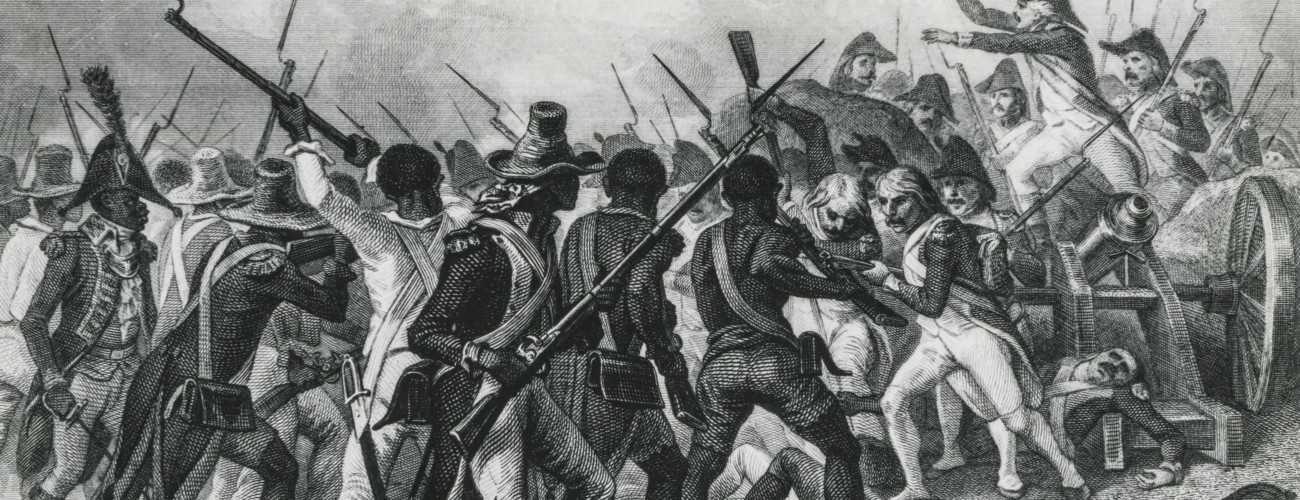
HAITI’S LOST BILLIONS.” “The Root of Haiti’s Misery: Reparations to Enslavers.” “How a French Bank Captured Haiti.” “Invade Haiti, Wall Street Urged. The US Obliged.” “Demanding Reparations, and Ending Up in Exile.” These were the top headlines in a sprawling package of articles—totaling tens of thousands of words and written primarily by four reporters, with the help of more than a dozen researchers in at least six locations on two continents—that the New York Times published on Haiti over the weekend, under the rubric “The Ransom.” The package took the form of a slick multimedia production online and a special section in print, trailed on Sunday’s front page across four columns under a large illustration of plantations burning during the Haitian Revolution, when enslaved Africans won independence from French colonial rule.

Though the events of the illustration date to 1791, the package really picks up Haiti’s story in 1825, more than twenty years after it declared independence, when the French returned and demanded that Haiti give them “reparations” or else face a war, setting the stage for decades of debt and exploitation. “For years, as New York Times journalists have chronicled Haiti’s travails, a question has hovered: What if? What if the nation had not been looted by outside powers, foreign banks and its own leaders almost since birth? How much more money might it have had to build a nation?” the paper asked. “For more than a year, a team of Times correspondents scoured long-forgotten documents languishing in archives and libraries on three continents to answer that question, to put a number on what it cost Haitians to be free.” The paper concluded—and fourteen experts agreed—that the payments have cost Haiti at least twenty-one billion dollars in lost growth, and quite possibly much more. The Times described the story as a whole as “rarely taught or acknowledged,” and claimed that “leading historians” viewed its efforts to calculate the payments as “a first.” Monica Drake, a Times editor, described the package as “investigative journalism, the documents are just really old.”

Related: The bot that saw the Times

Alongside the package, the Times published at least two articles explaining how it came together, one of which offered an extensive, though not exhaustive, methodology and bibliography that itself came to five thousand or so words. “Newspapers don’t normally do this,” Catherine Porter, a reporter on the series, said, “but we thought it was important.” The paper is also now running a live blog detailing the international reaction to, and impact of, the package. A French bank highlighted by the Times as having exploited Haiti said that it would hire researchers to investigate its history in the country, with the head of its parent company decrying “a very sad illustration of the meaning of colonization.” The Times also relayed reaction in Haiti—where radio hosts discussed the package at length and a leading newspaper splashed the findings on its front page—and across the diaspora. The paper translated the package into both French and Haitian Creole, explaining that the latter step, a first for the Times, was particularly significant given the language’s dominant yet often stigmatized status in Haiti. It published a piece about the reaction under the headline, “Haitian Creole Speakers Welcome ‘The Ransom’ Translation.”

Interestingly, the Times’ reaction blog also noted less positive reactions to the package among some historians, who took issue not with its historical content but with the way it was framed—arguing, in essence, that the paper presented the roots of Haiti’s present-day poverty as a mystery that its reporters had just solved, without giving sufficient credit to the many historians, many of them people of color, who’ve been researching the topic for years. The Times quoted Mary Lewis, a Harvard historian who said that the paper hadn’t credited her for putting the paper in touch with sources, and Paul E. Cohen, a University of Toronto historian who noted, among other observations, that the paper’s bibliography was partial and framed “in a way that functions to legitimate the journalists’ claims about the originality and importance of their work.” The Times pointed in response to the extensiveness of the bibliography and the uniqueness of its calculation. (Interestingly, the paper also noted, some way into the package, that the total figure it reached was “surprisingly close” to the very precise amount that Jean-Bertrand Aristide, a former Haitian president, demanded in reparations in 2003, before he was ousted by France and the US.)

Like most historical discussions themselves, the debate as to how journalists ought to credit historians (and vice versa) is not new. (Indeed, the Times described its package as having “rekindled” the debate.) Views on the matter conflict sharply, but it strikes me that a case-by-case approach is probably best, with the extent of attribution owed depending on factors such as the terms on which a given historian has agreed to engage with a given journalist, the originality of the former’s thesis, and the centrality thereof to the latter’s article. Very deeply reported work—a standard to which we should all aspire—is usually the tip of an iceberg of detail that would, if included, often serve to weigh down narrative structure and even basic factual clarity, doing the reader a disservice. As various observers have pointed out, academic-style citations typically aren’t tenable in journalism. Still, there are ways, these days, for journalists to ensure at least a degree of attribution—like hyperlinks, as my CJR colleague Mathew Ingram pointed out in this hyperlinked tweet—that don’t infringe on their precious copy. Ironically, the Times’ bibliography laudably went far beyond this bare minimum, and it’s a little baffling to me, given its existing level of detail, why it didn’t carry on to cite every source the Times consulted. (The Times also deserves to be lauded, to an extent, for quoting some of its critics’ tweets, especially in light of its recent, dismissive-sounding stance on online feedback. But I digress.)

If all this ties into a much broader industry debate about attribution to experts, it also ties into long-standing industry gripes about the Times, specifically, and its track record of prominently crediting the work of other journalists, with something like them at issue again here; Michael Harriot, for example, pointed to his past coverage for The Root headlined “As Haiti Burns, Never Forget: White People Did That.” Politico’s Jack Shafer tweeted yesterday that “the genuine scrimmage isn’t journalists vs. historians but the New York Times vs. everybody else,” elaborating in a column that “no subject exists or matters until it receives the Times treatment—that’s the paper’s code. The Haiti package is only the latest expression of this mindset.” (Though Shafer, too, noted that broader industry dynamics are at play here.)

As I see it, the most interesting and complicated issue at stake here doesn’t involve the relationship between historians and journalists, but between history and journalism, as disciplines. The former, fundamentally, is seen as being expansive and about the past, whereas the latter concerns what’s new, often tied to a rigid “news peg”; their demands are different and thus rightly draw on different practices, as I wrote eighteen months ago, amid another Times-driven controversy. But the two disciplines aren’t conceptually separable either, given how deeply the past informs—or should inform—our understanding of the present, and excellent journalism can form a bridge between the two, as the Times itself did with its “1619 Project” asserting the centrality of slavery to the American story. Even that project had a peg—the four hundredth anniversary of the first enslaved Africans arriving in Virginia—but it didn’t claim to be new scholarship, as Nikole Hannah-Jones, its lead journalist, noted over the weekend. What the project achieved, she said, was helping to usher a particular “understanding into the culture.”

It seems to me that we have to work to do, as an industry, to better define the boundaries of this type of engagement. As various journalists argued with regard to the Haiti package, the idea that a story must say something new in order to be “news,” while generally a good principle, is inflexible as a hard rule. At the very least, we could expand our definition of the news peg beyond new facts, seeing broad current problems as an opportunity to scrutinize how they came to be. The Haiti package certainly does contain some important new facts, but its much greater service, in my view, lies in focusing global attention on a shameful chapter of history with an ongoing legacy that many readers don’t understand. (Old facts are usually new to someone.) The package’s more sweeping claims of originality, in this light, weren’t just contrived, but also unnecessary. We need more nuanced understandings of how to slot the past into our present stories, beyond mirroring round-number dates and straining the boundaries of novelty.

As a global and growing news juggernaut, the Times, perhaps more than any other outlet, has the resources to commit to seriously ambitious historical storytelling, and the reach to put it in front of readers and open up debates, both old and new. With that global dominance, though, should come a responsibility to be a generous and humble steward of such debates. Again, the bibliography the Times published here was a step toward that. But it’s not a misunderstanding that the way it presented the package rankled so many people to such an extent.

If there’s a timing problem with the Haiti package, it isn’t any want of a current news peg, but the fact that it’s taken so much time for such a clear-eyed way of seeing the legacies of slavery and colonialism to routinely get such extensive treatment—and here, the Times is not a lone offender. The originality framing “is not only not true, but also allows the NYT to be self-satisfied that it’s doing ‘incredible work.’ It means you don’t ask ‘what took you so long?’” Kendra Pierre-Louis, a former Times journalist who is now at Gimlet, wrote over the weekend. “What took them so long is white supremacy. White supremacy is why we expect a Black country founded in revolution and self-determination to be poor, so predominantly white institutions don’t have to look at how they helped create that poverty.”

Below, more on the Times and Haiti:What’s new and what’s not: In his Substack newsletter, Jonathan M. Katz, who has written about Haiti extensively, assessed what about the Times’ package is actually new information and weighed the critical reaction to it. “At the risk of a little Timesian bothsidesing, I think both camps have a point,” Katz concludes. “The package did cover a lot of very old ground, a lot of which is presented as if it is new. There’s a lot of ‘rarely taught or acknowledged,’ ‘the Times reveals,’ etc., about things that have been known and talked about by millions of people for decades. But there is value in making this story more widely known in France and the United States. And moreover, there is important reporting that many people who think they know the story are missing.”

Historians and journalists: In 2018, the historian Danielle McGuire wrote for CJR making the case that journalists should be sure to properly credit historians. “The relationship between historians and journalists can be beautifully symbiotic, providing a larger platform for historians’ work and a grounding for journalists’ own reporting,” McGuire wrote. “So when other writers, bloggers, and public figures take historians’ work, including our analysis, framing, and argument—our intellectual property—and present it as an ‘untold’ story or readymade fact, we feel that without reference or attribution it is not translation. It is presenting our work as their own.”

History and journalism: Responding to the Haiti debate, Michael Socolow, an academic at the University of Maine, made the case that journalists and historians don’t understand each other, before re-upping an article that he wrote in 2019, also for CJR. “As a journalist involved in real time during a historic event, and as a trained historian, I’ve come to believe that neither endeavor possesses a narrative validity, or even specific intrinsic value, that the other lacks,” Socolow wrote at the time. “An excellent journalist might be a terrible historian—but that shouldn’t devalue their journalism. A respected historian might very well produce fine scholarship without understanding news.”

Haiti and the press: Recently, CJR’s Feven Merid went deep on the deadly risks faced by journalists in Haiti. In three years, “six journalists have been killed in Haiti,” Merid reported: Pétion Rospide in June 2019, Néhémie Joseph that October, Diego Charles in June 2021, and, recently, Wilguens Louissaint and John Wesley Amady this January. In late February, a journalist named Maxihen Lazzare was killed by police while covering factory workers on strike.” (I also wrote about press threats in Haiti last year.)