Wednesday, May 25, 2022

World Food Crisis: Causes, Consequences and Solutions

The war is exacerbating the food crisis, but to end it, the United States must first realise no military solution to the conflict in Ukraine will bring about the defeat of Russia it seeks.

C. Saratchand
25 May 2022
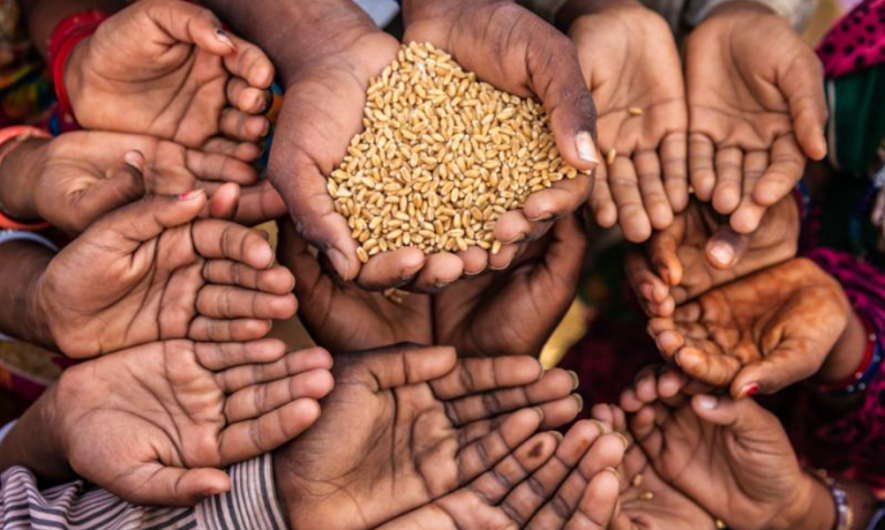

There is a world food crisis spanning the realms of production and distribution. According to the Global Report on Food Crises 2022, acute food insecurity afflicted approximately 193 million people in 2021. They were based in 53 countries/territories. This number was 40 million higher than those plagued by acute food insecurity in 2020. All this before the outbreak of the current armed hostilities in February 2022 in Ukraine, which has undoubtedly aggravated the world food crisis.

Before turning to the causes of this crisis, it may not be inapposite to review the working of the contemporary world food system. It has been argued that the elites of the developed countries, based principally in the temperate lands of the Global North, seek to exercise control over many primary commodities (crops and minerals). This is the case since most such primary commodities are not domestically available in the Global North.

These primary commodities are predominantly (but not exclusively) based in tropical and sub-tropical regions, home mostly to developing countries. This control involves a squeeze on the incomes of the working people, who release a greater volume of primary commodities to the developed world. Consequently, the working people in these countries are subject to chronic hunger, malnutrition and famine. However, this squeeze is not symmetrical across all segments of working people within or across developing countries.

As far as crops are concerned, this export to the developed countries often involves a shift of cultivable land use from food to non-food crops and the export of food crops at the expense of domestic food security. Developing countries where this shift has gone far enough end up dependent on food imports. This not only makes them vulnerable to volatility in the world market but also beholden to corporate agribusiness (and the elites of the developed countries more generally, especially through international finance, which controls much, though not all, of world trade in food and primary commodities.

During the centuries-long colonial period, this control of developed-country elites--the colonisers--over primary commodities resulted in the deaths of hundreds of millions of people in colonies and semi-colonies due to famines and epidemics exacerbated by such famines. The British colonial government squeezed the purchasing power of working people in India by prioritising the drain of wealth through the export of primary commodities. It largely ignored public investment in agriculture that could have been land-augmenting, and these played a principal role in such deaths. However, the promise of political decolonisation, inadequately realised during the dirigiste period, was soon belied by the neo-liberal project, which reinstated domestic food insecurity in many developing countries. It attenuated even the limited public support for agriculture put in place during the dirigiste period.

Therefore, the working of the contemporary world food system reproduces food insecurity, especially in developing countries. Corporate agribusinesses, coalescing with international finance and principally based in developed countries, control trade in many agricultural inputs and outputs. Besides, much of the contemporary world food trade is carried out through the US dollar-based financial system. A key element in this control is the speculative stock holding of primary commodities, which are conducive to profitable speculation since supply adjustment (especially for crops) requires a certain amount of time to produce fresh output.

For instance, if bad weather is expected to result in reduced world wheat output in the immediate future, then speculators—in other words, corporate agribusinesses coalescing with international finance—will enhance their speculative stock-holding of existing wheat stocks. This exacerbates food insecurity and will increase wheat prices. If wheat output rises in the future, and if there is a bumper crop, corporate agribusinesses may physically destroy a part of their stock-holding of wheat if that is more profitable (through consequent changes in price and traded volumes of wheat) than selling or storing wheat. In other words, world food insecurity is a principal consequence of the contemporary world food system dominated by corporate agribusinesses coalescing with international finance.

The current armed hostilities in Ukraine and economic war on Russia initiated by the United States and its “allies” has aggravated the world food crisis. This crisis was already severe due to the manner in which corporate agribusiness coalescing with international finance capitalised on the disruptions caused by neo-liberal policy responses to the Covid-19 pandemic.

Consider the realm of distribution of existing food stocks. According to the Food Price Index of the Food and Agricultural Organisation, the prices of cereals increased by 17.1% in the world market between early February 2022 and early March 2022. During this same period, the world market prices of oilseeds increased by 24.8%.

Now, Russia and Ukraine together account for 33% of world exports of wheat, 27% of world exports of barley, 17% of world export of maize, 24% of world export of sunflower seeds and 73% of world export of sunflower oil in 2021 according to the Global Report on Food Crisis 2022. Disruption of these supplies is leading corporate agribusinesses, fused with international finance, to profitably enhance their stock-holding of other existing volumes of such (and related) crops, resulting in a prohibitive rise in world prices of primary commodities.

The United States and its “allies” claim that the navy of the Russian Federation is blockading Ukrainian ports on the Black Sea, which is preventing ship-based exports of agricultural commodities from Ukraine. Attempts to transport agricultural commodities by rail from Ukraine face two constraints. First, currently, the railways, in a given period of time, can only handle a lower volume of such freight compared to ships. Second, the armed forces of the Russian Federation are militarily targeting the railway system of Ukraine to prevent arms supplies to Ukraine by the United States and its “allies”. If the United States and its “allies” seek to enhance their arms supplies to Ukraine, then this could result in further attacks on the railway system of Ukraine by the armed forces of the Russian Federation.

This will further reduce rail-based agricultural exports from Ukraine and reduce other food imports into Ukraine and the movement of people, exacerbating the humanitarian crisis. Besides, there are concerns about the size of the next agricultural harvest due to the ongoing armed hostilities in Ukraine. Suppose that harvest turns out to be significantly lower than at present. In that case, domestic food security concerns will adversely influence the magnitude of agricultural exports from Ukraine.

When confronted with this impasse, mainstream media in the United States and its “allies” have come up with two unviable solutions. First, the use of military means by the United States against the navy of the Russian Federation to restore agricultural exports by Ukraine through the Black Sea. Given the massive retaliation one can confidently expect from the military of the Russian Federation to any such move, such an option will remain a non-starter. Second, the United and its “allies” seek to use Belarus as a land transit route for agricultural trade to ports in the Baltic republics in return for a temporary waiver from unilateral sanctions. However, this cannot be a complete alternative to ship based transport of primary commodities through ports in the Black Sea.

Given the recent attempt of the United States and its “allies” in Belarus at regime change and the consequent attenuation of strategic autonomy of the current Belarus government with respect to the Russian Federation, the chances of success of such offers by the United States and its “allies” are underwhelming.

The government of the Russian Federation, on its part, claims the Ukraine armed forces have mined the approaches to Ukrainian ports in the Black Sea, which is preventing the navigation of ships from Ukraine. Further, Russia produces and exports more than Ukraine of most crops that both grow. Therefore, the government of the Russian Federation claims that unilateral sanctions imposed on Russia by the United States and its “allies” are the main hurdle to its export of agricultural commodities. Given this ongoing food distribution crisis globally, many governments (India, Kazakhstan, etc.) are restricting food exports to try and ensure domestic food security.

Turning to the realm of agricultural production, note that Russia is the leading exporter of nitrogen fertilisers globally, the second-largest exporter of potassium fertilisers in the world and the world’s third-largest exporter of phosphorous fertilisers. Besides, Belarus is a leading exporter of potash fertiliser. The economic war on Russia (and Belarus) by the United States and its allies is disrupting the supply of these fertilisers and a further increase in fertiliser prices that were already high. This further rise in fertiliser prices is principally due to corporate agribusiness, coalescing with international finance, capitalising on this through speculation.

This rise in fertiliser prices and the rise in energy prices due to the economic war on Russia are leading to an increase in cultivation costs. It may compel many peasants to reduce the area under cultivation, or it could cause a further rise in food prices both from the cost side and due to the speculative activities of corporate agribusiness, coalescing with international finance.

Further, the economic war on Russia has accelerated inflation in many countries, including the United States. Consequently, the US Federal Reserve is increasing its policy rate of interest. Unless other central banks hike their policy rates of interest, international finance will exit from these countries. Such hikes in policy rates in developing countries will result in an increase in lending rates to borrowers. Since peasants in developing countries are the least capable of accessing credit at higher interest rates (quite unlike the heavily-subsidised corporate agribusinesses of developed countries), their agricultural production will be further squeezed either by higher interest loans or lower credit access. Since many poor peasants tend to be net foodgrain buyers, this comprehensive squeeze on agricultural production will increase food insecurity for workers worldwide and these peasants.

But this crisis in agricultural production will be further exacerbated by adverse climate change. In the Rabi season 2021-22, wheat output has been estimated to fall by more than 10% due to an unseasonal heatwave in wheat-growing areas of India. Besides, studies demonstrate that the probable frequency of extreme heatwaves in North India and Pakistan will increase this century, compared with the twentieth century, with attendant deleterious consequences on agricultural output. Further, after reports of drought in France, crop yields are expected to reduce this year. Such phenomena will enable corporate agribusiness, coalescing with international finance, to engineer further increases in food prices through speculation resulting in mass hunger and famine.

The severity of the ongoing world food crisis requires a comprehensive set of short term and long term policy responses. In the short term, the United States must realise that there is no military solution to the conflict in Ukraine that will bring about their hoped-for “defeat of Russia”. The United States must recognise that if it imposes sanctions on other countries, these countries’ governments will retaliate. This retaliation will not necessarily be constrained by the usual play-book the United States prescribes to other countries in the “rules-based international order”.

The rest of the world is paying a higher price for the United States’ refusal to accept a diplomatic solution to the conflict in Ukraine. Therefore, the governments in Europe, especially France and Germany, must take the lead in bringing about a diplomatic solution to the conflict in Ukraine and ending the economic war on Russia. This will provide immense succour to those at the receiving end of the current world food crisis.

Further, all governments need to institute administrative action against speculation in food and related commodities through the deployment of stock-holding limits for private entities, regulation of food trade, direct government distribution of food, and government sale of food in the private market etc. International trade in food and fertiliser in currencies other than the US dollar must be adopted where appropriate. The greater cooperation among developing countries that such measures require will also lay the foundations for longer-term efforts to deal with the world food crisis.

Over the long term, all governments must prioritise domestic food security through suitable changes in agricultural land use towards food crops and regulation of food exports. Besides, government support for peasant production must span the entire gamut of agrarian interventions, including the transformation of agriculture in the direction of climate resilience, grounded in agroecology, through measures such as land augmenting public investment. Such changes are not merely administrative and require fundamental changes in the international political economy. No matter how remote such changes may seem from the vantage point of the current conjuncture, they are superior for working humankind to the alternative, which involves avoidable deaths of millions, as happened during the ongoing Covid-19 pandemic.

The author is a professor at the Department of Economics, Satyawati College, University of Delhi. (With thanks to Dr Navpreet Kaur for critical interventions in a previous version of this article.) The views are personal.
Central Trade Unions Come Together to Save Bengal's Jute Industry

In the coming days, the unions will hold conventions and meetings before jute mill gates across the state on a 27-point demand charter.

Sandip Chakraborty
25 May 2022


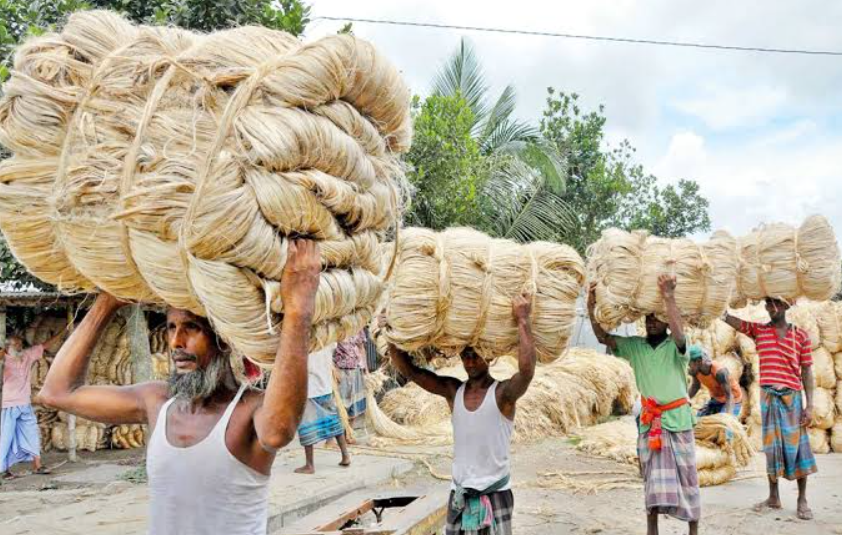
Kolkata: A decision was taken to forge a joint movement to save the ailing jute industry as representatives of all Central Trade Unions, including CITU, AITUC, INTUC, and BMS, met recently at Shramik Bhavan (CITU state headquarters) in Kolkata at a joint convention. They highlighted that due to illegal hoarding of raw jute by middlemen and without central or state interventions, the jute industry of Bengal is facing a deep crisis.

Jute is grown in vast areas of the state covering South and North Bengal. The state accounts for nearly 80% of the area under jute cultivation and 83% of its total production in the country. This year production of raw jute has increased. The Centre also raised the minimum support price of jute to Rs 4,500 a quintal (TD-5 variety) in 2021 from Rs 4,225 in 2020, which was expected to help the higher production. However, in the absence of an effective role played by the Jute Corporation of India (JCI), farmers say the price of raw jute earned by them is hardly ever equivalent to the MSP in the open market.

Moreover, the huge credit period and understanding among the jute mill owners while directly purchasing from farmers make the jute cultivators incapable of bargaining for better prices. However, this year, the middlemen have hoarded vast amounts of raw jute in their godowns and mills are closing down due to the want for the raw material, the trade union representatives claimed.

The jute mills now work on seasonal capacity, and unlike the earlier permanent arrangements, seasonal employment arrangement has been bolstered with the introduction of cheap and new high-capacity machines called China machines to reduce the worker's roles. According to the CTUs, there are more than 150 jute mills on both sides of river Hooghly in West Bengal, and most of these work on seasonal arrangements and call for layoffs at the slightest of issues. At the convention, the poor state of the jute industry was elaborately discussed by the representatives of the various trade unions.

They also alleged that the jute workers are amongst the lowest-paid workers in the eastern state, and a tendency has grown to make the jute workers toil at less than minimum wage. To ward off any union activity, the Trinamool Congress-led government has arranged police pickets outside the jute mills' gates. Within the mill premises, the authorities now rely on bouncers whom they employ to stop any union activities therein, the unions claimed. They further alleged that these bouncers often physically and mentally torment the jute mill workers.

A total of 21 trade unions working in the jute mill sector of the state met at Monday's convention. There, they decided that through a unified workers' movement, the mill owners would be forced to participate in a tripartite meeting to sign a new wage agreement. The state government's labour department, a party in the tripartite meet, only knows the language of movement, and through fostering of workers' movements, they would be forced to convene tripartite meetings, the unions said.

It was also decided that in all the districts, conventions and meetings before every jute mill gate will be held on a 27-point demand charter. On June 13, there will be a convention in Howrah, followed by one in North 24 Parganas on June 17 and Hoogly district on June 24.

Anadi Sahoo, general secretary of Bengal Chatkal Mazdoor Union (BCMU), at the start of the convention, placed the draft proposal saying that, at present times, the jute industry is facing a deep crisis.

Only due to supply constraints of raw jute, over 14 jute mills have closed down, leading to the unemployment of over 50,000 mill workers, Sahoo said. He noted that this year, raw jute production has been up to the mark. However, due to conspiracy by a section of jute barons and mill owners, the industry is facing a shortage of raw materials, he alleged.

The present situation has hit the common workers of the jute industry hard and hunger is now a perennial thing in their homes, the BCMU leader said. He added that while the permanent jute mill workers are being forced to work at Rs 370 per day, all trade unions have demanded to raise the daily wage of an average jute worker to Rs 1000.

Besides, in many jute mills, the owners have looted the retirement dues of the mill workers, Sahoo claimed. In this background, the 27-point demand charter has been drafted.

In the convention, the leaders also accused the ruling party of West Bengal of maintaining backdoor diplomacy with the erring jute mill owners, resulting in losses for the workers. To tackle this, the central trade unions have called for forging a movement on the lines of the farmers' movement in New Delhi, which has shown them the importance of a unified movement.

The unions also noted that many mill contractual workers are now employed without any social security net and are paid only Rs 500 per day. In the jute mills, the authorities now employ women daily wagers by paying them even less than the permanent workers. The women jute mill workers do not have toilets within the mill premises and are exploited to the core, they said. They added that the industry is suffering due to a low-wage structure, and permanent and skilled workers are leaving the arena for greener pastures or returning to their villages in the North Indian states.

After the TMC government was sworn to office, the exploitation of the jute workers increased manifolds as they faced severe exploitation but were unable to convene any strike due to a government ban, the unions said.

In 2019, a wage agreement was signed, but that is yet to be made functional at the mill level across the state, the union leaders said. During the Covid-19 period, the workers didn't get any wages even though the government assured them their salaries. The Mamata Banerjee government chose not to go to the Supreme Court to challenge the decision of the jute mill owners for not giving any relief to the mill workers.

The convention on Monday was administered by a praesidium comprising trade union leaders such as Dipak Dasgupta Ganesh Sarkar, Debasish Dutta, Atanu Chakraborty, and Amal Sen, among others. Many affected jute mill workers also spoke at the convention and highlighted their exploitation.
Europe at Crossroads of Neoliberalism and What People Actually Want

Where there’s a will, there’s a way.

Nora Garcia Nieves
25 May 2022

Image Courtesy: Brave New Europe

“Neither war that destroys us, nor peace that oppresses us”: This historic anti-war slogan of the Spanish feminist movement holds one of the fundamental keys to building a horizon of peace. It claims that peace is not just a ceasefire, nor is it surrender to or silence before those who impose their wars on others. Rather, peace is the building of a foundation for fostering relations based on mutual respect and cooperation.

Such an idea is neither naive nor impossible. Where there’s a will, there’s a way.

Building a new path based on a lasting peace is the only possible alternative for the sustainability of all people and the planet. The opposite of this means a silencing of the people, the loss of human lives, a divided world, permanent war, living in constant fear of nuclear weapons, and misery for the people affected by war.

Those who claim to defend freedom do not want those who are not like them to enjoy it. What we are facing is an “either with me or against me” mentality—or, as Josep Borrell, high representative of the European Union for foreign affairs and security policy, recently said, “We will remember those who are not by our side.”

Freedom, therefore, is not solely a choice between two options, but the possibility of creating our own option. That is why it is essential that, in the face of the mainstream perception of the world that tries to rob us of the ability to envision a new alternative, we must articulate one where everyone can fit in—where war is not inevitable.

‘EUROPE IS INDEFENSIBLE’

In the current context, with Russia having invaded Ukraine, we are surrounded by a sense of amnesia and the feeling of having returned to the 20th century. Once again, there is war, hatred, and the familiar rhetoric of division of “us” against the “others.” It is shocking that in the face of the war in Ukraine, Fortress Europe—which in its response to the refugees and migrants of war-torn and poor countries in the Global South has turned the Mediterranean Sea into a mass grave; which illegally carries out pushbacks against migrants; and which locks asylum-seekers in detention centres, without any access to lawyers—now finds it is so easy to make changes in policies and to open its doors to white and blue-eyed people.

The war in Ukraine has proven the EU to be perfectly capable of receiving refugees, but for those trapped in Libya—the country destroyed by NATO—there are no safe routes, no trains, and no free buses. This shows us again: where there’s a will, there’s a way.


All people have the right to flee war and rebuild their lives, like the Afghan, Kurdish, and Syrian people who made their way to Moria, the crowded refugee camp on the Greek island of Lesbos that burned down during the pandemic in 2020, with almost 13,000 people living in the camps left without any shelter, and where 10-year-old children have tried to commit suicide due to violence, hunger, and overcrowding. The attitude from colonial Europe’s history has endured, reiterating that there are lives that matter and lives that don’t matter.


But not so many years ago, thousands of Spanish families had to flee fascism, which also persecuted “the others,” a categorisation that included the Roma people, members of the LGBTQ community, and supporters of the Spanish Republic. As Aimé Césaire wrote in his Discourse on Colonialism, “Europe is indefensible.”


The level of hypocrisy is already astounding, and yet we continue down this path where we talk about peace while we send weapons to the warring nations, we talk about democracy while we support censorship, we talk about human rights while we dismantle the United Nations, we talk about freedom while we ignore the creep of fascism. And at the centre of all this is NATO. As if it were not enough to surrender our sovereignty to the capitalist market, we must also surrender it to wars waged by the United States.

‘You Can’t Eat Dignity, but People Without Dignity Get Down on Their Knees and End Up Without Food’

Julio Anguita González, the late mayor of Córdoba and the influential political leader within Spain’s Left wing, famously said, “You can’t eat dignity, but people without dignity get down on their knees and end up without food.” These words echo in my head as I try to figure out what is happening in Europe, or more importantly, what Europe is and how we can make it the opposite of that.

But to understand what Europe is today, we must remember that the debates that built the consensus toward this European Union were laid out in abstract and aspirational terms, associating modernity with neoliberalism. While the people became enchanted by an empty European identity, the foundation for an economy separated from political and democratic power was built.

Like the little mermaid from Hans Christian Andersen’s popular fairy tale, we sold our voices for a romantic idea of love—in our case, for a sense of belonging to a vague European identity. While we were voiceless, the EU’s manufacturers filled the gap between economic and social structures with institutions that foster inequalities and a European security project that answers to Washington.

The EU’s decisions in the face of the 2008 financial crisis, the COVID-19 pandemic, or the war in Ukraine cannot be any further from the real and daily security needs of its people. The lesson we should have taken from the little mermaid, however, is that without our voices, there can be no real love.

THE FIGHT AGAINST AMNESIA


Those of us who have fought against historical amnesia know that we don’t need military alliances, because war is a terrible symptom, but it isn’t the disease plaguing the world. To remove it, Europe urgently needs a heart transplant—an anti-fascist and anti-colonial heart, one that is responsible for the world it builds and the people who live in it and come to it. So how can we make Europe the opposite of what it is now? First, by assuming that we cannot postpone opening our eyes any longer, seeing Europe for what it is, and tackling the most difficult task: building a path of our own. With memory, we will be able to undertake that task, because it has been tried before.

Let’s listen to the past, and let’s make the present better. That journey goes from anti-war activist Rosa Luxemburg to the Non-Aligned Movement, BRICS, Pan-Africanism, and the struggle of the Mothers of the Plaza de Mayo. All this history reminds us that the struggle to build an alternative path to peace is full of courage, and that those who fought for peace learned on their way that their will also counts.

Because where there’s a will, there’s a way.

More weapons won’t save us—we will.

Nora Garcia Nieves, member of No Cold War, lives in Madrid, where she is an activist working in the feminist, internationalist, and cultural struggle.

Source: This article was produced by the Morning Star and Globetrotter.

Making the Belt and Road Initiative ‘small and beautiful’

Author: Ye Yu, Shanghai Institutes for International Studies

On 21 November 2021, Chinese President Xi Jinping laid out the key principles for the next stage of the Belt and Road Initiative (BRI). Risk control of BRI projects was a key focus. Xi encouraged companies and their regulatory bodies to prioritise ‘small and beautiful’ projects in international cooperation and to avoid ‘dangerous and turmoiled places’.

A worker at the construction site of East Coast Rail Link, a Chinese-invested railway project and part of the 'Belt and Road Initiative', Bentong, Malaysia, 13 January 2022 (Photo: Reuters/Hasnoor Hussain)

The Central Bank of China also issued a new regulation setting limits on the external lending of Chinese banks, ‘aiming to forge a new development pattern mainly relying on domestic cycles and … promoting interactions of domestic and international cycles’.

Limits on external lending represent a shift in Chinese BRI lending policies. The BRI has featured large direct lending for physical infrastructure projects in developing countries. Chinese state-owned banks financed on average US$85.4 billion a year across 2013–2017. This amount was more than double the United States. The average size of Chinese loans was US$328 million in this period, compared to non-concessional loans of OECD countries valued at US$12.4 million on average in 2019. Although infrastructure projects will continue to be the focus of the BRI, the size of future projects is expected to decline.

The shift can be understood in the context of global financial market dynamics. After the 2008 global financial crisis, European mega banks reduced overseas lending sharply from US$15.9 trillion to US$8.6 trillion from 2007–2016 due to enhanced financial regulations. A similar curve for the BRI will likely be pushed by the regulations of the Bretton Woods institutions and traditional creditors due to the COVID-19 pandemic.

According to the IMF and the World Bank, half of the countries eligible for International Development Association assistance are already in or were at high risk of entering debt distress before the pandemic. As proposed by the two institutions, the G20 approved the Debt Service Suspension Initiative (DSSI) and the Common Framework for Debt Treatment beyond the DSSI for this group of countries in April and November 2020 respectively. A total of US$12.9 billion debt service was suspended between May 2020 and the end of 2021. Further countries, such as Chad, Ethiopia and Zambia, are in the process of applying the Common Framework.

The accommodative policies of advanced economies over the last two years have allowed most debtor countries to survive without applying for Common Framework treatment. But the IMF, the World Bank and the US Treasury are encouraging more countries to speed up their debt treatment process. They are also pushing for broader debt transparency requirements and stricter debt sustainability analysis for DSSI countries. Inflation is driving a tightening of the global monetary environment and is expected to bring more DSSI countries into the G20 debt treatment process. China — as the largest official bilateral creditor — will be the most affected lender.

BRI deleveraging is different to the retreat of European banks during the global financial crisis due to the highly geopolitical nature of the debt treatment, debates on the role of BRI debt and the appropriateness of international regulations. The Bretton Woods institutions strengthened debt sustainability analysis for poor countries while advanced economies are effectively abandoning public debt limit disciplines. African countries complain about the ‘institutional bias’ in the methodology of rating agencies as attacking poorest countries during their hardest times.

The Common Framework processes will be prolonged due to the broad base of creditors and the lack of trust and leadership. Ensuring a commonly accepted fair burden sharing between commercial creditors of advanced economies, including bondholders, and Chinese banks will be the key.

A serious issue to consider is the optimal regulation for modern development finance to meet the financing gaps of developing countries. Traditional creditors are pushing for development banks and export credit agencies to comply with the strict norms of official development assistance (ODA), such as the ‘full transparency’ requirement and the prohibition of credit enhancement measures. These will heavily discourage the financing of ‘big and stupid’ infrastructure projects where ODA-type finance is insufficient to meet demand.

While it might be easy for the BRI to get wiser, it is still difficult for the poorest countries to find real alternatives. A new tide of ‘development finance competition’ is emerging to fill the financing gap. A dozen initiatives, including the Indo-Pacific Economic Corridor, Build Back Better World and Global Gateway were put forward to replace the BRI. Their key narrative is to adopt innovative financing tools to crowdsource private sector funding for high quality infrastructure projects, but results have been limited. How private sector solutions for infrastructure can really work remains an open question.

Ye Yu is Associate Research Fellow at the Shanghai Institutes for International Studies.

India Must Account for Human and Ecological Costs of Highway Expansion

Highways link regions and improve connectivity, but the break-neck pace of construction comes at a human, environmental, and social cost that cannot be ignored.

Bharat Dogra
25 May 2022

Image Courtesy: The Financial Express


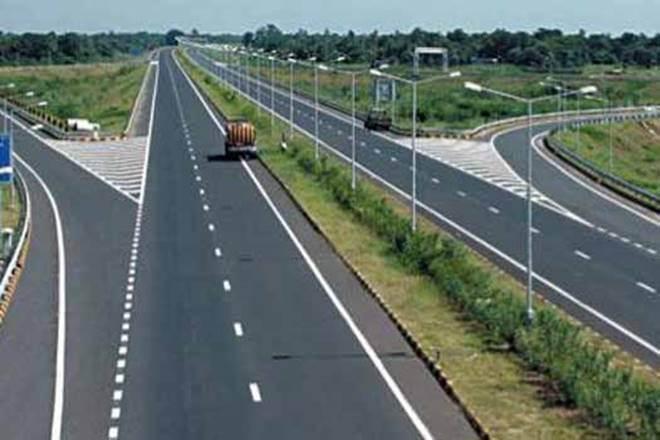
Rapid highway expansion is among the priorities of the central government, evident from how the National Highways Authority of India (NHAI) budget has expanded very rapidly in recent years. The actual expenditure of the NHAI in 2020-21 was Rs. 46,062 crores. Despite severe resource constraints during the Covid-19 pandemic, the following year’s budget estimate was raised significantly to Rs. 57,730 crores. Then the government increased the revised estimate in 2020-21 to Rs. 65,060 crores.

Highways are important for economic development and boost connectivity and transportation, but there is an ecological cost to building them, especially when it is done at break-neck speed. In 2022-23, India saw the most significant increase ever in the allocation for the NHAI, an over 100% hike in the budget estimate to Rs. 1,34,015 crore in the last Union budget. It implies a very rapid expansion of highways, which means the government must make effortst to reduce their ecological and social costs.

Instead, there are shocking reports of serious harm to the environment from many parts of the country, particularly the Himalayan region, during highway construction. Little is done to recompense for those who are losing out in the process of construction. To begin with the ecological costs, according to an official reply to an RTI request in December 2020, over 1.89 lakh trees were felled for the 297-km Bundelkhand Expressway project that seeks to link Chitrakoot and Etawah in Uttar Pradesh. Progress on this project is officially around 94% complete. Yet the figures for trees cut down are underestimated, as the destroyed shrubbery and soil were not accounted for here. For the roughly 900-km Char Dham project in Uttarakhand, both large and small felled trees were counted in the first three phases. Some have concluded that over two lakh trees were lost in this process. It’s quite possible that somewhere close to this number is also threatened in this project’s remaining 100-km stretch from Uttarkashi to Gangotri. This is a highly sensitive eco-zone near the origin of the Ganga river.

Along with tree-felling, serious harm has been caused by the tendency to save construction expenses by using unscientific means to cut hills. One big culprit is the excessive use of explosives. It raises the growing number of landslide-prone sites and highway danger zones. Our planners forget that the cost of a project includes the benefits it will bring in terms of time and fuel savings. If a highway project raises the frequency of traffic disruptions, delays, and accidents, then the purpose of expansion and road-widening gets defeated over time.

The problems start with poor planning and projects cleared without consulting communities. As a result, mass-scale road widening exceeds its tolerance limits in hilly regions. Another serious lapse is the inability to make arrangements to dispose of the muck that is created during construction. This mud finds its way into rivers and hurts water flow and riverine lifeforms and raises flood risk.

The project to widen the highway from Udhampur to Banihal in Jammu and Kashmir has devastated water sources, particularly the Tawi river in the Jammu region. In Ramban, people have complained of severe breathing problems where the muck is deposited. The National Green Tribunal (NGT) constituted a monitoring committee headed by a retired senior judge, which said in October 2021, NHAI must repair the damage and provide Rs. 129 crore on the polluter-pays principle. The NGT then instructed the NHAI to strengthen its capacity to prevent and monitor environmental damage while executing projects.

It is also a fact that in India no agency computes the cost of lives lost during mega-construction projects. A landslide took place at Ramban on 21 May, at the site of an ongoing tunnel construction project as part of the project to widen (four-lane) the Jammu-Srinagar highway. Ten workers digging at the mouth of the tunnel died. According to media reports, the mouth of this tunnel and areas around have become a “death trap” even for commuters, as it is constantly affected by landslides and shooting stones.

We also forget that the cost of building highways includes the tolls that people must pay once they are completed. Recently, local residents of Sohna in Gurgaon protested against the setting up of a toll plaza on the partially-opened elevated road along the 19-km stretch. They said they want exemption from the toll tax permanently, as opposed to the temporary relief given by NHAI to locals, along with monthly discounted passes. The residents say their movements are restricted by the presence of not just one but four toll plazas in Gurgaon, which have too few exits.

People facing environmental damages, economic hardships and social costs is not new, but as more funds are poured into highway-building work, these conditions will only worsen unless there is a correction. In 2019, the 1,328-km Delhi-Mumbai Expressway passed through protected areas. It was reported that the engineers engaged in this project were “exploding and flattening entire hills” and repurposing soil to create beds for the widened highways.

People do not realise that the higher the ecological losses, the more the social costs will climb. This writer’s conversations with people living near the widened Parwanoo-Solan Highway in Himachal Pradesh revealed many had lost their homes or parts of houses, pathways and farms during heavy construction work. While compensation for the land acquired during widening is generally received, the indirect harm often remains unsettled for long or is never compensated. Roadside shops are removed to make room for the roads, and they are usually classified as encroachments, disentitled to compensation. Those with modest livelihoods tied to tourism and pilgrimages are more adversely affected. Some have formed committees and are protesting to demand justice.

Or recall the tragic story of the Telangana village along an expressway whose numerous male residents died while trying to cross it. Such problems exist across the country and arise because the costs of access roads and by-passes are high. There are always villages and towns that do not get access roads, exits or by-passes, and each situation has its own complex impact. That is why we need measures to compute and then minimise the social and environmental effects of highway development. A recent National Green Tribunal (NGT) ruling said more financial resources must get allocated to repair such damage, which is welcome. It is even more critical to have precautionary systems that avoid inflicting harm in the first place. Highway building must learn from past mistakes. Unbiased pre-project assessments and community consultations are crucial to this process. Making good use of the local community and understanding conditions is essential.

The writer is honorary convener of Campaign to Save Earth Now. His recent books include Planet in Peril and Man Over Machine. The views are personal.
Human Mania for Roadbuilding a Threat to Great Apex Predator Species

Tigers and leopards are among the 10 apex predators most threatened by the world’s roads.

Jeffrey Dunnink
26 May 2022

Image Courtesy: Countercurrents

Designed for speed and efficiency, roadways across the globe are effectively killing wildlife whose futures are intrinsically linked to the future of the planet: apex predators, those species including big cats like tigers and leopards that sit at the top of the food chain and ensure the health of all biodiversity.

A new study I co-authored confirms that apex predators in Asia currently face the greatest threat from roads, likely due to the region’s high road density and the numerous apex predators found there. Eight out of the 10 species most impacted by roads were found in Asia, with the sloth bear, tiger, dhole, Asiatic black bear and clouded leopard leading the list.

The outlook for the next 30 years is even more dire. More than 90% of the 25 million kilometres of new global road construction expected between now and 2050 will be built in developing nations that host critical ecosystems and rich biodiversity areas. Proposed road developments across Africa, the Brazilian Amazon and Nepal are expected to intersect roughly 500 protected areas. This development directly threatens the core habitats of apex predators found in these regions and will potentially disrupt the functioning and stability of their ecosystems. This is particularly concerning where road developments will impact areas of rich biodiversity and where conservation gains have been so painstakingly achieved.

Ironically, as we celebrate the Year of the Tiger this year, road construction in Nepal is expected to bisect tiger strongholds, threatening to reverse the remarkable and previously inconceivable progress made to conserve the world’s remaining 4,500 wild tigers from extinction. In the Brazilian Amazon, 36,500 km of future roads will be built or upgraded inside the home ranges of pumas, ocelots and jaguars.

Naturally, the African Union’s development corridors are designed to promote development and drive investment in previously ignored areas. While marginalised communities must be given access to lifesaving development infrastructure and investment, this goal can be achieved while also conserving the continent’s fragile ecosystems and at-risk apex predator populations. As it now stands, the development planned in Tanzania’s Serengeti National Park, in particular, is expected to devastate one of the world’s greatest animal migrations, causing a domino effect on healthy apex predator populations.

It’s important to remember that roads don’t just kill the animals trying to cross them; they divide habitat patches into increasingly smaller fragments. Apex predators are disproportionately impacted by discontinuous habitats due to their need to roam large undisturbed areas. Research has found that predators such as the jaguar will completely avoid all roads in their habitat, often isolating individuals from the rest of their population. The ubiquity of roads also presents a barrier for mating between jaguars. This ultimately reduces the genetic diversity and strength of the population and is a particular threat to apex predators due to their large home range and small population sizes.

Another unintended consequence of rampant road development is increased poaching. Roads facilitate easy access to previously wild areas, allowing for the expansion of permanent human settlement. More roads make it easier for poachers to reach remote wildlife populations and facilitate the transport of illegal wildlife products across a greater area. Indeed, snares for wildlife and poachers are often found at higher rates close to roads and human settlements.

Despite these grim consequences, there is a way to achieve human development objectives while allowing predators to thrive. When road projects are deemed vital to the development of an area and the surrounding communities, they must be built with wildlife in mind—intentionally located well outside of protected areas and predator strongholds.

Wildlife crossing structures, such as tunnels and underpasses, need to be integrated into road planning and budgetary decisions from the get-go. It is only through inclusive planning processes, where the voices of local communities, conservation scientists, road engineers and government officials are all equally weighted, that sustainable road development can be achieved.

Costa Rica offers an excellent example of this type of collaboration. Although often considered the gold standard in conservation, Costa Rica hosts the highest density of roads in Central America, with one stretch of the Limón-Moín Route 257 responsible for 4.6 wildlife roadkills per hour, primarily due to speeding. By monitoring the highways for all roadkills, conservation scientists have identified key wildlife crossing areas and informed the construction of structures to ensure their safe passage, from arboreal crossings for tree-dwelling species to underpasses for the flat-footed ones. Critically, scientists have formed a strong partnership with local and national governments who fully support the concept of “wildlife-friendly roads.”

Our futures and health are forever intertwined with those of non-human animals, and people also benefit from wildlife-friendly roads. The recolonisation of pumas in North Dakota is estimated to have reduced costs of deer-vehicle collisions by more than $1 billion, and scientists estimate a recolonisation of the Eastern United States by pumas could reduce deer-vehicle collisions by 22% over 30 years, averting 21,400 human injuries and 155 human fatalities, and saving more than $2 billion in costs.

From wildlife-vehicle collisions to unintentionally creating new pathways for poachers to target our planet’s most cherished wildlife, roads pose a major threat to apex predators.

With research confirming that this threat will only intensify over the next 30 years, there is now a small window of opportunity to ensure that these developments do not unduly impact our natural world.

By planning roads more carefully, avoiding their construction in protected areas and adopting mitigation measures like wildlife crossings, we can protect apex predators and the critical role they play in the health and survival of our planet.

Jeffrey Dunnink is the Furs for Life coordinator at Panthera, a global wild cat conservation organisation.

Source: Independent Media Institute

Credit Line: This article was produced by Earth | Food | Life, a project of the Independent Media Institute.


India

Unions Protest BJP Govt’s bid to Privatise Electricity in Puducherry

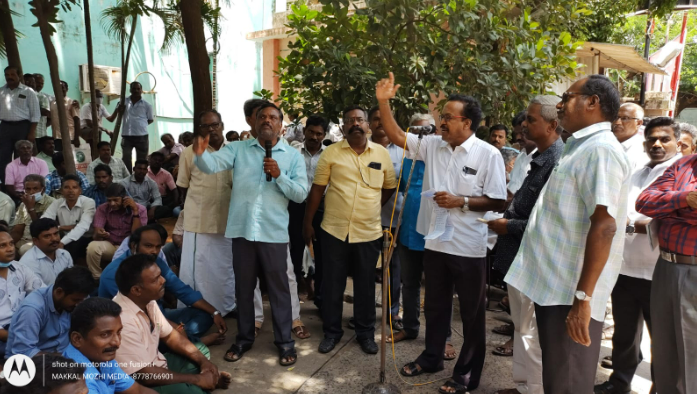
Around 500 employees of Puducherry Electricity Department went on a strike on May 23, demanding the central government withdraw its privatisation efforts.

Sruti MD
25 May 2022

Electricity workers protest privatisation in UTs.
 Image courtesy: CITU, Puducherry


In April 2020, Union finance minister Nirmala Sitharaman announced that electricity transmission and distribution would be privatised in all union territories. The reason behind the decision is said to be the loss-incurring electricity distribution in the UTs.

All the trade unions in the electricity departments in Puducherry have formed a joint action committee (JAC) protesting the government’s move as it would have an adverse effect on all sectors.

Around 500 employees of the Puducherry Electricity Department went on a one-day strike on May 23, demanding the Bharatiya Janata Party (BJP)-led central government to withdraw its efforts to privatise the electricity distribution company (discom) in the UT.

The JAC said that if their demand is not met, they will carry out more protests, indefinite strikes, and even a judicial course of action in the future.

BYPASSING THE LEGISLATURE

The JAC has vehemently opposed the argument that the electricity department is running under loss.

Ramasamy, secretary of the CITU in the department, told NewsClick, “The Centre claims that it wants to overcome losses and decided to privatise electricity. Even going by their argument, unlike few other UTs, Puducherry electricity board is running at a profit. So, there is no need to privatise electricity.”

Puducherry Power Corporation Limited, an undertaking owned by the Government of Puducherry, operates a 33 MW gas power plant in the Karaikal region, making the UT self-sustainable.

Ramasamy also said, “In other UTs, there is no elected government like Puducherry. The central government announced to privatise electricity and the implementation of it is already underway without the knowledge of the state government.”

Notably, electricity is under the concurrent list in the Seventh Schedule to the Constitution of India, which empowers both the Centre and states to make laws regarding it.

Under the leadership of the then Congress government in 2020, the assembly passed a resolution to oppose the privatisation of electricity in Puducherry. Except for the BJP, all other members supported the resolution, including members of Dravida Munnetra Kazhagam (DMK) and All India Dravida Munnetra Kazhagam (AIADMK).

“Namasivayam, the electricity department minister, is keen on implementing the privatisation move. On May 9, even without the assembly meeting, minutes were circulated saying the assembly passed the move to privatise electricity in the UT,” said Ramasamy.

Namasivayam was formerly with the Puducherry Pradesh Congress Committee and opposed the privatisation move in 2020.

“Usually, circulation minutes took two to three days; this was done within two hours. Also, this is a policy decision, so passing it without the assembly meeting is unacceptable. It is unusual in the history of Puducherry,” he added.

‘HOW CAN THEY PRIVATISE A DEPT?’

Across the country, since 2003, efforts have been made to unbundle the electricity departments under the state governments, to split it into production, transmission and distribution. This was viewed as a move towards privatising electricity, and there was strong opposition from the trade unions.

In 2007, there was strong opposition to unbundling and making separate corporations of transmission and distribution in Puducherry, which was successful.

However, now the electricity department employees are angered by the move to directly privatise an entire department.

“How can they privatise a whole department in the government? Earlier, they at least attempted to make them into boards and corporations before privatisation was pushed. Now, they are selling off an entire government-run department to the private sector,” Ramasamy said.

REPERCUSSIONS

Currently, the UT purchases per unit of electricity for Rs 5.5 from the Centre and sells it at approximately Rs 6 per unit. Around 450 megawatts of electricity is transmitted to Puducherry.

The JAC believes that there are chances of per unit electricity going up to as high as Rs 10 or Rs 11 if it is privatised.

Moreover, “if electricity is privatised, like in other states such as Orissa, during natural calamities the private company would refuse to provide electricity saying they are not responsible for it,” said Ramasamy.

He added, “In Pondicherry, we ensured that the disruption was sorted within an hour even during cyclones. This was possible only because we are a public department. It took up to two days to rectify electricity disruptions in many states.”

If electricity is privatised, the JAC observed, the benefits of free electricity to the agriculture sector and for people living in slum settlements might be withdrawn.

The committee also added that in the franchise method, many private companies would be given the responsibility of distributing electricity; this would affect the public.

Moreover, there is no job security for the 2,000 employees working in the Electricity Department in the four areas of Puducherry, including Mahe, Yanam and Karaikal. The UT and central government have not spoken about their plight. The rights and benefits of the government employees are also precarious.

Lieutenant-Governor Tamilisai Soundararajan said on May 24 that any decision on the privatisation of the Puducherry Electricity Department will be in the interest of the people and employees.
USELESS CALGARY PARTY
Braid: UCP leadership run could spell end of Calgary dominance

Don Braid, Calgary Herald - 


Calgary dominates, if not in hockey at this moment, certainly in provincial politics.


© Provided by Calgary Herald
The Calgary skyline was photographed on Thursday, January 27, 2022.

The city is wildly overrepresented in the UCP cabinet, partly through electoral fate (Edmonton holds only a single UCP riding) but also because of Premier Jason Kenney’s choices.

As a result, resentment among UCP members in the countryside and small cities could be a key factor in the leadership election to replace the premier.

Northern annoyance was certainly in play when Ed Stelmach won the PC leadership in 2006, following 13 years of Calgary premier Ralph Klein.

In final balloting, Stelmach, from Vegreville, was the only northerner up against Calgarians Ted Morton and Jim Dinning.

The northern vote wasn’t everything but it tipped the scales in Stelmach’s surprising third-count victory.

And here we are again, with a regional balance so lopsided it has alienated UCP members not just in the north, but across much of southern Alberta outside Calgary.

This could give an advantage to out-of-town leadership candidates, especially Brian Jean (Fort McMurray) and Finance Minister Travis Toews (Grande Prairie) if he decides to run.

Similarly, the disparity might cause trouble for Calgarians who enter the race, perhaps including ministers Rajan Sawhney and Rebecca Schulz.

The city is home to 12 full ministers. The rest of the province has only eight.

The count is just as skewed among the associate ministers who oversee chunks of larger portfolios.

Calgary UCP members hold four of these associate posts. The rest of the province has one.


The final score of full and associate ministers is:

Calgary 16;

Rest of Alberta, 9.


A Calgary UCP MLA has a 57 per cent chance of getting into Kenney’s inner cabinet circle.

An out-of-towner has a 23 per cent chance.


This is a recipe for regional trouble on a grand scale. We’ve already seen it explode time and again in rural ridings.

MLAs from these areas did not see their views represented or even understood by a cabinet so top-heavy with ministers from a big city.

“Rural Albertans are feeling frustrated, that they’re not being heard, and this (the Calgary factor) is definitely something that surfaces,” says Airdrie-Cochrane MLA Peter Guthrie.

“It’s not something that is pointed to all the time, but it does come up.”


© Jim Wells
Following a 51.4 per cent approval rating from the leadership review, Jason Kenney said on Wednesday, May 18, 2022, he will be stepping down as leader of the United Conservative Party.

Kenney himself obviously cares about rural Alberta. One of his proudest achievements was an $815-million irrigation project in the southeast , with participation from Ottawa and area farmers.

He campaigned across rural areas for both the leadership and election campaigns. He seems to like nothing more than events in small centres.

But it’s one thing for a premier to make friends with people outside his home base, and quite another to let them into the heart of government.

Kenney’s failure to do so is almost inexplicable. The rest of the province surely had many MLAs who could have done as well or better than the Calgary ministers.

But Kenney seemed quite unconcerned by the Calgary factor that has worried conservative premiers all the way back to the PC founder, Peter Lougheed.

When Lougheed retired in 1985 after 14 years as premier, he worried that another Calgarian would provoke resentment. That’s why he favoured Edmontonian Don Getty.

Getty served for seven years. But after he left in 1992, Calgary dominance resumed with Klein, Alison Redford, Jim Prentice and now Kenney.

Lougheed took office in 1971, 51 years ago. Calgary conservative premiers have run the Alberta show for 38 of those years.


Those premiers, aware of sensitivities, usually took care to balance cabinet posts among the two big cities and the rest of the province.

Kenney didn’t have much to work with in Edmonton — only Kaycee Madu got elected in 2019. But that was even more reason to pick more ministers from rural and small-city Alberta.

About 60 per cent of UCP members live outside Calgary and Edmonton. Many more will join up during the leadership race.

They’re very likely to want one of their own this time around. Who could blame them?

Don Braid’s column appears regularly in the Herald.

Haaretz | Opinion |

The New Battle in the Israeli Right's Relentless War on Palestinians

The West Bank's Area C represents every layer of the Israeli-Palestinian conflict: Annexation vs. self-determination, inequality, violence and, most recently, as the new front in the Israeli right's shameless reversal of the truth


Area C represents every layer of the Israeli-Palestinian conflict: Annexation vs self-determination, inequality, violence and, most recently, as the new front in the war over truth 
Credit: Avi Ohayon/La'am, Sven Nackstrand/AFP, Mussa Issa Qawasma/Reuters, Moti Milrod. Artwork: Anastasia Shub

Dahlia Scheindlin
May. 24, 2022

Dalia is a wispy eight-year old with a brushed-back ponytail whose heart-melting smile reveals terrible teeth. When she wasn’t proudly handing out cookies to guests, she cuddled with her dad, Nasser Nawaja, through his lecture on a sweltering Saturday in the Palestinian village of Sussia.

Dalia is clearly comfortable hosting visitors. The scrap of land in the South Hebron Hills has gained attention in recent years for the partly-successful international campaign to stave off what would have been yet another demolition in Sussia’s long history of destruction and dislocation since 1986.

But when a threat recedes in one place it crops up in another: a few kilometers away lies Masafer Yatta, or "Firing Zone 918," where a smattering of Palestinian villages and approximately 1400 people have been have been fighting in court to keep their homes since the late 1990s. In May, Israel’s High Court ruled against them, clearing the way for expulsion.

These territorial struggles represent the fine-grain detail of life under occupation, but the big picture is Area C. This region represents every layer of the conflict: The front-line political struggle between Israeli annexation and Palestinian self-determination, the tortured inequality and frequent violence in daily life. And, most recently, Area C has become the new front in the war over truth

The geopolitical designations A, B and C are, well, the ABCs of the post-Oslo era in the West Bank. According to the 1995 Oslo II agreement, Area A is governed by Palestinian civil and security control – fragments on the map totaling about 18 percent of the West Bank, where the large Palestinian cities and the bulk of the population are located. Area B falls under Palestinian Authority control for civil affairs, but Israeli military control.


Israeli troops move an elderly Palestinian man during a protest against the eviction of Palestinians and razing eight hamlets in Masafer Yatta, south of Hebron, in Area C
Credit: MUSSA ISSA QAWASMA/ REUTERS

Area C sprawls over roughly 60 percent of the West Bank, with a thick north-south band along the Jordan River, an unruly length along the Green Line and tangled east-west "C" regions connecting everything. C looks like a cocoon for the future Palestinian state, but acts like a straitjacket.

All Israeli settlements are located here, with about 450,000 settlers (not including East Jerusalem, which is annexed to Israel and therefore not included in A, B and C); in Area C Israel’s army controls all civil and military affairs – in other words, Israel controls C completely.


The political struggle is the top layer of the big picture. In December 2012, Naftali Bennett, then the new leader of the Jewish Home party, presented his big plan: Annex Area C.

His YouTube video explains Areas A, B, and C, incorrectly depicting each one as nearly equal in size. The narrator explains that Palestinians control A and B (disregarding Israel’s military control over Area B). Area C, falsely portrayed in the video as roughly one-third of the territory, is under Israeli control – therefore annexation makes sense. The video is helpfully subtitled into Arabic.


Screenshot from Naftali Bennett's factually dubious YouTube 'explainer' about Area C and his solution: Annexation
Credit: YourTube screenshot

Israel’s right wing had already openly embraced the idea by then. Tzipi Hotovely of Likud called to annex Area C back in 2010 and again as deputy foreign minister in 2015, to a rising chorus of settler support for annexation of Judea and Samaria in general. Benjamin Netanyahu declared his support for formal sovereignty over settlements in April 2019, for the Jordan Valley in September that year, and for large portions of Area C again via the Trump peace plan in 2020. Netanyahu suspended plans for de jure annexation in return for the normalization accord with the UAE signed that year.

This open commitment to annexation for years should remove any lingering illusion that Israel’s right-wing political leadership supports a two state solution: Carving Area C out of the West Bank would leave a Palestinian state looking not even like Swiss cheese, but a cut-out paper snowflake with precious little snow.

The Abraham Accords kicked de jure annexation off the agenda for now, but on the ground itself, Israel’s physical annexation long preceded Netanyahu, and continues unabated. In visible and less obvious ways, Israel does everything to anchor its control and make life untenable for Palestinians in Area C, presumably hoping they’ll conveniently remove themselves to slivers of Areas A and B.

By 2013, a policy brief by the European Parliament reported alarming acceleration of demolitions of "houses, shelters, schools, clinics" – perhaps including a shortage of dentists – "water wells, cisterns, playgrounds, mosques." Hundreds of demolitions each year led to many hundreds Palestinians displaced annually, the report stated.

These trends have only worsened since then, says Alon Cohen-Lifshitz of Bimkom, a human rights NGO focused on spatial planning in Israel and in the occupied territories. Once, demolition orders were issued weeks in advance of being carried out, allowing residents time to appeal; now they are served just days ahead.

In Sussia, Nawaja relates that the orders might be delivered on a Thursday, just as Israeli administration offices close for the weekend, for demolition on Sunday. Cohen-Lifshitz explains that a single order can cover numerous structures. He reported a new practice for "mobile" structures: the IDF dismantles them, and serves the order afterwards.


Children play in the Palestinian village of Susya, south-east of Hebron, in the Israeli-occupied West Bank
Credit: HAZEM BADER / AFP

These structures are built illegally – without permits – because Palestinians simply can’t get permits. From 2009-2018, the Civil Administration approved 98 Palestinian building permits, out of nearly 4500 requests. In contrast, in 2019 and 2020 alone, about 18,000 settlement-related permit requests were approved, according to Peace Now and Bimkom, based on data from the Civil Administration. Bimkom found that of 1065 Palestinian applications in the same time, just seven were approved.

The planning committees (under Israel’s Civil Administration, which comes under the aegis of the Ministry of Defense) do not include any Palestinians. In 2014, petitioners asked the High Court to restore Palestinian representation canceled decades earlier; in 2015, the High Court rejected the petition.

The IDF also declares massive swathes of land to be "closed firing zones" (like Masafer Yatta), or state-owned land, zoned for Israeli use – for settlements, but also for parks, and a more recent push for settlement agriculture. The most aggressive of the settlers regularly use raw violence to keep Palestinians from accessing their land, or for general harassment; while settlers and their land grabs are backed by the IDF.

Only 0.5 percent of Area C is allotted for Palestinian development, according to Cohen-Lifshitz. The current Israeli government has made a show of plans to permit new Palestinian housing units – but the big picture remains. In May, among frantic efforts to salvage the coalition by mollifying the most right-wing members, the planning committee approved over 4000 new settler housing units.

For Palestinians, nearly all construction in these villages is deemed illegal by the Civil Administration, meaning they can’t access normal electricity, infrastructure or, the ultimate prize, water.


A Palestinian woman gives water to livestock from a water tanker, as Israel's Supreme Court rejects a petition against the eviction of more than 1,000 Palestinian inhabitants of Masafer Yatta
Credit: MUSSA ISSA QAWASMA/ REUTERS

Yet pipes crisscross the land, connecting settler outposts like Avigayil to freshly-painted (blue and white) water stations of Israel’s national water company while skipping past Palestinian villages. Some Palestinians erect solar-powered pumps to access well-water or improvised pipes – and then the IDF destroys them. Some pay exorbitant fees for tanker water instead, while a big sign near Ma’on – by all accounts one of the most violent settler outposts – points to a "cherry plantation."

Between being squeezed off their land, the constant threat of demolition or expulsion, starved of water, vulnerable to rising, brazen settler violence and tired of fighting just to survive, many leave for Palestinian cities or towns – Areas A or B – serving the overarching Israeli political aim: the fewest possible number of Palestinians in Area C.

But proof of Area C’s towering importance to Israel is the psychological warfare, in recent years, over the truth itself. The most bitterly fought aspects of the Israeli Palestinian conflict have always been subject to manipulation of "narrative." Lately, Israel’s narrative is that Area C is threatened by – wait for it – a Palestinian takeover.


Settlers throw stones at Palestinians near the settlement of Yitzhar in the northern West Bank.
Credit: AP

This is worse than bygone quibbles over details. One such detail was the argument that Israeli settlements were all located in large blocs in Area C adjacent to Israel. Therefore, in that argument, settlement expansion in those areas wasn’t a problem, the "blocs" could simply be awarded to Israel in a peace agreement, and the rest of Area C was fully available for a future Palestinian state. Netanyahu’s 2019 annexation plan put a spotlight on the 30 settlements, 18 outposts, and nearly 13,000 settlers in the Jordan Valley, which ought to have dispelled the myth of neatly contained settlement geography.

Demography is another longtime battleground for the truth. Right-wingers insist that there are hardly any Palestinians in Area C, to argue the logic of Israel’s permanent ownership. Bennett’s 2012 video asserted that a paltry 48,000 Palestinians live there.

The most serious, field-based study by a UN humanitarian agency counted just under 300,000 in 2013. Btselem cites 180-300,000, and the Palestinian Bureau of Statistics estimates even more. To be sure, no one knows how many Palestinians have left, but natural population growth could offset any decline. The credible Palestinian population sources are not updated, and Bennett gave no source at all.

Pulling these threads together, the new Israeli narrative wants to own the big picture. In 2019, Gideon Saar (then still in Likud) told Israeli radio: "Illegal Palestinian construction in Area C is going wild, with European financing, and the aim of the construction is to try and suffocate settlements and take over the land – we need to fight over this."


People run from tear gas fired by the IDF during a demonstration by Israeli, Palestinian and foreign activists against the eviction of Palestinians for an Israeli military training zone in Area C 
Credit: HAZEM BADER - AFP

In March 2021, the right-wing extremist Ad Kan group "investigated" the "massive plans" for Palestinian illegal construction in Area C. Three months later, Saar’s key party member Zeev Elkin insisted on leading the fight against Palestinian "spread" in Area C as a condition for joining the coalition.

Bennett’s own 2019 election manifesto explicitly promised to annex the whole of Area C to put it under Israeli sovereignty. In 2020, as Defense Minister, Bennett announced a "battle" for the future of Area C, to be formally managed within the Defense Ministry.

This January, following haranguing by far-right wing groups, the Knesset’s Security and Foreign Affairs committee held a discussion on "illegal Palestinian construction" and "lack of enforcement” by the Civil Administration – a shameless reversal of the truth. That didn't stop the heads of the Knesset’s Land of Israel caucus from accusing Bennett of actively assisting "the Palestinian Authority’s plan to take over areas of Judea and Samaria [the West Bank]."

Nasser Nawaja has been fighting to stay in his home since he was first displaced from the original Palestinian Sussia, in 1986 – he was three years old. At eight, his daughter is already learning how to plead the case to visitors. It’s hard to fight a juggernaut; but the fight isn’t over. Knowing and maintaining the truth is a start.

Dahlia Scheindlin is a political scientist and public opinion expert, and a policy fellow at The Century Foundation. Twitter: @dahliasc


Northern Ireland: MPs must reject Troubles Bill which would sound 'death knell for justice' for conflict victims

Amnesty International has called on MPs to reject the controversial Northern Ireland Troubles (Legacy and Reconciliation) Bill, which it warned will create a deeply unfair two-tier justice system and introduce a de facto amnesty for grave human rights violations committed during the Northern Ireland conflict.

The Bill is due in parliament for its second reading today (Tuesday 24 May).

Grainne Teggart, Campaigns Manager for Amnesty International UK said:

“Alarm bells should be ringing for all who care about the rule of law and access to justice. This bill is a de facto amnesty designed to make perpetrators of heinous crimes untouchable.

“No matter how Government dress this up, the Bill is not designed to deliver for victims and promote reconciliation. Instead, it will remove victims’ access to the courts and send a message that they are less worthy of justice than victims of the same crimes in any other circumstances. This Bill would create a grossly unfair two-tier justice system.

“If enacted, it would also set a worrying precedent internationally, giving a green light to other countries that want to deny justice to victims of human rights violations.

“The ‘Troubles’ bill would sound the death knell for justice for victims of the Northern Ireland conflict. It is vital that MPs stand with victims and reject the Government’s move to legislate for impunity.”

Michael O’Hare, whose 12-year-old sister Majella O’Hare was shot dead by a British Army soldier in 1976 on her way to church and is seeking an independent investigation into the killingsaid:

“When you’ve lost a loved one, the pain lives with you every day.

“My sister was a child, a sweet innocent girl whose life potential was never realised because of bullets from a soldier’s machine gun.

“This Bill and Government are only adding to the trauma that I and others are experiencing. The past is ever-present, we need real truth and justice for our loved ones.

“I will never stop fighting for Majella. We will fight this bill. We call on MPs to stand with us."

Notes to editors

In a new parliamentary briefing, Amnesty UK has called on parliamentarians to decisively reject the Northern Ireland Troubles (Legacy and Reconciliation) Bill.

The briefing highlights fundamental flaws in the Bill which fails to discharge the UK’s human rights obligations. Points raised in the briefing include:

- A new body - which is a central element of the Bill - the ICRIR will not deliver investigations that comply with the European Convention on Human Rights. Instead, these will be replaced by light-touch ‘reviews’. A conditional amnesty will be offered to those who take part in the ICRIR . The draft legislation states the conditional amnesty must be granted if an individual gives an account, judged by a state appointed judicial figure, to be "true to the best of (their) knowledge and belief". Once granted, it cannot be revoked.

-Victims of conflict-related serious offences including sexual crimes such as rape will also be denied access to justice.