Sunday, July 24, 2022

SUNNI SECTARIANISM
Influential Salafist Scholar Killed in the Afghan Capital

By Saqalain Eqbal / in Afghanistan / on Thursday, 14 Jul 2022 


Sardar Wali Saqib, a prominent religious figure and leader of Salafi scholars, was assassinated in Kabul city, according to sources.

Sources report that unknown gunmen on Wednesday evening, July 13, killed the influential Salafist scholar at his place of residence.

In the Naranjebagh area of Jalalabad district, in the heart of Nangarhar province, where many students are pursuing religious education, Sheikh Sardar Wali Saqib was the head of a religious seminary.

The incident was confirmed by the spokesman for the Kabul police, Khalid Zadran, and an investigation has reportedly been opened.

No organization has as of yet taken responsibility for the incident. Prior to this, however, the Taliban was accused of assaulting Salafi scholars in the country.

Salafism is one of the religious movements in Afghanistan and according to a report of the United Nations, Salafis are mysteriously murdered in the country’s eastern provinces.


According to the yearly report on international religious freedom by US Secretary of State Anthony Blinken, the situation for religious freedom in Afghanistan has drastically worsened since the Taliban took over the country.

https://en.wikipedia.org/wiki/Salafi_movement

Salafist Call (al-daʿwa al-salafiyya) is another influential Salafist organisation. It is the outcome of student activism during the 1970s. While many of the activists joined the Muslim Brotherhood, a faction led by Mohammad Ismail al-Muqaddim, influenced by Salafists of Saudi Arabia established the

 ...

See more

  • https://en.wikipedia.org/wiki/Salafi_jihadism

    Salafi jihadism or jihadist-Salafism is a transnational, hybrid religious-political ideology based on the Sunni sect of Islamism, seeking to establish a global caliphate, characterized by the advocacy for "physical" (military) jihadist and Salafist concepts of returning to what adherents believe to be the "true Islam". The ideological foundation of the movement was laid out by a series of prison …

    Wikipedia · Text under CC-BY-SA license
    • Estimated Reading Time: 11 mins
    • https://oxfordre.com/religion/view/10.1093/acrefore/9780199340378.001...

      2016-08-05 · Salafism is a branch of Sunni Islam whose modern-day adherents claim to emulate “the pious predecessors” ( al-salaf al-ṣāliḥ; often equated with the first three generations of Muslims) as closely and in as many spheres of life as possible.

    • https://www.livescience.com/57987-history-of-salafism.html

      2017-02-23 · Salafism is sometimes referred to as Wahhabism, the Saudi Arabian variant of the movement that is intimately tied to the Saudi regime. They share some intellectual roots and theological emphases,...

    • The Trauma of Temblor: Afghanistan
       on Thursday, 30 Jun 2022 
      FILE: Afghanistan earthquake

      Deep, deep, deep inside earth, the Indian plate collided with the Eurasian plate and a 6.1 magnitude temblor shook and shocked Afghanistan on June 22. The quake took at least 1,000 lives, leaving several others displaced. Over 10,000 houses were completely or partially damaged. The search for the dear ones from the debris fetched miserable results. In addition to Gayan, Barmala, Naka and Ziruk four districts of Paktika province, Spera district in Khost province was severely affected in the quake. A follow up tremor hit the area hard again on Friday, killing five more people. The disaster has mounted several challenges for the Taliban, who are already tormented by decades-long war, poverty, pandemic, hunger and economic crisis across the nation of 40 million. The disaster has placed Afghanistan once again in global attention for the wrong reason.

      Following the quake, over 42 planes and a group of 15 trucks reached the quake-hit areas with housing and food items including rice, oil and flour. The Afghan government announced 100 million afghani, or $1.1 million. The locals started volunteering to collect money to support the affected families.

      Despite their chilling political and diplomatic ties, Afghanistan drew immediate response from the countries in the neighbourhood and the west. The Taliban urged the US to unfreeze the foreign funds of Afghanistan and lift the stringent sanctions imposed on them following the deadly earthquake in the country. Qatar, Iran, Turkey, the United Arab Emirates, South Korea, Taiwan and Pakistan have extended support to Afghanistan. China announced humanitarian aid worth $7.5 million for the quake-hit nation. The UK announced £2.5 million in aid for Afghanistan. The local staff of the International Federation of the Red Cross facilitated the shelter, medication, water, sanitation, and other basic requirements of the people in Khost and Paktika. The Norwegian Refugee Council served the affected people and provided cash assistance to the affected families.

      India responded immediately to stand by the ravaged state. India’s response was prompt and timely. A technical team was sent by India to coordinate the distribution of humanitarian aid across Afghanistan. India has sent 27 tons of emergency relief materials including blankets,bags, sleeping mats, tents and sleeping bags. Despite India pulled back her diplomatic missions from Afghanistan, India’s commitment to the people of Afghanistan can be found in her actions.

      “India sent next shipment of 3000 MTs of wheat today to Afghanistan. Our commitment to provide humanitarian assistance to the Afghan people remains steadfast. As on date, India has successfully completed shipment of 33,500 MTs of wheat to Afghanistan in partnership with WFP,” India’s Ministry of External Affairs stated after the quake.

      Earlier, India requested Pakistan in October for her land transit facility to send 50,000 tonnes of wheat to Afghanistan. Islamabad took more than a month to send a positive response on this. India and Pakistan, the two sides arranged the transportation of the aid from India. Fifty trucks carried the first consignment of 2,500 metric tonnes of wheat to Jalalabad in Afghanistan.


      “In order to closely monitor and coordinate the efforts of various stakeholders for the effective delivery of humanitarian assistance and in continuation of our engagement with the Afghan people, an Indian technical team has reached Kabul today and has been deployed in our Embassy there,” the Ministry of External Affairs of India said in a statement.

      India has affirmed that her commitment towards Afghanistan will be guided by its “historical friendship and special relationship with the people of Afghanistan.” On June 2, an Indian delegation led by Indian envoy JP Singh visited Kabul to monitor delivery operations of humanitarian assistance to Afghanistan. The delegation inspected the sites of Indian projects including Indira Gandhi Children Hospital, Habibia High School, Chimtala sub-power station and the food grain distribution center of WFP. India has signed an agreement with WFP for fair distribution of its 50,000 MT of wheat among the Afghans.

      While in Kabul, J.P. Singh called on Taliban’s acting Foreign Minister Amir Khan Mottaki and Deputy Foreign Minister Sher Mohammad Abbas Stanikzai. India refrained from dealing with Taliban directly but India held a dialogue with Taliban formally last year on 31 August 2021. Indian Ambassador to Qatar, Deepak Mittal, called on Stanikzai, then incharge of Taliban’s Political Office in Doha.

      Seismic waves created the Himalayas or the Hindu Kush. And the same waves turned lively villages of Patika into debris. Such Seismic movements may cause enormous destruction in Afghanistan in future. Located in the Hindu Kush region, Afghanistan is earth-quake prone. In this location, the Arabian, Indian and Eurasian tectonic plates. Prior to the quake, Taliban, the incumbent in Kabul was inundated by several challenges.

      The disaster has mounted more challenges before the Taliban. The administration in Kabul has reasons to worry and measures to take.


      AUTHOR

      Ayanangsha Maitra is a freelance journalist and PhD researcher. He writes for Khaama Press from India and tweets @Ayanangsha
      Twitter Storm; ‘Ban Taliban’ Vs. ‘Afghans Support Taliban’  Campaigns

      By Saqalain Eqbal / in Afghanistan / on Saturday, 23 Jul 2022


      Following Meta’s crackdown on Taliban-affiliated pages and content, some Afghans started a trend on Twitter with a hashtag calling for a ban on the Taliban, while others started a different campaign in support of the Taliban, which became a trending hashtag in Pakistan.

      With thousands of tweets supporting it thus far, the hashtag “BanTaliban” become a global trend. The trend, which is rapidly expanding, has received extensive media attention in Afghanistan, Pakistan, the United Arab Emirates, Germany, Europe, and India in addition to the United States of America.

      Another of the most popular topics on Twitter among Afghan users is the campaign started by the Taliban’s supporters. It is also said that today, Saturday, July 23, the hashtag “AfghansSupportTaliban” is at the top of Pakistan’s trending hashtags.

      The hashtag of Taliban supporters has been shared on Twitter almost over 130 thousand times as of now. Members of the Taliban actively participate in this campaign.

      This comes after Meta, formerly known as Facebook, on Wednesday banned Taliban-affiliated content and pages and TV channels, including the RTA TV channel and Bakhtar News Agency.

      PUTIN'S OTHER WAR

      Russian Airstrike Kills Seven in Syria's Idlib

      Al Bawaba Staff

      Published July 22nd, 2022 - 


      ALBAWABA - Russian airstrike on residential areas in west of Idlib

       in Syria kills seven civilians, including five children.

      The Anadolu news agency reports that the strike 

      also caused 13 injuries

      Video of Italian Nun Pulling Apart Two Girls Kissing Goes Viral

      Sally Shakkour
      Published July 21st, 2022 - 

      Italian nun in white seen pulling apart two girls who were kissing in the street.
       (Twitter/ Video screenshot)

      A video that has gone viral online shows an Italian nun, wearing white, pulling apart two girls who were seen kissing for a photoshoot in Naples, Italy.

      The 25-second clip of the Italian nun has gained millions of engagement online with over two million views, 21K likes, and over 5K retweets.

      The two girls were seen getting ready to take a photo while kissing each other on the lip had seemed to anger the nun and forced her to intervene by pulling them apart as she starts screaming at the models and the crew before walking away.

      Various reactions emerged online regarding the Italian nun's interpretation of the photoshoot where she pulled apart two models who were seen kissing each other. A person tweeted: "literally NUN of her business," while another added: "Imagine if gay people started doing this to straight people".

      Furthermore, some social media users slammed the move by the Italian nun describing her as being homophobic and anti-LGBTQ+ adding that no one has the right to interfere in other people's businesses as people should be free to do whatever they want.


      The Politics of Sandstorms in Arabia

      Farzad Bonesh
      Published July 19th, 2022 - 

      A worker sweeps a road during a sandstorm in Iraq's Diyala province, on July 3: oil-rich Iraq is ranked one of the five countries most vulnerable to the impacts of climate change and desertification 
      AHMAD AL-RUBAYE AFP

      Arab countries have witnessed sand storms in the past, but either they were not very intense or they were not at a high speed. Since the beginning of the third millennium, the increase in the number and intensity of its occurrence has reached an unprecedented level.

      The general distribution of sand storms in the "dust belt" in the Northern Hemisphere is from the Great Sahara in Africa to Syria, the Arabian Peninsula, and Central Asia. Therefore, even now, the countries of the Middle East and the Arabian Peninsula are among the most vulnerable countries to these storms in the world.

      Meanwhile, the situation in Iraq is special and more acute. Iraq used to see one or two sandstorms every year, but this year there have been about10 sandstorms in April and May alone. In addition, Saudi Arabia, Qatar, Kuwait, the United Arab Emirates, and other Arab countries experience dust storms.


      A family crosses a street during a sandstorm in the Iraqi capital Baghdad on July 3: over the next two decades, Iraq can expect 272 dusty days per year, projected to surpass the 300-day mark by mid-century.
      Sabah ARAR AFP

      Roots and causes

      Sand or dust storms are wind storms full of sand particles and dust rising from the loose surface of the earth. In fact, thunderstorms and extreme pressure changes increase wind speed. Various direct and indirect human and non-human factors have an effect on the occurrence and intensification of dust storms. In fact, some of the causes of sand or dust storms are global.


      Factors such as the La Niña phenomenon, a sharp decrease in surface water temperature in the Pacific Ocean, drought, climate changes and changes in the pattern of air masses, and global warming have an effect on the increase and spread of storms in the region. In the regional dimension, the shrinking of agricultural areas, the deterioration of soil conditions, the occurrence of conflicts and wars, the reduction of surface and underground water reserves, the lack of rain, the occurrence of drought and lack of vegetation, and the process of turning agricultural lands into deserts, lead to the formation of dust storms.

      Also, flooding irrigation methods, the disappearance of swamps and drying up of lakes, strong winds, unfair removal of gardens and green areas, and settlements and urbanization lead to the formation of sand storms. Meanwhile, the construction of dams in the countries upstream of the rivers, the reduction of the water level of rivers such as the Tigris and Euphrates, (98% of the total water reserves of Iraq), and Turkey's water programs are among the causes of drought and the occurrence of sand or dust storms in Iraq.


      At the national level, the type of wrong political and economic decision-making by countries can be very destructive in the environmental field. Failure to allocate proper credit and delay in combating desertification and stabilization of sand dunes, inappropriate agricultural programs, neglect and failure to renew dams and irrigation canals, and water leakage from networks actually serve to spread storms.

      Consequences and risks

      Dust storms vary in size and duration. Some affect dozens of square kilometers, and some have regional and cross-border dimensions. Therefore, their effects and risks cannot be in different local and regional dimensions.


      In fact, apart from some positive effects of dust storms on seas or trees, in general, they have significant negative effects on society, economy, and environment on a local, regional, and global scale. In the field of health, dust, sand, small particles, carry viruses and dangerous bacteria and cause the death of people, the premature death of tens of thousands of people, respiratory diseases, etc., and the pressure on the health system of the countries. Sometimes the pollution remains for a long time or affects the vegetation of various countries in the region and the agricultural sector.

      In another dimension, similar to the global damages of sand or dust storms, Middle East economies are vulnerable to dust storms. The destructive power of hurricanes in March 2021, in the Suez Canal, stopped approximately 60 billion dollars of trade. They are sometimes an important challenge for aviation and visibility on roads and transportation, and they have a negative effect on climate change, extreme drought, migration, and social unrest, and even accelerating the destruction of archaeological sites.


      People ride during a sandstorm in the town of Khalis in Iraq's Diyala province on July 3: the country of 41 million, despite the mighty Tigris and Euphrates rivers, also suffers from water shortages and declining rainfall 
      AHMAD AL-RUBAYE AFP

      In fact, sand or dust storms can even increase the conflicts over water resources and lead to political and even military differences between countries. While oil and gas production is an important part of the gross domestic product of countries such as Kuwait, Qatar, Oman, Iraq, United Arab Emirates, Saudi Arabia, etc., actually, sand storms can have a negative role in this field. In general, the consequences of storms in Iraq and Arab countries are increasing in various dimensions. Some people know that the damage from dust or sand storms is more than 150 billion dollars and more than 2.5% of the gross domestic product of most countries in the region.

      Solutions and vision

      Arab countries in the Middle East are one of the most vulnerable regions to climate change. In fact, in order to reduce risks such as increasing the average temperature to a few degrees Celsius, the increasing vulnerability of countries such as Iraq, etc., it is necessary to pay attention to solutions to reduce the risks and eliminate the fundamentals of sand storms.

      Although predicting the occurrence of dust storms is not as difficult as in the past, storms in the Middle East region are increasing. Even if they do not make it impossible to live in the region in an optimistic way, they will make it expensive.


      Facts such as the loss of two-thirds of Iraq's green cover and the reduction of 18 million palm trees in Iraq and the absence of an important plan to reduce greenhouse gas emissions by some countries such as Kuwait are worrying. Meanwhile, in order to deal with the increase of dust storms, different approaches should be considered.

      In the international dimensions, the United Nations in 2019 took into consideration a new approach to deal with dust storms and measures to reduce storms, adaptation and risk assessment, and increase awareness and information for policy-making. In this regard, the countries of the region should pay more serious attention to the issue of global climate change, reduction of greenhouse gas emissions, climate negotiations, etc., with the aim of curbing sand storms.

      In the regional dimension, dust storms do not recognize political borders. But ongoing political and geopolitical tensions have hindered cooperation in the field of environment and sand storms. Countries also sometimes only blame foreign hands to escape from their responsibilities. But regional cooperation is more vital than ever for the region's environment.

      In the last decade, we have seen the emergence of some regional policies and meetings such as the authorities of Iraq, Kuwait, Iran, and Syria, and their emphasize on the need to collectively deal with the growing problem of sand storms, and the project of resilience against sand storms in Kuwait-Iraq cross-border.

      However, the cross-border nature of environmental issues in the region and preventing the escalation of environmental crises requires the adoption of urgent and more decisive universal and regional measures.


      Sometimes tense political relations between countries disrupt negotiations on how to deal with sand storms. But the reality is that dealing with consequences such as the forced migration of people, the possible drying up of the Tigris and Euphrates by 2040, and the effects of storms, require agreements and coordinated regional strategies.

      In the national dimension, sand and dust storms are still a secondary issue. Governments should take a more serious look at forestry, dealing with desertification, stabilizing sand dunes, increasing the natural vegetation of areas, stabilizing soil, cultural and legal reforms in the environmental field, replanting desert lands, increasing agriculture, and encouraging farmers.

      In this area, although projects such as launching the forecasting system storm in the United Arab Emirates, preparing a 10-year vision for Iraq to face the challenge of climate change, or the slogan "Saudi Green Initiative" and "Green Middle East Initiative" and planting at least 10 billion trees can be useful. But still many countries do not have any practical and accurate plan to deal with global warming, use the experiences of other countries, and deal widely to recognize and eliminate the causes of sand storms.
      In the waters off Mexico, fishing this vital sea creature is banned. It's still happening.

      Sea cucumbers, marine animals that "clean" the bottom of the sea, are dwindling in numbers yet they're still illegally fished in Mexico and sold in the U.S. and Asia.

      David Domínguez Cano, fisherman and diver off the coast
       of Progreso, Yucatán, on April 28.
      Noticias Telemundo

      July 24, 2022, 2
      By Albinson Linares, Valeria León and Carmen Montiel, Noticias Telemundo

      PROGRESO, Mexico — Ricardo Domínguez Cano stared at the Yucatán Peninsula's intense blue sea as he remembered a different time, before a vital sea animal was endangered.

      “The sea cucumber was not something special, until the prices began to rise a lot,” Cano, 47, told Noticias Telemundo. “Many people then came from other [Mexican] states and settled in Yucatán for the cucumber. And they continued fishing, despite the ban."

      "The sea cucumber could be finished," the third-generation fisherman said sadly.

      Local fishermen, conservationists and scientists and scholars are sounding the alarm on the dwindling numbers of these marine animals known for “cleaning the bottom of the sea," according to Cuauhtémoc Ruiz Pineda, a researcher at the National Fisheries Institute (Inapesca), which is in charge of monitoring these animals.

      But there's a demand for them, especially in Asia. Due to intense overfishing, sea cucumber populations declined so much in Yucatán that Mexico banned fishing for them in 2013.

      The numbers of sea cucumbers have not yet recovered enough to allow a resumption of fishing activities, but it's still being done: According to the Food and Agriculture Organization of the United Nations (FAO), almost 1,600 tons of sea cucumber were fished in Mexico in 2020.

      According to data from the Mexican Government, 100% of sea cucumbers are exported, mainly to the Asian market — Hong Kong and other Chinese cities — and secondly to the U.S.

      The Center for Biological Diversity has denounced that the importation of sea cucumber to the U.S. has increased by 36 times in the last decade, and has requested that it be protected under the Endangered Species Act.

      The FAO estimated that more than 215,000 tons of sea cucumbers were caught from 2013 to 2017 globally. Of that figure, around 7,800 tons were caught in Mexico.

      As with other endangered species, such as the totoaba in Mexico, the main reason for the indiscriminate fishing of cucumbers is economic. Larger and better processed specimens fetch high prices on the Asian market: A kilo can cost $600 to $3,500 or more in Hong Kong and other Chinese cities.

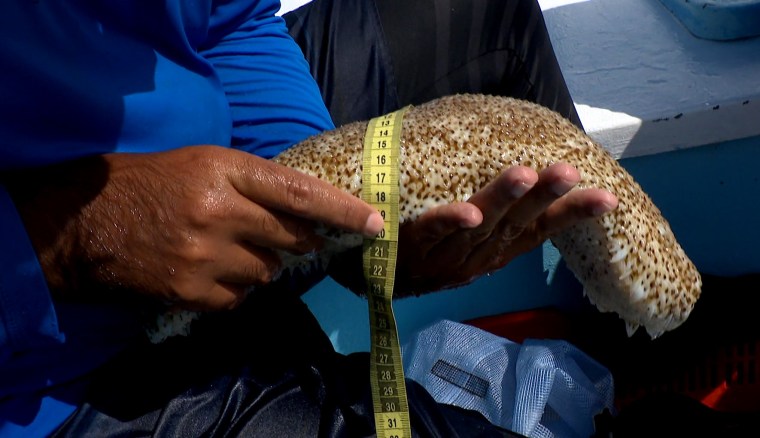
      Researcher Cuauhtémoc Ruiz Pineda measuring a sea cucumber off the coast of Progreso, Yucatán, on April 28.
      Noticias Telemundo
      Across the world, an appetite for it

      Sea cucumbers are invertebrate animals that live in rocks, seagrasses or algae in the sea bed. Soft and slimy to the touch, they perform an important environmental role — eating all of the organic detritus that is in the sand and leaves it clean, allowing various species to coexist and recycling, remineralizing and oxygenating the seabed.

      "Without the sea cucumber, the ocean floor is changed," Ruiz Pineda said.

      In the sea cucumber trade, the main product is its dried body wall, which is reconstituted with a slow-cooked boil and consumed in sauces or soups. In traditional Asian medicine, it's believed that it helps treat the symptoms of diseases such as arthritis and that it has aphrodisiac properties.

      In Mexico, “Chinese businessmen came who encouraged local fishermen to extract it when they saw the great value it has,” said Alicia Virginia Poot Salazar, a biologist and representative of Inapesca in Yucatan.
      The cartels also fish

      In March, an investigation found that from 2011 to 2021, Mexican and U.S. authorities seized more than 100.6 metric tons of sea cucumbers, with an estimated value of $29.5 million.

      “Illegal fishing undermines conservation efforts, destroys wildlife populations and ecosystems, harms legal fishermen, steals dollars from governments, undermines good governance and social order, and fuels organized crime,” Teale N. Phelps Bondaroff, lead author of the research, said in a recent interview.

      The document details a series of illegal practices that encourage the trafficking of the species, such as false identification, incorrect labeling, forged declarations, manipulation of invoices and fraud as a means of laundering illegal catches.

      Although the Mexican government has implemented various measures such as seasonal restrictions, quotas, closed seasons and monitoring, the investigation found that authorities cannot control the intense trafficking of the species and documents the corruption schemes of local authorities and the use of clandestine facilities to process cucumbers.

      Academics like Vanda Felbab-Brown of the Brookings Institution have investigated how organized crime groups have infiltrated Mexico’s fisheries.

      “I would say that one of the most important findings of my investigation is that it's not only about the presence of narcos from the Sinaloa Cartel and the Jalisco New Generation Cartel in illegal fishing, but also that they seek to take over the legal business and all the stages of production and marketing to establish a monopoly,” Felbab-Brown said.

      In her research entitled "China-Linked Wildlife Poaching and Trafficking in Mexico," she wrote that due to the decline in the species' populations, poaching only produces a small crop that organized crime groups buy from local fishermen to sell to Chinese middlemen.

      Low penalties for smuggling?


      U.S. authorities frequently detain people associated with the smuggling of sea cucumbers, as was the case of Claudia Castillo, a Mexican citizen who was sentenced to eight months in prison and ordered to pay $12,000 in restitution to the Mexican government for the smuggling of sea cucumbers from Mexico to San Ysidro, California, in 2018 and 2019.

      It also highlights the case of César Daleo, a former Border Patrol agent, who received simultaneous sentences of 30 and 24 months, respectively, for his role in sea cucumber and fentanyl smuggling operations.

      Daleo worked as a border agent for 11 years and is believed to have been the leader of a larger network, which was being investigated and monitored by authorities. From 2014 to 2016, and on at least 80 occasions, Daleo paid someone else to smuggle bags of dried sea cucumber from Mexico to the United States. It is estimated that the shipments were valued at $250,000.

      On March 8, 2018, David Mayorquin and Ramon Torres Mayorquin, owners of a company called Blessings Inc., pleaded guilty to 26 counts of illegally importing more than 128 tons of sea cucumbers from Mexico with an estimated value of $17.5 million dollars in the markets of Southeast Asia.

      However, the Mayorquins received no jail time, and only had to pay $973,490 in fines, $237,879 in forfeited property, and $40,000 in restitution to the Mexican government.

      Research by Bondaroff states that a common feature in all of these incidents is “the discrepancy between the value of the contraband goods and the fines and restitution imposed.”

      As with many wildlife crimes, the fines and penalties are less than the value of the cargo seized, and are low compared to the penalties imposed on the smuggling of other illicit goods.

      Risking lives for fishing


      In order for sea cucumber fishing to be reactivated on the Yucatán coast, there must be at least 70 specimens per hectare — about two and a half acres. But despite the ban, that number has not yet been reached.

      Intense overexploitation has also reduced the ability of the species to reproduce, which has led academic researchers to study how to repopulate them.

      “With the fishing boom, the breeding banks where all the breeders were accumulated were decimated, the reproductive capacity of the species was reduced and it is currently very difficult to find good specimens,” said Miguel Ángel Olvera Novoa, scientific manager of the marine station of the Center for Research and Advanced Studies in Yucatan.

      Olvera Novoa and his team took 14 years to achieve assisted reproduction of this species. However, much remains to be investigated.

      “Our main objective is to try to produce juveniles to restore populations and try to recover species that were subjected to irrational exploitation,” the scientist said.

      Another consequence of excessive fishing is that fishermen must dive to great depths in less explored areas to find the remaining sea cucumbers.

      Many of these fishermen are at risk of decompression sickness because they are not well prepared to go so deep and don't have the necessary equipment to adjust their bodies to the pressure changes experienced when climbing the surface.

      “Cucumber began to be scarce and people began to get hurt. Some fainted, others came with injuries, their knees were damaged. Some were even disabled. In a season of 15 to 20 days there was a daily death, it was very ugly,” said David Domínguez Cano, a diver and the brother of Ricardo Domínguez Cano. In recent years, however, these kinds of deaths have declined.

      For families like the Domínguez Cano, the sea is their livelihood and their home as they hope to preserve its sea animals and environment.

      “We live from this and we are not going to deplete it," he said, speaking of the area's ecology and marine life as he gazed out at the water. "But the people who only come to make money are not interested in keeping it. We have to take care of everything, that is our main problem."
      KCIA KULT
      In Japan, Abe suspect's grudge against Unification Church is a familiar one


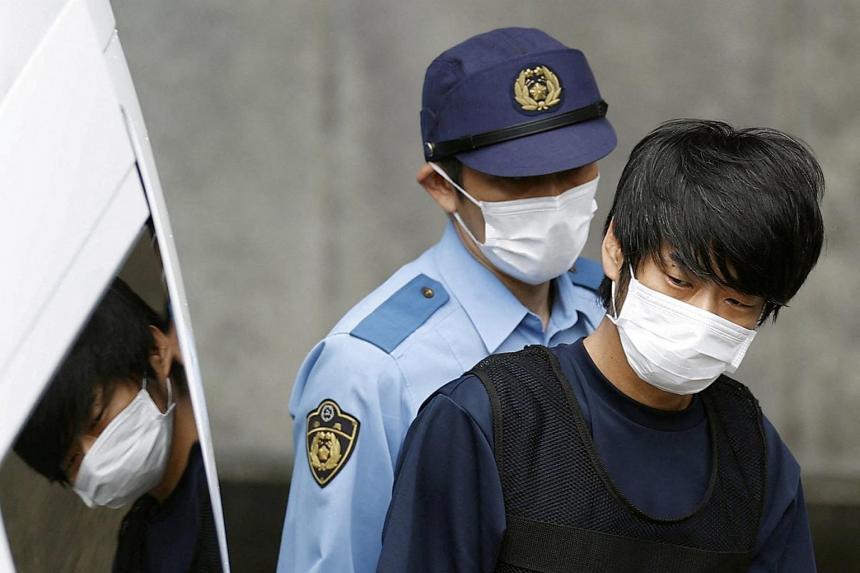
      Tetsuya Yamagami being escorted by a police officer in Nara, Japan, on July 10, 2022. PHOTO: REUTERS/KYODO


      TOKYO (NYTIMES) - The day before Shinzo Abe was assassinated, Tetsuya Yamagami sent a letter saying that the Unification Church had ruined his life, "destroying my family and driving it into bankruptcy".

      Yamagami's mother had been a member of the church for more than two decades, making prodigious donations over her family's objections. "It's no exaggeration to say that my experience with it during that time continues to distort my whole life," he wrote to a blogger who covered the church. Japanese police have confirmed that he sent the letter.

      The next day, Abe was dead, shot at close range with an improvised gun while campaigning in the city of Nara, Japan.

      Police have charged Yamagami with murder, saying he was angry at a "certain group" and decided to target Abe, the former prime minister of Japan. Authorities haven't named the group, but a Unification Church spokesperson said that Yamagami was most likely referring to them. It remains unclear why Yamagami directed his animus at Abe.

      The July 8 shooting has thrust the church's legal troubles back into the national dialogue, in particular its battles with families who said they had been impoverished by large donations. Those payments were among billions of dollars in revenue from Japan that helped finance much of the church's global political and business ambitions.

      In one judgement from 2016, a Tokyo civil court awarded more than US$270,000 (S$375,000) in damages to the former husband of a church member, after she donated his inheritance, salary and retirement funds to the group to "save" him and his ancestors from damnation.

      In another civil case from 2020, a judge ordered the church and other defendants to pay damages to a woman after members had convinced her that her child's cancer was caused by familial sins. On their advice, she spent tens of thousands of dollars on church goods and services, like researching her family history and buying blessings.

      Last week, church officials said they had struck an agreement in 2009 with the family of Yamagami's mother to repay 50 million yen (S$510,000) in donations she had made over the years. In an interview, Yamagami's uncle said she had given at least 100 million yen.

      Many families have settled complaints against the church through court-arbitrated agreements, according to Mr Hiroshi Watanabe, a lawyer who has negotiated some of them.

      Ms Eri Kayoda, 28, grew up in a household devoted to the Unification Church.

      She said that her mother gave the church an inheritance and the proceeds from the sale of their home. The family had to squeeze into a tiny Tokyo apartment decorated with pricey Unification Church books and vases thought to bring good fortune, she said.

      In middle school, Ms Kayoda said, she began keeping a close eye on her parents' finances and convinced them to save for a car and a home. Her mother now donates modestly. While Ms Kayoda condemned Abe's shooting, she said she hoped it would draw attention to the "many cases of families that have been destroyed".

      Mr Susumu Sato, a spokesperson for the Unification Church in Japan, said that some members had encouraged followers to donate excessively, but that most donors were motivated by their faith.

      "Nowadays, it seems unthinkable, but those people believed in God," said Mr Sato, who said he feared church members would become scapegoats for Abe's death.

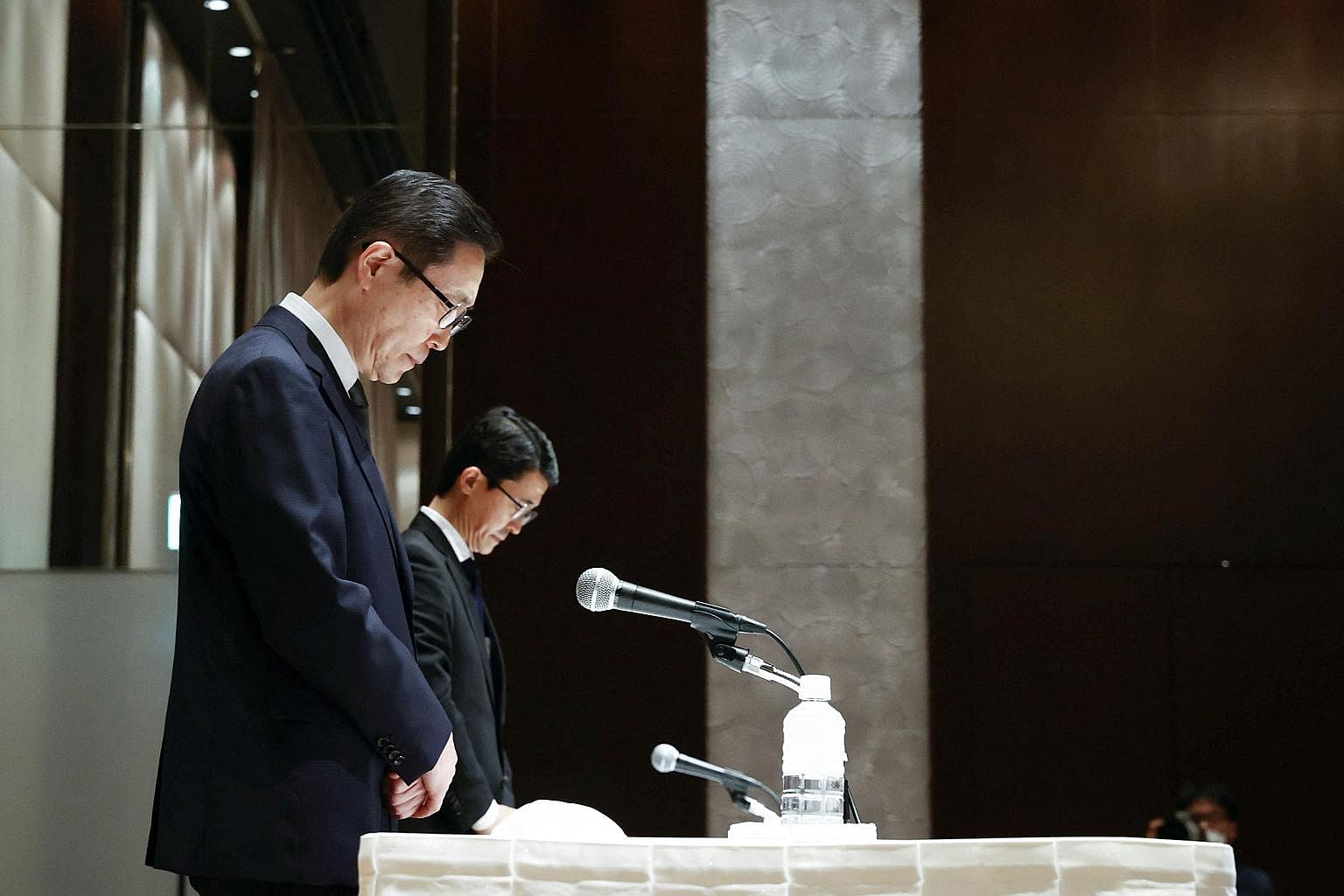
      Mr Tomihiro Tanaka, president of the Japan branch of the Unification Church, taking part in a moment of silence for former PM Shinzo Abe in Tokyo on July 11, 2022. 
      PHOTO: REUTERS/KYODO

      Rev Moon Sun-myung founded the Unification Church in South Korea in 1954. Five years later, he opened its first overseas branch, in Japan, which quickly became the church's largest revenue source.

      Abe's grandfather, Nobusuke Kishi, a former prime minister, appeared at events sponsored by a group that Moon established to fight communism. Decades later, in 2021, Abe spoke by video feed to a conference in Seoul, South Korea, sponsored by a church-affiliated nonprofit organisation, praising its "focus and emphasis on family values."

      An ardent Korean nationalist, Moon was educated in Japan while his own country lived under its colonial rule. His theology reflected his ambivalence towards Japan, describing it in his sermons as both a potential saviour and a satanic power.

      During visits, Moon warned his Japanese followers that they were steeped in sin and exhorted them to sacrifice everything for the church.

      "Each of you needs to restore, through paying indemnity, the sins committed by your ancestors in history," he told a group of believers in 1973, instructing them to "shed blood, sweat and tears."

      Hundreds of thousands heeded his call. By the mid-1980s, billions of dollars in donations had flowed from Japanese families into the church's coffers. Moon used the money to build a sprawling business empire and a network of nonprofit organisations and media outlets, like The Washington Times, that he leveraged for political influence.

      Families were asked to make constant donations and pay steep fees to purchase various religious services and leather-bound volumes of Moon's teachings, according to court judgements handed down in subsequent civil suits against the group.

      Businesses connected to the church sometimes used high-pressure sales tactics to gather even more funds. Judgements from civil suits describe how followers used warnings of ancestral curses to sell products like decorative vases imported from South Korea. The church decided whom its followers would marry and sent thousands of them - mostly women - abroad to become the spouses of church members.

      By the early 1990s, Moon's power in Japan had peaked. In 1995, sarin gas attacks by members of the religious cult Aum Shinrikyo created a backlash against what are referred to in the country as new religions. Suspicion of the Unification Church hardened as former followers published tell-all accounts and lawsuits began to mount.

      The National Network of Lawyers Against Spiritual Sales, a group that has spent decades crusading against the church, started receiving complaints about it in the late 1980s. It eventually collected more than 34,000, claiming damages in excess of US$900 million.

      As criticism built, the Unification Church went on the offensive, arguing that years of negative attention had led to its followers' persecution. In one case, a young man, Toru Goto, was confined in a Tokyo apartment for more than 12 years as family members attempted to "deprogramme" him, according to a civil suit he filed against his parents and others in the city.

      In the spring of 2009, Tokyo police raided a church-affiliated business that pushed customers to buy traditional seals, often used for documents, at steep markups. The arrests resulted in fines against five employees and suspended prison sentences for two executives.

      Fearing that the Japanese government would revoke its legal status, the church announced new controls on recruiting and donating.

      In the years since, the church's power and influence in Japan - as well as the complaints against it - have ebbed. But "even now, there are a lot of people like Yamagami's family," said Mr Yoshifu Arita, a member of parliament who has frequently spoken out about the issue. "Japanese society just doesn't see them."

      Yamagami, however, never lost sight of the Unification Church. His mother's actions had "plunged my brother, my sister and me into hell," he wrote on a Twitter account. The account name was included in the letter he sent before Abe's shooting.

      Amid anti-Korean screeds, misogynistic musings about incel culture and commentary on Japanese politics, the account - which has been suspended - describes a painful childhood and a seething fury at his mother's allegiance to the Unification Church. He blamed the relationship for his own failings in life.

      Yamagami was born into a wealthy family, but when he was 4, his father killed himself. A decade later, his grandfather died suddenly, leaving no one to stop "my mother who had been channelling money to the Unification Church," Yamagami wrote on Twitter.

      She "wrapped our whole family up in it and self-destructed," he wrote.

      In the letter he sent before the shooting, Yamagami said he had spent years dreaming of revenge, but had become convinced that attacking the church would accomplish nothing.

      Abe is "not my enemy," Yamagami wrote, "he's nothing more than one of the Unification Church's most powerful sympathisers." But, he added, "I no longer have the luxury to think about the political meaning or consequences that Abe's death will bring."
      China’s response to bank protests hints at a wider problem

      Stephen Bartholomeusz
      Senior business columnist
      SMH.COM
      July 12, 2022 — 

      It’s a bit hard to have a run on a bank when the depositors can’t get access to their funds, are assaulted by what appear to be plainclothes police when they protest, and China’s strict COVID regulations and the technology that supports them are used to flag protestors as health risks, which prevents them from using public transport or entering buildings.

      The protest and assaults occurred at the weekend when an estimated 1000 depositors in rural banks in central China’s Henan province tried to protest a freezing of their funds that dates back to April. During an earlier protest last month protestors found that the health codes on their phones had turned red, which designates them as health risks and limits their mobility.

      Demonstrators outside the People’s Bank of China in Zhengzhou, Henan province. 
       CREDIT:AP

      Initially depositors in the Henan banks were told they couldn’t access their funds because the banks were upgrading their systems, but it subsequently emerged that China’s authorities had started an investigation of allegations that a private investment company that had stakes in four small banks had colluded with bank employees to solicit funds via online finance platforms, which is illegal in China. Police in the province arrested a number of people associated with the private investment group, Henan Xincaifu Investment Group Holding Co.

      Whether or not there was some sort of fraud involved in the Henan banks, the heavy-handed response of the authorities to the threat of a run on the banks and to the protests suggests something with wider significance. There have been reports of protests in other provinces.

      Provincial banks historically marketed themselves to prospective depositors outside their regions using the big Chinese online platforms, but were banned from using third parties last year during the crackdown on the big tech companies, with the authorities citing potential financial risks. Since the ban, some smaller banks have created their own online marketing channels.

      There is concern that the banks have attracted deposits by offering interest rates that are unsustainable in the current Chinese economic environment, with growth slowing quite dramatically because of the continuing lockdowns that result from China’s harsh “zero COVID” policy as well as soaring energy costs, droughts and floods.

      Scenes like those at the weekend raise the risk of contagion within China’s banking system as depositors at other banks worry about losing access to their life savings.

      When China’s second-quarter GDP data is released later this week, it is expected to have a “1” in front of it, which would have been unthinkable in pre-pandemic times.

      In this environment, the potential for bank failures and bank runs, particularly among the smaller and less well-supervised banks, is real.

      Scenes like those at the weekend – videos of the protests and the police response were circulated widely, and internationally, on social media – raise the risk of contagion within China’s banking system as depositors at other banks worry about losing access to their life savings.

      Whether or not there is fraud involved in Henan, or if it is more a matter of the banks not being able to generate sufficient income to service the interest rates they offered to attract the deposits, it isn’t all that surprising that there are some stresses emerging within China’s banking system.

      RELATED ARTICLE

      Coronavirus pandemic
      Xi’s dilemma: The unvaccinated elderly keeping COVID-zero China in lockdowns

      The implosion of the country’s property sector (after a heavy-handed crackdown on leverage) has generated a string of major property developer defaults on their debts. It has also damaged local governments heavily reliant on income from property sales to developers as the developers’ sales to home buyers have more than halved over the past year, and had a wider impact on a Chinese economy where more than 30 per cent of GDP is exposed to the property sector.

      Despite central government attempts to prop up the sector with rate cuts, relaxation of lending restrictions, incentives to take out mortgages and voucher programs for future home purchases, mortgage lending in the first quarter of this year was at its lowest level on record.

      So dire is the plight of developers that some of them in rural China are now offering to accept garlic, wheat, barley and even watermelons as payment for deposits.

      And the dominoes keep falling at the big end of the property sector. Last month, ratings agency Moody’s said it had downgraded 91 developers over the past nine months. In the decade to December 2020, it had only downgraded 56.

      Analysts have estimated there have been 30 defaults by companies with more than $US1 trillion ($1.5 trillion) in debt since Beijing introduced its “three red lines” policy restricting developers’ leverage in late 2020.

      Last week, Shimao Group defaulted on a $US1 billion bond and this week China Evergrande, which defaulted on its offshore bonds late last year, moved closer to a default on its domestic debt after creditors refused to extend a deadline for repayment of their debts.

      A domestic default by Evergrande would have major ripple effects through the sector. Until now, it has been primarily foreign creditors and owners of uncompleted apartments bearing the brunt of the property sector’s losses.

      There’s also another $US13 billion or so of foreign currency bond payments due before the end of this year, which could drive another wave of defaults.

      China’s authorities are clearly concerned because they are creating a bailout fund with capital provided by the major financial institutions as a contingency against potential collapses of banks or insurers.


      A domestic default by Evergrande would have major ripple effects through China’s property sector.CREDIT:GETTY IMAGES

      They would have an eye not just on the stresses within China’s domestic financial system but the increased volatility within international markets and the divergence between China’s monetary policies and those of the US and Europe, which are tightening their policies even as China is loosening its monetary settings.

      While the official data is yet to show any signs of a blow-out in non-performing loans within China’s banking system, that data is viewed with some cynicism by analysts outside China. It is almost inconceivable that the turmoil within the property sector hasn’t had a material impact on bank balance sheets.

      The COVID lockdowns (there’s been another outbreak in Shanghai), the general slowdown in China’s economy, an exodus of foreign capital as interest rates in the US rise, and fear of being caught up in the West’s sanctions on those doing business (as China is doing) with Russia won’t help.

      RELATED ARTICLE

      Opinion
      Iron ore
      China is trying to revive its economy. We just got a sign it is not going to plan


      According to Bloomberg, Beijing’s Ministry of Finance is considering allowing local governments to sell the equivalent of $US220 billion of special bonds in the second half of this year, which would presage an attempt to generate growth through another big burst of infrastructure spending.

      That’s another sign that the authorities are concerned about the trajectory of the economy and the vulnerability that its weakness might expose even as Xi Jinping readies himself for the Communist Party’s endorsement of an unprecedented third term as the party’s chairman later this year.


      OPINION
      Flatlining: China’s economy has been crippled by its zero-COVID policies


      China’s weak June quarter data came in well below already-modest expectations.


      Stephen Bartholomeusz
      Senior business columnist
      SMH.COM
      July 18, 2022

      China’s economy is flatlining under the weight of its harsh response to COVID outbreaks. Without major fiscal and monetary stimulus, it will be near-impossible for the economy to meet Beijing’s growth target for this year.

      The June quarter GDP data released on Friday showed an economy growing at a meagre 0.4 per cent, down from the 4.8 per cent recorded in the March quarter. For the first half of the year, the economy grew 2.5 per cent.

      The 0.4 per cent growth was the second-worst quarterly outcome China has experienced in 30 years (the worst was the first quarter of 2020 when the economy shrank 6.8 per cent during the initial outbreak of COVID-19), rendering the achievement of the 5.5 per cent growth the authorities have set as the target for this year improbable.

      China would need second-half growth of more than seven per cent to reach the full-year target, which would probably require large-scale stimulus; few COVID outbreaks; an end to the problems China’s property market is experiencing and a better outlook for the global economy than appears likely if it is to get close to that growth number.

      The weak June quarter data came in well below already-modest expectations, which had ranged from about a one per cent to 1.5 per cent expansion in the economy.

      RELATED ARTICLE

      Opinion
      Trade wars
      The Russia blueprint: How the US may contain China

      It was also posted despite Beijing having embarked on some stimulatory policies, using tax breaks and incentives to buy new cars and homes, along with a boost to infrastructure spending, to try to offset the impact of the interaction between significant outbreaks of COVID and its own “zero-COVID” policies and the severe lockdowns of major cities they have generated.

      There was some evidence of the effects of that stimulus in the June quarter numbers. Retail spending recovered from a 6.7 per cent year-on-year decline in May to post 3.1 per cent growth in June, with the subsidies for new electric cars helping to double their production and underwrite retail spending levels. Infrastructure investment grew 6.1 per cent in June relative to June 2021 and 7.1 per cent year-to-date.

      The data, however, also highlighted the continuing problems within a core sector of the economy, with real estate development investment down 5.4 per cent and home sales 29 per cent in the first half of the year.

      Last year’s crackdown on property developers’ leverage has cut off developers’ access to funding and left a massive number of uncompleted apartments and, because China’s developers have operated on a pre-sales model, tens of thousands of very angry home buyers who have paid for homes that haven’t been completed.

      There are protests in the streets and, increasingly, rising levels of mortgage delinquency and bank loan losses as those buyers refuse to service loans for properties they can’t inhabit. That will add to the existing intense pressure on developers and on a sector that historically has contributed more than 30 per cent of China’s growth.

      PBOC governor Yi Gang, said the economy was facing “certain downward pressures” because of the pandemic and external factors and would move to provide stronger economic support.
      CREDIT:BLOOMBERG

      The recovery towards the end of the June quarter was helped by the re-opening of Shanghai, which had experienced lockdowns in April and May. Shanghai’s economy contracted 13.7 per cent in the quarter.

      That underscores how vulnerable the wider economy is to COVID outbreaks. There are still new cases being reported in Shanghai and new outbreaks and lockdowns occurring within the Henan and Guandong provinces. The national daily infection numbers are at near two-month highs.

      While the authorities have slightly softened their approach to COVID, Xi Jinping has made it clear that trying to keep control of the outbreaks is his priority, even if it impacts economic growth. That tension might become greater as Xi’s ambitions for an unprecedented third term as national leader reach their moment of truth at the Communist Party’s national congress later this year.

      The zero-COVID policy has impacted domestic economic activity and, coming after last year’s sudden crackdowns on the property and technology sectors, which left investors nursing significant losses, has triggered a substantial outflow of foreign capital.

      RELATED ARTICLE

      Opinion
      Inside China
      Xi Jinping’s year of triumph has been derailed by turmoil


      Those funds are flowing into emerging markets and towards the safe haven of the US Treasury bond market where rising yields (as a result of the Federal Reserve Board’s response to the surge in inflation to 40-year highs and the consequent strengthening of the US dollar) have made US bonds a more attractive investment option.

      So far, the authorities have refrained from the kind of massive stimulus programs China unleashed in response to the global financial crisis in 2008.

      There has been some modest but targeted infrastructure investment but concerns about the degree of leverage within the economy, particularly at the local government level, have disciplined the response to the current downturn.

      That may be changing. Beijing increased the amount of bonds that local governments can issue this year and had urged the local authorities to issue most of the new “special” bonds by mid-year. The central authorities are reportedly considering authorising another big bout of bond sales – several hundred billion dollars of new debt – for the second half of the year.

      The already highly indebted local governments have been hit hard by the implosions within the property sector – land sales generate much of their revenue – and the initial bond sales were meant to help them stabilise and recapitalise smaller banks within their regions so that they could increase their lending while the new tranches now being considered would fund another round of infrastructure investment.

      The People’s Bank of China has been running a relatively conservative approach to monetary policy and isn’t facing the inflationary pressures that confront other major central banks (which is an indication of the weakness of the economy).

      Over the weekend, however, the PBOC, quoting its governor Yi Gang, said the economy was facing “certain downward pressures” because of the pandemic and external factors and would move to provide stronger economic support.

      The external environment isn’t favourable for China. The strongest aspect of its economy has been the recovery in its exports but the high inflation rates and tightening financial conditions are slowing global economic growth and threatening a global recession.

      Greater reliance on a domestic economy that is experiencing a property sector crisis that is sending ripples of distress through China’s financial system; which opens and shuts down in response to COVID cases and which is experiencing outflows of foreign capital at rates not seen for many years almost dictates that China will have to open the fiscal and monetary policy spigots if it is to generate a growth rate with a four in front of it this year, let alone the 5.5 per cent target the authorities nominated and still adhere to.


      Stephen Bartholomeusz
      Senior business columnist

      China successfully launches first lab module for its space station

      China is on the track to completing the construction of its space station
      By PTI Updated: July 24, 2022 


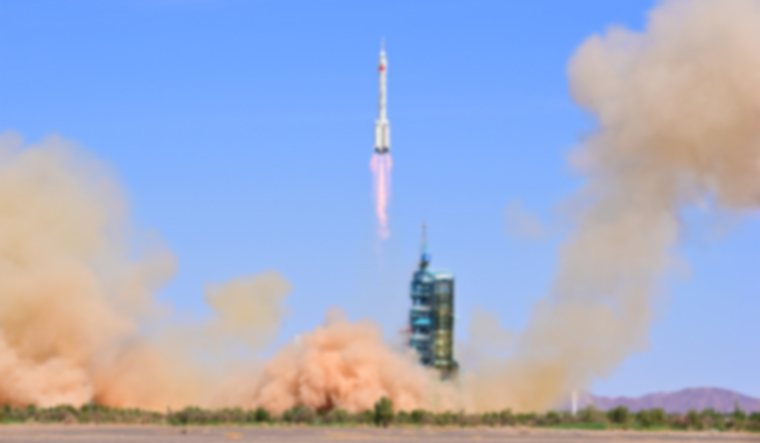
      China on Sunday successfully launched the first lab module for its under-construction space station, the latest step in the country's ambitious programme to complete it by year's end.

      The giant Long March-5B Y3 carrier rocket, carrying Wentian, blasted off from the Wenchang Spacecraft Launch Site on the coast of the southern island province of Hainan, according to the China Manned Space Agency (CMSA).

      The new module will function both as a backup of the core module, Tianhe, and as a powerful scientific experiment platform in the space station currently being built by the country.

      China is on the track to completing the construction of its space station as it successfully launched the first lab module, state-run People's Daily reported.

      The construction of China's space station called Tiangong is expected to be completed this year.

      It will then evolve from a single-module structure into a national space laboratory with three modules -- the core module, Tianhe, and two lab modules, Wentian and Mengtian.

      The Tianhe module was launched in April 2021, and the Mengtian module is set to be launched in October this year, the state-run Xinhua news agency reported

      In the next couple of hours, the Wentian will rendezvous and then dock with the Tiangong station's Tianhe core module, the CMSA said.

      After that the three-member crew mission commanders -- Senior Colonel Chen Dong, Senior Colonel Liu Yang and Senior Colonel Cai Xuzhe currently building Tiangong station -- will enter the lab module to check its condition and internal equipment, it said.

      In the coming weeks, Wentian will be repositioned by a robotic apparatus from the forward docking port to a lateral port, where it will remain and be prepared for long-term operation, it said.

      To prepare for the Wentian's arrival, a cargo spacecraft Tianzhou 3 detached from the Tiangong station on July 17 and it will be guided by ground controllers to fall back to Earth in due course, it said.

      Currently, Tiangong consists of the Tianhe module, the Tianzhou 4 cargo ship and the Shenzhou XIV spacecraft.

      Wentian lab features cutting-edge technologies, strong capabilities, and sophisticated design and represents a new milestone in China's space industry, state-run China Daily reported.

      It consists of three major parts a crew working compartment, an airlock cabin and an unpressurised service module.

      Once ready, China's low-flying space station will be the only country to own a space station. The International Space Station (ISS) of Russia is a collaborative project of several countries.

      China Space Station (CSS) is also expected to be a competitor to the ISS built by Russia.

      Observers say CSS may become the sole space station to remain in orbit once the ISS retires in the coming years.

      The significant feature of China's under-construction space station is its two robotic arms, especially the long one over which the US has previously expressed concern over its ability to grab objects including satellites from space.

      The 10-meter-long arm earlier successfully grabbed and moved a 20-tonne Tianzhou-2 cargo ship in a test, according to China Manned Space Engineering Office (CMSEO).