Wednesday, November 02, 2022

Reading Marx on Halloween


Life under capitalism is the experience of horror — and there is no better guide to it than Karl Marx.


Richard Haidinger / Flickr


10.31.2018
 Jacobin

Like the seemingly omnipotent antagonist in any given horror movie, capitalism is not just unstoppably horrific. It horrifies in its apparent unstoppability.

“The runaway world,” argues Chris Harman in a book on zombie capitalism, “is the economic system as Marx described it, the Frankenstein’s monster that has escaped from human control; the vampire that saps the lifeblood of the living bodies it feeds off.”

The diagnosis invites the big question: how do we orient ourselves politically within a social dynamic whose very essence is horror?

This is a question taken up by Karl Marx himself, whose writing overflows with tropes and figures born of the gothic, and it is one worth revisiting for Halloween.

“Capital,” Marx tells us, “is dead labour, that, vampire-like, only lives by sucking living labour, and lives the more, the more labour it sucks. The time during which the labourer works, is the time during which the capitalist consumes the labour-power he has purchased of him.” Or, in an altogether more grotesque formulation:

The capital given in exchange for labour-power is converted into necessaries, by the consumption of which the muscles, nerves, bones, and brains of existing labourers are reproduced, and new labourers are begotten.

In these two sentences, both taken from the only published book that Marx himself brought to completion, sounds more like Mary Shelley than a work of political economy, summoning predatory vampires, undead monsters, and dismembered bodies.

Both Dracula and Frankenstein have been read as a tales of capitalism. The vampire is, of course, a capitalist hellbent on imperial expansion:


There was a mocking smile on the bloated face which seemed to drive me mad. This was the being I was helping to transfer to London, where, perhaps, for centuries to come he might, amongst its teeming millions, satiate his lust for blood, and create a new and ever-widening circle of semi-demons to batten on the helpless. The very thought drove me mad. A terrible desire came upon me to rid the world of such a monster.

Frankenstein’s monster is, by contrast, the zombified embodiment of proletarian retribution:

All, save I, were at rest or in enjoyment: I, like the arch-fiend, bore a hell within me; and, finding myself unsympathised with, wished to tear up the trees, spread havoc and destruction around me, and then to have sat down and enjoyed the ruin.

But unlike the novels of Stoker and Shelley, Marx’s account is not only gothic. His descriptions of a blood-drenched and gore-caked mode of production are prescient of horror as we see it in more recent cinema. Whatever these descriptions lack in the sense of morality shared by gothic novelists they make up for in cold rationality.Capitalist accumulation is, as Marx knows, a crime whose most obvious analogue is cannibalism.

Marx’s horrors are irredeemable and absolute. When he insists that capitalism is the mode of production that “comes dripping from head to foot, from every pore, with blood and dirt,” he really commits himself, as a gifted writer and a master-stylist, to conveying specifically that kind of horror.

Elsewhere in Capital, when the vampire image returns, narrative emphasis shifts from the bourgeois predator to the exploited worker, and specifically to the worker’s obliterated body:


It must be acknowledged that our labourer comes out of the process of production other than he entered. In the market he stood as owner of the commodity “labour-power” face to face with other owners of commodities, dealer against dealer. The contract by which he sold to the capitalist his labour-power proved, so to say, in black and white that he disposed of himself freely. The bargain concluded, it is discovered that he was no “free agent,” that the time for which he is free to sell his labour-power is the time for which he is forced to sell it, that in fact the vampire will not lose its hold on him “so long as there is a muscle, a nerve, a drop of blood to be exploited.”

The vampire reveals itself only when it is already too late, when the façade of legal niceties turns out to be an evil, Faustian pact, inescapable until the death of either party.

Stylistically important is that quoted material at the end, taken from a description made elsewhere by Friedrich Engels. The quotation from Engels confirms the organic substance of capital, its own expropriated lifeblood, is the insides of the worker.

While Marx frequently draws on the patently gothic imagery of vampires and werewolves, specters and gravediggers, here we can see that his accounts of capital also acquire a taste for human viscera, with sentences chewing their way through bodily gristle:

We may say that surplus value rests on a natural basis, but this is permissible only in the very general sense, that there is no natural obstacle absolutely preventing one man from disburdening himself of the labour requisite for his own existence, and burdening another with it, any more, for instance, than unconquerable natural obstacles prevent one man from eating the flesh of another.

Capitalist accumulation is, as Marx knows, a crime whose most obvious analogue is cannibalism. Born into the wage-relation we are not human subjects. We are only our capacity to work, which means serving up our variously muscular, nervous, and cerebral organs — and consuming those of our friends and families, as well as those of complete strangers.

Gothic descriptions like these are not merely decorative. Instead, they get to the very essence of life under capitalism. They remind us how bodies and brains are mutilated into commodities. Literally, we need only think of the deformations, injuries, and fatalities caused by strained working conditions at every level of capitalist industry, from neurological trauma through to heart attacks, right down to broken bones, amputated limbs, and mass deaths.

Figuratively, every minute and every hour spent in wage labor is another minute and another hour in which our bodies are wired to a vast machine that only lives by draining our life substances.

Life under capitalism is the experience of horror, the irreversible liquefying of human substance and its necrophagic consumption. Like the grim fate of the victims in any given horror film, whose bodies are obliterated beyond all recognition and so frequently ingested by other humans, once our labor succumbs to value that transformation is utterly irreparable. So reflects poet Keston Sutherland in a brilliantly nauseating essay on Marx’s jargon: “All that is meat melts into bone, and vice versa; and no effort of scrutiny, will or heated imagination, however powerfully analytic or moral, is capable of reversing the industrial process of that deliquescence.”

The lesson can be put this way: we all inhabit the same horror story and we should all be intensely revolted by this. But, even if we cannot undo what has already been done, that revulsion might still be a catalyst for revolution. Perhaps this is what Marx was trying to teach us all along with his unique brand of gothic horror.


Mark Steven is a lecturer in literature at the University of Exeter. He is the author of Red Modernism: American Poetry and the Spirit of Communism and Splatter Capital.


SEE MY GOTHIC CAPITALISM
Feb 15, 2005 — The development of capitalism in the 18th and 19th Centuries saw not only bourgeois revolutions but the revolt of slaves and the most successful ...

Full text of "The Horror Of Accumulation And The Commodification ...

https://archive.org › stream › The+Horror+of+Accumul...

Karl Marx GOTHIC CAPITALI$M The Horror of Accumulation & The Commodification of Humanity Gothic Capitalism The Horror of Accumulation and the 


Calling the climate and biodiversity COPs

November 2, 2022

Halting and reversing the twin biodiversity and climate crises is possible, necessary and more urgent every minute


Other than a small number of people who’ve bought into fossil fuel industry propaganda or who simply haven’t examined the evidence, everyone knows we’re in a climate crisis. It’s why negotiators from every nation are meeting in Egypt in November for the 27th annual United Nations Climate Change Conference (officially Conferences of the Parties, or COP) — followed by the 15th UN Biodiversity Conference (COP15) in Montreal in December.

From November 7 to 18, representatives of the 197 signatory parties will examine the latest science compiled by the Intergovernmental Panel on Climate Change (IPCC) and work on agreements to forestall even worse climate consequences than we’re already experiencing — most of which have been predicted since way before countries started meeting in 1995.

From December 7 to 19, representatives will discuss the related biodiversity crisis. Much of the horrific loss of animals and plants over the past few decades has been driven by fossil fuel exploitation and climate disruption, as well as other human activities such as agriculture and development.

So, with 27 years of negotiating, how are we doing? Tragically, not so well.

Atmospheric levels of three major greenhouse gases — methane, carbon dioxide and nitrous oxide — have reached record highs, the World Meteorological Organization reports. As for biodiversity, we recently wrote about the dismal findings of the WWF’s 2022 “Living Planet Report,” which outlines a catastrophic 69 per cent average decline in vertebrate species populations since 1970.

Our understanding of human-caused climate change has increased dramatically since the IPCC’s founding in 1988. That’s sparked a global quest for solutions to the crisis and its impacts, from renewable energy to nature restoration. With so much knowledge and so many existing and emerging solutions, the upcoming conferences are critical.

But the UN says current national commitments to cut emissions wouldn’t prevent the world from heating more than 2.5 degrees Celsius above pre-industrial levels — which would bring about catastrophic climate breakdown. Under the 2016 Paris Agreement, countries pledged to keep global average temperature rise under 2 degrees C, with an aspirational goal of 1.5 degrees C.

Even though countries agreed at last year’s COP26 in Glasgow to submit strengthened plans, known as “nationally determined contributions,” only 24 had done so as of late October, the Guardian reported, and many of those were not substantially stronger. Delegates have a host of climate-related issues to deal with, from compensating vulnerable nations for “loss and damage” to curbing greenhouse gas emissions, and they need to take it all seriously. Of course, agreements are only as good as the actions they inform.

But halting and reversing the twin biodiversity and climate crises is possible, necessary and more urgent every minute. The 2022 Lancet “Countdown” report describes what the world is already experiencing, from devastating floods in Australia, Brazil, China, western Europe, Malaysia, Pakistan, South Africa and South Sudan to wildfires in Algeria, Canada, Greece, Italy, Spain, Turkey and the U.S., and record temperatures in many countries — with impacts exacerbated by the global COVID-19 pandemic.

The 99 wide-ranging experts who collaborated on the report for the world’s leading medical journal say continued reliance on coal, oil and gas will increase food insecurity, infectious disease and heat-related illness and death, at staggering costs.

We need to push political representatives to be bolder at the climate and biodiversity conferences. To do so, we must speak louder than the fossil fuel industry, which has used its enormous power, wealth and influence to water down agreements and downplay impacts. At COP26, the industry had 503 delegates — more than any single country!

More evidence surfaces daily about the industry’s decades-long efforts to downplay, deny and hide evidence — often from its own scientists — that using its products as intended puts human health and survival, and that of all life, at great risk. It’s short-term gain for long-term pain. Investigative journalist Geoff Dembicki’s The Petroleum Papers offers a chilling exposé of the ongoing campaign by industry and others that’s prevented timely climate solutions and led to the mess we’re in.

We can’t turn away, and we can’t be fooled by the greedy, immoral fossil fuel industry and its media and political supporters. Get informed. Sign petitions. Talk to your political representatives, your friends and family.


David Suzuki is a scientist, broadcaster, author and co-founder of the David Suzuki Foundation. Written with contributions from David Suzuki Foundation Senior Writer and Editor Ian Hanington. Learn more at davidsuzuki.org.
Manitoba’s Stefanson to Alberta’s Smith: Drop dead!
November 1, 2022


“There are other, more pressing things for us to be dealing with right now” than Danielle Smith’s big ideas, Manitoba’s premier says.

Manitoba Conservative Premier Heather Stefanson. Credit: U.S. Embassy and Consulates in Canada

When Manitoba Conservative Premier Heather Stefanson blew off Alberta Conservative Premier Danielle Smith’s call yesterday to ship Alberta oil through the Hudson Bay port of Churchill, Wild Rose Country’s most quotable and quoted political scientist called it a rebuff.

“This is a surprise,” tweeted Mount Royal University’s Duane Bratt. “Stefanson is rebuffing Smith.”

I’d say it was more than a rebuff. It was actually a good brisk “bug off!” Only, you know, not with a bug.

“There are other, more pressing things for us to be dealing with right now, which is why we’re here today to deal with the most vulnerable in our society,” Premier Stefanson told reporters at a news conference about her government’s plan to open more homeless shelters.

(Translation: Do you think I’m nuts? We’re getting our butts kicked here by the NDP and I’d kinda like to win at least one election as premier!)

Stefanson said she understood where her Alberta counterpart is at. “She’s facing an election and some tough things, tough challenges politically within her own province, and she wants to get some of these issues out of the way.”

This was a pretty shrewd analysis of what Smith was up to when she mailed off a wordy letter to Stefanson and Saskatchewan Premier Scott Moe rambling on about what a great idea it would be to build pipelines and ship bitumen from Alberta out through Churchill because, you know, Russia!

Smith has made a lot of promises to her base, the same ones who used to be Jason Kenney’s base, and they’ve already demonstrated what they do to politicians who fail to implement their Q-adjacent demands. At the same time, she knows some of those same policies are kryptonite to a lot of Alberta voters, especially in Calgary.

So maybe she can get some of that garbage out of the way now, then set about to acting like someone folks might elect in a couple of Calgary ridings.

She’d like a photo op at the other two Conservative premiers’ earliest convenience, Smith concluded her epistle to her fellow potential Buffalonians, where “we will kick-start our ongoing collaboration in this area and formalize a structure to engage with the Port, relevant ministries, First Nations and stakeholders to move this important work forward.”

Stefanson: Uh, no.

As for it being a surprise, well, that’s a matter of debate too.

Both Alberta’s and Manitoba’s Conservative premiers have essentially the same problem: an election is looming and their parties are both under performing in the polls compared to the opposition New Democrats.

Stefanson, who assumed office a year ago Sunday after a party election, faces an election next year on October 3. Recent polling suggests that if an election were held tomorrow, there would be an NDP majority in Manitoba.

It’s probably a little early for the province’s Conservatives to panic, but Manitobans have elected New Democrats lots of times before, so it’s not as if anyone would describe another NDP government there as a total fluke.

What’s more, given the small-c conservative approach the NDP took to running the province under Gary Doer from 1999 to 2009, it’s not like anyone could get away with calling them communists like the UCP is forever doing in Alberta.

Smith was only elevated to her current post 21 days ago, so maybe she’s still in leadership campaign mode with the fringiest fringes of the UCP’s base in mind. Or maybe she really is the conspiracy-obsessed sovereignist she appears to be.

The next Alberta general election is a little closer, at the end of next May – as long as the recent buzz isn’t true that she intends to ignore the province’s fixed-election-date law and hang around until 2024 without calling an election.

Like her Manitoba counterpart, Smith is yet to win an election as premier. What’s more, at the moment she doesn’t even has a seat in the Legislature, although she hopes to fix that next Tuesday in Brooks-Medicine Hat.

Whatever the explanation is, it’s apparent that Stephenson and Smith have hit on dramatically different election strategies, at least for now.

Maybe they’ll both work. Maybe neither of them will. Maybe by this time next year there will be NDP governments in three out of four Western Canadian provinces! Now wouldn’t that be a chuckle!
Also yesterday …

Some days it’s hard to know what Alberta story to comment on. Also yesterday was Canadaland’s story of a bizarre plot by sketchy operatives bankrolled by a cabal of Calgary Conservatives to try to trick then Calgary Mayor Naheed Nenshi into taking a bribe from a fake Russian oligarch.

Nenshi, of course, told them to take a hike.

It’s hard to believe the people said to be behind the scheme could be that stupid, but then again, maybe it’s not that hard.

Later yesterday, Nenshi suggested the Calgary Police Service and the RCMP “investigate this story deeply.” There were also whispers on social media of very senior Alberta Conservatives indeed being involved in this intrigue.

So it may be best to leave this one alone until the police have completed their investigation – which should be, you know, in three or four years …

There is also the possibility that the planned use by Ontario Conservative Premier Doug Ford’s government of the Notwithstanding Clause of the Canadian Charter of Rights and Freedoms to smash a garden-variety public sector strike could provoke a general strike in Canada’s most populous province.

So that seems pretty worthy of commentary too.

Regardless, today’s pick was an opportunity to bask in the reflected glory of the New York Daily News’s headline about another Ford, U.S. President Gerald R. Ford, on October 30, 1975. It was, in the opinion of this former professional headline writer, one of the two or three greatest headlines ever written:


Related

Danielle Smith’s success now hinges on policies adopted by Wildrose convention
September 26, 2022In "Canadian Politics"


DAVID J. CLIMENHAGA
David Climenhaga is a journalist and trade union communicator who has worked in senior writing and editing positions with the Globe and Mail and the Calgary Herald. He left journalism after the strike... More by David J. Climenhaga
Class War in Ontario
by Judy Rebick
November 1, 2022

Doug Ford and Education Minister Stephen Lecce have declared war on the labour movement through attempting to restrict the rights of teachers to negotiate and strike.
A photo of Ontario Premier Doug Ford. Credit: Premier of Ontario Photography / Flickr

The Doug Ford government has just turned a minor labour dispute into class war in Ontario.

Refusing to budge in negotiations, offering a piddly 10 per cent wage increase when 50 per cent was demanded, the Ford government, usually notoriously lazy, started the legislative session at 5 a.m. on November 1 to drive through a bill that not only removes union rights to free collective bargaining and to strike in Ontario but also puts at threat all of our constitutionally protected rights.

If you think I’m exaggerating, here is the appendix to the so-called Keeping Students in School Act.

“The Act provides for new collective agreements. The central terms for those collective

agreements are set out in the Schedule. The Act requires the termination of any strike or lock-out and prohibits strikes or lock-outs during the term of the collective agreement. (4 years)

“The Act is declared to operate notwithstanding sections 2, 7 and 15 of the Canadian Charter of Rights and Freedoms and the Act will apply despite the Human Rights Code.

“The Act limits the jurisdiction of the Ontario Labour Relations Board, arbitrators and other tribunals to make certain inquiries or decisions. It also provides for there to be no causes of action or proceedings against the Crown for certain acts. Certain proceedings are deemed to have been dismissed.”

Faced with a union determined to get a decent wage for the lowest paid education workers, who care for children with disabilities, pre-school children in public childcare and keep our schools clean and functional, the Ford government has declared war on the labour movement and put all of our rights at risk

Section 7 of the Charter protects our freedom of conscience and religion, freedom of thought, freedom of peaceful assembly and freedom of association. Section 7 is the right to life, liberty and security of the person. The right that won us legal abortion.

Section 15 is the Equality section of the Charter guaranteeing equality before and under the law without discrimination based on race, gender, religion, disability, which is the section used to defend gay marriage among other things.

As if that wasn’t enough, the Act limits the jurisdiction of the Ontario Labour Relations Board and arbitrators and applies “despite the Human Rights Act.”

As soon as this bill passes, which it will because the Tories have a majority, 55,000 Ontario education workers, most of whom are women will lose all their legally protected rights.

And as the right-wing pundit on CBC’s Power on Politics said yesterday “the teachers are next.”

The Ontario Federation of Labour has called an emergency demonstration on November 1. This has to be the first step in a province-wide mobilization not just of the labour movement but of every person who supports social justice and human rights. Each of us should put aside whatever else we are doing and join this struggle to drive back this assault on labour and human rights.

CUPE Ontario has said “Enough is Enough” and called a province-wide walk out on Friday November 4, whether or not the legislation passed. Ontario’s largest school board in Toronto has said the schools will be closed on that day. I hope it is with a sense of solidarity with the workers. Hopefully, the teachers’ unions will also go out in solidarity. I also hope as many parents as possible will be out supporting the picket lines or protests at their childrens’ schools.

The last time we had a major cross-province labour action was the Days of Action in the 1990’s against Mike Harris’s Common-Sense Revolution. Harris was a sociopathic leader who couldn’t care less how strong the opposition was and the mobilizations that were organized by a cross movement coalition led by Labour failed to change very much. Dofo is a different kettle of fish. He wants to be liked. His government claims it’s pro-labour separating public and private sector unions. It was also the height of the power of neo-liberalism. Now neo-liberalism is declining and the battle is against an alt-right that would like to roll the clock back to the days when people like women, Black, LGBTQ people, and Indigenous people had few if any rights.

This is the moment in Ontario for a massive, intersectional movement to fight for democracy, labour rights and human rights.
DEFENDING THE RIGHT TO STRIKE!
ONT. NDP given boot from legislature after refusing to back down on Bill 28
Antonella Artuso - 47m ago

NDP given boot from legislature after refusing to back down on Bill 28© Provided by Toronto Sun

Ontario NDP members were removed from the legislature Wednesday after accusing Premier Doug Ford and Education Minister Stephen Lecce of lying.

Speaker Ted Arnott asked the MPPs to withdraw their unparliamentary language but they refused.

“If you’ve got a government that’s got a stick poised over people’s head, you’re not bargaining in good faith,” NDP Leader Peter Tabuns said, the first to be removed. “You are actually intimidating people.”


Question Period was dominated by Ontario’s Bill 28, the Keeping Students in Class Act, which would use the power of the notwithstanding clause to override collective bargaining rights in the Canadian Charter of Rights and Freedoms and impose a contract on 55,000 CUPE education workers who had threatened to strike Friday.

Ford said the union refused to accept the government’s improved offer or back down from a strike that would put kids out of class starting as early as Friday.

“We won’t let that happen,” Ford said.

The CUPE members, which include maintenance workers and educational assistants, would have the most generous pension and benefits plan for this sector in the country, he said.

The union has said some of their members, many earning under $40,000 a year, have had to go to food banks.

aartuso@postmedia.com
The Unknown Natural Disaster That Wiped Out Part Of Ancient Britain

Jennifer Shea - Yesterday 

In prehistoric Doggerland, a hilly, densely wooded area that once connected today's British Isles and Europe, the Mesolithic ancestors of the modern-day Britons faced a problem that humans have to reckon with now: rising sea levels. In fact, the floods that wrecked their homeland were the result of melting glaciers, a situation that recalls present-day problems. And according to The Vintage News, the residents of Doggerland were eventually left with no choice but to pick up and move.


England and European mainland© Viacheslav Lopatin/Shutterstock

They set up their new homes in what are today England and the Netherlands. But the remains of Doggerland's civilization still make their way into fishermen's nets now, from artifacts to bones, per The Vintage News.

Those floods 6,000 years ago offer lessons for our age. According to National Geographic, some scientists warn that our melting polar ice caps could force billions of residents of areas near shorelines to migrate. And on an already overcrowded planet, that is a recipe for social strife.

What Happened To Suddenly Flood Doggerland?


Mesolithic hunter-gatherers© Print Collector/Getty Images

It is thought that amid the changing water levels, an epic tsunami struck Doggerland, according to The Guardian. The natural disaster was probably the result of a sub-sea landslide near Norway's coast.


Scientists have dubbed that landslide the Storegga Event, per Ancient Origins. And it likely caused multiple huge waves to overtake about 2,700 square miles of land in Doggerland.

How do we know that? Scientists at the University of Warwick have been plumbing the ancient DNA in sediment deposits from the North Sea for years. And in 2020, they released a study in the journal Geosciences finding that lithostratigraphy (the study of rock layers), geochemical signatures, macro and microfossils and sedimentary ancient DNA (sedaDNA) all point to a tsunami as the natural disaster that struck Doggerland, killing or driving out its inhabitants. While some Doggerlanders were able to make the journey to drier ground, many of the survivors lost their tools and shelter and probably died during the following winter.

Gathering What We Know To Tell A Cautionary Tale


Melting ice© Jane Rix/Shutterstock

Over the years, archaeologists and paleontologists from England and the Netherlands have pored over artifacts, seismic survey data, and even perfectly-preserved footprints on the seafloor to gain a better understanding of Doggerland culture. And they have actually put together a digital model representing 18,000 square miles of Doggerland before natural disaster struck, per National Geographic.

They have also assembled a physical exhibition that went on display in Holland's National Museum of Antiquities last year, and that features 200-plus artifacts — everything from skull fragments to arrowheads to mammoth molars, as The Guardian reported at the time. Some of the artifacts came from "citizen archaeologists" who picked the fossils up off the beaches near their homes.

Scientists hope that tales of Doggerland will spur more people to take climate change and the resulting uptick in extreme weather events seriously. Unlike the conditions that struck Doggerland, our present rising sea levels are a man-made catastrophe, and one we can at least try to reverse. Whether future humans will suffer the same fate as the residents of Doggerland remains to be seen.

Read this next: Really Bizarre Climate Change Side Effects
Filmmaker claims video exists of the aliens found in Brazil in 1996

Liz Braun - Yesterday 

An image taken from the trailer for the documentary,© Provided by Toronto Sun

Did the Brazilian military capture alien beings in 1996?

That’s the year residents of Varginha, Brazil, reported seeing a UFO in the night sky and maybe extraterrestrials, too.

Three young women claim to have seen an alien being on Jan. 20, 1996 — a creature about 5-feet tall, with a large head, brown skin and large red eyes — walking unsteadily in a rainstorm.

A second, similar looking creature was found lying by a road two days later, and another such being was spotted at the local zoo.

Brazilian military authorities explained away each of these incidents.

News Corp in Australia reported that interest in the alleged UFO crash, extraterrestrial encounter and subsequent military cover-up — which created a media frenzy at the time — has intensified once again with the news that video of an alien exists.

And it’s about to be released, according to the news agency.

Recommended video


The Varginha incident, as it’s known, is the subject of a new documentary called Moment of Contact from filmmaker James Fox.

Fox went to the small town in the southwestern state of Minas Gerais to interview eyewitnesses, experts and officials.

As retired Brazilian Air Force General Jose Carlos Pereira noted in the documentary, “Governments tend to cover up everything they can’t explain to their population.”

A local man, Carlos de Souza, witnessed the crash of a UFO in the area after locals reported seeing a cigar-shaped object falling slowly from the sky.

De Souza returned to the place 26 years later with the filmmakers and spoke about what he witnessed — strange pieces of aluminum-like material and the overpowering smell of ammonia.

A large military presence descended on the town almost immediately after de Souza got to the site, and cordoned off several blocks.

The alien beings are described by all who saw them as having strange, oily skin; a soldier who retrieved one alien body is said to have died within weeks from an infection he got after touching the alien’s skin.

A military insider said he saw a soldier with a camera filming a captured alien as the creature’s body was being transported from Humanitas Hospital in Varginha to ESA Army Base.

That’s where the rumours of video footage come from.

The film ends with a statement from filmmakers saying they continue to pursue video and photo evidence — evidence they say has already been seen by U.S. officials.

“According to local military and civilian witnesses, the bodies and crash debris were appropriated by agents from the United States of America.”
This GOP governor could lose in one of the midterms’ biggest upsets: report

Bob Brigham
November 01, 2022

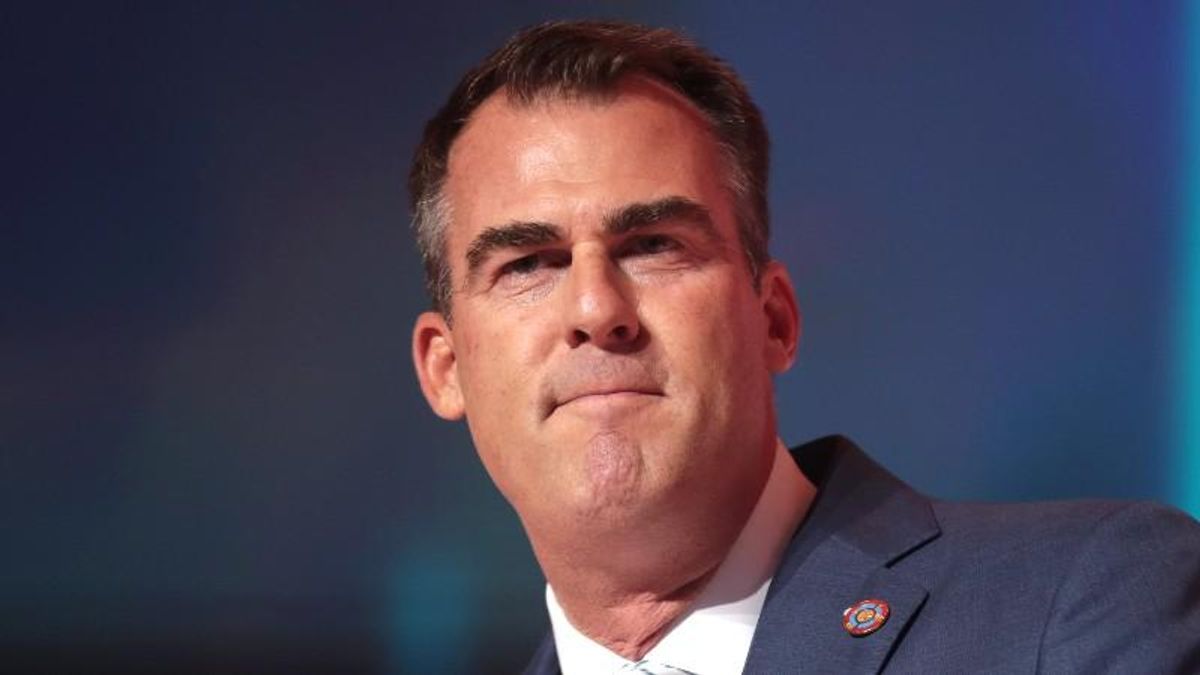
Gov. Kevin Stitt / Gage Skidmore

Republicans are spending big to try and shore up an incumbent governor facing re-election in a reliably red state.

"Oklahoma Governor Kevin Stitt was supposed to cruise to re-election," Eric Cortellessa reported for Time magazine. "Yet the Republican Governors Association has just released a seven-figure ad buy to help Stitt over the finish line. And prominent Republicans like Florida Governor Ron DeSantis and Sen. Ted Cruz of Texas are rushing to his side, as party leaders fear Oklahoma might be the site of one of the biggest upsets of the midterms."

Joy Hofmeister, the superintendent of Oklahoma’s public school system, is the Democratic Party nominee after being a Republican until last year, blunting GOP messages attempting to link her to President Joe Biden.

Stitt has made Hofmeister's job easier.

"The tight race is largely the result of a series of missteps by Stitt, from scandals that have plagued his administration to a bitter feud with Oklahoma’s 39 American Indian tribes," the magazine reported. "Stitt also signed one of the country’s most restrictive abortions bills into law, which has drawn some pushback even in conservative Oklahoma for its banning the procedure in cases of rape, incest and when the mother’s health is at risk. And he oversaw one of America’s highest COVID death rates, with roughly 17,000 lives lost.

The magazine said Stitt loaned his campaign "roughly $1 million" in recent days.

Governor Stitt has hijacked the Republican Party,’ Hofmeister said. “He is pandering to extremism.”

Read the full report.
Invasive malaria mosquito spreading in Africa, researchers warn

Modelling research in 2020 found that if Anopheles stephensi spread in Africa it would put over 126 million people at risk of malaria


By AFP
November 02, 2022
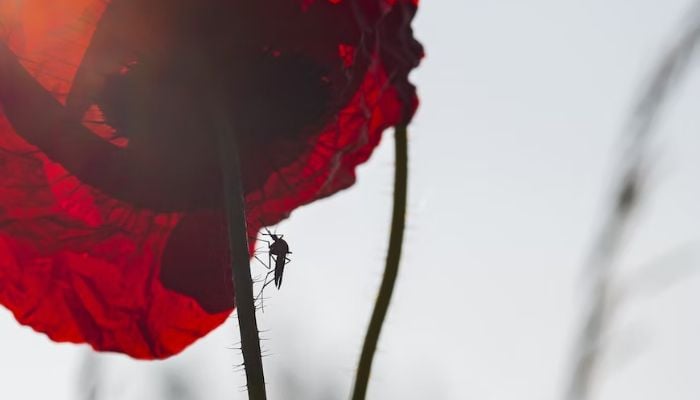
Mosquito on a flower stem.— Unsplash

New evidence has emerged that an invasive species of malaria-carrying mosquito from Asia is spreading in Africa, where it could pose a "unique" threat to tens of millions of city-dwellers, researchers warned Tuesday.

In Africa, home to more than 95% of the world's 627,000 malaria deaths in 2020, the parasite is mostly spread in rural areas preferred by the dominant Anopheles gambiae group of mosquitoes.

However, the Anopheles stephensi mosquito, which has long been the main malaria spreader in Indian and Iranian cities, can breed in urban water supplies, meaning it can thrive during the dry season. It is also to resistant to commonly used insecticides.

Modelling research in 2020 found that if Anopheles stephensi spread widely in Africa it would put more than 126 million people in 44 cities at risk of malaria.

Djibouti became the first African nation to detect Anopheles stephensi in 2012. It had been close to eradicating malaria with just 27 reported cases that year.

However, the number has skyrocketed since Anopheles stephensi's arrival, hitting 73,000 cases in 2020, according to the World Health Organization.

On Tuesday, researchers revealed the first evidence that a malaria outbreak in neighbouring Ethiopia earlier this year was caused by Anopheles stephensi.

In the eastern Ethiopian city of Dire Dawa, a transport hub between the capital Addis Ababa and Djibouti, 205 malaria cases were reported in all of 2019.

However this year more than 2,400 cases were reported between January and May. The outbreak was unprecedented because it took place during the country's dry season, when malaria has usually been rare.

'Surprising'

As the numbers were rising, Fitsum Girma Tadesse, a molecular biologist at Ethiopia's Armauer Hansen Research Institute, and other researchers "jumped in to investigate," he told AFP.

They quickly determined that "Anopheles stephensi mosquitoes are responsible for the increase in cases," Tadesse said.

They linked Anopheles stephensi to the infections of the patients, and also found the mosquitoes — carrying malaria — in nearby water containers.

Tadesse warned that the mosquito's preference for open water tanks, common across many African cities, "makes it unique".

The research, which has not been peer-reviewed, was presented at the Annual Meeting of the American Society of Tropical Medicine and Hygiene being held this week in Seattle, US.

Also presented at the conference were early findings that identified Anopheles stephensi at 64% of 60 test sites in nine states of neighbouring Sudan.

"In some instances, we have found that up to 94% of households have stephensi" mosquitoes nearby, Hmooda Kafy, the head of the integrated vector management department at Sudan's health ministry, said in a statement.

The findings come after the Nigerian Institute of Medical Research confirmed in July it had detected Anopheles stephensi in West Africa for the first time.

Sarah Zohdy, an Anopheles stephensi specialist at the US Centers for Disease Control and Prevention, told AFP it was "surprising" that the mosquito was detected so far west, as the focus had been on the Horn of Africa.

'A major threat'


In the last couple of months it has been shown that Anopheles stephensi "is no longer a potential threat" in Africa, Zohdy said.

"In the Ethiopian context, this is a threat — we now have data to show that," said Zohdy, who also works with the US President's Malaria Initiative, a partner of the Dire Dawa study.

"The evidence now exists to suggest that this is something that the world needs to act on," she added.

Anopheles stephensi has also been reportedly detected in Somalia, according to the WHO, which in September launched an initiative aimed at stopping the spread of the mosquito in Africa.

Because Anopheles stephensi can thrive in urban water tanks, "you get a shift from a seasonal disease to one that can persist year round," Zohdy said.

That shift poses "a major threat" to recent gains made against malaria, she added.

Deaths from malaria had more than halved from the start of the century to 2017 — largely due to insecticide-treated mosquito nets, testing and drugs — before progress stalled during the COVID-19 pandemic.

Zohdy called for increased surveillance to find out exactly how far Anopheles stephensi has spread across the continent.

"The true extent of the distribution of the mosquito is unknown," she said.
Brazilian Centrist Alckmin, Lula's Big-tent Bet For VP

11/01/22 
Though from different political backgrounds, Brazil's vice president-elect Geraldo Alckmin (L) and Luiz Inacio Lula da Silva (R) teamed up to defeat far-right incumbent Jair Bolsonaro 
AFP / NELSON ALMEIDA

Known as a good administrator but dull politician, Brazil's business-friendly centrist Geraldo Alckmin is the wingman leftist president-elect Luiz Inacio Lula da Silva is betting on to help mend a deeply divided country.

The vice president-elect and his boss are not exactly an obvious match: Alckmin ran against then-president Lula in Brazil's 2006 election, losing badly in the runoff.

But they decided to team up, they say, to defeat a common enemy: far-right incumbent Jair Bolsonaro.

"People might think it's strange," Alckmin said in March when he became Lula's running-mate for the hard-fought election that ended with their victory in a runoff election Sunday.

"I ran against Lula in 2006. But we never put the very issue of democracy at risk."

Lula on Tuesday appointed Alckmin to lead the transition with the outgoing administration.

Alckmin, 69, rose to prominence as governor of Sao Paulo, Brazil's biggest and wealthiest state, in the 2000s and 2010s. The mild-mannered anesthesiologist earned a reputation as a solid managerial type and was well-liked by the business and financial sectors.

But he had fallen into political oblivion, winning less than five percent of the vote in the first round of the 2018 presidential race, which brought Bolsonaro to power.

A co-founder of the center-right Brazilian Social Democracy Party (PSDB), long the main rival to Lula's Workers' Party (PT), Alckmin switched to the center-left Brazilian Socialist Party (PSB) so he could do the once-unthinkable and stand as the ex-metalworker's VP.

"We have to open our eyes and have the humility to see that today, (Lula) is the person who best reflects and interprets the Brazilian people's sense of hope for the future," Alckmin said.

A few years back, he had fewer kind words for the former -- and now future -- president.

"After bankrupting Brazil, Lula says he wants to be president again. In other words, friends, he wants to return to the scene of the crime," Alckmin said in 2017.

But Lula wanted a business-friendly running mate to help him mount a big-tent campaign with broad appeal, winning back centrist voters still stinging from the huge recession and corruption scandals that marked the end of the PT's years in power (2003-2016).

Lula, 77, has been here before: his VP when he was president was center-right businessman Jose Alencar, who helped convince wary markets the ex-union leader was serious about orthodox economic policies.

As with Alencar, there appears to be little risk Lula will be overshadowed by Alckmin, a politician nicknamed "xuxu popsicle" -- a reference to a bland vegetable common in Brazil.

"I'm not a showman. If you want to see a show, go watch a comedian," the bald, bespectacled Alckmin once said.

Born in Pindamonhangaba, a small city outside Sao Paulo, Alckmin grew up in a devout Catholic family.

He was a city councilman and mayor before winning a seat in Congress and eventually the governorship.

Despite his clean-cut reputation, he did not escape unscathed from the massive "Car Wash" corruption investigation that stained a laundry list of politicians and business executives in Brazil, Lula chief among them.

Managers at construction giant Odebrecht listed Alckmin among the politicians who allegedly received illegal campaign donations.

He was never charged.