Wednesday, June 14, 2023

UK Amazon warehouse workers extend strike for another 6 months

99% of workers voted in favor of extending protest over pay dispute, says GMB union


Burak Bir |14.06.2023 - 


LONDON

Hundreds of workers at Amazon's fulfillment center in central England will extend their strike for another six months, the GMB union announced on Wednesday.

Amazon workers at the fulfillment in Coventry province, who are already on their 19th day of strike over a pay dispute, will continue for another six months after 99% of them voted in favor of extending the protest, the trade union said in a statement.

On Jan. 25, Amazon workers at the Coventry warehouse went on strike for the first time in the UK after rejecting the company's 50 pence per hour raise offer.

Announcing the first strike of the workers, GMB senior organizer Amanda Gearing had said that they were set to "make history on 25 January, becoming the first-ever Amazon workers in the UK to go on strike."

Meanwhile, a group of striking workers traveled to London and gathered at Parliament Square to make their voices heard.

The GBM union said on Tuesday that Secretary of State for Business and Trade Kemi Badenoch "has been invited to meet striking Amazon workers as they head to Parliament tomorrow."
ANTI-ABORTION KILLS
Poles protest restrictive abortion law after pregnant woman dies

By AFP
Published June 14, 2023

Demonstrators carried placard denouncing the right-wing government that brought in the law -
Copyright POOL/AFP Kay Nietfeld

Several thousand people took to streets in Poland Wednesday to protest a near-total ban on abortion that they blame for a new case of a death of a pregnant woman.

Women rights groups organised gatherings in more than 50 Polish towns and cities, with protesters chanting “disgrace” and carrying pictures of the victim, 33-year-old Dorota Lalik.

Lalik died in a hospital in Nowy Targ, southern Poland on May 24, three days after having been admitted there when her waters broke.

She died of septicaemia after her 20-week-old foetus died in the womb, her family said in a statement.

The existing law does still allow the termination of a pregnancy if a woman’s life is in danger.

But the woman’s family said the hospital had not done the necessary examination in time, nor informed them that her life was in danger.

“The nurses told her to lie down with legs above her head because they said it would let the waters return,” her husband told a Polish daily Gazeta Wyborcza.

“No one mentioned that you could induce a miscarriage and save Dorota, as the chances of the child surviving were slim,” Marcin Lalik said.

– ‘Everything is political’ –

Prosecutors have opened an investigation into Lalik’s death. They are already looking at two similar cases of pregnant women who died in hospital after the death of the foetus they were carrying.

In 2021, after a pregnant 30-year-old mother from Pszczyna died, her family blamed doctors’ “wait-and-see attitude”.

A year later, a 37-year-old woman died in Czestochowa, a few weeks after she lost 12-week-old twin foetuses.

Questioned over the effects of the restrictive abortion ban, Polish Prime Minister Mateusz Morawiecki warned against “politicising” the case of Dorota Lalik.

But to Katarzyna Kotula, a New Left lawmaker who attended the protest in Warsaw, “everything is political when you are a woman in Poland.”

“Particularly political, unfortunately, is a woman’s pregnancy,” she told AFP.

“Because of political decisions, women are dying in Polish hospitals — and others are simply afraid of getting pregnant.”

Also protesting was 40-year-old Julia Cieslak, bearing a banner that read: “Stop killing us”.

She argued that the law had a chilling effect on doctors.

“Out of fear of the consequences, or some personal worldview, they contribute to the young women, young mothers dying in Poland,” Cieslak told AFP.
Adapting African Crops and Investing in Heathy Soils in Response to Climate Change


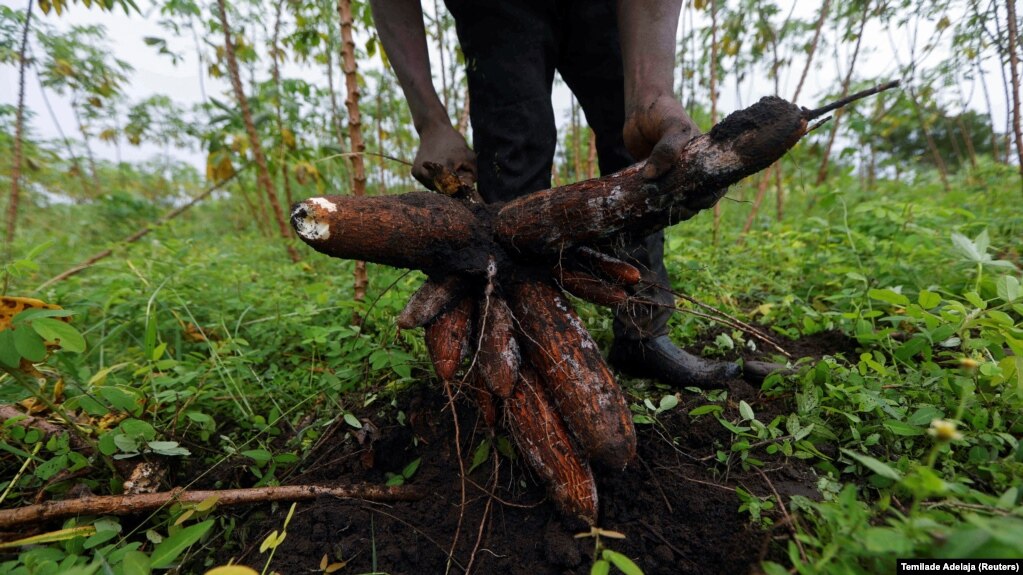
A farmer pulls out cassava during a harvest on a farm in Oyo, Nigeria

The population of sub-Saharan Africa is projected to double by 2050 according to the United Nations. That poses urgent challenges in terms of food security.

The population of sub-Saharan Africa is projected to double by 2050 according to the United Nations. That poses urgent challenges in terms of food security.

In early May, the U.S. State Department's Office of the Special Envoy for Global Food Security organized a panel discussion during the AIM for Climate Summit, to discuss the Vision for Adapted Crops and Soils, otherwise known as VACS. The initiative, launched in collaboration by the U.S. government, the African Union and the UN’s Food and Agriculture Organization seeks to adapt agricultural systems – starting with Africa – to the anticipated challenges of climate change. VACS focuses on the development of climate-resilient seeds and improvement of soil health to boost agricultural production.

“Today, … agriculture faces an historically unprecedented combination of challenges,” said U.S. Special Envoy for Global Food Security Cary Fowler. “Building food security really depends on our addressing all of these challenges.”

The panelists were some of the foremost experts in numerous fields affecting agricultural production, including Professor Lindiwe Majele Sibanda, Chair of the Consultative Group on International Agricultural Research or CGIAR [See-Jee-I-Eh-Ahr] System Board; Commissioner Josefa Sacko from the African Union Commission for Agriculture, Rural Development, Blue Economy, and Sustainable Environment; Dr. Cynthia Rosenzweig from the Agricultural Model Intercomparison and Improvement Project, or AgMIP and the Columbia Climate School; Lisa Safarian, President and Chief Operating Officer with the agricultural technology company Pivot Bio; and Dr. Robert Reiter, Head of Research and Development in Crop Science at Bayer.

Food security depends on addressing the fundamental aspects of having fertile soils and crops adapted to climate change, noted Dr. Fowler. “Yet what we find all around the world, and certainly in Africa, are depleted soils… Our crops are not sufficiently prepared for climate change. Our institutions are not sufficiently prepared.”

“We forged a partnership with the African Union and the Food and Agriculture Organization, but also with many others … to try to address this particular issue,” said Dr. Fowler.

“Pivot Bio is pursuing a fascinating approach to providing climate-neutral nitrogen directly to where it's needed, to the roots of our crops. Bayer has a very serious analysis of what ails us and is engaged in a wide range of scientific and philanthropic activities. Cynthia [Rosenzweig] is working with us from NASA and from Columbia Climate School on new climate modeling so we can better understand how the important, nutritious crops for Africa will fare in the current and future climates of Africa.”

“At the most fundamental level, those challenges in food security really depend on our having fertile soils and depends on having adaptive crops, adapted to climate change.”
UN voices concern over arbitrary arrest of migrants in Libya

UN mission says arrests of migrants were accompanied by disturbing rise in hate speech against foreigners

12.06.2023 - Update : 12.06.2023


TRIPOLI, Libya

The UN mission in Libya on Monday voiced concern over reports about arbitrary arrest of migrants and foreigners across the country.

"We are concerned about the mass arbitrary arrest of migrants and asylum-seekers across the country," the UN Support Mission in Libya (UNSMIL) said in a statement.

The mission accused Libyan authorities of arresting thousands of men, women, and children "from the streets and their homes or following raids on alleged traffickers' camps and warehouses."

“Many of these migrants, including pregnant women and children, are being detained in overcrowded and unsanitary conditions,” the statement said. “Thousands of others, including migrants who have entered Libya legally, have been collectively expelled without screening or due process.”

The UN mission said the arbitrary arrests were accompanied by “a disturbing rise in hate speech and racist discourse against foreigners online and in the media."

It called on Libyan authorities “to halt these actions and treat migrants with dignity and humanity in line with their international obligations.”

“Libyan authorities must grant UN agencies and INGOs unimpeded access to detainees in need of urgent protection,” it added.

In April, a group of investigators commissioned by the UN Council of Human Rights said there is evidence on crimes against humanity being committed against Libyans and migrants stuck in the country, including women being forced into sex slavery.

Libya is considered a main transit point for migrants on their way to Europe seeking a better life.

*Writing by Ahmed Asmar

US labor laws rank country behind developed world: Oxfam

New York, June 13 (EFE).- The United States has labor laws that place it behind the developed world in wage policies, worker protection and union rights, according to a report made public Tuesday by Oxfam America, comparing the labor legislation of the most developed countries.

The non-profit organization tracked 56 labor policies in the 38 countries of the Organization for Economic Cooperation and Development, which it later ranks according to its score, a statement read.

The US ranks “consistently near the bottom” of those lists, coming 36th in wage policies, 38th in worker protection and 32nd in rights to organize, reflecting how the country views rights and labor protections “privileges for people in ‘good’ jobs,” it added.

Kaitlyn Henderson, a research fellow at Oxfam America’s US National Policy Program and lead author of the report accompanying the index, said that in the country’s current labor laws “you can clearly see the echoes of historic racial discrimination and gender.”

The US, Henderson said, is “the only economically advanced nation that denies its workforce the fundamental right to paid leave,” part of a series of policy decisions that fuel “extreme inequality” and especially affect people of color, women, immigrants and refugees.

In the care sector (generally for dependent people), the country is last on the list, since it does not offer any days of compulsory paid sick leave, paid maternity or paternity leave for workers, the NGO said.

“Meanwhile, the US could learn a lot from a nation like Spain, which guarantees 16 weeks of paid parental leave to both parents, encouraging a more equitable approach to caregiving responsibilities,” the report added.

Oxfam also said that although the US has a federal minimum wage, it has not been increased in 14 years, and also only covers 29 percent of the national average wage, compared to countries such as Belgium, where it covers 75 percent.

It said that this minimum wage excludes agricultural workers, young people or those with disabilities.

On union rights, it said branches of government and private corporations “consistently attack union safeguards” and despite growing popular support for unions, membership remains low.

In 2022, it fell to record lows of 10 percent, and only 12 percent of the workforce was covered by collective bargaining.

The NGO, which said the US’ delay on many issues is a matter of “political will,” asked legislators and activists to use the index to help identify points of legislative improvement for the benefit of the workforce and working families. EFE

nqs/lds

Japan passes toothless law against discrimination towards LGBT communities

Tokyo, Jun 13 (EFE).- The lower house of the Japanese parliament on Tuesday approved a controversial law to prevent discrimination against LGBT people, although it does not include any concrete measure towards recognizing the rights of these communities.

The bill was approved by the lower house of the diet (parliament) after long sessions of parliamentary debates between the opposition – which has called for a stronger law – and the more conservative sections of the ruling coalition, which has called for diluting the draft further.

The bill now has to be approved by the upper house, which is also dominated by the alliance led by Prime Minister Fumio Kishida’s Liberal Democratic Party.

The text acknowledges that there is a lack of public awareness in Japan on the diversity of sexual orientations and gender identities and calls for efforts to change this situation by authorities, companies and educational institutions.

However, it does not lay down concrete actions in this regard.

The bill, whose initial progressive overtones were diluted and made generic and ambiguous, says that “all citizens can live with peace of mind,” and nobody should face discrimination.

The LDP has faced internal pressure against taking a stand in favor of freedom of sexual orientation and LGBT rights, as the party holds traditional family values and roles to be at the core of its political philosophy.

Japan is the only G7 country which does not have a central legal framework to recognize same-sex couples, although an increasing number of regional and local governments have allowed the registration of civil unions among gay couples, which carry certain rights and benefits.

In recent months, several local court verdicts have raised questions on the constitutionality of not allowing same-sex marriages, following legal action by groups working for LGBT rights.

The activists have welcomed these decisions but insisted that they would not be enough to force the government to take concrete steps towards legalizing same-sex marriages and granting other rights.

The petitioners plan to take the matter to higher courts. EFE

ahg/ia

Japan to expand space program for defense use

Tokyo, June 13 (EFE).- Japan Tuesday approved its first space security policy to better expand the sector for defense and security use.

The so-called Japan Space Security Initiative, drawn up based on the National Security Strategy, was approved during a cabinet meeting chaired by Prime Minister Fumio Kishida.

The government decided to join international initiatives of like-minded countries and open the sector to a greater role for the private sector involved in space technology development.

Japanese public broadcaster NHK said the objectives of the policy include expanding the use of space for national security, ensuring the safe and sustainable use of the sector, and promoting the development of the space industry,

Amid growing space-related threats, Japan plans to join the US-led Combined Space Operations Center (CspOC) of Britain, Australia and Canada.

The facility monitors attempts to intercept or attack military and commercial satellites.

The policy will guide Japan over the next 10 years to better utilize the space sector for its defense purposes in the face of rising military use of outer space by China and Russia.

“For the sake of national security, we will dramatically scale up the use of space systems and ensure the safe and stable utilization of the domain,” said Kishida.

Japan will use combined small satellites to strengthen its information gathering systems in space to improve its counter-attack or preemptive strike capabilities.

The government vowed to strengthen collaboration between the defense ministry and Japan Aerospace Exploration Agency (JAXA) to support private firms involved in the development of space technology.

The government expressed its fears about the “rapid expansion of threats” from some countries like China, Kyodo news agency said. EFE

mra/bks-ssk

Fukushima plant finalizes preparations for radioactive water discharge into Pacific

By Antonio Hermosin Gandul

Okuma, Japan, Jun 14 (EFE).- The Fukushima nuclear power plant is finalizing preparations to discharge tons of purified radioactive water into the Pacific this summer, a contentious measure that awaits the approval of international experts.

The Fukushima Daiichi plant, which faced the worst atomic accident since the Chernobyl plant in Ukraine, 1986, due to an earthquake and subsequent tsunami in March 2011, prepares for a crucial step in its long and complex dismantling process.

The large amount of waste liquid at the plant is treated to remove most of the radioactive materials from it to ensure safe levels before being discharged into the ocean, according to Japanese authorities, who still face complaints from local communities and neighboring countries.

Clean-up, decommissioning and construction of new facilities at Fukushima Daiichi have made visible progress in recent years.

There are hardly any masses of scrap metal, rubble or other remnants from the devastating tsunami of more than 15 meters that triggered an atomic crisis that had Japan on tenterhooks more than a decade ago.

The works to reinforce the buildings of the four damaged nuclear reactors and prepare for the extraction of atomic fuel are progressing as planned, although they face the enormous technical challenges of operating in the conditions of extreme radioactivity and low visibility inside.

But the most outstanding novelty is the installation of several phases of the Advanced Liquid Processing System (ALPS) and a pumping, storage and pipeline circuit to treat and pour water from the plant, located on the waterfront.

TEPCO, the plant’s operator, is verifying the effectiveness of the system to filter radioactive elements such as cesium or strontium and completing the installation of water testing devices and the network of pipes that will take it to the sea, the company’s spokesperson Keinichi Takahara explained to EFE.

The ALPS system is capable of removing all radioactive materials from the wastewater except tritium, a radioisotope of hydrogen that is also naturally generated in the atmosphere.

The purified liquid shall also be mixed with sea water to further reduce its concentration of tritium before dumping, to a level about forty times below the limit set by the Government of Japan for drinking water, and 1/7 of the maximum limit set by the World Health Organization.

The system is expected to be ready by the end of the month, according to the spokesman, who stressed that tritium in low concentrations does not pose any risk to human health and recalled that the dumping of tritiated water is a common practice in nuclear plants around the world.

This method of discharge was devised by the Japanese authorities and TEPCO to dispose of the 1.32 million tons of processed water stored in more than a thousand tanks inside the plant enclosure, where storage space has exhausted.

The contaminated liquid comes from seawater injected into the reactors for cooling and from the continuous influx of rain and underground aquifers into the units.

The Japanese plan is being overseen by experts from the International Atomic Energy Agency (IAEA), which, after a series of on-site inspections since last year, plans to publish a report of findings by the end of the month.

Once the IAEA gives the final greenlight, the Daiichi operators will open the channels to begin the discharge to the Pacific.

TEPCO, IAEA and independent laboratories around the world will analyze samples of water and marine organisms around the plant before and during the discharge to verify that it remains within standards considered safe.

Despite these assurances, fishing cooperatives off the Fukushima coast remain steadfast in opposition to the spill, fearing that it will be a new blow to the reputation of local produce.

Concerns have also been expressed on health and environmental grounds by neighboring China and South Korea, the Pacific Forum, the environmental nonprofit Greenpeace and some sections from the international scientific community. EFE

ahg-yk/sc

 

India denies data theft from government portal amid calls for investigation

New Delhi, June 12 (EFE).- The Indian government on Monday denied that personal data has been stolen from the official Cowin platform, created by Indian authorities for the management of coronavirus vaccination, among criticism from opposition parties demanding an investigation into the matter.

“There are some media reports claiming breach of data of beneficiaries who have received COVID vaccination in the country,” the health ministry said in a statement.

“It is clarified that all such reports are without any basis and mischievous in nature,” the government added, in response to reports by media outlets about the existence of a computer bot on the messaging platform Telegram that provided data such as the digital identity number of Aadhaar, which contains biometric data of millions of people in the country.

The Minister of State for Information Technology, Rajeev Chandrasekhar, said it did not appear that the Cowin app or database had been directly compromised, and that the information provided on Telegram seemed to be from data “previously stolen.”

“Union Health Ministry has requested the Indian Computer Emergency Response Team (CERT-In),” the ministry statement said, following calls for an investigation from opposition parties.

“In its Digital India frenzy, GoI has woefully ignored citizen privacy. Personal data of every single Indian who got COVID-19 vaccination is publicly available,” tweeted the parliamentarian from the opposition Indian National Congress, Karti P Chidambaram, while attaching a screenshot of a Telegram message containing his personal information.

All India Trinamool Congress spokesperson Saket Gokhale described the alleged data breach as “a matter of serious national concern” on Twitter and shared details of opposition leaders and journalists allegedly from the Telegram platform.

India, which has been the most populous country in the world since last May – according to the UN -, has repeatedly defended the security of its digital data systems, although the lack of legislation on data privacy has sparked criticism. EFE

daa/sc

Iranian president's visit to Latin America aims to counter western 'domination'

Ebrahim Raisi says ties with Venezuela, Nicaragua and Cuba work to 'confront unilateralism'


The trip marks Ebrahim Raisi's 13th visit abroad since taking office (AFP/File photo)

By MEE staff
Published date: 12 June 2023

This week Iranian President Ebrahim Raisi has set off on a tour of Latin America where he plans to visit Venezuela, Nicaragua and Cuba, in a visit he described as standing against the "domination system" of western countries.

The visit began with a meeting in Venezuela with its president, Nicolas Maduro. Raisi is travelling with his ministers of foreign affairs, petroleum, defence, and health.

“The common position of Iran and the three countries is to stand against the domination system and confront unilateralism,” Raisi said before his trip, as reported by Iranian news outlets.

“In addition to friendly political ties with Venezuela, Nicaragua and Cuba, Iran has also had good cooperation with these countries in the field of energy, industry, agriculture, science and technology, and medicine and treatment,” said Raisi.

The trip marks Raisi's 13th visit abroad since taking the presidential office. Iran is one of Venezuela's main allies, alongside Russia, China, Cuba, and Turkey. And like Venezuela, Nicaragua, and Cuba, Tehran is subject to tough US sanctions.

Last month, a Cuban delegation visited Iran and signed more than a dozen agreements spanning cooperation in healthcare, trade, agriculture, and sports.

Tehran and Havana have worked together on a number of projects, including a joint programme to produce a vaccine against the Covid-19 virus.

“The US government thinks only about its own interests and does not care about others. We have paid a heavy price for our political independence and we will safeguard it,” Cuban President Miguel Diaz-Canel said during the meeting last month, according to Iran's ministry of foreign affairs.

Iran's ties with Latin America


The closest ties Iran has in South America are with Venezuela.

Last year, Maduro travelled to Iran and signed a 20-year deal regarding the two countries' energy and financial sectors, and also pledged to work together on defence-related projects.

Venezuela and Iran are two major oil-producing countries and are both members of the oil cartel Opec, the former of which is home to the world's largest proven reserves of crude oil. However, US sanctions have crippled their economies and stymied much of their ability to export crude.

Isolated by the global financial system, they have engaged in their own oil deals. In 2021, they struck an agreement to swap Iranian condensate - an extremely light oil - for Venezuelan heavy crude.

In 2022, the countries also established a deal to operate direct flights between Caracas and Tehran "in order to promote tourism and the union between our countries", with Maduro saying that "Venezuela is open to receive tourists from Iran".

Iran's ties with Nicaragua originate in the 1980s during the Iran-Contra affair, when then-US President Ronald Reagan's administration secretly facilitated the sale of arms to Iran - which was under an arms embargo - in order to fund right-wing rebels in Nicaragua attempting to overthrow the Sandinista government led by Daniel Ortega.

The scandal took place at a time of US interventionism in Latin America against leftist groups, and Iran developed ties with Ortega's government. Former Iranian President Mahmoud Ahmadinejad visited Nicaragua and met with Ortega in 2007, and the two leaders said they shared common interests and enemies.

Saudi-Iran rapprochement


Raisi's visit to Latin America and meeting with Maduro also comes a week after the Venezuelan leader himself travelled to Saudi Arabia, one of Tehran's adversaries and a close ally of the US.

Maduro's meeting with Saudi Crown Prince Mohammed bin Salman took place a day before US Secretary of State Antony Blinken arrived in Riyadh for a three-day visit.


Iran and US near interim deal on nuclear enrichment and oil exportsRead More »

The kingdom has in recent years worked to pursue its own national interests at the expense of aligning with US positions, as Riyadh's ties with Washington have strained.

In March, Saudi Arabia and Iran ended seven years of severed relations after a deal that was brokered by China, another adversary of the US.

In another sign of pushing out of alignment with Washington, Saudi Arabia welcomed Syrian President Bashar al-Assad in his first trip to the kingdom since the two countries severed ties in 2012.

Assad was suspended from the Arab League after he launched a violent crackdown on street protests by government forces in the wake of the pro-democracy uprisings across the Arab-speaking world.

The crackdown led to a devastating civil war that killed more than a half million Syrians and displaced millions more.

Despite Israel's opposition, Iran confirms indirect nuclear deal talks with the United States


Tehran's confirmation comes after both countries denied such reports for days, with talks centering around sanction relief from Washington and a potential prisoner swap deal
|06.12.23 

Iran is holding indirect talks with the United States through the Sultanate of Oman, including on Americans detained in the country, a diplomatic official in Tehran confirmed on Monday.

The talks in Muscat, the capital of the Sultanate of Oman, "were not secret", Foreign Ministry spokesman Nasser Kanani said when asked about press reports of progress between Tehran and Washington.

 
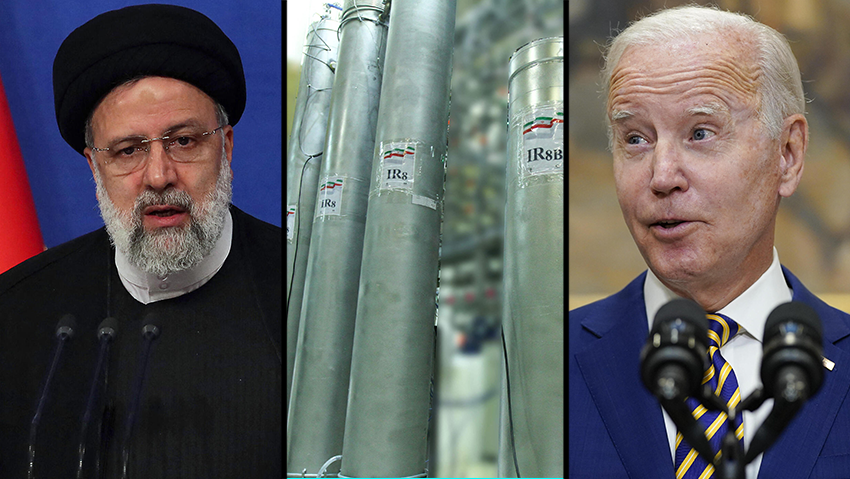
Iranian President Ibrahim Raisi and U.S. President Joe Biden
(Photo: AFP, AP)

"In order to stimulate talks on the lifting of" American sanctions against Iran, "we welcomed the efforts of Omani officials and we exchanged messages with the other party through this mediator", he explained during his weekly press conference.

"The talks are continuing in this framework," he said.

Tehran and Washington have not maintained diplomatic relations since 1980 following the Islamic Revolution in Iran.

In recent days, the two capitals have denied media reports that they were close to reaching an interim deal to replace the 2015 Iran nuclear deal, from which the U.S. pulled out in 2018.


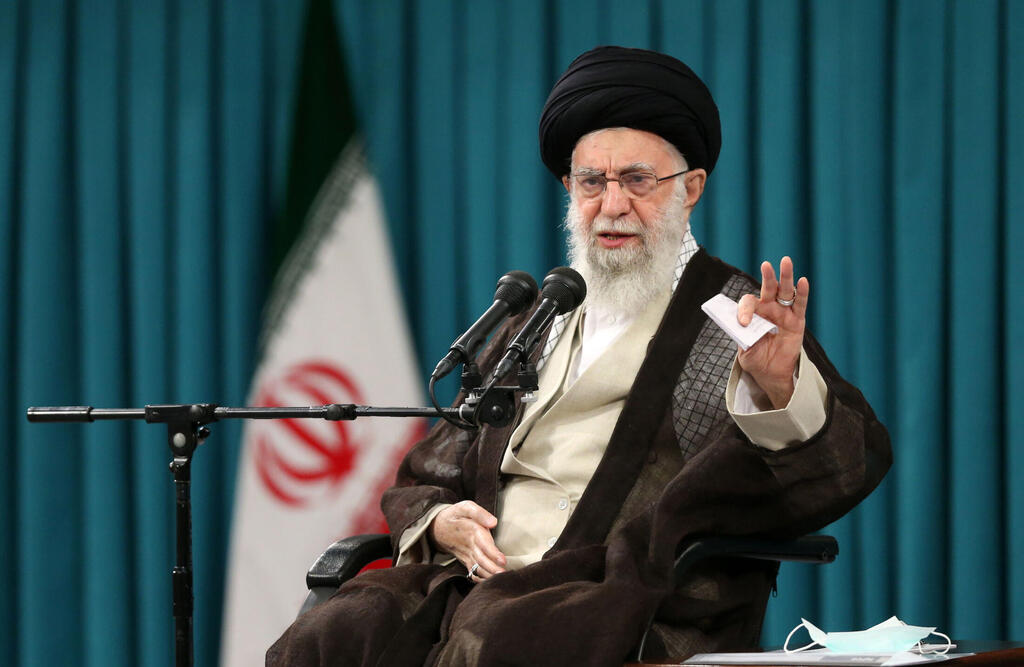
Iranian Supreme Leader Ayatollah Ali Khamenei
(Photo: EPA / IRAN SUPREME LEADER OFFIC)

"There is no temporary agreement to replace the JCPOA (an acronym for the agreement) and such a thing is not on the agenda," Iran's mission to the UN said on Friday as quoted by Iranian state news agency IRNA. The White House also called the information that appeared in the press "false".

Tehran is seeking relief from sanctions applied by the United States since 2018, which are severely affecting its economy.

Oman's mediation also covers an exchange of prisoners, for which "negotiations are continuing", Kanani reaffirmed. "If the other side shows the same seriousness as us, we can achieve a result in the near future."

At least three Iranian Americans are being held in Iran, including businessman Siamak Namazi, arrested in October 2015 and sentenced to ten years in prison for espionage.


Siamak Namazi
(Photo: Reuters)

For its part, Iran reported in 2022 the detention of "dozens" of nationals in the United States, some of whom are accused of having "diverted American sanctions" against Tehran.

In recent weeks, Iran has released six European prisoners and recovered an Iranian diplomat convicted of terrorism and imprisoned in Belgium.

In addition, Kanani denied the announcement by the White House that Iran was providing equipment to Russia to “build a drone factory”.

"We deny any accusations regarding the export of arms to Russia for use in the war against Ukraine," the spokesperson said.


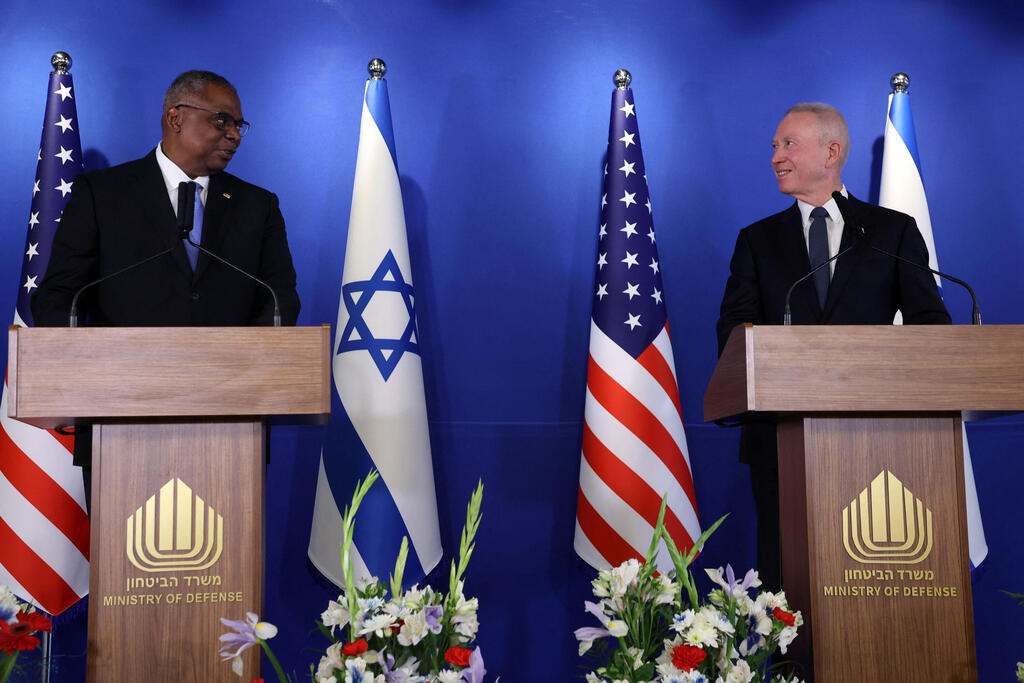
U.S. Defense Secretary Lloyd Austin and Defense Minister Yoav Gallant
(Photo: AFP)

Israeli officials have warned that the prospect of Washington and Tehran reaching a new interim agreement on the latter's nuclear program was increasingly likely.
 
With this concern in mind, Defense Minister Yoav Gallant is set to meet with U.S. Defense Secretary Lloyd Austin on Thursday. The meeting will take place in an unspecified European country because Prime Minister Benjamin Netanyahu has prohibited his ministers from holding meetings with senior U.S. officials in the United States until he is invited to the White House, a traditional courtesy that U.S. President Joe Biden has yet to extend to him.