Sunday, August 06, 2023

6 months after a devastating earthquake, Turkey’s preparedness is still uncertain


The remains of buildings destroyed during the earthquake are pictured in Antakya, southeastern Turkey Saturday, Aug. 5, 2023. Six months ago today, a devastating 7.8-magnitude earthquake hit the Kahramanmaras and 10 other provinces in southern Turkey on the morning of February 6th. Over 50,000 people died, and hundreds of thousands were left homeless, sheltering in tents and other temporary accommodation.

BY ROBERT BADENDIECK
August 6, 2023

ISTANBUL, Turkey (AP) — Dust and rubble fill the street as an excavator tears off chunks of concrete from an old apartment building. Bystanders and former residents watch from afar as construction equipment tears down the structure. Among the bystanders is Ibrahim Ozaydin, 30, a former resident. He watches the demolition not with worry, but with relief, as his building was marked by officials as unsafe months ago.

Ozaydin and his family were shocked to learn that the municipality deemed his building uninhabitable. “We decided to build our own house,” he told The Associated Press as he watched his former home being torn down. “Instead of living in a poorly built house, let us take our own precautions.”

The sight of construction vehicles demolishing buildings became engrained in Turkish minds six months ago today, after a devastating 7.8-magnitude earthquake hit Kahramanmaras and 10 other provinces in southern Turkey on the morning of Feb. 6.

Over 50,000 people died, and hundreds of thousands were left homeless, sheltering in tents and other temporary accommodation. The International Labor Organization estimates that some 658,000 people were left jobless. As for the material cost, some 300,000 buildings were damaged. Survivors needed to be rescued, rubble to be cleared and buildings on the verge of collapse torn down.

Yet this latest demolition is taking place in Istanbul, Turkey’s largest metropolis, far away from the earthquake zone. This time the building wasn’t torn down as part of search-and-rescue efforts, but to prevent such harrowing scenes in the future.

The building was occupied only by Ozaydin and his extended family, who also owned a shop on the ground floor. The family managed to relocate their shop and build a new, sturdier house at a different location, but theirs is an exceptional story in a city where hundreds of thousands of buildings are at risk and property prices are soaring.

Istanbul lies atop a major fault line, one which experts warn could break at any moment. In a bid to prevent damage from any future quake, both the national government and local administrations are racing against time to alleviate the pain of the February quake while also preparing their cities for potential disasters in the future.

However, even preparedness can fall victim to political rivalry: the authorities in opposition-held Istanbul municipality and the national government in Ankara cannot agree on the exact number of buildings at risk of crumbling in the event of an earthquake. But both put the figure at hundreds of thousands.

After the February tragedy, the Istanbul municipality headed by Mayor Ekrem Imamoglu, a prominent figure in the opposition to President Recep Tayyip Erdogan, earmarked for demolition 318 buildings housing over 10,000 people.

Bugra Gokce, an official with the Istanbul municipality overseeing the demolition, said, “We are identifying buildings at risk of collapse and fortifying others, all to reduce the potential loss of life.”

During a heated election campaign right before his re-election to a third decade in power, Erdogan pledged to construct 319,000 new homes within the year. He attended many groundbreaking ceremonies as he persuaded voters that only he could rebuild lives and businesses.

“It’s easy to say, ‘we are building this many square meters atop a hill’ or ’5,000 residences are being built somewhere,” adds Gokce, in an apparent jab at the national government’s urban transformation programs. “We are also doing that. But if you’re not also reducing the risk to existing buildings in the city, it is nothing more than urban expansion.”

Both experts and Erdogan critics argue that the sheer scale of February’s destruction was due to the president’s weak enforcement of building codes amidst a construction boom that helped drive economic growth.

Ankara launched several programs aimed at inspecting damaged buildings both in and outside the 11 provinces hit by the earthquake. Meanwhile victims have been offered both financial aid and a chance to resettle in public housing projects built by the Housing Development Administration of Turkey, or TOKI.

Although many promises were made by both the ruling party and the opposition in the leadup to the elections in May, those still in the earthquake-affected provinces are demanding faster action.

Lawyer Mehmet Ali Gumus in Hatay province, one of the worst hit by the earthquake, told The Associated Press that people were starting to lose hope. He said there were no signs of reconstruction in Hatay, and that the emergency shelter situation in Antakya, Hatay’s most populated city, was deteriorating by the day.

People are living in metal shipping containers and tents in sweltering heat that can reach up to 42 degrees Celsius (107 Fahrenheit) without any access to air conditioning. Residents must also contend with flies, snakes and other wildlife while living outdoors, according to Gumus.

Another health risk is the rubble from collapsed buildings, which is being dumped on farmland, shores, and even right outside encampments where survivors are staying. “Everyone around me says that we survived the earthquake, but they’ll be dealing with cancer in 5-10 years because of the asbestos (from the rubble),” adds Gumus.

In a social media post on July 15, the Hatay governor’s office stated that levels of asbestos in the rubble are safe and below the “regulatory limit.” Results showing low amount of asbestos taken from samples collected in debris dumping grounds were also posted.

While Hatay residents deal with the elements and other environmental hazards, their future remains uncertain.

“There were concrete statements before the elections, but afterwards we stopped hearing anything concrete,” continues Gumus, claiming that the government has not committed to securing new houses for victims or even to fortifying their existing residences. “Six months after the disaster we should be talking about newly built residences, not lines of people waiting for water,” he adds.

Another Hatay resident, Bestami Coskuner, was leaving for the western province of Izmir because of the power cuts and water shortages in his hometown.

“Tap water is not potable, but people use it to wash. Pipes burst daily, and power is cut two or three times a day,” Coskuner told The Associated Press. He said water was rationed, and some who drank from the tap came down with serious illnesses.

“You can’t easily drink water. In a place where you can’t easily drink water, how are you going to make any decisions? Even bottled water tastes bad in Hatay,” he added.

Victims of the earthquake have already had to deal with the aftermath of a disaster, the worst cost of living crisis in decades, and a highly polarizing election. They’ll have only had a brief break from politics as Turkey heads to hotly contested municipal elections in March. Erdogan, fresh off his victory in national elections last May, has vowed to take back the metropolitan cities he lost in 2019.

One of Erdogan’s campaign strategies had been a focus on providing housing and aid in the earthquake regions. The government made sure to provide amenities, shelter, and financial aid for earthquake victims.

His perceived support for the victims was one of the factors that enabled Erdogan’s party to hold on to power in most of the provinces hit by the earthquake, despite accusations of being responsible for the devastation with his lax enforcement of building codes and the perception of poor emergency response by the government.

Experts like professor Naci Gorur, a geologist and member of the Science Academy, have been warning of a potential earthquake in Istanbul and other provinces for years. He told the Associated Press that the “steps taken were far outweighed by those not taken,” and that Istanbul is not ready for a potential earthquake with the current state of structures and building codes.

Gorur described the soil in the affected regions as causing buildings to “resonate,” making it even more difficult for such structures to stay intact during earthquakes. The quake occurred in a seismically active area known as the East Anatolian fault zone, which has produced damaging earthquakes in the past, such as the 7.4 magnitude quake near Istanbul in 1999, in which an estimated 18,000 people died.

“We could have prepared the whole of Turkey for an earthquake, not just Istanbul, if we had started working with the ministry to make our at-risk provinces earthquake-resistant. If we had distanced ourselves from politics, if policies were not left to the whims of new administrations, and if there had been a serious budget and determination,” said Gorur.

“I have no doubts as to government’s good intentions, but if you are going to do something, do it properly. You don’t rush things like these,” he said, adding that instead of rushing permanent buildings, the government should have focused on maintaining temporary residences while conducting proper studies for the building of permanent structures which comply with “scientific principles.”
___

Associated Press reporter Cinar Kiper in Bodrum, Turkey contributed.


Two boys sit on a side and watch an excavator demolishing an old apartment building in Istanbul, Turkey, Friday, Aug. 4, 2023. Six months ago today, a devastating 7.8-magnitude earthquake hit the Kahramanmaras and 10 other provinces in southern Turkey on the morning of February 6th. Over 50,000 people died, and hundreds of thousands were left homeless, sheltering in tents and other temporary accommodation. 

The remains of buildings destroyed during the earthquake are pictured in Antakya, southeastern Turkey Saturday, Aug. 5, 2023. Six months ago today, a devastating 7.8-magnitude earthquake hit the Kahramanmaras and 10 other provinces in southern Turkey on the morning of February 6th. Over 50,000 people died, and hundreds of thousands were left homeless, sheltering in tents and other temporary accommodation.


An excavator works on the site of a new governmental housing project in Istanbul, Turkey, Friday, Aug. 4, 2023. Six months ago today, a devastating 7.8-magnitude earthquake hit the Kahramanmaras and 10 other provinces in southern Turkey on the morning of February 6th. Over 50,000 people died, and hundreds of thousands were left homeless, sheltering in tents and other temporary accommodation. 

People on a side watch an excavator demolishing an old apartment building in Istanbul, Turkey, Friday, Aug. 4, 2023. Six months ago today, a devastating 7.8-magnitude earthquake hit the Kahramanmaras and 10 other provinces in southern Turkey on the morning of February 6th. Over 50,000 people died, and hundreds of thousands were left homeless, sheltering in tents and other temporary accommodation. 


 An elderly man sits in the backyard of a house in the Fatih old district of Istanbul, Turkey, Tuesday, April 29, 2023. Six months ago today, a devastating 7.8-magnitude earthquake hit the Kahramanmaras and 10 other provinces in southern Turkey on the morning of February 6th. Over 50,000 people died, and hundreds of thousands were left homeless, sheltering in tents and other temporary accommodation. 


Two men watch the smoke rising from a building in Antakya, southern Turkey, Wednesday, Feb. 8, 2023. Six months ago today, a devastating 7.8-magnitude earthquake hit the Kahramanmaras and 10 other provinces in southern Turkey on the morning of February 6th. Over 50,000 people died, and hundreds of thousands were left homeless, sheltering in tents and other temporary accommodation. 

AP Photos/Khalil Hamra
AI Anxiety: Workers Fret Over Uncertain Future

August 06, 2023 
Agence France-Presse
This illustration picture shows the AI (Artificial Intelligence) smartphone app ChatGPT surrounded by other AI Apps in Vaasa, on June 6, 2023.

The tidal wave of artificial intelligence (AI) barrelling toward many professions has generated deep anxiety among workers fearful that their jobs will be swept away -- and the mental health impact is rising.

The launch in November 2022 of ChatGPT, the generative AI platform capable of handling complex tasks on command, marked a tech landmark as AI started to transform the workplace.

"Anything new and unknown is anxiety-producing," Clare Gustavsson, a New York therapist whose patients have shared concerns about AI, told AFP.

"The technology is growing so fast, it is hard to gain sure footing."

Legal assistants, programmers, accountants and financial advisors are among those professions feeling threatened by generative AI that can quickly create human-like prose, computer code, articles or expert insight.

Goldman Sachs analysts see generative AI impacting, if not eliminating, some 300 million jobs, according to a study published in March.

"I anticipate that my job will become obsolete within the next 10 years," Eric, a bank teller, told AFP, declining to give his second name.

"I plan to change careers. The bank I work for is expanding AI research."

Trying to 'embrace the unknown'

New York therapist Meris Powell told AFP of an entertainment professional worried about AI being used in film and television production -- a threat to actors and screenwriters that is a flashpoint in strikes currently gripping Hollywood.

"It's mainly people who are in creative fields who are at the forefront of that concern," Gustavsson said.

AI is bringing with it a level of apprehension matched by climate change and the Covid-19 pandemic, she contended.

But she said that she tries to get patients to "embrace the unknown" and find ways to use new technology to their advantage.

For one graphic animator in New York, the career-threatening shock came from seeing images generated by AI-infused software such as Midjourney and Stable Diffusion that rivaled the quality of those created by humans.

"People started to realize that some of the skills they had developed and specialized in could possibly be replaced by AI," she told AFP, adding she had honed her coding skills, but now feels even that has scant promise in an AI world.

"I'll probably lean into more of a management-level role," she said. "It's just hard because there are a lot less of those positions.

"Before I would just pursue things that interested me and skills that I enjoy. Now I feel more inclined to think about what's actually going to be useful and marketable in the future."

Peter Vukovic, who has been chief technology officer at several startups, expects just one percent or less of the population to benefit from AI.

"For the rest, it's a gray area," Vukovic, who lives in Bosnia, said. "There is a lot of reason for 99 percent of people to be concerned."

AI is focused on efficiency and making money, but it could be channeled to serve other purposes, Vukovic said.

"What's the best way for us to use this?" he asked. "Is it really just to automate a bunch of jobs?"


A VERY COLD CASE NOW
James Lewis, long eyed as suspect in 1982 Tylenol murders, died of pulmonary embolism

2023/08/03
Stacey Wescott/Chicago Tribune/TNS

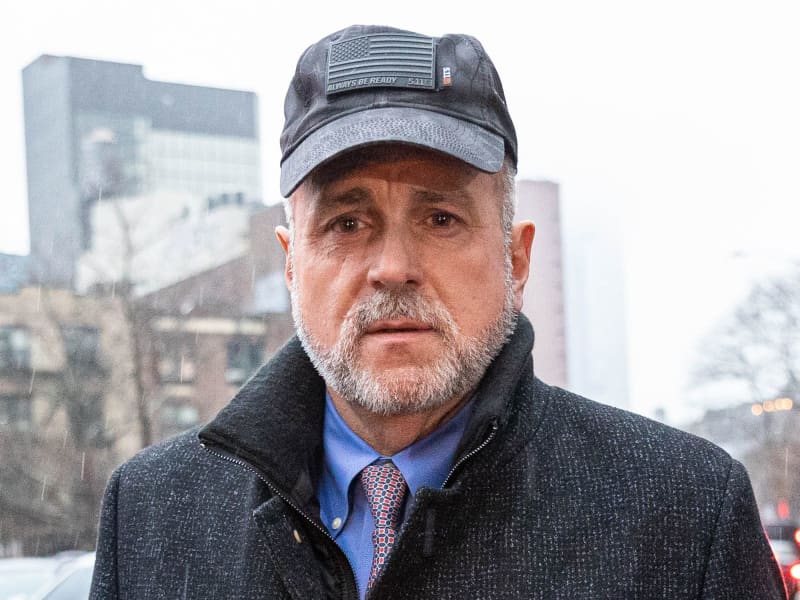
CHICAGO — An autopsy has concluded that James Lewis, the lone suspect in the 1982 Chicago Tylenol murders, died of natural causes in his suburban Boston home last month.

The Massachusetts Office of the Chief Medical Examiner announced Thursday that Lewis, 76, died of pulmonary thromboembolism — a blood clot in the lungs.

As The Chicago Tribune first reported, Lewis’ body was found in his downtown Cambridge condominium just after 4 p.m. July 9. Police said Lewis’ wife, who was out of town visiting relatives, had asked someone to check on her husband after she was unable to reach him.

Police initially said an autopsy was not expected because officers did not find signs of foul play. Lewis also had a history of heart issues. But the state medical examiner launched an investigation that week at the urging of Illinois authorities.

Lewis was cremated July 17, according to his death certificate. The document lists his occupation as self-employed artist and writer. The director of the Cambridge-area funeral home that handled his services declined to comment, citing the family’s wishes for a private memorial.

In September 1982, seven Chicago-area residents died after swallowing Tylenol capsules laced with potassium cyanide. The victims were Mary Kellerman, Mary McFarland, Mary “Lynn” Reiner, Paula Prince and Stanley, Adam and Terri Janus. Their deaths prompted a national recall of the medicine and led to the adoption of tamper-evident packaging.

Lewis — a convicted con man who inserted himself into the Tylenol investigation shortly after the poisonings by sending an extortion letter to the drug’s manufacturer — long denied being the killer.

He spent about 13 years in federal prison for attempted extortion related to that letter and for committing mail fraud in an earlier Kansas City credit card scam. He was released from prison in 1995 and joined his wife in Cambridge, where he lived the rest of his life.

His death came after 40 years of intense scrutiny and a lengthy cat-and-mouse game between Lewis and the Tylenol investigators. Authorities questioned Lewis for several hours as recently as September in Cambridge as part of a renewed effort to bring charges in the case. But the investigation stalled afterward.

Authorities maintained they had a “chargeable, circumstantial case” against Lewis, but prosecutors were hesitant to seek an indictment without direct physical evidence.

Police say the case remains open. But given the intense focus on Lewis, charges against anyone else seem unlikely absent a confession or a major advancement in DNA technology.

© Chicago Tribune
BUSINESS CLASS GETS IT ALL
Major Airline To Stop Carrying Enough Food For All Passengers

2023/08/03


By Jeffrey Quiggle

Air travelers frequently find that their in-flight experiences are different depending upon a number of variables.

These include whether the flight is domestic or international, the length of a particular flight and the airline on which the passenger is traveling.

In-flight amenities often include food and drinks, television and movies, wi-fi, power outlets, pillows and blankets.

Food and beverage service, reduced during the pandemic, has resumed in near full capacity -- even for travelers in economy class.

On domestic United Airlines (UAL) - flights, non-alcoholic beverages are complimentary on all flights. Alcoholic beverages are available for purchase.

Flights of more than 500 miles on United will have food products such as snack boxes. On routes that travel more than 1,500 miles, United offers food and drinks for sale.

Southwest Airlines (LUV) - offers complimentary snacks and non-alcoholic drinks on domestic flights. Alcoholic drinks are available at prices ranging from $6 to $7.

On Delta Air Lines (DAL) - , domestic flights of 251 to 499 miles offer sweet and savory snacks and non-alcoholic beverages.

On flights of more than 500 miles, alcoholic beverages are also available for purchase.

American Airlines (AAL) -  also offers complimentary snacks and non-alcoholic drinks. On domestic flights of 1,300 miles or more, beer is available for $8, wine for $9 and spirits for $10.

On most international flights, travelers can expect expanded food and beverage service.
One Airline Is Limiting Food Servings

British Airways, which offers similar services on most of its flights, is now trying something new that could result in some passengers not getting meals at all.

An internal company memo said the airline has a goal of cutting down on food waste created by hauling more than passengers will eat.

The company's solution is to ration food by not carrying enough meals on flights for all passengers.

"Insiders at the Heathrow-based carrier, however, say they fear the new policy will result in some passengers going hungry," wrote Mateusz Maszczynski of Paddle Your Own Kanoo (PYOK). "The thinking behind the new policy is that on certain long-haul flights, not all passengers will want to eat because they would prefer to forgo the meal service and instead get as much sleep as possible."

"In the coming weeks, British Airways will put that theory to the test by no longer loading enough meals for every passenger on certain late-night and early-morning flights," Maszczynski wrote.

He explained that the airline has experimented with this method of reducing waste before.

"British Airways insiders, however, claim that previous experiments to reduce food waste at the airline meant customers had to go hungry because there weren't enough meals for everyone who wanted to eat," Maszczynski wrote.

"In response to criticism over the plans, the airline says it will be closely monitoring the trial and can quickly adjust meal loadings if necessary," he added.

Gary Leff of View From the Wing had a couple of points to make about the plan.

The amount of food eaten on board is less than what's loaded, and that does mean waste.

They can estimate and build models for how much food they'll need.
IRONY

Ed Mullins, disgraced ex-head of NYPD’s sergeants union, sentenced to 2 years for stealing $600K from members

CRIMINAL CAPITALI$M; BUSINESS UNIONISM


2023/08/03
Ex-police union boss Ed Mullins leaving Manhattan Federal Courthouse, Thursday, Jan. 19, 2023, New York City. 
- Shawn Inglima/New York Daily News/TNS

The disgraced former head of the NYPD sergeants union, Ed Mullins, pleaded for mercy Thursday before a judge sentenced him to two years in federal prison and three years post-release supervision for looting his union’s treasury.

“Any sentence is tragic,” Manhattan federal court Judge John Koetl said. “But the tragedy of the sentence is certainly caused by the defendant’s actions.”

The firebrand ex-union chief said he had lost more than his post upon his federal arrest and conviction for plundering $600,000 from the Sergeants Benevolent Association through bogus expense reports.

“Although I regret everything that has led me to this day, I remain motivated to make this right, to correct my flaws, and to restore to all those who’ve I injured,” Mullins said at his Manhattan federal court sentencing.

“I make no excuses. I made an incredibly bad decision,” he continued. “However, no experience has changed me more than to be the accused of the criminal charge to which I stand here before you, now awaiting judgment.”

Mullins, 61, saw his legacy tarnished when he was stripped of his gun and shield following an October 2021 raid on his Long Island home and the union’s Manhattan offices.

He surrendered on charges in February 2022 and pleaded guilty in January in a deal with the Manhattan U.S. Attorney’s office.

Mullins,who asked for no prison time, said he was in a dark place after becoming a convicted felon.

“Your Honor, I offer these words to be placed on the record in the hope that others will learn and realize the result of what happens when good men fall from grace,” Mullins said in court Thursday.

“For nearly 22 months, I have been existing in the shell of the man I used to be. I live daily in a world of regret with an unforgiving soul that never seems to heal. Life has completely crashed all around me, leaving me with a great deal of time to think.”

Prosecutors said Mullins billed the union for home appliances, a relative’s college tuition, meals at high-end restaurants, designer clothing, jewelry, and other pricey purchases through fake or inflated expense reports.

In the fallout over the Mullins probe, SBA citywide secretary Paul Capotosto was ousted after the federal indictment said he rubber-stamped Mullins’ inflated expenses without requiring receipts.

After joining the NYPD at age 20, Mullins rose to detective and then sergeant before becoming president of the fifth-largest police union in the country in 2002. He remained head of the union for almost two decades.

In his final years on the force, the loudmouth labor boss developed a reputation for incendiary tweets, directing racist and misogynistic comments at elected officials and their relatives.

\-------

© New York Daily News
LGBTQ+ advocates sue to block Texas’ new law that could criminalize some drag performances

Rebecca Schneid, Texas Tribune
August 4, 2023

Drag Queen (Shutterstock.com)

"LGBTQ+ advocates sue to block Texas’ new law that could criminalize some drag performances" was first published by The Texas Tribune, a nonprofit, nonpartisan media organization that informs Texans — and engages with them — about public policy, politics, government and statewide issues.


LGBTQ+ Texans and advocates filed a federal lawsuit Wednesday to block a new state law that criminalizes some drag shows — and other performances — if they occur in front of children.

Senate Bill 12, which goes into effect on Sept. 1, originally sought to classify all drag shows as sexual performances, but it was dramatically altered throughout the regular legislative session. The version the Legislature eventually approved criminalizes performers that put on sexually explicit shows in front of children as well as any businesses that host those shows.

But it’s how the law defines sexually explicit behavior that spurred the lawsuit.

The complaint argues that SB 12’s language is overly broad, allowing for too much discretion for police, prosecutors and municipalities to decide what is or is not illegal.

“In its zeal to target drag, the Legislature passed a bill so yawning in scope that it criminalizes and restricts an enormous swath of constitutionally protected activity,” says the lawsuit, which was filed by the American Civil Liberties Union of Texas. “The State has threatened the livelihood and free expression of many Texans.”

Under the law, business owners would face a $10,000 fine for hosting sexually explicit performances in which someone is nude or appeals to the “prurient interest in sex.” Performers caught violating the proposed restriction could be slapped with a Class A misdemeanor, which carries a maximum penalty of a year in jail and a $4,000 fine.

The plaintiffs, represented by the ACLU of Texas, argue that SB 12 violates the First and 14th Amendments because the law “discriminates against the content and viewpoints of performances and imposes prior restraint on free expression.”

According to The Dallas Morning News, attorneys who have reviewed the bill say it could end up criminalizing behavior common at everything from Pride parades to bachelorette parties.

“Surely we can agree that children should be protected from sexually explicit performances,” state Sen. Bryan Hughes, who authored SB 12, told the Tribune in an emailed statement Thursday afternoon. “Senate Bill 12 provides that protection, and I am confident that this common sense law will be upheld.”

The attorney general’s office, whose acting leader is one of the defendants in the suit, and several co-authors of the legislationdid not respond to requests for comment Thursday.


The bill classifies the use of “accessories or prosthetics that exaggerate male or female sexual characteristics,” accompanied with sexual gesticulations as sexual conduct.

Brigitte Bandit, an Austin-based drag performer and one of the plaintiffs, criticized the addition of “accessories or prosthetics” to the bill.

“Is me wearing a padded bra going to be [considered] enhancing sexual features?” Bandit asked lawmakers earlier this year. “It’s still really vague but it’s still geared to try to target drag performance, which is what this bill has been trying to do this entire time, right?”

In a press release attached to the complaint, Bandit stated that they will not allow the drag community to be “used as a scapegoat or a distraction by politicians.”

Other plaintiffs are The Woodlands Pride, Abilene PRIDE Alliance, Extragrams LLC and 360 Queen Entertainment LLC.

In addition to the acting attorney general, they are suing the district attorneys of Montgomery and Bexar counties, the county attorney of Travis County, the city of Abilene, Woodlands Township, Montgomery County and Taylor County.

GLAAD, Equality Texas and the Transgender Education Network of Texas released a statement criticizing the law and portraying it as an attempt to unconstitutionally restrict the lives of LGBTQ+ Texans.

“The goal of this law is to chip away at our freedoms and eventually erase queer and trans existence from the public sphere,” said Andrea Segovia, senior field and policy advisor for TENT. “The plaintiffs of this case demonstrate true Texas values by standing strong for queer and trans rights. We’re supporting them every step along the way.”

This article originally appeared in The Texas Tribune at https://www.texastribune.org/2023/08/03/texas-drag-bill-lawsuit/.

The Texas Tribune is a member-supported, nonpartisan newsroom informing and engaging Texans on state politics and policy. Learn more at texastribune.org.

LGBTQ advocates sue Texas over state’s drag ban; say new law could also criminalize ballet, karaoke

2023/08/03
People march to the Texas State Capitol on April 15, 2023, in Austin. 
- Brandon Bell/Getty Images North America/TNS

A group of drag artists, management companies and LGBTQ nonprofits in Texas are seeking to block a controversial new law that could be used to censor a large number of constitutionally protected performances — including drag shows, theater, ballet and even karaoke nights.

On Wednesday, the American Civil Liberties Union of Texas sued the state’s attorney general and other officials to prevent Senate Bill 12 from taking effect on Sep. 1.

The bill — one of several anti-LGBTQ measures approved by the state’s GOP-controlled legislature earlier this year — was signed into law by Republican Gov. Greg Abbott on June 18.

Advocates argue the “unconstitutional” ban violates the First and Fourteenth Amendments and “threatens the livelihood and free expression of many Texans, including drag performers.”

Even though the bill was amended to remove language that explicitly defined “a male performer exhibiting as a female, or a female performer exhibiting as a male” as sexual conduct, critics say its vague and broad language gives state officials the power to target any performance they don’t like — including drag shows,

SB 12 targets “any performance that could be perceived as ‘sexual’ and proposes criminal penalties, including up to a year in jail, for artists and others who support them,” the ACLU of Texas said in a news release.

“The Texas Drag Ban is stunningly broad in scope and will chill entire genres of free expression in our state,” ACLU of Texas attorney Brian Klosterboer said in a statement. “No performer should ever be thrown in jail because the government disfavors their speech, and we are asking the Court to block this affront to every Texan’s constitutional rights.”

The organization is representing two Texas LGBTQ nonprofits, two drag production companies that “have already suffered negative impacts from the ban,” and Brigitte Bandit, an Austin-based drag artist, producer and queer rights advocate.

“Texas queens and kings from across our great state have been targets of threats and misinformation as a result of the anti-drag law,” the lifelong Texan said, accusing Republicans of using the LGBTQ community as a “scapegoat.”

“State leaders should focus on legitimate issues, not political stunts,” she said.

© New York Daily News

Analysis

From ‘Mr President’ to ‘Mr’: strongman Donald Trump cut down to size in court

Trump has always loved beating his chest, but away from the TV cameras, the former president appeared meek and shrunken


David Smithin Washington
THE GUARDIAN
Fri 4 Aug 2023 

The shock of blond-grey hair was familiar. So was the blue suit, white shirt and red tie. So was the conspicuously assertive tug of the suit jacket.

But the Donald Trump who walked into courtroom 22 on Thursday was a Trump that the public never sees – meek, shrunken, stripped of bravado and any sense of control. And, quite possibly, scared.

Crowds gather under stormy skies for glimpse of Trump in court – again


In the case United States v Donald J Trump, the former president was taken into custody by the government he sought to overthrow in a Washington courthouse perched between the scenes of the crime: the White House and US Capitol. It was the third time in four months that Trump has stood before a judge and pleaded “not guilty” (and each time no members of his family have been present).

On a day sure to be studied by future generations, Trump was arraigned on four criminal charges stemming from his efforts to remain in power after the 2020 election. This is a man who has always loved beating his chest, sticking his names on buildings, staging military parades and cosying up to dictators. But on Thursday, away from the TV cameras, this wannabe American strongman was cut down to size with exquisite symbolism.

For four years, Trump would enter rooms to the strains of “Hail to the Chief” and everyone would rise to their feet. Now the power dynamics were reversed: at the cry of “All rise!”, it was he who was forced to stand.

Long accused of sexism, racism and xenophobia, he had to defer to magistrate judge Moxila Upadhyaya, a woman born in Gujarat, India. His future trial will be overseen by Judge Tanya Chutkan, a woman born in Kingston, Jamaica, and appointed to the bench by Barack Obama.

Upadhyaya made Trump stew by arriving about 15min late. He occupied that time sitting at a long table that bore a black computer monitor, microphone and sheets of paper. He folded and unfolded his hands, picked up a document and discarded it, turned and whispered to his lawyers. He scratched his nose, scribbled on a document and puffed out his cheeks. Like a child, he could not sit still.

The days when he could push a red button in the Oval Office to order a Diet Coke on a silver platter were long gone. The mouth that summoned armies of supporters to the nearby Capitol on January 6, or that delivers bellicose speeches at campaign rallies, was silenced. When Upadhyaya, firm but courteous, took her seat, she called him “Mr Trump” rather than “President Trump” – a citizen, no more and no less.

It was a humbling worthy of Shakespeare’s Richard II handing his crown to Bolingbroke: “My crown I am, but still my griefs are mine. You may my glories and my state depose but not my griefs; still am I king of those.”

Dethroned, Trump was forced to undergo the same legal rituals as any other defendant. When a court deputy read aloud the name of the case – “United States of America v Donald J Trump” – he shook his head in disapproval.

Trump raised his right hand and was sworn in. There was a flicker of confusion as he stood up to give his name only to be told that sitting would do just fine. “Yes, Your Honour, Donald J Trump,” he said, adding: “John.” He gave his age as 77.

Asked if he had taken a medication or substance in the last 24 hours that would make it hard to answer, Trump replied: “No, I have not.”

Perhaps most sobering of all was Upadhyaya’s recitation of the charges and the “term of imprisonment” that Trump could face “if convicted”. He leaned forward in his chair, listening intently. Was he imagining himself behind bars, the cell door slamming shut? Could anything terrify him more?

Upadhyaya asked for Trump’s plea. “Not guilty,” he said, with an emphasis on “Not”.

The judge agreed to release Trump on conditions, including that he not have contact about the case with any witnesses unless lawyers are present. In a cordial tone that belied the seriousness of her words, she said: “If you fail to comply with any conditions of your release, a warrant may be issued for your arrest.”

Legal experts suggested this is unusual – but maybe necessary for a man twice impeached and thrice indicted.

Every so often Jack Smith, the steely special counsel who investigated both this case and Trump’s mishandling of classified documents, stared at Trump from about 15ft away on the front row.

Trump has made a career from parlaying personal catastrophe into public spectacle. He used to motorcade to his hotel steakhouse on Pennsylvania Avenue or his golf club in Virginia. Now it has become a ritual to travel to court – in New York, Miami and Washington – with TV cameras in tow.

Outside the building, beyond a ring of steel, there were again TV crews and satellite vans, curious onlookers and a small group of Trump supporters. One, wearing a “Make America great again” cap, waved a giant flag that said: “Trump or death. 1776-2024.”

Trump, facing 78 criminal charges in three jurisdictions, seems determined to make these his true judge and jury. Winning the White House back in 2024 could be his last best hope of avoiding jail. Each round of criminal charges has delivered a boost in the Republican primary. On Thursday Trump wrote on his Truth Social media platform: “I need one more indictment to ensure my election!”

Indeed, his one great political insight – “I could stand in the middle of Fifth Avenue and shoot somebody, and I wouldn’t lose any voters, OK?” – was an understatement. Recent events suggest that he would probably gain voters.

One solution is transparency. Except for a few dozen journalists and judges who attended Thursday’s hearing, the public was denied the chance to see Trump receive his comeuppance after decades of impunity. If they could see the smallness of Trump, some might feel differently.

Presidential historian Michael Beschloss has argued that, given America’s fractured and distorting media lens, the trial of Donald Trump should be broadcast live on television so every voter can witness how no one, not even a president, is above the law. Then the man who promised to make America great again might finally make it great after all.
Casey DeSantis' Hurricane Ian relief fund is sitting on millions nearly a year after disaster: report

Adam Nichols
August 4, 2023

Ron DeSantis introduces Florida first lady Casey DeSantis during a press conference announcing the Resiliency Florida initiative, at the Amway Center in Orlando on Feb. 26, 2021. - Joe Burbank/Orlando Sentinel/TNS

As Hurricane Ian devastated parts of Florida, millions of dollars rolled into Casey DeSantis’ relief campaign. Nearly a year later, much of it is sitting unused in a bank account, the South Florida Sun-Sentinel revealed.

The wife of governor and GOP presidential nominee hopeful Ron DeSantis campaigned to raise $63 million in donations for the Florida Disaster Fund as the hurricane destroyed swathes of the state in late September 2022.


“We can take those resources and micro-target them and get them directly to the ground as quickly and as efficiently as possible,” she said at the time.

“We’re going to cut through any red tape and bureaucracy because we know people need those funds and they need help.”

More than 10 months later, about $9 million has not been used, despite many families still struggling to complete repairs or dealing with storm-related damage including black mold, Alan Harris, Seminole County’s emergency management director and vice president of the disaster relief nonprofit organization Seminole Heart, told the Sun-Sentinel.

“If you are one of the families who has black mold or has a damaged roof, it’s something you think about every day,” he said.

Across Florida, 1,082 families are still in RVs or other temporary housing, records kept by the Florida Division of Emergency Management show.

“People who donate in response to a natural disaster want to ease the suffering of the people affected,” said Laurie Styron, executive director of CharityWatch.

“That’s why they donate. So if you still have people who are unhoused, buried in debt as a result of disaster losses, or otherwise not back on their feet, it is safe to say that the intentions of donors are not being honored.”

Though Volunteer Florida, which oversees the fund, promotes success stories on its website, including giving money to the American Red Cross and the Salvation Army, opening emergency food banks and helping low-income homeowners raise storm-prone homes, details of some of the spending are vague, the Sun-Sentinel reported.

The governor’s office announced a $25 million program in December through the disaster fund to provide “lodging for volunteers,” and more went to small business and restaurant recovery programs.

But there is no list of which businesses benefited from them, the Sun-Sentinel reported.

“Those funds can end up benefiting private individuals,” said Styron.

“The public needs to know who are those private individuals.”
QANON PIZZAGATE MOVIE
'Sound of Freedom' funder charged with kidnapping a child: report

Anti-child trafficking movie

Travis Gettys
August 4, 2023

Mugshot


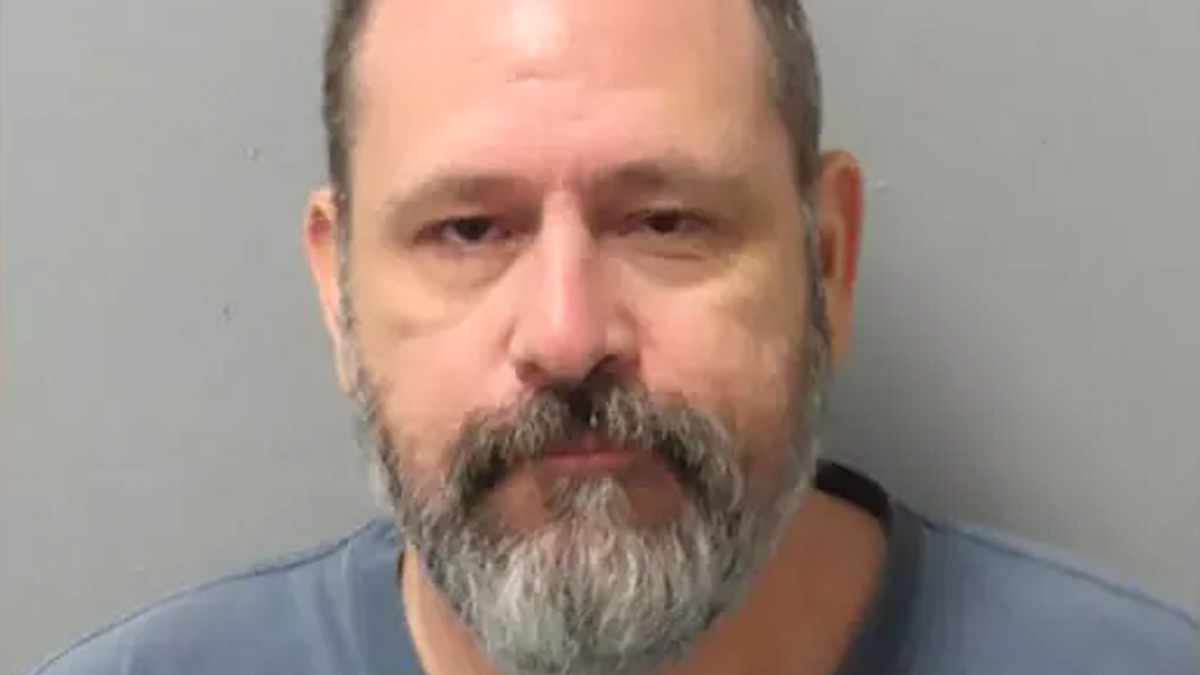
One of the investors who helped bring the anti-child trafficking movie "Sound of Freedom" to theaters has been arrested and charged in Missouri with kidnapping a child.

St. Louis police confirmed to Newsweek that 51-year-old Fabian Marta, whose name appeared in the credits as an investor in the film, was charged July 21 with felony child kidnapping and arrested two days later. His booking photo appears to match those from a Facebook account celebrating the movie as important and necessary.

"The Sound of Freedom movie tackles a very tough subject, and took extraordinary effort to bring it to movie theaters," read one since-deleted Facebook post on that account. "I'm proud to have been a small part of it. If you see the movie look for 'Fabian Marta and Family' at the very end of the credits."

The low-budget Christian thriller stars "Passion of the Christ" actor Jim Caviezel as a former federal agent rescuing children from exploitation, and has been a surprise box office hit despite its star's past association with the QAnon conspiracy theory echoed in the film's plot.

The circumstances around Marta's arrest aren't clear, but he's charged with a class A felony that carries a possible penalty of 10 years to life in prison.

Bond was set at $15,000, but Marta was released July 24 on personal recognizance.


REVOLT OF NATURE
Otter attacks women floating down Montana river

Agence France-Presse
August 4, 2023

Otter (Photo by USFWS Pacific Southwest Region/Flickr)


An aggressive otter attacked three women floating down a river in Montana, with one victim helicoptered to hospital with severe bites to her face and arms, authorities in the western US state said.

The group of swimmers was drifting along Jefferson River in inflatable ring tubes on Wednesday evening when they spotted one or two of the animals.

"An otter approached and attacked them," Montana's Fish Wildlife and Parks (FWP) service said in a statement. "All three women were injured."

FWP said otter attacks are rare but can be caused when the semi-aquatic animals are protecting their young, which take to the water in summer, or believe that a food source is under threat.

It advised people to keep their distance but, if attacked, to "fight back, get away and out of the water."

FWP official Morgan Jacobsen told a local NBC affiliate that the women had telephoned for emergency help and that one victim was flown to hospital due to the bites on her face and arms.

Several states away, surfers in California were the target of sea otter attacks last month when a five-year-old female tried to steal their boards.

In one social media video, the otter climbed on a surfer's board and hung on as he tried to shake it off. The otter lunged at him, and started biting the board.

Authorities in Montana have posted signs warning of the danger from otters, the FWP said, but are not planning any other response.

It added low water levels can bring humans closer to wildlife.

Otters, members of the weasel family, were historically sought for their pelts, with hunting and habitat loss threatening the population of both river and sea otters.