Monday, October 02, 2023


4 myths about green energy being pushed by GOP candidates

Fact-checking some of what got said last week by Trump and other candidates


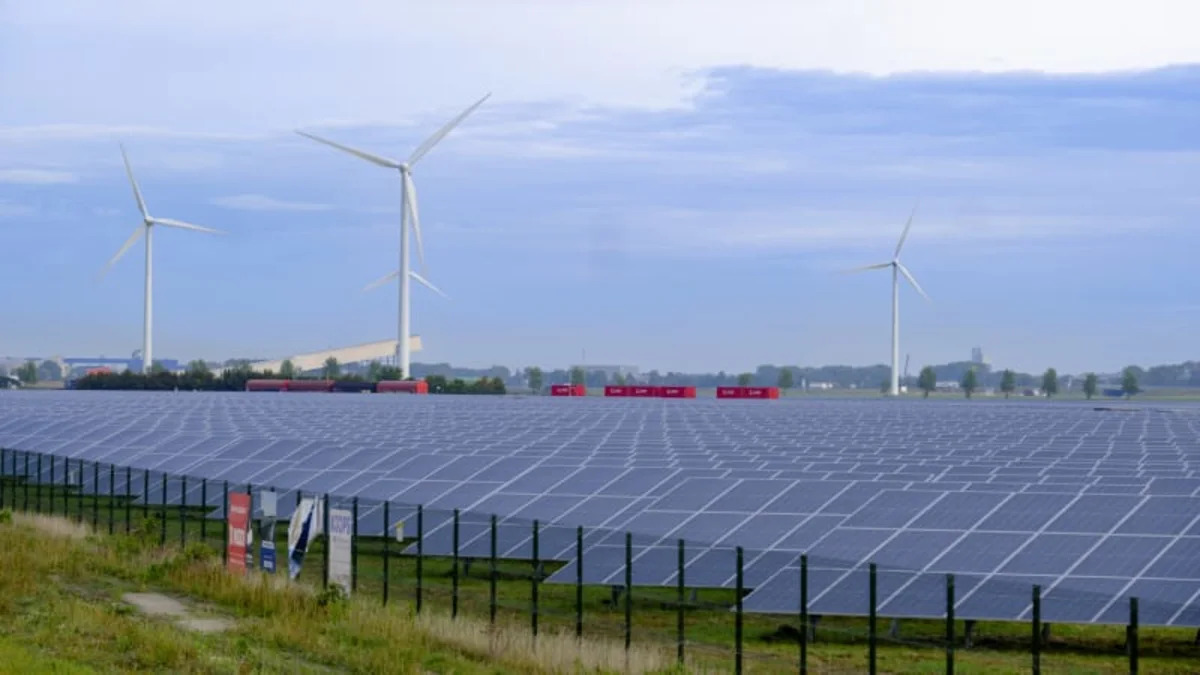
Wind generators and solar panels in Sluiskil, Netherlands. Green energy will be a multi-trillion-dollar industry in the coming years. First-movers will lock in vast amounts of wealth, innovation, employment, and other benefits, as they always do. (Getty Images)


Rick Newman / Yahoo Finance senior columnist

When Yahoo Finance interviewed former Vice President Mike Pence on Sept. 26, he referred to President Biden’s energy policies as the “Green New Deal.”

Biden actually opposed the Green New Deal (GND), which was a fanciful plan hatched by liberal Democrats in 2019 to overhaul the energy and transportation sectors and remake much of the US economy. There was never a chance it would become law, but progressives such as Sen. Bernie Sanders (I-Vt.) and Rep. Alexandria Ocasio-Cortez (D-NY) hoped the GND would serve as a vision document for future efforts to combat global warming.

Pence and other Republicans apply the label to Biden because they hope it will tar him with connotations of socialist extremism. Biden has, in fact, signed aggressive green-energy programs into law, but they largely rely on tax breaks meant to trigger private investment, not the mandates and government takeovers contained in the Green New Deal.

Republicans, nonetheless, seem to think Biden’s green-energy agenda is a juicy target as they look for ways to weaken his reelection campaign. Republican front-runner Donald Trump calls the move to green energy a “transition to hell,” while other Republicans blame Biden’s green-energy push for inflation, the autoworkers' strike and assorted other woes.

As ever, embellishments and lies mingle with reality. Here are four myths Republicans are spinning about green energy:

Myth 1: Biden’s policies will force consumers to go green

Trump, for instance, said in Michigan on Sept. 27, that Biden “wants electric vehicle mandates that will spell the death of the American auto industry.” But there are no Biden mandates requiring consumers to do anything. Biden does have a goal, which is to make EVs 50% of all new-car purchases by 2030. But he’s trying to accomplish that through incentives such as tax breaks that make EVs cheaper to buy and federal funding to help build a nationwide charging network. If the market doesn’t hit that 50% EV target by 2030, nothing will happen.

It's possible automakers will retire gas-powered models in favor of electrics and leave some buyers wanting a gas-powered car that no longer exists. But this can only happen if consumers embrace EVs enough to move the market fully away from gasoline. They may not, forcing automakers to keep a blend of EVs and gassers in their fleets. It’s also true that broad consumer trends often leave out buyers who prefer particular features no longer popular. Some drivers love manual transmissions, for instance, but automakers barely make them anymore because the take rate is so low.

[Drop Rick Newman a notefollow him on Twitter, or sign up for his newsletter.]

There are green-energy mandates in some states, where governments are forcing utilities to move away from fossil fuels toward renewables for electricity generation, which can lead to higher prices for retail consumers. Biden has proposed a rule requiring sharp cuts in carbon emissions at power plants nationwide by 2035. The Supreme Court struck down a similar rule the Obama administration tried to impose, and the Biden rule is sure to face litigation if or when a final version goes into effect. Energy consumers who want to stay brown will be able to do so for a long time.

Myth 2: The U.S. auto industry will be driven out of business

It’s not happening any time soon — especially if you include all the non-unionized workers at Tesla and the many foreign automakers that have factories in the United States. Trump told the workers in Michigan that “they want to go all electric and put you all out of business." He gave it two years. Yet U.S. auto-industry employment has been rising — even as virtually every carmaker has begun shifting to electrics. Since the post-COVID recovery began in mid 2020, the number of automotive jobs has risen to nearly 1.1 million, about 60,000 more than the peak under Trump.
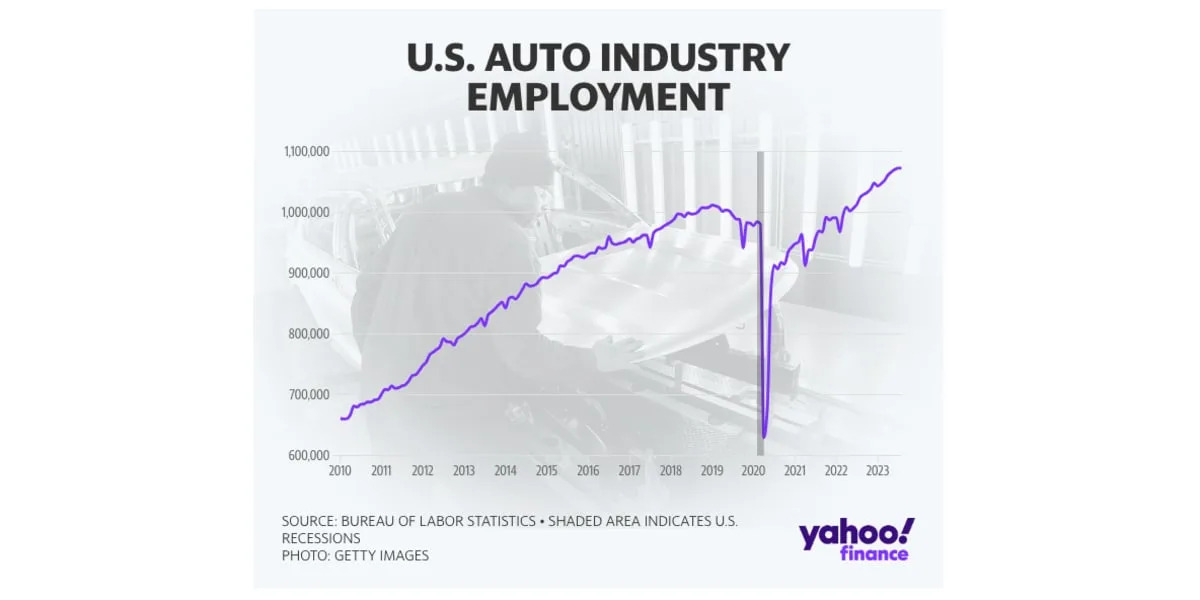
The huge green-energy package Biden signed into law last year includes powerful incentives to build more factories in the United States, not fewer. And there is, in fact, an unprecedented boom in U.S. factory production, which will be followed by even more factory hiring as those plants come online. A new U.S. “battery belt” is forming as factories pop up to supply the new components EVs will need. There could even be new mining operations as companies tap needed minerals, such as lithium from a huge deposit in Nevada.

There’s no guarantee new green-energy jobs will be unionized, and that’s something the striking autoworkers hope to address with General MotorsFord and Stellantis. But the Biden green-energy laws also contain added incentives for domestic projects that pay union-level wages. Trump gave his Michigan speech at a non-union automotive plant, and Republicans in general don’t support unions. So if it sounds like they’re bashing green energy to show solidarity with the union cause, don’t buy it.

Myth 3: Biden’s policies benefit China

If Biden did require Americans to buy EVs and other types of green-energy products, with no incentives to boost domestic production, then it probably would benefit China, which has a more robust renewable energy supply chain and lower costs than the United States does. But re-shoring green-energy production is one of the main goals of the Biden policy, and the claim about China winning is only plausible if you accept the first two bogus arguments.

Myth 4: We can just go back to oil and gas

Most of the Republican presidential candidates say they’ll trash Biden’s green-energy agenda and reemphasize oil and gas development if they become president. That would be foolish for two reasons, even if you put aside the need to address global warming.

First, the whole developed world is moving away from carbon and developing new green-energy technologies. This is a multi-trillion-dollar opportunity and everybody is not going to participate equally. First-movers will lock in vast amounts of wealth, innovation, employment, and other benefits, as they always do. The race is still on. Biden’s green-energy plan is a counterbalance to government incentives in China, Europe, and elsewhere aimed at keeping the spoils there.

Second, private-sector firms are now investing hundreds of billions of dollars in green energy development in the United States, in part because of the lucrative incentives Biden has signed into law. Would a Republican president really cancel all those incentives and tell green-energy firms to fire their workers and mothball their plants because we’re going back to fossil fuels? That’s basically what Republicans are promising to do. We’ll have oil and gasoline for a long time, but that doesn’t mean we have to be the last ones clinging to it.

Rick Newman is a senior columnist for Yahoo Finance. Follow him on Twitter at @rickjnewman.

Click here for politics news related to business and money

Read the latest financial and business news from Yahoo Finance

How Family that Runs Azerbaijan 

Built an Empire of Hidden Wealth

Documents peel away three layers of secret ownership in a conglomerate and lead to gold mines and overseas real estate.

On October 31, 2003, Ilham Aliyev, the newly elected president of Azerbaijan, stood behind a podium and a profusion of white flowers to address presidents, prime ministers and 2,000 other guests assembled at the Respublika Palace. First touching the constitution and then the Koran, Aliyev swore to serve his people. That night, fireworks lit up the sky of the Azeri capital, Baku.

Aliyev’s election to lead this energy-rich former Soviet republic bordering both Russia and Iran had been all but guaranteed. His ailing father, Heydar, an ex-KGB officer, had served in the same role for the previous 10 years. Election monitors reported that police had beaten and detained political opponents, in line with the country’s reputation for repression.

Becoming president wasn’t Aliyev’s only ascension during 2003. Using a network of secretive companies in offshore tax havens, his family, advisers and allies set about acquiring expensive overseas homes and positions in the country’s valuable industries and natural resources, including the family’s majority control of a major gold mine that has been unknown until now.

The new details of the Aliyev offshore empire emerge from secret records obtained by the International Consortium of Investigative Journalists, the German newspaper Süddeutsche Zeitung and other media partners from Mossack Fonseca, a Panama- headquartered law firm that helps to set up hard-to-trace corporate structures for clients. The more than 11 million documents reviewed by ICIJ and its partners – emails, bank accounts and client records – represent the inner workings of Mossack Fonseca for nearly 40 years, from 1977 to December 2015.

Family alliances

The records show that, in mid-2003, months before the October presidential election, Fazil Mammadov, Azerbaijan’s tax minister, began to create AtaHolding, which has since become one of the country’s biggest conglomerates. Mammadov, influential in his own right, subsequently invited President Aliyev’s family to join him, cementing a potentially potent and advantageous business and political partnership.

AtaHolding is a corporation that has significant interests in Azerbaijan’s banking, telecommunications, construction, mining, oil and gas sectors. Its most recent corporate filing in 2014 shows it held over $490 million in assets.

The leaked files show that the tax minister created a company in Panama through Mossack Fonseca named FM Management Holding Group S.A. Stand-in directors — straw men supplied by Mossack Fonseca — concealed the fact that Mammadov was involved.

Mammadov then created a second offshore entity – this time a foundation – called UF Universe Foundation. Panama foundations are subject to strict confidentiality laws. Anyone who discloses information about them can be fined or imprisoned.

Mehriban Aliyeva, First Lady of Azerbaijan
Mehriban Aliyeva, First Lady of Azerbaijan Image: Photo\\: Vugaramrullayev (CC BY-SA 3.0)

The files show that two years later, in 2005, Aliyev’s wife, the fashion-conscious, collagen-infused first lady and member of Parliament, Mehriban Aliyeva, became one of two managers of the UF Universe Foundation, alongside the tax minister, Mammadov.

In attachments to a “High Importance” email sent to Mossack Fonseca in February 2005 by a lawyer representing the Azeris, documents proposed that then six-year-old Heydar Aliyev, the president’s son who is known in the files as “A1,” be made the beneficiary of 20 percent of the foundation’s proceeds. The plan also proposed that the president’s two daughters, Leyla, then 19 and Arzu, then 17, would hold 15 percent each. Mammadov’s son held 30 percent while Ashraf Kamilov, a former tax ministry official, and other former tax officials held smaller stakes. So, too, did AtaHolding’s chairman, Ahmet Erentok.

So the secrecy had three layers: 1) The UF Universe Foundation, which controlled 2) FM Management, the Panama company set up by Mammadov, which owned shares in 3) a United Kingdom-based company named Financial Management Holding Limited. According to a flowchart shared with Mossack Fonseca in 2005, the UK company held 51 percent of shares in AtaHolding Azerbaijan.

While there is no doubt that these secret companies existed and paid hundreds of dollars to Mossack Fonseca in administrative fees, it is unclear whether or not the proposed structure to benefit President Aliyev’s teenage daughters and six-year-old son and other prominent Azeris was ever adopted.

UF Universe Foundation was closed in January 2007. Then, in February 2014, months after President Aliyev was sworn in for his third term, a London-based lawyer sought to reactivate the Foundation and FM Management Holding Group. Mossack Fonseca was happy to oblige and issued a $9,000 invoice in exchange for reactivating the company.

Most recently, majority ownership — 51 percent — of AtaHoldings was held by Hughson Management Inc., according to AtaHolding’s online annual report. A 2010 letter signed by Mossack Fonseca listed Aliyev’s daughters, Arzu and Leyla, and Swiss lawyer Olivier Mestelan as directors.

ICIJ sought comments from all individuals named in this article and received no responses. In response to previous reports about the family’s holdings, the President’s spokesman said the daughters “are grown up and have the right to do business.”

Friendship with U.S.

Despite global criticism of Azerbaijan’s mounting authoritarianism, the Aliyev regime has been a friend of successive U.S. administrations. The United States has spent hundreds of millions of dollars on the Aliyevs’ Azerbaijan, including millions for military and security training. Azerbaijan’s government is one of the largest buyers of influence in Washington D.C. and, together with its lobbyists, spent at least $4 million in 2014 alone burnishing the country’s image. The country has taken members of Congress on all-expenses-paid visits to Azerbaijan, lavishing the lawmakers with silk scarves, crystal tea sets and rugs.

U
Image: S. President Barack Obama greets Azerbaijan President Ilham Aliyev during a bilateral meeting in 2010. Photo\\: AP Photo / Susan Walsh

Azerbaijan’s importance in energy, as a supply route to American troops in Afghanistan and its potential role in the fight against ISIS makes the United States a reluctant critic, said former U.S. ambassador to Azerbaijan Richard D. Kauzlarich, now an adjunct professor at George Mason University.

“Being where it is – bordered by Russia and Iran in a very unstable geopolitical environment – is a factor that makes it among the more unique countries in the region,” said Kauzlarich, who was U.S. ambassador to Azerbaijan from 1994-1997.

Its levels of corruption and elite control of the economy make it stand out in a part of the world where these things aren’t unusual, he added.

“The franchising out of economic activity to families and clans that are important for maintaining the current regime in power is not an unusual pattern,” said Kauzlarich. “However, it certainly has been perfected in Azerbaijan.”

Bigger offshore network revealed

The fact that Aliyev’s family can be linked to offshore companies is not new. A 2013 investigation by ICIJ showed that Aliyev, his wife and his daughters owned or were otherwise connected to offshore companies. Now Mossack Fonseca’s files greatly expand on what is known and disclose new companies belonging to the President’s two daughters, Leyla and Arzu.

The documents show Leyla and Arzu Aliyeva controlled two previously hidden British Virgin Islands-incorporated firms — Kingsview Developments Limited and Exaltation Limited. It is unclear from the files the purpose of the first company, but the second was incorporated in January 2015 to own a British property worth more than $1 million.

President Aliyev’s eldest sister, Sevil, is also shown in the files as the owner of another British Virgin Islands company, Setanon Properties Inc. Again, it is unclear from the files what the company was used for. In the Mossack Fonseca documents Sevil Aliyeva, a composer, listed her address in West London in a neighborhood where average home prices touch nearly $9 million.

Sitting on a gold mine

Mossack Fonseca’s records reveal that the first family secured secret control of a gold mine, dwarfing a smaller stake they’d been known to hold.

In 2006, Azerbaijan’s government granted mining leases in the country’s west to a consortium of companies that established the Azerbaijan International Mineral Resources Operating Company Ltd. Under the agreement, the consortium would keep 70 percent of the mine’s profit, and the Azeri government received the remaining 30 percent, according to a 30-year production agreement.

At the time, opposition politicians criticized the deal’s lack of transparency.

In 2012, Azeri journalists working with the Organized Crime and Corruption Reporting Project, a non-profit investigative journalism group focused on Eastern Europe and Central Asia, reported that one of the four consortium members, Globex International LLP, was owned, in turn, by three Panamanian companies controlled by President Aliyev’s daughters and Mestelan, a Swiss businessman and family friend.

Investigative reporter Khadija Ismayilova has been sentenced to seven and a half years in prison after being convicted in a politically motivated trial in Azerbaijan in September 2015
Investigative reporter Khadija Ismayilova has been sentenced to seven and a half years in prison after being convicted in a politically motivated trial in Azerbaijan in September 2015 Image: Photo\\: AP

One of the OCCRP reporters was Azeri investigative journalist Khadija Ismayilova, also a member of ICIJ. In 2015, Azeri authorities imprisoned Ismayilova in what is widely believed to have been retaliation for her exposé of government corruption. Authorities charged Ismayilova with counts of embezzlement, illegal business, tax evasion, and abuse of power and inciting a man to commit suicide. Her sentence: 7½ years.

“Sorting out AIMROC's structure is a daunting task,” Ismayilova wrote in 2012, connecting the consortium’s operating company with an opaque “Panamanian trail” that linked the Aliyev family with the mining consortium.

Mossack Fonseca’s files reveal the leading member of the consortium, Londex Resources S.A., which was incorporated in Panama in 2005 and held 45 percent of the consortium’s stake. The files show that, in April 2008, the same three Panamanian companies owned by President Aliyev’s daughters and Mestelan, who shared control of Globex International, became Londex’s shareholders. Globex International held 11 percent of the consortium’s share of the goldmine.

The trio’s control of Londex Resources meant that President Aliyev’s family and inner circle controlled a majority stake – 56 percent – in the consortium.

There are nearly 400 documents about Londex in the Mossack Fonseca files, including invoices, corporate registry records, instructions to open a bank account, and emails marked “URGENT REQUEST!!!” Londex was a valuable client for Mossack Fonseca. The law firm invoiced Londex for thousands of dollars between 2005 and 2014.

In January 2016, mine workers protested before Azerbaijan’s parliament, alleging that Londex had not paid wages since 2014, when the mine was abruptly closed.

One of the protestors, Cumshud Alasgerli, a 46-year-old married father of three who worked as a geologist on the mine, was interviewed by OCCRP.

“More than 200 workers can’t get their salary,” Alasgerli said. He said he hadn’t received wages owed to him for nearly two years. “And the government doesn’t do anything for us.”

Alasgerli said he has taken his employment case against Londex to court. But he is not optimistic. The company and the government alike have so far failed to help.

“They just don’t want to help us,” Alasgerli said. “They pretend like they don’t know anything.”

AZERBAIJAN
Lawsuit Says NH Guv’s Family May Profit Off Humanitarian Crisis

BLOOD MONEY


A Sununu-linked mining company prepares to exploit resources in a disputed region as ethnic Armenians flee, according to legal docs and other public records.


William Bredderman

Senior Researcher
DAILY BEAST
Published Oct. 02, 2023

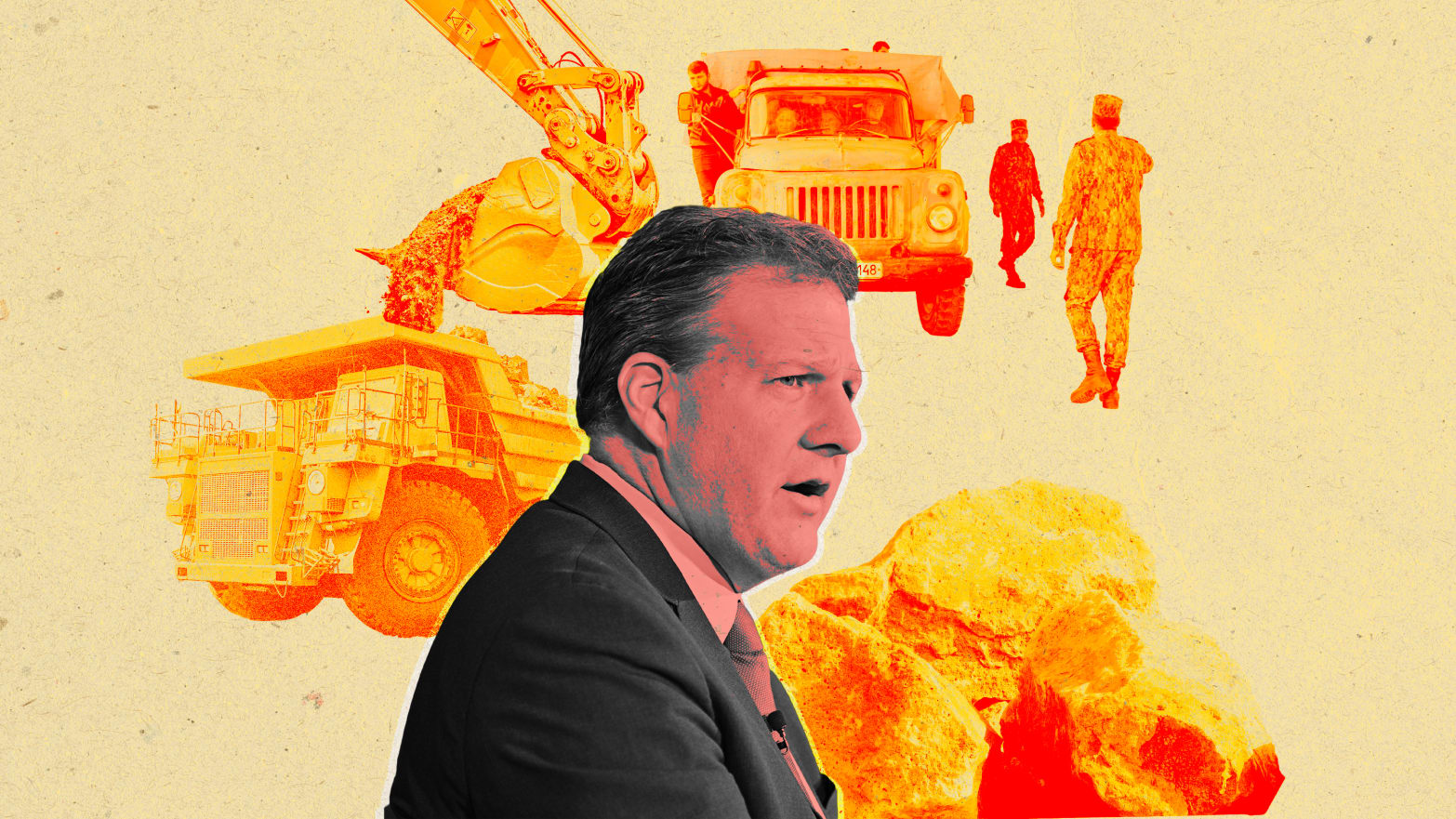
Photo Illustration by Thomas Levinson/The Daily Beast/Getty

As thousands of ethnic Armenians swarm toward the border amid Azerbaijan’s attacks on the enclave of Nagorno-Karabakh, a lawsuit filed in D.C. federal court lays out how a leading U.S. political dynasty—one that includes a sitting governor—stands to profit from the humanitarian disaster.

Azerbaijan assaulted the breakaway region earlier this month, after long obstructing the main aid corridor from Armenia, in violation of a Russia-brokered 2020 ceasefire. The Daily Beast provided an exclusive eyewitness account this past week of the unfolding exodus of Nagorno-Karabakh families attempting to escape violence.

The attack marked the latest stage of a long-running Caucasus conflict that dates to the early 20th century and which erupted amid the dissolution of the Soviet Union, when the province declared independence and gained autonomy from Azerbaijan with the help of Armenia. Nonetheless, the international community regards the area as part of Azerbaijan, despite its ethnic Armenian majority.

A lawsuit filed in July describes how, in the intervening years, the Sununu family—led by patriarch John Sununu, the former New Hampshire governor and ex-White House chief-of-staff—held stakes and positions in a U.K.-based firm that secured mining rights within the province from Baku, rights only an Azerbaijani reconquest could guarantee. Public records, news reports, and corporate filings support many of the suit’s factual assertions.

What’s more, according to federal filings that NBC News unearthed while investigating the dynasty’s interests in the Amazon, a family investment vehicle has historically held some of the shares in the U.K. company—a vehicle from which sitting New Hampshire Gov. Chris Sununu still derives income. The Granite State chief executive was the only member of the Sununu family to comment for this story.

“The governor has absolutely no involvement in the operations of Anglo Asian Mining or the operations of Sununu Holdings,” the present governor’s press team wrote to The Daily Beast in answer to questions about both the gold and copper extractor and the clan’s eponymous holding entity.

But the Republican, beloved to some for his criticism of ex-President Donald Trump, did not answer repeated queries about what financial benefits he might derive from Anglo Asian’s activities. His office also would not pledge that the governor would forfeit any potential returns from the company’s prospective business in Nagorno-Karabakh, so as not to profit from Azerbaijan’s alleged ethnic cleansing. Meanwhile, his 84-year-old father controls almost 10 percent of the metal miner, according to the most recently available corporate reports, making him the second largest shareholder in the operation.

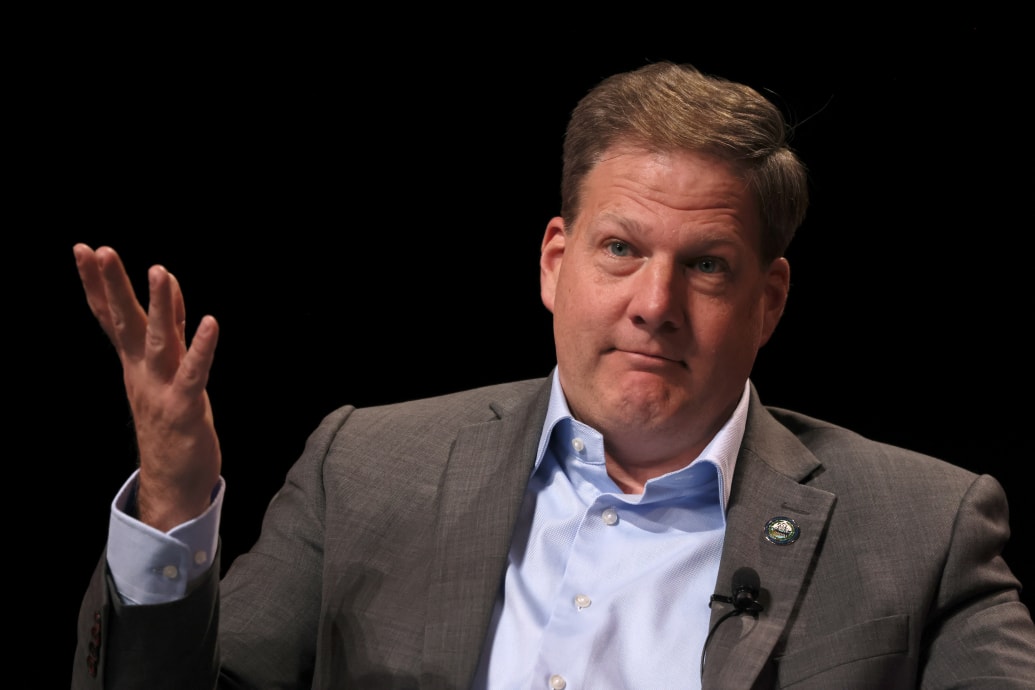
New Hampshire Gov. Chris Sununu.
Jemal Countess

The largest is president and CEO Mohammad Reza Vaziri, the defendant in the suit, which a Nagorno-Karabakh resident brought with assistance of an Armenia-aligned U.S. foundation. Neither Vaziri nor his attorneys replied to repeated requests for comment, and Anglo Asian declined to remark other than to point The Daily Beast to the company’s filings with the London Stock Exchange. Although Vaziri is the focus of the litigation, the complaint refers by name not just to John and Chris but to Michael Sununu, brother to the sitting governor and a local New Hampshire politician.

The suit dates the Sununu paterfamilias’ involvement in Vaziri’s Azerbaijani adventures to 1997, when the company first struck a deal with the authoritarian state to gain access to its metal reserves. News reports from that year listed the GOP statesman among Baku’s suitors for extractive opportunities, but the earliest document that The Daily Beast could find of a direct holding in Anglo Asian dates to 2005, when he joined its board of directors. The lawsuit further asserts that Sununu has a stake in at least one of Vaziri’s private companies, which The Daily Beast could not independently confirm.

From the start, the lawsuit notes, Anglo Asian sought and received mining concessions within Nagorno-Karabakh—concessions it could not access due to the territory’s autonomous status. Its interest intensified in January 2016 with the completion of an Armenian-owned copper and molybdenum processing plant in the province’s town of Demirli. An image from the site soon adorned the cover of Azerbaijani government report on Yerevan’s economic presence in “the occupied territories.”

The lawsuit highlights several subsequent events: on March 31 of that year, Azeri President Ilham Aliyev met with John Sununu while he was visiting Washington, D.C., and the next day, Azeri forces attacked Nagorno-Karabakh, an advance the lawsuit suggests aimed at Demirli. After four days of fighting, Aliyev’s forces withdrew.

But Azerbaijan grabbed back some of the territory four and half years later, prompting Anglo Asian to applaud in a statement to stockholders what it described as the “liberation” of one of its mining concession zones. After a month and a half of fighting, Moscow intervened to end the bloodshed, resuming its traditional role as security guarantor in its old imperial dominions.

Weeks later, the lawsuit highlights, Anglo Asian appointed Michael Sununu—founder of Sununu Holdings, the entity from which Chris Sununu draws income—to its board. This means that of the company’s five directors, two today are members of the Sununu family.

Almost exactly one year after the 2020 conflict began, Anglo Asian obtained initial Azerbaijani approvals to exploit two sites within the still-autonomous portions of Nagorno-Karabakh, including the Demirli installation.

“The recent cessation of hostilities with Armenia has presented an opportunity for Anglo Asian to develop its remaining contract areas,” Vaziri told Mining Weekly at the time. “Following extensive negotiations, we are very pleased to have secured two additional highly strategic mining properties.”

In December 2022, Azerbaijan demanded access to one of the mines as a condition for restoring Nagorno-Karabakh’s food, medicine, and fuel route from Armenia. The move came precisely one week after Anglo Asian penned missives to the U.S., U.K, United Nations, and the European Union complaining of “illegal mining” at its concession locations in the disputed region.

Despite these efforts, as of June of this year, Anglo Asian reported it was unable to access these locations, and the blockade of the corridor has persisted despite international condemnation and allegations of genocide.

However, on Sept. 26, Anglo Asian had good news for its shareholders.

“There have been reports in the press that the Azerbaijan Government has taken back control of the Demirli/Kyzlbulag mine, which is located in our contract areas,” an executive wrote in a London Stock Exchange report. “I would like to extend my sincere gratitude to all Anglo Asian employees, partners and the Government of Azerbaijan for their continued support in what continue to be challenging times.”

The lawsuit against the firm has yet to make headway, and Vaziri’s attorneys have so far not filed a response to the complaint. Michael Sununu declined to comment for this story. His father did not respond to repeated calls and emails.

Sununu Family Continues to Support Azerbaijan through Mining in Karabakh Region

JUNE 4, 2021
by Aram Arkun

CONCORD, N.H. – As the Mirror-Spectator reported last November, the Anglo Asian Mining company, in which Republican politician John Henry Sununu, father of current New Hampshire governor Chris Sununu, is the second largest shareholder, plans to resume mining gold in Zangelan province and possibly two other areas that were previously under Armenian control.

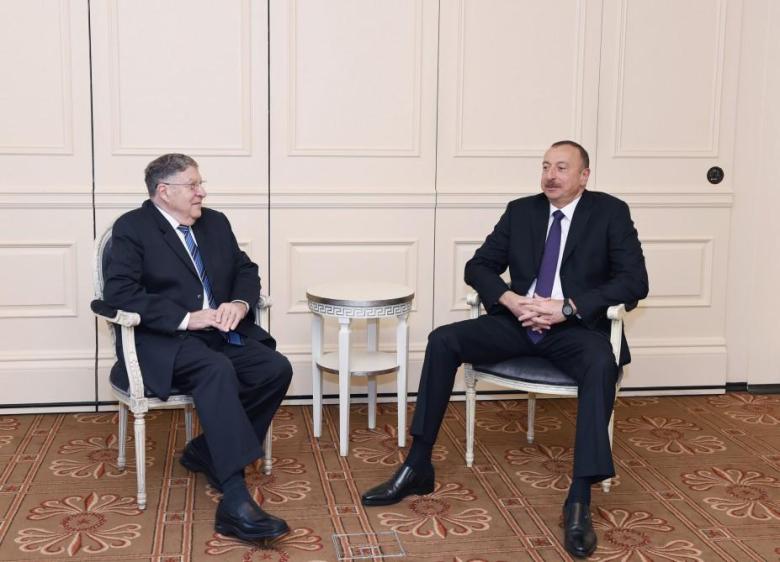
Azerbaijani President Ilham Aliyev with former Governor John H. Sununu pictured at a meeting in Washington, DC in March 2016 (Photo: trend.az)

John Sununu, a former governor of New Hampshire and former chief of staff to President George H. W. Bush, owns a 9.38 percent stake in the company. After the end of the 2020 Artsakh War, the Sununu family increased its direct involvement in the company, when in December of last year, Anglo Asian Mining welcomed Michael Sununu to its board as a non-executive director. Michael is the son of former governor John Sununu and is a founder and manager of Sununu Enterprises and Sununu Holdings.

Anglo Asian Mining’s predecessor company, controlled by the same CEO, Reza Vaziri, signed an agreement with the Azerbaijani government for rights in 1997 to six mines, including three which were then under Armenian control. As a result of the recent Artsakh war, two of these areas are under full Azerbaijani control. A third area, Sotk/Soyudlu, is on the border between Armenia and Azerbaijani controlled Kelbajar.

In the company’s quarterly report of April 13, 2021, CEO Vaziri states: “A recent visit to the Vejnaly [Kovsakan] contract area in Zangilan has identified some high grade ore stockpiles and the feasibility of transporting this ore to Gedabek for processing is being evaluated.” A May 20, 2021 Anglo Asian Mining report further elaborates: “However, due to safety and security concerns, access to Vejnaly and the other restored areas by company personnel remains somewhat restricted. The determination of their final status continues to be reviewed by the government of Azerbaijan.”

Anglo Asian Mining also has an eye on the Kashen deposit with molybdenum and copper in northern Martakert (Kyzlbulag), part of the territory of the Artsakh Republic, which at present is under the control of Russian peacekeepers. As the company website states, “our access to Kyzlbulag will depend on the final resolution of the status of Nagorno Karabakh.”

Non-executive chairman Khosrov Zamani in the May 20 report concludes, “The restoration of the three contract areas in the formerly occupied territories and Karabakh opens up further opportunities for the Company. The contract areas cover a total of 900 square kilometers and contain existing mines and have exceptional exploration potential. Our production sharing agreement is in good standing and will be reset to ‘year zero’ for each of these contract areas once access has been granted. The political situation is still developing and the Company is closely monitoring events. The Government of Azerbaijan has also commenced building infrastructure in the areas such as roads, railways and airports.” The same report also notes, “Development will commence when the Company receives notice in accordance with its PSA [Production Sharing Agreement] that the Organisation on Security and Cooperation in Europe (‘OSCE’) (or comparable international organisation) has acknowledged a liberation of the previously occupied territories and the Company is satisfied the districts are secure.”

Significantly, the government of Azerbaijan takes a hefty cut of Anglo Asian Mining’s profits due to the existing PSA, while the economic ties of the Sununu family with Azerbaijan naturally lead to political consequences. John Sununu serves as a member of the Honorary Council of Advisors of the United States-Azerbaijan Chamber of Commerce and in 2017 received an award of appreciation from this organization for his “contribution to US-Azerbaijani diplomatic relations.”

Anglo-Asian’s own website attempts to present Azerbaijan in a good light. For example, it glosses over the many problems of Azerbaijan’s undemocratic and authoritarian government with statements like “Azerbaijan is a multiparty democracy and presidential republic with a separation of the executive and legislative bodies. It is among the region’s most stable countries.”

The Azerbaijani connection with the Sununu’s is apparently not one way. BGR Government Affairs, which lobbied for the Republic of Azerbaijan, donated $1000 to Chris Sununu’s campaign for governor in 2017 and hosted a fundraising reception.

A campaign by the Armenian National Committee of America (ANCA) calling on Governor Chris Sununu to divest his family’s shares in this company, calling this investment “blood money,” has not received any response so far, according to the ANCA’s Washington D.C. office. Attempts this May by the Mirror-Spectator to contact Michael and Chris Sununu also received no response and it does not appear that in general Governor Sununu has made any public comments on the Artsakh war.

Mining Company With Ties To Sununu Family Poised To Profit After Peace Deal

New Hampshire Public Radio | By Josh Rogers
Published November 10, 2020 

Via Steelguru.Com

A mining company with ties to the family of Gov. Chris Sununu is poised to gain financially after a brokered settlement of an armed conflict between the nations of Armenia and Azerbaijan.

The company, Anglo Asian Mining, is partially owned by former Gov. John H. Sununu, father of the current governor. 

Anglo Asian has been mining gold, silver and copper in Azerbaijan since 2009.

The peace deal announced this week ends the Armenian-Azerbaijan conflict and clears the way for Anglo Asian to exercise rights to mine in Nagorno-Karabakh, the region under dispute which ethnic Armenians claimed as their own but was internationally recognized as a part of the nation of Azerbaijan.

Armenian groups were angered when Anglo Asian mining recently referenced the “liberation” of the disputed region where it enjoys mining rights.

In a statement published by the website Mining.com, Anglo Asian said it “complies with all international laws and with laws in the countries in which it operates.”

The company has also said it plans to mine in the disputed area only when the government of Azerbaijan confirms all hostilities have ended there.

The settlement has boosted the stock price of Anglo-Asian. Former Gov. Sununu, a director of the company, owns a 9 percent stake in it. That holding is now worth more than $16 million.


A powerful U.S. political family is linked to copper mining in the Colombian rainforest

The family of N.H. Gov. Chris Sununu has been in mining for decades. Their latest project would build a mine in the Colombian Amazon, raising ethical and ecological concerns.

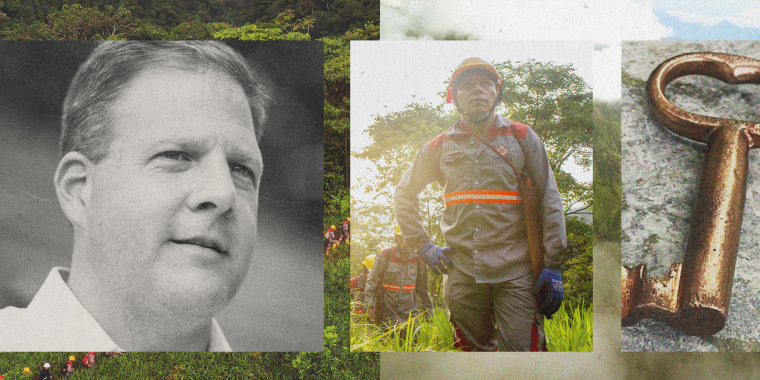
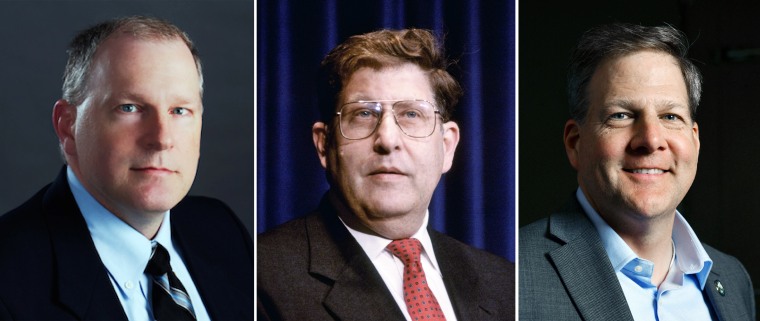
Chris Sununu's father and brother sit on the boards of a company conducting exploratory drilling next to a protected forest reserve in Colombia and its largest shareholder.NBC News; Getty Images; Courtesy Libero Copper & Gold

June 14, 2023, 
By Adiel Kaplan, Andrés Bermúdez Liévano and Andrew W. Lehren

This article was produced in partnership with the Pulitzer Center’s Rainforest Investigations Network and the Latin American Center for Investigative Journalism (CLIP).

MOCOA, Colombia — Angel Pasuy stood on his tribe’s land in the Colombian cloud forest, listening to a symphony of birdsong. An Indigenous land-use planner from the Kamentsá Biya de Sibundoy reservation, Pasuy and his people have called the steep slopes of the Mocoa area home for centuries.

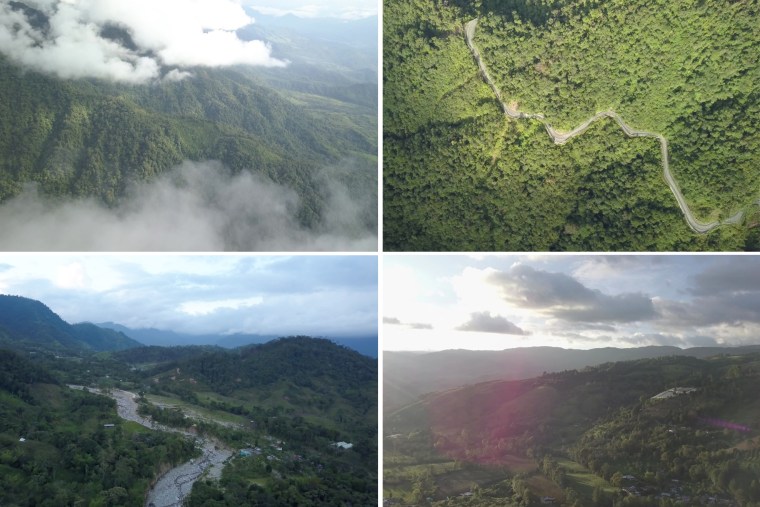
His reservation borders a nationally protected forest reserve that connects the Amazon basin to the Andes mountains, home to hundreds of plant and animal species and the origin of dozens of waterways.

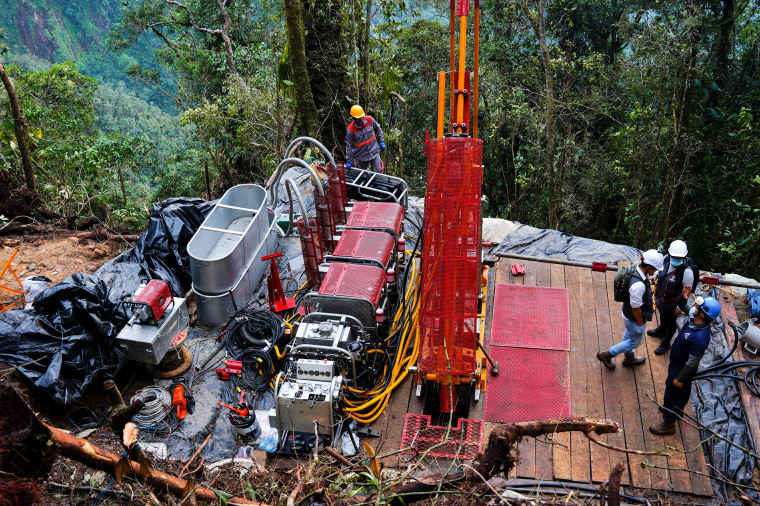
But Pasuy now worries about the forest’s future. In the past year, exploratory drilling for a prospective copper mine has picked up just outside the reserve’s eastern border, 2 miles from his reservation’s boundary. A Canadian mining company, Libero Copper & Gold, holds the rights to conduct exploratory mining in a 30-square-mile area that overlaps partially with the reserve, his reservation and another.

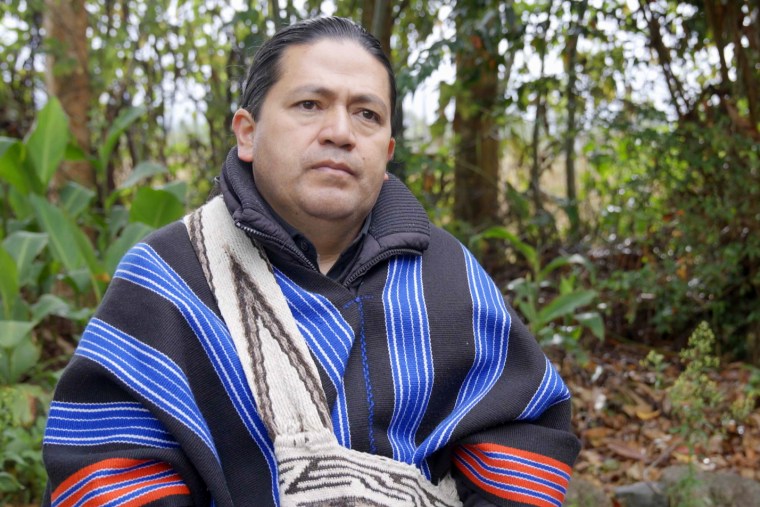
“The area where Libero’s [rights] are located is an area of special environmental and cultural value for us,” said Pasuy, an architect by training who works for several local reservations. “It is very clear to us that mining will affect the territory.”

The Mocoa region, where the Andes meet the Amazon, is home to immense biodiversity, dozens of headwaters and multiple Indigenous reservations.Pedro Samper / NBC News

The proposed mine would be the first legal metals mine in the country’s Amazon, part of Colombia’s push to become a major copper producer. Its development is being fueled by the global drive for metals for green energy, and in part by the family of New Hampshire Gov. Chris Sununu.

Sununu’s politically connected, climate change-denying father, John H. Sununu, and brother, Michael Sununu, are more than just investors in Libero Copper & Gold. Michael is a board member of Libero, and he and his father sit on the board of the company’s largest shareholder, Anglo Asian Mining PLC, which operates in Azerbaijan. John Sununu is the second-largest shareholder of that company, with a nearly 10% stake. He and Michael Sununu both declined to comment and referred all questions to Anglo Asian Mining.

The push to unearth copper in the Colombia rainforest is part of an accelerating effort around the world to find metals crucial for electric cars, lithium ion batteries and other green energy components.

After a change from a conservative to a left-wing national government in Colombia last year, Libero Copper & Gold announced it is designing a plan for a carbon neutral mine, with help from Anglo Asian Mining, focused on “reducing environmental impact” of the operation.

CEO Ian Harris told NBC News the company does not plan to do large-scale mining, instead building a small, ethically sourced supply chain that “specifically supplies a green economy.”

Libero has sought to partner with farming and Indigenous communities in the area, but that’s done little to ease concerns for the bordering Indigenous reservations, their leaders said. Still in the early stages of its project, Libero has yet to release planning documents about the size of the mine or its potential environmental impact, but has repeatedly said in shareholder reports that it plans to petition the Colombian government to shrink the forest reserve.

Leaders of the surrounding Indigenous reservations, like Pasuy’s, said they are concerned about the amount of land Libero has the rights to explore on, its overlap with the protected forest, the much larger additional area it has submitted permit applications for, and what they call the company’s minimal efforts to consult them.Angel Pasuy of the Kamentsá Biya de Sibundoy reservation.Pedro Samper / NBC News
While the territorial and environmental concerns surrounding the Mocoa mine echo those in many resource-rich areas around the world, the involvement of members of an American political family in a startup foreign mining company is unusual.

Chris Sununu, 48, who explored a campaign for the 2024 the Republican presidential nomination earlier this year before deciding not to run, has not disclosed any direct involvement with either company, and has no involvement in their operations, according to his office. But his relatives’ role on the two boards raise potential ethical concerns, good government groups said. If he is ever elected to federal office, his decisions could impact the foreign governments that regulate those companies.

“This is really a black box in terms of how well we’re able to judge the level of involvement in foreign interests [for family members] and how that might affect decision making in the U.S. political system,” said Alex Baumgart, a researcher with OpenSecrets, a nonprofit that tracks money in American politics.
The Sununus

Libero Copper & Gold is one of more than a thousand small Canadian exploratory or “junior” mining companies — essentially startups in the mining sector. They typically spend years searching for and developing deposits around the world to sell off to larger mining companies for production. Harris said Libero differs from most junior mining companies in that it plans to mine the copper from the Mocoa deposit itself. The company’s pursuit of copper is part of an industry trend, though. As demand for “green energy” metals has increased, many junior mining companies pivoted away from metals like iron to exploring those deposits.

Junior mining is a speculative industry — the vast majority of exploratory projects fail, but those that succeed can be a financial jackpot for investors. As national and global agendas have increasingly highlighted the growing need for more green energy metals, incentives for finding those successful projects have increased, according to the Prospectors and Developers Association of Canada, the advocacy group that represents junior mining companies based in Canada, the country with the highest concentration of them.

Workers on a drill pad for Libero Copper & Gold's Mocoa project.
Libero Copper & Gold

“There’s urgency as people are recognizing the intrinsic link between those metals and minerals that are required to reach that [carbon zero] goal,” said Alex Christopher, the immediate past president of the association. As a result, “the base of investors in the junior mining space is broadening.”

A class of investors once largely made up of Canadian venture capitalists now includes battery producers, automakers and — in this case — a politically powerful U.S. family with a history of hostility toward carbon reduction policies and technologies.

The Sununus have held political sway in the GOP since the 1980s, when family patriarch John H., 83, was elected New Hampshire governor. He later became a power player in Washington, serving as President George H.W. Bush’s chief of staff before co-hosting CNN’s “Crossfire” for six years in the 1990s, and then occasionally lobbying in D.C. on energy issues for much of the next decade. Half of his eight children have also held elected office. One is the governor; another, John E., 58, served in the House and Senate for over a decade; and two — Michael and James —are New Hampshire town selectmen.

The family has had a wide range of business interests in the past two decades — mostly in New England — from real estate, banking and biotech to running a ski resort.

The Libero mine is not the Sununus’ first mining project. In the ՚90s, John H. was among several former high-level administration officials, mostly Republicans, who went into business in post-Soviet countries or lobbied on their behalf in the U.S. While many were focused on the region’s oil and gas resources, Sununu went into mining.

Michael, John H. and Chris Sununu.Courtesy Michael Sununu; Getty Images

He was a founding adviser to the U.S. Azerbaijan Chamber of Commerce, and went into business with the head of that organization, Reza Vaziri, a high-ranking pre-revolution Iranian official, according to his company biography. They acquired rights to mine in Azerbaijan in 1997 in partnership with the country’s government, before being absorbed in 2005 by a British company, Anglo Asian Mining PLC.

Vaziri became the CEO of Anglo Asian, and Sununu joined the board. A Sununu family trust also owned more than $50,000 of stock in the company as recently as 2009, the last time a member of the family held a federally elected office requiring a financial disclosure listing its assets. According to Anglo Asian’s latest annual report, Vaziri and Sununu remain the company’s largest shareholders.

Over the years, Anglo Asian Mining expanded its operations in Azerbaijan, and now holds the rights to mine gold, copper and silver deposits in eight contract areas across the country. It has lost and gained access to some due to Azerbaijan’s decadeslong conflict with Armenia. The company has largely steered clear of the conflict, but was criticized by the international Armenian community after it celebrated the “liberation” of a mining site through a 2020 peace deal between the two countries. One U.K.-based Armenian organization accused Anglo Asian of “exploiting” the conflict for financial gain.

“Anglo Asian Mining has a strong track record of operating its mines and production facilities with a commitment to best practices,” a company spokesperson said. “The company works with its stakeholders at the local and national levels to maintain its high level of environmental and social stewardship — and will continue to do so as it expands its operations.”

It was after Michael Sununu, who runs several New Hampshire-based family companies with brother James, joined the Anglo Asian board in late 2020 that the company got involved in mining outside Azerbaijan. It became the largest shareholder of Libero Copper & Gold as the Canadian company was seeking funding to ramp up its exploration at the Mocoa site, earning John H. a nearly 2% stake in Libero. As part of the deal, Michael joined the Libero board.

Many political families have sprawling business interests, said Virginia Canter, chief ethics counsel for Citizens for Responsibility and Ethics in Washington, but it is international investments, particularly board memberships, that can raise the most ethical concerns for public officials.

“Foreign entanglements potentially give rise to questions about favoritism, bias, undue influence, and the potential for corruption,” she said. “As the world became more globally connected, these family opportunities have escalated, and their significance has probably escalated in turn.”

The U.S. is a prime market for green energy metals, as the country looks to ramp up imports and secure its supply to meet its climate goals. A company presentation posted on Libero’s website in March emphasized the potential of the U.S. as a major export market for the copper it hopes to produce at the Colombian mine.

“[Board membership] suggests an increased level of involvement and profit connection than just someone who owns some random amount of shares,” said Baumgart of OpenSecrets. But the extent and influence of those ties is difficult to trace because financial disclosure requirements differ by type of elected official, and most American financial disclosures only require officials to include information about spouses and dependents, not parents, siblings or other family members.

The father and son Sununu board members also share another interest — they are both outspoken critics of the scientific consensus on human-caused climate change. John’s efforts in the White House in the late 1980s have been credited as one of the key reasons the U.S. did not sign an early binding climate agreement. Michael has argued against climate science-based policy and legislation at the state level, as well as in op-eds and in a research paper published by a free market think tank where his father and a brother serve on the board.

Both John H. and Michael declined to comment on their views on climate change or their business holdings, referring NBC News to the statement provided by Anglo Asian Mining.

Harris, the Libero CEO, said that while he cannot comment on anyone’s beliefs, climate-change denial has not come up in any of Libero’s board meetings. “I don’t think it’s had a significant influence on the strategy of the company, if any,” he said, adding that he has never met John H. Sununu and never heard Michael Sununu “share those feelings.”

Chris is the only family member currently serving as an elected official above the local level. In his 13 years holding New Hampshire public office, six as governor, he has charted a unique energy approach for the region, opposing a variety of climate change initiatives adopted by neighboring states and vetoing energy transition legislation. In 2019, a New Hampshire Public Radio podcast devoted an hour to examining the governor and his family’s relationship to climate change.

“Governor Sununu recognizes that human behavior has contributed to climate change,” said Brandon Pratt, his deputy communications director. “He has supported several clean energy bills throughout his tenure as governor and has been a vocal supporter of hydro and solar development projects that protect ratepayers from burdensome subsidies.”

The governor’s investments are opaque. His New Hampshire financial disclosures show that for the last four years, he has made more than $10,000 in income annually from Sununu Holdings, the same family trust that held stock in Anglo Asian Mining in 2009. But New Hampshire does not require him to list the trust’s assets, so there is no public record that would show whether he personally holds a small stake in either mining company.

“Governor Sununu has no involvement in the operations of Anglo Asian Mining or the operations of Sununu Holdings, and files all financial disclosures required by law,” Pratt said.

After hinting at and taking initial steps for a potential presidential run, the governor announced in early June that he would not enter the 2024 race. Sununu did not rule out a later bid for the nation’s highest office. He remains on the national stage — as the governor of the first primary state, he is a coveted adviser to candidates in the crowded Republican primary field. Should he run in the future, he would have to submit a federal disclosure that would include more details of his assets within 30 days of being deemed a candidate by the Federal Election Commission.
The mine

Mocoa is the only active copper mining project in the Colombian Amazon, putting it in conflict with the country’s other major environmental goal: preserving the rainforest.

The land which Libero has the rights to explore on includes nearly 7 square miles of the forest reserve, called the Upper Mocoa River Basin Protected Forest Reserve, and 5.7 square miles of two Indigenous reservations, including Pasuy’s. Two square miles of Libero's area of exploration rights overlap with the reserve and one of the reservations.

Harris told NBC News that Libero plans to create a small, underground mining operation that would slowly mine the roughly 100 hectares (247 acres) of the deposit outside the forest reserve boundary, and that it might take a century to extract everything from the site. The long-term operation would have a small footprint, create far less waste than more common open-pit mining and cause little to no additional deforestation, he said. Libero is currently studying how to use “innovation and technology to minimize the project’s environmental footprint,” according to a May press release.

The company has also supported reforestation projects in the region, which has suffered one of the country’s highest rates of deforestation in recent years. It is exploring on private land in a small farming community, which has been working closely with the company, Harris said, but an operating mine is still probably four to 10 years away.

Libero has stated in shareholder reports that it plans to petition the government to allow mining under the forest reserve, as half of the minerals it could access in the deposit are underneath it. “Libero believes they will gain access to the Forest Reserve for mining purposes as part of the environmental permitting phase of the project,” an April filing said. “However, should the Colombian Government decide not to grant access into this area, this would significantly restrict the size of the resource-constraining pit shell and have a significant impact on the size of the mineral resource.”

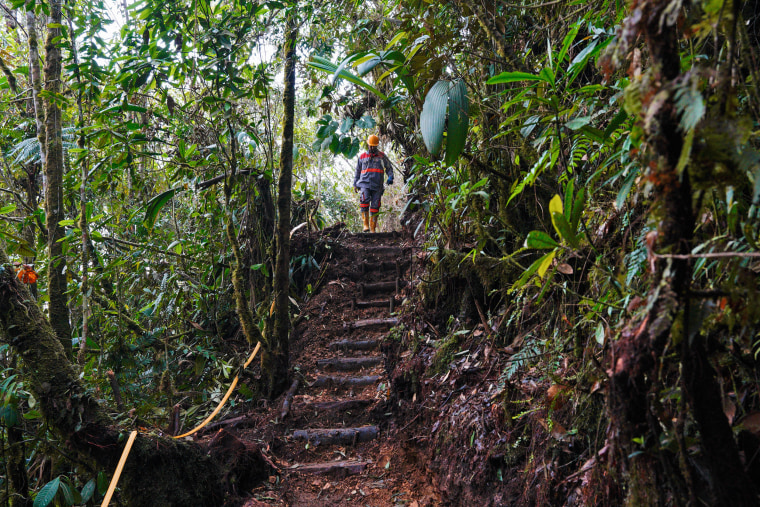
A Libero Copper & Gold worker walks down an access path to the company's Mocoa camp and drill pads.Libero Copper & Gold

It is unclear whether Libero’s request would succeed. The Upper Mocoa Basin is one of 59 nationally protected reserves. Colombia has several different types of forest reserves, some of which allow for mining activities or boundary changes for those purposes, but nationally protected reserves are not among them, according to the country’s environment ministry.

Harris said that Libero has not yet submitted that petition and may never do so, as the plan the company is developing would involve only underground mining outside the reserve.

While it has yet to file detailed reports to the Colombian government or shareholders about what its mine would look like and how it would affect the environment, Libero has applied for 31 additional exploration permits in the area, according to the national mining database, which would expand its rights to 11.5 times the current area, a third of it overlapping with Indigenous land belonging to 11 reservations. A March company presentation highlighted those applications as part of a “regional opportunity.”

According to the company, 13 of those applications were recently rejected, though the national mining agency database showed 20 had been, as of June 8. The remaining 11 pending applications would still expand Libero’s current area by six times, with 40% of the pending permit area overlapping nine reservations.

In response to questions about Libero’s permit applications, Harris noted that there is no restriction to apply for a permit based on Indigenous land. He added that the company has no plans to explore in the areas it submitted permit applications for, and that it only did so to avoid nearby competition. “To be very frank, it was to stop anyone else from coming in,” he said.

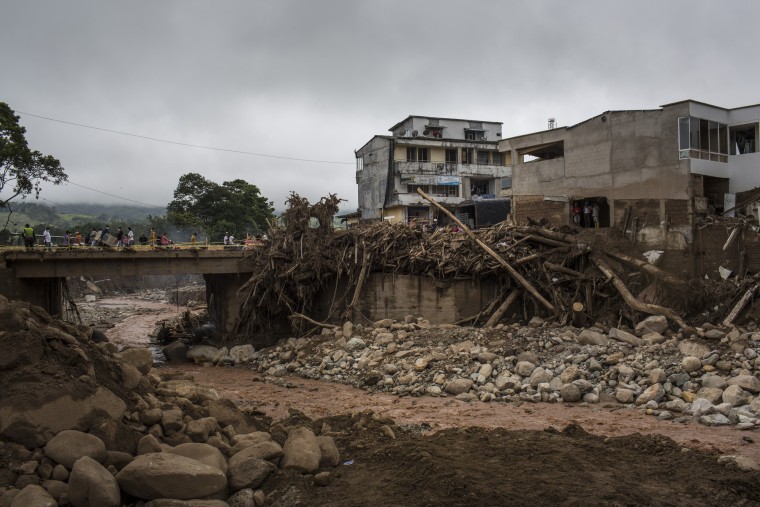
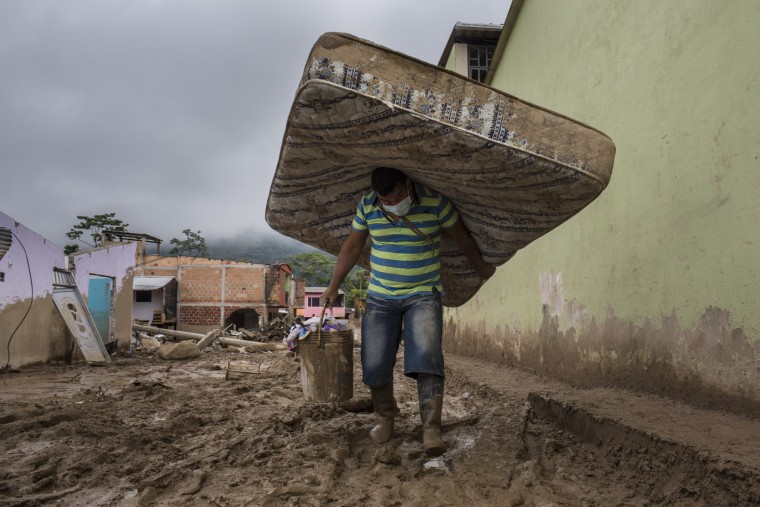
That hasn’t stopped local communities from worrying. The exploration site is just over 6 miles from Mocoa, the region’s largest city, where a deforestation-related mudslide killed more than 330 people six years ago. The project sparked a protest in the city in 2021 after Libero announced it was beginning to prospect in the area.

Displaced residents walk across a bridge over the Mocoa River after a landslide in Mocoa, Colombia, in 2017. 
A displaced resident carries a mattress and a bucket of supplies after a landslide in Mocoa, Colombia, in 2017. 
Nicolo Filippo Rosso / Bloomberg via Getty Images

According to the company, Libero has been contacting communities throughout the city and Indigenous groups in the region and is taking efforts to boost the local economy through hiring and contracting with small businesses. But there is a dispute over whom the company has to contact and when.

Libero has stated its current exploration is close to only one community — Montclar, a small farming village. The community signed a mutual benefit agreement with the company last year that includes commitments to cultural preservation, employment and water protection, according to a press release.

Colombian law requires mining companies to consult with Indigenous communities in their “zone of influence” before opening a mine. Libero has said in press releases that there are no Indigenous communities in that zone for its current exploration, and noted the company is going beyond what is currently required of it.

Libero employs an Indigenous coordinator to conduct outreach to local reservations and has had a relationship “with all our Indigenous communities in Mocoa from the very beginning,” according to a spokesperson.

But leaders of the two Indigenous reservations whose land overlaps with the company’s current mining titles said they were not satisfied with the limited information they had heard from Libero. A 2017 government assessment found that the two reservations and one other are in the zone of influence for any project within those mining titles. As a result, they must be consulted before mining operations begin.

The Inga de Condagua reservation, which has more overlap, filed a protection action against Libero in April 2022, arguing that they should also be consulted during the current exploration phase. After a judge ordered the ministry to assess the petition, the government agency agreed.

Residents of the village where Libero is currently exploring then appealed the decision. They said it infringed on their rights as private landowners and demanded that they be included in all consultations. A Libero spokesperson said the company is talking to both the farming and Indigenous groups and “we will do whatever decision the law states.”

Zoraida Chindoy of the Inga de Condagua reservation.
Pedro Samper / NBC News

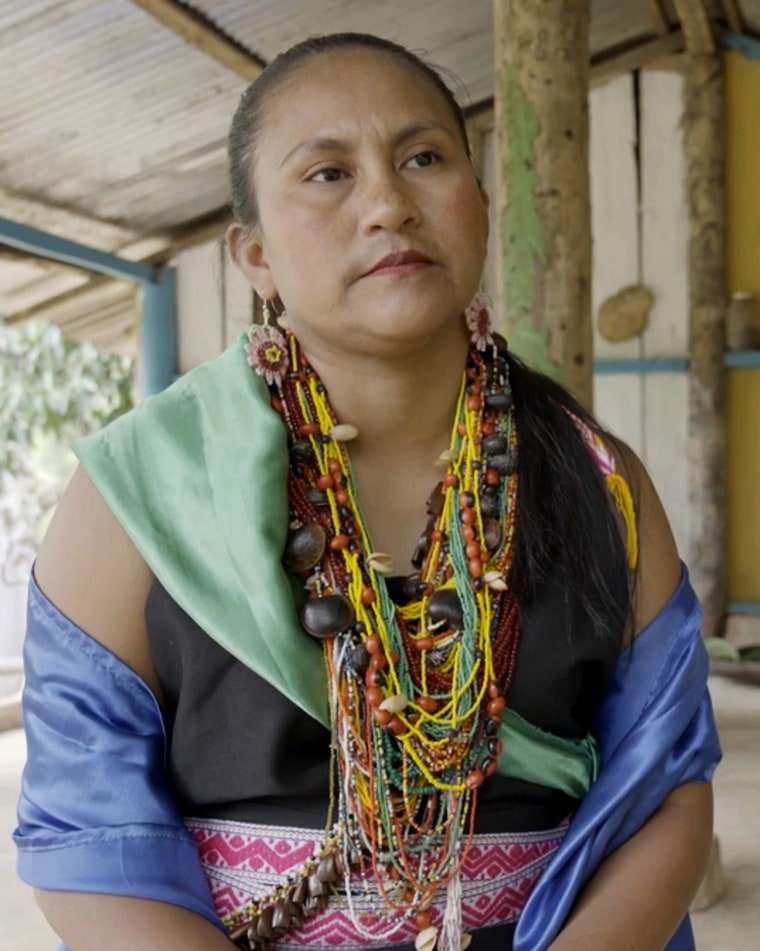
Zoraida Chindoy, the environmental leader of the Condagua reservation, fears how mining exploration could compound the effects of erosion. “During the dry season the land loosens, and even more so when people come to perform studies on it. It’s logical to assume they might leave some damage behind,” she said.

Chindoy survived Mocoa’s deadly mudslide in 2017, sheltering with family on the top floor of her three-story home as its lower levels were destroyed. “It could happen again, and I think Mocoa would disappear,” she said.

Andrés Bermúdez Liévano reported from Mocoa, Colombia. Adiel Kaplan and Andrew W. Lehren reported from New York.

Adiel Kaplan

Adiel Kaplan is a reporter with the NBC News Investigative Unit.
Andrés Bermúdez Liévano

Andrés Bermúdez Liévano is a reporter with the Latin American Center for Investigative Journalism (CLIP).
Andrew W. Lehren

Andrew W. Lehren is a senior editor with the NBC News Investigative Unit.
Anna Schecter, Jiachuan Wu and Randi Selvey contributed.