Wednesday, October 18, 2023

Used clothing from the West is a big seller in East Africa. Uganda's leader wants a ban


KAMPALA, Uganda (AP) — Jostling for space, people jam the crowded footpaths crisscrossing a massive open market in Uganda's capital. They are mostly looking for secondhand clothing, sifting through underwear for pairs that seem new or trying on shoes despite getting pushed around in the crush.

Downtown Kampala’s Owino Market has long been a go-to enclave for rich and poor people alike looking for affordable but quality-made used clothes, underscoring perceptions that Western fashion is superior to what is made at home.

Discarded by Europeans and Americans, these clothes are often purchased from wholesalers and then shipped to African countries by middlemen. It's a multimillion-dollar business, with some two-thirds of people in seven countries in East Africa having “purchased at least a portion of their clothes from the secondhand clothing market,” according to a 2017 U.S. Agency for International Development study, the most recent with such details.

Despite the popularity, secondhand clothes are facing increasing pushback. Ugandan President Yoweri Museveni, a semi-authoritarian leader who has held power since 1986, declared in August that he was banning imports of used clothing, saying the items are coming “from dead people.”

“When a white person dies, they gather their clothes and send them to Africa,” Museveni said.

Trade authorities have not yet enforced the president’s order, which needs to be backed by a legal measure such as an executive order.

Other African governments also are trying to stop the shipments, saying the business amounts to dumping and undermines the growth of local textile industries. The East African Community trade bloc — consisting of Burundi, Congo, Kenya, Rwanda, South Sudan, Tanzania and Uganda — has recommended banning imports of used apparel since 2016. However, member states have not enforced it at the same pace amid pressure from Washington.

In Uganda, the president's order has spread panic among traders, for whom such a ban, if implemented, spells disaster. They hawk used clothes in scores of large open-air markets across the country of 45 million people, at roadside stands and even in shops in malls where it’s possible to buy secondhand clothes marketed as new.

The clothes are cheap and drop further in price as traders make room for new shipments: a pair of denim jeans can go for 20 cents, a cashmere scarf for even less.

At one of Uganda’s Green Shops, a chain specializing in used clothes, apparel reseller Glen Kalungi shopped for items his customers might want: vintage pants for men and cottony tops for women.

“I am a thrift shopper,” he said. “I usually come to these Green Shops to check out clothes because they have the best prices around town.”

Kalungi likes to visit on clearance days when he can buy clothes for a fraction of a dollar. Then he sells them at a profit.

The chain, whose owners include Europeans, unveils new clothes every two weeks at its three stores. Some of the items are sourced from suppliers in countries including China and Germany, retail manager Allan Zavuga said.

“How they collect the clothes, we are not aware of that,” Zavuga said of their suppliers. “But (the clothes) go through all the verification, the fumigation, all that, before they are shipped to Uganda. And we get all documents for that.”

The Green Shops are environmentally friendly because they recycle used clothes in bulk, he said.

The association of traders in Kampala, known by the acronym KACITA, opposes a firm ban on used apparel, recommending a phased embargo that allows local clothing producers to build capacity to meet demand.

Some Ugandan apparel makers, like Winfred Arinaitwe, acknowledge that the quality of locally made fabric is often poor. Not surprisingly, many people would rather buy used clothing, she said.

"Because it lasts longer,” she said. “It can easily be seen.”

In Owino Market, a ban on used clothes is inconceivable to many, including some who say they don't think the president’s threat was serious.

Abdulrashid Ssuuna, who tries to persuade customers in the market to stop by his brother’s used clothing business, said a ban would deny him a livelihood.

“It’s like they want to chase us out of the country,” he said of the president’s order. “From these old clothes, we get what to eat. If you say we leave this business, you are saying we go into new clothes. But we can’t afford to go there.”

Ssuuna approaches people in Owino Market to urge them to visit the stall where his brother sells used jeans. The market is aggressively competitive, with merchants sitting behind heaps of clothes and shouting words of welcome to possible customers.

If he helps his brother sell clothing, “I get something,” said Ssuuna, who started this work after dropping out of high school in 2020.

The market is always full of shoppers, but business is unpredictable: Traders must try to anticipate what customers are looking for before they are lured by other sellers.

Some days are better than others, said Tadeo Walusimbi, who has been a used-clothes trader for six years. A government ban is simply untenable, he warned.

It “will not work for me and for so many people,” Walusimbi said.

Rodney Muhumuza, The Associated Press

Protecting boreal plant species is a critical part of reconciliation efforts

Story by Janelle Marie Baker, Associate professor, Anthropology, Athabasca University •
THE CONVERSATION


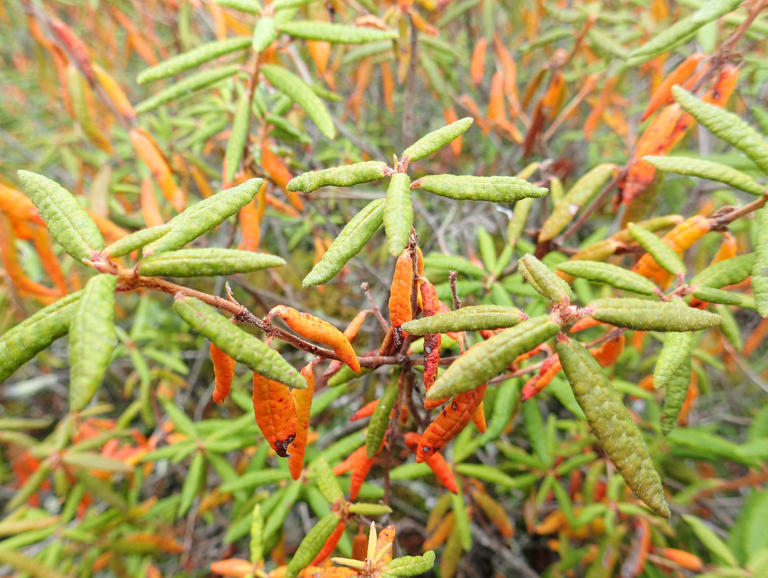
Labrador Tea is one of the boreal plants that are classified as pests or weeds. The plant is important to Indigenous communities for its healing properties.© (J. Baker)

Labrador Tea, fireweed, chokecherry and raspberry are some of the boreal plants that are classified as weeds by the Canadian Weed Science Society. These plants are targeted with herbicide by logging companies across the Canadian boreal forest.

However, these boreal plant species are important traditional plants for many Indigenous peoples in Canada and around the world. In addition to their use as food, these traditional native plants hold tremendous medicinal, ceremonial and material value.

This article is part of La Conversation Canada’s series The boreal forest: A thousand secrets, a thousand dangers

La Conversation Canada invites you to take a virtual walk in the heart of the boreal forest. In this series, our experts focus on management and sustainable development issues, natural disturbances, the ecology of terrestrial wildlife and aquatic ecosystems, northern agriculture and the cultural and economic importance of the boreal forest for Indigenous peoples. We hope you have a pleasant — and informative — walk through the forest!

These plant species thrived before the arrival of Europeans and are respected and cared for by Indigenous communities, in ways that help increase biocultural diversity.

As a cultural and environmental anthropologist, I have been working for and with First Nations communities in the boreal forests in Alberta since 2006. In my recently published paper, I reveal how the misappropriation of these plants from traditional territories is grounded in a colonial bias for the economic value of plants.

Boreal forests under threat


Over recent decades, boreal forests in Canada have been facing numerous threats, including attempts to extract plants for economic gain or eradicate them using herbicides.

The issue lies in what gets referred to as “merchantable timber” versus the abundance of boreal forest plants that cover the ground below the trees.

When government agencies and logging companies follow their Duty to Consult First Nations, they tend to overlook expressed concerns about the destruction of traditional plants that grow in abundance.

For example, balsam and aspen poplar trees, birch trees, Labrador Tea, blueberries and wild mint are all plants that grow in abundance in the boreal forest that have high cultural value.

In the consultation process, when an Elder or community member identifies these plants for protection, company representatives often respond saying that these plants grow throughout the forest, so their destruction has no significant impact on inherent rights protected by treaty.
This outside ruling can affect First Nation members’ access to their particular familial stewardship area.

The loss of access to seemingly abundant plants is exacerbated by the use of the herbicide glyphosate in the reforestation process, and along roads, pipelines and power lines.

Plants with great nutritional and medicinal value like Labrador Tea are sprayed so that they do not compete with monocropping reforestation practices that focus on timber. This reflects a bias toward merchantable timber rather than a biodiverse and healthy forest.
Boreal destruction impacts Indigenous communities

When people lose their collecting areas, they have to search larger areas for the same plants, request access in other people’s areas and risk collecting plants contaminated by volatile organic compounds, heavy metals or herbicides.

Research in the boreal forest has revealed that glyphosate remains in plant tissues for at least a decade. The communities I collaborate with during my research continue to be very concerned about the use of herbicides in their territories, and with reason.


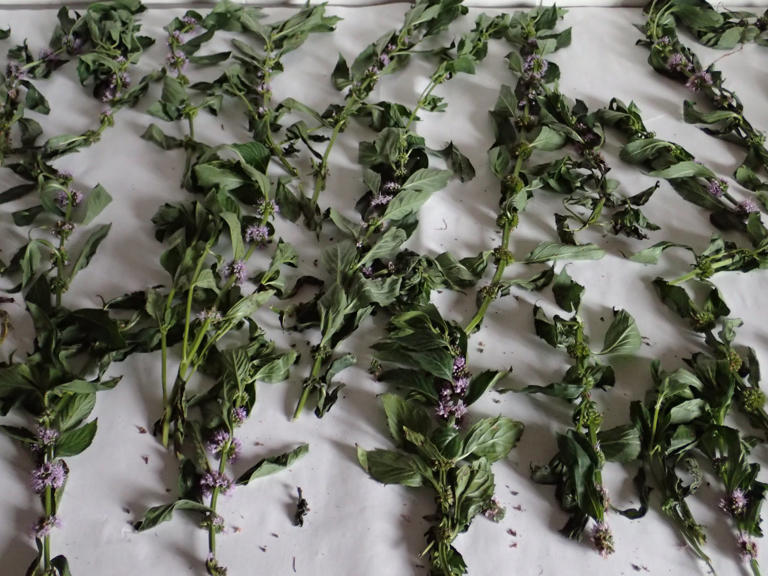
Wild mint — used as food and medicine — from the boreal forest laid out to dry.© (J. Baker)

Elders from First Nations communities are also concerned about the impacts of bioaccumulation — the gradual accumulation of substances such as pesticides or other chemicals through the food chain. These concerns are based on Elders’ own systems of natural law, oral traditions and enacting respect and reciprocity in the forest.

Reconciliation includes plant species


As Canada attempts to reconcile with Indigenous communities through the Truth and Reconciliation Commission of Canada Calls to Action, the recognition of species of traditional value is critical in this process.

Calls to Action for improvements in Indigenous-centred education, youth programs, language and culture, and health supports are connected to people’s abilities to participate in land-based activities. Plant species must be available for these activities to be possible.

The availability of these species means that they need to be respected and conserved based on Indigenous approaches and ecological knowledge.

Not caring for plant species in the context of Indigenous natural legal systems ignores the ancient and ongoing stewardship by Indigenous Peoples living within the boreal forests. Ignoring native species results in the continued misappropriation of traditional territories, one plant at a time.


This article is republished from The Conversation, a nonprofit news site dedicated to sharing ideas from academic experts.


Read more:

Longer growing seasons have a limited effect on combating climate change

Janelle Marie Baker receives funding from ECCC, the Arctic Connections Fund, CIHR, SSHRC, NSERC, and Athabasca University.

Ecuador’s youngest and richest elected president faces a practically impossible task


Ecuador’s youngest elected president faces a practically impossible task

QUITO, Ecuador (AP) — Ecuador 's youngest elected and richest president on Monday faced the practically impossible task of reducing a terrifying, drug-driven crime wave within a greatly shortened 1.5 years in office.

Daniel Noboa, 35, is the son of Ecuador’s richest man thanks to a global empire built on bananas — Ecuador’s main crop.

His voters were, among other things, frightened by the escalation of drug violence over the past three years. Killings, kidnappings, robberies and other criminal activities have become part of everyday life, leaving Ecuadorians wondering when, not if, they will be victims.

The spike in violence is tied to the trafficking of cocaine produced in neighboring Colombia and Peru. Mexican, Colombian and Balkan cartels have set down roots in Ecuador and operate with assistance from local criminal gangs.

Presidential candidate and anti-corruption crusader Fernando Villavicencio was assassinated in August. Since then, other politicians and political leaders have been killed or kidnapped, car bombs have exploded in multiple cities, including the capital, Quito, and inmates have rioted in prisons. Earlier this month, seven men held as suspects in Villavicencio’s slaying were killed inside prisons.

To fight the crime, Noboa made proposals ranging from turning ships into floating jails to getting police more gear.

But he has less than half of a regular presidential term to meaningfully address the rise in crime, which this year has already tallied more than 4,900 violent deaths.

Policies that do not address social issues could have a temporary impact on crime statistics but not reduce the poverty-stricken communities where criminal organizations find soldiers, experts say.

“A period of 18 months is factually short to be able to meet the campaign promise to fundamentally reduce the homicide rate and minimally solve the fundamental problem at the moment, even in democratic terms, which is insecurity,” said Jorge Vicente Paladines, a criminal-justice expert and professor at the Central University of Ecuador in Quito.

With nearly all votes counted, electoral officials said Noboa had just over 52%, compared to nearly 48% for Luisa González, an ally of exiled former President Rafael Correa. González conceded defeat during a speech before supporters in which she also urged Noboa to fulfill his campaign promises.

In getting elected, Noboa managed to do what his father failed at five times and he said that he will immediately begin to work to “rebuild a country that has been seriously hit by violence, corruption and hatred.”

The incoming president’s term will run through May 2025, what remains of the tenure of President Guillermo Lasso. Lasso cut his term short when he dissolved the National Assembly in May as lawmakers pursued impeachment proceedings against him over alleged improprieties in a government contract.

Noboa opened an event organizing company when he was 18 and then joined his father’s Noboa Corp., where he held management positions in the shipping, logistics and commercial areas. His political career began in 2021, when he got a seat in the National Assembly and chaired its Economic Development Commission.

His father, Álvaro Noboa, unsuccessfully ran for president five times.

The younger Noboa’s party will not have have enough seats in the National Assembly to be able to govern on its own. Garnering support from opposing lawmakers will be key to avoid the difficulties that plagued Lasso’s term.

Lasso, a conservative former banker, clashed constantly with lawmakers after his election in 2021 and decided not to run in the special election. On Sunday, he called on Ecuadorians to have a peaceful election and think about what is “best for their children, their parents and the country.”

Under Lasso’s watch, violent deaths soared, reaching 4,600 in 2022, the country’s highest in history and double the total in 2021.

“I don’t expect much from this election,” Julio Ricaurte, a 59-year-old engineer, said Sunday near one of the voting centers in northern Quito. “First, because the president will have little time to do anything, and second because the (National) Assembly in our country is an organization that prevents anyone who comes to power from governing.”

Noboa and González advanced to the runoff by finishing ahead of six other candidates in the election’s first round on Aug. 22.

González was unknown to most voters until the party of Correa, her mentor, picked her as its presidential candidate. She held various government jobs during Correa’s decade-long presidency and was a lawmaker from 2021 until May.

At the start of the campaign, she said Correa would be her adviser, but she recently sought to distance herself a bit in an effort to court voters who oppose the former president, who remains a major force in Ecuador despite being found guilty of corruption in 2020 and sentenced in absentia to eight years in prison. He has been living in his wife’s native Belgium since 2017.

Rosa Amaguaña, a 62-year-old fruit and vegetable vendor, said Sunday that safety “is the first thing that must be solved” by the next president.

“I’m hopeful the country will change,” Amaguaña said. “Yes, it can. The next president must be able to do even something small.”

___

Garcia Cano reported from Caracas, Venezuela.

Regina Garcia Cano And Gonzalo Solano, The Associated Press


Graz University of Technology study on e-scooter accidents: more helmets and less speed reduce the injury risk


A team from the Vehicle Safety Institute at TU Graz has used Human Body Models to investigate accidents involving electric scooters and identified the most important factors for preventing serious injuries


Reports and Proceedings

GRAZ UNIVERSITY OF TECHNOLOGY

The project SURF team (from left): Martin Schachner, Desiree Kofler, project leader Christoph Leo and research team leader Corina Klug from the Vehicle Safety Institute at TU Graz 

IMAGE: 

THE PROJECT SURF TEAM (FROM LEFT): MARTIN SCHACHNER, DESIREE KOFLER, PROJECT LEADER CHRISTOPH LEO AND RESEARCH TEAM LEADER CORINA KLUG FROM THE VEHICLE SAFETY INSTITUTE AT TU GRAZ.

view more 

CREDIT: LUNGHAMMER - TU GRAZ


The use of e-scooters has increased significantly in recent years, but so has the number of accidents involving this relatively new form of transport. At the same time, knowledge about injury mechanisms in this area was still very limited. In the project SURF, funded by Zukunftsfonds Steiermark, the Vehicle Safety Institute at Graz University of Technology (TU Graz) investigated this topic using Human Body Models and derived recommendations to reduce the injury risk in e-scooter accidents.

Put on a helmet, decrease speed and get off the pavement

As is also the case for other groups of vulnerable road users, the study found that when riding an e-scooter, a helmet can reduce the risk of head injuries drastically – in this case by up to 44 percent. It also showed that a ban on e-scooters on pavements and footpaths makes sense. The simulations showed that collisions with pedestrians often result in serious injuries. In addition to the ban, a speed limit would bring more safety in this regard – the same applies to single e-scooter accidents. For example, the risk of head injuries to pedestrians is reduced by up to 49 percent when the collision speed is reduced from 25 km/h to 15 km/h. In contrast, in collisions with passenger cars, it is mainly the speed of the car that plays a major role in the level of injury risk. Collisions with cars travelling at 40 km/h can cause severe to fatal head injuries to e-scooter riders.

A reduction in the maximum permitted speed of e-scooters would also benefit unexperienced drivers. As part of the study, there were experiments with volunteers in which the driving behaviour of the e-scooter riders was examined in order to determine their riding pose for simulations with Human Body Models. This showed that even unexperienced drivers often rode at the top speed of their e-scooters, although they were still very unsafe on the road.


The simulation of a crash between an e-scooter and a car.

CREDIT

VSI - TU Graz

From literature analysis to simulation

In order to obtain realistic results for the study, the team led by project manager Christoph Leo, research group leader Corina Klug, project assistant Desiree Kofler and university assistant Martin Schachner first analysed the accident events on the basis of literature, accident records and videos in order to derive boundary conditions for the simulation. Subsequently, the tests with volunteers to determine the riding pose were combined with Human Body Model simulations, which were developed with the involvement of the Vehicle Safety Institute, in order to be able to predict injuries in accidents. From this, a simulation matrix could be created that made it possible to answer the project questions.

“Because e-scooters are a very young form of mobility, we broke new ground in this project in order to be able to analyse the injury risk in e-scooter accidents. There were previously not many studies on this,” explains Christoph Leo. “However, after analysing the simulated accidents with the Human Body Models, a very clear picture emerged. Wearing a helmet and reducing the driving speed, especially around pedestrians, can prevent many serious injuries. It would be even more important that e-scooters comply with the ban on driving on pavements and footpaths. In general, the risks of this form of mobility seem to be underestimated, which is why an increasing number of injuries is expected in the coming years. You are safer in road traffic on foot or by bike and simultaneously do something good for yourself and the environment. Anyone who really needs to ride an e-scooter, please at least put on a helmet.”

This research is anchored in the Field of Expertise "Mobility & Production", one of five strategic foci of TU Graz.


New method may accurately identify body fluids at crime scenes


Peer-Reviewed Publication

WILEY


Identifying different types of body fluids can help forensic experts reconstruct a crime scene, but it’s difficult to do so. In a study published in Electrophoresis, researchers developed a method using two different types of RNA—called microRNA (miRNA) and messenger RNA (mRNA)—to determine five common body fluids.

Compared with previously reported single mRNA or miRNA assays, the combination of several mRNAs and miRNAs showed significant advantages for labeling human body fluids.

“Our findings indicate that this combined mRNA and miRNA system may provide a scientific reference for RNA-based body fluid identifications,” the authors wrote.

URL upon publication: https://onlinelibrary.wiley.com/doi/10.1002/elps.202300059


Additional Information
NOTE: 
The information contained in this release is protected by copyright. Please include journal attribution in all coverage. For more information or to obtain a PDF of any study, please contact: Sara Henning-Stout, newsroom@wiley.com.

About the Journal
Electrophoresis is an international separation science journal serving as the premier forum for advances in electrophoresis, liquid-phase separations, microfluidics and electrokinetics. We cover both fundamental aspects as well as innovative industrial and clinical applications linked to separation science, welcoming advances in sample preparation, methods, and analysis.

About Wiley
Wiley is a knowledge company and a global leader in research, publishing, and knowledge solutions. Dedicated to the creation and application of knowledge, Wiley serves the world’s researchers, learners, innovators, and leaders, helping them achieve their goals and solve the world's most important challenges. For more than two centuries, Wiley has been delivering on its timeless mission to unlock human potential. Visit us at Wiley.com. Follow us on FacebookTwitterLinkedIn and Instagram.


Can planting multiple crops in the same plot improve agricultural production and sustainability?


Peer-Reviewed Publication

WILEY


Agricultural management has typically focused on increasing yields, but there is an increasing need for sustainable food production that limits negative impacts on the environment. A new study published in Grassland Research provides insights into the potential benefits of diversifying agricultural practices, revealing how different mixtures of plant species can improve production, quality, and conservation.

For the study, investigators planted multiple species in different grassland plots, manipulating plant species richness from one to six species spanning three functional groups (legumes, herbs, and grasses). Certain mixtures led to increases in plant productivity and invasion resistance. Also, different plant species drove different functions, with legumes and herbs benefiting plant productivity and water availability, and grasses improving invasion resistance. Legumes were also highly beneficial for maintaining soil nitrogen.

“While the specific plant species and functional groups used in the study may vary across regions, the concept of using multispecies mixtures to enhance multifunctionality and promote both production and biodiversity can be applicable in various agricultural contexts around the world,” said corresponding author Laura Argens, a PhD student at the Technical University of Munich, in Germany.

URL upon publication: https://onlinelibrary.wiley.com/doi/10.1002/glr2.12060


Additional Information
NOTE: 
The information contained in this release is protected by copyright. Please include journal attribution in all coverage. For more information or to obtain a PDF of any study, please contact: Sara Henning-Stout, newsroom@wiley.com.

About the Journal
Grassland Research publishes excellent and novel research to foster scholarship in grassland science. "Grassland" encompasses rangeland, including forest rangeland; sown pasture; and amenity and turf grasses. Grassland Research is to be comprised of three sections: rangeland; forage, turf, and bioenergy crops; ecosystems. 

About Wiley
Wiley is a knowledge company and a global leader in research, publishing, and knowledge solutions. Dedicated to the creation and application of knowledge, Wiley serves the world’s researchers, learners, innovators, and leaders, helping them achieve their goals and solve the world's most important challenges. For more than two centuries, Wiley has been delivering on its timeless mission to unlock human potential. Visit us at Wiley.com. Follow us on FacebookTwitterLinkedIn and Instagram.


Reef-devouring predator survives coral bleaching and feasts on the survivors


The crown-of-thorns starfish is nature’s ultimate coral predator that has a circle of life perfectly adapted to warming waters


Peer-Reviewed Publication

UNIVERSITY OF SYDNEY

Coral cycle of life with crown-of-thorns starfish 

VIDEO: 

LIFE CYCLE OF CORAL WITH CROWN-OF-THORNS STARFISH. BEGINNING WITH HEALTHY CORAL, HEATWAVE EVENTS INDUCE CORAL BLEACHING, CAUSING CORAL DEATH AND ALGAL COLONISATION. CORALS THEN COLLAPSE AND CREATE RUBBLE HABITAT FOR JUVENILE CROWN-OF-THORNS, WHICH CAN TOLERATE THE THERMAL STRESS AND BUILD UP IN NUMBERS UNTIL THE REEF REGROWS AND THE JUVENILES EMERGE TO EAT THE NEW CORAL.

view more 

CREDIT: UNIVERSITY OF SYDNEY, BYRNE ET AL.


Research conducted by marine biologists from the University of Sydney has found juvenile crown-of-thorns starfish can withstand tremendous heatwaves well above levels that kill coral. These starfish then develop into carnivorous predators that devour reefs just as they begin to regrow.

Crown-of-thorns starfish are native to the Great Barrier Reef and found in the Indo-Pacific region, but they are classified as a species of concern because the damage large populations cause to coral is more significant than any other species. They fall behind only cyclones and bleaching events in their impact on coral mortality.

New findings suggest the species’ resilience to warming waters could exacerbate the ravaging effect climate change has on coral reefs.

The research is published in the journal Global Change Biology, led by Professor Maria Byrne from the School of Life and Environmental Sciences. She is also a member of the Marine Science Institute and Sydney Environment Institute.

Over the course of the experiment, juvenile crown-of-thorns displayed a surprisingly high heat tolerance, higher than that observed in their adult counterparts. This means that, even if the coral-eating adult stage declines in climate change-driven ocean warming scenarios, perhaps from a lack of their coral prey or from the heat, their herbivorous young can wait patiently for the opportune moment to grow into carnivores.

Coral bleaching and death can be triggered when waters warm by 1-3 degrees Celsius above the normal summer maximum, depending on how long the temperature lasts.

“We found juvenile crown of thorns starfish can tolerate almost three times the heat intensity that causes coral bleaching, using a model that measures temperature over time,” Professor Byrne said.

“This is an important finding that has implications for understanding the impacts of climate change on marine ecosystems, especially the influence of understudied small cryptic species.

“Juveniles might well benefit from warming waters. The increase in the amount of their rubble habitat, generated by coral bleaching and mortality, allows their numbers to build over time.”

The crown-of-thorns starfish is nature’s ultimate coral predator, with a circle of life perfectly adapted to warming waters.

During outbreaks of their carnivorous adult phase, crown-of-thorns starfish dine pervasively on stony coral, leaving lifeless skeletons across the reef. These skeletons eventually become home to algae before crumbling. Bleaching induced coral mortality has a similar effect.

The remains of dead coral may provide the perfect habitat for the starfish’s tiny, algae-eating offspring. According to previous research by Professor Byrne, the juveniles can survive, and wait, for at least six years for the reef to come back to life, and given the opportunity as coral recovers these juveniles can grow into coral-eating predators and start the cycle again.

“The heat resistance and potential for the juveniles to gradually build-up in the reef infrastructure in coral rubble over years might be a phenomenon contributing to the initiation of adult crown-of-thorns starfish outbreaks,” said Matt Clements, PhD student and co-author of the study.

“Loss of natural predators due to overfishing and the build-up of nutrients in the water have been suspected to contribute to outbreaks of crown-of-thorns starfish. Now we have evidence that bleaching induced coral mortality could aid the seafloor-dwelling juveniles, leading to subsequent large waves of adults in reefs which exacerbate the ravages of climate change.”

The researchers also identified factors that contribute to the juveniles’ ability to survive in warming conditions. They include small size, which may reduce physiological requirements, and their ability to feed on a variety of food sources, despite preferring a diet of coralline algae.

Young and old juvenile crown-of-thorns starfish.

CREDIT

Monique Webb, Byrne et al.


Prenatal exposure to environmental chemicals linked to childhood growth changes


New study reveals connections between endocrine disrupting chemicals exposure and children's body mass index (BMI) trajectories


Peer-Reviewed Publication

BARCELONA INSTITUTE FOR GLOBAL HEALTH (ISGLOBAL)


A new study led by researchers from the Barcelona Institute for Global Health (ISGlobal), a centre supported by the ”la Caixa Foundation” has shed light on the influence that Endocrine-Disrupting Chemicals (EDCs) can have on children's growth during their early years. The results, published in Environmental Health Perspectives, show that prenatal exposure to some of these environmental chemicals and their mixtures is linked to accelerated Body Mass Index (BMI) gain from birth to nine years old.

The study, involving 1,911 mother-child pairs from the Project INMA birth cohort in Spain, focused on assessing exposure to a wide range of Endocrine-Disrupting Chemicals. These chemicals are found in our diet and in everyday products like plastics, personal care items, and pesticides and include Persistent Organic Pollutants (POPs), Perfluoroalkyl Substances (PFASs), Polychlorinated Biphenyls (PCBs), phthalates and phenols (including parabens and bisphenol A).

The research team measured the concentrations of these chemicals in urine and blood samples collected from pregnant women. Subsequently, they measured the BMI of the children over time. BMI is a measure that combines a child's height and weight and is commonly used to assess weight status and obesity.

The statistical analysis showed that prenatal exposure to specific POPs, including Hexachlorobenzene (HCB) and Dichlorodiphenyldichloroethylene (DDE), as well as certain PFASs, can significantly alter a child's BMI trajectory. These alterations are characterized by either lower birth size followed by accelerated BMI gain or higher birth size with accelerated BMI gain.

One of the main novelties of the study is that, in addition to studying individual chemicals, the researchers also conducted a mixture analysis. This involved examining how a combination of different EDCs might impact children's growth, which offers a more realistic representation of how humans are exposed to EDCs. This approach showed that the mixture of EDCs was associated with an increased risk of children belonging to a trajectory of accelerated increase in BMI, with HCB, DDE and PCBs being the main contributors to this mixture effect.

Parisa Montazeri, ISGlobal researcher and first author of the study, commented, "Our findings underscore the potential impact of early-life chemical exposures on childhood growth patterns, which can have long-term implications for health. Understanding these relationships is crucial for informing public health efforts aimed at preventing childhood obesity and its related health consequences.”

“These revelations are of significant public health interest, as accelerated growth during childhood has been linked to various health issues during childhood and in later life, including obesity, cardiovascular diseases, and diabetes”, says Martine Vrijheid, head of ISGlobal’s programme on Environment and Health over the Lifecourse and senior author of the study.

The study's authors emphasize the need for more research to assess the health implications of prenatal environmental chemical exposure over the course of a child's life. Understanding these connections is crucial for informing policies and interventions aimed at reducing the health risks associated with exposure to harmful chemicals during pregnancy.

Phthalates and brain volumetric measures

Another recent study coordinated by ISGlobal found an association between exposure to phthalates in pregnancy and smaller volumetric measures in certain parts of the brain and lower IQ in children. The research, published in Molecular Psychiatry, suggested that those children whose mothers had a higher exposure to certain phthalates during pregnancy tend to show smaller total gray matter in their brains when they reach the age of 10. The researchers also found that maternal exposure to plasticizers during pregnancy is associated with lower child IQ at age 14.

Phthalates are a group of endocrine-disrupting chemicals which are ubiquitously used as plasticizers and solvents in a wide range of commercial products.

Reference

Parisa Montazeri, Nuria Güil-Oumrait, Sandra Marquez, Lourdes Cirugeda, Andrea Beneito, Mònica Guxens, Aitana Lertxundi, Maria-Jose Lopez-Espinosa, Loreto Santa-Marina, Jordi Sunyer, Maribel Casas, Martine Vrijheid. Prenatal exposure to multiple endocrine disrupting chemicals and childhood BMI trajectories in the INMA cohort study, Environmental Health Perspectives, 107006-11 131(10), October 2023.  doi:10.1289/EHP11103