Saturday, October 05, 2024

Latin America: Uncovering the hidden human workforce behind AI

Illustration: Image generated with generative artificial intelligence program Midjourney by Colombian Prompt Image Generator engineer David Orjuela

This is an extract of an article by María Camila Botero Castro, Francisca López Molina, and  Johan Alexander Sanabria Restrepo, first published on Distintas Latitudes on May 26, 2023. Global Voices republished this article as part of a media partnership agreement.

The impact of artificial intelligence (AI) on humanity is beyond dispute. From automating repetitive tasks to developing self-driving vehicles, AI has proven its ability to transform how we live and work. However, it has also raised serious questions about the future of jobs, privacy, and ethics.

The text above was initially written by Chat GPT, a large language model that the US AI organization OpenAI developed to generate coherent responses in a matter of seconds. But how exactly does this seemingly magic tool work?

AI platforms are data-fueled. The more data they have, the more accurate the output will be. And this doesn’t just mean one or two datasets, but billions! For Chat GPT to write the first paragraph of this article alone, it had to refer to 175 billion data variables. However, the dilemma here is who provides this data and under what conditions.

‘Ghost work’

Álvaro Montes, the director of Colombian Artificial Intelligence content at Prisa Media, explained that, for AI to work as we know it, it must first receive human training. This work, known as data labeling, involves analyzing and classifying information so the AI algorithm can learn from it. The most common tasks are voice and image recognition, text transcription, and word dictation.

According to Montes, “artificial intelligence platforms don’t think like humans do but use mathematical ‘reasoning’ instead. These platforms compare pixels, edges, and eye shapes.” For example, they must have first seen millions of photos of cats and dogs to differentiate between these two animals.

Allan González is one of those who have contributed to this sea of information, making artificial intelligence intelligent. For a year and a half (from 2019), he worked for the micro-task platform Spare5, analyzing images of streets, avenues, road signs, and pedestrians to train self-driving vehicles.

“It was a bit like slave labor,” he recalls.

Allan would sit in front of his computer screen all day analyzing these images. The time limit for completing each task was between five and 20 minutes. If he exceeded this time limit, he would not be paid. He thereby describes what he did as the “cheap labor fueling AI.”

Montes agreed:

This work is often done in Venezuela, Colombia, or African and Asia countries, because it is unskilled labor that doesn't require any qualifications and can be done cheaply there.

“With capitalism, everything is outsourced,” Montes added. This industry is no exception. Prominent Silicon Valley developers often subcontract data labeling tasks to companies that subsequently subcontract other companies to complete these tasks. Outsourcing hinders unionization, making it challenging to end unethical practices and demand better working conditions.

According to an investigation by the bimonthly magazine MIT Technology Review, “by mid-2018, an estimated 200,000 Venezuelans had registered for micro-task platforms like Spare5 and Hive Micro, accounting for 75 percent of their respective workforces.”

The workers at these companies mostly come from countries in the global majority. All testimonies on the Remotasks platform are from Kenya, Vietnam, the Philippines, and Venezuela.

According to DignifAi, a US company based in Colombia offering data labeling services, the other Latin American countries providing the most workers besides Venezuela are Colombia, Argentina, Panama, and Chile.

These companies insist they generate employment and support their workers. However, the MIT investigation concluded that their data labelers are low-paid (approximately USD 2 per hour), receive no social benefits, and work in poor conditions without any employment guarantees.

Other specialists, such as the anthropologist Mary L. Gray and the social scientist Siddharth Suri, have warned that data labelers’ mental health also suffers due to their grueling workdays in short-term jobs with high turnovers.

Although Allan didn't face any traumatizing images, he did carry out other exhausting tasks, both mentally and physically.

I’d say: “Clicking away on this computer is mind-numbing stuff.” The work is tremendously repetitive and offers no growth whatsoever.

“Given the challenging circumstances in Venezuela at that time,” Allan decided to take up data labeling since the pay was in USD. He received between 50 cents and USD 1 per task, depending on the task’s difficulty. Even so, he earned more than his country’s average salary. He said:

At that time, Venezuela’s monthly salary was 30 USD. So, I could earn what others earned in a month in one day alone.

For all these reasons, the MIT investigation also concluded that data labeling is not a reliable source of employment but another form of labor exploitation. It even states that “AI is creating a new colonial world order.”

How can we improve the working conditions of data labelers’?

Nevertheless, some companies claim to provide different working conditions. One such company is DignifAI, which mainly employs Venezuelan migrants and Colombians who used to live in Venezuela.

According to María Garcés, who at the time of this interview was head of operations at DignifAI, one of the guarantees they give their employees is a “decent salary.”

“If you look at the labeling industry statistics, you’ll see the salaries are below USD 1 per hour. We wanted to do things differently, and depending on the task, our salary is between USD 2 and USD 20 per hour.” She explained that DignifAI “always pays at least 30 percent above the minimum monthly salary of Latin American countries” but does not pay its labelers social benefits.

DignifAI projects range from content moderation to sentiment and toxic language analysis, tasks María describes as “very common in artificial intelligence. Here, you often have to look at striking images or read racist and homophobic texts.”

To reduce the negative impact on their mental health, María says that DignifAI provides psychological support for their employees, who also have social workers at their disposal. She also says they train them in other areas, such as digital marketing, entrepreneurship, community management, and professional and personal finances.

Ingrid Hernández is an employee at this company. She joined as a data labeler in late 2022 before becoming a text-based sentiment analysis project supervisor in February 2023. Before taking on this job, Ingrid was a language and literature teacher in Venezuela. However, the situation in her home country forced her to migrate to Colombia for better opportunities.

Although Ingrid has been unable to practice her profession directly, she has applied some of her knowledge to the text analyses at DignifAI. She is thereby satisfied with her working conditions.

You only work four hours a day and, at least in the case of data annotators, earn more than you would anywhere else on a part-time basis.

For María, all labeling companies must improve their annotators’ financial conditions.

The industry is waking up to the ethics of artificial intelligence now that they are in the spotlight. Now is the time to be vocal and raise awareness about the lives of those at the bottom of the social ladder so that the necessary changes can take place.

Although Álvaro Montes agrees, he believes the real problem is that Latin America is a region passively observing the Fourth Industrial Revolution. He said:

The challenge involves more than resolving the employment situation of the Venezuelan migrants labeling photos. Of course, this is only right, but we must step out of the consumer role to become the Thor of technology.

He believes doing so would resolve the underlying problem by creating skilled jobs that would contribute to the region’s growth.

Do we want to be a continent that develops technology and has many engineers, technicians, technologists, mathematicians, and scientists? Or do we want to be well-paid pizza delivery drivers and data labelers?

For Montes, the answer lies in strengthening innovation and ensuring technological sovereignty by becoming technology producers instead of importers.


 

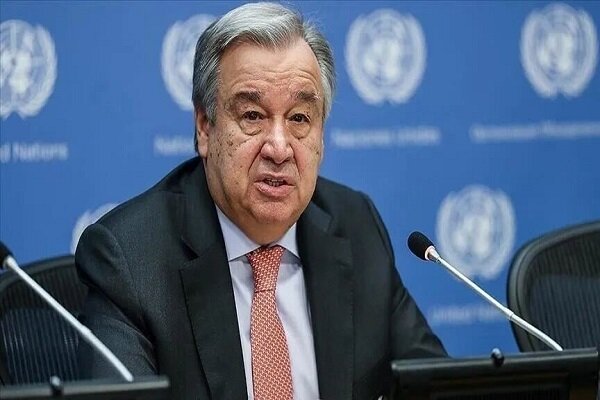
UN Sec Gen to participate in BRICS summit in Russia's Kazan

UN Sec Gen to participate in BRICS summit in Russia's Kazan

TEHRAN, Oct. 05 (MNA) – Russia has sent an invitation to UN Secretary-General Antonio Guterres to attend the upcoming BRICS summit in the city of Kazan, said Vladimir Kuznetsov, head of the UN information center in Moscow.

"Russia has sent an invitation to the UN secretary-general to take part in the expanded session of the BRICS summit. In accordance with the current practice, announcements of his participation in international events are made by his spokesperson at the UN headquarters," Vladimir Kuznetsov told reporters during the opening ceremony of the Kazan Dialogues project, TASS reported.

According to Kuznetsov, the UN expects that important agreements will be reached at the summit and that it will "give the necessary forward momentum to ensure that the goals set out in the 2030 Agenda for Sustainable Development, all 17 goals, are implemented and make life on the planet more prosperous and safe."

Russia took over the one-year rotating BRICS presidency on January 1, 2024. It includes more than 200 events on a wide range of issues. The main highlight of the Russian presidency will be the BRICS summit set to be held in Kazan on October 22-24.

SD/

US asks immigrants from 4 countries to leave when their 2-year permits under 'parole program' expires

Immigrants from Cuba, Haiti, Nicaragua, and Venezuela under special US parole program must leave when their two-year permits expire unless they find another legal way to stay, reports media

Seda Sevencan |05.10.2024 -TRT/AA


ISTANBUL

Immigrants from Cuba, Haiti, Nicaragua, and Venezuela who entered the US through a “parole program” must leave the country when their two-year permits expire if they do not secure another legal way to stay, the Biden administration announced on Friday.

According to the Washington Post, the Department of Homeland Security (DHS) said the program, introduced during President Joe Biden's term, aimed to reduce illegal border crossings.

The initiative allowed people from these nations to apply for parole and enter the US legally on commercial flights. Officials say the effort has been successful, with illegal crossings dropping 99% since it began in 2022 for Venezuelans and 2023 for the other nationals.

“This two-year period was intended to enable individuals to seek humanitarian relief or other immigration benefits for which they may be eligible, and to work and contribute to the United States,” the Department of Homeland Security said.

Anyone who has not applied for asylum or another status “will need to depart the United States prior to the expiration of their authorized parole period or may be placed in removal proceedings after the period of parole expires,” the department said.

An official familiar with the program told the daily that only a small percentage of participants are likely at risk of losing their parole status after two years. If referred for deportation, these people could face years of delays in the heavily backlogged US immigration courts.

Despite the upcoming expiration deadlines, the parole program will continue to admit up to 30,000 new applicants per month, according to officials.

UK

Kate Hudson: my time at CND


“The history of CND is the history of post­ World War II, told from the side of those fighting for humanity against the horror of war. It is the story of ordinary people’s struggles to shape a world without nuclear weapons and war, based on legality and morality” – Kate Hudson

CND General Secretary Kate Hudson retires at the end of this month. Here she looks back on her time with CND.

I accepted nomination as a vice-chair of CND in the summer of 2001. Little did I know that just days before my election, the terrible attacks of 9/11 would take place: the ‘War on Terror’ followed, and the build-up to the war on Iraq. It was a baptism of fire, travelling around the country to meetings virtually every evening. But I drew strength from the enormous love and support from CND members, and the unity that has been a constant throughout my time with CND.

The years that have followed, as Chair from 2003, and as General Secretary from 2010, have been a roller coaster – the Iraq war, Trident replacement, missile defence, NATO, nuclear power, ‘low yield’ nuclear weapons, nuclear ‘use’ policies, the climate emergency, the Ukraine war, the genocide on Gaza… the challenges have been endless. But that has always been the case for our movement.

The greatest lesson that I have learnt is that CND is most effective when we work in alliance with others, united across the movements, embracing diversity and engaging internationally. And above all I value CND’s democracy, the fact that it is a member-led organisation making its own political decisions, without fear or favour. And sometimes that means hard debate and discussion.

But that is our greatest strength, because only a movement open to different views can adapt and develop in an ever-changing world, and CND members are so passionate about our goals we are determined to get it right. As a result we have been able to play a leading role in virtually every peace campaign since CND was founded. Our most important asset has always been the accumulated experience of our members and I am confident that will continue. We are at our best when we relate directly to people’s most pressing concerns – linking our issues to the reality of what is going on in the world.

The history of CND is the history of post­World War II, told from the side of those fighting for humanity against the horror of war. It is the story of ordinary people’s struggles to shape a world without nuclear weapons and war, based on legality and morality; to make our governments responsive and accountable over our right to stay alive, our right to breathe air free of radioactive pollution, our right to say no to the indiscriminate killing of other peoples. We continue to make this history and I am proud to have been part of our struggle to bring our vision of the world into being.

It has been an immense privilege to serve in the leadership of CND for over two decades and I thank you all for the trust and support that you have shown me.


Doctors alarmed by changes to men’s penises around the world

JOE


Some things are too good to be true

According to new data, the UK is a nation of growers, not showers, and apparently very fast growers at that, reportedly alarming doctors.

Just two years ago the average size for a man’s piece in the UK was 5.17 inches, but since then, blokes across the UK have seen a meteoric rise in penis proportions.


As of 2024, the average now sites at 5.63 inches, while erect, a whopping 8.9% growth over two, placing our humble isles eighth in the global ranking for penis growth and 60th in the world for size.

For the time being Venezuela are still the country to beat at a colossal 6.67 inches.

However, for all the puns and seemingly good news, doctors are in fact alarmed by what appears to be a worldwide trend, affecting men globally.

A study from last year found the average penis length has increased over the past 30 years, with experts saying the discovery is “concerning”.

“Any overall change in development is concerning because our reproductive system is one of the most important pieces of human biology,” Dr Michael Eisenberg, the study’s author, told Stanford Medicine’s blog Scope.

“If we’re seeing this fast of a change, it means that something powerful is happening to our bodies.”

The Stanford University study, published in the World Journal of Men’s Health, analysed data from 75 studies, with over 55,000 men from 1992 to 2021, focusing on the length of an erect penis.

Researchers discovered the average penis size had increased 24 per cent.

Dr. Eisenberg said: “Erect penile length is getting longer, from an average of 4.8 inches to 6 inches, over the past 29 years.”


While further studies are needed to confirm the development and determine the cause, experts are surprised.

Dr Eisenberg had expected to see sizes decreasing.

“Given the trends we’d seen in other measures of men’s reproductive health, we thought there could be a decline in penile length due to the same environmental exposures,” he said.

“What we found was quite different from trends in other areas of male fertility and health,” he added.

Chemical exposure from pesticides or hygiene products, he continued, could be one of the various factors fuelling penis growth, as they can disrupt the endocrine system, which regulates hormones.

Past studies have claimed pollution is shrinking the penis, the New York Post noted.


Meanwhile, Covid was also thought to have shrunk penises.
Fox and badger snapped nose to nose in back garden

Jude Winter
BBC News, Derby
Leigh Pugh
The friendly pair were pictured eating together on Wednesday evening

An amateur photographer from Derbyshire captured the "amazing" moment a fox and a badger went nose to nose in his back garden.

Leigh Pugh, 54, managed to snap the friendly pair at his home in Matlock, Derbyshire, by setting up cameras with remote triggers that go off through the night when something enters his garden.

Mr Pugh said he had seen foxes and badgers feed close together before but "never like that".

After realising what he had snapped on Wednesday evening, Mr Pugh said: "I was really chuffed with them and it was one of them moments I never thought I’d ever capture."

He added: "It was something I will never repeat again. It was amazing to see it."

Leigh Pugh
Mr Pugh said two foxes have been coming to his garden since they were cubs

The 54 year-old, who has a passion for bird photography, decided to set up the cameras after being "mesmerised" when two fox cubs entered his garden three years ago.

Since then, Mr Pugh has placed cameras on tripods while "hoping for the best" to photograph the wildlife sneaking in while he sleeps.

He said the fox cubs had regularly come back to his house since he first saw them, with one of them being caught on camera feeding with the badger on Wednesday.

"I have decided to name them as they are quite recognisable", said Mr Pugh.

"The one without a scratch on his nose is called Echo and the one with the scratch is called Mischief.

"I am so stoked with the pictures."
"Kyrgyzstan seeks to create society, where women are actively involved in ensuring peace, security and preventing gender-based violence" - Vice Speaker of Parliament


Kyrgyzstan|foreign policy|October 5, 2024 / 

AKIPRESS.COM - During the Second Dialogue of Women of Central Asia in Bishkek, Vice Speaker of the Kyrgyz Parliament Jamilya Isayeva stressed the importance of the dialogue platform for discussing problems and joint solutions in the field of ensuring and enhancing women’s rights.

"Since its foundation, the Dialogue of Women of Central Asia has provided us with an opportunity to discuss and find common ground for supporting women in the region and today’s conference "Women, Peace and Security" is no exception. The second session is also chosen for a reason, as the issue of "Women, peace and security" is a key issue, which was first included on the agenda of the Security Council in 2000 when UN Security Council resolution 1325 on Women, Peace and Security was adopted," she said.

Isayeva referred to measures taken by the Kyrgyz Republic in this direction, stressing that national legislation provides equal rights and opportunities for women in political and public life.

"In August 2024, President Japarov signed the Law "On the amendment of some legislative acts of the Kyrgyz Republic in the field of security and protection of family from sexual and gender-based violence," she said.

The document aims to provide comprehensive assistance to survivors of violence, according to her.

Concluding her speech, the Vice Speaker of the Parliament once again stressed the desire of Kyrgyzstan to create a society, where women are actively involved in ensuring peace, security and preventing gender-based violence.
Palestinian cultural heritage brought to light in Switzerland

Artefacts from Gaza are being displayed in Geneva as Israel's war on the besieged enclave nears its first anniversary.


AFP

A visitor walks past a lintel in two fragments (Mamluk period, 13th-15th century) discovered in the Zeytoun district in Gaza City, during "Heritage in Peril" at the Art and History Museum in Geneva on October 3, 2024. / Photo: AFP


Archaeological treasures from Gaza are going on display in Geneva, with the Swiss city protecting the heritage of a territory devastated by a year of war.


Amphoras, statuettes, vases, oil lamps and figurines are among the 44 objects unearthed in Gaza going on show in the "Patrimony in Peril" exhibition at the Museum of Art and History (MAH).


"It's a part of Gaza's soul. Its identity, even," Beatrice Blandin, the exhibition's curator, told AFP. "Heritage is really the history of this strip of land, the history of the people who live there."


The artefacts are from a collection of more than 530 objects that have been stored in crates in a secure warehouse in Geneva since 2007, unable to return to Gaza.


The exhibition, which runs from Saturday until February 9, also includes artefacts from Sudan, Syria and Libya.

It was staged to mark the 70th anniversary of the 1954 Hague Convention for the Protection of Cultural Property in the Event of Armed Conflict.


Cultural damage in Gaza


The exhibition looks at the responsibility of museums in saving such property from damage, looting and conflict, reminding visitors that deliberately destroying heritage is a war crime.

"The forces of obscurantism understand that cultural property is what is at stake for civilisation, because they have never stopped wanting to destroy this heritage, as in Mosul," said Geneva city councillor Alfonso Gomez –– a reference to the northern Iraqi city captured by Daesh in 2014.


MAH director Marc-Olivier Wahler told AFP: "Unfortunately, in the event of conflict, many aggressors attack cultural heritage because it is obviously erasing the identity of a people, erasing its history. "


Thankfully, "there are museums, rules and conventions that protect this heritage".


Since Israel's invasion in Gaza began following the October 7, 2023 attack by Hamas, cultural sites in the Palestinian territory have paid a heavy price, says the United Nations' cultural organisation.


UNESCO has verified damage to 69 sites: 10 religious sites, 43 buildings of historical and/or artistic interest, two depositories of movable cultural property, six monuments, one museum and seven archaeological sites.


AFP

This photograph shows boxes of artefacts from Gaza originally kept in a secure hangar in Geneva since 2007.


Stuck in Swiss warehouse


At a time when Palestinian cultural heritage is "the victim of unprecedented destruction, the patrimonial value of the Gazan objects held in Geneva seems greater than ever", said the MAH.


Some of the objects belonged to the Palestinian Authority. The rest belonged to the Palestinian entrepreneur Jawdat Khoudary, but he later gave ownership of them to the PA in 2018.


These artefacts, evoking daily, civil and religious life from the Bronze Age to the Ottoman era, arrived in Geneva in 2006 to be shown at the "Gaza at the Crossroads of Civilisations" exhibition, inaugurated by Palestinian President Mahmoud Abbas.


They had been meant to form the foundation of an archaeological museum to be built in Gaza.


Instead, they were stuck in Geneva for 17 years, the conditions for their safe return having never been met.


Saved by circumstances


"At the time when the objects were due to leave, Hamas took over Gaza and there were geopolitical tensions between Palestine and Israel," said Blandin.


This "coincidence of circumstances," she said, ultimately saved the artefacts: the rest of Khoudary's private collection, which remained in Gaza, has been "totally destroyed" since October 7 last year.


Following a new cooperation agreement signed last September between the Palestinian Authority and Geneva, the Swiss city has committed to looking after the artefacts for as long as necessary.


The MAH also served as a refuge, in 1939 when the Spanish Republicans evacuated by train the greatest treasures from the Museo del Prado in Madrid and several other major collections.


And last year, Geneva hosted an exhibition of Ukrainian works of art.


According to the Swiss Museums Association, Switzerland, along with counterparts in other countries, has also been able to help more than 200 museums in Ukraine preserve their collections after Russia's full-scale offensive in February 2022.

SOURCE: AFP


Saudi Arabia: Over 220 employers penalised for labour violations

Authorities halt licences of 36 recruitment offices

Published: October 05, 2024 
Licenses for an additional 11 recruitment offices were revoked due to failure to meet minimum performance standards and violations of various recruitment regulations.Image Credit: Shutterstock (Representational image)

Cairo: Saudi Arabia has penalised 222 employers for violating domestic labour regulations. The violations included providing domestic workers' services to third parties, allowing them to work independently, and assigning tasks not agreed upon in advance.

The Ministry of Human Resources imposed fines on the violators, who were also stripped of their recruitment rights. Additionally, the ministry suspended the licenses of 25 recruitment offices for non-compliance with recruitment and labour service regulations, such as failing to refund clients and resolve employer-related issues.

Licenses for 11 more recruitment offices were revoked for not meeting minimum performance standards and violating several recruitment rules.

Saudi Arabia, home to 32.2 million people, hosts a large expatriate workforce. Recently, the Kingdom has focused on regulating its job market to enhance its attractiveness and competitiveness.

In August, the Saudi government approved significant labour reforms to protect contractual rights. For contracts without a specific duration, the notice period for termination is 30 days if initiated by the worker and 60 days if initiated by the employer.
Advertisement

In 2020, Saudi Arabia introduced major labour reforms, significantly improving its sponsorship system. These reforms, implemented the following year, allow job mobility and regulate exit and re-entry visas for expatriates without requiring employer approval.
THE SAHEL JIHAD

600 people shot dead within hours by Al Qaeda in Burkina Faso: Report

By HT News Desk
Oct 05, 2024


Eyewitness accounts reveal horrific scenes as the terrorism, which has surged since 2015, continues to devastate the country.


Nearly 600 people were killed within a few hours in Burkina Faso by terrorists linked to Al Qaeda, according to a report by France's top intelligence agencies. The incident took place on August 24, when the terrorists attacked Barsalogho town in Burkina Faso.

People with their belongings piled on a makeshift trailer pulled by two donkeys flee their villages amid a terror attack in Burkina Faso.(AFP)

The attack, in which most of the victims were women and children, was one of the worst in the West African country's history, which has been grappling with a terror movement waged by rebels affiliated with Al Qaeda and the Islamic State group that spilled over from neighbouring Mali in 2015.

The members of Jama'at Nusrat al-Islam wal-Muslimin (JNIM), an Al-Qaeda affiliate based in Mali and active in Burkina Faso, shot down villagers as they swept into the outskirts of Barsalogho on bikes.

While the United Nations estimated a death count of around 200, the terror group in a statement said it had killed nearly 300 "fighters". However, citing a French government security assessment, CNN reported that up to 600 people were shot dead in the attack.

Eyewitnesses describe the horrific scene as the terrorists swept into the outskirts of Barsalogho on motorcycles, shooting down villagers who were digging trenches to defend their town. Videos of the attack showed some of the villagers lying on the ground and playing dead as the attackers opened fire.

A series of coups in Mali, Burkina Faso, and Niger has led to the departure of French and American forces, creating a power vacuum that has allowed jihadist groups to thrive.


What Is Happening In Burkina Faso

The jihadist insurgency in Burkina Faso began in 2015, spilling over from neighboring Mali. The conflict has resulted in over 20,000 deaths and displaced more than 2 million people.

Back-to-back coups in Burkina Faso, in January and September 2022, were precipitated by bloody attacks by armed groups.

Also read: New Sahel bloc leaves West Africa more divided than ever

Jihadist fighters affiliated with Al Qaeda and the Islamic State group have killed more than 20,000 people in Burkina Faso since 2015 - including some 3,800 this year alone - according to the ACLED analysis group, which tracks global conflict.

The Burkina Faso government has struggled to cope with the threat, and the military has been criticized for its response.

What Survivors Say

Survivors of the attack told CNN about the trauma and horror they experienced. One survivor, who wished to remain anonymous, said, "We the survivors are no longer normal. The problem is beyond us all. The massacre started in front of me. The very first shots were fired right in front of me." Another survivor lost two family members in the attack and described the difficulty of burying the dead.

"They killed people all day long. For three days we were collecting bodies - scattered everywhere. Fear got into our hearts. At the burial time, there are so many bodies lying on the ground that burying was hard," the survivor said.

The attack has led to angry protests against Burkina Faso's junta leader, Captain Ibrahim Traore, who endorsed the construction of the trenches by civilians. The French report criticizses the government's response, stating that it "no longer has a military strategy to offer and whose propaganda discourse seems out of breath and ideas."