Friday, April 18, 2025


By 

By Ray Furlong


(RFE/RL) — There was recently talk of getting a Ukraine cease-fire in place by Easter. That hasn’t happened, but there may have been some tangible progress in diplomatic efforts to cheer hearts this weekend.

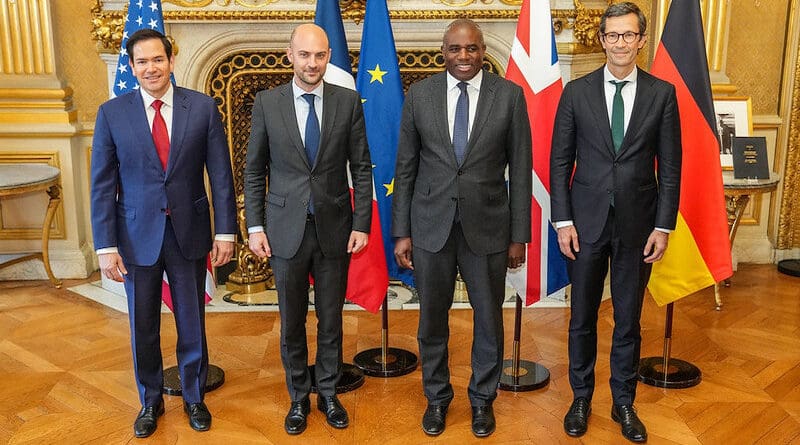
The noises coming out of Paris following high-level talks between key European countries, Ukraine, and the United States have been unusually positive.

It was the first such meeting between them in this format, and in many ways the omens were not good.

US efforts to get Russia to agree to any kind of a cease-fire have been met with vague words and increased bombing by Moscow.

US special envoy Steve Witkoff said a deal was “emerging” after his third meeting with Russian President Vladimir Putin on April 11 — hinting that Ukraine must make massive territorial concessions to Russia.


In Kyiv, Ukrainian President Volodymyr Zelenskyy accused Witkoff of “spreading Russian narratives.”

No Cameras, Please

In Paris, a 45-second video was released showing Emmanuel Bonne, a senior French adviser, apparently asking Witkoff to begin proceedings with a debrief before the camera team was hustled out by security.

It seemed as if they wanted to kick the cameras out before he said anything.

“It’s perfectly clear that most of the European leaders, including [French President Emmanuel] Macron, are fully opposed to all the proposals made, especially by Steve Witkoff,” French political analyst Nicolas Tenzer told RFE/RL.

But Tenzer, who is chairman of the Center for Studies and Research on Political Decision (CERAP), a Paris think tank, added that the meeting itself was a sign of progress.

“They are now understanding that they cannot make any kind of agreement without the Europeans,” he said.

New agreements on Ukraine were not declared. But the parties did agree that there would be more talks next week in London in the new format: Europe, Ukraine, and the United States. This seems to be a major development.

A Place At The Table

Also at the Paris talks was US envoy Keith Kellogg, who in Munich in February said Europe would not have a place at the table when Ukraine’s future was negotiated. Kellogg has himself since been largely absent from key meetings.

“The ‘E3’ are around the table and we’re doing it with a European ambition,” said a French diplomat, referring to Britain, France, and Germany collectively.

Alina Polyakova, president of the Center for European Policy Analysis (CEPA) in Washington, also said the meeting suggested that Washington was now seeking support from Europe.

“They realized that you need European input because they have skin in the game,″ she said.

’’This is not just about a swath of territory in Ukraine. This is about broader questions of European security and you can’t disentangle those.″

There were also diplomatic developments elsewhere.

While leaders gathered in Paris, US President Donald Trump was hosting Italian Prime Minister Giorgia Meloni in the White House.

He said there could be two other developments in the coming days: an agreement with Ukraine in giving the United States access to its rare earth minerals, and a response from Russia on a possible cease-fire in Ukraine.

In both cases, earlier optimistic statements from US officials have failed to bear fruit.

But the prospect of a new diplomatic track involving Europe, Ukraine, and the United States is genuinely new. The question now is whether the announced meeting in London will be the start of a fruitful new diplomatic process – or just another dead end.

  • Ray Furlong is a Senior International Correspondent for RFE/RL. He has reported for RFE/RL from the Balkans, Kazakhstan, Georgia, and elsewhere since joining the company in 2014. He previously worked for 17 years for the BBC as a foreign correspondent in Prague and Berlin, and as a roving international reporter across Europe and the former Soviet Union.

RFE RL

RFE/RL journalists report the news in 21 countries where a free press is banned by the government or not fully established.

Ukraine Hits Back After Trump's Special Envoy Says Kyiv Should Give Up Land To Putin

The US is pushing to end the Ukraine war quickly – even if that means resolving it on Russia's terms.


By Kate Nicholson
17/04/2025
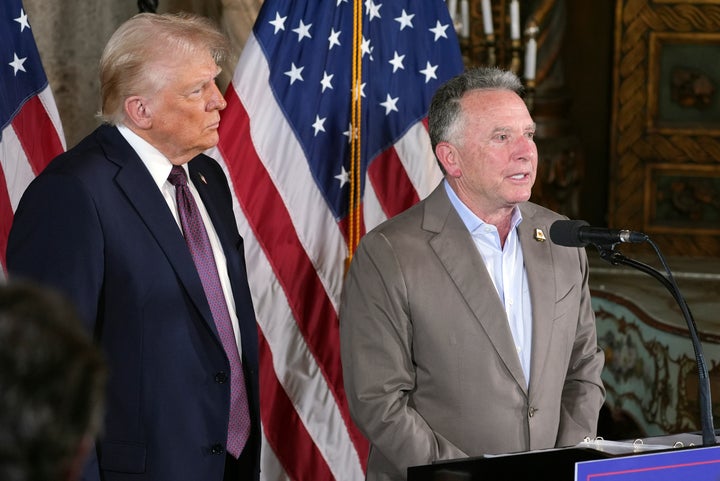
Donald Trump and his special envoy Steve Witkoff
via Associated Press


Ukraine has slapped down Donald Trump’s special envoy after he suggested Kyiv hands over five territories to Russia.

Steve Witkoff claimed a permanent peace deal with Vladimir Putin – who started the war by invading Ukraine in February 2022 – relies on officially changing the border in Moscow’s favour.

But Ukraine’s foreign ministry spokesperson, Heorhii Tykhyi, told a press briefing on Wednesday that there was no chance Kyiv would agree to such a plan.

He said: “Ukraine is a sovereign country, united within internationally recognised borders.

“This position of Ukraine is immutable and will never change. I can tell you: never.

“No matter how many years, months, it will never change. Ukraine, as it was, will be within internationally recognised borders.”

Putin seized Ukraine’s peninsula of Crimea in 2014 and took Zaporizhzhia, Luhansk, Kherson and Donetsk in 2022.

Ukraine’s president Volodymyr Zelenskyy has repeatedly made it clear he will only accept peace if Russia returns Ukraine’s borders back to those set up in 1991, after the collapse of the Soviet Union.

Notably, Witkoff – who met Putin on April 11 – did not name the territories he was referring to when he suggested Ukraine give up land to secure peace.

In March, the special envoy triggered backlash by saying: “I think the largest issue in the conflict is those so-called four regions ... Donbas, Crimea, Luhansk... and there’s two others.”

Donbas is the collective name of the region encompassing both Luhansk and Donetsk.

Tykhyi also pointed out that Ukraine has three red lines in the peace talks Trump is pushing to resolve; firstly, that Ukraine will never cede its occupied territories, that it will never agree to cap its defence or foreign aid, and that third countries will not have a choice over what unions or alliances Kyiv joins.

He said: “This all is Ukraine’s right under international law, not just a wish list.

“Russia has no right to dictate anything to Ukraine. It’s an aggression, where there’s a state that was attacked and the attacker state.

“There should be no equalising of the two.”


US's ultimatum on Russia-Ukraine peace deal: Will move on if no progress made

US Secretary of State Marco Rubio warned that peace efforts between Russia and Ukraine may be halted soon if no progress is seen.
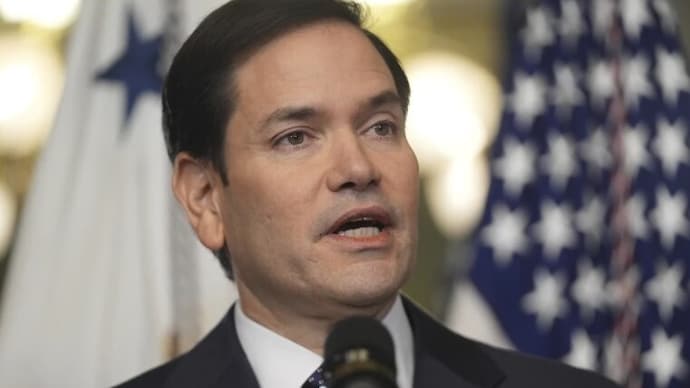


Marco Rubio warns Russia-Ukraine of abandoning peace deal

India Today News Desk
New Delhi,
Apr 18, 2025 
Edited By: Akshat Trivedi

In Short

Marco Rubio warns of deadline for peace progress

Rubio says Trump still interested but has global priorities

US seeks clear signs for deal feasibility

US President Donald Trump will walk away from trying to broker a Russia-Ukraine peace deal within days unless there are clear signs that a deal can be done, US Secretary of State Marco Rubio said on Friday.

"We're not going to continue with this endeavour for weeks and months on end. So we need to determine very quickly now, and I'm talking about a matter of days whether or not this is doable in the next few weeks. If it is we're in. If it's not, then we have other priorities to focus on as well," Rubio said in Paris, after meeting European and Ukrainian leaders.

Rubio said Trump was still interested in a deal but was willing to move on if there were no immediate signs of progress.

Trump promised during his election campaign to end the war within his first 24 hours in the White House. He moderated that claim on taking office, suggesting a deal by April or May, as obstacles mounted.

Rubio's comments underline the mounting frustrations over a lack of progress in pushes to settle a growing list of geopolitical challenges.

SYRIA

Foza Yusif:  HTS risks turning into a new Baath regime

Foza Yusif stated that the constitution and transitional government of HTS are undemocratic, warning that it will resemble the Baath regime.


ANF
ROME
Thursday, 17 April 2025

Foza Yusif, a member of the Co-Presidency Committee of the Democratic Union Party (PYD), stated that if the process initiated by Abdullah Öcalan leads to a resolution, it would eliminate the excuses Turkey has used until now. She said, “This would create a positive situation both in terms of our relationship with Turkey and in resolving the problems within Syria.”

Yusif responded to questions from ANF and noted that Hay’at Tahrir al-Sham (HTS) is currently under significant pressure from international powers. She recalled that its oppressive practices against Alawites have come to light. She pointed out that both the constitution HTS has drafted and the transitional government it has formed so far are not democratic. Foza Yusif stated: “If they continue in this way, they risk becoming a repetition of the Baath regime. We have expressed this on various platforms many times. In particular, their drafted constitution disregards the will of the Syrian people. If they insist on continuing this political line, they will be defeated just as the Baath regime was. If they intend to remain a part of Syria’s future, they must completely change their political approach and reconsider the decisions they have made so far. Their mentality and practices so far have shown no real difference from the Baath regime.”

The danger in the occupied areas remains

Yusif emphasized that one of the most critical issues they are facing is ensuring that the people of Afrin (Efrîn), Girê Spî, and Serêkaniyê can return to their lands and live there safely. She continued: “There are still militias in those regions. In some areas, the Turkish state is also present. Our people can only live safely on their land through the presence of local forces and internal security units, because the danger has not yet passed. Our condition is the withdrawal of the Turkish state and the mercenaries affiliated with it from the territories they have occupied. Only then can our people live in safety. Discussions will be held about the future of these areas. Local councils must be established, the people must govern themselves, and municipalities must be in the hands of the people. Security is the most fundamental issue, and both security and administration must be established. This is the approach we are taking.”

Our stance against the Alawite massacre is clear

Yusif stated that the massacre of Alawites had a profoundly damaging impact across all of Syria, as it sent a threatening message to all communities. She stated, “This is why we have made our position on the massacre absolutely clear. We are working to stop such massacres, to expose them, and to prevent them from happening again. We are actively pursuing this both in diplomatic channels and within the framework of international law. We are also working to provide humanitarian support to Alawite communities. In every region, people must govern themselves through their own will, and everyone’s safety must be ensured. That responsibility lies with Damascus. One of the key topics in our negotiations with Damascus is preventing such massacres from ever happening again. Those who committed the massacre must be held accountable and brought to justice. A monitoring committee has been established for this purpose. We are also following the legal developments closely. We will be observing whether justice is served and whether those responsible for the massacre are prosecuted.”

A resolution in Northern Kurdistan would impact all relations

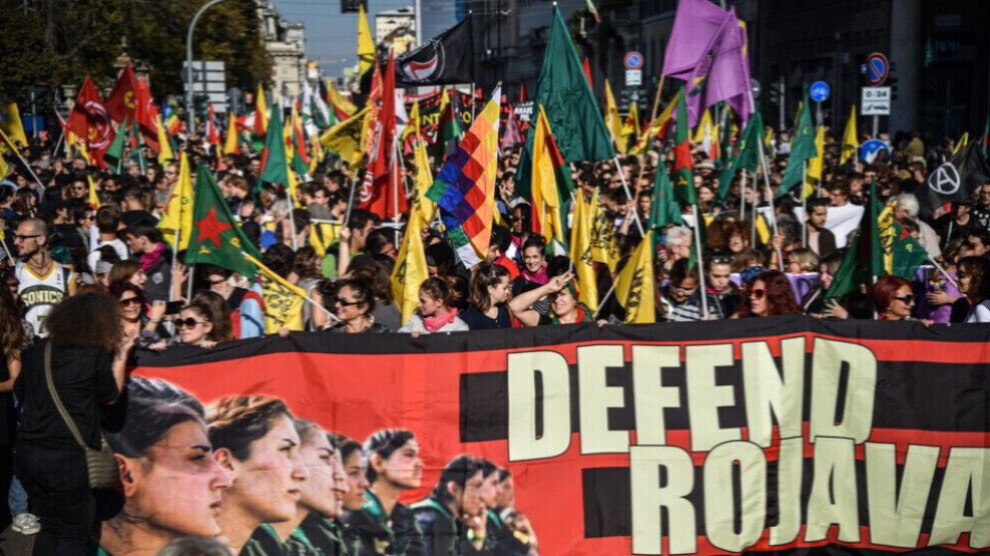
Yusif recalled that, since 2011, the Turkish state has acted as a source of instability and has supported all forces opposed to the Rojava Revolution. She added: “This is why, if the Kurdish question in Northern (Bakûr) Kurdistan is resolved through democratic means, it will undoubtedly have an impact on relations between Turkey and Rojava. It will also influence the policy that the Turkish state is pursuing in Syria. Turkey has repeatedly claimed, ‘The Kurdistan Workers’ Party (PKK) is present here, and that is why we are launching attacks.’ If a resolution is achieved, all the excuses Turkey has used until now will collapse. Therefore, if the process developed by Mr. Öcalan succeeds, it will lead to a positive outcome in terms of security, our relationship with Turkey, and the resolution of the problems in Syria.”

Ilham Ehmed: We are seeking a stronger agreement for Syria


“We are seeking a stronger agreement for Syria's constitutional process, political system and reconstruction,” said Ilham Ehmed at the 9th Sulaymaniyah Forum.


ANF
SULAYMANIYAH
Thursday, 17 April 2025

Ilham Ehmed, Co-Chair of the Foreign Relations Department of the Autonomous Administration of North and East Syria, spoke about the situation in Rojava and Syria at the 9th Sulaymaniyah Forum in southern Kurdistan (northern Iraq).

Pointing out that it will be difficult to return to the pre-2011 situation in Syria, Ehmed emphasized that diversity must be respected.

“The rights of Kurds and all other components must be guaranteed in the constitution,” she said.

Stating that the majority of the Syrian people do not want a centralized system, Ehmed said, “Syria needs new solutions to avoid the current crises.”

Underlining that the participation of all parties in the drafting of the new constitution will be important, Ilham Ehmed said, “The Syrian people have decided to fight for their freedom and dignity and will not give up their goals from now on.”

Referring to the agreement between the Autonomous Administration and the Damascus government, Ilham Ehmed said, “We are seeking a stronger agreement for Syria's constitutional process, political system and reconstruction.”

Regarding the agreement signed between SDF General Commander Mazloum Abdi and Syria's interim President Ahmed al-Sharaa, Ilham Ehmed added: “This agreement is important for the fate of the Kurdish people and other components of Syria. The agreement refutes the allegations that the Autonomous Administration is trying to secede from Syria.”

Ilham Ehmed also pointed to the obstacles facing the Autonomous Administration, saying, “These obstacles do not mean that we will take steps back. On the contrary, they strengthen our will to achieve our goals. We hope to build a better and we will continue our struggle until we reach our goals.”

“The experience of the Kurdistan Region is important in the history of Kurds and the countries they live in,” Ilham Ehmed concluded: “The situation in the Kurdistan Region and the geopolitical situation in Syria are generally different. This difference must be taken into account.”


Rojava to defend current status if Damascus rejects federalism: Official

April 17, 2025
Rudaw


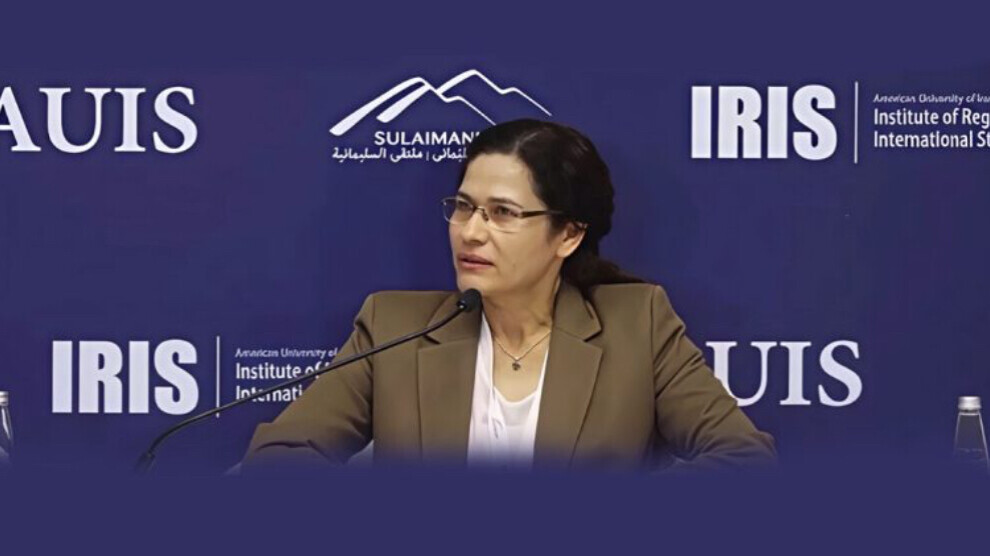
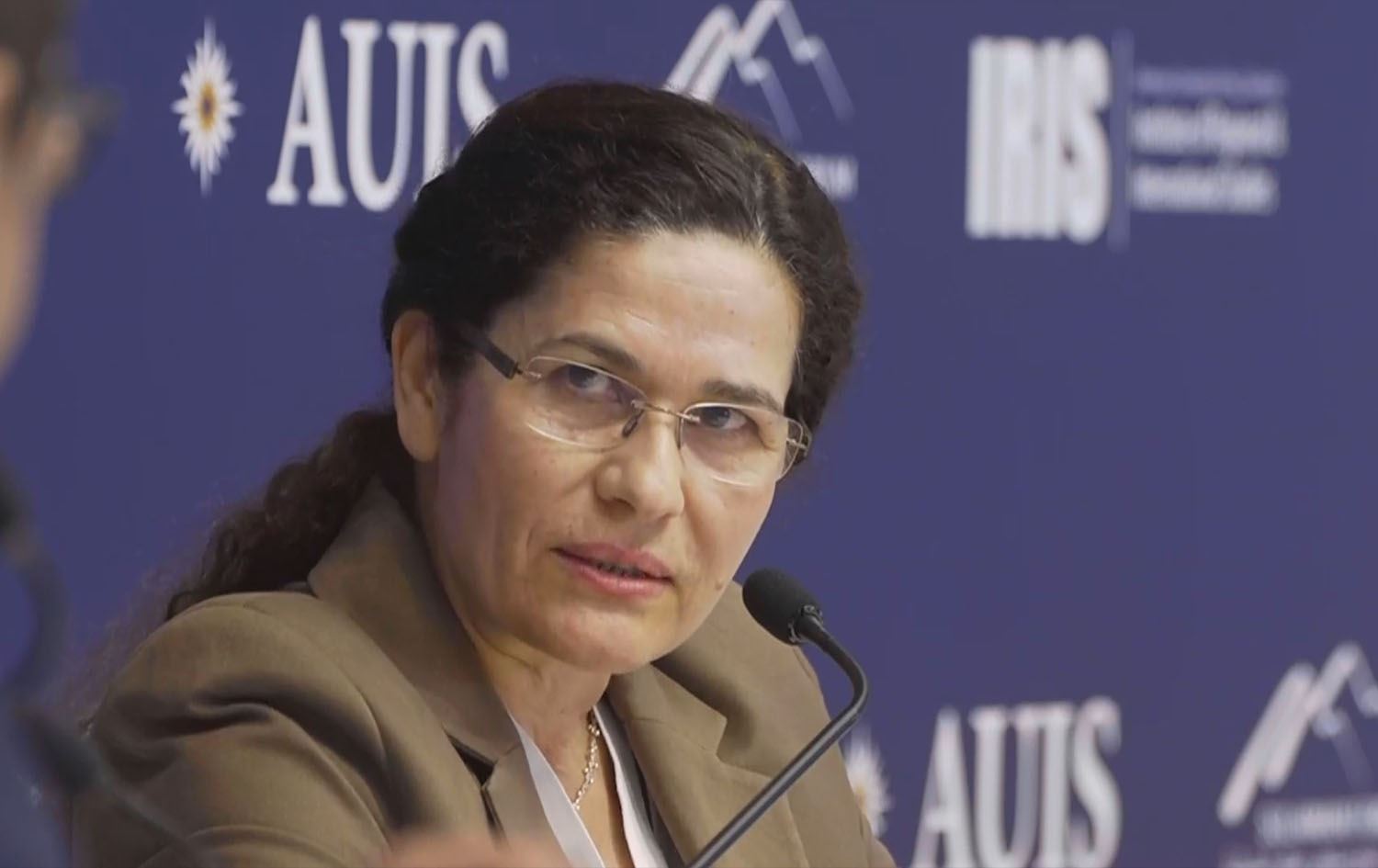
Elham Ahmed, co-chair of Rojava’s foreign relations office, speaking during a panel discussion at the Sulaimani Forum on April 17, 2025. Photo: screengrab/AUIS.


ERBIL, Kurdistan Region - A senior official from the Kurdish-led administration in northeast Syria (Rojava) said on Thursday that they plan to preserve the enclave’s current status while engaging more actively in Syria’s political process, despite the new government’s rejection of federalism.

“Our current plan is to preserve what exists, and we will try to be more involved within Syria and participate in every process,” Elham Ahmad, co-chair of the Democratic Autonomous Administration of North and East Syria’s (DAANES) foreign relations said during a panel at the Sulaimani Forum when asked about their plan if Syria’s interim government opposes federalism.

The interim government’s officials and commanders have ruled out federalism.

The Kurdish official warned that centralized systems have historically led to structural crises in diverse societies like Syria.

“We see that strictly centralized systems do not solve problems but deepen them,” she said. “Syria must not return to [how it was] before 2011. It must be decentralized and give the rights of all Syrian components.”

Her remarks come weeks after a deal was reached between interim President Ahmed al-Sharaa and Syrian Democratic Forces (SDF) chief Mazloum Abdi to integrate Rojava’s civil and military institutions into the Syrian state.

The SDF is the de facto army of Rojava.

Ahmed called the agreement a “historic point” which dispels accusations that the Kurdish administration seeks partition or separatism.

“We have always been accused of [wanting to cause] division and separation, so this agreement has put those accusations to rest,” she said. “We are now in the phase of forming dialogue committees to discuss the bond of the agreement, how to implement it, and its mechanism.”

Ahmed confirmed that “many understandings” had also been reached regarding the strategic Tishreen Dam and Kurdish-majority neighborhoods of Sheikh Maqsood and Ashrafiyeh in northern Aleppo which had long been under SDF control.

This follows a 14-point agreement signed in early April that includes a prisoner swap and outlines joint security oversight in Aleppo.

As part of the broader agreement, Damascus-aligned forces and the SDF on Sunday began jointly managing security of the neighborhoods.

The dam became the target of intensified attacks by Turkish-backed militia groups following the ouster of the former regime.

Rojava’s Ahmed reiterated that the Kurdish administration demands participation in drafting Syria’s new constitution.

“What is happening now is that Syria’s future is being specified by one side,” she said. “We see ourselves as important and serious partners in the process of rebuilding Syria.”

Sharaa signed a 53-article interim constitutional declaration in March, criticized by minority communities for reinforcing authoritarianism and religious exclusion. It preserves Syria’s name as the “Syrian Arab Republic,” makes Arabic the sole official language, and stipulates Islamic jurisprudence as a primary source of legislation. It also requires that the president be Muslim.

The declaration has drawn backlash from various groups, including Syria’s Druze community. Their spiritual leader, Sheikh Hikmat al-Hajari, who in March called the government “extremist in every sense of the word.”

At the Sulaimani panel, Ahmed noted that many Syrians - including Druze, Alawites, Christians, and a significant secular segment of the Sunni Arab population - reject centralism. “Most in Syria demand decentralization,” she said.

Druze military and political forces in Suwayda have refused to disband and repeatedly called for decentralization. Bahaa al-Jamal, the Druze commander in Suwayda, told Rudaw in March that the declaration is “not accepted” and that the community “ought to have been included” in the process. He added that the Druze will only recognize Syria’s president “through fair elections.”

In March, Rojava’s ruling Democratic Union Party (PYD) and the opposition Kurdish National Council (ENKS) agreed on a joint list of demands, including federalism.

“The unification of the Kurdish stance is the starting point,” said Hoshyar Zebari, a senior official from the Kurdistan Democratic Party (KDP), who voiced support for the demands.

The KDP, led by Masoud Barzani, has maintained ties with both ENKS and the SDF. In January, Barzani met publicly with Abdi in Erbil, followed by talks between Abdi and ENKS that led to a plan to send a united Kurdish delegation to Damascus.

Peter Galbraith, former Assistant Secretary-General of the United Nations and fellow panelist, highlighted Syria’s vast social and ideological divisions and argued that federalism offers the best path forward.

“How do you reconcile a part of Syria, northeast Syria, which has its own political system, strict gender equality... with one in Idlib, which is Islamist?” he asked. “Federalism in Syria is likely to keep Syria together.”

The Hay’at Tahrir al-Sham (HTS), whose leaders rule Syria, was formed from factions previously affiliated with al-Qaeda and Islamic State (ISIS). HTS leader Sharaa has attempted to rebrand, but international critics point to extremist ties. Some members of the newly formed cabinet in Damascus - such as Interior Minister Anas Khattab - were designated as terrorists by the US and the UN in the early years after the civil war in 2011.

Prior to ousting the former regime, the HTS had long controlled Idlib in northwestern Syria.

Galbraith stressed that around 40 percent of Syria’s population is not Sunni Arab, and even among Sunni Arabs, many are secular, echoing claims made earlier by Ahmed.

“The idea that one particular ideology coming out of Idlib led by somebody who used to be ISIS and used to be al-Qaeda could somehow control Syria, is something that is not in the interest of the people of Syria and frankly not in the interest of the rest of the world,” he said

Galbraith proposed elections based on proportional representation as a way to ensure diverse representation and inclusivity across Syria’s fractured landscape.

“We’re hoping to reach deeper understandings regarding the constitutional process, the political process, and the process of rebuilding Syria anew,” Ahmed said during the discussion.


The struggle for democracy must be waged correctly

The democratic struggle must unite all of Syria and prevent HTS from using religion for sectarian rule.


ZEKI BEDRAN
ANF
NEWS DESK
Thursday, 17 April 2025


Those who came to power in Syria under Hay’at Tahrir al-Sham (HTS) have failed to inspire any confidence in either domestic or international public opinion. Their track record was already deeply troubling. They tried to present themselves as changed by trimming their beards and putting on suits. But in practice, their actions have never matched their words. They deliberately excluded all organized forces in Syria from the entire political process. In their so-called transitional constitution, they included an excessively empowered presidential status. In its current form, it is clear that they are on the path to establishing a regime even worse than the Baath regime. While the Baathists built an oppressive system fueled by Arab nationalism, HTS is adding religious fanaticism to this formula, constructing a regime that is even more despotic and authoritarian.

At a time when it was seeking legitimacy, HTS carried out a brutal massacre of the Alawite population. In its current state, it does not have full control over Syria and lacks strong internal support. Yet one must ask: if a mindset capable of such a massacre gains more power, what else might it do? HTS has a background rooted in primitive methods—beheading people and spreading terror throughout society to grow stronger and expand its influence. If it ever gains full control over Syria, it will deny the right to life to anyone who does not conform to its ideology.

The mindset and structure of HTS are no mystery. This is precisely why they have not been accepted internationally in the way they had hoped. The United States (US), the United Nations (UN), and European countries have not removed HTS from their list of terrorist organizations. In fact, by continuing the sanctions imposed on the Baath regime, they have made it clear that they will keep monitoring the group and observing its actions. Despite being under international scrutiny and operating in a time of severe economic collapse within the country, HTS did not hesitate to carry out a massacre targeting the Alawite population. Moreover, the governing practices they have demonstrated so far have consistently excluded any notion of democracy.

Syria is a country rich in culture, ethnicity, and religious diversity. However, the overly centralized and repressive rule of the Baath regime is what led the country to its current state. What Syria needs is not new despots or authoritarian systems, but a democratic structure that embraces all people. Only a democratic Syria can truly welcome all beliefs, cultures, and differences. Yet HTS has acted in complete opposition to this vision. It appointed the so-called transitional government according to its own interests, dictated the content of the transitional constitution, and unilaterally defined the 'congress' and its composition. In doing so, it consulted neither the self-administrations governing significant parts of Syria, nor the Druze community, nor intellectuals or secular groups. In many cases, they were not even informed.

HTS has even adopted and reimposed the name of the country as defined by the Baath regime, insisting on calling it the 'Syrian Arab Republic' instead of the 'Democratic Syrian Republic.' As can be seen, both their mindset and the methods they employ are completely incompatible with democracy. They openly claim that drafting the constitution and holding elections will take four to five years, but this is a deliberate tactic. In reality, one year is more than enough to draft a constitution, and two years are sufficient to organize elections. Because they lack a genuine mass base, they aim to use state power to organize themselves and consolidate their rule. Their plan is to establish dominance first, weaken the opposition, and only then move toward elections.

There are serious misconceptions in the discussions taking place within democratic circles and in the international public sphere. What is truly needed is to correct these misunderstandings, demand democracy for all of Syria, and actively struggle for it. It is often said, “Alawites, Druze, Christians, and other minorities in Syria must be protected, and their persecution must be opposed.” Raising awareness on these issues is not wrong. If HTS gains more power, it will undoubtedly crush these minorities. Their mentality is perfectly suited to such repression. They operate with a boundless lust for power and an authoritarian mindset. However, focusing solely on this aspect of the problem is a mistake. It ultimately plays into HTS’s hands and reinforces their agenda.

Is it only minorities and followers of different faiths who want democracy in Syria? Does the broader Syrian population truly accept the mindset and governance model of HTS? The answer is no. A large portion of the Syrian people, especially Sunni Arabs, must not be abandoned to HTS. There is a broad segment of the population in this country that, in one form or another, has embraced secular life. For example, what percentage of Damascus’s population truly accepts the worldview and lifestyle imposed by HTS?

Do Alawites, Kurds, Turkmens, Druze, and Christian communities need democracy, but Sunnis do not? If Sunnis are overlooked, the possibility of building a healthy and inclusive democracy is put at serious risk. Just as it is wrong to label the entire Baath regime as 'Alawite,' it is equally wrong to associate all Sunnis with HTS, hand them over to it, or consider them part of it. Such an approach and perspective are fundamentally flawed.

Democratic demands and the struggle for freedom must encompass all of Syria. Self-administrations, democratic groups, and intellectuals must join forces and share their experiences. HTS must not be allowed to promote sectarianism or use religion as a tool for power. Without labeling people by sect or ethnicity, all of Syria must come together under the umbrella of democracy. When all communities and religious groups accept one another and succeed in living together peacefully, everyone in Syria will be safe. If Syria is to be a shared home for all its people, then the public stage must not be handed over to those who behead in the name of rule.

Syria’s first Kurdish education minister works to bridge gaps with Rojava

05-04-2025
Rudaw


Syrian education minister speaks to Rudaw on April 1, 2025. Photo: screengrab/Rudaw


ERBIL, Kurdistan Region - Syria’s new education minister, the only Kurd in the cabinet, wants to bridge gaps between the federal education system and the one in northeast Syria (Rojava) that operated independently for 13 years during the civil war.

“The certificates of those who obtained their credentials between 2011 and 2024 should be accepted,” Mohammad Turko told Rudaw’s Dilbixwin Dara on Tuesday.

Kurdish authorities in Rojava developed their own curriculum in areas they controlled, rejecting the national one in place at the time that they said promoted Baathist ideology. They also promoted Kurdish as a language of instruction for the first time.

While acknowledging the technical difficulties of aligning the Rojava curriculum with national standards, Turko vowed to develop a plan for certificate equivalency. The issue has become increasingly urgent for thousands of students in Rojava. Turko explained that recognizing these certificates would allow students from Rojava to enroll in Damascus University and other Syrian institutions.

He also pointed to logistical obstacles faced by students in Rojava, who are often forced to travel to distant governorates to sit for baccalaureate exams for grades nine and 12. “All of them cannot be expected to travel to other governorates to take their exams,” he said.

Among his stated priorities are improving teaching quality, rebuilding schools, and integrating more than 2.5 million displaced children back into the education system.

On the issue of mother-tongue education, Turko expressed support for cultural and linguistic rights. “Language is the identity of a nation,” he said, noting that many Kurds would have expectations of him. “I am the minister for all Syrian children,” he added. “Every child has the right to learn.”

He said that Syria’s constitution guarantees language freedoms and framed Kurdish-language education as a cultural right. However, he tempered expectations by noting that practical implementation would require “work and agreements.”

Born in the Kurdish city of Afrin in northwest Syria in 1979, Turko holds a law degree from Damascus University and a doctorate from Leipzig University. He has published extensively on child rights, citizenship, and education, and has taught at several Syrian universities.

Turko was appointed Minister of Education and Learning in late March by interim Syrian President Ahmad Sharaa as part of a new 23-member cabinet.

The appointments have raised eyebrows, with ethnic and religious communities voicing concern over the lack of consultation. The cabinet includes several controversial figures, including individuals blacklisted by the United Nations and the United States for ties to extremist armed groups. Among them are Anas Khattab, a former intelligence chief named interior minister, and Mazhar al-Wais, a senior Sharia judge from Hay’at Tahrir al-Sham (HTS), appointed justice minister.

“I am a Kurdish technocrat minister in this government,” Turko said. “I am not a representative of a political party or political force.”


Druze, Kurds share ‘harmonic’ relationship, vision for Syria’s future: Senior Druze cleric

26-03-2025
Rudaw
Interview    


Senior Druze cleric, Youssef al-Jarbou, speaking to Rudaw on March 24, 2024. 
Photo: Screengrab/Rudaw

ERBIL, Kurdistan Region – A senior Druze cleric from Syria’s southern Suwayda province highlighted his community’s “harmonic” relationship with the Kurdish “brothers” in northeast Syria (Rojava), emphasizing their shared political vision for Syria’s future and alignment in demands and efforts.

“There is good communication between our people in the Kurdish regions and the people of Suwayda,” Yousef al-Jarbou, one of three Sheikh al-Aql (leaders of wisdom) of the Druze community in Syria, told Rudaw on Monday. “We see our relationship with the Kurds as one of harmony and shared political vision, particularly regarding Syria’s future. There is significant alignment in our demands and efforts,” he added.

In early March, Syria's interim President Ahmed al-Sharaa and Syrian Democratic Forces (SDF) chief Mazloum Abdi signed a landmark agreement to “integrate all civil and military institutions” in Rojava under the administration of the Syrian state, “including border crossings, the [Qamishli International] Airport, and oil and gas fields.”

Jarbou said that the Druze were “very pleased with this agreement.” He described the accord as “a positive step to prevent bloodshed and avoid military confrontations” and “a good step toward the future” of Syria.

At the same time, the senior Druze cleric reiterated his community’s rejection of Syria’s interim constitution in its current draft.

In mid-March, Sharaa signed a 53-article constitutional declaration that centers on Islamic jurisprudence, mandates that the country’s president must be Muslim, and sets a five-year transitional period. It also maintains Syria’s official name as the Syrian "Arab" Republic.

The interim constitution also grants Sharaa exclusive executive power, the authority to appoint one-third of the legislature, and the ability to appoint judges to the constitutional court, which is the body that can hold him accountable.

Jarbou stated that the declaration “does not rise up to the aspirations of the Syrian people,” including the Druze community, and warned that it could steer Syria toward a “non-participatory state.” He added that under these conditions, the Druze cannot “participate” in the upcoming government.

Following the ouster of Syrian dictator Bashar al-Assad in early December, both the Rojava administration and the Druze community have urged decentralization, despite the new Damascus leadership’s rejection of federalism.

Jarbou reiterated that decentralization is not equivalent to “secession,” emphasizing that Syria’s Druze would accept whatever system emerges from “a comprehensive consensus” among the Syrian people across all governorates.

Below is the full transcript of the interview.

Rudaw: How do you view the constitutional declaration? Do you believe it meets the aspirations of the Syrian people?

Youssef al-Jarbou: In reality, the Syrian constitutional declaration does not fulfill the aspirations of the Syrian people. There are strengths and weaknesses, but the weaknesses are fundamental. The declaration appears to lean toward a non-inclusive state, and there are concerns about extremist undertones in it. We hope this constitutional declaration can be amended - as it is, after all, a draft constitution - to address its shortcomings. I don’t know how the current government views the possibility of amending the constitution to align with the aspirations of the Syrian people. We want a constitution that embraces all components of Syrian society, ensuring freedom, dignity, and full independence for Syria as a sovereign state, free from any external domination, while safeguarding citizens' religious and social rights and guaranteeing general freedoms. We want a constitution that truly represents the diverse components of the Syrian society.

Did the interim constitution’s drafting committee include any representative from Suwayda?

I don’t think so. We were not consulted to nominate anyone for the constitutional drafting committee from the outset. I also don’t believe anyone from Suwayda province was represented in this committee.

Speaking of the provisions in the constitution, which ones do you disapprove of or believe need changing?

First and foremost, with regards to the provisions stating that the religion of the state is Islam and that the president must be Muslim, we don't object to these two points per se, but we oppose the reliance on Islamic jurisprudence as base for drafting the constitutional declaration as it opens the door to jurisprudential interpretation. I recently told one of the TV channels that this could lead us to the jurisprudence of Ibn Taymiyyah or Muhammad ibn Abd al-Wahhab which are extremist schools of thought that reject the other. This could plunge us into sectarian or religious conflicts over jurisprudential interpretations. We believe a civil constitution that guarantees the freedom of all Syrian citizens, regardless of their background, is the true safeguard for the rights of the Syrian people.

This constitution will be in effect for the next five years marking the transitional period in Syria. If its provisions remain unchanged, will you participate in the new government?

I don’t think we can participate under these conditions. Another notable issue is the absence of a provision specifying the president’s nationality. Previously, one of the requirements was that the president must be a Syrian Arab for at least five years. Now, this provision is missing from the constitutional declaration. Additionally, we noticed the abolition of the prime minister’s position and the expansion of powers for the president and the presidential or national council, which is structured around six or seven leading figures headed by Mr. al-Sharaa. This centralizes decision-making within a single faction and a single group. Decisions concerning Syria’s future as an inclusive state for all Syrians are now monopolized by one group, which we see as problematic. Decision-making should be participatory.

There’s also the issue of the separation of powers, there’s no clear accountability. For example, if a minister is appointed, can they only be held accountable by the president or by the legislature as well? We don’t see the benefit of granting ministers or government officials broad powers without oversight.

Another controversial point is the composition of the legislature, where one-third of its members are appointed by the president, and the other two-thirds are nominated. This deprives citizens of the right to choose their representatives. In most countries, the People’s Council or parliament represents the citizens, voices their concerns, monitors the government’s work, and ensures the implementation of service programs. Allowing the president to appoint one-third of the council opens the door to blocking any decision that doesn’t align with this faction’s interests, which is also another flaw in the constitution.

Speaking of the demands of Suwayda’s residents and the Druze spiritual leaders, how do they envision the state’s policy - centralized or decentralized?

In fact, our demands align with those of the Syrian people as a whole, serving the next phase and all Syrians. In Suwayda, we have no ambitions or orientations that differ from those of the Syrian people. The upcoming political mechanism, whether decentralized or federal, must have broad approval across all Syrian provinces. If there is consensus on whether the next phase should involve centralized governance, decentralization, federalism, or self-administration, Suwayda cannot unilaterally adopt a separate political model.

When we talk about decentralization, we mean for all of Syria, not just a specific region. There have been many statements from Suwayda calling for decentralization, similar to those coming from northeast Syria (Rojava) aiming to guarantee the rights of all components. This does not mean secession. What is your view?

Decentralization is not secession; it is a form of governance. We do not oppose decentralization at this stage, but we demand that this direction be based on a general consensus among the Syrian people. If there is agreement on decentralization, we support it, and if there is agreement on federalism, we support that as well. This is my personal opinion, and I believe many in Suwayda share it.

Regarding the military council in Suwayda, why hasn't it surrendered its arms yet? What are the reasons?

In the past period, we suffered from terrorist attacks from several factions and endured losses in lives and equipment. We have concerns about the next phase, as full stability has not yet been achieved, where the state can fully impose its control over all Syrian territories, including Suwayda, and ensure security. At that point, there will be no need to bear arms. Currently, our weapons are not directed at the state or any party but are for self-defense, protecting our land, honor, and lives. The next phase requires organizing the status of armed factions and cooperating with the state, paving the way for weapon regulation. We may reach a stage where we no longer need these weapons, and control returns to the state.

What is your response to the recent Israeli positions? How do you interpret them?

Recently, there has been much talk about Israel being a guarantor of security for Suwayda and the Druze, but in my perception this is being exploited politically by the Israeli government to send a message to the surroundings that the Druze seek secession, which is untrue. We have not requested protection from Israel, not in the past and not in the future. Our true protector is God, and we are accustomed to defending ourselves with our own means, without relying on external forces. International and regional interventions in Syria’s internal politics have imposed realities on the ground, but we strive to rely on ourselves with all we have. What comes from abroad as part of international agendas is beyond our control.

Syrian President Ahmed al-Sharaa’s statements spoke of a participatory Syria that embraces all sects. Were you asked to participate in the government or the drafting of the constitution?

The rhetoric of the Syrian government, led by Mr. al-Sharaa, has been positive and reassuring, especially to the people of Suwayda, conveying that the state is cooperative and will do everything necessary to rebuild Syria into a civilized and advanced nation. Personally, I have not been contacted regarding participation in the government or the constitution. I don’t know if there have been communications with other sheikhs or officials, but to my knowledge - perhaps through indirect channels, especially with some young political figures who were part of the opposition - there may have been some coordination. However, this is just a possibility, and I have no confirmed information. We hope to have a role in the new government.

How would you describe your relationship with the Kurds in Rojava? Is there any communication between you?

Yes, there is good communication between our people in the Kurdish regions and the people of Suwayda. During the 2018 kidnapping crisis following the Islamic State (ISIS) attack, the Kurds offered significant assistance in securing the release of the abducted women. Our Kurdish brothers proposed exchanging high-ranking ISIS leaders held by the Syrian Democratic Forces (SDF) for the kidnapped women. We see our relationship with the Kurds as one of harmony and shared political vision, particularly regarding Syria’s future. There is significant alignment in our demands and efforts.

What is your opinion on the agreement between SDF Chief Mazloum Abdi and Syrian President Ahmed al-Sharaa?

We were very pleased with this agreement, even though we were not privy to all its details. In principle, it was a positive step to prevent bloodshed and avoid military confrontations. The agreement paved the way for reuniting the Syrian society and removed the specter of war from the region and our Kurdish brothers. I believe the concerned parties are best positioned to evaluate its outcomes, but from my perspective, it was a good step toward the future.

What are your key demands from the Syrian government?

Today, we suffer from the absence of state authority in Suwayda, leading to chaos and a governance vacuum. Some institutions are barely functional, while others, like the judiciary and civil registry, are completely inactive. Births have gone unregistered for three months, marriages are not being documented, and there are obstacles in issuing passports and ID cards. The main reason is the absence of the state. We have demanded and continue to demand, the return of state authority. There were initial understandings and general agreements at first, but some disputes arose. We hope these will soon be resolved so the state can reassert its control over Suwayda.

These are service-related demands. What about political demands?

We want representation in the legislative body, a say in drafting the constitution, and meaningful participation in the upcoming government, one that reflects our component’s rightful place in Syria’s political landscape.

Yazidis embrace new beginnings at Lalish new year celebrations


RUDAW
APRIL 17, 2025
Donya Seif Qazi@donyaseifqazi

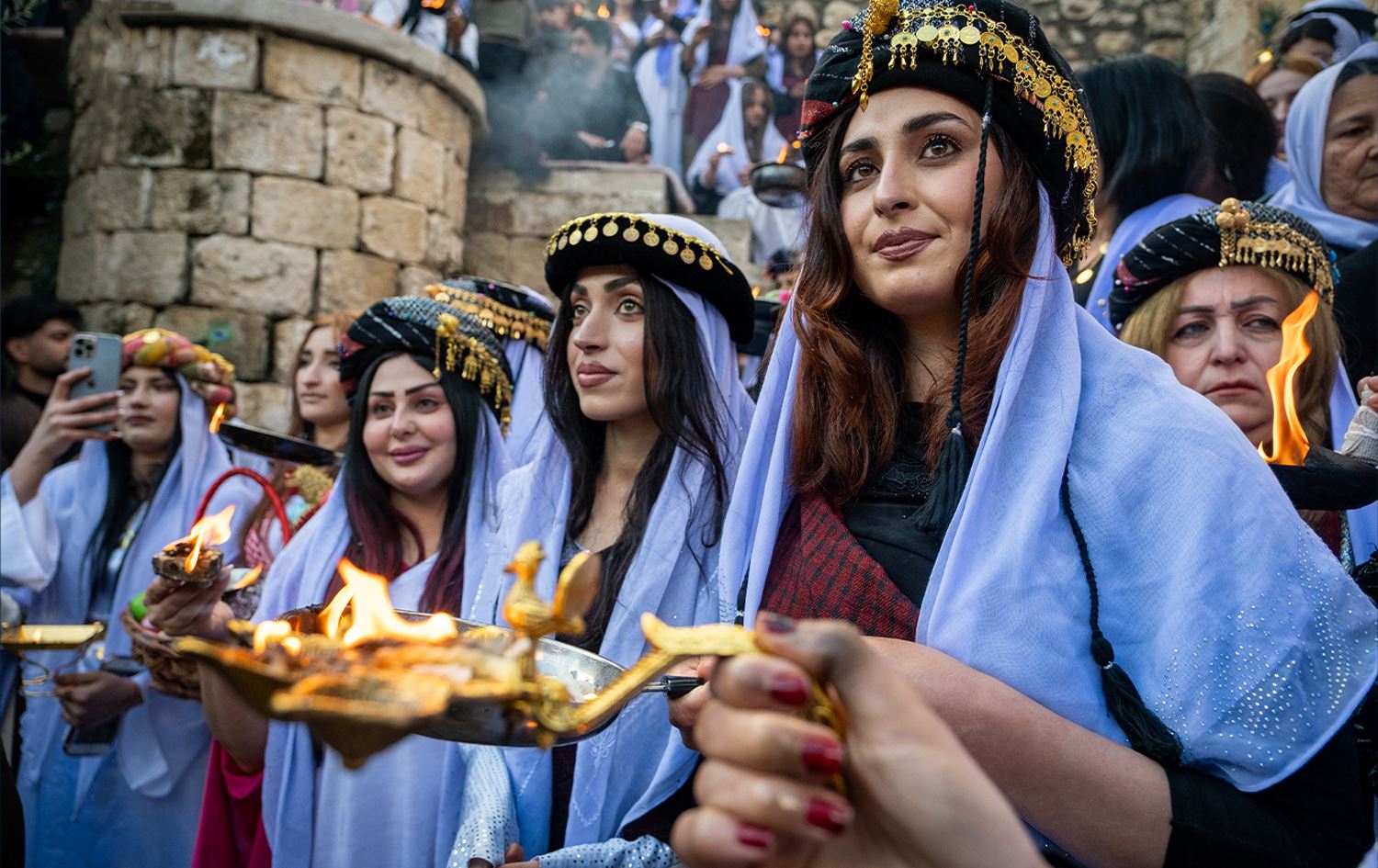
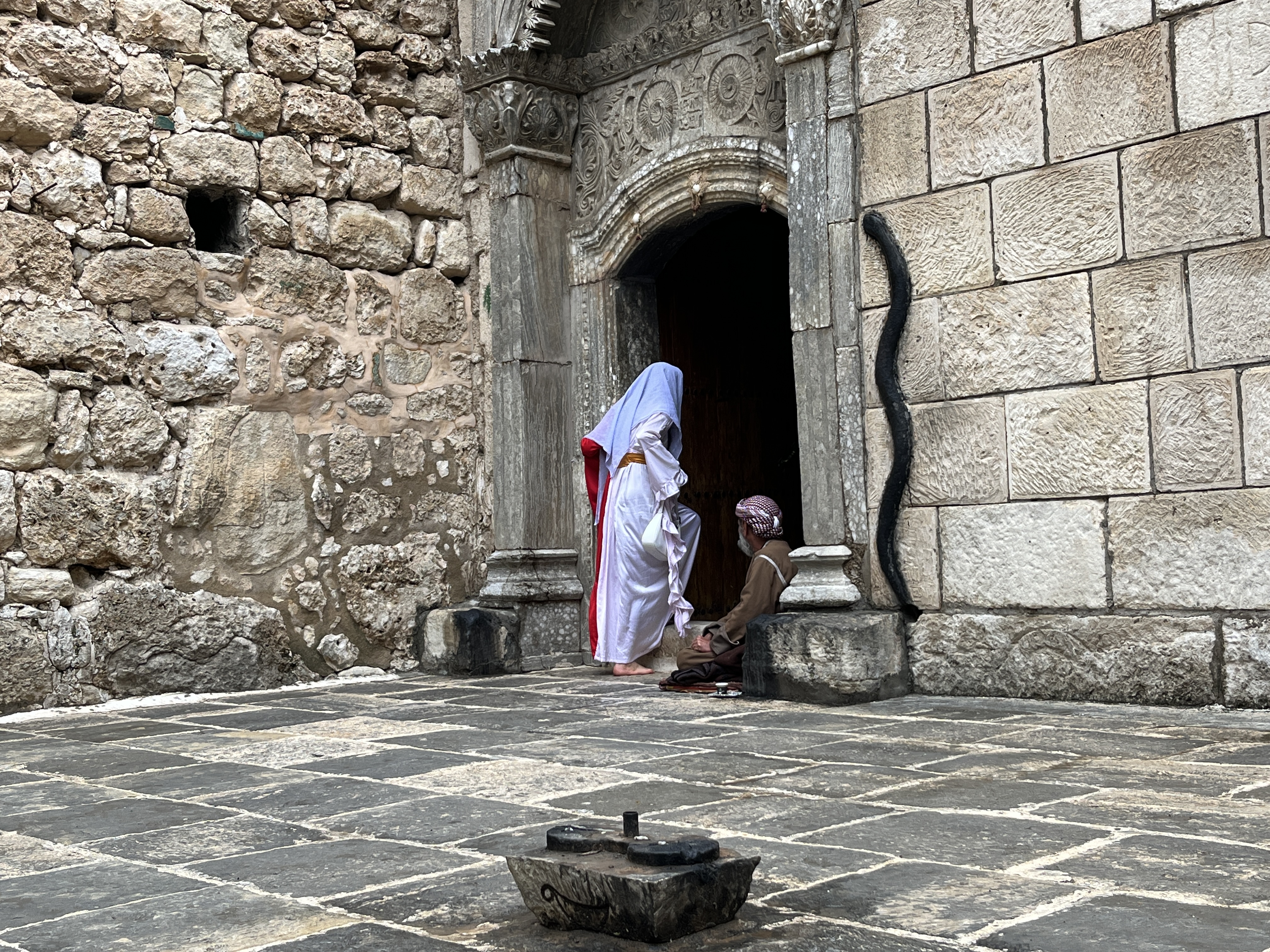
Yazidis celebrate Chwarshama Sur, the Yazidi New Year, at the Lalish temple in Duhok province on April 15, 2025. 
Photo: Bilind T. Abdullah/Rudaw


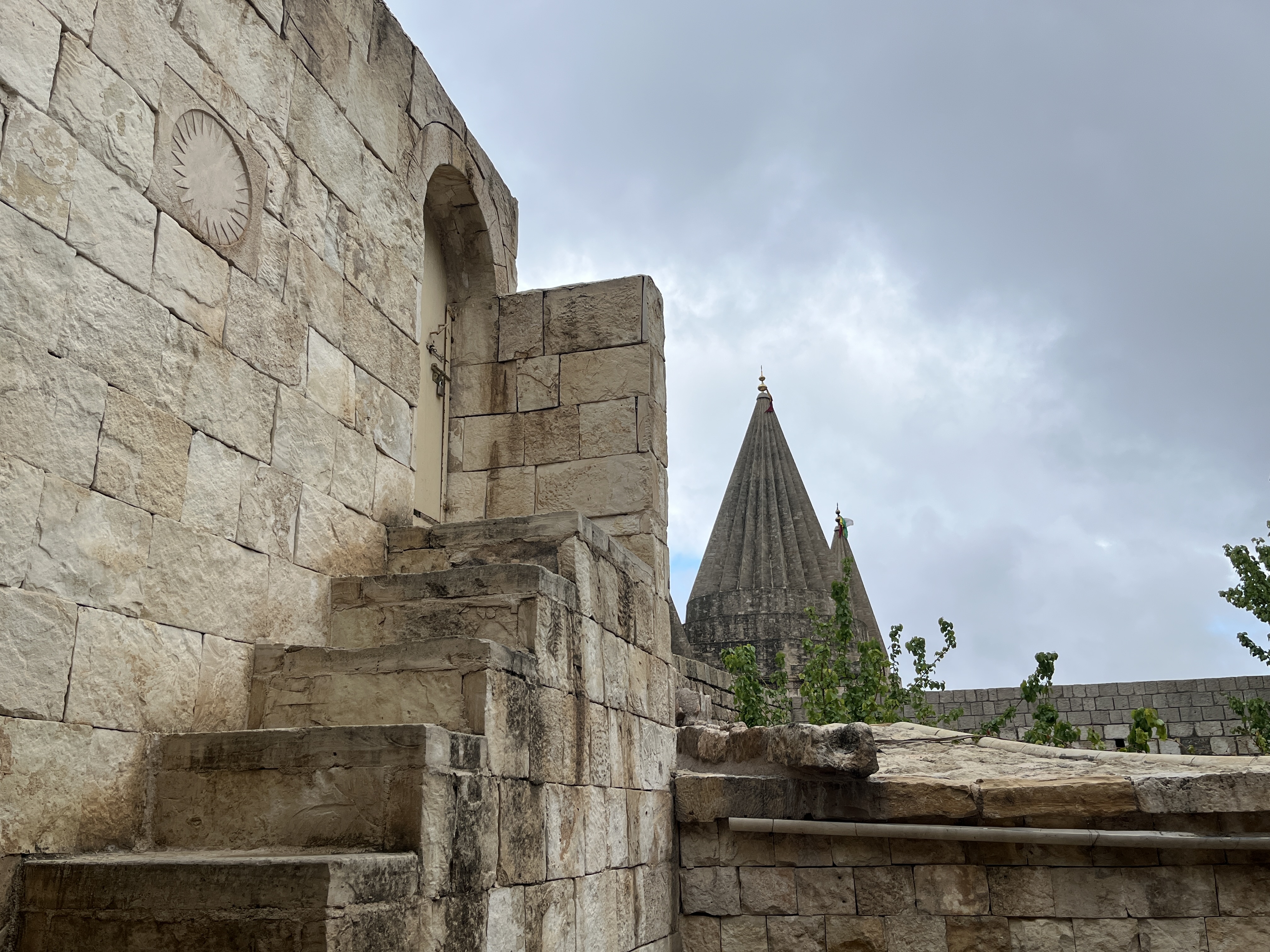
ERBIL, Kurdistan Region - Nestled in the mountains of Duhok province’s Shekhan district, Lalish Temple, the holiest site in the Yazidi faith, hosted Chwarshama Sur (Red Wednesday) on Tuesday evening. The ancient celebration, considered the oldest and most sacred Yazidi tradition, marks the beginning of creation and the renewal of life.

The Lalish site, believed to date back approximately 4,000 years, reflects deep-rooted heritage, with ancient symbols etched into its stone structures, each representing narratives and rituals tied to the historical and religious foundations of the Yazidi faith.

Chwarshama Sur (Red Wednesday), one of the most ancient and sacred celebrations in the Yazidi faith, marking the new year, was hosted on Tuesday evening at the holy Lalish Temple in Shekhan district.


Photo: Donya Seif Qazi/ Rudaw

“Since ancient times, the peoples of the Middle East have welcomed this festival and celebrated it in various ways, with each region calling it by a different name. Yezidis call it the New Year Festival, Babylonians call it the Akitu Festival, and Sumerians call it the Zikmak Festival,” Luqman Mahmoud, from the Lalish communication center, told Rudaw English at the temple.

Each year, Yazidis from around the world return to the Kurdistan Region to celebrate Red Wednesday at the holy Lalish Temple, where they offer prayers and light fires, a deeply rooted symbol in their faith to welcome the rise of life and the new year.

“Fire has a special sacredness in Yazidi mythology. Throughout historical periods, from the time of Sumerian civilization to Babylonian, Median, and Mithraic civilizations, fire has been lit in their temples. Since the Yazidis are the continuation of these civilizations, fire also has a special sacredness in their religious practices,” said Yazidi writer Hogir Haydo.

Haydo noted that, according to belief, the first person to light the sacred fire was named Yazidi, a figure whose act is said to have inspired the fire-lighting ritual that continues in Yazidism to this day.

On the eve of the festival, Yazidis light candles and oil wicks as religious singers recite hymns and prayers throughout the sacred valley.

“This festival dates back to the time when human civilization emerged. This festival was first celebrated in the city of Eridu [viewed as a symbolic place of origin], and until now, the traditions and rituals of the Yazidis continue,” Haydo added.

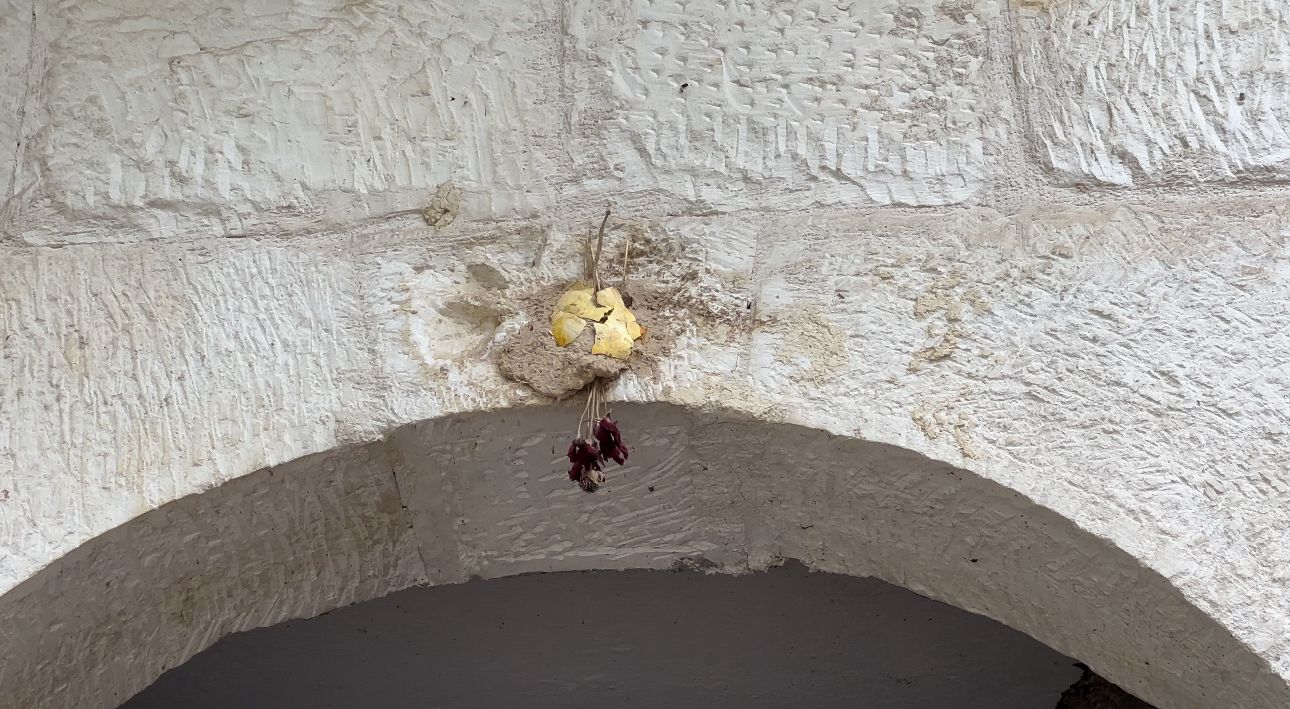
As part of the ritual, Yazidis boil eggs on the festival day, attaching them with a mixture of mud and special spices. The mixture and the egg are then applied above entrance doors, with a flower placed at the center, symbolizing renewal and protection.


Photo: Donya Seif Qazi/ Rudaw

“Among the rituals of this festival, early on the morning of the festival, women wake up to hang red flowers along with the Giyay Benav [nameless herb] and colored eggshells over the doorways of houses. This is a sign and symbol of the new year, the month of April, and spring, and is a very ancient symbol in Yazidism,” Khald Khdr from the Lalish Media Network said in a statement in 2019.

Farmers hold a sacred role in Yazidism, and the use of eggshells from the festival carries symbolic meaning. The shells are scattered over farmland the following day as a natural fertilizer to nourish the earth. Planting is avoided during this time, as Yazidis believe the earth is reborn and must be treated as a newborn.

Yazidis also refrain from marriage during the second half of April, believing it marks the beginning of the new year, a sacred period in which the month itself is regarded as a bride.


Photo: Donya Seif Qazi/ Rudaw

The cultural richness of the site and its rituals draw a great number of tourists each year, particularly during Yazidi ceremonies.

A group of tourists from Utiel municipality in Spain’s Valencia, who joined the celebrations with a Kurdish tour guide, expressed admiration for the richness of Kurdish culture and the depth of Yazidi traditions.

“My friends and I are coming from Utiel in Spain, and we found out about this event thanks to my guide who brought us here and told us about this special tradition, and all about it, and so far we are having a great time. We didn't know anything about it, and we are so amazed because we haven't seen anything like that before,” Laura Ortiz, the visiting tourist, told Rudaw English.

“Our main goal was to change the image of Kurdistan, which is always linked with war and negativity, to show the real beauty that really exists,” said Mohammed Dilshad, the tourism company founder.

“We were successful to show many different, represent actually many different minorities of Kurdistan to the world as well. For example, we did a tour for the Akito festival, which is the Akkadian, Babylonian, Assyrian New Year, and then the Yazidi New Year, which is the Chashambah Serenisani [ first wednesday of yezidi new year], and we were able to bring a lot of people to see this celebration,” he added.

The Yazidi ethnoreligious community bore the brunt of the Islamic State’s (ISIS) atrocities during their brazen offensive across large swathes of Iraq in 2014, particularly as the jihadists moved on the community’s heartland of Shingal (Sinjar) and captured it.

In the assault on Shingal, ISIS militants abducted 6,417 Yazidi women and children, many of whom were subjected to sexual slavery and forced labor. Although the group was territorially defeated in Iraq in 2017 and in Syria in 2019, it continues to pose a security risk.

To date, 2,590 individuals are still missing, according to statistics provided by Hussein Qaidi, head of the Office of Rescuing Abducted Yazidis, affiliated with the Kurdistan Region Presidency.

KCK: Only the struggle for organization and democracy guarantees survival


"The only way for the Yazidi people to ensure and protect their existence, to secure their sociality, and to continue their legacy by adding further values to it is to organize with democratic consciousness and to struggle in unity," KCK said.


ANF
BEHDINAN
Tuesday, 15 April 2025

The People’s and Beliefs Committee of KCK issued a statement to mark Çarşema Sor, the holy day of the Yazidi people.

The statement said: "Our Êzidî (Yazidi) people are celebrating this year’s feast of Çarşema Sor. As a freedom movement, we celebrate our Êzidî people, who have managed to free themselves from genocide, renew themselves from the roots up, and create a new future for themselves based on their old cultural values, on their holy day. We congratulate all Kurds on the traditional Çarşema Serê Nîsanê, and we express our hope that this holy day will be taken as an occasion to strengthen the struggle for democracy, freedom, peace, and brotherhood, which is the longing of the peoples of the region."

The statement added: "Our Êzidî people in Shengal (Sinjar) are preparing to celebrate Çarşema Sor while being under serious threats and intimidation of genocidal threats by the Turkish state and the Iraqi state. In the face of genocidal attacks, the only way for the Êzidî people to ensure and protect their existence, to secure their sociality, and to continue their legacy by adding further values to it is to organize with democratic consciousness and to struggle in unity. It is necessary that modern-day Derweshe Evdes and Eduleshes arise, that the struggle is risen, and that the spirit to protect the Êzidî identity is created. The most meaningful response of the Êzidî people to the genocidal attacks will be to further strengthen their organization of the democratic society and the autonomous administration as a system that can and will guarantee their future according to their own social identity."

The statement continued: "The development of the democratic society in Shengal will continue to have a strong and positive impact on all the people of southern Kurdistan. It will contribute to the democratization of the political system of southern Kurdistan, and through this, a more just and transparent administration can be formed. On this occasion, we call on all the people of southern Kurdistan to see the struggle in Shengal as their own struggle, to embrace it, and to support it by participating in it. We also make this call to all the forces that claim to be in favor of the democratization of Iraq.

Dear Êzidî People,

Çarşema Sor is the holy day of creation, the holy day of resurrection. Throughout history, our Êzîdî people have progressed towards realizing their own social creation and resurrection through their struggle and have carried themselves to these days through struggle. The current period is a period that corresponds to the belief and spirit of the Çarşema Sor holy day, a period that is conducive to new creations and resurrections. Especially the struggle in Shengal, the values that emerged, and the gains as a people gave hope and willpower to Êzidîs living all over the world."

The statement underlined that "the resistance in Shengal paved the way for the Êzidî people to continue their existence in the world, stronger than ever, by meeting their roots. In particular, the developments that have unfolded over the course of the last ten years have shown in practice that the Êzidî people and all Kurds can overcome all kinds of difficulties when they organize and struggle with Apoist consciousness. The tradition of resistance in the face of genocidal attacks proved how strong and unshakable social moral values are. The results of the struggle of our Êzidî people and the Kurds in general, as an updated expression of social morality, have further increased the enthusiasm and excitement of this year’s Çarşema Sor festivities.

We call on the Kurdish people to take this year’s Çarşema Sor as an occasion to understand the process we are going through correctly. It is a necessity of this period to transform our ancient folk culture of solidarity and sharing into a large and strong organization. We see it as a necessity to preserve our moral values that enable us to overcome many difficulties as a society, to strengthen our relations of neighborliness, kinship, and friendship, and to meet the difficult period of struggle ahead in unity. We call on everyone to grow these social values with Apoist consciousness and patriotism and make them the basis for the development of democratic nation organization and the construction of a democratic society."

The statement said: "It is of great cruciality to strengthen the mechanisms of self-defense with the awareness of the dangers posed by various forms of attacks that may develop against our Êzidî people. One needs to be sensitive to collaborators and traitors and to act in a patriotic manner. The religious leaders of the Êzidî people have to play their leading role in this regard, and they have to play their part in strengthening the internal unity of the Êzidîs in the struggle against genocidal attacks and the special warfare.

With these feelings and thoughts, we once again celebrate the holiday of our Êzîdî people, we commemorate all our heroic martyrs who enabled us to celebrate this holiday with great excitement and faith by commemorating Binevsh and Xanes, Mam Zeki Shengali, Dijwar Feqir, and Zerdesht, and we reiterate once again that we will raise our struggle to bring the cause of democracy and freedom of the peoples for which they gave their lives to its ultimate goal."