Friday, February 27, 2026

Uber and Joby Aviation launch in-app air taxi booking ahead of Dubai debut

Uber and Joby Aviation launch in-app air taxi booking ahead of Dubai debut
Uber and Joby Aviation launch in-app air taxi booking ahead of Dubai debut / bne IntelliNews
By bne IntelliNews February 26, 2026

Ride-hailing giant Uber has unveiled "Uber Air powered by Joby," allowing riders to book Joby Aviation's all-electric air taxis directly within the Uber app, as Joby prepares to carry its first passengers in Dubai later this year in what the partners describe as a major milestone in urban air mobility.

The integration allows riders to enter a destination in the Uber app's standard search bar, with Joby air taxi options appearing alongside conventional ride choices where applicable. The company said that "with a single tap, the app seamlessly connects and books every leg of the journey — including Uber Black pickup and drop-off" to and from the departure point.

Joby's aircraft seats up to four passengers and is flown by a certified commercial pilot. The company said the cabin features "comfortable seating with large windows with panoramic views of the city below from every seat," offering what it described as "a remarkable way to travel above the city and experience the next generation of flight."

The aircraft uses six tilting propellers to take off vertically before transitioning to forward flight, reaching speeds of up to 200 mph with a range of up to 100 miles on a single charge. It has been engineered with multiple levels of redundancy and an acoustic profile the company says is "quiet enough to blend into the ambient sounds of a city's streets."

Before launching commercial operations in the United States, Joby must complete Federal Aviation Administration (FAA) certification. The company has logged more than 50,000 miles of flight tests across its fleet and says it has entered the final stage of the FAA certification process, which it described as reflecting "its safety-focused approach and steady progress toward carrying passengers."

Joby and Uber have worked together on urban air mobility since 2019. In 2021, Joby acquired Uber's Elevate division, which had helped establish the urban air mobility sector and develop demand simulation and multi-modal operations tools. Joby subsequently acquired Blade's passenger business, with plans to bring Blade's commercial helicopter service to the Uber app in 2026 as a precursor to the full electric air taxi rollout.

Target markets beyond Dubai include New York, Los Angeles, the United Kingdom, and Japan.

AIR Tashkent, US company Samson Sky want to see 300 Switchblade flying cars in Uzbekistan’s skies

AIR Tashkent, US company Samson Sky want to see 300 Switchblade flying cars in Uzbekistan’s skies
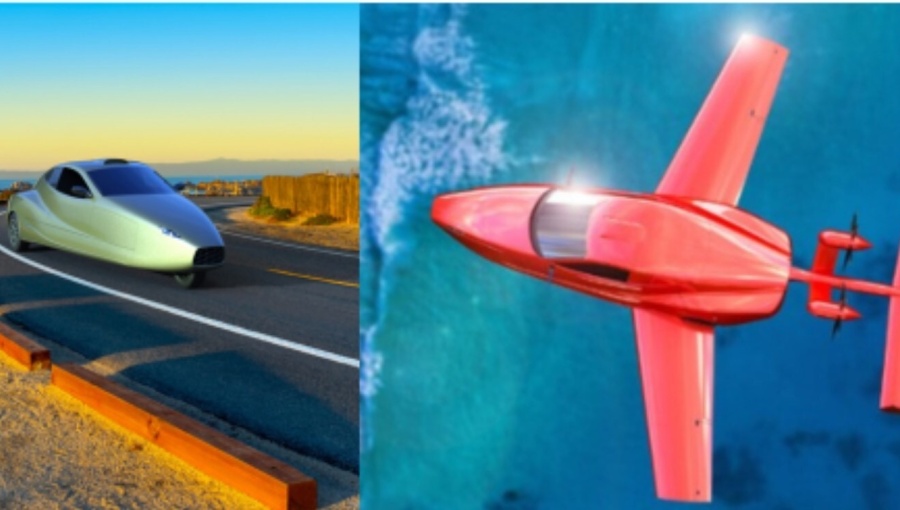
Flying mode is achieved in three minutes at the push of a button, says Samson Sky. / Samson Sky
By Mokhi Sultanova in Tashkent February 26, 2026

AIR Tashkent and US manufacturer Samson Sky have announced that they aim to bring at least 300 Switchblade flying cars to Uzbekistan.

Private aviation services provider AIR Tashkent said in a February 24 press release that it has signed a memorandum of understanding with Samson Sky on joint work to facilitate the sale of the Switchblades in a deal valued at more than $60mn.

The signing took place at the opening of AIR Tashkent’s Easy to Fly Academy where aviation professionals are to be trained. The memo provides for cooperation on sales, pilot training and maintenance support. 

The Uzbek company intends to make a bulk purchase of a percentage of the 300 flying cars and put them to use in pilot training for personal and commercial licences.

“It started with an idea in 2024 to develop private aviation in Uzbekistan,” said Anna V. Grebenshchikova, a former aerobatic pilot and ambassador for Samson Sky. “Now we are speaking about innovations such as the Switchblade Flying Sports Car reaching the land of the ancient Silk Road.”

Under the agreement, Samson Sky will provide pilot training support using its proprietary flight simulators and will train mechanics to service the aircraft. 

The US company will also work with AIR Tashkent and the Uzbek government to qualify the vehicle for both road and flight use in the country. 

The Switchblade has already flown in the US and is being launched into production there.

“The Switchblade will bring Uzbekistan a tremendous benefit of rapid regional travel,” said Sam Bousfield, chief executive and founder of Samson Sky. “We see the potential for regional trips, both national and international, helping business and government to operate faster and more efficiently.”

The Switchblade, which completed its official first flight in November 2023, is a hybrid-electric vehicle designed to function as both a sports car and a light aircraft. 

It accelerates from 0 to 60 mph (97 km/h) in five seconds, has a top ground speed of 125 mph (201 km/h) and a cruise speed in the air of 160 mph (257 km/h). Using premium automotive fuel, it has a flight range of up to 500 miles (805 km) at 13,000 feet on a single tank.

In driving mode, its wings and tail surfaces are enclosed within the vehicle for safety and insurance purposes. 

The aircraft is designed to fit inside a standard garage and can be driven on public roads to a nearby airport, where it can be converted from road to flight configuration in about three minutes at the push of a button, said the two companies.

AIR Tashkent, which bills itself as Uzbekistan’s first private provider of individual high-quality aviation services, offers maintenance services alongside charter routes. 

Watchdog warns EU climate policy risks capture by corporate lobbying

Watchdog warns EU climate policy risks capture by corporate lobbying
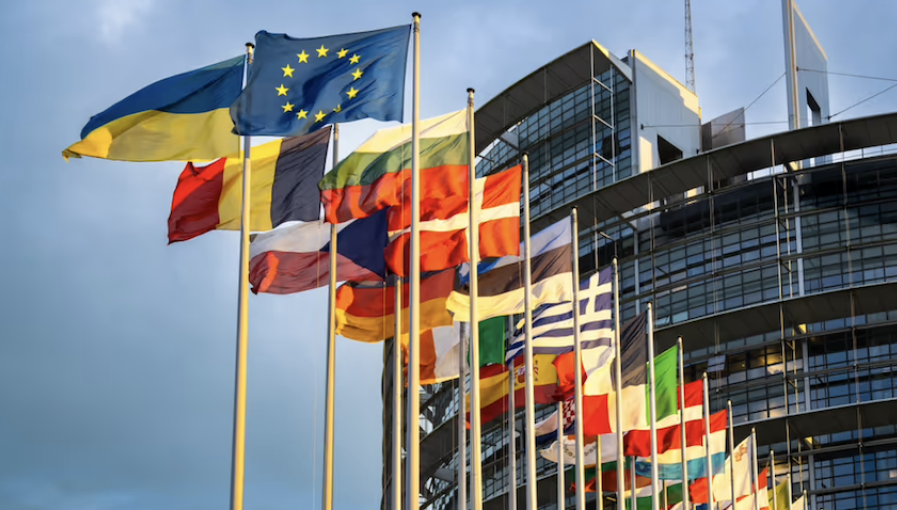
Campaigners warn that mounting corporate influence risks diluting the EU’s Green Deal as climate rules move from ambition to implementation. / bne IntelliNews
By bne IntelliNews February 27, 2026

Europe’s climate agenda risks becoming a “lobbyists’ playground” as industry groups are capturing control over changes to the EU’s green legislation, according to a watchdog report cited by Euronews on February 25.

The report says that as Brussels moves from setting ambitious emissions targets to implementing complex sectoral rules, corporate actors are gaining disproportionate influence over the details of policymaking. Campaigners warn that this shift could dilute the European Union’s flagship Green Deal and slow progress towards its legally binding goal of climate neutrality by 2050.

“Europe’s climate policy [is] turning into a lobbyists’ playground,” the watchdog said, pointing to increased access for fossil fuel, automotive and heavy industry representatives during negotiations over key files including carbon pricing, industrial decarbonisation and energy market reform.

The Green Deal has been the EU’s flagship reform for the last decade, but European Commission President Ursula von der Leyen has been forced to soften the initiative since her re-election last year due to the worsening economic performance of the Union. She has begun to roll back some of the restrictions and legislation, especially relating to agriculture, one of the main sources of emissions, under pressure from right-wing groups in the European Parliament.

The European Commission has in recent years advanced sweeping measures under the “Fit for 55” package, designed to cut greenhouse gas emissions by at least 55% by 2030 compared with 1990 levels.

These include reforms to the EU Emissions Trading System (ETS), the introduction of a Carbon Border Adjustment Mechanism (CBAM) and stricter standards for vehicles and buildings. But as these proposals move into the implementation phase, the restrictions are being eased or exceptions and calve outs are being created thanks to lobbying by vested interests, the report claims.

Industry groups argue they are “essential partners” in ensuring the transition remains “competitive.” European manufacturers face higher energy costs than rivals in the US and Asia, particularly following Russia’s full-scale invasion of Ukraine, which triggered a spike in gas prices and forced the EU to accelerate its exit from Russian fossil fuels. The bloc has responded with the Net-Zero Industry Act and more flexible state aid rules to support clean-tech investment.

Critics, however, say the balance of influence is skewed. The watchdog report highlights what it describes as privileged access for corporate lobbyists in technical working groups and consultations, as well as a growing focus on carbon capture and storage and hydrogen projects favoured by incumbent energy companies.

The debate comes at a sensitive political moment. Several member states face elections in 2026–27, and concerns about industrial competitiveness and consumer energy bills are reshaping climate politics. Farmers’ protests and pushback against environmental regulation have already prompted the Commission to soften or delay certain measures last year.

Green restrictions have also undermined a Mercosur trade deal as European farmers complain that Latin American farmers don’t face the same stiff regulatory controls as European farmers and so can produce agri-goods at lower cost. That deal has now become snarled up in legal challenges that will delay its implementation by at least two years.

Supporters of the Green Deal argue that robust climate policy is itself a competitiveness strategy, attracting investment in renewables, batteries and electric vehicles. The International Energy Agency estimates that clean energy investment in the EU has risen sharply since 2020, although it still trails China in scale.

The European Commission has repeatedly defended its consultation processes as transparent and inclusive, stressing that engagement with industry is necessary to design workable regulation. But as the EU moves from setting targets to enforcing them, the tension between ambition and implementation is likely to intensify.

Ukraine’s wartime grid offers ten lessons in energy resilience, IEA says

Ukraine’s wartime grid offers ten lessons in energy resilience, IEA says
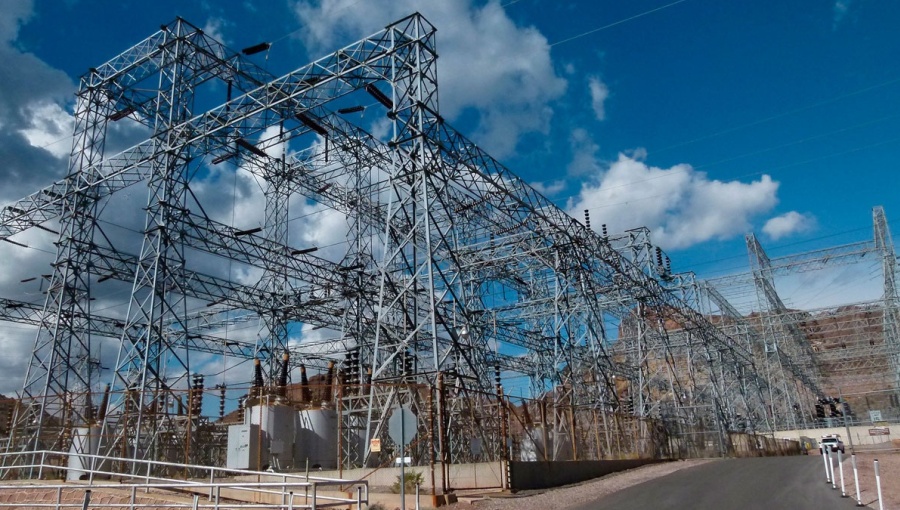
Ukraine’s wartime experience offers ten lessons in energy resilience that the IEA says can strengthen energy security worldwide. / bne IntelliNews
By bne IntelliNews February 26, 2026

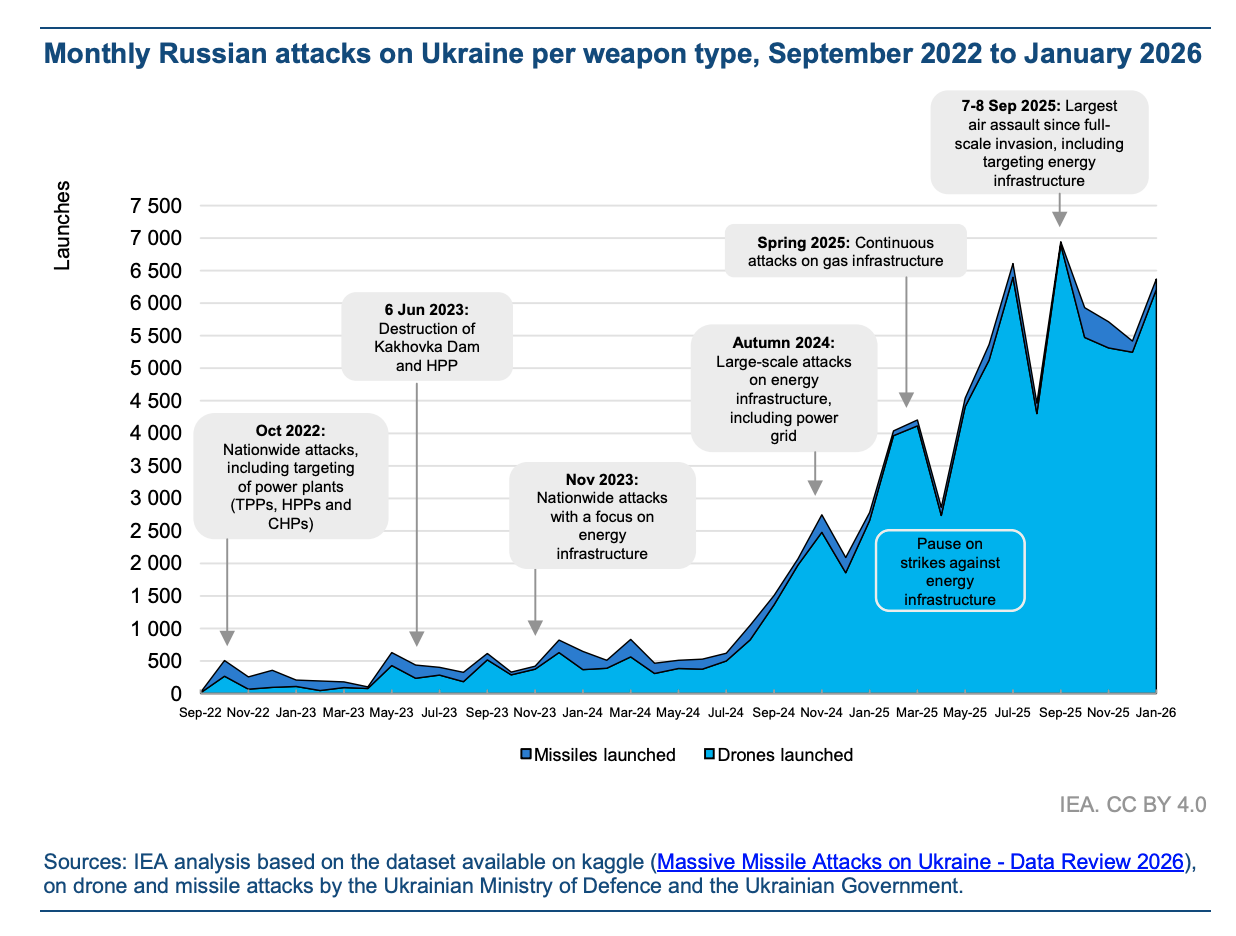
Ukraine’s struggle to keep the lights on under sustained Russian bombardment this winter has yielded ten core lessons for energy security that policymakers worldwide would be wise to study, according to a new report from the International Energy Agency.

The study, Energy System Resilience, distils insights from Ukraine’s efforts since Russia’s full-scale invasion in 2022 to withstand physical and cyber-attacks on its power infrastructure.

The IEA argues that “ensuring energy security encompasses both long-term and short-term dimensions”, combining infrastructure investment and supply diversification with the capacity to cope with shocks that exceed standard planning assumptions.

“Since Russia’s full-scale invasion in 2022, Ukraine has worked to protect its energy sector and to increase its ability to withstand and rapidly recover from Russia’s attacks on its energy infrastructure,” the report says. The lessons, it adds, apply not only to wartime conditions but also to “cyberattacks, physical attacks on infrastructure, extreme and severe weather, and unexpected infrastructure failures”.

The IEA’s ten lessons from Ukraine

Energy security must combine long-term investment with short-term resilience.

Decentralisation enhances system resilience.

Flexibility and rapid repair capacity are critical.

Cybersecurity must be treated as core infrastructure protection.

Clear governance and coordination improve crisis response.

Diversification of supply reduces systemic vulnerability.

Strategic reserves and spare equipment are essential.

Demand-side management can stabilise stressed systems.

International partnerships strengthen resilience.

Planning must assume events beyond historical norms.


Energy security must combine long-term investment with short-term resilience

The IEA stresses that energy security is not simply about building more infrastructure or diversifying fuel sources. “The long-term dimension involves securing sufficient infrastructure investment and diverse supply sources,” the report notes. But the short-term dimension — resilience — focuses on a system’s ability to cope with events that exceed standard planning conditions. Ukraine’s experience shows that even well-developed systems require contingency planning for extreme scenarios.

Decentralisation enhances system resilience

Ukraine has accelerated plans to decentralise its power system, reducing reliance on large, centralised generation facilities that are vulnerable to missile strikes. The IEA’s roadmap for decentralising Ukraine’s power system highlights how distributed generation, microgrids and local energy resources can reduce the risk of cascading failures. Smaller, dispersed assets are harder to disable simultaneously and easier to restore.

Flexibility and rapid repair capacity are critical

A key wartime adaptation has been the development of rapid repair teams and modular replacement strategies. The ability to restore damaged substations or transmission lines within days, rather than months, has limited blackouts. The report underscores the importance of pre-positioned spare parts and trained emergency crews capable of operating under extreme conditions.

Cybersecurity must be treated as core infrastructure protection

Ukraine has faced persistent cyberattacks alongside physical strikes. The IEA argues that digital security should be integrated into core resilience planning, not treated as an auxiliary concern. Strengthened monitoring, redundancy in control systems and regular stress testing have become central to protecting grid operations.

Clear governance and coordination improve crisis response

Crisis management structures have evolved to ensure swift coordination between government, grid operators and private utilities. The IEA emphasises that clarity in roles and responsibilities speeds decision-making during emergencies and reduces duplication or delay.

Diversification of supply reduces systemic vulnerability

Ukraine’s pre-war energy mix included significant nuclear and thermal generation. Wartime disruption has reinforced the value of diversification across technologies and import routes. The lesson extends to other countries seeking to reduce exposure to single suppliers or fuels.

Strategic reserves and spare equipment are essential

The report highlights the importance of stockpiling critical components such as transformers and grid equipment. When attacks damaged infrastructure, access to spare parts determined recovery speed. Strategic reserves, often neglected in peacetime, proved decisive.

Demand-side management can stabilise stressed systems

Ukraine has relied on managed outages and demand reduction measures to prevent system collapse during peak stress periods. The IEA notes that demand flexibility — including industrial load shifting and public conservation campaigns — can buy time during acute shortages.

International partnerships strengthen resilience

The IEA has worked closely with Ukraine, publishing a 10-point plan ahead of the 2024–2025 winter, followed by a 2025–2026 update. “This has provided Ukraine with critical assistance, while also offering invaluable real-world lessons that can inform resilience planning for IEA Member countries and beyond,” the report says. European industry has collaborated with Ukrainian firms, sharing technology and learning from operational experience under attack.

Planning must assume events beyond historical norms

Perhaps the most striking lesson is that resilience planning must go beyond traditional risk models. The report identifies the need to prepare for high-impact, low-probability events — whether war, extreme weather or systemic cyber disruption — rather than relying solely on historical averages.

The IEA concludes that Ukraine’s experience offers practical guidance for countries confronting an era of heightened geopolitical tension and climate volatility. “This report distils key lessons from Ukraine’s experience that can inform energy system resilience efforts worldwide,” it states.

As energy infrastructure becomes increasingly digitised and decentralised, the distinction between peacetime reliability and wartime resilience is narrowing. Ukraine’s battered grid has become an unintended laboratory — one whose lessons may shape global energy security planning for years to come.


Samsung develops a solid-state silver-carbon battery breakthrough

Samsung develops a solid-state silver-carbon battery breakthrough
Samsung’s silver-based solid-state battery could double EV range while reshaping global silver demand. / bne IntelliNews
By bne IntelliNews February 25, 2026

Samsung’s development of a solid-state battery using silver as a core material could prove a disruptive moment for the electric vehicle industry, with potentially significant implications for global silver demand.

The South Korean group has unveiled a prototype solid-state “silver-carbon” battery that promises substantial improvements over conventional lithium-ion technology. According to company disclosures and industry reports, the new design requires roughly 1 kilogram of silver per 100 kilowatt-hours of capacity, compared with about 20 grams used in today’s lithium-ion batteries.

The performance claims are equally striking. The battery is said to deliver approximately twice the driving range of current EV batteries, charge around four times faster and last roughly twice as long, while offering enhanced safety through the use of a solid electrolyte rather than a flammable liquid.

If commercialised at scale, even incremental adoption could reverberate through commodity markets. A typical EV battery pack of 100 kWh could contain about 1 kg of silver under Samsung’s design. A doubling of range could imply around 2 kg of silver per vehicle, depending on configuration. That additional material cost could be offset by the longer lifespan of the battery, potentially avoiding a replacement that can cost upwards of $14,000 in some markets.

China has also reported developing a sodium-ion based battery, to compete with the widely used lithium-ion batteries, making use of the much more abundant and easily accessible sodium metal that would also bring the cost of batteries down further.

The more immediate impact of Samsung’s silver battery would be on silver demand. Global EV production exceeded 14mn vehicles last year, according to industry estimates. If just 10% of annual output adopted a silver-intensive solid-state design, that could add roughly 55mn ounces of annual silver demand. The global silver market has already recorded deficits for six consecutive years, according to data from the Silver Institute, as industrial demand — including solar panel manufacturing and electronics — has outpaced mine supply.

Silver prices have been supported in recent years by robust photovoltaic demand, where the metal is used in conductive pastes for solar cells. An additional structural source of demand from EV batteries would compound those pressures, particularly if adoption were to accelerate beyond early premium models.

Solid-state batteries have long been viewed as a “holy grail” for the EV sector, promising higher energy density and improved safety. Toyota, QuantumScape and other groups are also racing to commercialise the technology. The main obstacles remain cost, scalability and manufacturing reliability.

For automakers, the prize is clear: longer range, faster charging and improved durability — all factors that address consumer concerns around EV adoption. For metals markets, the implications may be equally profound if silver becomes a critical input in next-generation energy storage.

Much will depend on whether Samsung can move from prototype to mass production at competitive cost. But if the technology delivers on its claims, it could reshape both battery economics and the structure of global silver demand.

How soaring silver prices are reshaping wedding traditions in Rajasthan


Laxmikanta Joshi 


In Bhil communities of Banswara, rising silver prices are prompting families to scale back wedding rituals and other traditional practices.


Women wearing the silver jewellery (Photo - Laxmikanta Joshi, 101Reporters)

Banswara, Rajasthan: “Fathers leave silver to their sons. It is cheaper than gold and available by the kilogram. It is practical,” Pandit Uttam, who conducts rituals for several Bhil families in the district, told 101Reporters.

In Banswara district of Rajasthan, where a large Bhil population lives, silver is the most valued metal. Its presence is visible everywhere, from everyday wear to wedding rituals.

Deepika Katara, an Adivasi woman and social worker from Vasuni village in Kushalgarh block, said: “Not just at weddings, even at fairs and weekly markets, women wear full ornaments…Daily wear includes pale on the hands, payzeb on the feet and nose rings. Silver is both economic security and stree dhan.”

According to Katara, women traditionally wear hansali around the neck, bor on the forehead, tagali, armlets and toe rings. Silver amulets are tied around children’s necks to ward off the evil eye. Men, too, wear silver bracelets.

In Bhikli village, Rekha Maida, Leela Dodiyar and Sita said silver carries emotional value beyond its price.

“We love silver. It is our adornment,” they said. “It gives confidence that it will help in times of crisis.”

It also acts as a buffer in times of financial stress, said Lachu Bamniya of Wadlipada village.

“In difficult times, it can be loaned or sold for quick cash. This security is passed down from one generation to the next,” he said.

Rekha said her sister-in-law was given three-and-a-half kilograms of silver about a decade ago. “Three years ago, when the wheat crop failed, one kilogram was sold to cover the losses,” she said.

Traditionally, at the time of marriage, the groom’s side gives silver jewellery to the bride’s side. Silver is also exchanged on other auspicious occasions. In recent years, residents said, social media has contributed to a renewed interest in wearing silver anklets among tribal women.

However, there has been a sharp rise in prices since January 2025. According to Vishal Dosi, president of the Banswara Sarafa Association, silver is currently priced at around Rs 2.4 lakh per kilogram in the district. On January 19 and 20, the price touched Rs 3 lakh per kilogram. By January 29, it crossed Rs 4 lakh, reaching a high of Rs 4.17 lakh before gradually declining.

Some residents told 101Reporters that this volatility has begun affecting social and religious practices.

Shifting traditions

Mohan Maida, almost 80 and a senior member of the Bhil community from Kushalgarh block, has seen the older era of these traditions.

“There was a different time,” he said. “When our daughters-in-law entered the house, the sound of their silver jewellery filled the house.”

Maida said he purchased silver for his children’s weddings nearly 25 years ago when prices were around Rs 7,000–Rs 8,000 per kilogram.

He has four sons and seven grandchildren. His sons migrate seasonally to Gujarat, to cities such as Vadodara, Vapi, Surat, Valsad and Ahmedabad, where they work in construction and pipeline digging for daily wages of Rs 600 to Rs 800. Three daughters-in-law stay in Kushalgarh, while one lives with the sons in Gujarat.

Maida said silver has often provided financial fallback for his family.

“When crops failed or money was needed for medicines, we mortgaged silver,” he said.

Harsingh of Amlipada village said farming is rarely profitable. “Most farmers own one-and-a-half to two bighas. Input costs are high. Even if 30% remains after expenses, it cannot feed a family for a year,” he said, adding that in some of these situations silver acts as a safety net.

New wedding rituals

Traditionally, three to four kilograms of silver, locally called daapa, are exchanged at Bhil weddings, residents said.

But with prices rising sharply this year, some families are reconsidering the scale.

Dosi cited a recent wedding in a village near the Mahi Dam backwater area where both families agreed not to exchange heavy silver ornaments. Instead, the bride was given a gold mangalsutra and silver toe rings, costing around Rs 1.5 lakh. A fixed deposit of Rs 2 lakh was made in her name.

Anchi of Vasuni village said her family sold nearly one kilogram of old silver for Rs 2.85 lakh during her brother’s wedding.

“With that, we bought a gold mangalsutra for Rs 1.6 lakh and silver toe rings and anklets. We did not need to take a loan,” she said.

Dosi also said that earlier, families would often take silver on credit before weddings and repay the amount after collecting funds through notra, a community contribution system. With rising prices and volatility, such arrangements have become difficult.

“In earlier years, some families pawned silver for small loans and did not return for years,” he said. “Now that prices have risen, they are coming back to settle accounts and reclaim their silver.”

He added that price fluctuations have also led to occasional disputes as rates continue to change.

In villages such as Barwas, Bhagatpura and Thumar, discussions are underway to limit wedding exchanges. Dinesh Chandra Dindor said a 21-member committee has been formed in parts of the Kushalgarh constituency.

“In some villages, families have agreed to limit it to one or one-and-a-half kilograms,” he said. “The tradition continues, but with adjustments.”

(Laxmikanta Joshi is a freelance journalist and a member of 101Reporters, a pan-India network of grassroots reporters.) 

“Lest We Forget”: Six Years After Delhi Violence


Mukund Jha 


At a remembrance meet, participants feel that justice remains an unfinished promise.

On 23 February, at the Press Club of India in New Delhi, survivors, lawyers, former judges, scholars, activists, and concerned citizens gathered under a banner that read: “Lest We Forget” to mark six years since the communal violence that engulfed northeast Delhi in February 2020. The carnage claimed 53 lives as per official figures while leaving hundreds injured and thousands displaced. Some civil society groups maintain that the number of persons killed is 54.

Organised by Karwan-e-Mohabbat, the event was conceived not merely as a memorial, but as a civic intervention. Moderated by Harsh Mander — former Indian Administrative Service officer, author, and long-time human rights campaigner — the gathering sought to revisit the events of February 2020 and assess where the pursuit of justice stands today.

Six years is a significant span in the life of a city. Buildings are reconstructed, shops reopen, governments change, headlines move on. Yet for families who lost loved ones, homes, livelihoods, and a sense of security, time has not resolved the central question: has justice kept pace with memory?

Revisiting February 2020

The violence erupted in late February 2020 against the backdrop of countrywide protests against the Citizenship Amendment Act and fears of a discriminatory National Register of Citizens (NRC). Tensions had been mounting for weeks. Protest sites such as Shaheen Bagh had become symbols of constitutional assertion. At the same time, inflammatory political rhetoric escalated.

When clashes began in northeast Delhi — in neighbourhoods including Jaffrabad, Maujpur, Chand Bagh and Shiv Vihar — they quickly spiralled into arson, vandalism, and targeted attacks. Homes were torched. Shops were looted. Religious sites were damaged. Fifty-three deaths were officially recorded. Civil society groups later documented an additional name — Asif — whose death, they argued, had not been formally included.

Multiple investigations followed. Hundreds were arrested. Yet six years later, the legal landscape remains deeply contested. Conviction rates in many cases are low. In others, trials have barely progressed. Allegations of investigative lapses, fabricated evidence, and selective prosecution continue to circulate in courtrooms and public discourse alike.

Memory as Democratic Responsibility

Opening the event, Harsh Mander framed remembrance as a constitutional duty rather than an act of nostalgia. “A democracy,” he said, “is measured not only by elections but by how it responds when its most vulnerable citizens are harmed.”

Drawing on his long engagement with survivors of communal violence — from Gujarat in 2002 to Delhi in 2020 — Mander emphasised that “Lest We Forget” carries institutional weight. Forgetting risks normalising injustice. Memory, by contrast, insists on accountability.

He stressed that justice must be understood in its full constitutional sense: impartial investigation, equal protection of the law, and meaningful rehabilitation. “Justice,” he said, “is not vengeance. It is fairness, transparency, and accountability.”

Citizenship, Fear, and Institutional Inversion

Former civil servant Deb Mukherjee reflected on the broader political climate that preceded the violence. He spoke of the deep anxiety triggered by discussions around a countrywide NRC. “It was a new experience,” he said. “Even after proving your identity, even after documents were verified, you could still be picked up and sent to a detention centre.”

He argued that the burden of proof had been inverted. People’s Tribunal members, he noted, had affirmed that citizenship is a fundamental right and that it is for the state to prove that someone is not a citizen — not for individuals to endlessly prove that they are.

Mukherjee recalled visiting Shaheen Bagh during the protests. He described being moved by a woman who declared: “We do not care what the government says. We are ready to assert our rights as citizens.”

He rejected portrayals of protest sites as anti-national. “Those spaces were marked by the Indian flag, the national anthem, and the Constitution. They were deeply constitutional spaces.”

He also raised concerns about hate speech. When a judge questioned why an FIR had not been filed in response to inflammatory slogans, that judge was transferred the next day. “Years later,” Mukherjee observed, “that ‘appropriate time’ to act still has not arrived.”

He noted that various reports — by political parties, independent lawyers’ groups, citizens’ committees, and the Delhi Minorities Commission — converged on one conclusion: the police had failed in their duties, and in some instances, there were indications of complicity.

Six years later, he said, many young people remain imprisoned under the Unlawful Activities (Prevention) Act. “The use of UAPA here,” he argued, “has not simply been procedural. It has amounted to a travesty of justice.”

Due Process Under Strain

Former Supreme Court judge Madan B. Lokur addressed the gathering with a detailed examination of the legal process. He began with conviction statistics: many cases have been decided, yet acquittals dominate. In several judgments, courts have sharply criticised police investigations.

One grave allegation, he noted, is fabrication of evidence. Courts have observed instances where prosecution witnesses were not even present at the scene. Producing false witnesses, he said, “strikes at the heart of the justice system.”

Yet despite judicial criticism, accountability appears absent. “If there are no consequences for investigative misconduct,” he warned, “the deterrent effect is lost.”

He questioned the elastic invocation of a “larger conspiracy.” Could a handful of individuals destabilise a nation-state? “Is our government so fragile?” he asked. Without careful scrutiny, such theories risk becoming blanket justifications for prolonged incarceration.

Turning to delays, he cited the case of Umar Khalid. Six years on, charges have yet to be formally framed, though a voluminous charge sheet was filed long ago. It reportedly took over two years for the accused to receive copies of relevant documents.

“The presumption of innocence is foundational,” Lokur emphasised. “It is not the accused’s duty to expedite the trial. It is the prosecution’s obligation — and the court’s.”

He also referred to a widely circulated video showing a man being beaten and forced to sing the national anthem. “It took six years even to consider registering an FIR,” he said. “When those entrusted with enforcing the law are accused of breaking it, and no prompt action follows, public confidence suffers.”

Justice, he reminded the audience, must be blind. “No one is above the Constitution. If influential individuals remain untouched while others face prolonged incarceration, justice begins to look selective.”

Commission of Inquiry, Hate Speech, and Rehabilitation

Senior political leader Brinda Karat spoke next, outlining three central concerns. First: Why has there been no official Commission of Inquiry? After the 1984 anti-Sikh violence, multiple commissions were constituted. After Gujarat 2002, inquiries were held. “But for Delhi 2020?” she asked. “No official commission.”

Without a state-constituted inquiry, she argued, a particular “chronology” presented in Parliament shaped the entire narrative before cases were even filed.

Second: hate speech and sanction. Complaints were filed against political leaders for inflammatory slogans. Yet FIRs remain stalled, partly over questions of prior sanction for prosecuting public servants. “If hate speech is legally linked to violence,” she said, “that principle must apply equally.”

Third: compensation and long-term rehabilitation. Of the 54 families civil society groups track, most lost primary breadwinners. Many households are now female-headed. Karat described the work of a relief and rehabilitation committee that continues to support 64 children with scholarships.

Compensation, she argued, cannot be a one-time payment. It must include long-term educational support, livelihood rebuilding, and monitoring to prevent school dropouts.

She also proposed forming an independent “case audit committee” to review all decided cases and place findings before the public. “When justice shows double standards,” she warned, “social trust erodes.”

The Language of Outreach

Former Union Minister Salman Khurshid offered a reflective intervention. “You are here because you already understand these issues,” he said. “But what about the distant villages? What about those who do not share this vocabulary?”

He argued that the movement must develop a new language of engagement — one capable of reaching beyond familiar circles. Referring to his experiences during Jamia and Shaheen Bagh struggles, he suggested that constitutional language must be translated into everyday idioms.

He invoked Gandhi — not merely as a symbol of non-violence but as a practitioner of dialogue. “We have to find a way to speak across differences,” he said. “Otherwise, divisions harden permanently.”

He acknowledged that the “balance sheet” of the last six years appears discouraging. Yet he urged participants to learn from other movements — including the farmers’ protests — about building wider public consensus.

Survivors and the Human Cost

Documentary screenings during the event foregrounded survivors’ testimonies: a shopkeeper whose business was reduced to ashes; a father searching hospital corridors; women navigating widowhood and sudden economic responsibility.

Parents of the deceased, speakers noted, live with dual burdens — grief and ongoing responsibility for surviving children. Some families relocated permanently. Others rebuilt amid quiet mistrust.

Trauma lingers. Children face anxiety and disrupted education. Women heading households confront economic precarity in environments shadowed by fear.

In January 2025, petitions were filed in the Delhi High Court alleging that even previously announced compensation had not been fully disbursed. A court order directing payment within three months reportedly faces challenges. “Justice,” one speaker observed, “is not complete when an order is passed. It is complete when it is implemented.”

Where is justice?

As the evening concluded, there was no declaration of closure. Instead, there was recognition that February 2020 remains an unfinished chapter.

Infrastructure in northeast Delhi has largely been rebuilt. Markets bustle. Schools function. Life moves forward.

But justice, participants insisted, cannot be measured by anniversaries. It is measured by equal application of law, institutional accountability, due process, and meaningful rehabilitation.

Until that question receives a credible, consistent answer — for victims and for the accused alike — “Lest We Forget” will remain not just a memorial phrase, but a constitutional demand. Justice, six years on, remains an unfinished promise.