By Nasrullah, Azhar Ibrahim and Awang Azman Awang Pawi
The development of the Nusantara Capital City (IKN) in East Kalimantan has garnered significant attention. The Indonesian government views the region as a key economic asset, and wishes to capitalise on its abundant natural resources, including mining, forests, and plantations. East Kalimantan has long been a destination for migrants, be this through the government’s transmigration programme or internal migration from other islands such as Java, Sulawesi, Lombok, and Sumatra. Driven primarily by economic opportunities, migration to the region surged during Indonesia’s independence period and under Soeharto’s New Order.[1]
With the ongoing development of Nusantara, experts predict that this migration trend is set to continue. As the region attracts migrants seeking economic opportunities, the composition of its communities has become increasingly complex. Since the latter half of the 19th century, the influx of labourers and primary income earners to East Kalimantan has fostered vibrant interactions among diverse religious and cultural communities.[2] However, these interactions have also made society more susceptible to social and communal strife.
Examining past communal conflicts in East Kalimantan offers valuable insights into the challenges that may arise from the region’s diversity. This issue is particularly pressing for indigenous communities, who often face exclusion from government initiatives and corporate activities.[3] Therefore, it is important that promoting diversity extends beyond encouraging interethnic and interreligious interactions; it requires ensuring equitable access to resources and state policies for all religious and ethnic groups in the region.
Beyond economic factors, the demographic makeup of East Kalimantan is also noteworthy, particularly in the context of Indonesia’s current demographic changes, driven largely by a significant young population. This shift makes the exploration of religious and cultural diversity among the young in the area even more pertinent. Therefore, it is essential to assess the state of multiculturalism among young activists in East Kalimantan, especially with regard to two key questions: What are their views on the region’s diverse ethnic and religious identities, and how do they navigate and promote this diversity? This Perspective examines youth-led initiatives that aim to preserve multiculturalism in East Kalimantan—particularly in Samarinda—and evaluates their effectiveness in maintaining diversity amidst challenges posed by established organisations that may jeopardise harmony and tolerance in the region.
THE STATE OF MULTICULTURALISM IN SAMARINDA
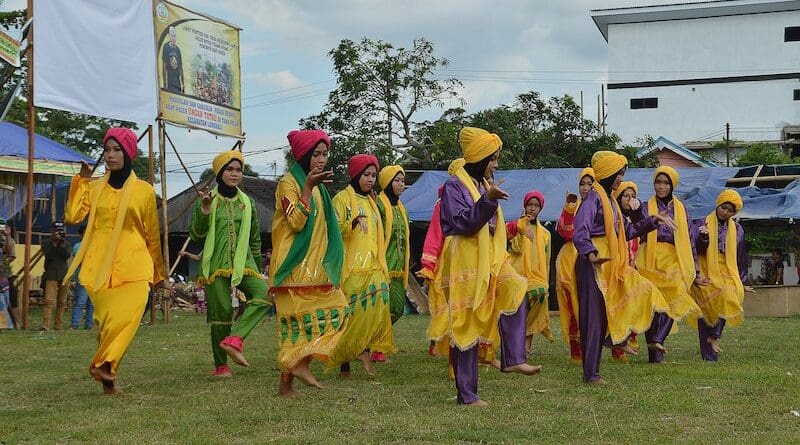
Before examining the youth-led initiatives, it is essential to first understand the demographic makeup of Samarinda, the capital of East Kalimantan. The demographic landscape of Samarinda mirrors the broader multicultural composition of the region, characterised by a diverse mix of religious and ethnic communities.[4] Islam is the dominant religion, and Muslims comprise 91 per cent of Samarinda’s population and 87 per cent of East Kalimantan’s,[5] with Christianity, Catholicism, and Buddhism making up the remaining portions.[6] Approximately 60 per cent of the population in these areas are of Javanese, Sundanese, and Madurese origin, while around 20 per cent of the population are Bugis and members of various ethnic groups from Sulawesi Island. The remaining 20 per cent consists of local and mixed ethnicities, contributing to the overall cultural diversity of the region.[7]
Alongside these migrant populations, East Kalimantan is also home to several indigenous ethnic communities, including the Kutai, Paser, Malay-Beraunese, Tidung, and Dayak. These communities have long historical roots in the region, with ancestral ties to the Kingdoms of Kutai, Paser, and Sambaliung-Gunung Tabur. Religiously, the majority of Samarinda’s population, particularly the Javanese, Bugis, and Banjar ethnic groups, adhere to Islam. Christianity and Catholicism are mainly practised by the Dayak, Toraja, Batak, Minahasa (Manado), Chinese communities and a minority among Javanese. The Chinese community predominantly follows Buddhism, while Hinduism is mainly practised by Balinese transmigrants. Overall, the region is diverse in both its ethnic and religious composition. This diversity not only adds to the vibrancy of Samarinda and East Kalimantan but also presents both challenges and opportunities for fostering harmony and mutual understanding among different groups. The next section explores the efforts of civil society organisations (CSOs) in East Kalimantan and their role in managing and promoting diversity within the region.
MANAGING DIVERSITY: EFFORTS BY CIVIL SOCIETY ORGANISATIONS (CSOS)
The religious and ethnic diversity of East Kalimantan, particularly in Samarinda, has given rise to two distinct types of CSOs. One group seeks to uphold and preserve the regions’ diversity by celebrating its broad spectrum of ethnic identities. By contrast, the other emphasises specific religions and local ethnicities as the foundation of their organisational identity. Both these contrasting groups play an active role in public discussions on the regions’ religious and ethnic diversity, especially during key events such as presidential and regional elections.
In recent years, there has been a noticeable rise in the presence of large banners and billboards in Samarinda and Balikpapan, claiming to represent mass organisations affiliated with local ethnic groups or indigenous Kalimantan tribes. This trend reflects the increasing prominence of regional ethnic organisations, and reinforces division between indigenous and migrant ethnic groups, or between local residents and those from other Indonesian islands. Moreover, the elites of these indigenous or local ethnic mass organisations are often linked to local politicians who either hold or aspire to government positions, including regional heads and legislative members at regional and national levels.
In this regard, it is important to highlight that the attitudes of CSOs in East Kalimantan towards diversity are primarily influenced by two key material factors: access to crucial government positions, and the distribution of resources. The recurring discourses in East Kalimantan society often centre on the marginalisation of migrants and the exclusion of native residents. The root cause of this marginalisation lies in state policies and the disproportionate influence granted to companies by central and regional governments.[8] The factors result in significant structural challenges within natural resource management, leading to inequitable access among various civil society groups.
Notably, the central and regional governments actively perpetuate the disparity in access between local residents and migrants, with migrant workers often being the primary beneficiaries of this bias. Moreover, regional mass organisations have inadvertently contributed to the widening divide between indigenous populations and migrants (perantau). Rather than advocating for equitable aid distribution or pushing for affirmative measures to support indigenous ethnic groups, these organisations have, in effect, exacerbated the rift between local residents and migrants.
THE POLITICAL-ECONOMY OF DIVERSITY
Compared to the CSOs, political parties and interest groups in East Kalimantan generally adopt a more pragmatic approach to diversity—they embrace it only when it aligns with their political and economic goals. Only a few civil organisations have genuinely prioritised diversity as their organisational goals. As a result, political parties tend to focus more on safeguarding economic and political interests than on promoting diversity. While the need for maintaining and appreciating diversity is acknowledged, the main objective is often to leverage the presence of multiple perspectives to further economic and political agendas. In the November 2024 gubernatorial election, for instance, one candidate pair blocked contenders of local ethnic heritage from competing by securing the support of established political parties. In this case, diversity and multiculturalism were secondary to political and economic interests.
It is important to note that the Javanese, the largest ethnic group in East Kalimantan, hold considerable influence, particularly in Samarinda. Political elites in the region often seek political backing from the Javanese population either by nominating them as candidates or appointing them to influential government positions, such as the regional secretary of East Kalimantan province or the mayoral secretary of Samarinda.[9] In these scenarios, diversity is not the primary consideration. Nevertheless, this example underscores the significant impact of ethnic diversity on regional head elections in East Kalimantan. Indeed, the positions of Regent (Bupati) and Deputy Regent (Wakil Bupati) in the Kutai Kartanegara region are predominantly occupied by ethnic migrants of Javanese-Bugis descent.[10] The Bupati and Wakil Bupati pair faced minimal competition in the most recent Bupati election, particularly from local ethnic candidates, such as those from the Kutai and Dayak communities.
While one might assume that Muslims, as the dominant religious group, exert significant influence over government and politics in East Kalimantan, there is, in reality, little to no substantial competition at the provincial level which is based on religious identity. In districts like Mahakam Ulu and West Kutai, governance and politics are primarily shaped by Christian communities and ethnic Dayaks, who practise Catholicism and Christianity. Over time, conflicts have emerged within the Muslim community, largely revolving around ethnic identity—particularly the divide between indigenous ethnic groups and ethnic migrants. However, political disputes generally downplay these identities, as long as they do not threaten political and economic stability. The discourse on diversity in this region is only revived when stability, especially on religious matters, is at risk.
YOUTH-LED EFFORTS IN PROMOTING DIVERSITY
On the other hand, the youths of East Kalimantan, particularly in Samarinda, have demonstrated a stronger willingness to embrace diversity. Youth organisations and activist groups, in particular, adopt a flexible and inclusive approach to religious and ethnic identities. This is largely because youths in East Kalimantan are more inclined to accept and celebrate religious and cultural diversity within their social circles. Their social dynamics tend to be less rigid and more open compared to those of the older generation, especially those involved in government, business, and politics. For example, the Gusdurian Community and Aksi Kamisan Kaltim—both led by young people—have been at the forefront of promoting diversity in the region, actively defending the rights of minority groups. Unlike the older generation, these young activists not only embrace diversity but also leverage it as a powerful tool to advocate for positive change, both within their local communities and across East Kalimantan.
The Gusdurian Community in East Kalimantan, in particular, actively champions diversity and pluralism in line with the teachings of Gus Dur, a respected figure in Indonesian history. On the other hand, Aksi Kamisan Kaltim principally dedicates its efforts to advocating for and enlightening the public on human rights and environmental concerns. Despite their distinct area of focus, both groups regularly advocate causes that safeguard the rights of marginalised communities in East Kalimantan, including those facing persecution, such as the Ahmadiyah group.[11] Furthermore, both groups address issues such as land grabbing, environmental degradation, and anti-corruption, partnering with other non-governmental organisations (NGOs) to amplify their efforts.
However, despite these youth-led efforts to promote diversity, the issue of migration, in particular, remains a dominant and polarising topic in East Kalimantan. Migration is often framed as a threat to the interests of the indigenous population, with some groups attributing resource scarcity and economic disparities to the influx of migrants. This has fuelled a growing wave of anti-migrant sentiment, with migrants being blamed for exploiting the region’s resources at the expense of the indigenous people. Such attitudes are further reinforced by the visible presence of billboards and public messaging in Samarinda and Balikpapan, which emphasise the need for indigenous communities to reclaim what they believe are their lost rights—something often framed as having been taken by migrants.
In light of this, youth organisations advocating for diversity in East Kalimantan have yet to issue a collective statement that challenges the aforementioned narrative. However, addressing this misconception is crucial, as the tension between indigenous and migrant communities is often rooted in the competition for scarce resources, a situation further compounded by the control over key resources by state-backed private companies. If left unaddressed, this issue could disrupt the harmonious coexistence between the region’s diverse communities.
THE EFFECTIVENESS OF YOUTH INITIATIVES
As highlighted earlier, the current situation presents significant challenges for civil society and youth organisations working to address diversity issues in East Kalimantan. Despite their efforts, religious and ethnic sentiments continue to overshadow the support for multiculturalism, particularly during major events involving religious and ethnic mass organisations. For example, the aftermath of the 2017 Jakarta regional elections saw heightened tensions between Islamic mass organisations, such as the Islamic Defenders Front (FPI), and several Dayak groups in East Kalimantan.[12] These mass organisations, with their extensive networks and influence, still play a dominant role in shaping religious and ethnic sentiments, often undermining the efforts of youth groups advocating for diversity and tolerance. As a result, organisations focused on promoting diversity and tolerance face considerable difficulties in mobilising the general public to support multiculturalism in East Kalimantan, especially when confronting organisations perceived as intolerant or conservative.
That said, influential religious organisations such as Nahdlatul Ulama (NU) and Muhammadiyah, along with ethnic and regional associations must step up to rally support for diversity, multiculturalism, and tolerance. By doing so, they can help mitigate the harmful impact of ethnic and religious attitudes that threaten tolerance in East Kalimantan. If these large organisations choose not to act, ethnic and religious sentiments could lead to social fragmentation. This, in turn, would make it increasingly difficult for youth-led efforts to promote tolerance and multiculturalism to have meaningful impact. This is especially true when highly organised and influential mass organisations make use of divisive rhetoric and actions. In such a climate, advocates of multiculturalism may struggle to encourage the celebration of diversity and tolerance in East Kalimantan.
Despite the challenges, the situation is not without hope—youth activists in East Kalimantan still have significant opportunities to promote and uphold diversity and multiculturalism. A strategic approach would begin with engaging the aforementioned prominent Islamic institutions, such as NU and Muhammadiyah, whose influence and networks can lend credibility and support to these efforts. Following this, youth leaders can collaborate with other religious groups, including those representing Christian, Catholic, Hindu, Buddhist, Confucian, and indigenous faiths, to foster a more inclusive dialogue. Additionally, youth activists can reach out to community associations representing groups such as the Javanese, Banjar, Bugis, Chinese, Batak, Kutai, Dayak, Tidung, and others, to form a broad coalition.
Simultaneously, proponents of multiculturalism must strengthen their partnership with NGOs. By promoting proactive measures that guarantee equal economic and educational opportunities for all, youth activists can address the growing religious and ethnic tensions between local ethnic groups and migrants. In doing so, they can help pave the way for a more inclusive, harmonious future in East Kalimantan.
For endnotes, please refer to the original pdf document.
- About the authors: Nasrullah is PhD candidate at the Department of Socio-culture and the Arts, Academy of Malay Studies, Universiti Malaya. He is also a lecturer and faculty member at the Faculty of Cultural Sciences, Mulawarman University. Azhar Ibrahim is Senior Lecturer at the Department of Malay Studies, National University of Singapore (NUS). Awang Azman Awang Pawi is Professor at Academy of Malay Studies, Universiti Malaya. He is also a Director of Center for Malay Excellence Studies (Pusat Kajian Kecemerlangan Melayu – PKKM), Academy of Malay Studies, Universiti Malaya.
- Source: This article was published at ISEAS Perspective