Monday, June 30, 2025

BURN BABY BURN

Burning Trash For Energy, People And Planet – OpEd
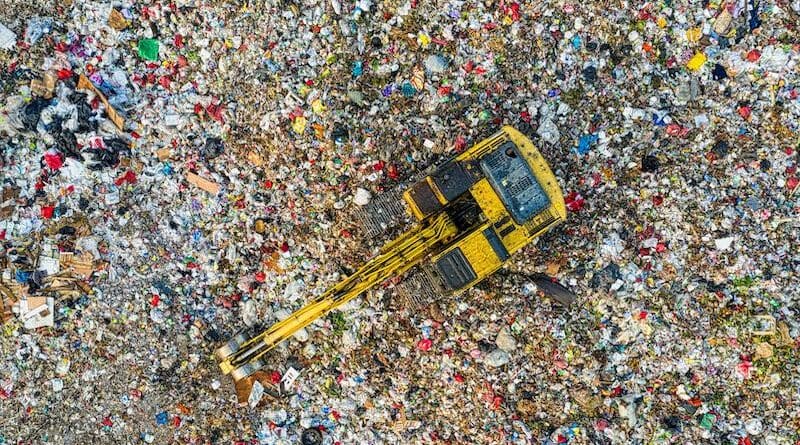
landfill garbage dump


By 

Waste-to-Energy reduces landfilling, increases recycling, powers society and avoids blackouts


After years of opposing them, but facing constituents increasingly angry about rising electricity prices, New York Governor Kathy Hochul recently gave grudging support for two new Williams Companies natural gas pipelines.

Assuming they clear new hurdles, the Constitution Pipeline will transport gas 100+ miles from northeastern Pennsylvania fracking fields toward Albany. The 23-mile Northeast Supply Enhancement Pipeline will connect New York to the New Jersey segment of the Transco Pipeline, America’s largest-volume natural gas pipeline system, and carry enough gas to heat 2.3 million homes.

Hochul, other state Democrats and environmental activists have long stymied the projects, using exaggerated and fabricated water quality and climate change arguments – and fanciful expectations that heavily subsidized solar panels and onshore and offshore wind turbines can provide enough affordable electricity, enough of the time, to meet steadily increasing New York City and State power demands.

In exchange, the Trump Administration will let them continue installing gigantic offshore wind turbines that will generate 9,000 MW of electricity (less than one-third of what the state needs on hot summer days) perhaps 30-40% of the year … and be supported by fire-prone grid-scale batteries that would provide statewide backup power for about 45 minutes.

New gas turbines would help avoid blackouts, ensure that poor families freeze less often in winter and swelter less in summer, and help the state meet power needs that are soaring because of data centers, artificial intelligence, and legislatively mandated conversions from gasoline and gas to electric vehicles, stoves, and home and water heating.


They could also help reduce the need to import electricity from Canada and other states: some 36,000 gigawatt-hours (11% of statewide electricity) annually.

But legislators want to put another hurdle in the way. New legislation would force homes and businesses to pay $10,000 or more to connect to natural gas lines. If Gov. Hochul signs the bill, or the legislature overrides a veto, few or no new customers would take advantage of the new gas.

It’s a kill switch, reflecting the state’s determination to impose “climate leadership” and “protect communities” from alleged dangers from fossil fuels.

It’s also hypocritical and irresponsible. New York doesn’t just import electricity; it also exports garbage.

New York City generates nearly eight million tons of waste annually. Its last municipal incinerator closed in 1990; its last municipal landfill in 2001. City trash is now mostly sent on barges, trucks and trains to landfills (80%) and incinerators (20%) in New Jersey, Upstate New York, Pennsylvania, and even Virginia, Ohio and South Carolina! NY State exports 30% of its garbage.

The city and state could address both garbage and electricity challenges by using natural gas to power waste-to-energy (WTE) generating plants that burn trash, thereby reducing the need to landfill or export garbage, while increasing recycling, producing reliable, affordable, much-needed electricity, and reducing blackout risks that are climbing every year.

In Fairfax County, Virginia, a WTE or resource recovery facility operated by Reworld Waste burns home, business, industrial and other garbage that doesn’t go straight into recycling programs and would typically be landfilled, including myriad extraneous plastics. The trash is dumped in a receiving area, sorted for unacceptable materials like rocks, mixed thoroughly, and burned with natural gas in a chamber at 2000 degrees F for up to two hours, until it’s totally combusted to ash. 

The heat converts water to steam, which is super-heated in tubes to drive turbines that generate electricity: 80 megawatts 24/7, enough for about 52,000 homes. Depending on its composition, a ton of waste generates 550-700 kilowatt-hours of electricity.

Since opening in 1990, the plant’s trash has replaced the equivalent of burning 2,000,000 barrels of oil for electricity every year.

Glass from lightbulbs and other nonrecyclable sources becomes part of the ash stream, from which ferrous and nonferrous metals are recovered. Most of the remaining ash is used as a substitute for sand and aggregates in road and building construction, cement and cinder block production, and manufacturing other building materials.

Unsold ash is landfilled but, by the time the metals are removed, only about 10% of the original trash bulk and 25% of its original weight is left.

Even staples, paper clips, bottle caps, metal light bulb bases, aluminum foil, and wires from spiral notebooks and furnace filters can be “recycled” this way. In fact, enough iron, steel, aluminum, copper and other metals are recovered from the resultant ash at the Fairfax facility to build 20,000 automobiles annually.

However, plastic-metal-glass waste (computers, monitors, keyboards, printers, microwaves), broken pots and pans, household appliances and other larger refuse should go to special “white goods” and metal recycling centers.

Lime neutralizes acids in the airstream, activated carbon controls heavy metals, and fabric filter bags remove particulates, keeping air emissions below EPA standards. The scrubber waste (fly ash) is then dewatered and chemically stabilized, before being landfilled or used in construction materials. 

Process steam condenses back into water and is reused. Water from the wastes and scrubbers is recovered, treated and used to cool the facility and equipment.

Two other trash-to-energy facilities serve the Washington, DC area; 75 across the USA generate over 2,500 MW of electricity. However, more WTE plants could help solve garbage, energy, landfill and pollution problems in metropolitan areas across the country (and worldwide), including:

* Philadelphia, PA – 1,300,000 tons per year of municipal solid waste (MSW), but only one WTE; 
* Chicago, IL – 3,100,000 tpy, but just one WTE plant (other proposed facilities were rejected);
* Houston, TX – 4,200,000 tpy, with one WTE facility;
* Phoenix, AZ – 1,000,000 tpy, and one WTE facility;
* Los Angeles, CA – 4,000,000 tpy, but again only one WTE facility.  

New York and other jurisdictions that have rejected natural gas and waste-to-energy/resource-recovery facilities are missing enormous opportunities to address challenges that will only become worse. They’re also dumping their own local responsibilities into their neighbors’ backyards.

These facilities ensure secure, affordable electricity generation close by, without the need for expensive backup power and multi-hundred-mile transmission lines to part-time wind and solar power.

They utilize fuels that America still has in abundance: gas and trash. And they reduce the need for resources that are in increasingly short supply: landfill space, cropland and wildlife habitats impacted, and bird, bat and other wildlife lost due to wind, solar and transmission installations.

From my perch, these clear and significant benefits clearly offset the cost and subsidyconcerns that some have raised about WTE facilities.

Metro areas and states should apply pragmatism, reality and these benefits when reconsidering climate and “renewable” energy ideologies that have dominated public policies for far too long.



Paul Driessen

Paul Driessen is a senior fellow with the Committee For A Constructive Tomorrow and Center for the Defense of Free Enterprise, nonprofit public policy institutes that focus on energy, the environment, economic development and international affairs.
During a 25-year career that included staff tenures with the United States Senate, Department of the Interior and an energy trade association, he has spoken and written frequently on energy and environmental policy, global climate change, corporate social responsibility and other topics. He’s also written articles and professional papers on marine life associated with oil platforms off the coasts of California and Louisiana – and produced a video documentary on the subject.


 

Wildfires Affected 30 Million Hectares In Brazil In 2024

Brazil Fire Forest Fire Children Fear Flame Amazon


By 

By Fabiola Sinimbu


In 2024, fires affected 30 million hectares of Brazil’s territory—the second-largest area burned in the past 40 years, and 62 percent above the average for the 1985–2024 period, according to the Annual Mapping of Land Cover and Use in Brazil (MapBiomas), a project developed since 1985 by a multi-institutional network that includes universities, NGOs, and technology companies.

The data were published on Tuesday (Jun. 24) in the first edition of the Annual Fire Report (RAF) and in Collection 4 of Brazil’s fire scar maps.

Last year, 72 percent of the area burned in Brazil was native vegetation. Forest cover was the hardest hit, with 7.7 million hectares consumed by fire, representing an increase of 287 percent compared to the average of the last four decades.

The Amazon

Studies show that the Amazon was the most hit biome in 2024, with 15.6 million hectares burned—the largest area harmed in the biome throughout the entire historical series. This corresponds to more than half (52%) of the total area consumed by fire in the whole country.

The region was not only the epicenter of burnt areas in the country, exceeding the average of the last 40 years by 117 percent, but also experienced a qualitative change in the type of vegetation altered.


For the first time, forest areas were the most impacted, accounting for 43 percent of the total burned area.

A total of 6.7 million hectares of forest and 5.2 million hectares of pasture were burned. According to the researchers, areas previously converted to pasture have historically been the most damaged, due to the common practice of using fire to clear land before planting pasture.

MapBiomas’ Amazon mapping coordinator, Felipe Martenexen, noted that the region was heavily affected by the El Niño phenomenon in 2023 and 2024, which left the biome drier and more susceptible to fire. However, since the occurrence of natural fires in native vegetation is very low, human action was necessary for the fires to start.

“We believe that inadequate pasture management plays a major role, as fire often escapes and causes forest fires,” explains Martenexen.

Atlantic Forest

The Atlantic Forest also registered a record area burned in 2024, exceeding the historical average by 261 percent. The biome saw 1.2 million hectares exposed to fire and includes four of the ten municipalities with the highest proportion of burned area: Barrinha, Dumont, Pontal, and Pontes Gestal.

Human-modified areas were hit hardest by fire last year, but the burning of natural vegetation also rose compared to the last 20 years.

“When fires occur, they tend to have a significant impact on the scarce forest remnants within the biome,” says Natalia Crusco, from MapBiomas’ Atlantic Forest team.

Pantanal

In 2024, the area burned in the Pantanal increased by 157 percent, representing the highest proportional rise in fire occurrence among all biomes in the country, compared to the historical average.

It was the third year with the largest area burned, totaling 2.2 million hectares. Of this total, 93 percent damaged native vegetation, primarily grasslands, flooded fields, and marshes.

Researcher Eduardo Rosa, MapBiomas’ Pantanal mapping coordinator, explains that fire dynamics in the biome were driven by drought in the Paraguay River region, where natural vegetation is concentrated.

“Although parts of the Pantanal are more adapted to fire, the areas near rivers contain a very complex mosaic of native vegetation that is more vulnerable,” says Rosa.

Cerrado, Caatinga, and Pampa

Last year, fires in the Cerrado accounted for 35 percent of the total area burned in Brazil. A total of 10.6 million hectares were hit—representing a 10 percet increase compared to the historical average of 9.6 million hectares per year.

In 2024, the area burned in the Caatinga decreased by 16 percent, with 404,000 hectares scarred by fire compared to an average of 480,000 hectares over the past 40 years.

In the Pampa, fire impacted a slightly larger area than in 2023, totaling 7,900 hectares—well below the historical average of 15,300 hectares per year. This represents a 48 percent reduction compared to the period analyzed.

Researchers state that the data offer the most comprehensive overview of fire activity across the country and reveal patterns in the occurrence of burn-offs and wildfires.

“The report enables us to support the planning of preventive measures and to direct firefighting efforts more effectively,” concludes Ane Alencar, Science Director at the Amazon Environmental Research Institute (IPAM) and coordinator of MapBiomas Fogo.


ABr

Agência Brasil (ABr) is the national public news agency, run by the Brazilian government. It is a part of the public media corporation Empresa Brasil de Comunicação (EBC), created in 2007 to unite two government media enterprises Radiobrás and TVE (Televisão Educativa).


Mixed Outlook For The UN On Its 80th Birthday – OpEd

United Nations flag. Photo Credit: Tasnim News Agency

By 

By Andrew Hammond


The UN celebrated its 80th birthday on Thursday. But Secretary-General Antonio Guterres used the occasion to warn that its founding charter is under assault like never before.

The organization was created out of the trauma of the Second World War, with the UN Charter inked by an initial 50 states on June 26, 1945. It came into force later that year with the aim of trying to prevent future wars, while also upholding human dignity and equal rights.

Guterres warned on Thursday that “we see an all-too-familiar pattern: follow when the charter suits, ignore when it does not. The Charter of the United Nations is not optional. It is not an a la carte menu. It is the bedrock of international relations.”

Of course, countries regularly accuse each other of violating the charter. In recent years, Russia and Israel have been cited by the General Assembly for violating it in Ukraine and Gaza, respectively. Earlier this month, Iran accused the US of breaching the charter with its strikes on three of its nuclear facilities.

Yet, as many challenges as the world body now faces, its 80th birthday underlines that it continues to have resilience and legitimacy. This is despite growing concerns over its relevance in an increasingly contentious, fragmented world.


There is still widespread recognition that global challenges can best be tackled through international, coordinated action, often led by the UN. And despite the deep decay of the post-1945 order, the remaining postwar international institutions — with the UN at their heart — continue to have major relevance almost a century after their birth. While these bodies are imperfect and in need of significant reform, they have generally enabled international prosperity and security, especially with the two most powerful countries in the world today, China and the US, both being permanent members of the Security Council.

The UN’s continuing relevance underlines the wisdom of the critical mass of nations that decided, at that time, to try to change the course of history by committing to work together for peace. In the decades since the signing of the charter, the world body has worked unwaveringly for peace, dialogue and cooperation to promote human rights, the rule of law and sustainable development, as well as fighting climate change.

Given the overall success of the UN after three-quarters of a century, one of the many ironies of the current political era is the sea change in view of the US administration. The UN and fellow multilateral institutions such as the International Monetary Fund and World Bank were key parts of the postwar settlement championed by American presidents in the 1940s and which were subsequently cultivated on a bipartisan basis by successors of every stripe to bolster US global leadership during the Cold War and beyond.

Yet, today’s administration is widely viewed to be hastening the collapse of that same postwar order. This surprises many across the world, given that the post-1945 system has generally been so beneficial for Washington in terms of both soft and hard power.

President Donald Trump, unlike all his postwar predecessors in the White House, has disowned many of the US-led institutions and alliances, promising instead an “America First” platform. On his first day back in power in January, for instance, he signed an executive order withdrawing the US from the World Health Organization.

The UN is also concerned about the expected outcome of a US review of its participation in the UN and other multilateral institutions, which was ordered by Trump and is expected in August. More than 60 UN offices, agencies and operations that get money from the organization’s regular operating budget are already facing job cuts of about 20 percent — part of reforms made by Guterres due to the White House’s already-announced funding cuts and wider developments.

But dismantlement is one thing — building something new is another. Thus far, the administration is yet to forge any comprehensive new doctrine centered on its core vision. Indeed, there has often been policy incoherence, reflecting the president’s transactional style of governing.

However, it is not just the vacuum caused by a lack of US leadership in the UN that is contributing to the uncertainty surrounding both it and the wider erosion of the post-Second World War settlement in the volatile, uncertain, complex and ambiguous landscape of 2025. For there is also growing geopolitical angst, as shown by the current tensions in the Middle East and Ukraine, not to mention other conflicts such as those in Sudan, eastern Congo, Haiti and Myanmar.

What makes this so worrying for the UN and other proponents of international peace and security is that it comes on top of layers of previous turbulence in the international landscape. The multiple challenges now confronting the international order include the fact that Washington’s relations with China are at one of their lowest points in decades.

A fundamental driver of whether the UN will thrive, not just survive, in the coming years is the direction of the ties between the US and China, the two most powerful members of the UNSC. With the US exiting the WHO and cutting its funding to other UN agencies, China’s influence will increase.

Right now, the US-China relationship seems set for growing bilateral rivalry and what some see as a new cold war that could see international cooperation erode, including over technology and wider trade issues. Military tensions are also increasing, from the South China Sea outward.

However, there may still be unexpected potential for partnership at the UN and beyond. Bilateral cooperation, possibly in the era after the Trump presidency, is most likely if stronger partnerships can be embedded on issues like climate change, as during the Barack Obama and Joe Biden years, which may enable more effective ways of resolving hard power disputes.

  • Andrew Hammond is an associate at LSE IDEAS at the London School of Economics.

Arab News

Arab News is Saudi Arabia's first English-language newspaper. It was founded in 1975 by Hisham and Mohammed Ali Hafiz. Today, it is one of 29 publications produced by Saudi Research & Publishing Company (SRPC), a subsidiary of Saudi Research & Marketing Group (SRMG).


Iran Could Resume Uranium Enrichment Within Months, Says UN Nuclear Chief


International Atomic Energy Agency (IAEA) Director General Rafael Mariano Grossi. Photo Credit: Dean Calma / IAEA


By 

(RFE/RL) — Iran could resume producing enriched uranium within months despite significant damage inflicted on its nuclear facilities by recent US and Israeli air strikes, according to Rafael Grossi, the head of the UN’s nuclear watchdog.


“The capacities they have are there. They can have, you know, in a matter of months, I would say, a few cascades of centrifuges spinning and producing enriched uranium, or less than that,” Grossi told CBS News in an interview scheduled to air on June 29.

Grossi, who leads the Vienna-based International Atomic Energy Agency (IAEA), acknowledged that attacks on sites in Fordow, Natanz, and Isfahan had set back Iran’s capacity to convert and enrich uranium.

However, he cautioned: “Frankly speaking, one cannot claim that everything has disappeared and there is nothing there.”

“Iran is a very sophisticated country in terms of nuclear technology,” Grossi said. “So you cannot disinvent this. You cannot undo the knowledge that you have or the capacities that you have.”

Israel launched a bombing campaign against Iranian nuclear and military sites on June 13, stating its aim was to prevent Tehran from developing nuclear weapons — an objective Iran denies, insisting its program is solely for peaceful purposes.


The United States later joined the strikes, targeting three key facilities linked to Iran’s atomic program.

US President Donald Trump claimed on June 26 that Iran’s nuclear program had been set back “decades” and said he would consider further strikes if Iran resumed worrying levels of uranium enrichment.

On June 29, Trump told Fox News that Iran’s nuclear capabilities were “obliterated like nobody’s ever seen before. And that meant the end to their nuclear ambitions, at least for a period of time.”

Iranian Foreign Minister Abbas Aragchi confirmed that the damage to nuclear sites was “serious,” though details remain unclear.

A major unresolved issue is the fate of Iran’s stockpile of highly enriched uranium, enriched to 60 percent — above levels needed for civilian use but still below weapons grade. Iran is estimated to have had around 400 kilograms of this uranium.

“We don’t know where this material could be,” Grossi said. “So some could have been destroyed as part of the attack, but some could have been moved. So there has to be at some point a clarification.”

In his interview with Fox News, Trump indicated that he did not believe Iran had relocated its stockpile.

“It’s a very hard thing to do plus we didn’t give much notice. They didn’t move anything,” he said.

Meanwhile, Iranian lawmakers voted to suspend cooperation with the IAEA, and Tehran denied Grossi’s request to visit the damaged sites, including Fordow, Iran’s main uranium enrichment facility.

“We need to be in a position to ascertain, to confirm what is there, and where is it and what happened,” Grossi said.

Following calls in the hard-line Iranian Kayhan newspaper for the “arrest and execution” of the IAEA chief, US Secretary of State Marco Rubio said such statements were “unacceptable and should be condemned.”

“We support the IAEA’s critical verification and monitoring efforts in Iran and commend the Director General and the lAEA for their dedication and professionalism,” he said. “We call on Iran to provide for the safety and security of IAEA personnel.”

Iran’s ambassador to the United Nations, however, assured Grossi needs not to worry. In an interview with US broadcaster CBS, Amir Saeid Iravani said “there is not any threat” against the inspectors or the director general. “Inspectors in Iran were “in safe conditions,” he added.

Separately, French President Emmanuel Macron said he held a telephone conversation with Iranian President Masud Pezeshkian on June 29, telling him that Tehran’s best course of action was to return to the negotiating table and to allow resumption of the IAEA’s work in the country.


RFE RL

RFE/RL journalists report the news in 21 countries where a free press is banned by the government or not fully established.


France, Germany and UK condemn 'threats' against UN nuclear watchdog chief

France, Germany and Britain on Monday condemned "threats" against the head of the UN nuclear watchdog after Iran rejected its request to visit nuclear facilities bombed by Israel and the United States.


Issued on: 30/06/2025 - RFI

IAEA Director General Rafael Grossi with Austrian Foreign Minister Beate Meinl-Reisinger, at the Austrian Chancellery, in Vienna, Austria, 25 June, 2025. © Reuters/Lisa Leutner

Tehran has accused Rafael Grossi, head of the International Atomic Energy Agency, of "betrayal of his duties" for not condemning the Israeli and US strikes on Iran's nuclear sites, and Iranian lawmakers this week voted to suspend cooperation with the agency.

"France, Germany and the United Kingdom condemn threats against the director general of the IAEA Rafael Grossi and reiterate our full support to the agency," foreign ministers Jean-Noël Barrot, Johann Wadephul and David Lammy said in a joint statement.

"We call on Iranian authorities to refrain from any steps to cease cooperation with the IAEA," they added.

"We urge Iran to immediately resume full cooperation in line with its legally binding obligations, and to take all necessary steps to ensure the safety and security of IAEA personnel."

Excuse

On Friday, Iranian Foreign Minister Abbas Araghchi said on X that Grossi's insistence on visiting the bombed sites was "meaningless and possibly even malign in intent".

Iran has said it believes an IAEA resolution on 12 June that accused Iran of ignoring its nuclear obligations served as an "excuse" for the war that Israel launched on 13 June and that ended with a fragile ceasefire last week.

Iran nuclear sites suffered 'enormous damage', IAEA chief tells RFI

Argentina, Rafael Grossi's home country, has also slammed "threats" against him from Iran.

None specified which threats they were referring to, but Iran's ultra-conservative Kayhan newspaper recently claimed documents showed Grossi was an Israeli spy and should be executed.

Speaking to US broadcaster CBS on Sunday, Iranian ambassador to the United Nations Amir Saeid Iravani denied there was any threat to nuclear inspectors in Iran, insisting they were "in safe conditions" but their work was suspended.
Downplayed damage

Questions remain as to how much damage the US strikes did to Iran's nuclear programme, with President Donald Trump and his officials insisting it had been "obliterated".

On Sunday, however, The Washington Post reported that the United States had intercepted calls between Iranian officials who said the damage was less than expected.

That followed an early "low confidence" US military intelligence report that said the nuclear programme had been set back months, not years.

Israel has said Iran's programme was delayed by years, while Tehran has downplayed the damage.

The IAEA said Iran had been enriching uranium to 60 percent, far above the levels needed for civilian nuclear power, although Grossi previously noted there had been no indication before the strikes that Iran was working to build an atomic weapon.

On Saturday, Grossi told CBS Iran likely will be able to begin to produce enriched uranium "in a matter of months," despite damage.

Israel has maintained ambiguity about its own nuclear arsenal, neither officially confirming nor denying it exists, but the Stockholm International Peace Research Institute (Sipri) has estimated it has 90 nuclear warheads.

(with AFP)


‘Flying Money’ Scheme Aiding Trafficking In Wildlife, Other Illicit Resources

China Elderly Woman Market Seller


By 

The Chinese term fei chien, which translates to “flying money,” refers to an underground financial system with no paper trail that dates back to the Tang dynasty in the ninth century, when traders established a network to settle accounts without carrying coins over long distances.


The ancient Chinese scheme still exists today. Experts say it is the primary method of laundering immense amounts of cash linked to wildlife trafficking and the smuggling of illicit minerals and other natural resources. Traditional Chinese medicine is a leading driver of the illicit wildlife trade worldwide.

“Flying money is often used to denote Chinese money laundering or paying in-kind with a commodity instead of cash,” Vanda Felbab-Brown, a senior fellow with the Brookings Institution and an expert on international crime and terrorism, told conservation website Mongabay for a June 6 article.

Fei chien allows for the virtually untraceable transfer of huge sums of money. Transnational criminal networks use this shadowy system to launder money, pay traffickers and move illicit profits across borders while avoiding the conventional financial sector.

According to Andrea Crosta, Chinese brokers around the world help traffickers pool profits from the illegal trade of wildlife, timber, gold and drugs. Crosta is the founder and director of Earth League International, a nonprofit that works to monitor, investigate and dismantle these crime networks.

In fei chien, a broker in one part of the world receives money and transfers it to another agent in the network elsewhere who pays the same amount to the intended recipient. With Chinese brokers around the world and in their homeland connected to illicit trade, untraceable funds are transferred anonymously through or end up in China.


“The same crooks trafficking people, drugs and weapons are increasingly trafficking elephant ivory, tiger bones and many other natural resources,” Crosta wrote in a June 6 article for Mongabay. “That’s why I believe flying money is the greatest national security risk you’ve never heard of.”

Crosta sees fei chien as a critical component in what he calls “environmental crime convergence” — the growing connection between environmental crime and global organized crime.

“Studies estimate the annual value of environmental crime at between $110 billion and $281 billion, making it one of the most lucrative criminal economies in the world,” the Global Initiative Against Transnational Organized Crime (GI-TOC) stated in a 2023 report.

“Few of the proceeds of this market benefit the development of communities near the source markets but are instead transferred abroad and laundered into the global financial system.”

Internet-enabled smart devices have transformed how illicit exotic wildlife, timber, precious metals and other commodities are sold, with traders able to reach to a much wider audience over long distances and at little cost, GI-TOC said.

Money laundering through the fei chien system is key to the connection between multiple criminal enterprises.

“The menace has grown in recent years, fueled by underground Chinese networks equipped with new technologies that can enable dirty money to be washed clean in minutes,” according to a 2024 report in The Economist magazine. “For transnational criminal gangs, these shadowy ‘banks’ are becoming the financiers of choice.”

Crosta says one way to fight fei chien is to target the individuals, entities and countries with sanctions for facilitating financial crimes. This also would help restore legitimate government revenue from legal transactions. In Africa, that kind of response could save wildlife, ecosystems and tourism industries that are in danger.

“The only way to defeat a threat stretching from Asia to Africa is by working together,” he wrote.


Africa Defense Forum

The Africa Defense Forum (ADF) magazine is a security affairs journal that focuses on all issues affecting peace, stability, and good governance in Africa. ADF is published by the U.S. Africa Command.