Sunday, January 25, 2026

Ukraine: The peace that cannot come

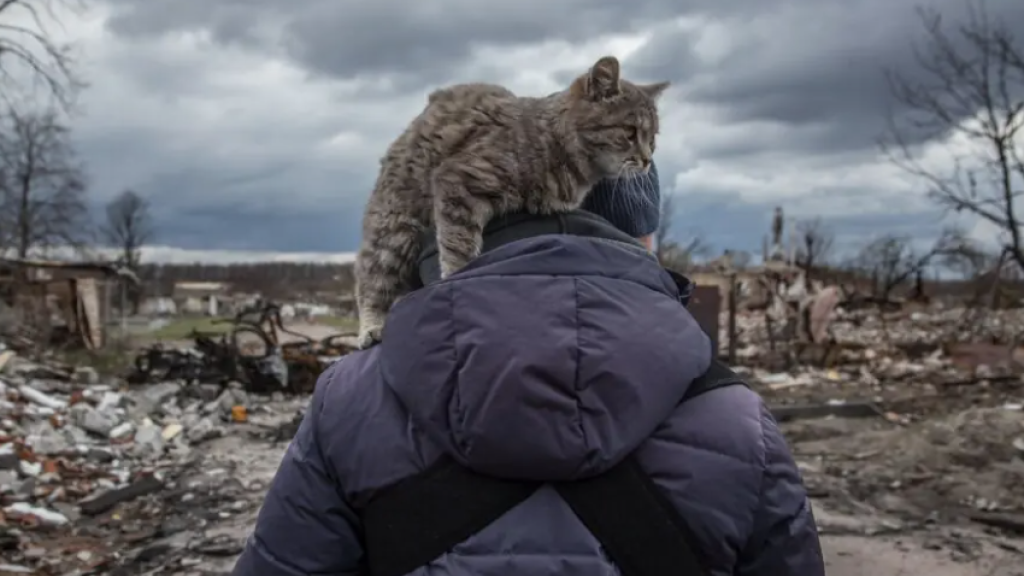
Four years of war and no end in sight: destruction caused by Russian airstrikes in the village of Novoselivka, April 2022.

First published at analysis and critique.

For my grandparents, it took three years, ten months, two weeks, and three days of horror and sacrifice from the moment the first bombs fell on Belarusian and Ukrainian cities until the aggressor capitulated. Today, the war that Russia is waging in our country is about to enter its fifth year with neither victory nor defeat in sight. Nearly 20 percent of Ukraine's territory is already occupied, but less than one percent of that was gained in the last year.

To the relief of many peace enthusiasts, Kyiv's efforts have shifted toward seeking diplomatic solutions, with European capitals following suit. Yet as Trump's deadlines have passed, the deal remains nowhere closer. Optimistic claims that 95 percent of terms are agreed upon, with only a few thorny questions left, make one wonder how this differs from the infamous Istanbul communiqué, which "almost brought us peace" but was similarly full of deferred disagreements.

Negotiations now revolve primarily around the positions of Ukraine and its allies, with those of the US, which in turn holds talks with Russia. The latest proposals maintain symbolic figures — an 800,000-strong domestic army, Article 5-like guarantees valid until Ukraine fires on Russian territory unprovoked — while leaving control of the Zaporizhzhia nuclear plant and territorial concessions unresolved. Kyiv agreed to presidential elections and even suggested a referendum to validate the peace agreement, provided an armistice would make them possible. All in vain: after a phone call, both Putin and Trump agreed that an immediate ceasefire would only prolong the conflict.

In the meantime, Russia continues “solving the problems by military means”. Early January strikes at energy infrastructure caused total blackouts in Dnipropetrovsk and Zaporizhzhia regions, leaving nearly 800,000 without electricity as temperatures dropped well below zero. Then the power was cut to over 500,000 in Kyiv. Moscow even fired a nuclear-capable hypersonic Oreshnik ballistic missile that reportedly hit an underground gas storage near the Polish border.

Russia's idée dixe

Andriy Movchan argues in Counterpunch that many severely underestimate the ideological component of the Kremlin's invasion. All of Russia's foreign actions have long been subordinated to one goal: the subjugation of Ukraine, which has become an idée fixe. If this cannot be achieved militarily now, Russia will embed conditions in any peace process that allow it to continue under more favorable circumstances. Preventing the recurrence of aggression is key for both Ukraine and European security.

This explains Moscow's harsh reaction even to cautious discussion of possibly deploying multinational forces in Ukraine: of limited size, only after a comprehensive ceasefire, away from the contact line, and if nothing endangers their safety. The Kremlin perceives any potential hindrance as a threat to its ambitions and warns that any such units and facilities will be treated as legitimate military targets.

If Russia were indeed looking for compromise in good faith, a hypothetical international police mission in a demilitarized neutral zone along the entire contact line could lift the siege from Kherson, ensure freedom of navigation on the Dnipro, secure the Zaporizhzhia nuclear plant, reinstate access to Pokrovsk's coking coal mines, allow refugees to return, and physically separate the forces. Unlike military formations, such a mission could focus on civilian protection and surveillance rather than force projection. It could even allow Moscow to declare victory: no NATO troops in Ukraine, a buffer zone secures "the people of Donbas", their land link to Crimea is maintained, while EU accession obliges Kyiv to respect minority rights and equips them with grievance mechanisms. The fact that nothing alike is even considered is further evidence that all these are no more than excuses.

At the Defense Ministry meeting in December 2025, Putin was explicit: Russia would "unconditionally" achieve its war aims and "liberate its historic lands", predicting European "little pigs" backing Kyiv would eventually lose power.

The peace wing

The spokespeople of Peace from Below, Alexei Sakhnin and Lisa Smirnova, also dismiss in Jacobin the idea that Putin seeks an amicable settlement. Russia's regime goals are to crush Ukraine completely, leaving it defenseless and in political turmoil, to justify the costs of the "special military operation" and to avoid any possible future threats. Yet they believe that a genuine call for immediate and unconditional force from the people's movements would, when refused by the Kremlin, delegitimize the regime in the eyes of its sympathizers.

This stance is beyond naive. It could even cause harm if taken seriously. Undermining support for Ukraine's defense effort only weakens Kyiv's negotiating power. It is completely unclear what such a call could offer different from previous Ukrainian proposals without delivering the Kremlin exactly what it wants. Over the past year, Kyiv has submitted multiple ceasefire proposals, all of which were rejected outright. Yet there were no protests by angry peace activists worldwide outside Russian embassies. While massive pro-peace rallies condemning domestic militarism were held in the West which Russian media reported on extensively, nothing of the sort was seen on the streets of Russian cities.

While desertions occur and fatigue grows, Moscow reports exceeding its recruitment quota for mercenaries. Hundreds of thousands of Russians continue going armed to Ukraine, voluntarily, to escape sentences, earn money, or advance careers. Historic experience shows it takes more than positive vibes from abroad for people to rise. Food shortages triggered riots in 1917, and heavy battlefield losses and distrust of incompetent leadership drove Prigozhin's insurrection in 2023.

Ukraine's mission impossible

The latest public opinion figures show consistent resilience: over the year, the share of those who categorically oppose territorial concessions stands still, at a simple majority. At the same time, more than two-thirds could accept the frozen conflict, yet 74 percent continue to reject the Moscow terms. Still, 17 percent admit they could live with Russia's version of peace, and another nine percent remain undecided — enough people to refer or appeal to for those willing to take a chance. As resources dwindle and exhaustion deepens , these numbers could rise, which could lay the grounds for internal political conflict.

The fiscal reality is brutal. Ukraine's 2026 budget requires $49 billion in external support – without which the country would be financially non-functional. Last year's trade deficit doubled to $42 billion, increasing dependence on Western cash flows. Public debt has reached $186 billion, with servicing already consuming 18 percent of domestic revenues. Instead of seizing frozen Russian assets, the EU's € 90 billion loan for 2026-2027 adds to this debt pile, but at least repayment is supposedly postponed until Moscow pays reparations. Even if the frozen assets were used:, without peace in sight, the debt trap tightens, and reconstruction costs mount.

Military exhaustion compounds fiscal crisis. The AWOL epidemic reached record levels in 2025, prompting the government to restrict statistical data and announce yet another Defense Minister change. Kyiv still controls nearly 20 percent of the disputed territories with heavily fortified urban areas. Withdrawing is both unpopular and strategically dangerous, as it moves the frontline closer to neighboring regions with harder-to-defend positions. Russian troops advance slowly with heavy losses, but Moscow appears ready to wait and pay the price.

This grim situation forces an unavoidable question I would have dismissed years ago under the pretext of not being a military expert. What is the goal of Ukraine in this war? Hold until gathering strength to expel the occupants? But where will such resources come from? Wait until Russia's economy crashes? Ilya Matveev's research points out that while state-directed mobilization helped Russia weather initial shocks, its economy has settled into long-term stagnation — but no imminent collapse is in sight. Maintain independence and future prospects? But protracted war undermines both.

Support for people is not the same as support for the government. The latter can be awful and disgusting, but those in Ukraine can hardly afford to move on and step aside because the aggressor's rule is far worse. Few indeed are willing to risk dying fighting, but even fewer would choose to live under occupation. The best options from an individual perspective would be for the war to stop or, at least, for there to be an opportunity to escape. But neither is on the table for the country as a whole.

Russia is prepared to bear the costs of the war, condemning Ukraine to an unenviable choice: yield now or fight as long as support continues. Calling to withdraw resources to force Ukraine's capitulation in "an unwinnable war" is a curious policy choice, but many on the left seem content with it. Sooner or later, such an outcome may indeed become reality. But to the disappointment of the peace wing, the world in which this becomes possible doesn't bring heaven.

The New World Disorder

The broader context offers a glimpse of the future. On January 3, the United States conducted a military operation to capture Venezuelan autocrat Nicolás Maduro. This wasn't even dressed up as a humanitarian intervention. The justification was blunt: control over oil.

Buoyed by success, Trump revived his push to acquire Greenland and openly mocked international law in the process. The signal was unmistakable: power decides, rules follow if convenient. Against this backdrop, it's unclear how durable Washington's interest in Ukraine really is, what price it will demand, and whether any security guarantees would bind the US once circumstances change. For Europe, still coming to terms with the necessity to confront Russia, which is ready to assert its interests by force, this looks less like leadership and more like betrayal. Suddenly, talking about Ukraine as a shield no longer sounds like a figure of speech. Putin's reassurances should offer no comfort — he is a man of his word in the narrowest sense: he gives it and takes it back.

Ukraine may have to swallow a bitter pill, but so will any other country not interested in, or not capable of, imperial conquest. Whoever reduces peace or justice to moral categories will never be able to achieve either. Rather than condemning the wrongs, it's time to ask what makes them possible. Should smaller nations or communities accept a world where great powers dictate what they want? And if not, what tools are actually available to resist when someone stronger is twisting your arms?

Oleksandr Kyselov comes from Donetsk. He is a left-wing activist and research assistant at Uppsala University.

Iran in revolt: Neoliberalization, sanctions, repression


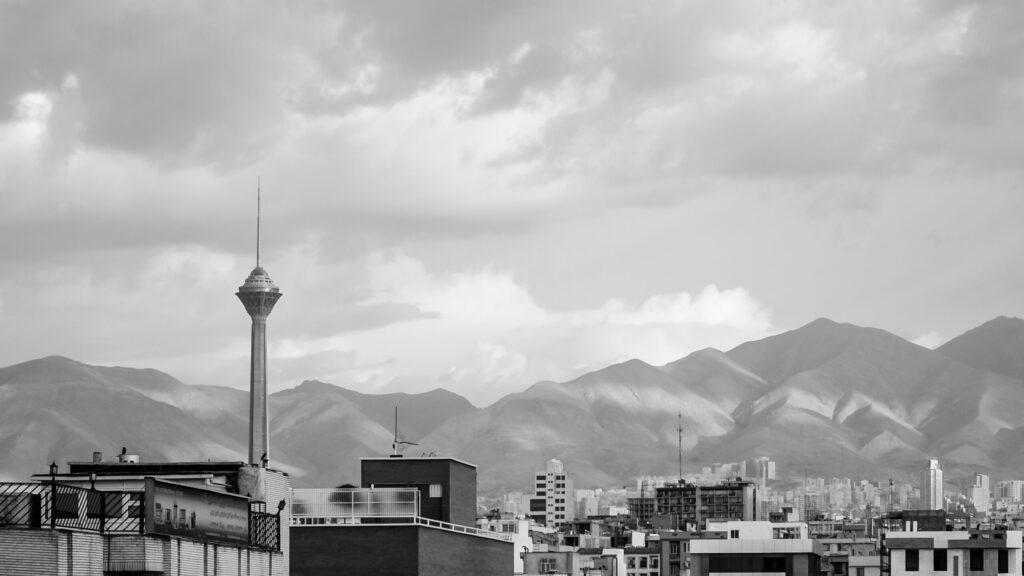
Tehran skyline

First published at Phenomenal World.

The recent unrest in Iran marks the fourth major uprising since 2017.1 Sparked by merchants in Tehran who closed their stores in protest at a sharp drop in the currency, the ferment soon spread across the nation, drawing in a wide cross-section of people — from students to business owners to the urban poor — who clashed with the increasingly repressive state authorities. Over the next three weeks, the turmoil only seemed to escalate: an internet blackout, a mounting death toll, apparent penetration of the protests by Mossad, threats of bombing and regime change from Washington.

And then, in a matter of days, the momentum ebbed away. The government appeared to regain control, using what one analyst described as a “systematic strategy to encircle and fatigue the protest movement.” For now, it seems the clerical establishment will remain in place, since the domestic opposition is not strong enough to dislodge it and the US is unwilling to risk a major intervention.

Yet the crackdown has done nothing to address the origins of the upheaval, which lie in the country’s political economy and social structure. These have been reshaped, in recent decades, by two primary forces: the neoliberalization of the post-revolutionary state since the early 1990s, and the dramatic expansion of international sanctions since 2012. This has reconfigured Iran’s patterns of accumulation, allowing a narrow set of actors — primarily the Islamic Revolutionary Guard Corps (IRGC) and the religious-revolutionary foundations — to consolidate power.

For everyone else, conditions have deteriorated. Inequality and poverty are on the rise. Casualization and wage repression are ubiquitous. Welfare has been eroded, the middle class has been hollowed out, and a growing stratum of educated youth are unemployed or underemployed. The result is a simmering crisis of legitimacy, which now routinely erupts into the open. In what follows, I will show how deep political-economic transformations created the context for the events of this month, and interrogate their meaning for the future of the Iranian regime. Roiled from within and menaced from without, what are its chances of survival?

Welfare-warfare state

Following the overthrow of the Shah in 1979, Islamist forces, loyal to the charismatic Ayatollah Khomeini and supported by a broad segment of the population, moved to crush their revolutionary rivals — using violent methods to suppress the communists, the nationalist liberals, and national minorities. The newly established Islamic revolutionary state had three main offices: the Supreme Leader, the President, and the Prime Minister. While the President was directly elected by the people, real executive power rested largely with the Prime Minister, who led the government.

This ruling apparatus went on to develop an economic agenda with two main pillars: achieving independence from the United States, and redistributing wealth to promote social justice for the “downtrodden” (mostazafan). Viewing nationalization as essential to these aims, the Revolutionary Council launched a wave of state takeovers in which the assets of former elites were confiscated and redistributed. They were classified as either governmental property (dolati) to be managed directly by state ministries, or as public property (omumi) which was placed under the authority of the Supreme Leader.

The dolati assets—ranging from private banks and insurance companies to heavy industries —  thus came under the control of newly created revolutionary ministries, all of which were part of the executive branch, with their leaders appointed by the Prime Minister. The omumi assets, on the other hand, were transferred to foundations known as bonyads: the Mostazafan Foundation, the Martyrs’ Foundation, the Imam Khomeini Relief Committee, the Fifteen Khordad Foundation, and Setad (Execution of Imam Khomeini’s Order). These were nominally public bodies that operated under the personal authority of the Supreme Leader and were therefore outside government oversight. Their purpose was to advance the cause of social justice by uplifting the mostazafan.

The bonyads’ access to resources and autonomy from government allowed them to grow quickly. During the Iran-Iraq War, their activities expanded to encompass large-scale relief and reconstruction efforts. Within a few years, they had evolved into sprawling, semi-private monopolies that wielded significant economic and social influence.

This gave rise to a factional division within the revolutionary power bloc. On one side, there were the bureaucrats who controlled the state enterprises under the authority of the government ministries. This state-bureaucratic faction advocated the subordination of individual property rights to perceived state interests. Politically, they were represented by the Islamist Left. On the other side, there was the group that coalesced around the bonyads, with their close institutional and social ties to the traditional merchant class of the bazaar. This bonyad-bazaar nexus favoured a conservative interpretation of Islamic law and charitable activity, and resisted greater government intervention in its economic affairs. This faction was represented by the Traditional Right.

Both factions competed for the support of the subaltern classes, promising to fulfil the promises of the revolution. Yet while the Shah had been ousted, little had been done to overturn his industrial policy of import-substitution industrialisation (ISI). Iran’s economy remained heavily dependent on domestic industries producing consumer goods, which in turn relied on imported technology and materials. It did not take long for this model to run into serious trouble. The conflict with Iraq forced Iran to divert a large amount of its oil income into the war effort, while also undertaking a massive redistribution of wealth to the poor, via food rations, cash stipends, and broader access to public services. This dynamic produced an expansive welfare-warfare state — but without a firm economic basis to maintain it.

As the country’s oil infrastructure was damaged by political upheaval and US sanctions, it became difficult to generate sufficient foreign exchange to finance imports. Agricultural output remained flat, industrial capacity was underutilized, and unemployment rose sharply. Between 1976 and 1989, real GDP per capita fell by 46 percent. Facing a crisis of accumulation, a powerful group within the state-bureaucratic faction, led by Hashemi Rafsanjani, advocated market liberalization and integration into the post-Cold War global economy as the only viable way forward. To sideline bureaucrats who were still committed to ISI, Rafsanjani and his allies formed an alliance with the bonyad-bazaar nexus. From the early 1990s onward, they succeeded in marginalizing the Islamist Left and setting an entirely new economic direction for Iran.

The neoliberal turn

Iran’s First Five-Year Development Plan, approved in June 1990, marked the beginning of this neoliberal era. Under President Rafsanjani, who ruled until 1997, and his successor Mohammad Khatami, whose tenure lasted until 2005, the state unleashed a series of pro-market policies. It abolished Iran’s multiple exchange rates — which had previously been maintained for different sectors and transactions — and created a single, market-based one. It moved to restructure the financial sector, rationalize prices, and phase out energy subsidies to reduce fiscal pressures. Efforts were made to replace non-tariff barriers with tariffs and to lower average tariff rates in line with emerging WTO norms. Legal and institutional reforms were introduced to attract foreign direct investment. The Tehran Stock Exchange was reopened. A suite of policies were designed to promote non-oil exports.

Although privatization was presented as the cornerstone of this new strategy, it only ever went so far. Efforts were made to partially open state-controlled industries to Western multinationals, with the aim of attracting capital, technology, and market access to support export-oriented industrialization. While Rafsanjani oversaw the sale of 391 government-owned companies, most of them were simply transferred to investment firms within the banking sector and pension funds which disguised themselves as non-governmental business groups. Such firms went on to become some of Iran’s largest diversified conglomerates, controlling dozens of holdings and hundreds of subsidiaries. Khatami accelerated the trend by privatizing another 339 enterprises and licensing new private firms in competitive sectors. More than a hundred spin-off companies from the National Iranian Oil Company were established as nominally private firms which continued to operate with state capital.

Rather than total privatization, then, Iran saw the proliferation of these “semi-private” enterprises: subsidiaries of ministries and government organizations, often tied to bureaucrats and their relatives, who were able to strike deals with powerful forces in the government. The result was not the dismantling of state control but rather its reconstitution through a web of semi-private conglomerates. This allowed political and bureaucratic elites to consolidate their power under the guise of market reform.

The outcome was the mutation of what was once the original revolutionary state-bureaucratic faction into new, Western-oriented faction of the ruling bloc. This group was primarily concerned with integrating Iran into the financial, trade, and institutional networks of OECD economies, mainly in Western Europe and North America. It found political representation in the New Right — most notably the Servants of Reconstruction Party, as well as reformist parties such as the Participation Front and the Mojahedin of the Islamic Revolution Organisation.

The military-bonyad complex

Yet the power of the Western-oriented faction would soon come up against a set of formidable rivals. Under this neoliberal regime, various institutions of the old order remained intact. The bonyad-bazaar nexus retained its influence and managed to carve out an exemption from the privatization agenda. The IRGC also enhanced its role in both the state and civil society, participating in reconstruction and other economic activities in the aftermath of the war with Iraq. Not even Khatami was capable of curbing the power of these autonomous actors — whose Eastern orientation was at odds with the state’s program of opening up to the West. Such forces became more deeply embedded after Mahmoud Ahmadinejad came to power in 2005, setting in motion a seismic shift in Iran’s political economy, which ultimately disempowered the Traditional Right and New Right alike.

A former IRGC commander, Ahmadinejad had close ties with both the Guards and the bonyads. Nearly two-thirds of his first cabinet were drawn from the military and security apparatus. He created the conditions for the bonyads to expand their economic role by transforming into large conglomerates — which were not simply expected to turn a profit, but also to contribute to national development, as part of an approach explicitly modelled on the large-scale corporate structures of East Asia. With that, a novel and more aggressive phase of privatization had begun.

This was enabled by the reform of Article 44 of the 1979 Constitution. The clause had originally stated that Iran’s economy was primarily state-controlled, confining the cooperative and private sectors to peripheral roles. Yet a reinterpretation of the article, ratified by the Supreme Leader in 2004, altered the government’s role: replacing direct ownership and management with policy-making, supervision, and oversight. Two years later, this was extended to authorize “public, non-governmental entities and organs, the cooperative and private sectors” to invest in, own, and manage up to 80 percent of shares in major state industries, including banking, insurance, energy, telecommunications, transport, and even defence. The Ahmadinejad administration thus had a legal framework to transfer substantial state assets from government ministries to firms affiliated with the IRGC and bonyads.

Though the law still required state assets to be tendered competitively on the stock exchange, the government argued that bidders had failed to appear and that it therefore had to carry out direct transfers, using a mechanism known as “liabilities clearance.” This effectively meant handing large enterprises over to their creditors, many of which were bonyads and IRGC-affiliated firms. What was presented as debt repayment actually functioned as a form of asset transfer.

Assets were also transferred through so-called “justice shares,” in which the government allocated 40 percent of shares in major enterprises to low-income households, war veterans, families of martyrs, and members of the Basij. They were doled out at steep discounts or sometimes free of charge, with repayment supposed to occur over ten years through company profits. Roughly 49 million people were deemed eligible for the scheme and 30 provincial justice-share investment companies were created to administer it. Once again, management of the shares was concentrated in bonyad-linked institutions, such as the Imam Khomeini Relief Committee and the Mostazafan Foundation. Welfare distribution thus became yet another means of selling off the state, further tightening the grip of bonyads and the military over the economy.

Between 2005 and 2013, the Ahmadinejad government transferred assets at nearly fifty times the pace of privatization under Khatami. This was framed as part of the same “liberalization” drive pursued by previous administrations. But its effects were wholly different. Rather than fulfilling the dreams of the Western-oriented faction, who wanted to remake Iran as a model neoliberal nation, Ahmadinejad’s reforms entrenched the power of traditionalist parastatal actors and increased their economic significance — allowing the conservative, Eastern-oriented elements within the Islamic Republic to gain the upper hand.

The IRGC moved swiftly to exploit this new phase of privatization through its network of affiliated financial firms. Groups like the Sepah Cooperative Foundation, the Ansar Financial and Credit Institution, and the Armed Forces Social Welfare Organisation captured major stakes on the Tehran Stock Exchange. Sepah came to control investment groups like Tose’eh E’temād Mobin; the AFSWO took over dozens of firms; and Ansar grew into a credit network of 600 branches serving six million customers. Even the Basij, once a paramilitary street force, reinvented itself as a stock market player. Revenues from all IRGC firms were shielded from tax and oversight on the pretext of funding anti-poverty initiatives.2

The bonyads followed a similar trajectory. The Mostazafan Foundation pruned smaller firms and reinvested in strategic sectors, building Sina Bank and the Sina Financial and Investment Company. With ten major holdings and more than 200 subsidiaries, it established a strong footing in agriculture, energy, mining, construction, services, and finance. Pursuing similar diversification, the Imam Reza Shrine Foundation extended its control to over 150 companies and 400,000 hectares of land, while the Martyrs’ Foundation deepened its political ties under Ahmadinejad while expanding into finance and industry. Setad morphed into a vast holding company with an investment arm that spanned finance, pharmaceuticals, and agriculture. It defended its tax-free privileges by claiming to assist rural development.

Thus, what was presented as privatization, charity, and national development was, in reality, the consolidation of this vast parastatal empire. Through debt settlements, tax exemptions, and opaque networks, the IRGC and allied foundations turned state retreat into monopoly power, blurring the line between welfare and predation. In so doing, they marginalised their traditional allies, namely the bazaar merchant classes (the very same group that sparked the uprisings of 2026). Sanctions further contributed to these shifting power relations, as Iran was forced to develop a network of smuggling routes to circumvent the trade restrictions, allowing the IRGC to leverage the ports and airports under its control.

By the late 2000s, the rise of these interlocking conglomerates and subsidiaries had created an extremely powerful faction: the military-bonyad complex, whose political representatives are known as the Principlists. While the Traditional Right maintained its ties with the bazaar, this new group came to dominate both the ruling class and the state apparatus, forging close ties with the Supreme Leader himself.

Sanctions and geopolitics

There are several areas of overlap between the Western-oriented faction and the military-bonyad complex: both gained power by exploiting state institutions to channel public assets into “semi-private” conglomerates, effectively erasing the line between state and private capital. Yet the two have entirely different approaches to international capital and foreign relations. The Western-oriented faction supports an increased role for multinational corporations, particularly European ones, in strategic state-dominated industries — viewing this as Iran’s most viable source of funding, technology, and access to export markets.

This perspective naturally pushes foreign policy in a more Western-friendly direction, as demonstrated by the administrations of Rafsanjani, Khatami, and later Hassan Rouhani. It also aligns with a more “democratic” reading of Islam, emphasising “pluralism” and “good governance” as euphemisms for integration into the post-Cold War world order. Among this faction, support for free elections and institutional reform is mostly tactical rather than ideological: it is essentially an attempt to push back against the overbearing power of the military-bonyad complex. Because the latter benefits from the hybrid structure of the Islamic Republic, in which a range of unelected bodies — the judiciary, Guardian Council, bonyads, armed forces — are controlled by the Supreme Leader, calls for greater democratic opening are a means of challenging this factional hegemony.3

The military-bonyad complex meanwhile casts itself as the guardian of the 1979 revolution, arguing that greater entanglement with Western capital would pose a threat to the revolutionary ideal of “self-sufficiency.” It rejects the notion that foreign firms would bring technology or lower production costs, and portrays pro-FDI policies as instruments of Western domination. Unlike the Rafsanjani and Khatami administrations, which sought rapprochement with Europe and the US, Ahmadinejad pursued a security-driven foreign policy designed to limit further integration with the West. He brushed off Washington’s new sanctions as a “worthless piece of paper,” while the Supreme Leader touted them as an opportunity to cultivate economic independence.

The military-bonyad complex also sees China’s economic rise and Russia’s growing geopolitical assertiveness as a welcome departure from the period of unchecked American domination. This, it believes, could present Iran with new opportunities to leverage its strategic position. The Ahmadinejad administration tried to convince Beijing of the importance of Iran’s energy reserves, promoting itself as the region’s only “independent and secure” supplier, beyond the grip of the US. As the military-bonyad complex expanded its presence in the built environment — construction, contracting, development, telecommunications — and came to dominate major infrastructure projects, including railroads, highways, and dams, it styled itself as an ideal partner for Chinese capital, while the latter embarked on the Belt and Road Initiative. Principalists saw the rising East as a means to shore up their embattled revolutionary state.

Decline

Since Ahmadinejad left office, these two factions have continued to wrestle for control. In 2012, the unprecedented US and EU sanctions on Iran’s energy and banking sectors sharply reduced oil exports, plunging the country into a crisis that paved the way for the Western-oriented “reformist” Rouhani to win the presidency and embark on the Joint Comprehensive Plan of Action with the Obama White House. Following the election of Donald Trump, however, it became clear that there was little hope of appeasing Washington, which waged a relentless “maximal pressure” campaign against Tehran, hoping to destabilize and ultimately topple the regime.

This caused the political pendulum swing back against the reformists, tightening the grip of the military-bonyad complex and accelerating the “Look East” pivot. This reorientation culminated in Iran’s signing of a 25-year Cooperation Agreement with China in 2021, accession to the Shanghai Cooperation Organisation in 2023,entry into BRICS in 2024, and the conclusion of a 20-year Strategic Partnership Treaty with Russia in 2025. Even though the incumbent president, Masoud Pezeshkian, was supported by the Western-oriented camp, he has been unable and unwilling to reverse this trend. Both the balance of forces in Iran and the dynamics of US-Israeli escalation militate against any such decision.

Predictably, neither the Western- nor Eastern-oriented bloc has managed to deliver on their plans for economic regeneration. From the outset, there has been a contradiction between maintaining the privileges of these ruling elites and keeping the revolution’s original promise of supporting workers and the poor. This dilemma has been greatly intensified as the economy has come under siege. Embedded interest groups, linked to both the reformists and the conservatives, ensure that it cannot be resolved in favor of the general population.

Instead, they have stuck to a neoliberalization program which has redistributed wealth upward. Under the banner of market reform, state assets have been transferred to parastatal conglomerates. Under the pressure of sanctions, access to trade, finance, and infrastructure has been monopolized by institutions shielded from oversight. Under the banner of “self-sufficiency” and “economic resistance,” coercive power has fused with economic privilege. The effect has been to profoundly reshape the subaltern classes.

Labor-market deregulation has given rise to a precariat which is now the largest segment of the workforce: whereas only 6 percent of workers were employed on temporary contracts in 1990, this figure rose to 90 percent by the late 2000s. By 2021, an astonishing 97 percent of workers had contracts lasting less than six months. Economic restructuring has also sharply increased unemployment, particularly among university-educated young people aged 15 to 30. In a country with a median age of 32, this cohort constitutes the largest share of the population. The proportion of this emerging social group within the total unemployed population has risen steadily, from 10 percent in 2001 to 20 percent in 2005; from 42 percent in 2015 to over 50 percent by the end of the 2010s.

The deprivation of the traditional poor continues to deepen. Subsidy cuts for basic food and energy, persistent inflation, and the depreciation of the national currency have disproportionately affected households in rural areas, small towns, and among rural migrants in major cities. Although some remain partially covered by welfare organizations, the erosion of subsidies and purchasing power has still severely undermined their living standards. The result is a spike in inequality. Since 1994, the richest 10 percent of the population have earned, on average, around fifteen times more than the poorest 10 percent, while the top 20 percent captured nearly half of total income compared to just 5.5 per cent for the bottom 20 percent. By the end of the 2010s, official estimates showed that 25 per cent of the population lived below the extreme poverty line (the real figure is widely considered to be higher).

Throughout the neoliberal period Iranian workers have engaged in strikes and protests, fighting back against redundancies, short-term and temporary contracts, poor working conditions, and low wages. Riots have also broken out as a result of subsidy cuts, inflation, and declining living standards. After 2017, however, there was both qualitative and quantitative shift in the Iranian opposition, marked by a rise in labor unrest and the eruption of four nationwide uprisings.

The first wave, known as the Dey protests, began in Mashhad and lasted from December 2017 to January 2018, catalyzed by a sudden 40 percent increase in the prices of basic foodstuffs. Second, the Aban protests of November 2019 kicked off in Khuzestan province following the government’s abrupt announcement of fuel price increases. Third, the Women, Life, Freedom movement of September 2022 were initiated in Kurdistan after the death of Mahsa Amini while in custody of the Morality Police. And, finally, the most recent wave began on 28 December 2025 in Tehran’s historic bazaar, precipitated by the collapse of the currency.

From one uprising to the next, we have seen increases in both the geographical scope of the protests and the level of anti-state sentiment. While the 2017 protests took place in roughly 75 towns and cities, the most recent ones have spread to 200 locations across all 31 provinces. In parallel, the scale of state repression has risen, accompanied by near-total communications blackouts. Whereas there were around 20 deaths and 4,000 arrests in 2017, these figures have risen to an estimated 4,500 deaths and 26,000 arrests in 2026. The upward trend suggests a mounting structural crisis, caused by decades of neoliberalisation, economic mismanagement, and international sanctions. These processes have strengthened an unaccountable military-bonyad complex, dismantled the limited social protections of the post-revolutionary state, and produced a vast, precarious population of workers and youth who are vulnerable to economic shocks.

Each protest wave — whether triggered by food price hikes, fuel increases, the brutality of the morality police, or currency collapse — has expressed pent-up social frustration. Each has been broader, more geographically dispersed, and more socially diverse than the last. The Islamic Republic’s response has showcased its formidable coercive capacity, which appears to have succeeded in reclaiming the streets for now. Yet repression alone cannot restore stability or ensure the long-term viability of the regime.

  • 1

    The empirical foundations of this article are drawn from my book, Capitalism in Contemporary Iran: Capital accumulation, state formation and geopolitics(Manchester University Press, 2024; paperback edition January 2026). 

  • 2

    The IRGC-affiliated construction conglomerate Ghorb embodied this rise. By 2017, Ghorb claimed to have completed over 2,500 projects, spanning highways, metro lines, dams, hospitals, and agricultural schemes. Rather than damaging Ghorb’s position, the sanctions regime helped to consolidate it. When Shell and Total withdrew from South Pars, Ghorb subsidiaries were awarded no-bid contracts. Hidden behind a dense network of subsidiaries, front companies, and charitable shells, it is difficult to measure the true scale of Ghorb’s operations, but by 2010 it reportedly controlled more than 800 registered firms. 

  • 3

    It is worth noting that, unlike during the first decade of the revolution, the 1989 constitutional reforms abolished the prime ministership and concentrated executive authority in the presidency. 


Egypt: ‘Even when there is the worst kind of repression, it’s laying the seeds for opposition’


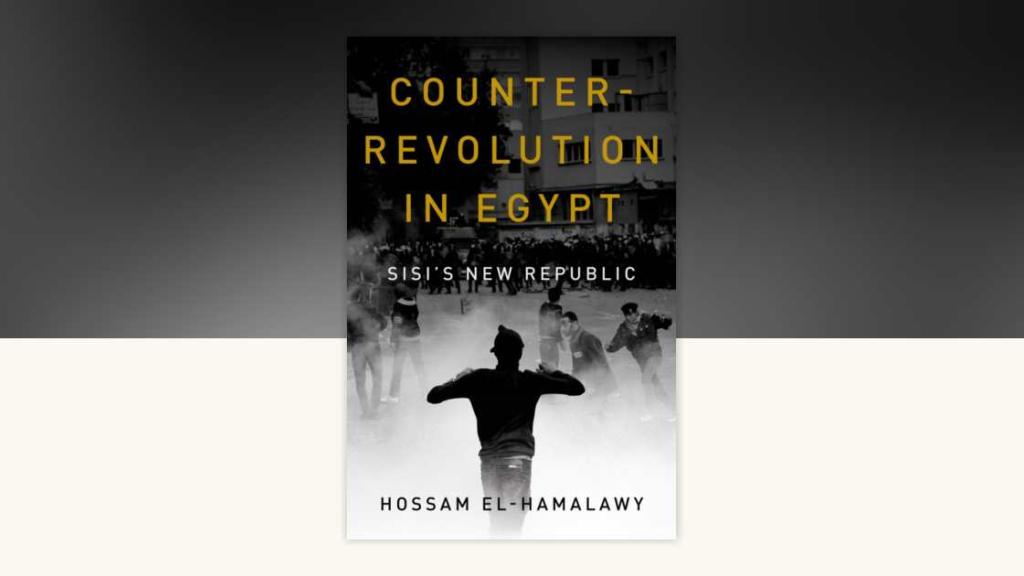
book cover

First published at The Left Berlin.

Interview with Hossam el-Hamalawy, author of Counterrevolution in Egypt: Sisi’s New Republic by Phil Butland.

Hi again, Hossam. Since the last time we spoke, you’ve become a doctor.

That’s true. I finished my dissertation, and now it will be published by Verso. I’m really honoured to have a book with them that will come out this May.

Maybe you can explain what the dissertation and book are about.

It’s based on research that I’ve conducted from 2018 till 2023, but in practice, it’s based on over two decades of my involvement in the dissident movement in Egypt — as a journalist, as a photographer, as a labour organizer, and also as a researcher who’s been interested in the repressive apparatus of the modern Egyptian state.

The main argument of this book is that, contrary to the general belief that a counter-revolution restores the old order, actually, the old order has failed. This is not a failure around governance and human rights and social equality and what have you. In the eyes of the counterrevolutionaries, the old regime has failed because it failed to repress the revolution. This is why the kind of regime that evolves out of a victorious counter-revolution is usually one that tries to avoid the mistakes of the past. It is even more repressive and more efficient at repression.

This is not uniquely an Egyptian phenomenon. When the German revolution failed, you didn’t get the Kaiser; you got Hitler. When the Italian revolution failed, you didn’t get a constitutional monarchy; you got Mussolini and Fascism. When the Egyptian revolution failed, we didn’t get Mubarak; we got Sisi.

Are you arguing that Sisi is objectively worse than Mubarak?

Objectively worse, but also different. And this is what’s more important. My book tries to explain how this regime is different from the previous regime. I mainly focus on a couple of things. One is how the security apparatus was organized before the coup, and how it is organized now.

The modern Egyptian repressive apparatus was born after the 1952 coup. It was fragmented by design. In 1952, we had a coup by a group of eclectic nationalist army officers who called themselves the Free Officers. They were led by Colonel Gamal Abdel Nasser, and they overthrew the British-backed monarchy, and declared a republic a year later.

There was a lieutenant colonel among the conspirators. His name was Zakaria Mohieddin, and he was dubbed as “Nasser’s Beria”, in reference to his role in restructuring the security establishment. He was Nasser’s right-hand man, like Beria under Stalin.

Mohieddin organized the Egyptian modern security apparatus, and he fragmented that apparatus by design, because the immediate concern of the officers at the time was simply a counter coup. This was very fashionable. There was a joke at the time in the Arab world, for example, that the officer who wakes up the earliest usually stages a coup. Coups were the order of the day at the time.

If your dominant perceived threat is a military coup, you fragment your apparatus. You create organizations with overlapping mandates in competition with one another. They hardly exchange information, and the communication channels are not horizontal. Only the ruler would have the bird’s-eye view.

When it comes to the security sector, the interaction between the components of the Egyptian repressive apparatus for decades, whether it’s under Nasser, Sadat, or Mubarak, shaped Egyptian politics. This formula basically continued up until 2011.

Someone would naturally ask, were the rulers only worried about a military coup? What about the people on the streets rising up? Now, it’s natural that any autocrats, if they want to stay in power, have to protect themselves from all sorts of dangers and threats. However, at the same time, there is always one dominant perceived threat. And they organise their apparatus according to that dominant perceived threat.

Up until 2011, the Egyptian ruling class never took us seriously. They knew that every now and then, you could have riots here, some protests there. But they never imagined, even in their worst nightmares, that a revolution like 2011 could take place. So now you had a revolution, and for two and a half years, the gallows haunted the dreams and the nightmares of the Egyptian ruling elites and generals, until the coup happened in 2013.

The generals who led the coup, together with el-Sisi, who was the minister of defense back then, regarded Mubarak as too weak, too lenient, someone who gave so much room for the press and NGOs to criticize him. If it wasn’t for his leniency, they said, we wouldn’t have had this catastrophe of 2011.

So they opted for a new model, which rested on two main things. One is that they unified the security apparatus for the first time since 1952. The components of that apparatus are mainly the military, the police, and the General Intelligence Service. For the first time, they were forced to coordinate and to unite these three components and to exchange information in order to face this existential threat of a revolution.

In the book, I trace how Sisi reorganized that apparatus. It wasn’t an easy job. This wasn’t just an automatic transition that the security services had opted for. There were those inside those organizations who resisted, and they had to be purged.

That is one thing. I argue that the other thing that distinguishes the Sisi regime is that while it is true that Mubarak was a dictator, he presided over a vibrant civil society, and this civil society acted as a buffer to protect society from the excessive intrusions of the executive state.

It also protected the state against a potential uprising. Let me give you a concrete example. If atrocities flared in Gaza, Mubarak was worried that this might trigger riots and mass protests in Egypt. But he had the Muslim Brotherhood, a mammoth organization that existed in almost every province in Egypt. They were reformists and were more than happy to play the game with the regime, and Mubarak would turn a blind eye and allow the Muslim Brotherhood to hold protests, which never chanted against Hosni Mubarak, never left the university campus to go into the streets, and never left the premises of the professional syndicates. These protesters never chanted against the police. They never clashed with the security forces. And if things got out of hand, Mubarak would send in the Central Security Forces, which is our version of the riot police.

If there were rising frustration in society over the deteriorating living conditions. Mubarak had a network of Salafi sheikhs who could use their Friday sermons to start blaming unveiled women, or Christians, or Shia, for the economic malaise. To divert attention, they could tell everyone it’s a moral crisis before it is an economic crisis.

If there were industrial actions flaring, Hosni Mubarak had the state-backed General Federation of Trade Unions, which was a pyramid-like structure dominated by state bureaucrats. They had a presence in almost every workplace.

Mubarak would strike a bargain with those bureaucrats, together with striking a bargain with the legal left-wing organization, the Tagammu, which was our die Linke more or less, or with the Egyptian Communist Party. These bargains defused the industrial militancy in exchange for some seats in parliament.

More importantly, there was something called the ruling National Democratic Party, a mammoth organization that existed in almost every neighbourhood in Egypt. These guys were not just thugs for the regime. They were bureaucrats who were the product of generations of experience from the Nasser time—the Arab Socialist Union days. This was the one party of the regime. And they all transformed themselves and metamorphosed into the National Democratic Party.

These guys had 20 or 30 or 40 years of bureaucratic experience. They knew how to wield power. So, if you had a problem in your neighbourhood with the police or with the authorities, before you go and set yourself on fire in front of the police station, you would go to your local NDP guy. You would talk to him, and in exchange for a small bribe, or even for free, he would act as a mediator between you and the state to solve the problem.

Now, Sisi and the generals saw this as one of the reasons for the “catastrophe” of 2011. So the kind of regime that they built after 2013 rested on unifying the security apparatus and completely destroying civil society. Egypt is now being ruled without a ruling party, without opposition, without NGOs, without independent trade unions, without even the old power structures that Hosni Mubarak had.

Instead, you have the state micro-managing society on a daily basis, without any buffer in the middle. You have the repressive arm of the state, meaning the military, the police, and the intelligence service, who are cannibalizing the civilian organizations of the state.

So, for example, many of the responsibilities of the various ministries and civil agencies were transferred to the military. It is true that since 1952 and especially under Mubarak, the regime used to pump in retired officers into the bureaucracy. This is not new, but what’s new here is, first, that it’s being done on steroids at this point. And secondly, officially, the military institutions are now replacing the civilian institutions.

If you want to know which military agency is running what sector in Egypt, simply go to the Facebook page of Sisi’s presidential spokesperson, where the guy posts daily pictures of whatever meetings Sisi is having. Look at any picture at any point of the day, and examine the attendees. Each civilian official would have a military counterpart. The latter has the upper hand.

For example, when he tells you that today, Sisi held a meeting to discuss the agricultural sector, on Sisi’s right will be the Minister of Agriculture and the Minister of Irrigation. On the other side will be Colonel Bahaa el-Ghannam, who is now running the Future of Egypt agency, which is the business arm of the Air Force. The Air Force is now in charge of our agricultural sector, believe it or not.

If Sisi is having a meeting to discuss education policy in Egypt, you would find the Minister of Education sitting on one side of the table. On the other side would be the director of the Egyptian Military Academy. So it’s the Egyptian Military Academy that is now running the education sector.

Starting from 2023, every single applicant for any civil service job has to be vetted by the Egyptian military academy. I’m talking here about every single civil service job, where, after you pass your exam, you go to the Egyptian Military Academy for six months, where you go through an ideological indoctrination boot camp.

You wake up in the morning, and you practice sports just like a conscript. You do physical training, and then you take courses and classes on national security, on the conspiracies to bring down the state, and what they’re calling “ Fourth generation warfare” — a crackdown on internal dissidents who are serving foreign powers without even knowing.

You’ve talked a lot about how the state has restructured itself and tilted towards more naked repression. The history of Egypt and the history of the region show that naked repression of its own will not sustain itself indefinitely, that there will always be discontent. I presume there is discontent about Palestine and about living conditions. What’s the state of our side? You’ve explained well what their side is doing. Is there any organised attempt to counter this?

At the moment, the situation is bleak. I will not try to paint it as rosy. First, after the coup, Sisi started cracking down on the Islamist opposition, mainly the Muslim Brotherhood, but also the Salafis and the Jihadis. And then he started cracking down on the secular opposition, whether they are on the left, liberals, or youth groups. He dismantled all of them, killed scores of activists, and imprisoned tens of thousands of others.

From 2011 to 2021, 43 new prisons were built. The prison population is very difficult to estimate because there is no transparency whatsoever. Some figures ran as high as 60,000 political prisoners at some point. Now, I think that the number has gone down to anywhere between 10,000 and 20,000.

The Egyptian left, meaning our side, has been largely neutralised and destroyed. And this happened through mass arrests, through drying up the funding of these organisations, through security crackdowns. Then the regime also adopted this revolving door detention technique called Tadweer in Arabic, which means recycling.

They will arrest you today and hold you in pre-trial detention for, let’s say, a couple of years. on some bogus charges. Then, before you go on trial, they will release you on paper, but accuse you of the same things in a new case. So you stay in this revolving door forever. You have people who have been recycled for over seven years. No trial, just getting in and out on paper.

At the same time, this is not a reason to despair. I always say this, there is a saying: “The Darker the Night, the Brighter the Star”. We are Marxists who understand the dialectics. This means that even when there is the worst kind of repression, it’s laying the seeds for opposition.

What’s been the reaction of the Egyptian street to the ongoing attacks on Gaza?

It’s been largely muted compared to the previous decade. I am 48 years old. I got radicalised through the Palestinian cause. My political upbringing was always through solidarity with the Palestinians, and it’s through this solidarity that I got into radical leftist politics.

But what has happened is that under the sheer level of repression that the country has seen, most of the organisations have been destroyed, and there is also fear among the public. It would be suicidal to have a protest for Palestine.

Despite all of that, with the outbreak of the war on Gaza, spontaneous protests did take place on the campuses. These were probably the first protests that the campuses had seen in almost a decade since Sisi pacified them. There were also sporadic protests in mosques and public squares, but the state cracked down and arrested hundreds. As I’m talking to you today, there are at least 120 people who have been in prison in pre-trial detention since 2023.

At the same time, the regime was spreading through the media that Sisi was doing its best to disrupt the transfer scheme and the expulsion of the Palestinians into Sinai, and that we’re doing our best to help our Palestinian brothers, even though, at the end of the day, Sisi was completely complicit in this war.

That’s why it didn’t translate into mass protests in the streets, but it revived this sense slightly, and solidarity with the Palestinians was expressed through other forms, especially the boycott campaign, which spread like wildfire in Egypt.

What has been the reaction in Egypt to the recent developments in Iran?

It’s been mixed, depending on the kind of news they are receiving. There will definitely be a section of the Egyptian public who would buy into the propaganda that the whole thing is solely about Israelis bringing down a regime that’s anti-Israeli. But I would say that the majority of Egyptians would find parallels between themselves and the Iranian protesters.

What triggered this mass wave of protest in Iran is the deteriorating economic condition and sheer brutality of the state, which is something that the Egyptians know quite well. So I think Egyptians will be watching closely and also contemplating whether something similar could happen in Egypt.

Of course, you cannot predict the future, but what could happen next in Egypt?

I am hopeful for a very simple reason. Sometimes, a counter-revolution could diffuse the factors that led to the outbreak of the revolution in the first place. Some counter-revolutions are successful, not just because of repression, but because they also address those problems. This is not the case in Egypt.

To put this in clearer terms, the 2011 uprising did not happen simply because activists or opposition figures decided to mobilise. Individual action and political agitation matter, but they are never enough on their own. Revolutions emerge when broader structural conditions make society combustible, and when organised political forces are able to intervene at the right moment.

In Egypt, two such objective conditions came together. The first was pervasive political repression and routine police brutality. The second was social injustice, particularly the unequal distribution of wealth and the steady deterioration of living conditions. These factors created a society primed for explosion.

What was missing for long periods, and what briefly materialised in 2011, was what Marxists call subjective intervention. By this, I mean the presence of organised actors, networks, and movements capable of translating popular anger into sustained collective action. The counter-revolution did not resolve any of the underlying structural problems. On the contrary, repression intensified, and economic conditions worsened. This means the objective conditions remain firmly in place. What remains absent, for now, is that organised political intervention capable of turning discontent into a mass challenge to the regime.

Did the counter-revolution provide answers or solutions to these problems? No, they actually made it even worse. Today, when it comes to political repression, Hosni Mubarak is a human rights activist compared to Sisi. When it comes to the economic conditions, many people are yearning for the Mubarak days. I don’t blame them when they say: It wasn’t that bad under Mubarak.

The existence of these two factors means that there will always be an environment that’s fertile for resistance. What’s missing here is the subjective intervention. And over the past few years — and this got accelerated by the genocide in Gaza — there’s been a slight revival in left-wing activity. It’s still very confined to the margin. But this margin did not even exist a few years ago.

Simultaneously, there is an increased wave of industrial actions, not on the same level as the waves in 2006 or 2011, which was our winter of labour discontent that made the road to the revolution. But an incremental increase is happening. In 2025, at least 100 labour protests were recorded, and these are the ones that we know about. There will definitely be other wildcat strikes that we couldn’t know of.

These strikes are triggered by low salaries, and by the management refusing even to implement Sisi’s decrees of raising the national minimum wage. So, managements are not even sticking to that bar that the government is setting. Amid this industrial action, this creates an audience for people like you and I to start talking socialism again.

Does the fact that things are now worse than they were before 2011 mean that the Arab Spring was a failure?

I’m not a fan of dichotomies or of binaries, saying that something failed, or something didn’t. That wave of the Arab Spring, or whatever you want to call it, as some people don’t like that term, has been defeated; there is no question about that. But this is not the end of the story. I would disagree with the kind of narrative that sees defeat as the end. There are people who have seen this revolution, and they are still alive.

In the 1990s, when my comrades and I were starting in underground cells trying to talk about revolution against Mubarak, people treated us like lunatics, like extraterrestrial aliens. What are you talking about? We never had a revolution in this country, or the last time we had a revolution was in 1919, against the Brits.

Today, you can tell an 18-year-old to look at YouTube, in order to find footage of what happened. This makes the revolution an actuality, something concrete, and not just something abstract that you read about in books. You’ve seen it happening.

This is one of the positive things that came out of the Arab Spring. At least when we are talking about a new revolution, there is something concrete that we’re based on. But I would say that this first wave definitely got defeated. But let’s learn from it, build on it, and take the movement forward.

Is there anything that you haven’t said that you’d like to add?

One last thing is that comrades here in Germany have a role to play. You are in the belly of the beast. Sometimes people romanticise the global South. They say: “That’s where the repression is, so that’s where the revolutions will happen. We will never see it here in Germany”. That’s not true.

The entire capitalist system is getting into a crisis, and we’ve already started to see symptoms and signs of it, whether it’s here in Germany or in the industrialised West. People here in Germany and in Europe and in the West have a role to play. This role is number one: you reign in your own governments from supporting and endorsing our regime.

One of the main reasons why the counter-revolution prevailed in Egypt was that it was endorsed by regional and global allies, and that would include Germany. So you have a role to play in pressuring the local government here into stopping support for Sisi.

On the other hand, there will be a rise in social dissent here in Germany. There is no question about it. This is not because Germans are left-wing or right-wing, but because the economic situation is deteriorating. If you are not organised enough, people will start looking to the far right for answers if the radical left is not ready with those answers.

Any local fight that you engage in here in Germany is helping us in Egypt. It’s not just about protesting in front of the Egyptian embassy. If you win a fight against the privatisation of the S-Bahn, you are helping the Egyptian revolution. If you win a fight here against the cuts in social spending, you’re helping the Egyptian revolution. If you bring a halt to this militarisation drive here in Germany, you’re helping the Egyptian revolution.

The entire capitalist system is like a matrix. You weaken it in one spot, and that helps all the other ones.