Wednesday, February 11, 2026

Cambridge University museum set to return Benin bronzes to Nigeria

A Cambridge University museum will shortly return around 100 Benin bronzes to Nigeria as part of a major restitution initiative, the UK's weekly newspaper the Observer has reported.


Issued on: 10/02/2026 

Benin Bronzes exhibited at the National museum Onikan in Lagos on 21 June, 2025. AFP - TOYIN ADEDOKUN

By: Melissa Chemam with RFI

The institution backed a 2022 claim by Nigeria's National Commission for Museums and Monuments (NCMM) calling for the return of 116 objects looted by British armed forces during the 1897 sacking of Benin City.

The term "Benin bronzes" refers to objects crafted from brass and ivory as well as bronze, which were seized during the colonial-era military expedition.

Among the returned bronzes that will travel in the coming months are wood and ivory sculptures, as well as commemorative heads of King Oba and Queen Mother Lyoba Idia.

The decision follows the formal request from the National Commission for Museums and Monuments in Nigeria (NCMM), made in January 2022, for the return of artefacts.

The University’s Council supported the claim and authorisation from the UK Charity Commission was subsequently granted.

"Physical transfer of the majority of the artefacts will be arranged in due course," the university’s council added.

Seventeen pieces will remain on loan and on display at the museum for three years in the first instance, to be accessible to museum visitors, students and researchers in the UK.
'Pride and dignity'

A return that contributes to "restoring the pride and dignity" of the Nigerian people, according to Olugbile Holloway, Director General of the NCMM.

"By agreeing to cede some of its approximately 500 works from Benin City, the British institution has decided to respond favorably to a request made in 2022 by the Commission," he said.

He added that "the return of cultural items for us is not just the return of the physical object, but also the restoration of the pride and dignity that was lost when these objects were taken in the first place."

Professor Nicholas Thomas, Director of the Museum of Archaeology and Anthropology, in Cambridge said: “It has been immensely rewarding to engage in dialogue with colleagues from the National Commission of Museums and Monuments, members of the Royal Court, and Nigerian scholars, students and artists over the last ten years."

Over the period, support has mounted, nationally and internationally, for the repatriation of artefacts that were appropriated in the context of colonial violence, he added.

"This return has been keenly supported across the University community.”

Blood and Bronze: unveiling the British Empire's brutality in Nigeria

European move

The university’s decision is in line with similar commitments made by other UK, US and European museums. The Netherlands also announced last year the restitution of more than 100 Benin bronzes to Nigeria.

Netherlands agrees to return 119 Benin statues to Nigeria

Other institutions in the Uk also agreed to return stolen artefacts to Ghana.

These returns come as pressure mounts on Western museums and institutions to address the restitution of African artefacts plundered during colonial times by the USA, France, Germany and Belgium.

French senators adopted a bill in January to simplify the return of artworks looted during the colonial era to their countries of origin.

However, the British Museum still refuses to return part of its collection.
NAKBA 2.0

UN says Israel's West Bank plans would accelerate 'dispossession of Palestinians'


Geneva (AFP) – Israel's plans to tighten control over the occupied West Bank, paving the way for further settlement expansion, are a step towards consolidating illegal annexation, the UN rights chief said Wednesday.


Issued on: 11/02/2026 - RFI

Israel, which has been occupying the West Bank since 1967, has overseen evictions and home demolitions of Palestinians as it builds more settlements © Ahmad GHARABLI / AFP/File

The plans include allowing Jewish Israelis to buy West Bank land directly, and extending greater Israeli control over areas where the Palestinian Authority exercises power.

Volker Turk, the United Nations High Commissioner for Human Rights, said the decisions by Israel's security cabinet were the latest in a string of measures to annex Palestinian lands.

"This is yet another step by the Israeli authorities towards rendering a viable Palestinian state impossible, in violation of the Palestinian people's right to self-determination," Turk said in a statement.

"If these decisions are implemented, they will undoubtedly accelerate the dispossession of Palestinians and their forcible transfer, and lead to the creation of more illegal Israeli settlements.


"This will also further deprive Palestinians of their natural resources and restrict their enjoyment of other human rights."

israel has occupied the West Bank since 1967.

Excluding Israeli-annexed east Jerusalem, more than 500,000 Israelis live in settlements and outposts across the West Bank, which are illegal under international law.

Around three million Palestinians live in the territory.

"This will further cement Israel's control and integration of the occupied West Bank into Israel, consolidating unlawful annexation," Turk said of the new measures.

He said they came amid a wider context of increasing attacks by Israeli settlers and security forces against Palestinians in the West Bank, plus a pattern of forcible transfers, evictions, home demolitions, land grabs and movement restrictions documented by his office.

"We are witnessing rapid steps to change permanently the demography of the occupied Palestinian territory, stripping its people of their lands and forcing them to leave," the high commissioner said.

"This is supported by rhetoric and actions by senior Israeli officials, and violates Israel's obligation as an occupying power to preserve the existing legal order and social fabric. These decisions must be overturned."

© 2026 AFP
French families sue state and manufacturers over contaminated baby milk

Twenty-four families on Tuesday filed a legal complaint at the Paris Court of Justice against the French state and baby milk manufacturers for negligence over their handling of contaminated formula. They are calling for the products to be tested by an independent laboratory.


Issued on: 10/02/2026 - RFI

Europe's infant milk formula industry has been rocked by recalls in recent weeks. © Fred Tanneau / AFP

Several manufacturers, such as giants Nestlé, Danone and Lactalis, have issued recalls of infant formula in more than 60 countries, including France, since December due to a risk of cereulide contamination.

Cereulide, a toxin produced by certain bacteria, is "likely to cause primarily digestive problems, such as vomiting or diarrhoea," according to the French health ministry.

Two criminal investigations have already been opened in Angers and Bordeaux following the deaths of two infants who consumed infant formula recalled by Nestlé due to "possible contamination" by a bacterial substance.

The French health ministry said that no "causal link" has yet been established.

According to information and testimonies gathered by Radio France's investigative unit, other families have come forward to criticise what they say are inadequate health investigations.

The families - members of the Intox'Alim collective - filed a legal complaint on Tuesday, accusing both the French state and manufacturers of "deliberate endangerment, continued supply of dangerous goods, unintentional injury, and obstruction of justice".

They are demanding that the milk powder be analysed by an independent laboratory to establish a link between the consumption of this milk and their children's hospitalisations or episodes of illness.

Families denounced the fact that the health authorities referred them to Nestlé which then asked families to return the milk powder to them so that they can carry out their own analyses.

"This procedure raises serious issues. By asking parents to return the powder to Nestlé, the manufacturer is effectively conducting a health investigation that directly concerns it," says Nathalie Goutaland, the lawyer representing 24 families in this case.

When contacted by Radio France's investigative unit, the Ministry of Agriculture assured that manufacturers' laboratories are adequate, adding that official assessments may be carried out at a later date.
Ignoring the risks

The National Agency for Food, Environmental and Occupational Health and Safety (Anses) is the only public laboratory in France capable of detecting and quantifying cereulide toxin, but with limited capacity.

A similar lawsuit was filed on 29 january on behalf of eight French families by European consumer association Foodwatch. They said their babies suffered severe digestive problems after drinking formula named in the December recall.

The complaint, while not naming the manufacturers or government agencies, calls for a legal investigation.

Foodwatch believes that producers could not have ignored the risks to babies by leaving their milk on sale in France and in more than a dozen European countries, as well as in Australia, Russia, Qatar or Egypt

The recall of potentially contaminated infant formula has heaped scrutiny on Chinese firm Cabio Biotech, the supplier of an ingredient used in infant formula which is suspected of being tainted.

Headquartered in the central Chinese city of Wuhan, Cabio Biotech is one of the world's largest producers of ARA, a fatty acid used primarily in baby formula and food products.

Cereulide was discovered in ARA manufactured by Cabio Biotech.

Last Monday the EU's food safety agency proposed new reference doses for the toxin, prompting a further recall of products.
ENVIRONMENT

Why France's agriculture law may not help the farmers it claims to defend

France’s parliament on Wednesday debates a petition against the Duplomb agriculture law, which would reauthorise the use of a pesticide banned in 2018. The issue has become a flashpoint between farming unions, scientists and environmental groups – with concerns for biodiversity and human health.


Issued on: 11/02/2026 - RFI

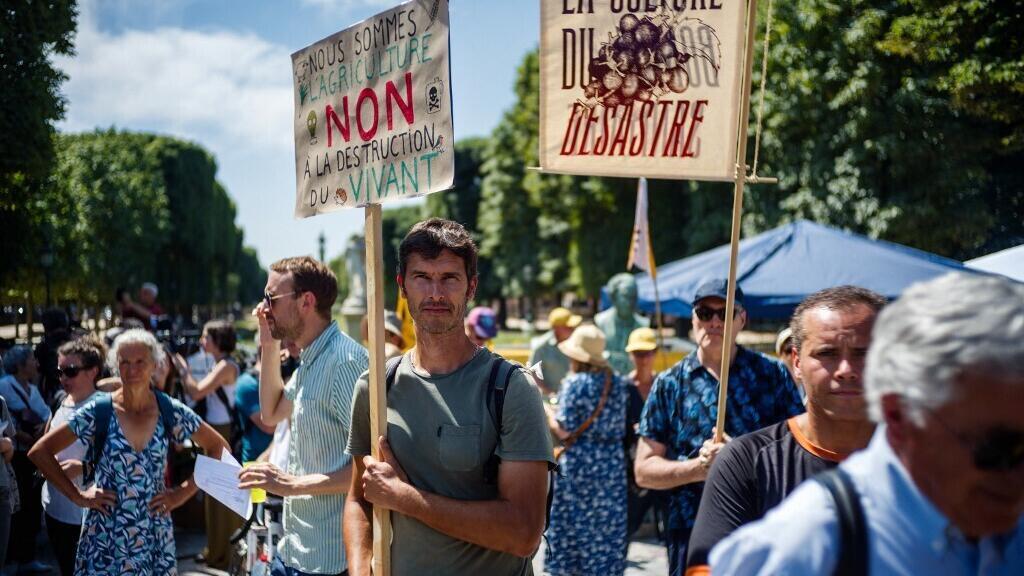
Farmers, scientists, beekeepers and citizens protest the Duplomb agricultural bill, which aims to ease access to pesticides. AFP - DIMITAR DILKOFF

By: Alison Hird

The Loi Duplomb, named after conservative senator Laurent Duplomb who proposed it, claims to ease pressure on farmers by loosening rules on pesticide use, large-scale livestock farming and water storage projects.

Backed by the government and major farming unions, the law was passed on 8 July 2025.

It was immediately contested by some scientists, health experts and environmental groups because it reauthorised acetamiprid, part of the neonicotinoid group of pesticides banned in France in 2018 for harming bees and other pollinators.

Within days, a student-led petition denouncing the law as a “public health and environmental aberration” gathered more than 500,000 signatures. By the end of 2025, more than 2 million people had signed the petition – a record in France.

In August, opponents of the law brought it before France's constitutional council, which ruled against reintroducing the pesticide, arguing it flouted France’s environmental charter, which guarantees the “right to live in a balanced and healthy environment”.

However, all the other provisions in the law, such as easing authorisations for livestock farming and irrigation reservoirs, remained in place.

Brain disorders


Senator Duplomb is continuing to push for a derogation on pesticides. In early February, he submitted a revised version of the censured article maintaining the reintroduction of acetamiprid, along with another insecticide, flupyradifurone, in a limited number of cases.

“No serious study has shown that acetamiprid is carcinogenic,” Duplomb told French public radio on Monday, defending the measure and underlining that France is the only country in the EU to have banned acetamiprid.

"We are banning molecules that are authorised in Europe whereas independent agencies have shown that [acetamiprid] was dangerous neither for people nor the environment. Today in France, through a particular kind of obscurantism, we would like to have people believe the opposite."

Chemist and toxicologist Jean-Marc Bonmatin said the lack of studies means there is no “formal proof” that acetamiprid causes cancer. However, “there are serious indications showing acetamiprid could be carcinogenic, notably for breast and testicular cancer because all neonicotinoids have been found to be endocrine disruptors,” he told RFI.

French health experts oppose bill that could reintroduce banned pesticides

There is no doubt, however, about the molecule’s impact on the brain.

“The main concern with neonicotinoids, and acetamiprid in particular, is the action of these neurotoxic molecules on the central nervous system”, Bonmatin said – adding that they affect neurodevelopment, notably in unborn babies and young children.

He pointed to “extremely important diseases” such as autistic spectrum disorders in children, and neurological disorders in the elderly.

“That’s why we scientists and doctors are taking action on this issue,” the chemist said.

In 2021, Bonmatin and colleagues at France’s Centre for scientific research (CNRS) published a list of the effects of neonicotinoids, including acetamiprid, on human health “so that doctors can recognise the symptoms of poisoning and the cases”.

While scientists often invoke the principle of precaution when studies are not clear, Bonmatin says that in this case the principle of prevention has to apply.

“We know very well what these pesticides will do to the population, to biodiversity, to the environment, so we have an obligation to protect people from future illnesses,” he said.

Even the European Food Safety Authority (EFSA) – often cited by supporters of acetamiprid – said in 2024 that there were "major uncertainties in the body of evidence for the developmental neurotoxicity (DNT) properties of acetamiprid".

It proposed reducing the acceptable daily intake by a factor of five.

French health watchdog warns of pesticide dangers to young children

Existing alternatives

Duplomb said the revised law would allow the use of the pesticide only where farmers have no alternative.

“We have focused on those sectors that INRAE considers to be in a complete dead end – where plant protection products are the only solution, such as hazelnuts, apples, cherries and sugar beet,” he said on Monday – referring to the National Research Institute for Agriculture, Food and the Environment.

The Loi Duplomb is backed by France’s largest farming union, the FNSEA, which is dominated by large cereal and sugar beet farmers and agribusinesses. It says sugar beet farmers in particular have no alternative to neonicotinoids when faced with the jaundice virus transmitted by aphids.

Bonmartin cites a 2021 report by Anses – France's food, environmental and occupational health and safety body – which specifically adressed the sugar beet issue and which found there were in fact around 20 alternatives.

“There are even varieties of sugar beet that resist the jaundice disease transmitted by flies,” he said. “So saying there is no alternative amounts to fake news to allow the reintroduction of neonicotinoids.”

“When the FNSEA says there is no alternative what they mean is that there is no alternative as easy as using pesticides.

"So the choice is either I take the easier solution through pesticides – the worst in terms of poisoning people – or I use alternatives and I preserve the environment, biodiversity and public health.”

'Farmers are main victims'


The Loi Duplomb was presented as a way to “lift the constraints on the profession of agriculture” in response to farmers' protests in January 2024. One of their key demands was simpler rules and less paperwork.

Supporting the law, the FNSEA has denounced unfair competition linked to France’s ban on some pesticides and weedkillers allowed in other EU countries.

Other unions, including the Confédération paysanne, which represents smaller farmers and supports an agroecological transition, oppose the bill.

Eve Fouilleux, a researcher at the Centre for Agricultural Research for Development (Cirad), says farmers themselves are the main victims of pesticides, but they're not always aware of the danger.

She said the issue is not regulations but agricultural economics.

“The root of the problem is income – the price paid to farmers – the economic system is crushing them,” she told RFI. “When you spend €100 on food in the supermarket, only €6.90 goes to the farmer.

“It’s a system where farmers are being asked to produce more and more with very little added value. So for them, pesticides are a guarantee of being able to produce a few percent more yield. And what is tragic is that this few percent means a little more money for them, but it's a disaster for the groundwater, for water quality and for taxpayers' bills."

Fouilleux cited surveys showing farmers are “overwhelmingly in favour of the ecological transition in agriculture, but they’re asking for support”.

While the French government is spending a lot of money on the food system, 60 percent goes to manufacturers, supermarkets and commercial caterers, she explained.

Around 20 percent goes to farmers through subsidies from the EU’s Common Agricultural Policy (CAP), but these are paid per acre. “So the bigger you are, the more support you get.”

Fouilleux said the existing productivist system contributes to the economic marginalisation of farmers in the food system. “That’s the problem, it’s not about standards at all. It’s really a discursive strategy by the FNSEA union, which is in fact run by agri-food industrialists,” she said.

Economic interests


Duplomb himself is a large dairy farmer and a senior member of the FNSEA union. He is also a former agro-industry executive.

From 2014 to 2017 he was regional president of the dairy group Sodiaal – a major French cooperative that owns brands such as Yoplait, Candia and others – and has been a member of Candia’s supervisory board.

“There’s a conflict of interest. He defends bills that will benefit his farm,” said Guillaume Gontard, president of the Senate’s environmentalist group. “He’s a representative of agribusiness who lives off exports.”

The environmental NGO Terre de Liens has described the Duplomb law as “tailor-made for FNSEA and agro-industry”.

“Duplomb has very strong ties to the agrochemical industry,” Bonmatin said. “There’s a denial of scientific facts in favour of economic interests.”

"He's chosen private economic interest, he’s not defending the farming community at all. To do so, you just have to help it make the necessary transitions."


'EU-US trade deal is a total capitulation to Trump,' MEP Bricmont says

Copyright EbS

By Vincenzo Genovese
Published on 

In an interview with Euronews' morning show Europe Today, Greens/EFA group MEP Saskia Bricmont said the trade agreement between the EU and the United States as a "total capitulation", calling for more investments and decoupling from Washington.

"I'm part of the ones that say that the EU-US trade deal is a total capitulation", Belgian MEP Saskia Bricmont (Greens/EFA) told Euronews' Europe Today morning show in Strasbourg Wednesday, commenting on the political agreement European lawmakers reached the day before to approve the trade deal.

"There is obviously a willingness from the von der Leyen majority to show signs of appeasement with Trump. I'm not sure this is the language he understands," Bricmont said.

Representatives of the European Parliament's political groups have agreed on the conditions to attach to the deal, which include a "sunset clause" to make the agreement expire at the end of March 2028, unless explicitly renewed, and a "suspension clause" to suspend the deal in the event the US threatens the territorial integrity of one of the EU member states.

"Trump is somehow less vocal about Greenland, but I am pretty sure he is not giving up," Bricmont said. "He has an international agenda, it's pretty clear, and it's a security strategy as well."

The Belgian MEP said that Europe has "to show teeth" and "give appropriate answers" when it is attacked on trade by the US or other countries, leveraging its network of partnerships and alliances, its economic potential, and its strong industry.

"Trump obviously has a huge problem with other continents, including Europe. And he wants to show that Europe is weak. It's up to us Europeans to show the Europeans that Europe isn't weak", she said.

Bricmont also stated that Europeans have to "take their own fate into their hands", by massively investing in clean industries and green transition, ahead of a crucial EU leaders' summit on Thursday focused on competitiveness.

"I don't see the investments today. Investing in our industry, but also in our green industry, is highly needed at the EU level. Otherwise, we will be the old continent", Bricmont said.

Other countries are investing in clean technologies while Europe "is now giving up on its climate and ecological transition", a "condition for our competitiveness," she concluded.

Trump tariffs hurt French wine and spirits exports

US tariffs hit French wine and spirits shipments hard last year, playing a major role in the overall drop of eight percent in value of one of France's top exports, a trade body said Tuesday.


Issued on: 10/02/2026 - RFI

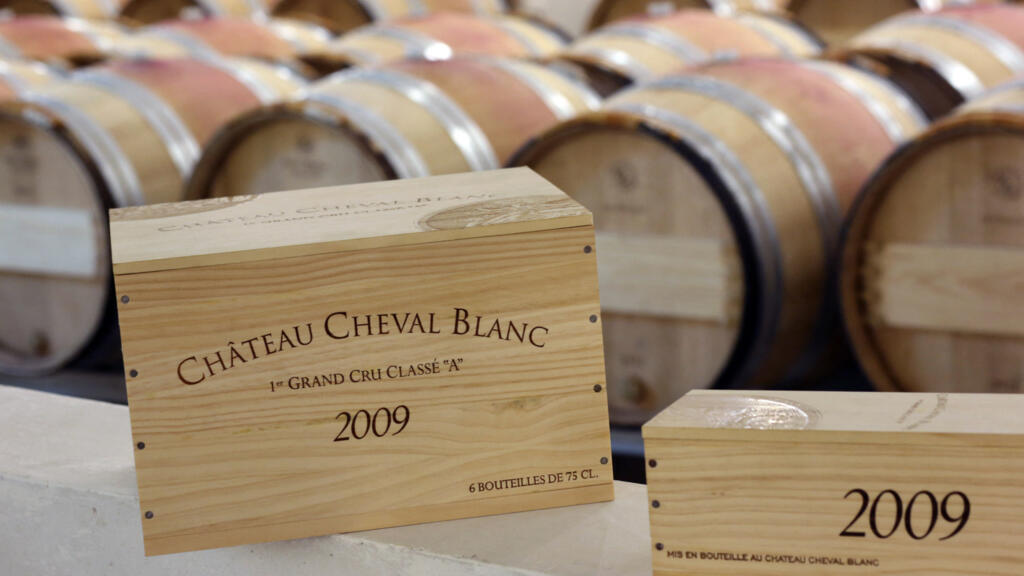
Boxes of Chateau Cheval Blanc's Premier Grand Cru Classe A n Saint-Emilion, southwestern France. © AFP - Nicolas Tucat

Exports to the United States slumped by 21 percent, the French Federation of Wine and Spirits Exporters (FEVS) said.

The United States is the biggest importing country for French wines and spirits, accounting for 21 percent of the overall export market last year.

French winemakers say 'nightmare' Trump tariffs could cost industry €1bn

"Geopolitical tensions, commercial conflicts, exchange rate fluctuations, and a loss of confidence by households weighed on our exports," said the Federation's president, Gabriel Picard.

French and European wines are also suffering from the increase in tariffs -- first 10 percent, then 15 percent -- imposed on European alcoholic drinks by US President Donald Trump in 2025.

"In the United States, the imposition of customs duties and an unfavourable exchange rate have heavily impacted the overall result," FEVs said in a statement.

Economic uncertainty weighing on consumer spending, as well as stockpiling by wholesalers, also contributed to the fall, it said.

Overall, the value of French wine and spirits exports fell by 7.9 percent to 14.3 billion euros ($17.0 billion).

They slid 3.3 percent by volume.

Wine exports, which account for the overwhelming majority of the total, slid by 4.1 percent by value.

Under pressure

Meanwhile, spirits exports slumped 17.4 percent, with Chinese anti-dumping measures playing a major role.

Beijing launched an investigation into EU brandy after the bloc undertook a probe into Chinese electric vehicle (EV) subsidies and producers agreed to hike prices to avoid anti-dumping taxes.

Sales of cognac dove 23.8 percent to 2.3 billion euros.

"The anti-dumping duties have severely penalised exports of cognac, armagnac and other wine-based French spirits," the FEVS said.

The release of 2025 export data coincided with the annual Wine Paris trade show.

French President Emmanuel Macron visited the show on Monday, where he insisted that ripping up unprofitable grape vines was a necessary part of revitalising the flagging wine sector.

Winegrowers are dealing with over-production caused by falling demand as a result of changing drinking habits, fierce competition and export difficulties.

Efforts to help the crisis-hit industry include the government's latest 130-million-euro "arrachage" fund that opened last Friday, offering subsidies to loss-making owners to uproot their vines.

"It has to be done... so that the others (producers) retain their value," Macron said.

The wine and spirits sector supports 600,000 jobs in France and generates around 32 billion euros in revenue annually.

(with AFP)

Paul Thomas Anderson and Radiohead’s Jonny Greenwood demand music to be removed from ‘Melania’ doc

Paul Thomas Anderson and Radiohead’s Jonny Greenwood demand their music to be removed from ‘Melania’ documentary
Copyright AP Photo

By David Mouriquand
Published on 

The Oscar nominated director and musician allege breach of agreement after their score from 'Phantom Thread' was reused in the controversial documentary ‘Melania’.

Director Paul Thomas Anderson and Radiohead’s Jonny Greenwood have requested that their Phantom Thread music be removed from the Melania Trump documentary.

In Melania, a segment of music from the 2017 film Phantom Thread is played – a long excerpt of Greenwood’s ‘Barbara Rose’.

Directed by Anderson and featuring a score from Greenwood, the film was Oscar-nominated for six Academy Awards, including Best Original Score. Both the director and the composer have requested that the music be removed from the Brett Ratner-directed documentary, claiming that its inclusion is a “breach” of their composer agreement.

“It has come to our attention that a piece of music from Phantom Thread has been used in the Melania documentary,” the pair said in a statement, which was obtained and published by Variety.

“While Jonny Greenwood does not own the copyright in the score, Universal failed to consult Jonny on this third-party use which is a breach of his composer agreement,” it added. “As a result Jonny and Paul Thomas Anderson have asked for it to be removed from the documentary.”

No one from the Melania team has yet publicly responded to the request.

Amazon MGM paid a staggering $40m to acquire streaming rights for the film, followed by another $35m to market it in theaters – representing an unprecedented sum for a nonfiction film. These sums have prompted speculation that Amazon made the purchase to curry favour with Trump.

The project also marks the return of Ratner to Hollywood. The director of the Rush Hour franchise moved to Israel following multiple sexual misconduct allegations in 2017. The director has also appeared in a recent release of photographs from the Epstein files.

The film has been critically torched but did exceed box office projections in the US, earning $13.3m domestically, in large part thanks to the reported rallying of Republican women, who have made up the largest portion of the audience.

In Euronews Culture’s review of Melania, we wrote: “Many were quick to accuse 'Melania' of being a despicable piece of propaganda even before seeing it. It’s not. Propaganda has a point. Forceful tools of hatred like Triumph of the Will and Birth of a Nation had evil purpose. Melania can be mentioned in the same sentence as these films but only remains as a staged puff piece, (...) a shallow, 104-minute-long vanity project whose staggeringly misjudged timing reveals it to be the ultimate "F*ck you”.”

Jonny Greenwood and Paul Thomas Anderson have worked together for nearly two decades, with the Radiohead guitarist writing scores for several of the director’s films, including 2007’s There Will Be Blood, 2012’s The Master, 2021’s Licorice Pizza and last year’s One Battle After Another.

One Battle After Another is seen as the frontrunner – alongside Sinners – at next month’s Oscars. It is nominated for 13 Academy Awards, including Best Film, Best Director, and Best Original Score.


Jamaica bobsleigh team to continue Cool Runnings legacy at Winter Olympics

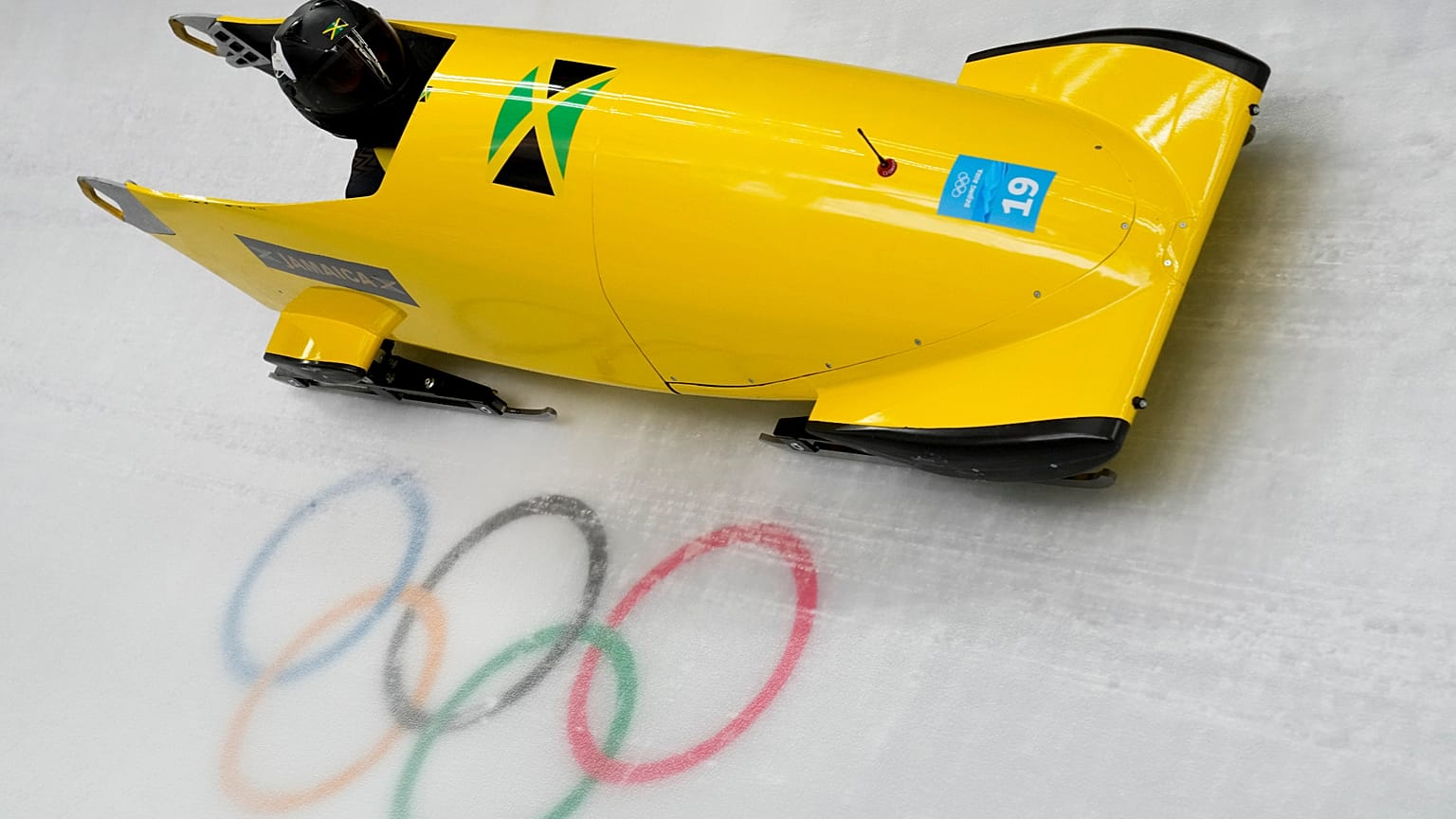
jamaica team bobsledding
Copyright Copyright 2022 The Associated Press. All rights reserved

By Giorgia Orlandi
Published on 

Jamaica's iconic bobsleigh team — which inspired the hit film Cool Runnings — will make its tenth Winter Olympics appearance at Milano Cortina 2026.

Nearly four decades on from Jamaica's debut at the 1988 Calgary Olympics that inspired the cult film Cool Runnings, the Caribbean country's bobsledders are now preparing for their tenth Winter Games in Italy.

At the Milano Cortina 2026 Winter Olympics, Jamaica will compete in both the women's and men's bobsleigh events between 15 and 22 February.

In the women’s monobob, the green, black, and yellow flag will be worn by Mica Moore — a former Great Britain athlete who has switched allegiance.

Mica Moore, flag bearer of Jamaica, leads her team in during the Olympic opening ceremony at the 2026 Winter Olympics, in Cortina d'Ampezzo, Italy, Friday, Feb. 6, 2026. Misper Apawu/Copyright 2026 The AP. All rights reserved

In the men’s competition, Jamaica will field two crews. The four-man bobsleigh team will feature Shane Pitter, Andrae Dacres, Junior Harris and Tyquendo Tracey.

In the two-man event, Pitter will serve as driver, with the brakeman to be selected from Joel Fearon, Junior Harris or Nimroy Turgott.

They will be continuing the legacy of their compatriots who made history in Calgary in 1988.

Unlikely venture

The story begins with the crew that made history: driver Dudley Stokes, brakeman Michael White, and push athletes Devon Harris and Chris Stokes — the quartet with which Jamaica debuted in the four-man bobsleigh.

Some of the athletes were picked after a selection process among competitors preparing for the 1988 Seoul Olympics, while others were drawn from the ranks of Jamaica's army.

Behind the unlikely venture stood George Fitch, then a commercial attaché at the US Embassy in Kingston and still regarded as the architect of “tropical” bobsleigh.

As unconventional as the idea of Jamaica entering a winter sport were the athletes themselves. White was a sprinter on the army team, Harris competed in the 800 metres, and Dudley Stokes began his career as a helicopter pilot.

Although the four-man crew did not qualify for the fourth run, Jamaica’s debut in the Winter Olympics — and the personal stories of the athletes involved — had already left a lasting mark, even inspiring the Disney film Cool Runnings. The movie is largely fictionalised but is still the most recognizable part of the Jamaica bobsled story.

Those athletes' example has also encouraged other warm-weather nations, such as Mexico, Puerto Rico and Brazil, to establish their own bobsleigh teams.

Started with a street cart race

Although the team now trains in the United States, in Evanston, Wyoming, its earliest experiments took place in Jamaica itself, where athletes practised explosive starts using improvised street carts in place of sled

It was while watching a traditional downhill cart race that Fitch and his fellow entrepreneur William Maloney first conceived the idea of forming a Jamaican bobsleigh team, convinced that the island’s greatest sporting asset — its world-class sprinting speed — could be adapted to winter competition.

Initial training sessions, conducted under American coach Pat Brown in the United States and Austria, were challenging and often discouraging.

Yet the determination shown by the athletes attracted the attention of the international federation, which ultimately approved Jamaica’s participation in Calgary in 1998.

Shortly before the competition, the team suffered a setback when crew member Allen Caswell was forced to withdraw because of injury.

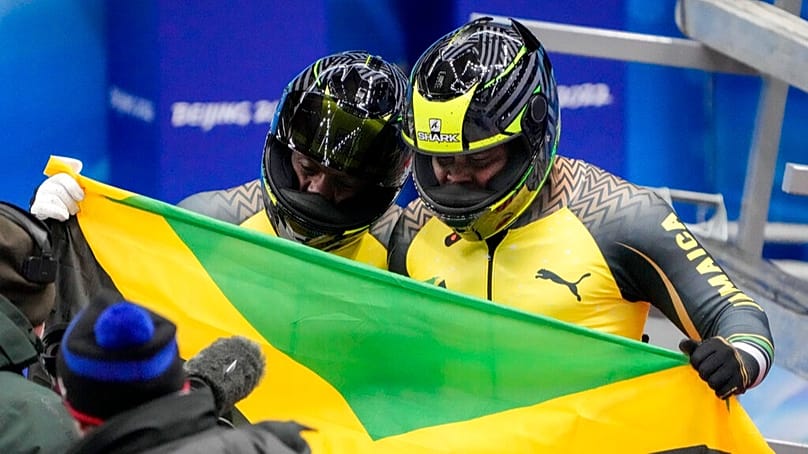
FILE: Shanwayne Stephens and Nimroy Turgott, of Jamaica, celebrate after their 2-man heat 3 at the 2022 Winter Olympics, Tuesday, Feb. 15, 2022, in Beijing. Mark Schiefelbein/Copyright 2022 The AP. All rights reserved

He was replaced by Stokes, a fellow sprinter who had travelled to Calgary primarily to support his brother Dudley, the team’s driver.

The sporting results are well known. The two-man sled of Dudley Stokes and Michael White finished 30th, while the four-man crew’s campaign ended in dramatic fashion with a crash during the penultimate heat — an incident that, despite disappointment on the track, helped cement the team’s enduring place in Olympic history.

Jamaica’s best-ever result remains a 14th-place finish in the men’s two-man bobsleigh at the Lillehammer 1994 Games.

In recent years, however, the evolution of the sport — particularly the introduction of the women’s monobob — has opened up new opportunities, enabling the programme to develop a more structured, long-term approach.


Milano-Cortina 2026: What's the economic impact of the Winter Olympics?

The sun sets over the mountains and the Livigno Valley prior to the Milano Cortina 2026 Winter Olympic Games opening ceremony in Livigno, Italy. 6 Feb 2026.
Copyright AP/The Canadian Press/Sean Kilpatrick

By Piero Cingari
Published on 

The Milano-Cortina Winter Olympics are estimated to generate €5.3bn in total economic value, including €2.3bn in tourism spending.

Northern Italy is in the global spotlight as the Milano–Cortina Winter Olympics unfold across the region, marking Italy’s first Winter Games since Turin hosted the event two decades ago.

Unlike previous editions, the Games will unfold across a dispersed footprint spanning Milan, Cortina d'Ampezzo, Verona, Valtellina, and Val di Fiemme, blending Italy’s fashion, culture, and Alpine tourism into a multi-destination showcase.

According to a report by Banca Ifis, the overall economic impact of the Games is expected to reach €5.3bn.

Of that, €1.1bn is expected to come from spending by tourists and operational staff during the event itself, while a further €1.2bn is projected from continued tourism flows in the following 12 to 18 months.

An additional €3bn is attributed to infrastructure and legacy investments, with both sporting and civil assets being either upgraded or constructed anew.

Organisers anticipate around 2.5 million spectators over the course of the Games, with average stays of three nights and visitors engaging in multiple local experiences.

Hotels, transport operators, and service providers in Milan, Cortina and beyond are reporting surging demand, with real-time booking data reflecting heightened activity not only in traditional winter hubs but also in cities like Verona and Venice.

Tourism surge expected during and after the Games

The tourism sector, already a pillar of the Italian economy, is experiencing strong momentum during the Games

According to Chloe Parkins, lead economist at Oxford Economics, Italy is on course to welcome 66 million international tourists in 2026, up from 60 million in 2023.

The economist anticipates that tourism spending will rise by €2.9bn this year alone, with cities in Northern Italy outperforming national trends.

However, the overall tourism impact won't be as big as summer Olympics.

"Economic and tourism impacts are typically smaller for the Winter Games than the summer event," Parkins said, adding that Paris 2024 sold about 10–12 million tickets — around five times the expected volume for Milano-Cortina.

Oxford Economics also highlighted that the dispersed hosting model appears to be limiting the displacement effects often associated with mega-events.

By spreading competitions across several regions, transport bottlenecks and fears of overcrowding are reduced, helping destinations signal that they remain open for business beyond Olympic venues.

Milano-Cortina 2026: Budgets remain under control

From a public finance perspective, the Games appear manageable.

Mariamena Ruggiero, analyst at S&P Global Ratings, said the Milano–Cortina Olympics have proved less costly than Milan’s Expo 2015 and are far less burdensome than the Turin 2006 Winter Games.

S&P estimates total costs of the Milano-Cortina Winter Olympics at between €5.7bn and €5.9bn, equivalent to around 0.3% of Italy’s 2025 GDP.

About 63% of spending is public, largely funded by the central government and directed towards infrastructure investment.

"Milano-Cortina cost less than those in Sochi and Beijing but more than any other winter games held in the past 20 years," Ruggiero said.

Despite costing less overall, the agency indicated that the Turin 2006 Winter Olympics severely strained the city’s finances because Turin assumed much of the venue and infrastructure spending, leading to deteriorating budget metrics and a heavy debt burden.

Visitor boom and tax uplift to offset costs

"We expect solid visitor numbers will translate into revenues that should largely compensate for the operating costs," Ruggiero said.

Visa cardholders’ flight and accommodation data already suggest a 160% increase in arrivals from abroad to northern Italy during the core Games period. Domestic interest is also high, with nearly 80% of residents in relevant areas expressing a desire to attend at least one event.

The Italian government has also approved €200mn in additional spending for tourism promotion, logistics, and security.

Municipalities within 30 kilometres of Olympic venues are authorised to raise their tourist tax rates during 2026, with 50% of the proceeds allocated to the central government.

S&P cautions that the long-term economic impact will be limited, given Italy’s status as one of Europe’s top three tourist destinations.

Yet, the social and infrastructural legacy is expected to endure. Enhanced accessibility, upgraded transport systems, and improved public venues will serve residents and tourists alike well after the Olympic flame is extinguished.

Train and airport strikes in Italy to disrupt thousands of travellers this month

The industrial action could impact between 25,000 and 27,000 passengers.
Copyright Aron Marinelli

By Rebecca Ann Hughes
Published on 

The industrial action could impact between 25,000 and 27,000 air passengers.

Travellers to Italy should prepare for disruption to flights and rail services this month.

Nationwide strikes will hit air transport on 16 February, while trains across the country will be affected on 27 and 28 February.

As per Italian law, some services are guaranteed. Here’s what travellers need to know.

Nationwide air transport strike to hit Italy on 16 February

Severe disruption is expected to impact air transport on Monday 16 February, causing headaches for holidaymakers heading to Italy’s ski slopes and the Winter Olympics.

Staff of flagship carrier ITA Airways have planned a 24-hour walkout from midnight.

Flights across Italy’s airports, including Milan Malpensa, Milan Linate, Rome Fiumicino, Venice Marco Polo and Verona Valerio Catullo Airport, are expected to be affected.

Unions representing pilots, flight attendants and ground staff are participating in the strike.

Italian aviation legislation means there are still guaranteed time slots when services must operate. These will be from 7am to 10am and from 6pm to 9pm.

However, ITA has 314 flights scheduled on 16 February, according to data from Cirium, with nearly 70 per cent of departures outside the guaranteed hours.

The industrial action could impact between 25,000 and 27,000 passengers, in addition to potential cancellations or disruptions on the days before and after the strike.

Vueling Airlines flight attendants are also expected to walk out on Monday for the entire day.

A strike by ground staff from Airport Handling and ALHA is planned at Milan Linate and Milan Malpensa airports on 16 February as well.

Travellers are urged to check with their airline or tour operator for updates.

Italy rail strikes expected at end of February

More travel chaos is expected to hit at the end of the month.

Staff of the Italian state railway Ferrovie dello Stato Italiane (FS) will walk out for 24 hours. The strike will begin at 9pm on Friday 27 February and end at 8.59pm on Saturday 28 February.

Regional, high-speed Frecce and Intercity trains are all likely to be impacted.