It’s possible that I shall make an ass of myself. But in that case one can always get out of it with a little dialectic. I have, of course, so worded my proposition as to be right either way (K.Marx, Letter to F.Engels on the Indian Mutiny)
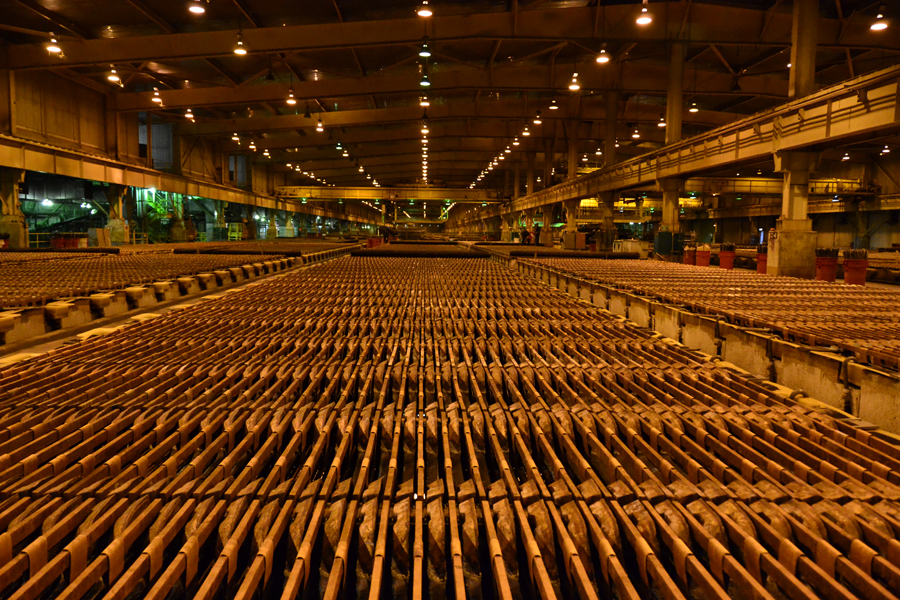
Mexican mining giant Grupo Mexico is weighing sizeable investments in the US to cash in on the copper boom, executives said on Wednesday.
In a long-awaited move, the firm said its Asarco unit was proceeding with plans to reopen and renovate its mothbolled Hayden smelter in Arizona and the Amarillo refinery in Texas.
The overhaul would cost an expected $230 million, mining head Leonardo Contreras told analysts following Grupo Mexico’s fourth-quarter earnings report.
The move would increase capacity to smelt 600,000 metric tons of copper concentrate and refine up to 450,000 tons of copper content per year, with medium-term increases possible, the firm said.
Grupo Mexico’s transport division (GMXT) is planning $472.7 million in investments this year. No funds were identified as being earmarked for a bid for Argentine rail lines, with a source telling Reuters GMXT planned to invest $3 billion in if it won the bid.
The conglomerate’s infrastructure division was dinged by halted production at oil rigs operated by state-run producer Pemex, with an executive saying it was in talks with the firm and expected work to restart soon.
(By Kylie Madry; Editing by Iñigo Alexander)
AU
Gold CEO ousted over mystery payments returns to African mining
Endeavour Mining former CEO Sebastien de Montessus. (Credit: Endeavour Mining)
Sebastien de Montessus — ousted as boss of Endeavour Mining Plc over alleged irregular payments — is back at the helm of an Africa-focused gold miner.
The 51-year-old French national was appointed chief executive officer of Mansa Resources Ltd. to turn around the firm’s flagship Kouroussa mine in Guinea, according to people familiar with the matter. A company database in the United Arab Emirates shows de Montessus is on the board of the Dubai-registered firm, which was set up 10 months ago.
As bullion’s record-breaking rally accelerated, the former Endeavour CEO returned to gold mining to advise Burkinabe businessman Idrissa Nassa on refinancing troubled Hummingbird Resources Plc, one of the people said. Nassa – whose companies were Hummingbird’s biggest shareholder and creditor – acquired the rest of the London-listed miner and took the firm private last March.
De Montessus is now heading Mansa, which has taken over two former Hummingbird assets: Kouroussa and the Dugbe development project in Liberia. He’s also a shareholder in the new firm, the people familiar said, asking not to be identified discussing the matter.
It’s a swift comeback after Endeavour’s board forced de Montessus out in January 2024 for alleged “serious misconduct” related to payments of more than $20 million to a company incorporated in the UAE. Following an investigation, Endeavour said it was unable to determine the ultimate beneficiary.
De Montessus has previously said he didn’t benefit personally from the payments and that they were made to an established Endeavour contractor. The miner and its ex-CEO reached a settlement in July 2024.
Nassa’s Nioko Resources Corp. is Mansa’s largest shareholder, one person familiar said. Orion Resource Partners – a New York-headquartered investment firm that’s teamed up with the US government to raise up to $5 billion for critical minerals deals – also owns shares in Mansa and has a seat on the board, according to the UAE registry, which doesn’t specify the size of the interest.
Nassa is the founder and owner of Coris Bank International SA, a banking group present across 10 African nations. Several executives at Nassa’s companies are also listed as Mansa shareholders.
De Montessus was CEO of Endeavour for almost eight years, during which time the company’s annual gold production more than doubled. Before that, he ran a mining firm owned by the family of Egyptian billionaire Naguib Sawiris, which became a major Endeavour shareholder in late 2015.
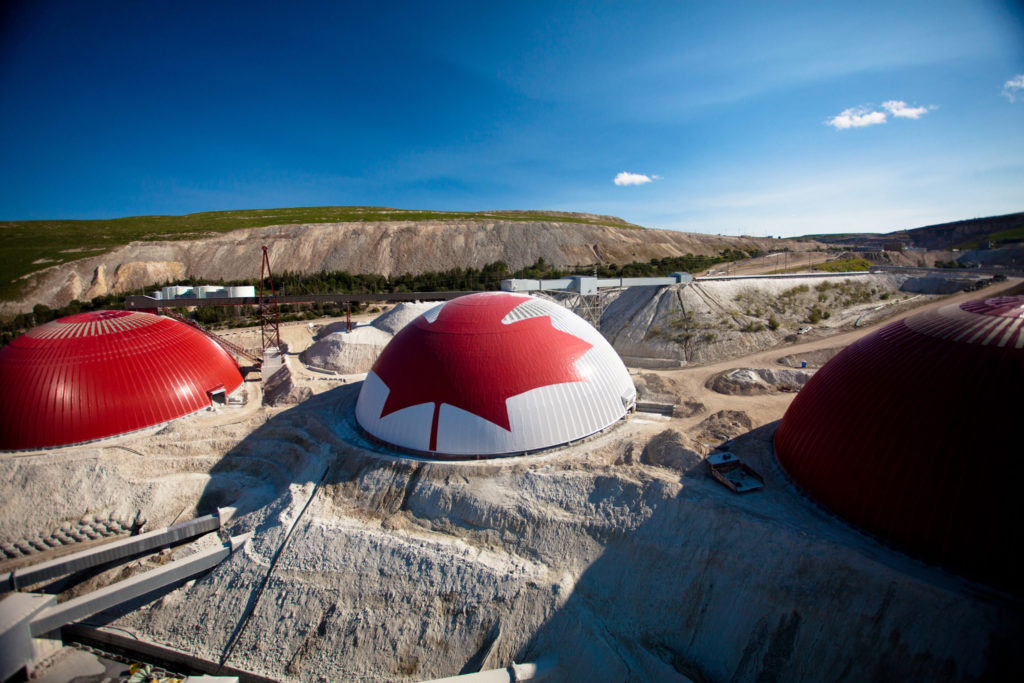
Recent large deals, including the proposed Anglo–Teck merger, highlight the rush into mining M&A. (Image of Highland Valley Copper. Courtesy of Teck.)
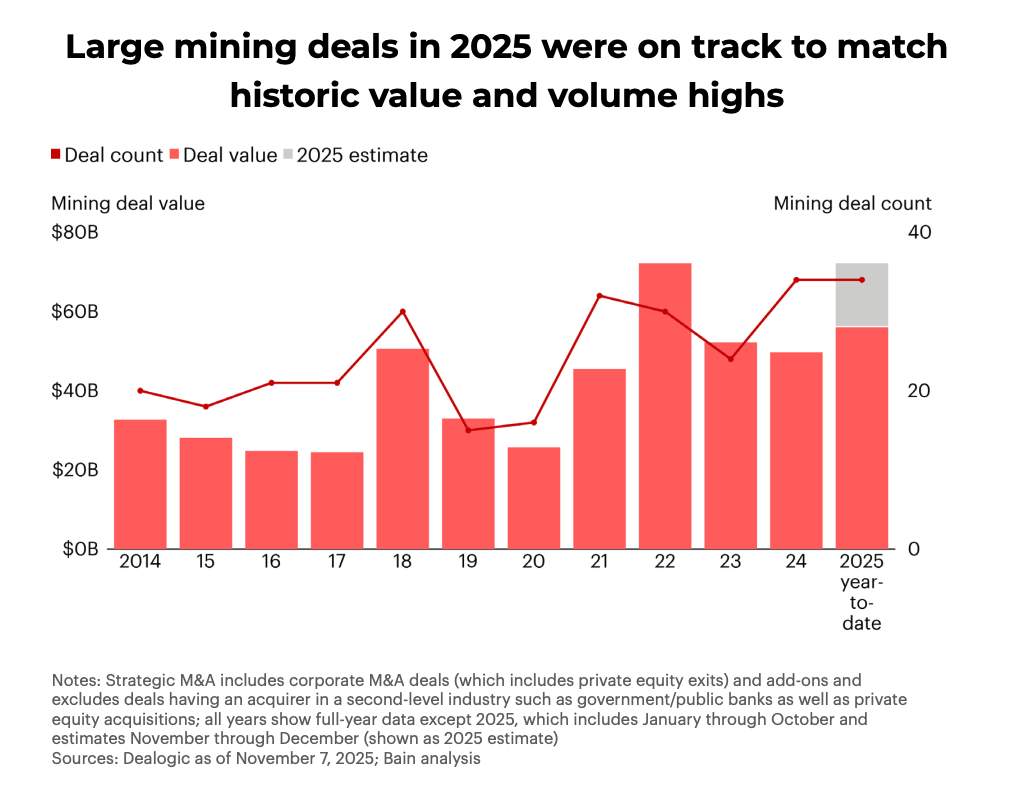
Mining companies are rushing into mergers and acquisitions (M&A) as a core growth strategy, a shift that is helping drive Canada’s deal market to its highest level in more than a decade, a Bain & Company report shows.
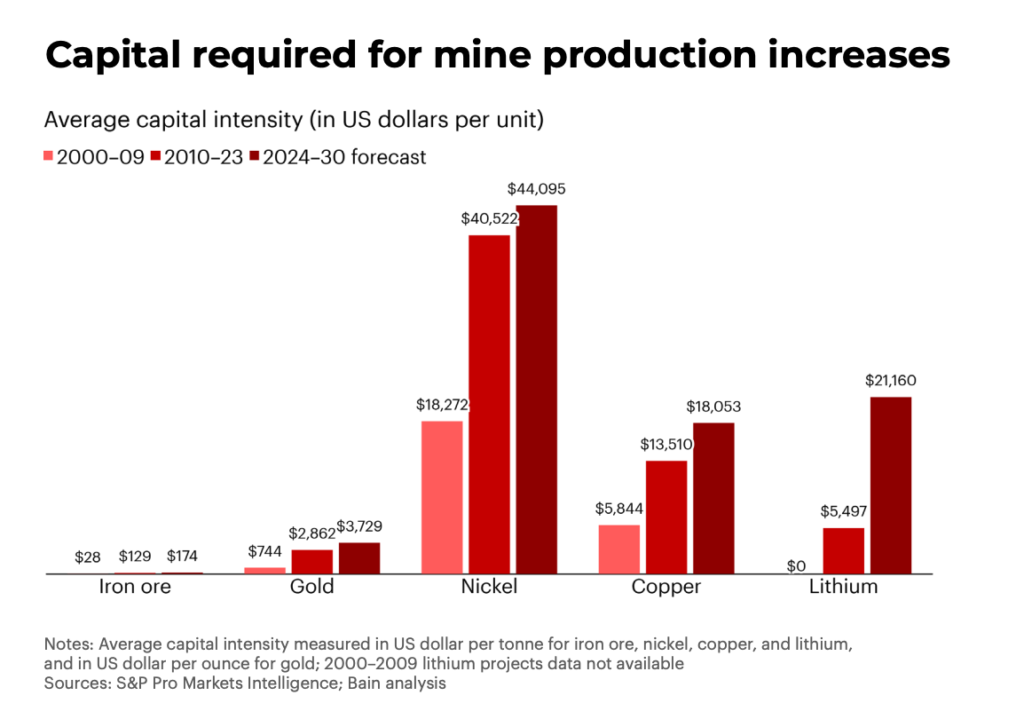
The shift reflects mounting pressure from rising capital costs, longer development timelines and intensifying competition for high-quality assets, which are the main forces reshaping how miners pursue growth and efficiency.
Bain estimates that global mining transactions valued above $500 million rose about 45% in 2025 compared with 2024, as companies looked to secure scale and resilience through acquisitions rather than greenfield development.
Recent large moves underscore the trend. Anglo American’s (LON: AAL) proposed merger with Teck (TSX: TECK.A TECK.B, NYSE: TECK), which values the Canadian miner at nearly $24 billion including debt, would create a combined entity with a market value of roughly $53 billion.
Bain says such transactions highlight how strategic M&A is becoming a critical tool for competitiveness and capital efficiency as the sector positions for a new commodity supercycle.
The next wave of mining dealmaking is expected to be larger, more complex and more decisive in determining long-term winners, the report finds.
Execution matters
While most large mining deals over the past decade have delivered neutral or positive shareholder outcomes, few have reached their full potential. Bain points to timing risk, peak-cycle valuations and execution challenges as the main constraints on value creation.
Successful examples show what is possible when execution is strong. Agnico Eagle’s $10.7 billion merger with Kirkland Lake Gold created the world’s second-largest gold producer, anchored in the Abitibi gold belt. The deal targeted between $800 million and $2 billion in synergies over five to 10 years, with only 15% to 20% tied to general and administrative costs and the bulk expected from operational and strategic integration.
By the second quarter of 2022, Agnico reported early “quick-win” synergies and signalled it could exceed the $2 billion target. Subsequent milestones—including commissioning the Macassa mine’s No. 4 shaft in 2023 and record gold production and free cash flow in 2024—point to growing momentum, though Bain notes it is still early to fully assess outcomes.
Canada focus
Canada’s total M&A deal value rose 30% to $178 billion last year, outperforming the US on strategic transactions even as it lagged the 40% increase globally. Strategic M&A value jumped 57% year over year in Canada, compared with 54% growth south of the border.
Energy and natural resources led Canadian strategic dealmaking, with deal value rising 133% in 2025, while advanced manufacturing and services declined 21%. Strategic buyers accounted for $149 billion in total deal value, though the number of Canadian deals larger than $30 million increased just 8% from the prior year.
Beyond Canada, Bain highlights Evolution Mining (ASX: EVN) as an example of repeatable, strategic M&A done well. The company focuses on building regional, long-life operating hubs where adjacent assets and shared expertise compound value. Rather than relying on top-down cost cutting, Evolution emphasizes operating leverage —shared infrastructure, transferable mining methods and portfolio mix— to strengthen margins across cycles.
Looking ahead, dealmakers remain optimistic about 2026 but warn that macroeconomic and geopolitical uncertainty could still temper market momentum, particularly for capital-intensive sectors such as mining.
Anglo-Teck merger would create a ‘global minerals family’ HQ’d in Vancouver, CTO says
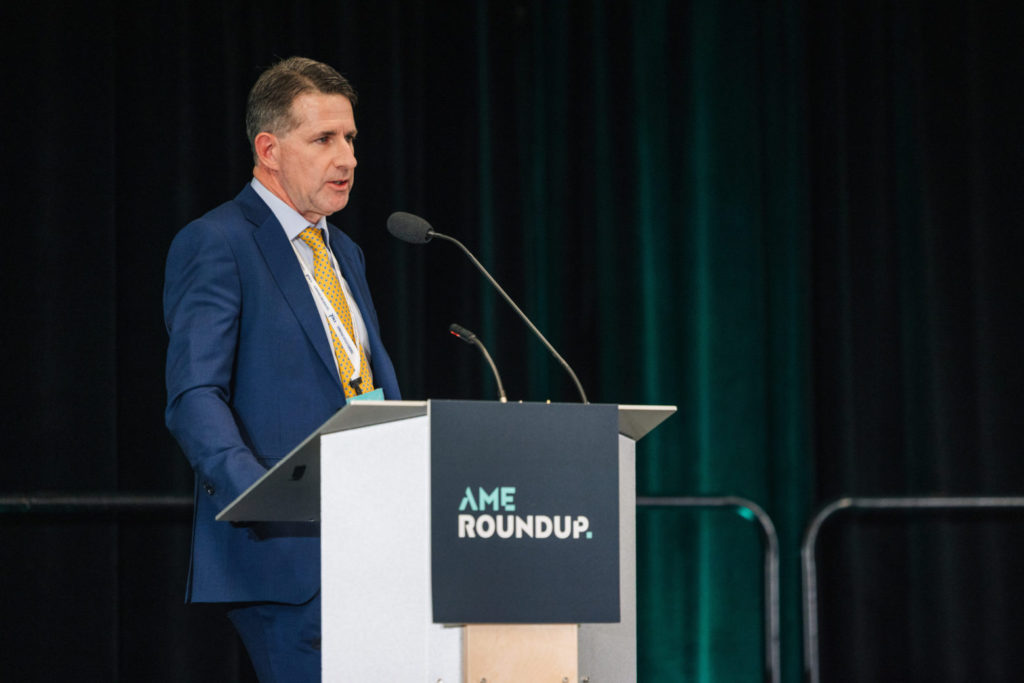
Anglo American’s chief technical officer Tom McCulley. Credit: AME.
Anglo American’s chief technical officer Tom McCulley used his first appearance at the Association for Mineral Exploration (AME) Roundup to deliver a clear message to the industry: the global energy transition will fail without faster, deeper and more innovative mineral discovery.
Speaking at the annual conference in Vancouver on Monday, McCulley said the pace of global change – driven by electrification, artificial intelligence, population growth and geopolitical uncertainty – is accelerating demand for critical minerals at a time when supply is falling behind.
“The world needs more critical minerals, and it needs them faster, safer and more sustainably,” he told delegates, warning that declining ore grades, deeper and more complex deposits, rising capital costs and lengthening permitting timelines are tightening the supply outlook.
Copper, McCulley noted, illustrates the scale of the challenge. While developed economies have roughly 230 kilograms of installed copper per person, the global average is closer to 70 kilograms, he said.
Closing that gap would require installed copper stocks to rise from about 500 million tonnes today to more than 2 billion tonnes in the coming decades, a figure likely to increase further with the expansion of data centres, electrification and grid infrastructure.
Against that backdrop, exploration remains the industry’s most critical lever, McCulley said. Anglo American’s approach, he noted, is built around scale, discipline and innovation, supported by an integrated discovery and geosciences team that combines global exploration, near-asset discovery and advanced geoscience capabilities.
McCulley highlighted several proprietary technologies that Anglo American is deploying to improve discovery success, highlighting the Spectrum airborne system, which collects high-resolution electromagnetic, magnetic and radiometric data in a single pass; a highly sensitive ground-based magnetometer known as “low-temperature SQUID” used to detect metallic sulphides in complex geological settings; and AI-assisted core logging, which can reduce weeks of manual relogging work to a single day.
While technology is critical, he stressed that trust and community relationships ultimately determine whether discoveries become mines. Drawing on his experience at Anglo American’s Quellaveco copper mine in Peru, commissioned in 2022, he said early and sustained engagement with communities and government was essential to managing social and environmental risks – particularly water access in arid regions.
At Quellaveco, Anglo American worked with local communities to design water diversion and storage infrastructure that prioritised community needs, including a 60-million-cubic-metre dam largely dedicated to regional water supply.
“The community feels this is their dam,” he said, describing the project as a model for future developments across the company’s global portfolio.
“This dam, known as the Vizcachas dam, we did this all because of open dialogue with the community. The majority of the water from that dam is for the community – not the mine. The community not only worked with us, but helped us design – this is their dam.”
Mega-merger with Teck
Turning to Canada, McCulley said the country is uniquely positioned to supply critical minerals for the energy transition, citing its geological endowment, regulatory framework and commitment to responsible mining.
He pointed to the federal government’s 2025 budget, which earmarks more than $2 billion to enhance mining competitiveness and accelerate critical minerals investment.
Anglo American’s proposed $53-billion mega- merger with Teck Resources, announced last September, would create a global copper giant.
The Canadian government has approved the Anglo-Teck merger, clearing the way for the creation of one of the world’s largest copper producers as demand accelerates.
“We have a long history of partnerships…and this year’s theme: Materials for a changing world, couldn’t be more fitting for us at Anglo American, but us as an industry.”
“We announced the merger with Teck, to form ‘Anglo-Teck’. This will be a global minerals family – based right here in Vancouver,” McCulley said. That’s something we all can be proud of.”
As part of the strategy, the company plans to invest $300 million over five years in exploration and technology in Canada, establish a $100 million global institute for critical minerals research, and continue supporting the junior mining ecosystem, McCulley said.
“Discovery is about more than finding ore bodies,” he said. “It’s about creating enduring economic, environmental and social value for future generations.”
Bolivia’s lithium gamble tests US realignment in Latin America
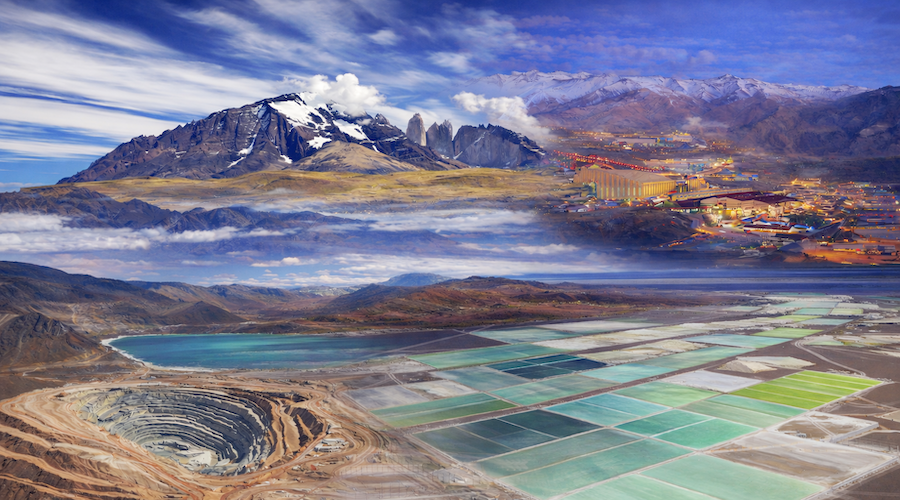
Latin America is rich in copper, lithium, silver, and gold, among other valuable resources. ( AI-generated photo with background image by Dmitry Pichugin.)
Latin America is entering 2026 with resources at the centre of a fast-moving geopolitical realignment, underscored by the US capture of Venezuela’s Nicolás Maduro.
For years, political risks for miners and explorers operating in South America for the most part had to do with changes to tax regimes and royalties, interference with permitting processes, or local government and citizen opposition. Only in rare cases were there outright property seizures, production halts or blanket bans on activity (and when it happened is was usually not permanent).
Now the stakes are higher and the politics global: Governments and investors are focused on who controls critical minerals, which capitals have Washington’s backing, and how far states will go to secure supply chains that underpin everything from electric vehicles to weapons systems.
In a new series, MINING.COM will track the forces reshaping the region’s markets, examining Latin America through a geopolitical lens, where mineral-rich frontiers increasingly resemble security zones, and markets react as much to shifting alliances as to domestic election results.
In our first installment, we dig deep into Bolivia’s mining past, present and future — a country whose vast mineral wealth and shifting political tides make it a bellwether for where the region could be headed next.
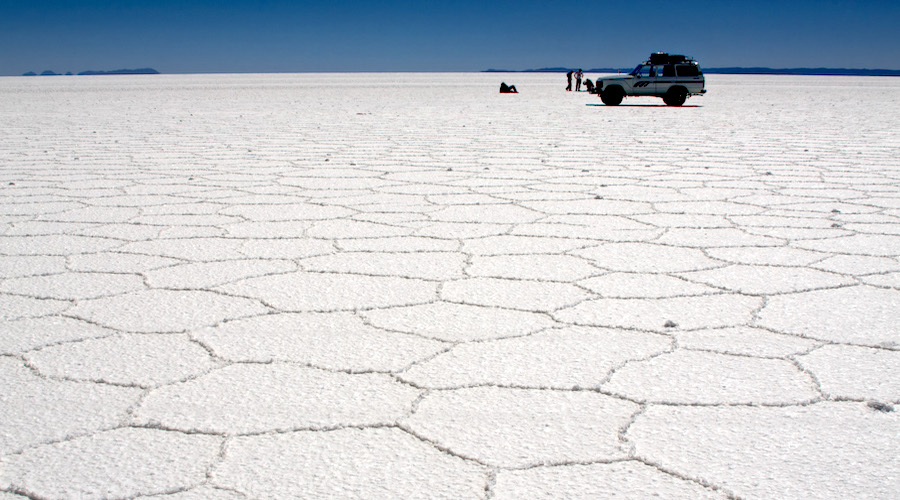
Stretching more than 4,050 sq. miles of the Altiplano, Uyuni is the world’s largest salt flat. (Image courtesy of Pedro Szekely | Flickr Commons.)
Bolivia’s political trajectory shifted in November 2025 when President Rodrigo Paz took office, signalling a turn toward closer ties with the US after two decades of Socialist rule.
Paz’s centre-right, pro-business government is betting that Bolivia’s vast but underdeveloped lithium resources can help stabilize an economy strained by inflation, fuel shortages and dwindling dollar reserves. A pro-US tilt, officials hope, will unlock development finance, draw much-needed technical expertise into the country and forge new multi-lateral partnerships.
But analysts warn that geopolitics alone will not overcome Bolivia’s long-standing execution and governance challenges.
Mariano Machado, Americas Principal Analyst at Verisk Maplecroft, told MINING.COM that Bolivia’s lithium contracts are “contracted but contested” — investable for early-stage work, but not yet bankable for large-scale project finance.
“Congress, courts and public pressure can still re-price deals midstream,” Machado said, noting that lenders are therefore likely to insist on phased drawdowns, escrowed revenues, step-in rights and political risk insurance rather than relying on sovereign assurances.
That caution, he added, is well grounded. Chinese and Russian direct lithium extraction (DLE) agreements signed in 2023–2024 collapsed into congressional turmoil in July 2025 and were later halted by court order.
Meanwhile, the state-owned lithium company YLB’s first industrial plant, opened in late 2023, is reportedly operating well below capacity, reinforcing what Machado described as an “execution-and-governance discount” on Bolivia.
Dreams of lithium riches
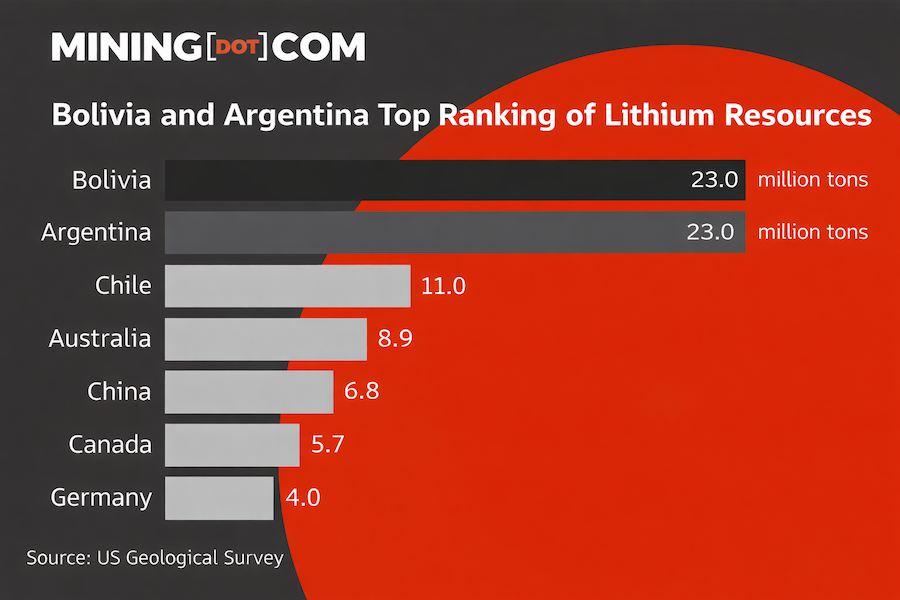
Bolivia holds some of the world’s largest lithium resources. According to the 2025 United States Geological Survey (USGS), the country has 23 million tonnes of identified lithium resources, about 20% of the global total — roughly double Chile’s.
The landlocked South American country has a history of shattered lithium dreams. It has tried and failed to develop its industry several times since the 1990s, producing only an accumulated 1,400 tonnes since 2018.
The new government plans to open lithium projects to foreign capital, boost transparency around opaque contracts, certify resources through independent third parties and pursue broader economic reforms aimed at restoring investor confidence.
Analysts including Juan Ignacio Guzmán, CEO of Chile-based GEM Mining Consulting, warn that political promises alone are unlikely to shift sentiment without hard guarantees.
Guzmán told MINING.COM that investors will not commit capital without legal certainty, fiscal stability, and reliable mechanisms to resolve disputes, noting that international arbitration clauses are often a minimum requirement.
Machado agreed, saying that while policy signals can improve sentiment, investment decisions ultimately depend on firm legal and fiscal foundations, including stable tax and royalty regimes, clear legislative authority, workable consultation and permitting processes, and credible dispute resolution—particularly given the risk of social unrest tied to Bolivia’s economic stabilization efforts.
“The moment fuel prices rise, and protests hit the streets is when governments test contract boundaries,” Machado said. He pointed to Paz’s emergency economic Decree 5503, which lasted less than a month from mid-December to early January before being replaced following nationwide protests after fuel prices jumped between 86% and 162%.
Several factors impede Bolivia’s ability to turn its vast lithium resources into bankable projects. High magnesium content, complex geology and costly logistics — including a more than 300-mile route to the nearest port — mean the US Geological Survey does not classify Bolivia’s resources as commercially viable.
Guzmán said the key technical barrier is the impurity profile. “The magnesium-to-lithium ratio in the case of Uyuni is around 20 to 1,” far higher than in Chile’s Salar de Atacama or Argentina’s Puna, “making extracting lithium from Bolivia much more expensive due to the necessary processing and more complex quality control required to achieve battery-grade lithium.”
YLB has recently moved to address that technical bottleneck on paper. On Jan. 23, it filed patent applications for a DLE process tailored to Uyuni’s high-magnesium brines, as well as an industrial design patent for a portable fast-charging lithium-ion charger.
The filings build on a 2023 patent for high-purity lithium carbonate, but for investors and analysts they underline a familiar gap: Bolivia continues to generate intellectual property faster than it can translate it into reliable, bankable production.
Machado noted these challenges raise a larger strategic risk: timing. “The biggest risk is missing the lithium cycle,” he said. “Bolivia may win the politics but lose the timing.”
Uyuni’s high-magnesium brines, landlocked logistics and the need to prove extraction technologies —including DLE — at scale already stretch costs and timelines, he said. Combined with a volatile street environment and uneven state capacity, Bolivia risks arriving late to a market that increasingly penalizes delayed, high-friction entrants. By contrast, Argentina and Chile have spent years aligning their projects with investor and market expectations.
Markets remain skeptical. Federico Gay of Benchmark Mineral Intelligence said in a research note that even with regulatory improvements, Bolivia is unlikely to become a major producer before the end of the decade.
From a project finance perspective, Guzmán said existing agreements remain unbankable. “As long as the legal and social milestones that Bolivia require to assure investors that the investment will materialize into future cash flows are not in place, the contracts are not bankable,” he said. He added that deals with a Chinese consortium led by CBC and the uranium-linked agreement with One Group remain under international scrutiny amid political disputes and litigation risk.
Reform in motion
The government has moved to shore up its finances as it pushes for reform. La Paz has announced plans for a $3.1 billion loan from the Latin American Development Bank, and Economy Minister Marcelo Montenegro Aramayo has held talks with the International Monetary Fund, the Inter-American Development Bank and other multilateral lenders. Aramayo has declined to say how much support the US might provide.
Guzmán said US financing could help lower the cost of capital but flagged a key constraint: because major contracts are tied to Chinese and Russian partners, it is unlikely Washington would finance projects linked to those actors.
Verisk’s Machado said US support could still play a role if deployed carefully. A time-bound currency swap or other measures to ease near-term foreign exchange pressure and fuel shortages could help de-risk the macro environment without adding to sovereign stress, he said. But such support would not unlock lithium capital expenditure unless Bolivia pairs it with credible fiscal consolidation and an investable rulebook that attracts private capital through guarantees and political risk insurance.
The pivot marks a sharp break from the era of former president Evo Morales, who ruled from 2006 to 2019, expelled the US ambassador and counterdrug officials, nationalized the energy sector and maintained generous fuel subsidies. Those policies contributed to declining natural gas production, shrinking foreign exchange reserves and mounting fiscal pressure, while cheap fuel encouraged widespread smuggling to neighbouring countries.
Morales is now holed up in his rural Chapare stronghold to avoid arrest over allegations of statutory rape, which he denies. His successor, Luis Arce, was arrested in mid-December on corruption charges a month after handing over power to Paz; Arce also denies the allegations.
The new government has made reforming fuel subsidies a priority, aiming to stabilize supply and ensure subsidies reach small businesses and vulnerable groups rather than smugglers at the borders.
Beyond lithium, Bolivia hopes to revive its hydrocarbons sector, targeting an oil and gas bidding round in 2027. That plan hinges on passing a new hydrocarbons law and a separate lithium law this year to attract foreign investment.
Even if reforms advance quickly, Guzmán said Bolivia’s near-term impact on global lithium supply will remain limited. The country currently produces about 2,000 tonnes of lithium carbonate equivalent, he said.
In a best-case scenario, output could rise to around 40,000 tonnes by 2030, which is still a small share of a market that is moving fast and leaving little room for late entrants.
The other gems in the crown
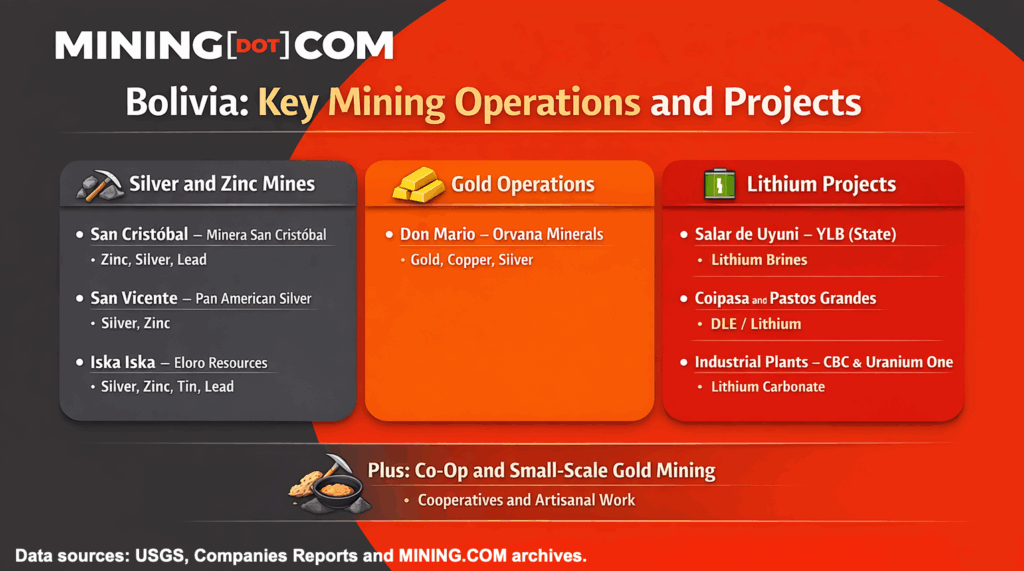
While lithium dominates the headlines, Bolivia’s near-term mining stability still comes from established silver and base-metal production.
The country’s largest modern operation is San Cristóbal, a major open-pit mine producing zinc-silver-lead concentrates, operated by Minera San Cristóbal. The nation also hosts key silver operations such as San Bartolomé, run by Andean Precious Metals (TSX: APM), through its subsidiary Manquiri, focused primarily on silver.
Among the most important advanced-stage polymetallic projects is Iska Iska, led by Eloro Resources (TSX: ELO), with a resource story anchored in silver and zinc, alongside meaningful tin and lead exposure—one of the few large development-scale pipelines in the country outside lithium.
Gold, meanwhile, remains structurally important but highly fragmented. Beyond industrial-scale plans, a large share of Bolivian production comes from cooperatives and smaller-scale operations, which can be economically significant but bring a different mix of regulatory and social risks.
Still, the country has seen activity around potential industrial continuity, including Orvana Minerals’ (TSX: ORV) Don Mario asset, associated with gold (with copper/silver credits depending on ore).
The country’s mining outlook is likely to remain a two-speed story: silver and zinc provide continuity and cash flow, while lithium represents the transformational prize— one that will depend on the new administration’s ability to align investment rules, partner selection and social license with the scale of the industrial challenge.
The Trump administration is stepping back from plans to guarantee a minimum price for US critical minerals projects, a tacit acknowledgment of a lack of congressional funding and the complexity of setting market pricing, multiple sources told Reuters.
The shift, which comes as a US Senate committee is reviewing a price floor extended last year to MP Materials, marks a reversal from commitments made to industry and could set Washington apart from G7 partners discussing some form of joint price support or related measures to bolster production of critical minerals used in electric vehicles, semiconductors, defense systems and consumer electronics.
At a closed-door meeting earlier this month hosted by a Washington think tank, two senior Trump officials told US minerals executives that their projects would need to prove their financial independence without government price support, three attendees told Reuters.
“We’re not here to prop you guys up,” Audrey Robertson, assistant secretary of the US Department of Energy and head of its Office of Critical Minerals and Energy Innovation, told the executives. “Don’t come to us expecting that.”
The shift would guide future deals and does not affect MP’s price floor, which the government agreed to as part of an investment package last July.
Robertson was joined by Joshua Kroon, the deputy assistant secretary for textiles, consumer goods, materials, critical minerals and metals at the US Department of Commerce’s International Trade Administration.
Both Kroon and Robertson told the meeting that Washington is no longer in a position to offer price floors, according to the sources.
Kroon and Robertson did not respond to requests for comment.
The administration’s current stance is in contrast to a closed-door meeting held last July, where two separate officials told minerals executives that a floor price extended to MP Materials days prior was “not a one-off” and that the administration was working on price supports for other projects.
Since then, the administration has taken equity positions in Lithium Americas, Trilogy Metals, USA Rare Earth and others. None were offered price floors, sparking questions about the government’s commitment to that financial tool.
US mining and processing companies have pushed for price floors and other government backstops to help them compete with China. Industry executives argue China’s state-backed producers can slash prices to punish rivals, undercut projects and deter private investment.
The White House declined to say whether it plans to issue any new price floors, but said it will continue to pursue deregulation, tax cuts and targeted investments in the high-priority sector “while being good stewards of taxpayer dollars.”
Critics of price floors warn they could expose US taxpayers to significant financial risk by forcing the government to subsidize minerals when market prices fall, potentially locking in long-term liabilities if prices remain depressed.
Legal experts also caution that guaranteeing minimum prices could face challenges under US procurement, trade and budget laws, particularly if such support is seen as market distortion or lacks explicit congressional authorization.
Moving away from price floors does not preclude other steps Washington could take to bolster mineral projects and attempt to stabilize prices, including stockpiling, equity investments and local content stipulations.
Other countries, including Australia, have also considered price floors for critical minerals.
MP deal under spotlight
The MP Materials investment sparked concern from some administration officials and members of Congress that funding for a price floor of at least $110 per kilogram for two types of rare earths had not been authorized by Congress, two additional sources familiar with the discussions said.
The economics of mineral markets since the MP investment have shifted. USA Rare Earth said earlier this week it intends to buy those same types of rare earths for $125 per kilogram on the open market.
The MP investment, which included a guaranteed purchase agreement, fueled confusion over whether Washington would guarantee a price floor for others.
As the Trump administration considered other potential equity investments after MP, it recognized that it did not have the congressional authority to fund a price floor, the sources said.
That realization was fueled in part by an inquiry from members of the Senate Armed Services Committee, which asked Pentagon staff last year to meet to explain why MP Materials received price floor support and the administration’s strategy around minerals sector investment, according to the two sources.
A committee staffer confirmed the meeting request but declined further comment. MP Materials did not respond to a request for comment.
(By Ernest Scheyder and Jarrett Renshaw; Editing by Veronica Brown and Lisa Shumaker)
Australia’s Iluka flags impairment of minerals sands unit
Australia’s Iluka Resources said on Thursday it expects to recognize two exceptional items, including an impairment of its mineral sands business, putting its shares on course for their largest single-day decline in two months.
The non-cash impairment charge for the segment is expected to be around A$350 million ($246.02 million) before tax and will be accounted for in its final 2025 results, Iluka added.
Shares of the critical minerals miner fell as much as 8.4% to A$5.92, set for their weakest session since late November 2025. The stock is the worst performer on the broader ASX 200 index, which was down 0.4% as of 23:23 GMT.
The impairment comes after Iluka in September disclosed the suspension of production activities at its Cataby mine and Synthetic Rutile Kiln 2 (SR2) processing facility in Western Australia.
The decision had been taken due to subdued demand for mineral sands and their associated downstream products, with lower levels of global economic activity further weighing on purchasing behaviour of their customers, the company said in its September statement.
Rio Tinto is also looking to exit its minerals sands business, with the world’s largest iron ore miner last year flagging that its titanium and borates divisions were up for sale.
Iluka added in its Thursday announcement that it would also recognize a reduction for some of its inventory as price expectations have prompted a decrease in realized value for its items.
The company is expected to include exceptional charges totalling A$565 million pre-tax in its financial statement for the year ended December 31.
In its quarterly production report, Iluka flagged that development of its Eneabba rare earths facility, which is being built via a partnership with the Australian government, has progressed, with commissioning slated for 2027.
($1 = 1.4227 Australian dollars)
(By Nikita Maria Jino; Editing by Alan Barona)
Volta Intersects High-Grade Gallium Mineralization at the Springer REE Project in Ontario, Canada
Broad, continuous gallium mineralization confirmed in Borehole SL25-23 with 117m assayed to date:
77g/t Ga2O3 over 117m (from 59.0m to 175.8m)
Including 120 g/t Ga2O3 over 11.1m (from 153.0m to 164.1 m)
Up to 211.0 g/t Ga2O3 over 1.5m (from 156.0m to 157.5m)
Results rank among the highest-grade gallium assays reported in North America to date, based on publicly available data
Gallium is on the critical mineral list for Canada, Europe, Australia and the US, and the gallium market is expected to grow significantly from US$2.5B in 2024 to US$21.5B by 2034
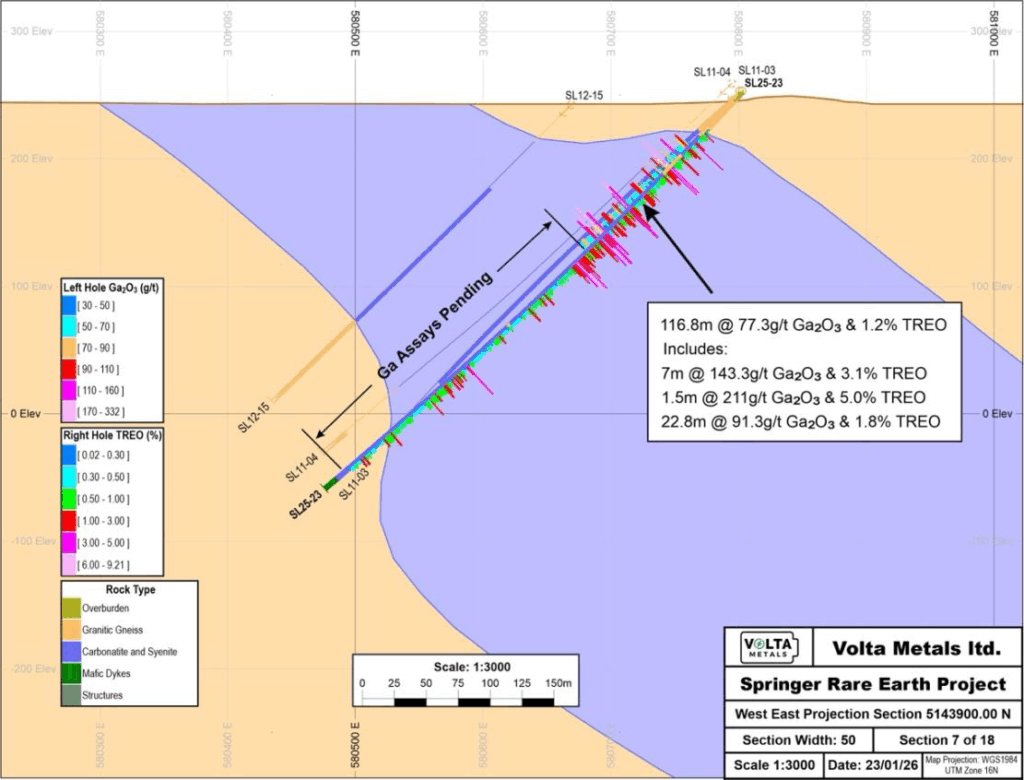
Volta Metals Ltd. (CSE: VLTA) (FSE: D0W) (OTC Pink: VOLMF) (“Volta” or the “Company”) is pleased to report initial gallium assay results from its Springer Rare Earth Project near Sudbury, Ontario, Canada. The newly received assays from drill hole SL25-23 confirm thick, continuous gallium mineralization over a 116.8m interval grading 77 g/t Ga2O3, including multiple high-grade zones exceeding 100 g/t Ga2O3 (Figure 1).
These initial Springer results show gallium mineralization within the high-grade range, reinforcing the project’s potential to emerge as a leading North American gallium-bearing REE system (Table 1).
Table 1. Select Ga2O3 Assays from Drill hole SL25-23
Ga2O3 g/t
Interval (m)
From (m)
To (m)
77.3
116.8
59.0
175.8
143.3
7.0
81.0
88.0
332.0
1.0
82.0
83.0
172.7
3.0
126.0
129.0
194.9
1.5
127.5
129.0
211.0
1.5
156.0
157.5
119.8
11.1
153.0
164.1
91.3
22.8
153.0
175.8
Globally, gallium is primarily produced as a secondary by-product of aluminum and zinc refining, making primary natural gallium occurrences uncommon. Industry benchmarks generally classify gallium grades as:
Low grade: <35 g/t Ga2O3
Moderate-grade: 35-60 g/t Ga2O3
High grade: >60 g/t Ga2O3
The sampled interval (58.0m to 175.8m) from hole SL25-23 ended in 118.3 g/t Ga2O3, with the remainder of the hole (to 372m) currently undergoing gallium assay.
These results represent the widest and most consistent high-grade gallium intercept identified at Springer to date and demonstrates the project’s multi-commodity critical minerals potential in addition to its high-grade Rare Earth Element (“REE”) mineralization.
Figure 1. Ga2O3 g/t assay highlights in drill hole SL25-23.
CEO Kerem Usenmez commented, “These gallium assays further reinforce Springer’s position as one of North America’s most advanced and strategically important critical minerals projects. The presence of long, continuous intervals with consistently high gallium grades is rare in North America.”
Gallium is on the critical mineral list for Canada, Europe, Australia and the US, with the gallium market expected to grow significantly from approximately US$2.5B in 2024 to US$21.5B by 2034. Subject to ongoing metallurgical testwork, Springer could produce notable by-product Ga alongside Light and Heavy Rare Earth Elements.
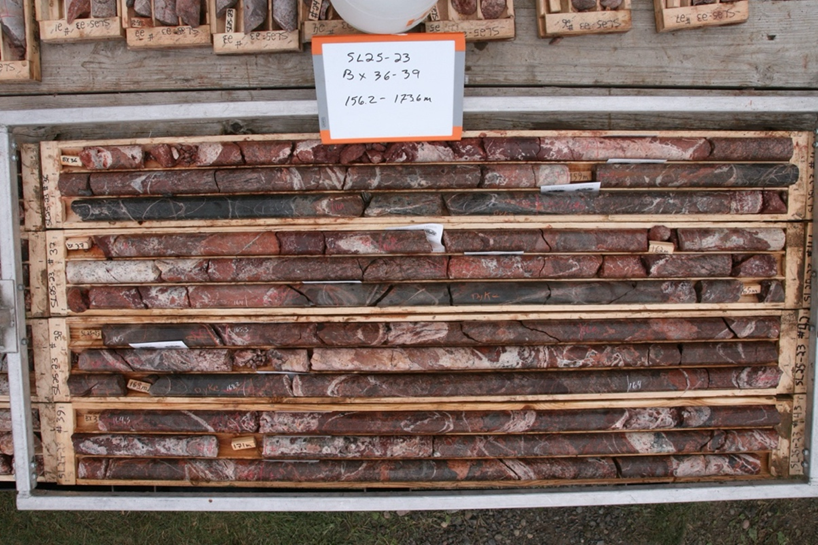
Figure 2. High-grade gallium mineralization with grades up to 211.0 g/t Ga2O3 over 1.5m (from 156.0 to 157.5m) in borehole SL25-23.
The Global Gallium Market
The gallium market is overwhelmingly dominated by China, which controls 98% of global gallium production.
Expanding Demand Across Multiple Sectors
Demand for gallium has expanded dramatically across a range of high-tech sectors, placing sustained upward pressure on prices. The global gallium market is projected to grow from approximately US$2.32 billion in 2024 to US$2.91 billion in 2025, representing a compound annual growth rate (“CAGR”) of 25.4%. More aggressive forecasts suggest the market could reach US$17.0 billion by 2032, expanding at a CAGR of 24.5%. Continued demand growth across the semiconductor, telecommunications, defense, and renewable energy sectors is expected to support ongoing price strength.
Price Increase and Market Dynamics
Gallium prices have experienced significant volatility in recent years, with a clear upward trend driven by tightening supply and accelerating demand. In December 2024, gallium price surged to US$575 per kilogram, representing a 17% increase over previous levels and the highest price since 2011. The most significant factor driving recent price increases has been China’s strategic export restrictions. Initial export controls introduced in August 2023 disrupted global supply chains and pushed prices higher. By December 2024, China had escalated these measures, announcing a comprehensive ban on gallium exports to the US, further intensifying market pressures. With China accounting for approximately 98% of global gallium production, these export restrictions have had a disproportionate impact on global supply and pricing. China’s production advantage stems from its integration of gallium recovery with its massive aluminum industry, as gallium is typically extracted from the alumina processing stream.
Gallium Applications
Semiconductor Applications and Integrated Circuits: The semiconductor industry represents the largest demand driver for gallium, with approximately 74% of gallium imported into the United States in 2023 used in integrated circuits. Gallium arsenide (GaAs) and gallium nitride (GaN) have become critical semiconductor materials across a wide range of industries, including high-tech, automotive, aerospace, healthcare, and telecommunications. Gallium nitride semiconductors are particularly valuable due to their superior power density and heat resistance properties. Traditionally used primarily in military applications, GaN is now finding increased adoption in commercial applications, including 5G networks, wireless infrastructure, power electronics, satellites, electric vehicles, and consumer electronics. As one manufacturer noted, “GaN offers higher power density, more reliable operation and improved efficiency over traditional silicon-only based solutions”.
Optoelectric Devices: Approximately 25% of gallium consumption goes toward optoelectronic devices such as laser diodes, light-emitting diodes LEDs, photodetectors, and solar cells. Continued growth in consumer electronics devices – such as mobile phones, laptops, televisions, and advanced lighting applications continues to drive demand in this segment. These applications are particularly important for fibre optic communications and high-speed data transmission technologies, both of which represent key long-term growth areas.
Renewable Energy Applications: The renewable energy sector represents an emerging but potentially significant source of future gallium demand. Thin-film solar panels rely heavily on gallium for their high efficiency, and as renewable energy adoption accelerates globally, gallium requirements are expected to grow substantially. Europe alone is projected to consume up to 26 times more gallium by 2030 compared to current levels, according to the Fraunhofer Institute*. The scale of potential demand is staggering — Austria’s planned renewable energy projects, despite serving a population of only 9 million, would require approximately 4.5 times the current global gallium production. This statistic underscores the looming supply-demand imbalance as gallium becomes increasingly integral to both energy independence and environmental commitments worldwide.
About the Springer Rare Earth Deposit
The 2012 mineral resource estimate presented for the Springer Rare Earth Project is historical in nature. Volta’s Qualified Person has not completed sufficient work to confirm the results of the historical resource. Volta does not treat this as a current mineral resource but considers it relevant as a guide to future exploration and includes it for reference purposes only. The historical resource was estimated by Tetra Tech Wardrop in 2012. The gallium was not included in this initial mineral resource estimate.
The block model and mineral resource for the Springer Rare Earth Project is classified as having both Indicated and Inferred Mineral Resources based on the number of boreholes, borehole spacing and sample data populations used in the estimation of the blocks. The mineral resource estimate for the deposit, at a 0.9% Total Rare Earth Oxide (“TREO”) cut-off, is an Indicated Resource of 4.2 Mt at 1.14% TREO, 0.02% ThO2, with approximately 6% of the TREO being made up of HREO; and an Inferred Resource of 12.7 Mt at 1.17% TREO, 0.01% ThO2, with approximately 4% of the TREO being made up of HREOs.
The 2012 mineral resource, based on 22 diamond boreholes, was estimated by Ordinary Kriging interpolation on uncapped grades for all 15 REOs and thorium dioxide. The TREO% is a sum of the 15 individual interpolations of the REOs. No recoveries have been applied to the interpolated estimates.
The 2012 mineral resource estimate categories are not compliant with the current CIM Definition Standards. No other resource estimates have been undertaken since the 2012 Tetra Tech Wardrop report. Further drilling will be required by Volta to verify the historical estimate as a current mineral resource.
QA/QC Protocol
All drilling was completed by a diamond drill rig producing NQ-size core. Volta implemented a strict QA/QC protocol in processing all rock samples collected from the diamond core samples obtained from the Springer REE property. The protocol included inserting reference materials, in this case, high-concentration and low-concentration certified rare earth elements standards, blanks, and drill core duplicates, to validate the accuracy and precision of the assay results. All collected rock core samples were cut in half by a rock saw, placed in sturdy plastic bags and zip-tied shut while under the supervision of a professional geologist. The remaining half core was returned to the core box, which is stored on the Property. Sample bags were then put in rice bags and kept secure before being sent by road transport to Activation Laboratories Ltd.’s preparation facility in North Bay, Ontario. Sample preparation (code RX1) consists of drying and crush (< 7 kg) up to 80% passing 2 mm, riffle split (250 g), and pulverize (mild steel) to 95% passing 105 µm. The samples from SL25-23 were subsequently analyzed at Saskatchewan Research Council (“SRC”) site in Saskatoon, Saskatchewan, using Code 8–REE Assay (lithium metaborate/tetraborate fusion with subsequent analysis by ICP and ICP/MS). Syenite standard SY-5 from Natural Resources Canada was inserted in the sample stream for every 20 drill core samples. Standard SY5 passed within two standard deviations for rare-earth elements (La to Lu) and Ga. The rare-earth elements assayed by SRC were similar to those previously assayed by Actlabs to further confirm the REE assays from the Springer Project.
Qualified Person
The technical content of this news release has been reviewed and approved by Dr. Julie Selway, P.Geo., who is an independent Qualified Person (“QP”) as defined in National Instrument 43-101, Standards of Disclosure for Mineral Projects. The QP and the Company have not completed sufficient work to verify the historical information on the Springer deposit, and it is considered as “historical”, particularly regarding historical exploration and government geological work.
For more information about the Company, view Volta’s website at www.voltametals.ca.
ABOUT VOLTA METALS LTD.
Volta Metals Ltd. (CSE: VLTA) (FSE: D0W) (OTC Pink: VOLMF) is a mineral exploration company focused on rare earths, gallium, lithium, cesium, and tantalum. It owns, has optioned and is currently exploring a critical minerals portfolio of rare earths, gallium, lithium, cesium, and tantalum projects in Ontario, one of the world’s most prolific and emerging hard-rock critical mineral districts. To learn more about Volta and its Springer and Aki Projects, please visit www.voltametals.ca.
ON BEHALF OF THE BOARD
For further information, contact:
Kerem Usenmez, President & CEO Tel: 416.919.9060 Email: info@voltametals.ca Website: www.voltametals.ca
Neither the CSE nor the Canadian Investment Regulatory Organization (CIRO) accepts responsibility for the adequacy or accuracy of this release. This news release contains forward-looking statements relating to product development, plans, strategies, and other statements that are not historical facts. Forward-looking statements are often identified by terms such as “will”, “may”, “should”, “anticipate”, “expects” and similar expressions. All statements other than statements of historical fact included in this news release are forward-looking statements that involve risks and uncertainties. Forward-looking information in this news release includes, but is not limited to, that the newly designed drill program will provide sufficient data for an updated mineral resource estimate, which is scheduled to be completed in the first quarter of 2026. There can be no assurance that such statements will prove to be accurate, and actual results and future events could differ materially from those anticipated in such statements. Important factors that could cause actual results to differ materially from the Company’s expectations include: the risks detailed from time to time in the filings made by the Company with securities regulators; the fact that Volta’s interests in its mineral properties are options only and there are no guarantee that such interest, if earned, will be certain; the future prices and demand for lithium, rare earth elements, and gallium; and delays or the inability of the Company to obtain any necessary approvals, permits and authorizations required to carry out its business plans. The reader is cautioned that assumptions used in the preparation of any forward-looking statements may prove to be incorrect. Events or circumstances may cause actual results to differ materially from those predicted, as a result of numerous known and unknown risks, uncertainties, and other factors, many of which are beyond the control of the Company. The reader is cautioned not to place undue reliance on any forward-looking statements. Such information, although considered reasonable by management at the time of preparation, may prove to be incorrect and actual results may differ materially from those anticipated. Forward-looking statements contained in this news release are expressly qualified by this cautionary statement. The forward-looking statements contained in this news release are made as of the date of this news release, and the Company disclaims any intention or obligation to update or revise any forward-looking statements, whether as a result of new information, future events, or otherwise, other than as required by law.