Why France wants to penalise 'online sexual exploitation' on OnlyFans and Mym
France’s Senate has voted in a new criminal offence targeting intermediaries or agents representing adult content creators on online platforms. The bill, which has sparked deep divisions, aims to crack down on what supporters call “pimping 2.0”.
France’s Senate on Tuesday evening overwhelmingly approved a bill creating a new criminal offence of “online sexual exploitation.”
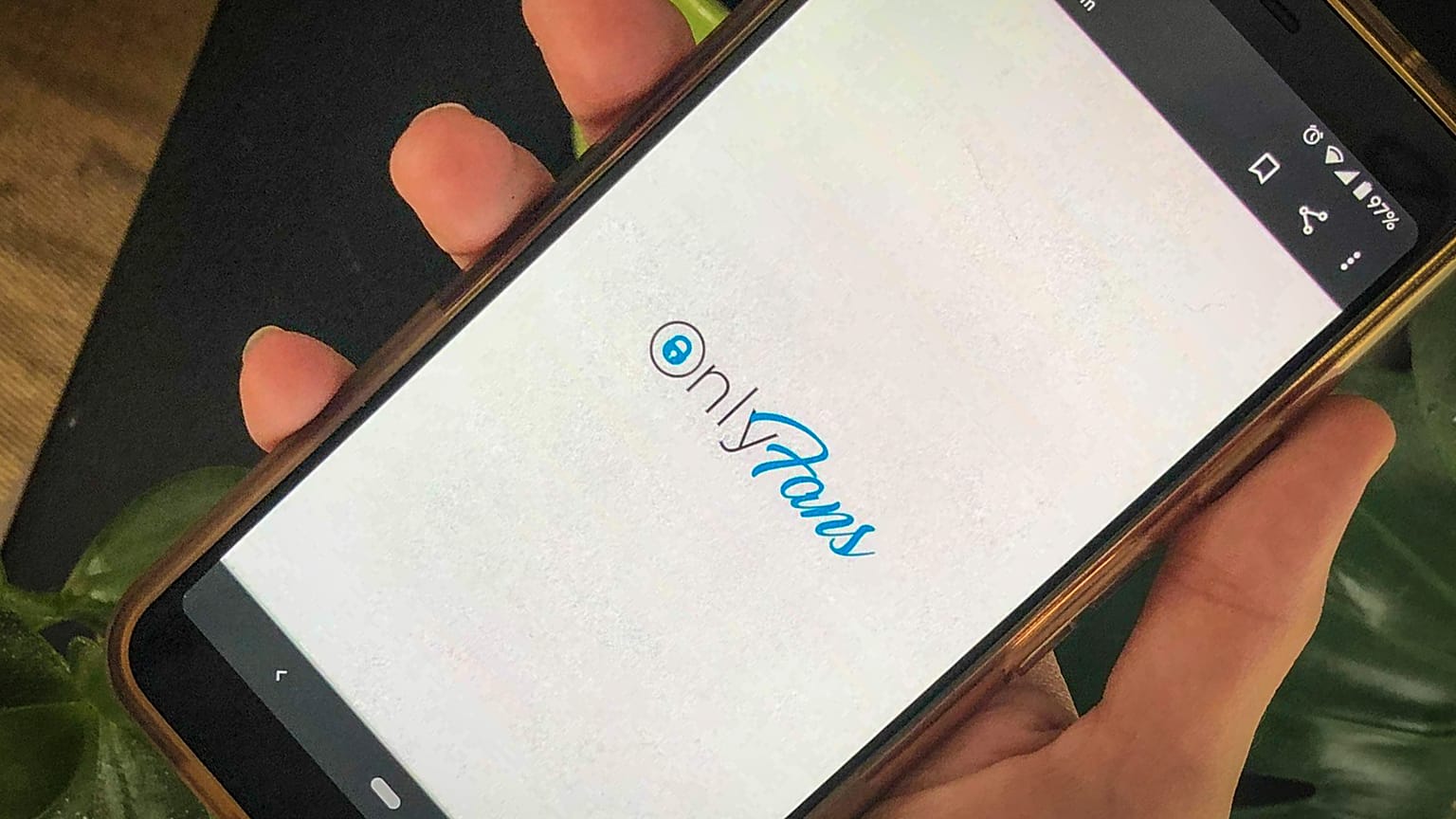
The proposal, introduced by conservative Les Républicains Senator Marie Mercier, seeks to tackle agents or intermediaries of adult content creators operating on platforms offering personalised sexual services such as OnlyFans and the French platform Mym.
The text was significantly rewritten during parliamentary debates, resulting in the creation of “a new offence inspired by human trafficking law.”
The legislation primarily targets agents who operate around subscription-based adult content platforms, accused of profiting from abusive practices, in some cases likened to modern forms of exploitation or coercion.
The bill will now move to the National Assembly for further examination.
A legal grey area
Platforms such as OnlyFans and Mym operate on a subscription model in which users pay for access to photos, videos or personalised sexual content on demand. Their popularity surged since the COVID-19 pandemic.
However, under French law, prostitution requires physical contact. Because online sexual services take place remotely, they do not fall within the legal definition of prostitution, a position confirmed by France’s highest court, the Cour de cassation, notably in rulings concerning live-streamed sexual performances or “camming”.
As a result, neither the platforms nor the intermediaries who profit from them can currently be prosecuted for pimping under existing legislation.
“The problem is that we are witnessing a fundamental debate about whether this type of content should be considered prostitution,” digital law attorney Raphaël Molina told Euronews.
Faced with this legal deadlock, senators opted for a different approach: creating a standalone offence specifically targeting intermediaries.
Targeting 'pimps 2.0'
The law focuses on so-called “managers” or “agents” who recruit, supervise and monetise the activity of adult content creators.
On paper, the young women involved — typically in their early to mid-20s, often students — are said to be looking to “make ends meet” through online services.
According to Senator Mercier, managers “promise their models financial independence” and “a risk-free activity in their bedroom, behind a screen.”
But, she argues, “the reality behind the scenes is far more sordid,” involving “minors,” “consent sometimes obtained through harassment,” and “increasingly unhealthy or violent images and videos.”
“These are not the creators we are targeting,” Mercier told Euronews. “I am targeting the business chain of these men — usually aged between 20 and 30 — who make a lot of money at the expense of these young women whose lives are being destroyed.”
According to a Senate report, around 30% of content creators in France are represented by an agent.
Under the newly adopted offence of “online sexual exploitation,” offenders could face up to seven years in prison and a €150,000 fine, with harsher penalties when minors are involved.
Contacted by Euronews, OnlyFans and Mym had not responded at the time of publication.
A parliamentary report published in January by MP Arthur Delaporte and former MP Stéphane Vojetta outlined numerous alleged abuses linked to agencies operating on such platforms: misappropriation of earnings, pressure to produce increasingly frequent or extreme content, unauthorised reuse of images, psychological harassment and isolation.
Mercier describes a gradual mechanism of control: “What seems very soft at first ultimately becomes like an infernal trap closing in. The young women end up almost under control. The manager asks them to produce more and more content, and increasingly violent content.”
A deeply divisive law
While many agree on the need to address abuses, the bill has sparked concern among sex workers, particularly those operating online.
The Senate’s law committee removed an earlier provision that would have criminalised buyers of personalised sexual content, arguing it would disproportionately restrict freedom between consenting adults.
Vera Flynn, a virtual sex worker since 2011, says she fears unintended consequences.
“When it comes to agents, we more or less agree,” she told Euronews. “But regarding personalised content, that’s where we had a problem.”
She acknowledges that some managers engage in abusive practices but warns against overly broad restrictions.
“We have the right — even between ourselves, even unpaid — to create personalised content. So there is an issue there.”
“I don’t have a gun to my head. I chose to do my job. It’s a job, that’s all,” she added.
Molina also advocates regulation rather than criminalisation.
“I have always argued that instead of criminalising agents on these platforms, they should be regulated through some form of administrative licensing,” he said.
Abolitionists say it does not go far enough
On the other side of the debate, abolitionist organisations — which oppose all forms of prostitution — argue the law remains insufficient.
For Delphine Jarraud, head of the NGO Amicale du Nid, the digital dimension does not change the nature of the act.
“You are not buying videos, you are buying a human being who is subjected to sexual acts remotely at someone else’s request,” she told Euronews.
Her organisation is calling for an extension of France’s existing criminal framework — which penalises the purchase of sexual services in person — to include online services, similar to legislation adopted in Sweden in 2025.
Sweden criminalised the purchase of personalised sexual services online, while keeping platform subscriptions legal.
Responding to criticism, Mercier describes the French bill as a first step. “You can’t do everything in one day. You can’t redefine prostitution overnight. But we had to start by creating a breach.”