Showing posts sorted by relevance for query SUFIS. Sort by date Show all posts

Sunday, February 20, 2022

Hamas targets Sufis in Gaza

Sufis have opposed the way the Hamas government came to power, prompting the movement to shut down their institutions and restrict their religious activities.
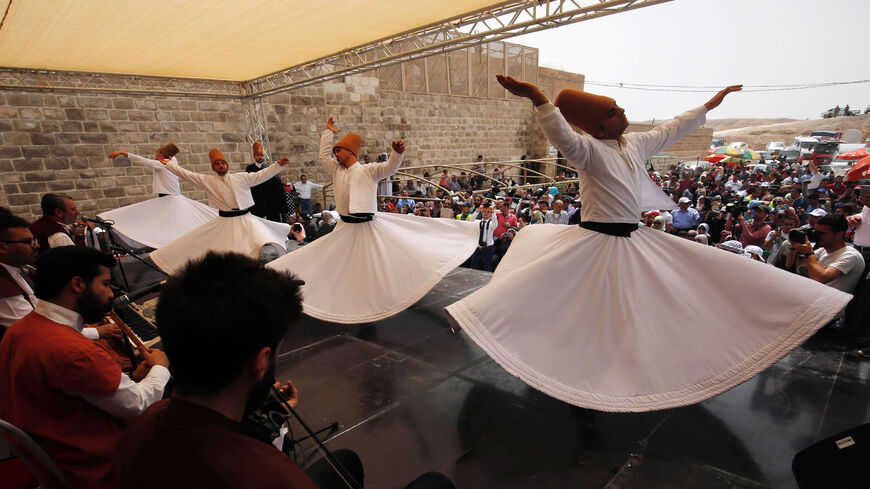

Whirling dervishes perform during a festival at the mosque of Nabi Musa, where the tomb of Prophet Moses is believed to be located, in the Judean Desert near the town of Jericho, West Bank, April 8, 2016
. - Abbas Momani/AFP via Getty Images

Hadeel Al Gherbawi
@hadola_gh
TOPICS COVERED
Gaza
February 6, 2022 —


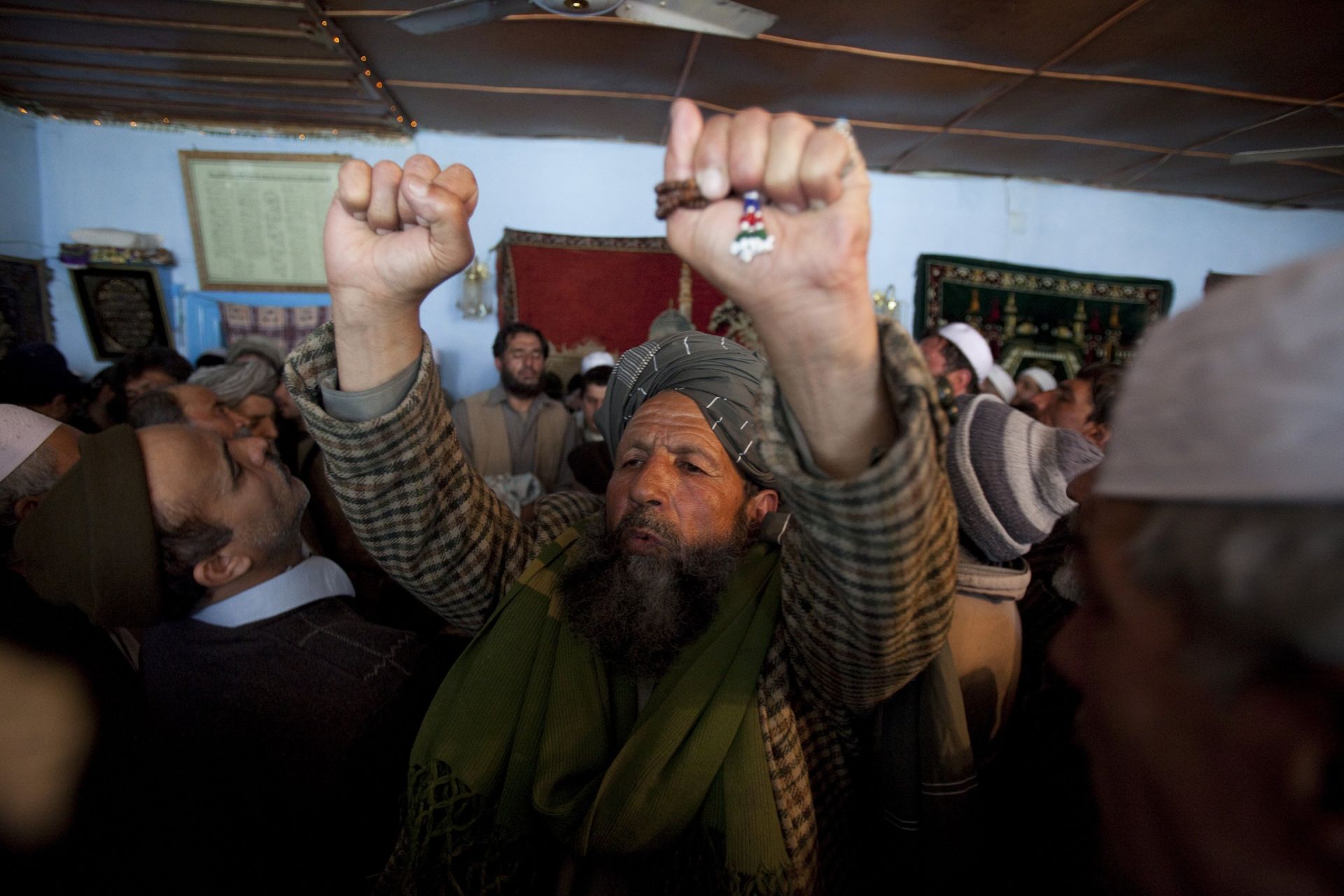
A number of Sufi mosques are spread across the Gaza Strip, and each sheikh practices his own way of Sufism. But they all participate in performing the weekly “session,” which is a Quranic session in which prophetic invocations and praises are chanted.

Sufism in Palestine can be traced back to the Mamluk era, and some Sufi families in Gaza have become well known, such as the Sa’afin and Khalidi families.

Sufism has always raised controversy among some Muslims, but it remains a very important issue as many have studied Sufism in an attempt to reach a conclusion about Sufi thought. However, many Sufis refused to talk to Al-Monitor for fear of repercussions from Hamas.

One sheikh of the Alawiyya order told Al-Monitor on condition of anonymity, “The origins of our order [religious institution] go back to Sheikh Ahmad bin Alawi. Sufism is one of the foundations of Islamic beliefs. The weekly session we hold is a clearing of worries and sins; followers gather to remember God and the verses of the Quran without distortion as some describe it and without holding celebrations and drumming.”

He said that he keeps good relations with the Palestinian factions in the Gaza Strip, but the order’s rejection of Hamas’ rule is based on the movement’s insistence to rule by force of arms. “There is nothing in the Book of God or the sunna that motivates me to fight those who oppose me with weapons, for God says, ‘And speak kindly to all people.’”

A Sufi affiliated with the Ahmadiyya order told Al-Monitor on condition of anonymity, “Society’s negative view of Sufism stems from the new generation’s ignorance of the true meaning of Sufism. Our only goal is to restore the time of the Prophet Muhammad, and Sufism serves to reform oneself away from the inclinations and malice of political parties and their only interest to assume political positions.”

When Hamas assumed power in 2006, it shut down many Sufi zawiyas (meeting places) on the pretext that they posed a danger to society.

Nasser al-Yafawi, a Gaza-based historian who opposes Hamas’ actions against Sufis, told Al-Monitor, “The Sufis are wonderful. I have visited the Qadiriya, Jaririyah and Rifa’i orders, and I witnessed a full weekly session with them. There is no difference between the orders. Their session is a spiritual imagining of God and their celebrations are considered a religious dance to draw closer to God.”

He said, “At the beginning of its rule, Hamas closed many Sufi zawiyas, claiming Sufis pose a danger to Gazan society. This is a major false accusation because Hamas wants to monopolize the leadership of the Islamic movements. I do not support Hamas’ point of view and unjustified actions. It wants to rule so-called Islamic movements and disagrees with all parties, not just Sufis.”

Yafawi noted, “Some rumors spread about Sufis practicing freemasonry rituals and that they carry out acts that violate social values. Hamas closed some zawiyas of the Ahmadiyya, Shadhiliyya and Alawiyya orders, restricting their movements and preventing them from holding religious ceremonies and weekly sessions. This is a violation of freedom of expression. I have personally verified this and discovered that it’s all malicious rumors and false arguments.”

Meanwhile, many support shutting down Sufi zawiyas. Saleh al-Raqab, a professor of Islamic faith at the Islamic University of Gaza and a former minister of endowments, told Al-Monitor, “Sufism in Gaza is made up of groups affiliated with sheikhs outside the enclave, such as the Shadhiliyya and Alawiyya orders, and they have many heresies and myths, as we see in their many zawiyas, such as dancing in mosques. They have very corrupt beliefs, but in the Gaza Strip they apply them without understanding their meanings, such as begging for the Prophet Muhammad to fulfill their needs.”

He said, “There is also a lot of polytheism, which is exemplified in their book 'The Unity of Being' by Ibn Arabi. This person is an atheist since he sees all existence as one and believes there is no difference between a Creator and a creature. The Sufis here in Gaza practice rituals without the slightest understanding. They kneel to their sheikhs as we kneel to God. They even kiss the sheikhs’ hand and this represents polytheism and disbelief in God. The Sufis do not offer anything to Islam, but separate religion from politics. They are using social media nowadays to attract the younger generation, and this is a disaster.”

Raqab noted, “Dozens of young people are joining Sufism in the Gaza Strip because they have a great spiritual void that needs to be filled. I am not aware of the fact that Hamas closed Sufi zawiyas, nor about restricting their movements and celebrations, because I have seen many zawiyas opening. But they must be closed before they spread further.”

Raqab explained that his doctoral thesis was about Sufi sects from an ideological point of view, and he also teaches these topics to university students as he believes that Sufism in the entire Arab world has major deviations and contradicts Islam altogether.


I OF COURSE DISAGREE FOR EXACTLY THESE SAME REASONS 

SEE: 


Wednesday, June 15, 2022

ISIS WAR ON SUFIS
Afghanistan’s Sufis Are Under Attack

Recent bombing of a mosque in Kabul shows the growing security problems facing the Taliban government
Afghan followers of Sufism recite poetic verses from the Koran at the Pahlawan Mosque in Kabul, Afghanistan / Robert Nickelsberg / Getty Images

As I passed through my final years of high school in Kabul, it did not cross my mind that I might be able to go on and study at university. My father had just died from a long illness and, like so many Afghan teenagers, I was already thinking about how I might be able to support my family. We were poor enough that I had only one set of shirt and trousers to wear to my last two years of classes, so I knew I would have to find a job sooner rather than later.

I graduated from school in 2006 and, although times were tough on a personal level, there was a sense of optimism in much of the country back then. It’s true that security was starting to deteriorate, but memories of the 1990s civil war were still fresh in everyone’s minds, and there was a widespread belief that the international community would not abandon Afghanistan again.

After trying and failing to find a job with various NGOs for reasons none of them cared to explain, I was persuaded by one of my younger brothers to visit a local Sufi — “tasawwuf” — mosque in the hope that it might change my luck. I must admit that I initially laughed at his suggestion, not because I disliked Sufis but because I was skeptical of any practices that went against my belief in the more traditional tenets of Islam. I regard myself as a socially progressive Muslim who shows his devotion to God in conventional ways. I could not see how a visit to this particular mosque might be any better for me than praying in my usual mosque or at home. In the end, however, I agreed to go there to boost the morale of my brother and mother.

We cycled to the Khalifa Sahib mosque in Aladdin, a neighborhood in west Kabul near Parliament and the American University, and sat down to talk to one of its scholarly custodians. I remember him being a kind man who listened quietly from under his flat white turban as I explained about my futile search for a job. He then took out some paper talismans and told my brother to burn or smoke one at night. Another one he gave us was to be put in a glass of water, dissolved and drunk the next morning.

We obeyed his instructions and, while my luck didn’t change in the short term, it did eventually. I later found work as a journalist and graduated with a degree in Islamic law from Kabul University. I do not attribute this change in fortune to the Sufi mosque, but I have always looked back on that visit with fondness. I was a young man — a boy, really — going through a hard time, and it meant a lot to me to receive the kindness of a stranger, however eccentric his advice might have been.

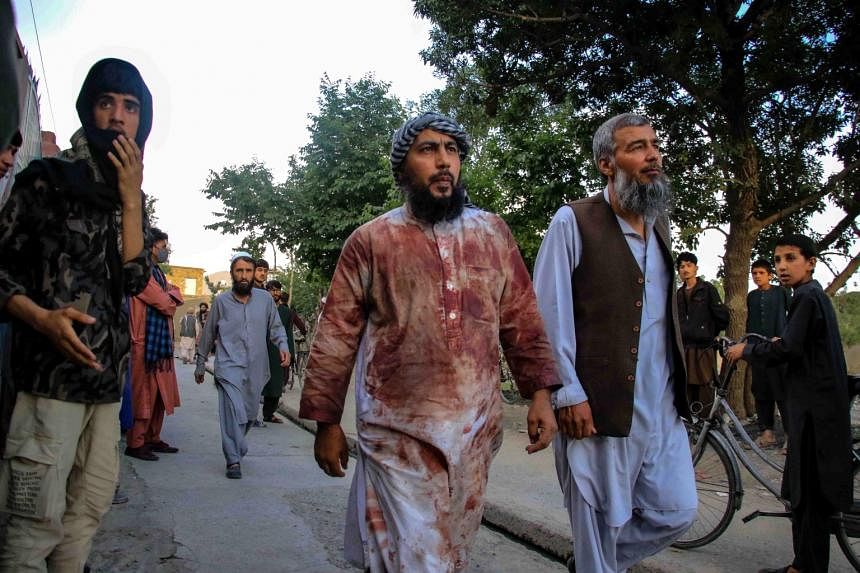
Unfortunately, this memory of a more innocent time has taken on a melancholy hue in recent weeks. On April 29 an explosion ripped through that same Sufi mosque after Friday prayers. At least 10 people, and perhaps more than 50, were killed. There is confusion about whether the blast was a suicide attack or the result of a bomb planted at the scene, but it was not an isolated incident. A week earlier, on April 22, the Mawlawi Sekander Sufi mosque in the northern city of Kunduz was hit by a similar attack that killed at least 33 people and wounded dozens more. The Islamic State group claimed responsibility for that blast and is also believed to have been behind the bloodshed in Kabul. With Shia Muslims as well as Sufis being increasingly targeted, it is clear that attempts are underway to ignite a sectarian war in Afghanistan. History suggests this will not work, but nothing is certain anymore.

Sufism has roots in this country that are far older than the kind of ideology practiced by the Islamic State. While Afghans are often wary of its more esoteric aspects — such as the way worshipers engage in “dhikr” (chanting) to show their devotion to God — its mysticism has traditionally been a source of comfort for many people here. The sick visit Sufi shrines in search of cures for cancer or depression; infertile women go to them looking for the miracle they need to have a child. This has started to change in recent years and of course it would be better if everyone trusted in science, but it seems churlish to rebuke Afghans for finding hope wherever they can. During times of darkness we occasionally need artificial light.

Sufism is not a sect or a type of jurisprudence but a form of Islamic belief that emphasizes the mystical, peaceful aspects of our religion and prioritizes inner contemplation. As far as the Islamic State is concerned, this is enough to make Sufis idolators. But attacks such as the one on April 29 in Kabul are attacks on the heritage and culture of all Afghans. We do not have to be Sufis to understand and appreciate the role that Sufism has played in our history.

There are four main Sufi orders in Afghanistan and the wider region: the Chishti, the Qadiriyya, the Suhrawardiyya and the Naqshbandi. The Chishti originated near Herat in western Afghanistan, and some of our greatest poets were Sufis. The most famous of them, Jalaluddin Rumi, was born in Balkh in northern Afghanistan in the early 13th century. The United Nations cultural agency (UNESCO) celebrated his work in 2007, the same year I went to the Sufi mosque in Kabul. The U.N. secretary-general at the time, Ban Ki-moon, described Rumi’s work as “timeless” and praised his “humanist philosophy.” We Afghans also claim Abdur Rahman Baba, a 15th- and 16th-century Sufi poet from Peshawar, as one of our own and continue to draw inspiration from his writing.

Afghan Sufis fought against the Soviet occupation of our country in the 1980s, just like more hardline jihadists. Three of the seven Sunni mujahedeen parties during that time were led by Sufis. They may not have been as militarily effective as their rivals, but their followers still made enormous sacrifices in the name of defending Afghanistan and Islam.

Although the Taliban’s relationship with the Sufi community is complex, it is certainly not openly hostile. Afghan Sufi scholars have been vocal in their support for the current government and often refer to Sirajuddin Haqqani, the minister of interior, using the honorific “Khalifa” — a title traditionally given to Sufi disciples who reach scholarly levels of enlightenment. The respect seems both genuine and mutual, and it is arguably a good example of the compromises we Afghans need to make if we want our country to move forward. The shamans who always used to roam around Kabul collecting alms are no longer visible on the streets and seem to have been discouraged from carrying out their rituals in public since the Taliban’s takeover, but that is the only sign I have noticed of the Islamic Emirate possibly acting against Sufism.

This cordial relationship between the government and the Sufi community may be only a small cause for optimism, but it is worth noting. Given the increased activity of the Islamic State of late and the criticisms that have rightly been leveled at some of the Taliban’s more repressive social policies, we need to recognize that there is still some cause for hope. Whether this can be built on may well depend on whether security gets significantly worse.

A month after the attack on the Sufi mosque in Kabul, the Taliban marked the sixth anniversary of the death of their former leader, Mullah Akhtar Mohammad Mansour, who was killed by a U.S. drone strike in Pakistan in 2016. To honor his memory, several senior officials attended a commemorative event on May 22 in a wedding hall in Kabul, the kind of place that would once have been the scene of raucous late-night parties. Although the atmosphere was measured, the meeting was revolutionary in its own way. The former head of the Taliban’s political office in Doha and current deputy foreign minister, Sher Mohammad Abbas Stanikzai, used the occasion to call for girls’ schools to be reopened and for women’s rights to be respected. Even that meeting, however, was not allowed to pass peacefully. An explosion hit several vehicles parked outside, causing unknown numbers of casualties. This time a group calling itself the National Liberation Front claimed responsibility. Exactly who they are and what they want is unclear.

These kinds of mysterious attacks took place regularly under the governments of Hamid Karzai and Ashraf Ghani, and the Taliban will be keen to ensure they do not get out of hand. This spring we have often been without electricity in Kabul because the pylons in the north of the country that supply the city are being routinely targeted in sabotage operations. On the streets here no one is quite sure whether to blame rebel groups linked to the old Northern Alliance or hostile states — or, perhaps, both. Even as I write these lines at home now, I have just heard an explosion in the near distance. I will wait for the sound of ambulance sirens or a call from a friend or relative to find out if anyone was hurt.


Fazelminallah Qazizai is the Afghanistan correspondent at New Lines
June 1, 2022
“Letter from Kabul” is a newsletter in which our contributors provide their own unique glimpses into life on the ground in Taliban-controlled Afghanistan

SEE


Sunday, August 22, 2021

Sufis strive to protect their heritage in war-torn Libya


Issued on: 22/08/2021 - 
A 2012 attack forced the Sufi seminary in the Libyan town of Zliten to close, but in recent years it has discreetly reopened to students of the mystical Islamic tradition Mahmud TURKIA AFP

Zliten (Libya) (AFP)

Bullet holes scar the minaret of the Sufi mosque in Libya's Zliten, but followers of the Muslim mystical tradition are working to renovate and preserve their heritage.

A handful of students sit cross-legged on the floor of the mosque in the Asmariya zawiya, transcribing on wooden tablets as their teacher chants Koranic verses.

Elsewhere in the complex, named for its 16th-century founder Abdessalam al-Asmar, scholars pore over old manuscripts on theology and Islamic law.

The zawiya -- an Arabic term for a Sufi institute offering a space for religious gatherings, Koranic education and free accommodation to travellers -- also includes a boarding school and a university.

Historian Fathi al-Zirkhani says the site is the Libyan equivalent of Cairo's prestigious Al-Azhar University, a global authority in Sunni Islam.

But despite Sufism's long history across North Africa, Libya's plunge into chaos after dictator Moamer Kadhafi was ousted in a 2011 revolt gave a free hand to militias.

They included hardline Islamists, who are deeply hostile to Sufi "heretics" and their mystical nighttime ceremonies aimed at coming closer to the divine.

"(Previously) dormant ideological currents, with backing from abroad, took advantage of the security vacuum to attack the zawiyas," Zirkhani said.

In August 2012, dozens of Islamist militants raided the site, blowing up part of the sanctuary, stealing or burning books and damaging Asmar's tomb.

But today, craftsmen are busily restoring terracotta tiles and repairing damage caused by the extremists.

Students at the Asmariya zawiya come from all corners of the Islamic world to study the Sufi tradition, which has a long history in North Africa 
Mahmud TURKIA AFP

The tomb is surrounded by scaffolding but still bears its green silk cover, delicately embroidered with gold.

The zawiya hosts several hundred students, including many from overseas, who enjoy free food and lodging.

"I came to Libya to learn Koran here," said Thai student, Abderrahim bin Ismail, in faltering Arabic.

Houssein Abdellah Aoch, a 17-year-old from Chad wearing a long blue tunic, said he was working hard to commit verses to memory.

"I'm hoping to memorise the entire Koran then go home and become a religious teacher," he said.

- 'Fear and mistrust' -

When the call to prayer rings out, all rise and head through an arcaded courtyard to the mosque for noon prayers.

Libya's longtime dictator Moamer Kadhafi viewed the Sufis with suspicion but after his 2011 overthrow, Sunni extremists posed a greater threat to the mystics 
Mahmud TURKIA AFP

It is a scene repeated daily for hundreds of years, but the zawiya has had a turbulent few decades.

Kadhafi, who ruled Libya with an iron fist for four decades after seizing power in a 1969 coup, was suspicious of the Sufis.

"He infiltrated the zawiya with his secret services, creating a climate of fear and mistrust," said an employee, who asked to remain anonymous.

"Kadhafi chose to divide the Sufis to control them better."

But Kadhafi's authorities "loosened the stranglehold in the mid-1990s, which allowed the zawiyas to regain their autonomy," he added.

After Kadhafi's overthrow in 2011, another danger emerged. The attack in Zliten, on the Mediterranean coast east of Tripoli, was echoed across the country.

Islamist militants used diggers and pneumatic drills to destroy numerous Sufi sites across Libya -- attacks echoed in Iraq, Pakistan and elsewhere.

Zirkhani says the people who attacked the complex in Zliten were "extremists known to the state".

But in the chaos of post-revolt Libya, they have never been held to account.

The zawiya has also suffered from a lack of funds as it seeks to rebuild and restore its treasures.

Zirkhani showed AFP dusty old manuscripts he wants to preserve for posterity.

The seminary has a large collection of old Islamic manuscripts that historian Fathi al-Zirkhani is eager to preserve for posterity
 Mahmud TURKIA AFP

"We have neither the means nor the know-how to restore them," Zirkhani said. "We need help from (UN cultural agency) UNESCO and European institutions."

But there are some signs of hope for Sufis in Libya.

The zawiya was closed for six years following the 2012 attack. But in 2018 it discreetly reopened, and Sufis have been able to exercise their customs more publicly.

Last October in Tripoli, they took to the streets of the old city to celebrate the birthday of the Prophet Mohammed -- a festival frowned upon by more austere currents of Islam.

© 2021 AFP

Friday, November 13, 2020

Bangladeshi star's comeback after Islamist death threats

Issued on: 13/11/2020 
For years Sufi singer Rita Dewan captivated millions of followers in Bangladesh with her haunting ballads, but nowadays she lives in fear each performance will be her last 
Munir Uz zaman AFP


DOHAR (Bangladesh) (AFP)

For years Sufi singer Rita Dewan captivated millions of followers in Bangladesh with her haunting ballads.

Today, she lives in fear each performance will be her last.

Accused of defaming Islam and targeted by religious radicals -- a growing force in the Muslim majority country -- she spent months in hiding to escape death threats.

Rarely going out in daylight, she and her family fled to rural shanties and often went without food whilst living underground.

"YouTube is flooded with videos of Mullahs calling for my beheading," she tells AFP in tears. "I was too afraid to go to the toilet even. In rural areas they are mainly outside. I felt like [extremists] would find me and decapitate me."

Sufi Islam is considered deviant by conservative Muslim groups who oppose its mystical interpretation of the Koran.

The movement still has tens of millions of followers worldwide, but in Bangladesh the rise of hardliners has meant numbers are dropping.

In recent years, some two dozen Sufis have been killed by extremists in the South Asian country, some hacked to death.

Sufism has a long tradition in art and academia ranging from the poet Rumi to mathematician Omar Khayyam to modern Pakistani star Rahet Ali Khan.

But Sufis beliefs are increasingly under attack as un-Islamic and conservatives want to introduce strict blasphemy laws in Bangladesh, with the death penalty for offenders.

- Agony and ecstasy -

Dewan has been under pressure since a Youtube clip she appeared in went viral, attracting a storm of criticism.

In it she makes comments about Islam in a singing duel against another artist, who plays a God.

Conservatives have filed at least four cases against Dewan accusing her of damaging religious sentiments and defaming Islam, a charge currently punishable by life in jail.

She insists the clip was taken out of context and shows just a few minutes of an eight-hour performance.

The star apologised but it was too late to stop the threats.

"Some Mullahs have used their sermons to brand me a coward prostitute and told people to kill me if they can find me," she explains.

The star is to make a first appearance in court on Sunday but decided to come out of hiding to perform an eight-hour show for fans at a famed Sufi shrine.

The 38-year-old said her "ecstasy" at being able to perform again was tempered by terror after seeing two men in the crowd she feared were fundamentalists who might harm her.

They left after two songs, but experts say such intimidatory tactics are not unusual.

Saymon Zakaria, a Bangladeshi researcher on traditional music said Sufi art is now under threat from those who want a hardline Islam imposed in the country.

"The situation is very critical," Zakaria told AFP .

- 'Harrowing time' -

Rights researcher Rezaur Rahman Lenin said the cases against Dewan were part of a pattern to "censor artistic works".

"Artists and their performance are barred, and artists and academics detained and judicially harassed and persecuted on the grounds of insulting or hurting religious feelings," he said.

Male Sufi singer Shariat Sarker spent more than six months in jail this year after being accused of defaming Islam and is now in hiding because of death threats.

Dewan has already missed more than 60 shows because of police concerns about safety and security and says that as a result she has lost thousands of dollars in earnings.

"All of a sudden we became poor. My husband and my daughter are part of my team. All members of my troupe suffered. It's a harrowing time."

The star, who left school at the age of nine to train as a singer and regularly performed to vast crowds, is unsure how she can carry on.

Despite her recent show many shrines are still reluctant to work with her.

The court case makes Dewan fear for her own future but she remains defiant that the art will endure.

"No matter how powerful these Mullahs are this Sufi music tradition will live on in this country. Mullahs have called these songs haram -- prohibited in Islam -- but nowhere in the Koran is it said that music is haram," she insists.

"I am sure this music tradition will live on forever. It has been going on for centuries. People love it. It is pure joy. And Sufis will live here. It was the Sufis who brought Islam here centuries ago, not the hardliners. Bangladesh is the land of Sufis."

sa/tw/lto

Sunday, April 13, 2025

REVIEWS

Inter-religious Practices and Saint Veneration in the Muslim World: Khidr/Khizr from the Middle East to South Asia


Book Editor(s):Michel Boivin, Manoël Pénicaud
Published Date:January 2025
Publisher:Routledge
Paperback:294 pages
ISBN-13:9781032478661

April 1, 2025 
MEMO

Saint veneration and inter-religious practices in the Muslim world are often viewed through rigid sectarian or doctrinal lenses, often overlooking the lived religious experiences that blur these lines. Inter-religious Practices and Saint Veneration in the Muslim World: Khidr/Khizr from the Middle East to South Asia, edited by Michel Boivin and Manoël Pénicaud, challenges that narrow focus. The book explores how the enigmatic figure of Khidr (the ‘Green One’)—known variously as a prophet, wali, and guide—has long served as a spiritual link between religious communities, appearing in narratives across Islam, Christianity, Hinduism and even Sikhism, from Anatolia to the subcontinent.

The book opens with Hugh Talat Halman’s chapter, “The Sage of Inner Knowledge: Al-Khidr in Qur’an, Hadith, and Tafsir,” which delves into the Qur’anic narrative of Khidr’s encounter with Prophet Moses. This story, found in Surah Al-Kahf (18:60-82), portrays Khidr as a mystical guide imparting esoteric wisdom beyond conventional understanding. Halman examines how this narrative has been interpreted in Islamic exegesis, particularly within Sufi traditions, where the relationship between Khidr and Moses is seen as emblematic of the “master-disciple” dynamic. Khidr is also widely believed to have been a contemporary of Alexander the Great. As Halman summarises: “In the heart of al-Khidr and his story is a message of divine mercy and inner knowledge imparted by God that has moved countless people throughout the ages.”

In Shia narratives, Khidr’s role extends to interactions with other significant figures. For instance, some accounts suggest that Khidr accompanied Imam Al-Mahdi during a meeting with Sheikh Hassan ibn Muthlih Jamkarani in 984 CE, instructing the construction of the Jamkaran Mosque near Qom, Iran. A shrine is also dedicated to Khidr in Sarafand, Lebanon – although “There is no tomb inside… ‘because Al-Khidr is not yet dead.’”

The scope of the book is wide-ranging, covering historical, ethnographic, and textual perspectives. It captures not only the symbolic versatility of Khidr/Khizr but also how his veneration actively shapes shared sacred spaces and inter-communal practices.

Bedeviled: Jinn Doppelgangers in Islam & Akbarian Sufism

One particularly illuminating chapter is Michel Boivin’s own contribution on Khizr in Sindh, Pakistan. Drawing on fieldwork and local narratives, Boivin details how “Khaja Khizr” is venerated not just in Sufi shrines but also in Hindu communities, including during boat-blessing rituals where his role as the patron of water and guidance at sea is invoked. The inter-religious aspect is not an anomaly here; it is central to the practice. Boivin also notes that following the decline of the Mughal Empire, Khizr’s iconography “was incorporated into the Sikh aesthetic… like the representations of Guru Nanak.”

Another standout chapter is by Manoël Pénicaud, who examines pilgrimages to shared sacred sites in the Mediterranean, where Christian and Muslim communities have historically venerated Khidr Prophet Elijah (alongside Jews) and St. George together. As Pénicaud notes, “Khidr is revealed as a contact point with other religious systems than Islam,” and that of the shared saints and prophets in the region, is “the one who is the most capable of transformation and to absorb Biblical and Christian personages.”

The volume doesn’t romanticise syncretism—it also tackles the tensions and contestations that arise around shared saints. In the Balkans, for instance, the annual ritual of the meeting of Khidr and Ilyas (Hidrellez) is shown to be a site of both unity and negotiation, where different religious groups interpret and reframe the meaning of the practice according to their own worldviews.

A fascinating conceptual thread throughout the book is the role of Khidr in mediating between heaven and earth, life and death, Islam and “the other.” The authors consistently show that saint veneration—often dismissed as marginal—is in fact deeply political and socially meaningful, especially in contexts where formal religious boundaries are porous or contested.

Inter-religious Practices and Saint Veneration in the Muslim World is both timely and necessary. More than a study of Khidr/Khizr as a religious figure, it offers a lens into the lived religious practices that have historically blurred the boundaries between communities. At a time when sectarianism is often foregrounded in discussions of the Muslim world, this volume reminds us of a long-standing, often overlooked, tradition of shared sacred figures and spaces.

Anchored in solid scholarship and informed by fieldwork across regions, it sheds light on the local, often deeply personal, ways in which religion is experienced and negotiated. For researchers and general readers alike, it offers a meaningful engagement with the interconnected histories of belief that continue to shape religious life from the Middle East to South Asia.

Sufis in Medieval Baghdad


Book Author(s):Atta Muhammad
Published Date:October 2023
Publisher:I.B.Tauris
Hardback:192 pages
ISBN-13:9780755647590

December 15, 2023 
MEMO


There is a tendency to think about public spheres as modern socio-political innovations. German philosopher Jurgen Habermas, who coined the idea of public sphere in the 1960s, said it was a place that lies between state and civil society, where common people critically and rationally debate matters of common interest. While other thinkers have debated the concept and what it means, there is a belief that it is a post-enlightenment and secular phenomenon. However, something called a public sphere can be observed in the premodern world and includes religious institutions. Medieval Baghdad was one such place where a public sphere existed, argues Atta Muhammad. Indeed there were multiple public spheres and a robust and critical engaged population – Atta Muhammad argues in his new book Sufis in Medieval Baghdad: Agency and the Public Sphere in the Late Abbasid Caliphate.


In the 11th century, Sufi movements became prominent in society, “the roles of the Sufis of Baghdad in religious, social and political spheres that brought tangible benefits to common people…These Sufi figures tried to fulfil a range of the religious, spiritual and material needs of common people through the charitable institutions of ribats or Sufi lodges.” These lodges weren’t the only public institutions available but they were among the most prominent, especially during the Seljuk and Ayyubids dynasties. Rich and poor were associated with these lodges and they provided common space where elites, scholars, sufis, merchants and common people could frequent. Interestingly, while many charitable and sufi lodges were founded and funded by elites, quite a large number were also funded and founded by members of the general public. They offered a range of charitable activities and were at the core of public life in Baghdad. One important way the ribats contributed to the expansion of public space in Islamic societies was through educational initiatives.

According to Muhammad, there were two types of Sufi educational institutions – one involves the master-disciple relationship, where a sheikh guides students in a range of topics from correct Islamic behaviour, belief, but also personal and professional training. Pupils could learn practical skills useful to their trades, useful things for their everyday life and spiritual training.

The second type were expanded ribat, madrasa and mosques, which disseminated knowledge to disciples and the masses. Students from across the world would come to these institutions to learn. “In the medieval Islamic world, travel for the sake of knowledge was a prevalent phenomenon.” These students would be from a wide range of socio-economic backgrounds, which demonstrates a growing educated public was emerging in medieval times. Libraries were also an important part of these lodges, which contained books for both scholars and wider society, indeed libraries were not only in mosques, schools and lodges, but were also added to hospitals and mausoleums too. There were also many female Sufi lodges that facilitated these developments among women too. Above all else, the lodges provided spaces for people to debate the issues of the day.

Religious institutions were not the only forms of public sphere available to people. “People belonging to a non-ruling elite created spaces through which they contributed to the public good…These groups and organisations could be called ‘civic associations’ as they were formed by religious, spiritual and mercantile groups with the aim of raising the living standards of their communities and towns.”

While contributing to the public good was everyone’s responsibility. This was highlighted by how, when a Turkish soldier tried to assault a Muslim woman outside the Jami’a Mosque in Baghdad in 1069, a riot broke out. The day after the riot, people gathered outside the Caliph’s palace and demanded justice. The Caliph was told about the situation and merchants and local notables went to resolve the situation.

Sufis in Medieval Baghdad provides a fascinating study and snapshot into civic life in medieval Baghdad. It is clear that a variety of civic and non-elite institutions played a crucial role in providing security, education and improving economic development alongside elite institutions and the government. Everyday people were very interested and actively involved with running their societies – regardless of whether or not the ruler wanted it or not. Muhammad has given a good overview of what tools were available to people and the theoretical framework that shaped their understanding. Sufis in Medieval Baghdad will be a welcome addition to growing scholarship on the role of the public in daily life and society in premodern times.

Monday, March 06, 2023

Sufis Aren’t an Apolitical Counterweight to Political Islam, Babadzhanov Says

            Staunton, March 5 – Many post-Soviet analysts and officials have argued that Sufism, the mystical trend in Islam, can serve as a powerful bulwark against followers of political Islam and have even urged that their governments support Sufi orders as allies in the struggle against Islamism.

            (For background on such advocacy, see windowoneurasia2.blogspot.com/2022/03/view-that-sufism-represents-stabilizing.htmlwindowoneurasia2.blogspot.com/2021/05/sufism-offers-spirituality-traditional.htmlwindowoneurasia2.blogspot.com/2019/10/sufism-most-effective-means-to-counter.html and windowoneurasia2.blogspot.com/2016/07/sufism-better-than-state-as-bulwark.html.)

            But that attitude and the policies that arise from it are beginning to change, as ever more observers recall the role of militant Sufis in the 19th century and deal with the problems, often greater than those posed by Islamist groups, that some Sufi orders present across the post-Soviet space.

            (For examples of such problems, see windowoneurasia2.blogspot.com/2022/12/kadyrov-raising-military-unit-based-on.htmlwindowoneurasia2.blogspot.com/2022/11/chechnyas-kadyrov-takes-up-cause-of.html and windowoneurasia2.blogspot.com/2022/11/russian-officials-accuse-influential.html.)

            Now, Bakhtiyar Babadzhanov, a scholar at Tashkent’s Institute of Oriental Studies, has attacked as “a cognitive mistake” the view that Sufism in principle is “apolitical” and warned officials in Uzbekistan and elsewhere that Sufism is a militant threat (ia-centr.ru/experts/iats-mgu/ostanetsya-li-sufizm-v-tsentralnoy-azii-vne-politiki-/).

            It is likely that he will be accused of ignoring those aspects of Sufism that genuinely are pacific and apolitical in order to make his case; but it seems likely that Babadzhanov’s argument likely presages a shift in policy not only in Uzbekistan against a segment of Islam even the Kremlin thought it could work with.

            To the extent that is true, the Sufis are likely to respond not by withdrawing from politics and militance but by doubling down on both, something that sets the stage for potentially serious consequences not only in areas where Sufis have been traditionally strong but in others where they have been growing in many cases because of state protection. 

Monday, April 29, 2024


2024 Elections: What’s at stake for India’s minorities?

Could a third term under Narendra Modi see the formalising of second-class status for minorities and the destruction of the country’s ancient composite culture?
Published April 29, 2024 
PRISM/DAWN

If the Bharatiya Janata Party (BJP) under Prime Minister Narendra Modi succeeds in winning a third five-year term in the ongoing Lok Sabha elections, many fear that India’s religious minorities, especially Muslims, will see their second-class status formalised in law and practice.

But for Hindu supremacy to be fully realised, which is the stated aim of Hindu nationalists, they will have to expunge India of any Muslim influence, of which there is much, historically. When Indians cast their vote in the coming weeks, they would do well to be aware of the weight of their electoral choices. And the international community would do well not to drop the ball on India.
Second-class citizens

In a recent article, political scientists, Ashutosh Varshney and Connor Staggs asked the rhetorical question: “Is India under Narendra Modi … beginning to resemble the American South under Jim Crow?” referring to state and local laws introduced in the southern United States in the late 19th and early 20th century that enforced racial segregation.

They explain that Jim Crow laws were aimed at blunting the Reconstruction Amendments that abolished slavery and gave equal rights to Blacks. They were designed to make Blacks second-class citizens. Similarly, in India, Hindu nationalists seek to diminish the constitutionally guaranteed equal citizenship of Muslims and turn them into marginalised, less than fully equal citizens.

Jim Crow laws lasted for almost a century, ending only in the 1960s. Varshney and Staggs claim that since Hindu nationalism is in its early phase, it could still be forestalled before it is institutionalised via political and legislative processes. They suggest that the ongoing national elections present an opportunity for Indians to do that.

However, the comparison between Jim Crow and Hindu nationalism diverges in their ultimate objectives. While Jim Crow merely targeted the equal citizenship of Blacks, Hindu nationalism has a more totalitarian goal.
What does Hindutva want?

To fully grasp the end-goals of Hindu nationalism or Hindutva, it is necessary to read its foundational texts. There are none more seminal than We or Our Nationhood Defined (1939) by Madhav Sadashiv Golwalkar, who led the Rashtriya Swayamsevak Sangh (RSS) from 1940 to 1973. The RSS is considered the heart and soul of the vast network of Hindu nationalist organisations, of which the BJP is the political wing. Narendra Modi, a life-time member and former official of the RSS, credited it for grooming him to political leadership.

In his text, Golwalkar writes of his wariness of “hostile elements” within the country that “act as menace to national security”, singling out Muslims as the number one threat, followed by Christians. His solution to “the danger of a cancer developing into its body politic” was offering the “foreign element” two options: “either to merge themselves in the national race and adopt its culture or to live at its mercy so long as the national race may allow it to do so, and to quit the country at the sweet will of the national race”.


MS Golwalkar. Credit: Golwalkarguruji.org — image via Scroll.in


Another of the movement’s foundational texts is Essentials of Hindutva (1923) by Vinayak Damodar Savakar, who is considered by many to be the foremost Hindutva thinker. In Essentials, he provided Hindu nationalism with an ideology, which in a nutshell claims that India was special, as it offered something nobody else could — Hindu thought. This unique Hindu supremacy, Savarkar believed, was under threat because of the presence of non-Hindus. He called on Hindus, fragmented as they were, to unite and reclaim their supremacy. Violence against Muslims, Savarkar said, was the means to achieve that goal.

Golwalkar drew on Savarkar’s thoughts. He also admired the race theories of fascist Germany and Italy and recommended that Hindustan, the land of Hindus, should profit from their lessons. In We or Our Nationhood Defined, he wrote: “To keep up the purity of the race and its culture, Germany shocked the world by her purging the country of its semitic races — the Jews. Race pride at its highest has been manifested here.”

Golwalkar saw the world in apocalyptic terms. His objective was clear: “To rule over the world was the heavenly task ordained to Hindu race.” He called upon Hindus to “rally to the Hindu standard, the bhagwa dhwaj [and] set our teeth in grim determination to wipe out the opposing forces”.

Some Hindutva leaders today have explicitly articulated this vision. For instance, in March 2020, a Hindu priest named Yati Narsinghanand, who is the president of Akhil Bharatiya Sant Parishad (All India Priests Council) and someone close to the BJP, was reported to have told his followers, “Humanity can only be saved if Islam is finished off. Hindus: Read the Gita along with Mahabharat, and learn how to die fighting.”

This call was made around the time BJP leader Kapil Mishra was leading processions in Delhi calling for violence against the mainly Muslim participants in protests against the Citizenship Amendment Act, chanting the mantra: “Desh ke ghaddaron ko, goli maro saalon ko [Shoot the traitors of the country].”

In 2023, another BJP leader, an MLA from Telangana, T Raja Singh, at a rally in Mumbai, urged his audience to take to arms. “I would like to request all my Hindu brothers that the coming time is the time of struggle, it is the time of war,” he said. “Every Hindu is obliged to unite. Hindu should not become one who rings temple bells, but rather he should become a Hindu who kills landyas”, a derogatory reference to Muslims.

At a public meeting of Hindu priests in December 2021, in the holy town of Haridwar, a star speaker, Annapurna Maa, the general secretary of the Hindu Mahasabha, was heard exhorting her audience: “If you want to eliminate their population, then be ready to kill them and be ready to go to jail. If only a 100 of us become soldiers and each of us kills 20 lakhs of them, we will be victorious…”

Modi is circumspect in his speeches now, but was not always so. As chief minister of Gujarat, soon after the pogrom there in 2002 during his term that left at least 2,000 dead, mostly Muslim, he was often reported in his public speeches to evoke visions of a religious struggle of good over evil.

“This is the holy place of shakti [godly power], the power for extermination of asuras [demons],” he said in one speech. “We have resolved to destroy and stamp out all forces of evil…”
The montage that is India

Beyond the goal of cleansing the Hindu land of the “cancer” to save the nation, there is another equally compelling reason for the Hindutva project to be more than just about marginalising Muslims. That has to do with the fact that India today is, in the words of historians Catherine Asher and Cynthia Talbot, “an intricate montage assembled from assorted material”, of which the Islamic is a critical element. The desire on the part of Hindutva leaders to fully realise Hindu supremacy will also require extirpating Muslim life and Muslim imprint from today’s India.

Historians view the era between 1200 AD and 1750 AD (Medieval India in history textbooks) as the foundation for the highly diverse human landscape of modern South Asia, with its pluralistic culture that draws on both Indic and Islamic traditions. In their magisterial work, India Before Europe (2006), Catherine Asher and Cynthia Talbot show how the Central Asian ethnic heritage, Persian cultural orientation and Islamic religious affiliation of North India’s ruling elite class in the period after 1200 AD led to the dissemination of many innovative elements through the subcontinent.

While acknowledging that the encounter between Indic and Islamic peoples and cultures led to short-term conflicts, Asher and Talbot note the vast degree to which cultural practices inspired by Perso-Islamic traditions became integral to the subcontinent as a whole in the long run. South Asia’s art and architecture, its political rituals, its administrative and military technologies and even its popular religions were deeply inflected by the new forms.

This composite culture, the authors note, forms the basis of India that exists today, in its foods, dressing and music, languages that people speak, the built architecture, and its popular religions, among others.


The ruins of the Krishna temple in Hampi, Karnataka, in 1868. 
Credit: Lyon, Edmund David (1825-1891)., Public domain, via Wikimedia Commons — taken from Scroll.in

In the south of the peninsula, the ‘Hindu’ Vijaynagara empire (1350-1550) drew significantly from Islamicate influence in military technology, secular architecture, courtly dress, as well as local languages. The successor ‘Muslim’ sultanates of the Bahmani state in the Deccan too, followed in this tradition, most importantly in their patronage to local languages, so much so that Golconda rulers, around today’s Hyderabad, occupied an important place in the historical memory of Telengana language — with one of the sultans, Ibrahim Quli Qutub Shah (1550-1580) often called Ibharama Chakravati by Telgu poets.

Bijapur’s Ibrahim Adil Shah II (1580-1627), called Jagat Guru, authored a collection of songs in dakani, Kitab-e-Nauras (book of nine rasas), that opens with an invocation to Saraswati, Hindu goddess of learning, followed by praise of Prophet Muhammad (PBUH) and then the Chisti saint Gisu Daraz. These were no exceptions.

In Bengal, the Hussain Shahi (1493-1538) rulers adopted local customs, such as purification by the water of Ganga at coronation ceremonies, and the Sufi poet, Saiyid Sultan (d 1648) published a genealogy of prophets of Islam, called Nabi Vamsha that included the Hindu god, Krishna.

In Gujarat, amid the flourishing literary tradition that the Ahmad Shah rulers patronised was the Sanskrit work Raja-Vinoda (pleasure of the kings), written in honour of the ruler, Mahmud Begada (1460s), presenting the sultan as an ideal Indic king, whose court was graced by the presence of the Hindu deity Saraswati, the goddess of learning. In Malwa, in central India, capital Mandu had fine libraries that included among their collection the track Nimat-nama (c. 1500), an illustrated recipe book for making dishes suitable for all seasons, including vegetarian as well as meat-based, with illustrations drawing on both Persian and Indic tradition, including the Bhagwata Purana.

However, it was the Mughals, especially Akbar (1556-1605), who helped create a state that was more Indian in character. The aesthetic that developed under Akbar’s guidance was composed of a fusion of Timurid and Indic models, and which went on to set a standard for subsequent Mughal arts and culture, including food, architecture and courtly dress and culture, Asher and Talbot argue.

Besides, in the realm of built architecture, of which there is ample evidence, literary production was an important site of Indic and Islamic collaboration. Examples are the translation of Ramayana and Mahabharata in Persian (Razm-nama) and Abul Fazl’s including in his Ain-i-Akbari, extensive sections on “the learning of India” — including philosophical schools, music, life cycle rituals, and modes of image worship. The scale of the borrowing led Audrey Truschke, a prominent historian of Sanskrit at the Mughal court, to conclude that these were efforts on the part of Abul Fazl to convince Akbar’s supporters of the virtues of infusing Sanskrit knowledge into Indo-Persian thought.

The tendencies towards synthesis had significant consequences. Man Singh, the highest ranking noble in Akbar’s court, only after his sons, built temples throughout the domain, including the Govinda Deva temples in Vrindavan, the largest in North India, in a recognisably Mughal style, and helped to spread Akbar’s belief in multiculturalism, just as Abdul Rahim Khaan-e-Khanan did by commissioning an illustrated Ramayana.

Among the most consequential contributions of the Mughal court to Indian letters, Allison Busch shows, was its engagement with Brajbhasha. A local (Hindavi) dialect of the region around Agra and Delhi, Mughal heartlands, Brajbhasha had existed until then, mostly as bhakti devotional poetry. Under Mughal patronage, it developed a sophisticated courtly style, inspired by Sanskrit poetics, and became the principal poetic language of north India. In creating the outcome, that could be described as classical Hindi, were Akbar’s nobles composing works in the language, including Todar Mal, Birbal and the Rajput nobles, as also Faizi and Abdul Rahim Khana Khanan — showing how courtly literature in Brajbhasha was nurtured within the multicultural context of elite Mughal society.

There were other enduring contributions too, of this age and milieu, outside the courtly realm. A major influence in the early part of this period was Sufis, and their dispersal, throughout much of the subcontinent. By the 14th century, the practice of Sama, devotional musical congregations, and Urs, annual pilgrimage to the shrines of Sufi saints, had become established Sufi traditions. Sufi shrines drew both Muslims and Hindus, and were themselves influenced by local traditions, including the Shattari Sufis of Bengal drawing on Nath yogis, and Rishi Sufis of Kashmir who led celibate lives and practised vegetarianism.

Sufism also contributed to reform in Hindu tradition, starting in the 14th century with the rise of sants, who like Sufis, were mystics, believed in a formless God, and extolled devotion to God as a primary religious practice. Kabir, the most influential, attacked rituals and customs of traditional religions, and excoriated the caste system. Guru Nanak (born in 1469), the founder of the Sikh tradition, also came from the same context.

Notably, Sufism also influenced Hindu bhakti tradition, as the historian of Indian religion John S Hawley points out. This is evident in the commonalities that the latter began to show in its focus on love for God, as did Sufis, the use of poetry and music in worship, and an ethics of compassion for others. Tulsidas’s Ramcharitmanas (1575), crafted in about the same age and the middle Gangetic Awadhi milieu of Sufi poets, Malik Mohammad Jayasi (Padmavat, 1540) and Mir Siyyid Manjhan (Madhumalati, 1545), exemplified this shift. Ram, an incarnation of Vishnu, became the preeminent object of devotion, in place of Siva.

It is these constructions of a cosmopolitan Indian paradigm, resulting in innovations that spoke to both traditions that Hindu nationalists must disentangle and destroy to be able to achieve their vision of a Hindu supremacist India. This will undoubtedly leave much violence in its trail.
‘Authentic fantasies’ of suffering

These historical accounts of co-living and co-production contradict Hindutva claims that have much purchase today, in popular as well as scholarly circles about the thousand years of conflict between Muslim “outsiders” and “local” Hindus; of forced conversions and the wanton destruction of temples. Hindu nationalists have developed a wide repertoire of suffering and victimhood of Hindus at the hands of Muslims. Evidence to support their thesis is slim.

Richard Eaton, one of the foremost historians of medieval India, shows how the claim that Islam spread in South Asia by the sword is incongruent with the geography of Muslim conversions in South Asia. There is an inverse relationship between the degree of Muslim political penetration and the degree of conversion to Islam, he notes. Most conversions happened in the north west and north east — Punjab and Bengal, farthest away from centres of Muslim power.

As to temple destruction, Eaton found, over a span of more than five centuries from 1192 to 1729, there were “some 80 instances of temple desecration”, well short of the 60,000 claimed by Hindu nationalists. Typically, the desecrated temples would have been associated with the authority of an enemy kingdom. The instances of desecrations followed a long-established pattern in India, of temples having been natural sites for the contestation of kingly authority, well before the coming of Muslim Turks, including their destruction. Among the most recent examples was the destruction in the 10th c of the Pratihara temple of Kalapriya near Jamuna, by the Rashtrakuta king Indra III.

But as the Bosnian historian, Edin Hajdarpasic, shows from his study of Balkan nationalism in the 19th century, enthusiastic depictions of suffering convey the essence of a political threat more vividly than simple facts or documentary narratives — a phenomenon he calls “authentic fantasy”. Hindu nationalists, themselves inspired by European nationalist movements at the turn of the 19th century, relied much on the construction of suffering and victimhood of Hindus, however divorced from facts.

Decolonial historiography shows how they drew on the Orientalist bias of British colonial historians, who saw the period of the previous 600 years, as a history of Muslim arrival and their dominance over Hindus, marked by Muslim fanaticism, and temple destruction, forced conversion, and Hindu oppression. In contrast to the dark Muslim medieval age, colonial historians like James Mill posited the ancient Hindu age as golden, and modern British, as liberal.
Call to violence

Hindu nationalists in power today are seeking to inflict retribution for their perceived sufferings by rewriting history. In some cases, this has taken physical forms — such as in the destruction in 1992 of the 15th century Babri mosque in Ayodhya, a criminal act that was legitimised by the Supreme Court of India in 2019. Claims for several other historical mosques to be converted into temples have been set in motions across the country.

Elsewhere, place names have been changed to erase any hint of their Muslim heritage. Allahabad is now Prayagraj, Mughalsarai station is Pandit Deen Dayal Upadhyaya Junction, Aurangabad is Sambhajinagar and Gulbarga is Kalaburagi. Not satisfied with occasional erasures, the BJP government has thought fit to change high school history and politics textbooks by significantly altering and in some cases, fully scrapping the sections on Mughal history.


C
redit: Yasminsheikh, CC BY-SA 4.0 via Wikimedia Commons — taken from Scroll.in


The act of political forgetting targets minorities to deprive them of history, of the right to narrate, of the capacity for recognition. History tells us it is also a precursor to violence. As eminent historians Aditya and Mridula Mukherjee noted recently, “…genocide of a community is often preceded by the community being demonised, their names changed, their history being erased”, claiming “these processes have begun in India and open calls for genocide of Muslims are being given in various parts of the country with amazing impunity”.

More than Jim Crow South, the history of the Balkans in the late 19th century and post-Yugoslavia 20th century provides a better guide to understanding the future of minorities in India today. Hajdarpasic’s account of Balkan history alerts us to the real consequences of the claims of victimhood. Nationalists there used stories of suffering not only to inspire collective sacrifice but also to encourage mass violence against entire communities perceived as threats. He demonstrates how certain stories of victimisation in the region long outlived their original inspirations. Decades after overthrowing Turkish rule, Serbian nationalists could revive narratives about Turk-like enemies even in the late 20th century with catastrophic consequences.

Tanika Sarkar, eminent historian of modern India, demonstrates similar impulse in early modern Hindu nationalist thought. Emblematic of this repertoire was Bankim Chandra Chatterjee’s 1818 novel, Anandmath, whose main character, the Hindu sanyasi (ascetic) rebel, Satyanand, is engaged in a messianic battle “for exterminate(ing) all Muslims on this land, as they are enemies of God”, a recompense for “inflicting misfortune on Hindus”. The novel is set in the context of the 1770 famines in Bengal, as the East India Company was inserting itself at the expense of the Nawabs of Bengal, and that resulted in a third of the population starving to death, both Hindus and Muslims. Historians inform Muslim fakirs (ascetics) rose up, along with sanyasis, against the depredations.

Sarkar calls for Anandmath, “the first explicit message in our literary history for ethnic cleansing”, one foretelling Hindu nationalist thoughts to emerge later in 20th century. Its protagonists deemed “elimination of Muslim rule and Muslim presence from the land” an act of worship of Bharat Maata (motherland), a deity that first emerged in the novel. In 1920, Savarkar and Golwalkar adopted Vande Mataram — hymn to Bharat Maata, contained in Anandmath — as aHindu nationalist anthem. Vande Mataram was also the rallying cry of Hindu communalists in anti-Muslim violence to follow during Partition.

Vande Mataram continues to inspire Hindu nationalist thoughts and action to this day. So when the terror-accused BJP MP Pragya Thakur recently instructed her audience to “keep your weapons sharpened”, to “in this world created by god … finish all oppressors, wrong-doers, sinners…”, she was deploying Anandmath’s template of the holy war — calling for violence against the entire Muslim population.

It is in such violent contestations borne out of ‘authentic fantasies’ of past sufferings that Hindu nationalists of today — following that of Savarkar and other Hindutva ideologues — seek to create Hindu supremacy, by waging permanent war against India’s 200 or so million Muslims and other ‘foreign elements’. Already, United Nations experts are alerting us to the fact that “India risks becoming one of the world’s main generators of instability, atrocities and violence, because of the massive scale and gravity of the violations and abuses targeting mainly religious and other minorities, such as Muslims, Christians, Sikhs and others.”

Mass atrocity experts are warning: “If nothing is done to address these risks, India may continue to experience a rise in the number of violent (and fatal) attacks against religious minorities, an escalation in the scale of the violence, and an increased level of state involvement in atrocities.”

The burden on Indian voters to use the ballot to forestall the institutionalisation of Hindu nationalism, before it reaches a point of no return, is therefore, even heavier.

This piece is a longer version of the article, titled “Is the 2024 Lok Sabha election India’s last chance before the point of no return?” by Sajjad Hassan published on Scroll.in. It has been reproduced here with permission.

Header image: A protest against the Citizenship Amendment Act — photo taken from Prashant Waydande/Reuters

Tuesday, May 10, 2022

With spate of attacks, Islamic State group begins bloody new chapter in Afghanistan
A bombing at a mosque in Kabul, Afghanistan, on April 29 killed at least 10 and wounded dozens more. PHOTO: EPA-EFE

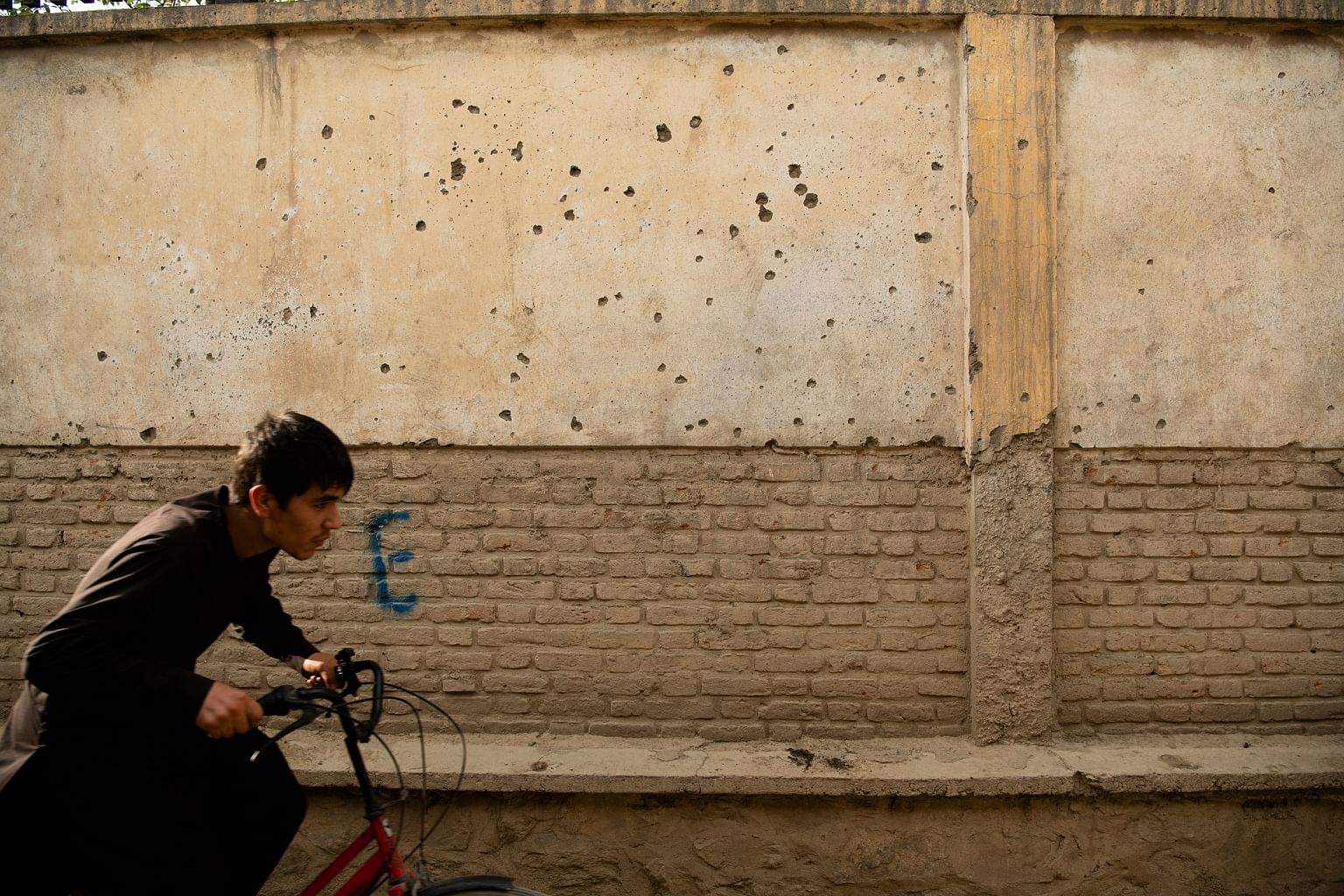
KABUL (NYTIMES) - The first blast ripped through a school in Kabul, the Afghan capital, killing high school students. Days later, explosions destroyed two mosques and a minibus in the north of the country. The following week, three more explosions targeted Shi'ite and Sufi Muslims.

The attacks of the past two weeks have left at least 100 people dead, figures from hospitals suggest, and stoked fears that Afghanistan is heading into a violent spring, as the Islamic State's affiliate in the country tries to undermine the Taliban government and assert its newfound reach.

The sudden spate of attacks across the country has upended the relative calm that followed the Taliban's seizing of power in August, which ended 20 years of war. And by targeting civilians - the Hazara Shi'ite, an ethnic minority, and Sufis, who practise a mystical form of Islam, in recent weeks - they have stirred dread that the country may not be able to escape a long cycle of violence.

The Islamic State affiliate in Afghanistan - known as Islamic State Khorasan - has claimed responsibility for four of the seven recent major attacks, according to SITE Intelligence Group, which tracks extremist organisations. Those that remain unclaimed fit the profile of previous attacks by the group, which considers Shi'ites and Sufis heretics.

With the attacks, the Islamic State group's Afghanistan affiliate has undercut the Taliban's claim that they had extinguished any threat from the Islamic State in the country. It has also reinforced concerns about a potential resurgence of extremist groups in Afghanistan that could eventually pose an international threat.

Last month the Islamic State claimed it had fired rockets into Uzbekistan from northern Afghanistan - the first such purported attack by the group on a Central Asian nation.

"ISIS-K is resilient; it survived years of airstrikes from Nato forces and ground operations from the Taliban during its insurgency," said Mr Michael Kugelman, deputy director of the Asia Programme at the Wilson Centre, a think tank in Washington, using an alternate name for the Islamic State Khorasan.

"Now after the Taliban takeover and the US departure, ISIS-K has emerged even stronger."

The Islamic State group's Afghanistan affiliate was established in 2015 by disaffected Pakistani Taliban fighters. The group's ideology took hold partly because many villages there are home to Salafi Muslims, the same branch of Sunni Islam as the Islamic State. Salafists are a smaller minority among the Taliban, who mostly follow the Hanafi school.

Since its founding, the Islamic State group's Afghanistan affiliate has been antagonistic toward the Taliban: At times the two groups have fought for turf, and last year Islamic State leaders denounced the Taliban's takeover of Afghanistan, saying that the group's version of Islamic rule was insufficiently hard line.

Still, for most of the past six years the Islamic State has been contained to eastern Afghanistan amid US airstrikes and Afghan commando raids that killed many of its leaders. But since the Taliban seized power, the Islamic State has grown in reach and expanded to nearly all 34 provinces, according to the United Nations Mission in Afghanistan.

After the Taliban broke open prisons across the country during their military advance in the summer, the number of Islamic State fighters in Afghanistan doubled to nearly 4,000, the UN found.

The group also ramped up its activity across the country, said Mr Abdul Sayed, a security specialist and researcher who tracks the Islamic State group's Afghanistan affiliate and other radical groups. In the last four months of 2021, the Islamic State carried out 119 attacks in Afghanistan, up from 39 during the same period a year earlier. They included suicide bombings, assassinations and ambushes on security checkpoints.

A boys’ school in Kabul that was bombed last month. 
PHOTO: NYTIMES

Of those, 96 targeted Taliban officials or security forces, compared with only two in the same period in 2020 - a marked shift from earlier last year when the group primarily targeted civilians, including activists and journalists.

In response, the Taliban carried out a brutal campaign last year against suspected Islamic State fighters in the eastern province of Nangarhar. Their approach relied heavily on extrajudicial detentions and killings of those suspected of belonging to the Islamic State, according to local residents, analysts and human rights monitors.

For months this past winter, attacks by the Islamic State dwindled - raising some hope that the Taliban's campaign was proving effective. But the recent spate of high-profile attacks that have claimed many civilian lives suggests that the Islamic State used the winter to regroup for a spring offensive - a pattern perfected by the Taliban when it was an insurgency.

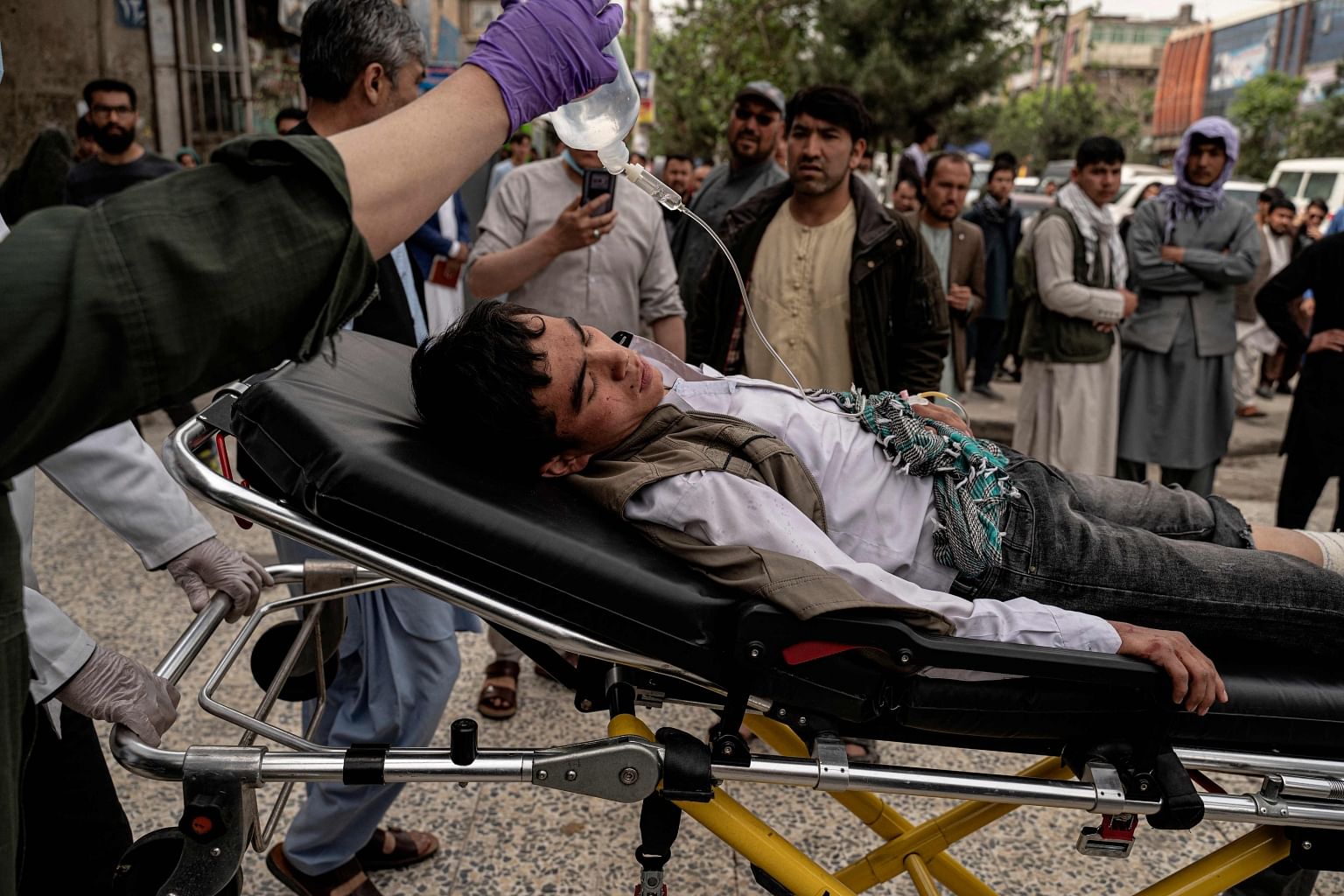
A student wounded in the attack on a school, which was in an area of Kabul dominated by Hazara Shiites. PHOTO: AFP

While the Islamic State group's Afghanistan affiliate does not appear to be trying to seize territory, as the Islamic State did in Iraq and Syria, the attacks have demonstrated the group's ability to sow violent chaos despite the Taliban's heavy-handed tactics, analysts say.

They have also stoked concerns that, sensing perceived weakness in the Taliban government, other extremist groups in the region that already have reason to resent the Taliban may shift alliances to the Islamic State.

"ISIS-K wants to show its breadth and reach beyond Afghanistan, that its jihad is more violent than that of the Taliban, and that it is a purer organisation that doesn't compromise on who is righteous and who isn't," said Dr Asfandyar Mir, a senior expert at the United States Institute of Peace.

The blasts have particularly rattled the country's Hazara Shi'ites, who have long feared that the Taliban - which persecuted Afghan Shi'ites for decades - would allow violence against them to go unchecked. The strife has also caused concern in neighbouring Iran, a Shi'ite theocracy.

Many Afghan Shi'ites have been on edge since suicide bombings by the Islamic State at Shi'ite mosques in one northern and one southern city together killed more than 90 people in October. The recent blasts, which mainly targeted areas dominated by Hazara communities, deepened those fears.

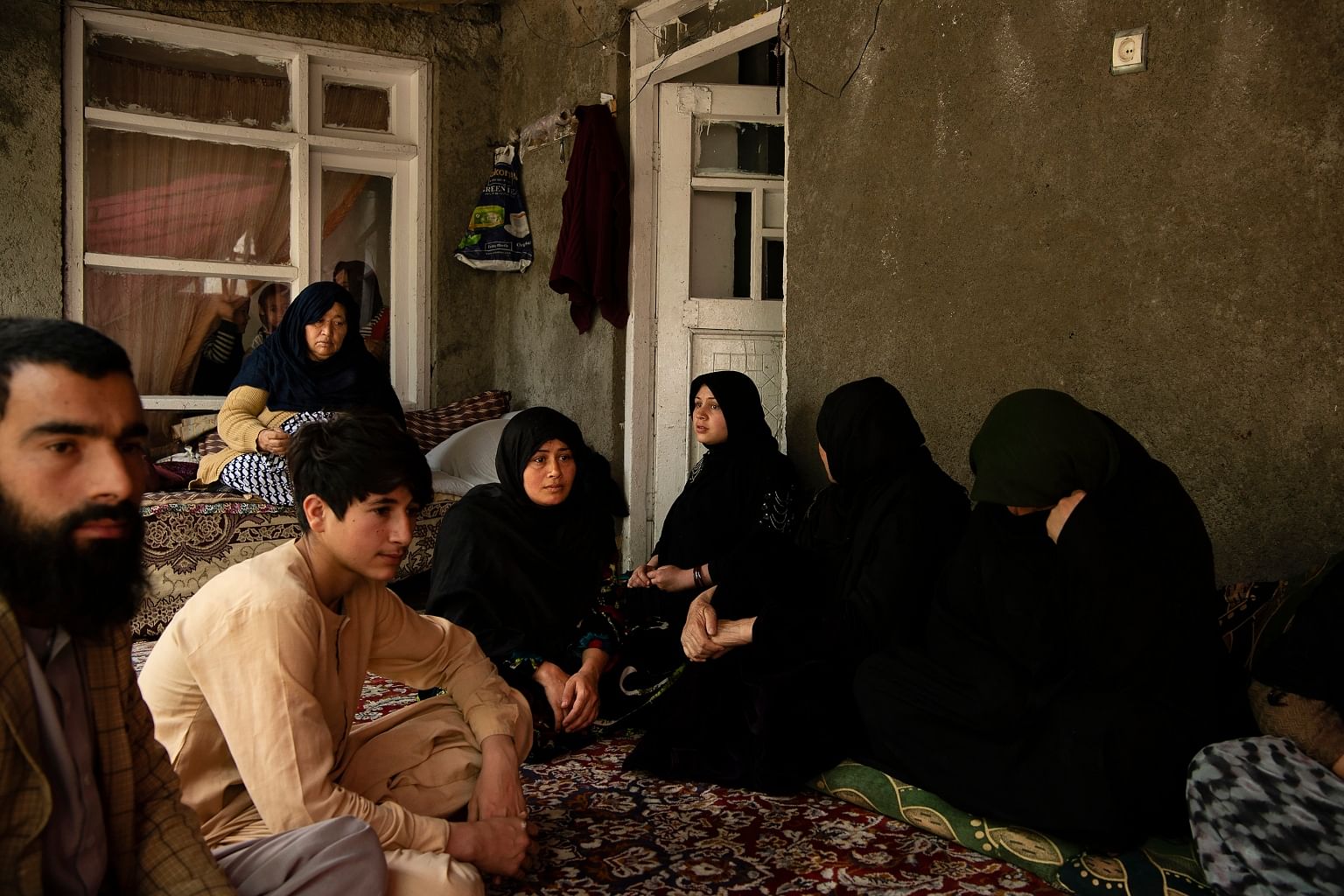
Relatives mourning Mohammad Hussein, who was killed in an explosion outside the boys’ school in Kabul, on April 27, 2022. PHOTO: NYTIMES

Late last month, Mr Saeed Mohammad Agha Husseini, 21, was standing outside his home in the Dasht-e-Barchi area of Kabul, a Hazara-dominated area, when he felt the thud of an explosion. He and his father raced to the school down the street, where throngs of terrified students poured out its gate, the bloodied bodies of some of their classmates sprawled across the pavement.

His father rushed to help the victims, but minutes later Mr Husseini heard another deafening boom. A second explosion hit the school's gate, fatally wounding his father.

A week later, Mr Husseini sat under the shade of a small awning with his relatives to mourn. Outside, their once-bustling street was quiet, the fear of another explosion still ripe. At the school, community leaders had been discussing hiring guards to take security into their own hands.

"The government cannot protect us; we are not safe," Mr Husseini said. "We have to think about ourselves and take care of our security."

MORE ON THIS TOPIC

Thursday, September 15, 2022

SUFISM
Bangladeshi mystic fights demons with psychiatry


Shafiqul ALAM
Wed, September 14, 2022 


Evil spirits bedevil the families that seek blessings from an elderly Bangladeshi mystic -- but he knows his prayers alone are not enough to soothe their troubled minds.

Syed Emdadul Hoque conducts exorcisms but at the same time is helping to bust taboos around mental health treatment in the South Asian nation, where disorders of the mind are often rationalised as cases of otherworldly possession.

Hundreds of people visit the respected cleric each week to conquer their demons, and after receiving Hoque's blessing a team of experts will gently assess if they need medical care.

Mohammad Rakib, 22, was brought to the shrine after complaining of "possession by a genie" that brought alarming changes to his behaviour.

"When I regain consciousness, I feel okay," he tells Hoque. But his uncle explains that the student has suffered alarming dissociative spells, attacking and scolding his relatives while speaking in an unrecognisable language.

"Don't worry, you will be fine," Hoque says reassuringly, reciting prayers that he says will rid Rakib of the spirit and to help him concentrate on his studies.

Rakib is then led into a room by the cleric's son Irfanul, where volunteers note down his symptoms and medical history.

"We think he is suffering from mental problems," Irfanul tells AFP.

"Once we've taken his details, we will send him to a psychiatrist to prescribe medicines."

- Sufi mystics -

Hoque, 85, and his son are members of the Sufi tradition, a branch of Islam that emphasises mysticism and the spiritual dimensions of the faith.


They are descended from one of the country's most respected Sufi leaders, from whom Hoque has inherited the esteemed title of "Pir", denoting him as a spiritual mentor.


Their hometown of Maizbhandar is one of the country's most popular pilgrimage sites, with huge crowds each year visiting shrines dedicated to the Hoque family's late ancestors to seek their blessings.

Their faith occupies an ambiguous place in Bangladesh, where they are regularly denounced as heretics and deviants by hardliners from the Sunni Muslim majority.

But Sufi mystics have a deeply rooted role in rural society as healers, and Irfanul says his father gives his visitors the opportunity to unburden themselves.

"Those who open up their stresses and problems to us, it becomes easier for us to help," he says. "My father does his part by blessing him and then the medical healing starts."

Hoque is helped by Taslima Chowdhury, a psychiatrist who worked at the shrine for nearly two years, travelling from her own home an hour's drive away in the bustling port city of Chittagong.

"Had he not sent the patients to me, they might never visit a trained psychiatrist in their life," she tells AFP.

"Thanks to him, a lot of mental patients get early treatment and many get cured quickly."

- Veil of silence -


Despite Bangladesh's rapid economic growth over the past decade, treatment options for panic attacks, anxiety and other symptoms of mental disorder remain limited.

A brutal 1971 independence war and the floods, cyclones and other disasters that regularly buffet the climate-vulnerable country have left widespread and lingering trauma, according to a British Journal of Psychology study published last year.

Bangladesh has fewer than 300 psychiatrists servicing a population of 170 million people, the same publication says, while a stigma around mental illness prevents those afflicted from seeking help.

A 2018 survey conducted by local health authorities found nearly one in five adults met the criteria for a mental disorder, more than 90 percent of whom did not receive professional treatment.

But experts say Hoque's referral programme could offer a revolutionary means of lifting the veil of silence around mental health and encourage more people to seek medical intervention.

"It is remarkable given that in Bangladesh, mental problems are considered taboo," says Kamal Uddin Chowdhury, a professor of Clinical Psychology at the elite Dhaka University.

The country's top mental hospital is now engaged in a project to train other religious leaders in rural towns to follow Hoque's approach, he tells AFP.

"They are the first responders," he adds.

"If they spread out the message that mental diseases are curable and that being 'possessed by a genie' is a kind of mental disease, it can make a big difference in treatment."

sa/gle/skc/dhc