It’s possible that I shall make an ass of myself. But in that case one can always get out of it with a little dialectic. I have, of course, so worded my proposition as to be right either way (K.Marx, Letter to F.Engels on the Indian Mutiny)
Monday, January 12, 2026
NI
Nickel price extends drop amid lack of detail on Indonesia output cuts
Nickel fell further from a 19-month high after Indonesia didn’t provide details on its pledge for output cuts, which had earlier fueled a sharp rally.
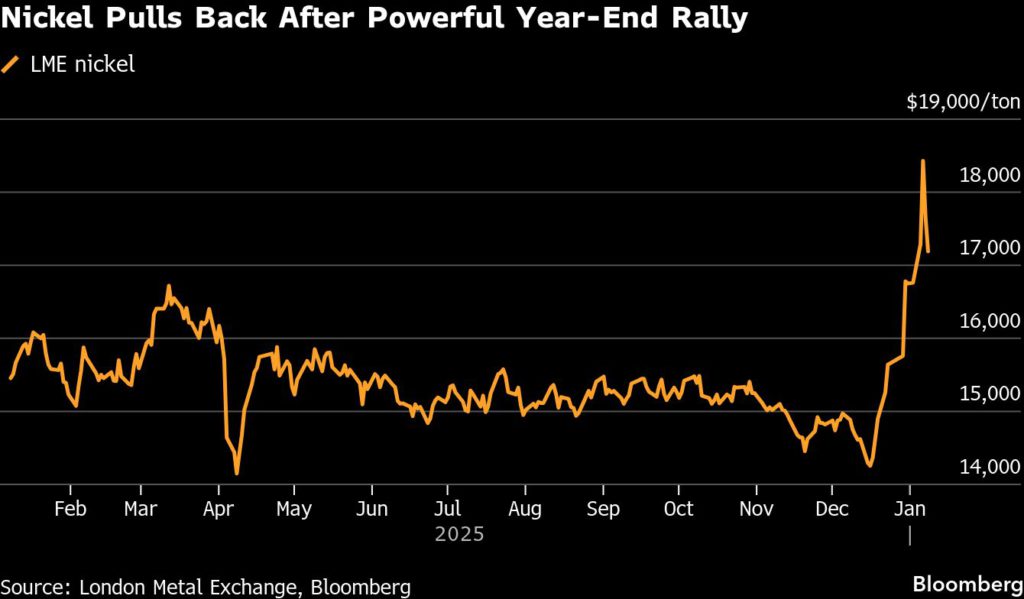
Three-month futures declined as much as 5.9% on the London Metal Exchange. Prices had surged as high as $18,800 a ton on Wednesday — the highest since June 2024 — as investors bet on risks to output in top supplier Indonesia, but the metal ended the day 3.4% lower.
Indonesia has flagged plans to reduce production this year to improve the balance between supply and demand. The Energy and Mineral Resources Ministry didn’t provide any details on this year’s nickel mining quota at a Thursday press briefing, with Minister Bahlil Lahadalia saying the figures are still being finalized.
Nickel — used in batteries and stainless steel — has surged about 20% since mid-December, joining a rally in copper and aluminum. The metals have been buoyed by a wave of buying from Chinese traders, as well as heightened geopolitical concerns.
The sustainability of nickel prices “remains uncertain, unless quota reductions are implemented in a meaningful and consistent manner,” Benyamin Mikael, an analyst with UOB-Kay Hian Holdings Ltd., said in a note. The impact of the planned quota cuts is likely to be limited in the near term as “most committed investments are largely exempt for the next one to two years.”
Nickel settled 4.1% lower at $17,155 a ton on the LME as of 5:52 p.m. London time. Most other metals also settled lower, with copper falling 1.4% to close at $12,720.50 a ton.
Pressure for Indonesian quota U-turn is a risk for nickel price rally
Nickel pig iron plant in Indonesia. (Image from Nickel Mines Ltd.)
Indonesia’s plan to cut nickel mining quotas to boost revenues has succeeded in pushing nickel to close to 19-month highs but analysts say pressure for a policy reversal is likely to mean the rally will be short-lived.
Accounting for around 70% of global nickel production, which was estimated at around 3.8 million metric tons last year, Indonesia is the world’s biggest nickel producer.
Following its announcement of mining curbs in December, prices of nickel have steadily gained more than 30%. They hit $18,800 a ton this week, the highest since June 2024. It was last trading near $18,000.
How long the rally will last, however, depends largely on how long the government can keep lower quotas in place. A similar effort a year ago had a limited effect: in January 2025, the government said it would issue quotas for around 200 million wet metric tons for 2025, but ended up approving permits for nearly 300 million tons.
Industry pressure
“There will be a lot of pressure on them to relent. There are a lot of projects coming onstream this year,” said Macquarie analyst Jim Lennon.
“Cutting quotas would be like saying to Chinese companies which have built these plants, they can’t operate them. That would put the kibosh on any future investment.”
Nickel industry sources say many of the new projects will be ready to produce in the second half of the year and that Indonesia could limit the quotas – known locally as RKABs – only for the first half of the year.
When production increases, miners could reapply for higher quotas and the government could grant more licences, they said.
“The owners of these nickel operations are pretty close to the government, they always have been. They will lobby and the government will backflip like it did last year,” said Panmure Liberum analyst Tom Price.
Nickel, which is needed for electric vehicle batteries and steel production, accounted for about 12% of Indonesia’s exports last year. Directly and indirectly the industry employs thousands of people and Chinese companies are still investing millions of dollars to increase capacity.
Amply supplied
Regardless of Indonesian quotas, traders expect prices to retreat as funds finish short-covering as there is no shortage of nickel in the market.
Stocks in London Metal Exchange-approved warehouses have risen more than 300% to 275,634 tons since the start of 2025.
Meanwhile, off-warrant stocks, or nickel that could be delivered to the LME, at 112,028 tons is nearly double the level at the end of October last year.
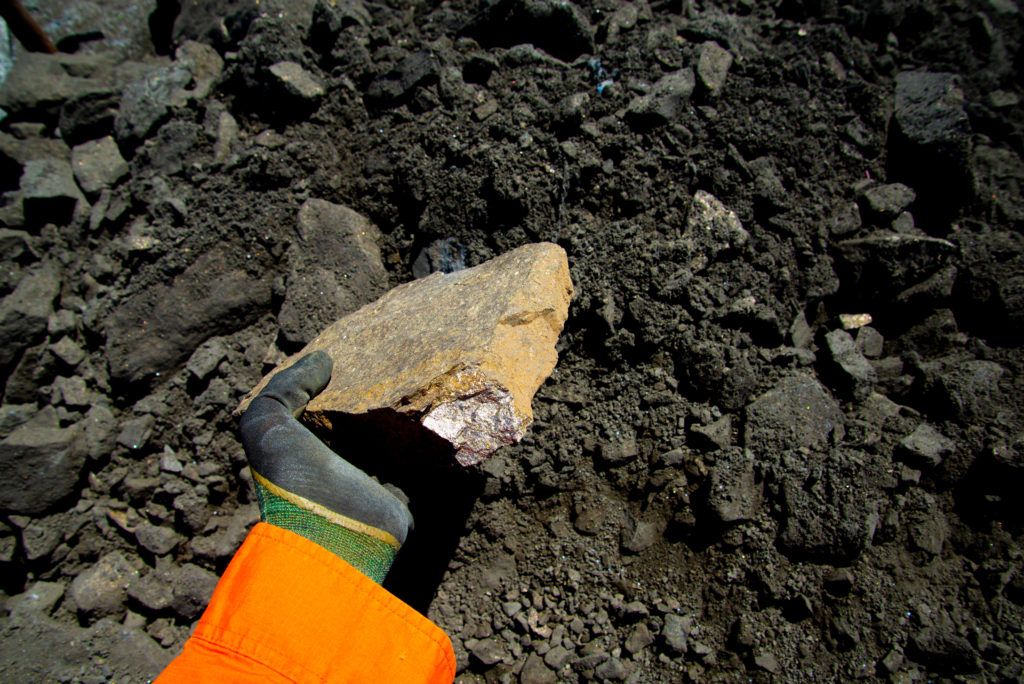 Stock image.
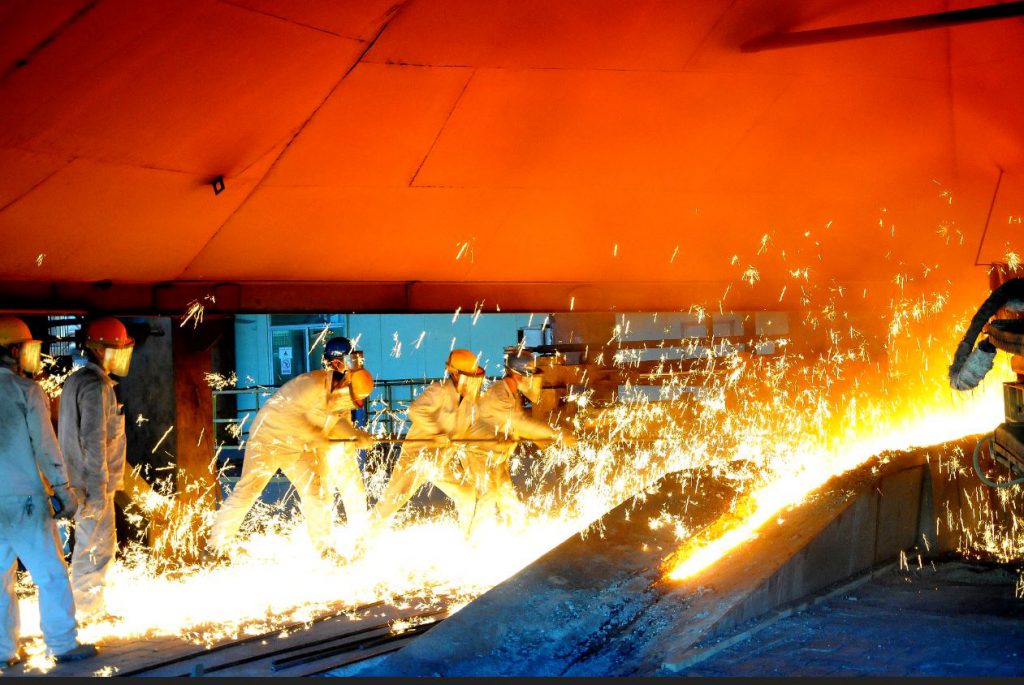 Nickel pig iron plant in Indonesia. (Image from Nickel Mines Ltd.)
No comments:
Post a Comment