U$ IMPERIALISM TOO
Opinion: The Greenland scenarios — From the stupid to the insane and back
By Paul Wallis

Donald Trump has coveted Greenland since his first mandate as US president - Copyright AFP Odd ANDERSEN
The “annexation” of Greenland isn’t just dumb. It’s ridiculous.
As a security proposal, this is a lame version of very old Cold War strategy, and the Cold War made it obsolete generations ago.
Against what would the US security be protected by annexing Greenland?
Hypersonic ICBMs? No.
Conventional ICBMs? No.
Nuclear attack subs? Hardly.
Sleeper agents disrupting the US from the inside with massive cyberattacks and terrorism? Not at all.
Fentanyl? No.
Other random boogeymen like pet-eating Ohioans or single mothers from Mars? Not at all.
What about those Greenland mineral assets, you ask with starry eyes?
Getting any of those assets to market, let alone all of them, would take at least a decade and cost many billions. It’s much worse than Venezuelan oil. Mining is always a heavy-duty, capital-intensive cost.
What about territorial advantages?
There aren’t any. Any degree of territorial development would take generations and require huge budget commitments from future American governments just to maintain. It’s a formula for massive failure through capital overextension alone.
A few scenarios
These scenarios are pretty bizarre.
Scenario 1: Direct military annexation
This scenario is likely to cause the most hostile and widespread long-term reactions. American forces arrive in Greenland in force. 82nd Airborne follows up special forces deployment as the US Navy effectively blockades Thule.
NATO objects strongly and deploys friendly forces elsewhere in Greenland A furious Canada stops all talks with the US and sends Canadian special forces to Greenland as a NATO exercise. NATO ground and air troops also arrive but there is no actual combat. The result is an ongoing, expensive, and utterly pointless military standoff. The US military quite rightly objects to any operations whatsoever against NATO forces. Deadlock.
American non-NATO allies like Japan, South Korea, and Australia refuse to cooperate with the US. They either pull or mothball defense and a vast range of other deals.
The military option goes stale in 3 years after much expense and no actual achievements. The irony is that the US military said there was no point in the exercise from any security perspective.
Scenario 2: Diplomatic and economic factors and political maneuvers. Purchasing?
Greenland becomes the subject of political negotiations which drag on for years. Denmark and Greenland refuse to negotiate at all.
Purchasing is off the agenda before it starts. Greenland is worth trillions of dollars. Does the US have trillions of dollars to spare? Is this “impulse buying”?
The EU is by now as furious as Canada and Denmark. The rest of the world ignores the US territorial claims and refuses to recognize American sovereignty over any part of Greenland. The UN calls the US attempts to annex Greenland illegal and infringing on the rights of Greenlanders. No territory is or can be legally acquired.
US trade with the EU is poleaxed. The EU imposes sanctions on the US. EU trade with the US tanks completely. The US is about as popular for doing business as the UK was after Brexit and the result is much the same. The US is progressively excluded from global trade.
The US dollar nosedives in the furore, with some help from China and annoyed Europeans. Even US assets overseas are suddenly under threat of seizure. That’s not good news for America’s vast overseas tax havens.
Scenario 3: US internal political and administrative developments
The US political situation alone effectively derails the Greenland project. The sheer cost of annexation is prohibitively expensive. US Federal revenue stagnates and/or shrinks in real terms. Debt payments increase and blow out due to the rising cost of government.
The 2026 midterms effectively neuter the Greenland project. Political options for Greenland operations are blocked. In 2028, Greenland becomes “just another Trump thing,” which America instantly disowns. There’s no future in it.
The word is no, and there are no other words required.
_______________________________________________________________
Disclaimer
The opinions expressed in this Op-Ed are those of the author. They do not purport to reflect the opinions or views of the Digital Journal or its members.

“75 years Nato” patch is seen on the arm of a member of the US military at the NATO Airborne Early Warning and Control Force headquarters in Geilenkirchen, western Germany, Nov. 13, 2025. (AFP)
AFP
January 12, 202617:29
NATO chief Mark Rutte said that the alliance was working on “the next steps” to bolster Arctic security
If US followed through with an armed attack on Greenland that it would spell the end of NATO, the Danish PM warned
NUUK: NATO and Greenland’s government on Monday said they intend to work on strengthening the defense of the Danish autonomous territory, hoping to dissuade US President Donald Trump, who covets the island.
On Sunday, Trump further stoked tensions by saying that the United States would take the territory “one way or the other.”
Confronted with the prospect of annexation by force, Greenlandic Prime Minister Jens-Frederik Nielsen placed his hopes in the US-led military alliance NATO.
“Our security and defense belong in NATO. That is a fundamental and firm line,” Nielsen said in a social media post.
His government “will therefore work to ensure that the development of defense in and around Greenland takes place in close cooperation with NATO, in dialogue with our allies, including the United States, and in cooperation with Denmark,” he added.
NATO chief Mark Rutte also said Monday that the alliance was working on “the next steps” to bolster Arctic security.
Diplomats at NATO say that some alliance members are floating ideas, including possibly launching a new mission in the region.
Discussions are at an embryonic stage and there are no concrete proposals on the table so far, they say.
Trump has insisted that Greenland needs to be brought under US control, arguing that the Danish autonomous territory is crucial for national security.
Danish Prime Minister Mette Frederiksen has warned that if Washington followed through with an armed attack on Greenland that it would spell the end of NATO.
In a bid to appease Washington, Copenhagen has invested heavily in security in the region, allocating some 90 billion kroner ($14 billion) in 2025.
Greenland, which is home to some 57,000 people, is vast with significant mineral resources, most of them untapped, and is considered strategically located.
Since World War II and during the Cold War, the island housed several US military bases but only one remains.
According to Rutte, Denmark would have no problem with a larger US military presence on the island.
Under a 1951 treaty, updated in 2004, the United States could simply notify Denmark if it wanted to send more troops.
- Diplomacy -
Denmark is also working on the diplomatic front, with a meeting between Danish and Greenlandic representatives and US Secretary of State Marco Rubio expected this week.
According to US and Danish media reports, the meeting is set to take place Wednesday in Washington.
Danish Foreign Minister Lars Lokke Rasmussen on Monday posted a photo from a meeting with his Greenlandic counterpart Vivian Motzfeldt.
Denmark reportedly wants to present a united front with the leaders of the autonomous territory before the meeting with US representatives.
The Danish media reported last week on a tense videoconference between Danish lawmakers and their Greenlandic counterparts over how to negotiate with Washington.
Facing Trump’s repeated threats, Nielsen said in his message on Monday: “I fully understand if there is unease.”
In a statement published Monday, the government in the capital, Nuuk, said it “cannot accept under any circumstance” a US takeover of Greenland.
A Danish colony until 1953, Greenland gained home rule 26 years later and is contemplating eventually loosening its ties with Denmark.
Polls show that Greenland’s people strongly oppose a US takeover.
“We have been a colony for so many years. We are not ready to be a colony and colonized again,” fisherman Julius Nielsen told AFP over the weekend.
By AFP
January 11, 2026

Several European countries have backed Greenland and Denmark over Trump's claims to the territory - Copyright Ritzau Scanpix/AFP Ida Marie Odgaard
Camille BAS-WOHLERT
Denmark’s prime minister on Sunday said her country faces a “decisive moment” in its diplomatic battle with the United States over Greenland, after President Donald Trump again suggested using force to seize the Arctic territory.
Ahead of meetings in Washington from Monday on the global scramble for key raw materials, Prime Minister Mette Frederiksen said that “there is a conflict over Greenland”.
“This is a decisive moment” with stakes that go beyond the immediate issue of Greenland’s future, she added in a debate with other Danish political leaders.
Frederiksen posted on Facebook that “we are ready to defend our values — wherever it is necessary — also in the Arctic. We believe in international law and in peoples’ right to self-determination.”
Germany and Sweden backed Denmark against Trump’s latest claims to the self-governing Danish territory.
Swedish Prime Minister Ulf Kristersson condemned US “threatening rhetoric” after Trump repeated that Washington was “going to do something on Greenland, whether they like it or not”.
“Sweden, the Nordic countries, the Baltic states, and several major European countries stand together with our Danish friends,” he told a defence conference in Salen where the US general in charge of NATO took part.
Kristersson said a US takeover of mineral-rich Greenland would be “a violation of international law and risks encouraging other countries to act in exactly the same way”.
– No ‘immediate threat’ –
Germany reiterated its support for Denmark and Greenland ahead of the Washington discussions.
Before meeting US counterpart Marco Rubio on Monday, German Foreign Minister Johann Wadehpul held talks in Iceland to address the “strategic challenges of the Far North”, according to a foreign ministry statement.
“Security in the arctic is becoming more and more important” and “is part of our common interest in NATO”, he said at a joint news conference with Icelandic Foreign Minister Thorgerdur Katrin Gunnarsdottir.
“If the American president is looking at what threats might come from Russian or Chinese ships or submarines in the region, we can of course find answers to that together,” he added.
But “the future of Greenland must be decided by the people of Greenland” and Denmark, he said.
Asked about a possible strengthening of NATO’s commitment in the Arctic, Wadephul said Germany was “ready to assume greater responsibilities”.
Earlier Sunday, German Finance Minister Lars Klingbeil said: “We are strengthening security in the Arctic together, as NATO allies, and not against one another.”
He was speaking ahead of an international meeting on critical raw materials in Washington.
European nations have scrambled to coordinate a response after the White House said this week that Trump wanted to buy Greenland and refused to rule out military action.
On Tuesday, leaders of seven European countries including France, Britain, Germany and Italy signed a letter saying it is “only” for Denmark and Greenland to decide the territory’s future.
Trump says controlling the island is crucial for US national security because of the rising Russian and Chinese military activity in the Arctic.
NATO Supreme Allied Commander General Alexus Grynkewich told the Swedish conference that alliance members were discussing Greenland’s status.
While there was “no immediate threat” to NATO territory, the Arctic’s strategic importance was fast growing, the US general added.
Grynkewich said he would not comment on “the political dimensions of recent rhetoric” but talks on Greenland were being held at the North Atlantic Council.
“Those dialogues continue in Brussels. They have been healthy dialogues from what I’ve heard,” the general said.
A Danish colony until 1953, Greenland gained home rule 26 years later and is contemplating eventually loosening its ties with Denmark. Polls indicate that Greenland’s population strongly oppose a US takeover.
“I don’t think there’s an immediate threat to NATO territory right now,” Grynkewich told the conference.
But he said Russian and Chinese vessels had been seen patrolling together on Russia’s northern coast and near Alaska and Canada, working together to get greater access to the Arctic as ice recedes due to global warming.
burs-jj/des
By AFP
January 10, 2026

Trump has refused to rule out military action in Greenland, leaving Europe scrambling to respond - Copyright AFP SAUL LOEB
Camille BAS-WOHLERT
Greenland’s political parties said they did not want to be under Washington as US President Donald Trump again suggested using force to seize the mineral-rich Danish autonomous territory, raising concern worldwide.
The statement late Friday came after Trump repeated that Washington was “going to do something on Greenland, whether they like it or not”.
European capitals have been scrambling to come up with a coordinated response after the White House said this week that Trump wanted to buy Greenland and refused to rule out military action.
“We don’t want to be Americans, we don’t want to be Danish, we want to be Greenlanders,” the leaders of five parties in Greenland’s parliament said in a joint statement.
“The future of Greenland must be decided by Greenlanders,” they added.
“No other country can meddle in this. We must decide our country’s future ourselves — without pressure to make a hasty decision, without procrastination, and without interference from other countries.”
France’s Foreign Minister Jean-Noel Barrot said in an interview published Saturday that Trump’s “blackmail must stop”.
But he also said he did not believe a US military intervention would happen.
“Greenland is a European territory, placed under the protection of NATO. I would add that the Europeans have very powerful means to defend their interests,” he said.
– Fears of invasion –
According to a poll published Saturday by Danish agency Ritzau, more than 38 percent of Danes think the United States will launch an invasion of Greenland under the Trump administration.
A Danish colony until 1953, Greenland gained home rule 26 years later and is contemplating eventually loosening its ties with Denmark.
Many Greenlanders remain cautious about making this a reality.
Julius Nielsen, a 48-year-old fisherman in the capital Nuuk, told AFP: “American? No! We were a colony for so many years. We’re not ready to be a colony again, to be colonised”.
“I really like the idea of us being independent, but I think we should wait. Not for now. Not today,” Pitsi Mari, who works in telecoms, told AFP.
“I feel like the United States’ interference disrupts all relationships and trust” between Denmark and Greenland, said Inaluk Pedersen, a 21-year-old shop assistant.
The coalition currently in power is not in favour of a hasty independence.
The only opposition party, Naleraq, which won 24.5 percent of the vote in the 2025 legislative elections, wants to cut ties as quickly as possible but it is also a signatory of the joint declaration.
“It’s time for us to start preparing for the independence we have fought for over so many years,” said MP Juno Berthelsen in a Facebook post.
– Vast natural resources –
Denmark and other European allies have voiced shock at Trump’s threats on Greenland, a strategic island between North America and the Arctic where the United States has had a military base since World War II.
Trump says controlling the island is crucial for US national security given the rising military activity of Russia and China in the Arctic.
“We’re not going to have Russia or China occupy Greenland. That’s what they’re going to do if we don’t,” the US president said Friday.
“So we’re going to be doing something with Greenland, either the nice way or the more difficult way,” he added.
Both Russia and China have increased military activity in the region in recent years, but neither has laid any claim to the vast icy island.
Greenland has also attracted international attention in recent years for its vast natural resources including rare earth minerals and estimates that it could possess huge oil and gas reserves.
Danish Prime Minister Mette Frederiksen has warned that an invasion of Greenland would end “everything”, meaning the transatlantic NATO defence pact and the post-World War II security structure.
– Flurry of diplomacy –
“I’m a fan of Denmark, too, I have to tell you. And you know, they’ve been very nice to me,” Trump said.
“But you know, the fact that they had a boat land there 500 years ago doesn’t mean that they own the land.”
Secretary of State Marco Rubio is due to meet next week with Denmark’s foreign minister and representatives from Greenland.
A flurry of diplomacy is under way as Europeans try to head off a crisis while at the same time avoiding the wrath of Trump, who is nearing the end of his first year back in power.
Trump had offered to buy Greenland in 2019 during his first presidential term but was rebuffed.
burs-gv/jj
Pound of flesh
Rafia Zakaria
The writer is an attorney teaching constitutional law and political philosophy.
ONE would think that everyone in the world knows that nothing is free. Every favour granted, every kindness bestowed has its cost — sometimes the payment is demanded immediately, and at other times, decades later. Europe it appears is only learning the truth of this in these feverish days of the Trump administration. Recently, the Americans carted off Nicolás Maduro and his wife from Caracas to a jailhouse in America. Careful statements came from Europe so as not to anger the American president.
It was the words that came after that were even more unnerving to the watching Europeans. No sooner had images of a handcuffed Maduro appeared on TV screens than the Trump administration officials began to assert that they would take over Greenland next. Post-Maduro, one of the first to make the claim was Stephen Miller — Trump’s Goebbels-esque immigration czar. Then it was Trump himself and also Secretary of State Marco Rubio who said that the US would not militarily take over Greenland but simply buy the country. Controlling Greenland, all three seemed to agree, was necessary for America’s security.
If Venezuela’s takeover had instigated panic attacks in Europe, these overt announcements of US plans brought on a nervous breakdown. The major European countries issued a statement against the claims to Greenland being made across the pond. At the centre of the circle was Denmark, which had laid claim to Greenland 300 years ago and still wants to hold on to it even though Greenlanders themselves do not seem to want it to do so.
Danish Prime Minister Mette Frederiksen has since had increasingly testy exchanges with President Donald Trump. In her words, if the US were to ‘get’ Greenland it would be the end of the international world order.
The cuddly US that indulged Europe’s domestic spending has gone.
The reality is more complex and the source of Danish fretting over every word the US says about Greenland is ironically an international treaty or a series of treaties themselves. The first dates to 1941. At that time, the Danish ambassador who had been cut off from Copenhagen owing to the Nazi takeover of Denmark signed a defence agreement on behalf of Denmark and Greenland with the then US administration.
The motivation behind this was that the Nazis could have used Greenland as a route to North America and thus it made sense for the US to be able to set up military bases there. Another treaty is from 1951 when the US looking to bolster its Cold War defences against the Soviet Union got permission to set up any number of military bases in Greenland if it wanted to.
The US is a military behemoth with a defence budget of over $900 billion. Even as Denmark’s PM dramatically decries US claims on Greenland it seems questionable whether the rest of Europe will forsake the US as a military ally over Greenland. The promise of American military support has enabled Europe to keep up a lifestyle it could not afford had European countries been required to spend gobs of money fending off a threat from the then Soviet Union. The social welfare state, free schools and healthcare for citizens, for instance, would not have been possible if military spending had not been defrayed by Nato.
The cuddly US that never raised a finger at Europe’s indulgent domestic spending is now gone. In its place is a nasty America looking to get paid for past favours. Many in Washington predict that the US plan
to thwart China is to simply get a tighter grip on South and Central America as well as most of the rest of the Western Hemisphere. Greenland, sitting on enormous mineral deposits, is part of America’s new security strategy. This means that even if there is no dramatic or overt capture of Greenland, it is likely that a takeover will take place quietly.
Beyond Venezuela, the US also has its eyes on the area known as the ‘lithium triangle’ constituting Bolivia, Chile and Argentina. The Argentinian prime minister has already sung Trump’s praises. Given Maduro’s fate, his regional counterparts know they better follow suit. America is intent on making sure it has enough oil, precious metals and other components required for technological advancements and it’s not afraid to use its military to make sure it gets just that.
Greenland with its 57,000 inhabitants is likely about to exchange the hegemony of one state for another’s. The Trump administration sees no reason why an icy hinterland of buried treasure should not be theirs. Europe, which had counted on the US remaining a friend forever, is in for a dark and disappointing time ahead. The US wants what it wants and it is Europe’s turn to realise this.
Published in Dawn, January 10th, 2026

Rafia Zakaria is an attorney and human rights activist. She is a columnist for DAWN Pakistan and a regular contributor for Al Jazeera America, Dissent, Guernica and many other publications.
She is the author of The Upstairs Wife: An Intimate History of Pakistan (Beacon Press 2015). She tweets @rafiazakaria
Trump’s Greenland talk brings opportunity, unease for business
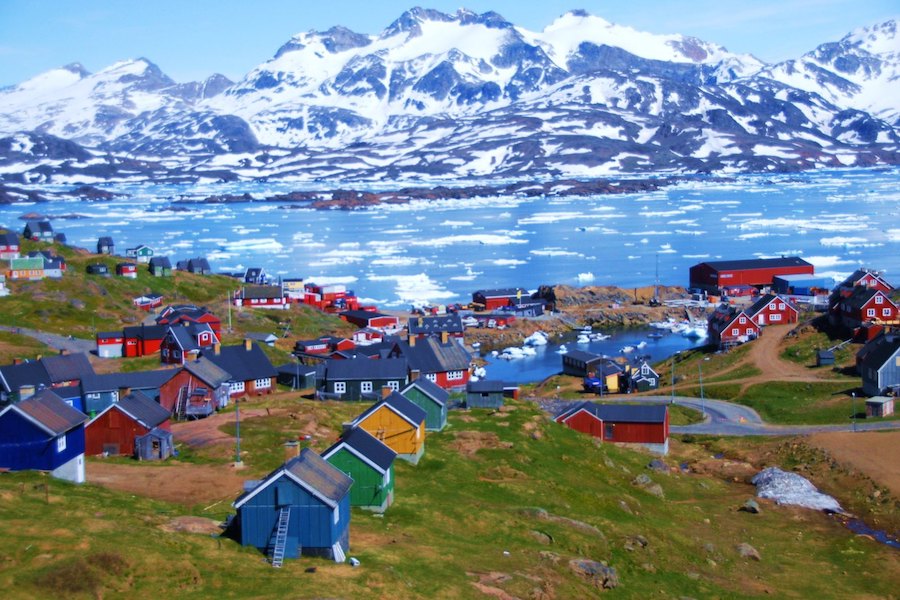
Greenland’s business community is split on the impact of Donald Trump’s renewed interest in the Arctic island.

While some see commercial opportunity, others say harsh rhetoric about taking control of the territory is dampening near-term activity.
The revived talk has sparked a new rush by US officials to identify business deals and other ways to deepen ties with Greenland, according to people familiar with the matter. For now, discussions are focused on mining projects, hydroelectric power and other ventures that could expand the US economic footprint on the island.
“Greenland is now in the position to decide its future, to build up its economic independence,” Eldur Olafsson, founder and chief executive officer of Amaroq Ltd, told Bloomberg Television on Thursday. “There is opportunity in this.”
The Toronto-based company operates a newly opened gold mine in Greenland and holds the largest portfolio of mineral exploration licenses in the territory. Last year, Amaroq attracted strong demand from investors on both sides of the Atlantic in an oversubscribed funding round and has since seen interest from state-backed agencies in the US and Europe.
The US president has “really put Greenland on the map” since he first touted the idea of buying the island in 2019, Olafsson said. “People saw there are resources there.”
Trump “doesn’t want to lose time to get something done,” Olafsson said. “That overall is a good thing, because Greenland needs investment.”
The island’s public finances are under mounting pressure and its fiscal position suffered a “surprisingly sharp deterioration” last year, according to an analysis published this week by Denmark’s central bank. It underscores the urgency of discovering new sources of growth as Greenland seeks greater economic self-reliance.
The Arctic island is betting on its mining sector to help diversify the economy and lay the groundwork for future independence from Denmark. Despite Greenland’s vast untapped reserves, commercial extraction remains limited so far. Harsh operating conditions, high production costs and relatively low mineral concentrations have deterred large-scale development.
To bridge that gap, support from other governments will likely be needed. The US and other nations could help projects get off the ground through purchase commitments, price floors, grants or even equity stakes.
Elsewhere in Greenland’s business community, reactions are more mixed.
“Some people do see it as an opportunity to expand into new markets in the US,” Mads Qvist Frederiksen, executive director of the Arctic Economic Council, told Bloomberg Radio. While Greenlanders are unlikely to agree to a sale, he said, companies remain open to doing business.
For now, however, the rhetoric around buying Greenland or taking it by force is proving counterproductive.
“Everything is put on hold at the moment,” Frederiksen said, with companies postponing decisions until there is more clarity about Greenland’s future. “We have to turn off this fire that is on at the moment.”
(By Sanne Wass)
Greenland miner that surged 80% says rare earth supply in focus
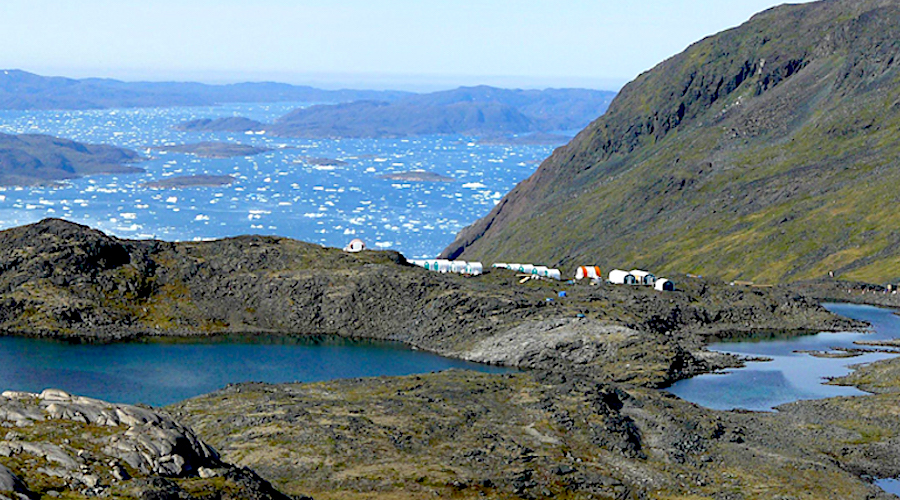
An Australian miner with a rare earth project in Greenland, the Danish territory attracting the interest of the Trump administration, said resource security is increasingly driving prices.
“Supply chains for critical minerals like rare earths are now not just priced based on cost, but more importantly on security of supply,” Energy Transition Minerals Ltd.’s managing director, Daniel Mamadou, said on Bloomberg Television.
“What the West is realizing, and taking steps towards now, is the fact that tough projects need to be funded,” Mamadou said, adding that the company has continued to receive interest from global investors including in Europe and China.
Energy Transition has surged nearly 80% this year in Sydney as the US mulls seeking control of Greenland. President Donald Trump has said he won’t rule out the use of military force to acquire the island, which is a self-ruling territory of Denmark.
Trump has mused about making Greenland part of the US since his first term, but has ramped up the rhetoric after launching a military operation last week to oust Venezuelan leader Nicolas Maduro.
Greenland has sizable natural resources including rare earths – the strategic minerals that have been a focal point of trade talks between China and the US – but commercial extraction in the island remains limited so far.
Energy Transition is developing a flagship rare earth project at Kvanefjeld in southern Greenland, which will consist of a mine, a concentrator and refinery. The company said last month that legal proceedings related to the grant of an exploitation license are still ongoing.
(By Annie Lee and Haslinda Amin)

No comments:
Post a Comment