It’s possible that I shall make an ass of myself. But in that case one can always get out of it with a little dialectic. I have, of course, so worded my proposition as to be right either way (K.Marx, Letter to F.Engels on the Indian Mutiny)
Monday, January 12, 2026
African states, business groups eyeing stake in De Beers, CEO says
De Beers has attracted interest from several business groups and African governments as parent Anglo American looks to offload its stake in the firm, the diamond giant’s CEO told Reuters.
Botswana, Angola and Namibia – all major diamond producers – have expressed interest in acquiring equity in De Beers, alongside “a number of business-led groups,” CEO Al Cook said, stopping short of commenting on the status of talks or the names of some of the interested parties.
Reuters reported in June, citing sources, that billionaire Anil Agarwal, Indian diamond groups and Qatari investment funds were among those that had shown interest in De Beers.
Anglo American, which owns 85% of De Beers, has valued the diamond producer at about $4.9 billion.
When asked about who it would prefer as the company’s new owner, Cook said the focus was not on identity but on alignment with its long-term strategy, including its emphasis on natural diamonds, partnerships with producer nations and growth in key markets.
De Beers is sharpening its focus on India, which Cook called “a tremendously important market.” He expects demand for natural diamonds in the country to double, with the market for the precious stone hitting 1.5 trillion rupees ($16.7 billion) by 2030.
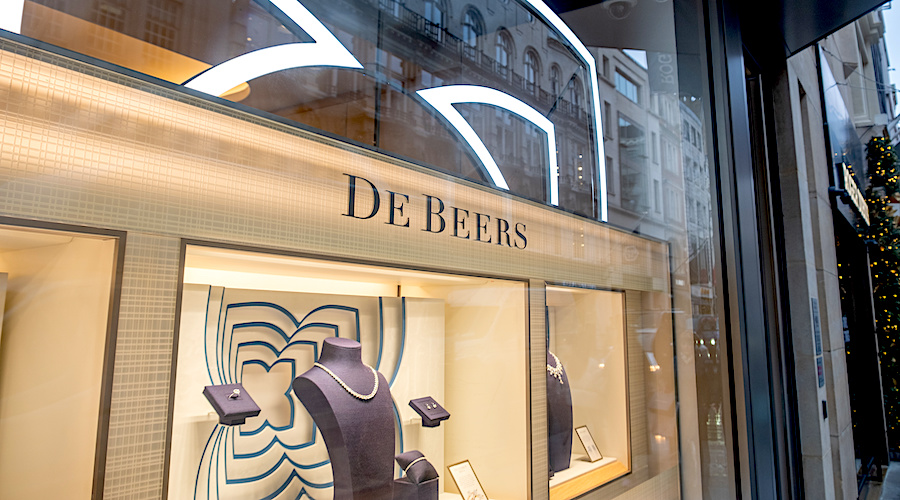
The group opened its fifth Forevermark store, its largest store globally, in Mumbai this week and plans to expand the network to 25 outlets by the year-end, with a long‑term goal of crossing 100 stores.
De Beers, whose revenue slid 13% to $1.95 billion in the first half of 2025 due in part to low prices, is banking on rising self-purchases in India as demand globally has shifted away from a gifting-led model.
The group is also doubling down on its Element Six business, which brought in about $300 million in revenue last year by supplying synthetic diamond wafers to data centers for their use as heat conductors. It discontinued its lab-grown diamond jewellery brand Lightbox last year.
($1 = 89.8090 Indian rupees)
(By Praveen Paramasivam; Editing by Anil D’Silva)
De Beers bets on India’s rich to boost natural diamond demand
De Beers is betting on India’s surging affluent class to fuel growth in natural diamond demand, even as the global market remains challenging and a pending US-India trade deal disrupts supply chains.
The unit of Anglo American Plc is opening its fifth and largest global ‘Forevermark’ store in Mumbai this week and plans to reach 25 outlets nationwide by the end of 2026, chief executive officer Al Cook said in an interview. Demand in India has grown in “double-digits” annually over the last four years and it “should continue” into 2026, he said.
Yet the optimism comes against a tougher backdrop. Globally, De Beers has been grappling with weak diamond demand in key markets such as China, where economic uncertainty has curbed luxury spending. Rising competition from cheaper lab-grown diamonds — popular among younger buyers — has further squeezed margins in traditional markets.
In India, structural hurdles remain. Steep 50% tariffs by the US have rattled India’s diamond cutting and polishing industry, which exports to the American market, with trade flows “down by around half,” Cook said. He did not elaborate on the details of the trade flows, but said he is hopeful of a pact being signed soon between the two countries.
It would be the “biggest tailwind” heading into 2026, Cook said.
Even so, De Beers is leaning on India’s luxury boom, banking on rising affluence to sustain demand for diamonds and jewelry as global retailers move in.
India is now the firm’s second-largest market after the US. Long a hub for cutting and polishing rough stones, the country is increasingly central to its consumer-driven growth strategy.
100 stores
De Beers is eventually targeting a network of 100 stores by 2030, according to Shweta Harit, global senior vice president of De Beers Group and CEO of Forevermark. Some of these stores will run on a franchise model, she said.
Expansion is focused beyond top metros, targeting smaller cities where new wealth from entrepreneurship is reshaping consumption. A store in Chandigarh will open in February, with outlets in Lucknow and Jaipur to follow.
These customers are “actually going to be the game changer,” Harit said. “We’ve got to grab that opportunity.”

 (Image courtesy of William | stock.adobe.com.)
No comments:
Post a Comment