Groups Warn Trump Executive Orders Would Spike Cancers Caused by Exposure to Nuclear Radiation
A letter implored the Nuclear Regulatory Commission to “stand up to the executive order’s marching orders to ‘promote’ nuclear power.”
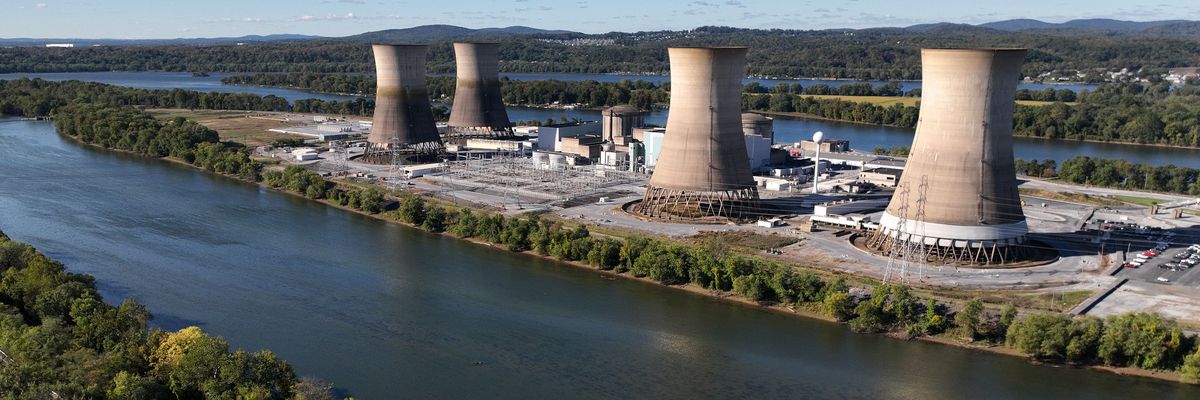
The shuttered Three Mile Island nuclear power plant stands in the middle of the Susquehanna River on October 10, 2024 near Middletown, Pennsylvania.
(Photo by Chip Somodevilla/Getty Images)
Julia Conley
Nov 14, 2025
COMMON DREAMS
A series of nuclear power-related executive orders issued by President Donald Trump seek to legitimize people’s “suffering as the price of nuclear expansion,” said one expert at Beyond Nuclear on Friday, as the nongovernmental organization spearheaded a letter to the Nuclear Regulatory Commission and top Trump administration officials warning of the public health risks of the orders.
More than 40 civil society groups—including Physicians for Social Responsibility (PSR), Sierra Club, Nuclear Watch South, and the Appalachian Peace Education Center—signed the letter to the commission, calling on officials not to revise the NRC’s Standards for Protection Against Radiation, as they were directed to earlier this year by Trump.
RECOMMENDED...
‘A Mistake of Radioactive Proportions’: Markey Pushes Bill to Block Trump From Testing Nuclear Bombs
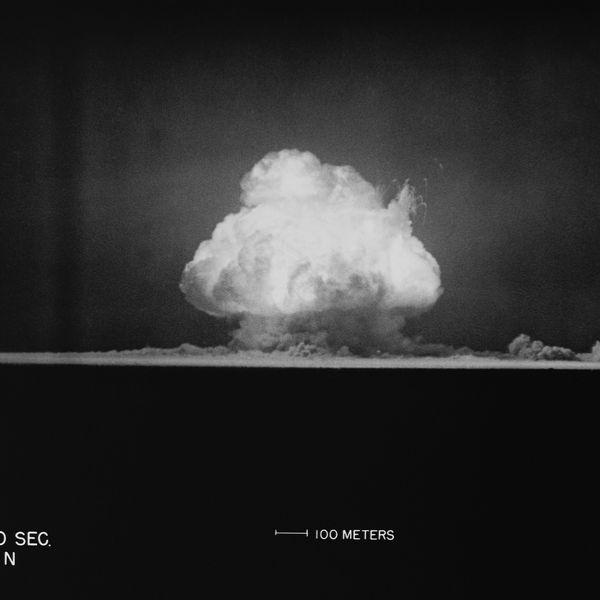
‘Extremely Dangerous for Humanity’: Trump Orders Resumption of US Nuclear Weapons Testing
“NRC has not made a revision yet, and has been hearing that the Part 20 exposure (external only) should be taken from the existing 100 mr [milliroentgen] a year, per license, to 500 mr a year, and in view of some, even to 10 Rems [Roentgen Equivalent Man], which would be 100 times the current level,” reads the letter.
In 2021, noted PSR, the NRC “roundly rejected” a petition “to raise allowable radiation exposures for all Americans, including children and pregnant women, to 10 Rems a year.”
The revision to radiation limit standards would result in anywhere from 5-100 times less protection for Americans, said the groups, with 4 out of 5 adult males exposed over a 70-year lifetime developing cancer that they otherwise would not have.
“Radiation is dangerous for everyone,” said Amanda M. Nichols, lead author of the 2024 study Gender and Ionizing Radiation. “[Trump’s] executive order will allow the industry to relax the current standards for radiological protection, which are already far from adequate. This will have detrimental health consequences for humans and for our shared environments and puts us all at higher risk for negative health consequences. ”
The change in standards would be even more consequential for women, including pregnant women, and children—all of whom are disproportionately susceptible to health impacts of ionizing radiation, compared to adult males.
“Radiation causes infertility, loss of pregnancy, birth complications and defects, as well as solid tumor cancer, leukemia, non-cancer outcomes including cardiovascular disease, increased incidence of autoimmune disease, and ongoing new findings.”
In Gender and Ionizing Radiation, Nichols and biologist Mary Olson examined atomic bomb survivor data and found that young girls “face twice the risk as boys of the same age, and have four to five times the risk of developing cancer later in life than a woman exposed in adulthood.”
Despite the risks to some of the country’s most vulnerable people, Trump has also called for a revision of “the basis of the NRC regulation,” reads Friday’s letter: the Linear No Threshold (LNT) model, the principle that there is no safe level of radiation and that cancer risk to proportional to dose.
The LNT model is supported by decades of peer-reviewed research, the letter states, but one of Trump’s executive orders calls for “an additional weakening of protection by setting a threshold, or level, below which radiation exposure would not ‘count’ or be considered as to have not occurred.”
The Standards for Protection Against Radiation are “based on the well-documented findings that even exposures so small that they cannot be measured may, sometimes, result in fatal cancer,” reads the letter. “The only way to reduce risk to zero requires zero radiation exposure.”
Trump’s orders “would undermine public trust by falsely claiming that the NRC’s radiation risk models lack scientific basis, despite decades of peer-reviewed evidence and international consensus supporting the LNT model,” it adds.
The signatories noted that the US government could and should strengthen radiation regulations by ending its reliance on “Reference Man”—a model that the NRC uses to create its risk assessments, which is based on a young adult male and fails to reflect the greater impact on infants, young children, and women.
“Newer research has shown that external radiation harms children more than adults and female bodies more than male bodies,” reads the letter. “Existing standards should therefore be strengthened to account for these life-stage and gender disparities… not weakened. Radiation causes infertility, loss of pregnancy, birth complications and defects, as well as solid tumor cancer, leukemia, non-cancer outcomes including cardiovascular disease, increased incidence of autoimmune disease, and ongoing new findings.”
Olson, who is the CEO of the Generational Radiation Impact Project, which also helped organize the letter, warned that “radiation causes cancer in women at twice the rate of adult men, while the same exposure in early childhood, will, across their lifetimes, produce seven times more cancer in young females, and four times more in young males.”
The groups emphasized that “executive orders do not have the power to require federal agencies to take actions that violate their governing statutes, nor to grant them powers and authorities that contradict those governing statutes. The NRC needs to stand up to the executive order’s marching orders to ‘promote’ nuclear power—a mission outside its legal regulatory mandate under the Energy Reorganization Act of 1974 and the concurrent amendments to the Atomic Energy Act.”
Federal agencies including the NRC, they added, “should not favor industry propaganda asserting that some radiation is safe over science-based protection of the public. This is a deliberate subversion of science and public health in favor of corporate interests.”
How nuclear power aims to wean Finland off Russian energy
Nuclear energy and renewables are key
Finland's new nuclear reactor, Olkiluoto 3 is one of the biggest in the world with a total capacity of 1,600 mega-watts (MW), and has boosted Finland's nuclear share in electricity production from 28% in 2022 to 39% now.
But that came at a cost. Olkiluoto 3's price tag almost quadrupled to €11 billion ($12.7 billion). Building it took 18 years instead of four as initially planned. The skyrocketing costs had operator TVO cancel plans for a fourth reactor on Olkiluoto island.
"Consumers are benefiting from low electricity prices. And we have created 5,000 direct and indirect jobs," he told DW during a recent press tour of the reactor's premises.
Finland's Climate and Environment Minister Sari Multala says the Nordic country is currently "paving the way for more nuclear power."
Speaking with journalists on the tour of the Posiva site, he said the government was currently "reviewing our nuclear energy legislation to facilitate a faster permitting processes and investigating whether nuclear [power] will need some financial support or risk-sharing mechanisms in the future."
Could wind power be the immediate solution?
But Anni Mikkonen, CEO of industry association Renewables Finland, objects to the current government's pro-nuclear policy arguing that wind farms can be completed much faster.
"There's a really strong project pipeline that you can start building when electricity is needed. We could double onshore capacity within 10 years," she told DW.
She also said that "additional [Finish] power could be used for electric cars or exported to other countries" so that these could also become more independent from Russian energy imports.
Edited by: Uwe Hessler

DW
November 12, 2025
As Finland is striving to free itself from Russian energy imports, the country remains crucially dependent on its neighbor for fueling the transition.
As Finland is striving to free itself from Russian energy imports, the country remains crucially dependent on its neighbor for fueling the transition.

Russia's share in Finland's energy import has gone down to almost zero
mage: Antti Yrjonen/NurPhoto/picture alliance
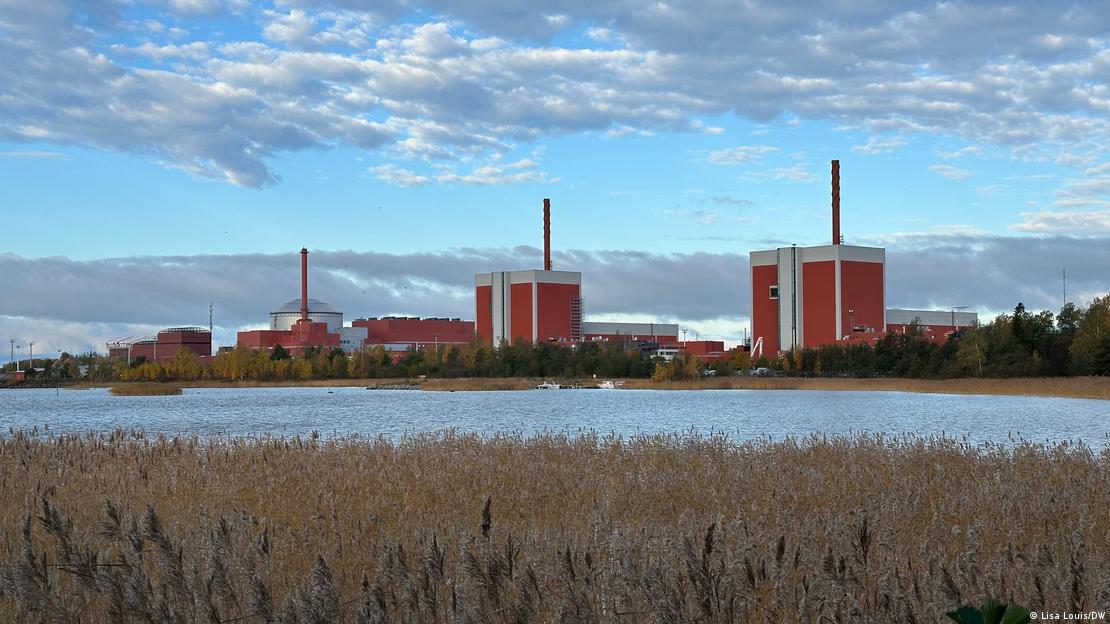
Olkiluoto island on the western coast of Finland used to be just an energy hub for the country bordering Russia. But with the start of Russia's full-scale invasion of Ukraine in February 2022, it became strategically important as Helsinki decided it could no longer rely on Russian energy.
Up until then, the country had been receiving half of its energy imports from the neighboring country, with which it shares a 1,300-kilometer (807-mile) border. They included electricity, oil and natural gas deliveries.
Olkiluoto island on the western coast of Finland used to be just an energy hub for the country bordering Russia. But with the start of Russia's full-scale invasion of Ukraine in February 2022, it became strategically important as Helsinki decided it could no longer rely on Russian energy.
Up until then, the country had been receiving half of its energy imports from the neighboring country, with which it shares a 1,300-kilometer (807-mile) border. They included electricity, oil and natural gas deliveries.
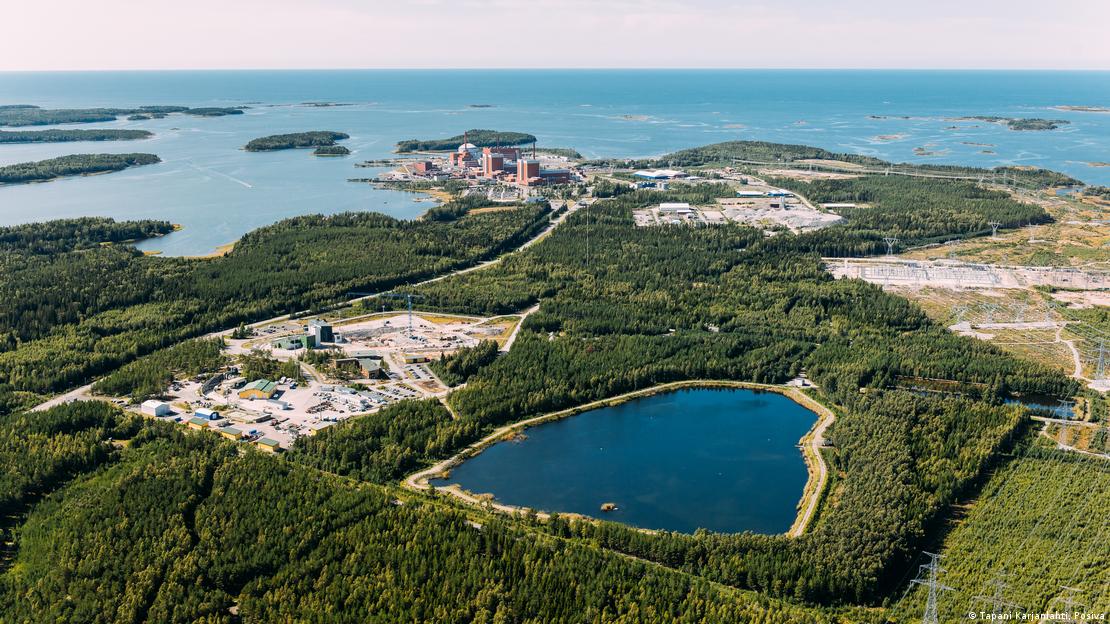
Olkiluoto island has become crucial for ensuring Finland's energy supply
Image: Tapani Karjanlahti, Posiva
"Before 2022, there had been the optimistic hope we had gotten past an era where it's all about enlarging territory and invading sovereign countries and we could live happily in peace having trade," says Sari Multala, Finland's minister of climate and the environment.
"But then, we understood that was not the case and that we had to take care of our own sovereignty, also when it comes to energy. We cannot depend on a hostile partner," she told DW.
Helsinki dropped its formerly neutral stance and announced it would join the Western defense alliance NATO. Moscow cut off electricity supplies to Finland, supposedly because Helsinki refused to pay for them in the Russian currency, the ruble.
Russia's share in Finland's energy import has since gone down to almost zero.
"Before 2022, there had been the optimistic hope we had gotten past an era where it's all about enlarging territory and invading sovereign countries and we could live happily in peace having trade," says Sari Multala, Finland's minister of climate and the environment.
"But then, we understood that was not the case and that we had to take care of our own sovereignty, also when it comes to energy. We cannot depend on a hostile partner," she told DW.
Helsinki dropped its formerly neutral stance and announced it would join the Western defense alliance NATO. Moscow cut off electricity supplies to Finland, supposedly because Helsinki refused to pay for them in the Russian currency, the ruble.
Russia's share in Finland's energy import has since gone down to almost zero.
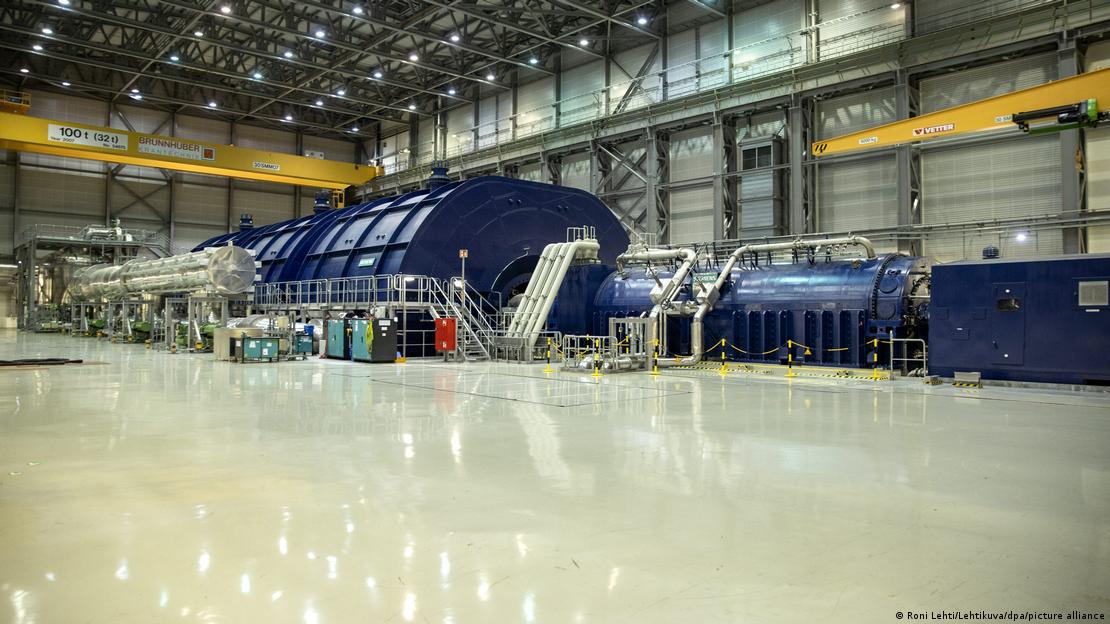
The turbines of the Olkiluoto 3 nuclear reactor were powered up in 2023 and are replacing large parts of the Russian electricity
Image: Roni Lehti/Lehtikuva/dpa/picture alliance
Oil, which made up for 19% of Finland's energy consumption in 2019, is now being imported from Norway, the UK and the US. Natural gas, at the time representing 5% in the country's energy mix, is imported in its liquefied LNG form.
Finland's state-owned company Gasgrid Finland, meanwhile, has commissioned a new floating LNG terminal in the southern port of Inga.
Oil, which made up for 19% of Finland's energy consumption in 2019, is now being imported from Norway, the UK and the US. Natural gas, at the time representing 5% in the country's energy mix, is imported in its liquefied LNG form.
Finland's state-owned company Gasgrid Finland, meanwhile, has commissioned a new floating LNG terminal in the southern port of Inga.
Nuclear energy and renewables are key
Finland's new nuclear reactor, Olkiluoto 3 is one of the biggest in the world with a total capacity of 1,600 mega-watts (MW), and has boosted Finland's nuclear share in electricity production from 28% in 2022 to 39% now.
But that came at a cost. Olkiluoto 3's price tag almost quadrupled to €11 billion ($12.7 billion). Building it took 18 years instead of four as initially planned. The skyrocketing costs had operator TVO cancel plans for a fourth reactor on Olkiluoto island.
"Consumers are benefiting from low electricity prices. And we have created 5,000 direct and indirect jobs," he told DW during a recent press tour of the reactor's premises.
For TVO spokesman Juha Poikola, the huge price tag for Olkiluoto was worthwhile
Image: Lisa Louis/DW
But other electricity sources also contributed to Finland's energy shift, particularly renewables.
In 2024, onshore wind farms made up 24% of the country's electricity production, compared with 14% in 2022.
For Veli-Pekka Tynkkynen, professor at the Finnish Centre for Russian and Eastern European Studies at the University of Helsinki, renewables are the way to go because nuclear, biomass, hydropower and wind energy would make the Finnish model "resilient."
"But it's very expensive to build new nuclear power plants nowadays because of the high safety standards. And we should move away from fossil energy. It's not a good idea to be dependent on autocratic countries — be it Russia, Saudi Arabia or the US," he told DW.
Tynkkynen added, however, that Finland had not managed to achieve complete energy independence from Russia. "Finnish energy company Fortum has tried for the past three years to substitute Russian uranium deliveries, but has not yet been able to do so," he said.
Other European countries have also made a shift
Thijs van de Graf, associate professor for international politics at Ghent University in Belgium and an expert on energy policy, agrees that the right mix is key.
"Most European countries have looked towards other energy sources after the start of Russia's full-scale invasion of Ukraine," he told DW. "The recipe for energy security includes energy efficiency, electrification and renewables."
He added this was particularly the case in countries where there was not as much political appetite for nuclear as in Finland.
According to a May 2025 poll by UK polling institute Verian, 68% of Finns have a positive opinion of nuclear energy, which is why operator TVO wouldn't rule out building additional nuclear reactors.
But other electricity sources also contributed to Finland's energy shift, particularly renewables.
In 2024, onshore wind farms made up 24% of the country's electricity production, compared with 14% in 2022.
For Veli-Pekka Tynkkynen, professor at the Finnish Centre for Russian and Eastern European Studies at the University of Helsinki, renewables are the way to go because nuclear, biomass, hydropower and wind energy would make the Finnish model "resilient."
"But it's very expensive to build new nuclear power plants nowadays because of the high safety standards. And we should move away from fossil energy. It's not a good idea to be dependent on autocratic countries — be it Russia, Saudi Arabia or the US," he told DW.
Tynkkynen added, however, that Finland had not managed to achieve complete energy independence from Russia. "Finnish energy company Fortum has tried for the past three years to substitute Russian uranium deliveries, but has not yet been able to do so," he said.
Other European countries have also made a shift
Thijs van de Graf, associate professor for international politics at Ghent University in Belgium and an expert on energy policy, agrees that the right mix is key.
"Most European countries have looked towards other energy sources after the start of Russia's full-scale invasion of Ukraine," he told DW. "The recipe for energy security includes energy efficiency, electrification and renewables."
He added this was particularly the case in countries where there was not as much political appetite for nuclear as in Finland.
According to a May 2025 poll by UK polling institute Verian, 68% of Finns have a positive opinion of nuclear energy, which is why operator TVO wouldn't rule out building additional nuclear reactors.
Finnish public opinion about the 3 nuclear reactors on Olkiluoto island has changed following Russia's full-scale invasion of Ukraine
Image: Lisa Louis/DW
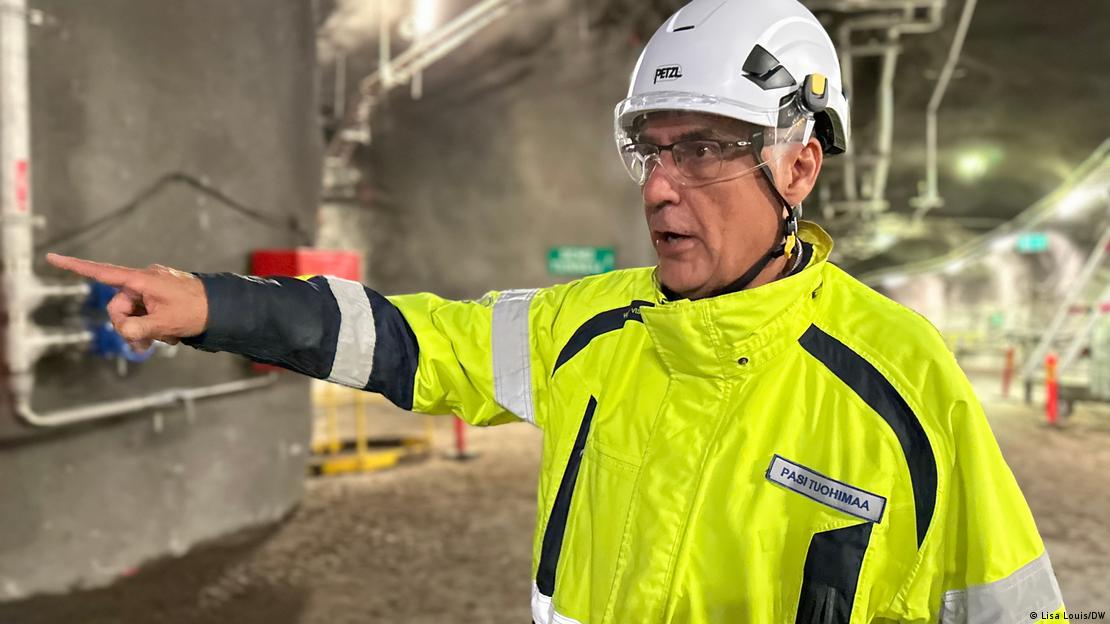
Pasi Tuohimaa is communications manager at Posiva, a company owned by TVO and Fortum and specializing in the final disposal of spent nuclear fuel in the Onkalo storage facility located at the power plant site .
Posiva plays a crucial role in ensuring the safety of nuclear waste management in Finland.
On a recent afternoon, Tuohimaa was leading a group of journalists through the Onkalo project which is to open in the coming months.
Pasi Tuohimaa is communications manager at Posiva, a company owned by TVO and Fortum and specializing in the final disposal of spent nuclear fuel in the Onkalo storage facility located at the power plant site .
Posiva plays a crucial role in ensuring the safety of nuclear waste management in Finland.
On a recent afternoon, Tuohimaa was leading a group of journalists through the Onkalo project which is to open in the coming months.
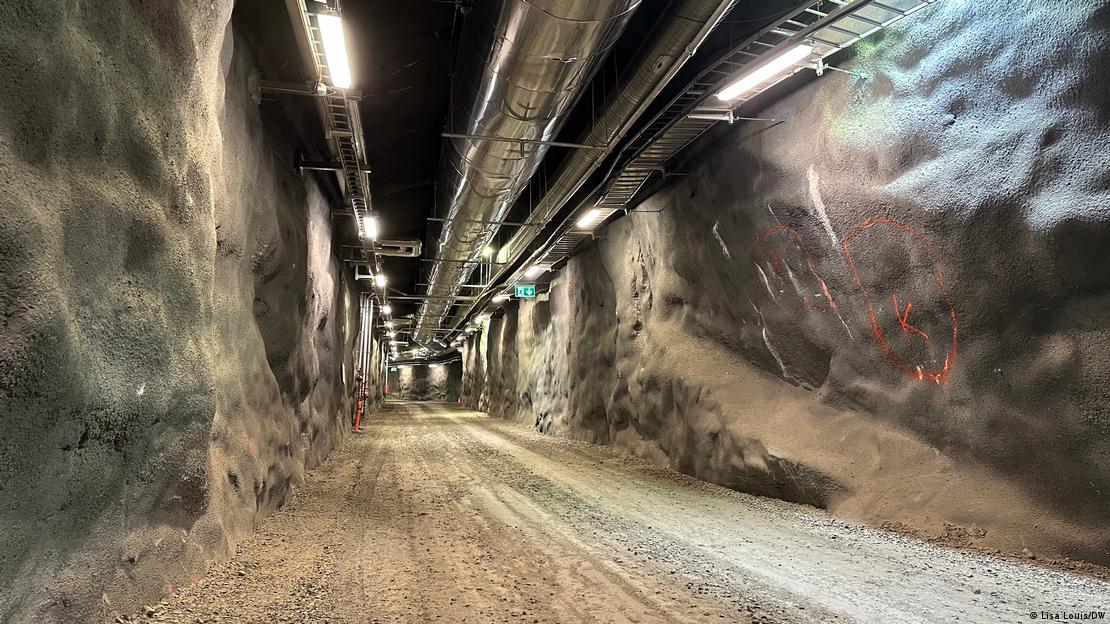
The Onkalo site will be the world's first deep geological repository for spent nuclear fuel
Image: Lisa Louis/DW
The waste of the country's five existing nuclear power plants will be stored there for good in one-ton capsules that are to be stored in chambers in the ground.
Operator Posiva has so far spent between €500 million ($577 million) and €1 billion on the storage facility encompassing 60 kilometers (37.2 miles) of tunnels about 450 meters (1,476 feet) below ground level.
"We have a solution to take care safely of the spent nuclear fuel. Excavating tunnels is not that difficult. Finland is full of bedrock. So there can be other places here and abroad," Tuohima told DW.
The waste of the country's five existing nuclear power plants will be stored there for good in one-ton capsules that are to be stored in chambers in the ground.
Operator Posiva has so far spent between €500 million ($577 million) and €1 billion on the storage facility encompassing 60 kilometers (37.2 miles) of tunnels about 450 meters (1,476 feet) below ground level.
"We have a solution to take care safely of the spent nuclear fuel. Excavating tunnels is not that difficult. Finland is full of bedrock. So there can be other places here and abroad," Tuohima told DW.
Where to put nuclear waste? 07:34
Finland's Climate and Environment Minister Sari Multala says the Nordic country is currently "paving the way for more nuclear power."
Speaking with journalists on the tour of the Posiva site, he said the government was currently "reviewing our nuclear energy legislation to facilitate a faster permitting processes and investigating whether nuclear [power] will need some financial support or risk-sharing mechanisms in the future."
Could wind power be the immediate solution?
But Anni Mikkonen, CEO of industry association Renewables Finland, objects to the current government's pro-nuclear policy arguing that wind farms can be completed much faster.
"There's a really strong project pipeline that you can start building when electricity is needed. We could double onshore capacity within 10 years," she told DW.
She also said that "additional [Finish] power could be used for electric cars or exported to other countries" so that these could also become more independent from Russian energy imports.
Edited by: Uwe Hessler


No comments:
Post a Comment