Copyright Joshua A. Bickel/Copyright 2025 The AP. All rights reserved.
By Jerry Fisayo-Bambi with AP
Published on 15/11/2025 - EURONEWS
Speaking about the effects of climate change in their home countries, activists advocated for youth representation in the UN negotiations.
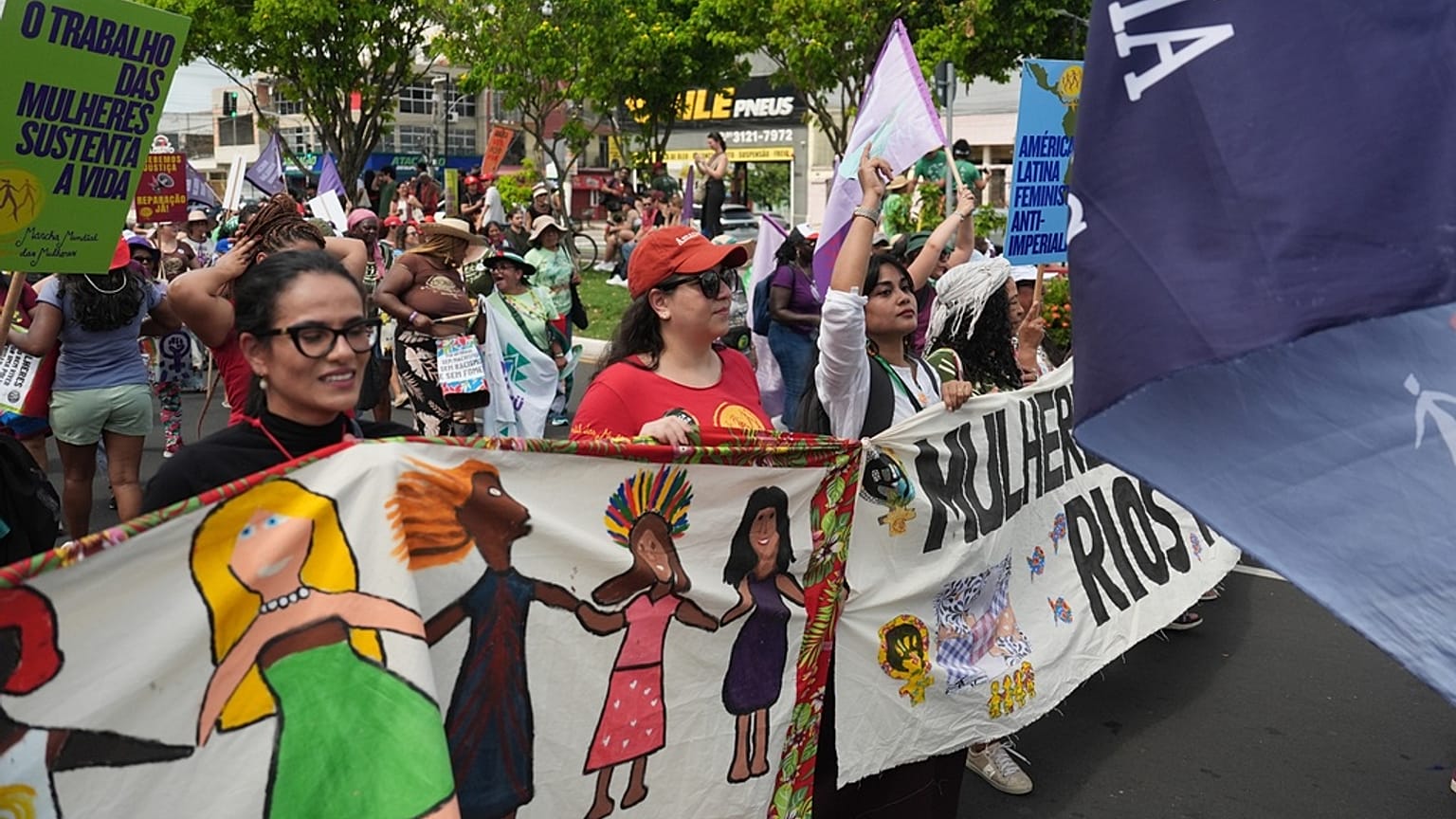
Thousands of protesters took their message again to the gates of the COP30 United Nations climate conference talks in Belem, Brazil, blocking the venue of the climate talks in a peaceful standoff.
Activists, Brazilian youth organisations, and indigenous communities participated in the march to demand action during the crucial UN climate meeting.
Speaking about the effects of climate change in their home countries, activists with the Fridays for Future movement advocated for youth representation in the UN negotiations.
"For us, the youth who are inheritors of the planet, that is very frustrating,” said Rachelle Junsay, with Climate Action Philippines. "That drives us crazy and mad because this is the future that we are talking about.”
"It is about the survival of our species. And yet, the decision-makers sitting at the table today, those in the negotiation panels, and those who are in the blue zones in their air-conditioned rooms are talking about, you know, the people. And yet the actual victims, the actual communities, are not at the table and are not in the conversation.”
Protests at climate talks are first since 2021
It was the first time in three years that protesters had been allowed to demonstrate outside the UN climate talks.
The demonstrations, which have been disrupting the talks, come in a conference that organisers have promoted as empowering and celebrating native peoples.
Earlier this week, protesters twice disrupted the talks by surrounding the venue, including an incident on Tuesday where two security guards suffered minor injuries. Saturday's march was scheduled to stop short of the venue, where a full day of sessions was planned.
Many of the protesters revelled in a freedom to demonstrate more openly in Belem than at recent climate talks held in Azerbaijan, the United Arab Emirates, and Egypt.
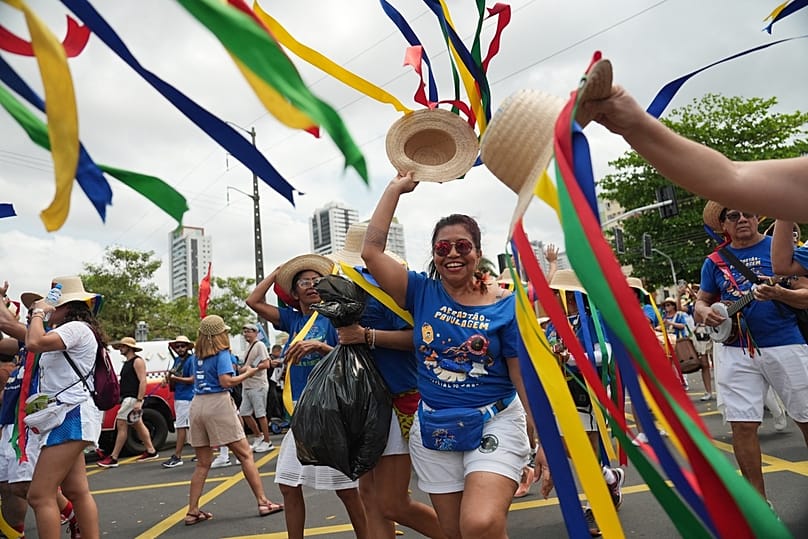
Youth leader Ana Heloisa Alves, 27, said it was the biggest climate march she has been part of. “This is incredible,” she said. “You can’t ignore all these people.”
Alves was at the march to fight for the Tapajos River, which the Brazilian government wants to develop commercially. “The river is for the people,” her group’s signs read.
Pablo Neri, coordinator in the Brazilian state of Pará for the Movimento dos Trabalhadores Rurais Sem Terra, an organization for rural workers, said organisers of the talks should involve more people to reflect a climate movement that is shifting toward popular participation.
The climate talks are scheduled to run through Friday, 21 November, but analysts and some participants have said they don't expect any major new agreements to emerge from the talks, though many are hoping for progress on some past promises, including money to help poor countries adapt to climate change.
The United States, where President Donald Trump has ridiculed climate change as a scam and withdrawn from the landmark 2015 Paris Agreement that sought to limit Earth's warming, is skipping the talks.
Saturday 15 November 2025, by Christian Zeller
At the 30th World Climate Conference, COP30, held in Belém from 10 to 21 November 2025, powerful nations and representatives of large corporations presented their positions on how to respond to the climate crisis. Escalating geopolitical tensions formed the backdrop and complicate the process of reaching agreement. This ‘climate conference’ – like its predecessors – has nothing to do with a transformation away from fossil fuels.
The US government under Trump has withdrawn from the 2015 Paris Climate Agreement. Recently, the US president described ‘climate change’ as a ‘hoax’. New ‘climate targets’ are not on the agenda. By February of this year, most countries had not fulfilled their obligation to set climate targets to be achieved by 2035. Moreover the national climate targets submitted in the previous five-year period were all insufficient. If they had been met, they would have pushed global warming well above two degrees above the pre-industrial global average. The European Union only recently agreed on its new targets after lengthy haggling and is scaling back its previously formulated targets. It wants to reduce emissions by 66.25 to 72.5 per cent by 2035 compared to 1990 levels. In addition, the EU also wants to count investments in emission reductions outside the EU towards its own 2040 emission target. It is postponing the start of the new emissions trading scheme for transport and buildings until 2028. The host country, Brazil, is no better. With its national oil company, Petrobras, it is vigorously pushing ahead with the expansion of oil production.
Adapting to barbarism
The conference in Belém will focus on strategies for adapting to global warming and on indicators for measuring the success of these adaptations. Another key topic is ‘climate finance’. At COP29 in Baku last year, the early industrialised countries agreed to support developing countries with at least 300 billion US dollars annually for climate protection and adaptation. However, there is still disagreement about where the money will come from, where it will go and under what conditions. A key project is the expansion of carbon markets. This pleases the players on the financial markets.
The conference spectacle seems rather cynical in view of the massive changes to the Earth’s climate system caused by the burning of coal, oil and gas. The recently published Lancet Countdown Report reports that millions of people lose their lives every year due to heat, air pollution, the spread of disease and worsening food insecurity. The number of heat-related deaths has risen by 63 per cent since the 1990s, reaching an average of 546,000 deaths per year between 2012 and 2021. The year 2024 was the hottest since records began, with the most vulnerable people (under one year old and over 65) exposed to an average of more than 300 per cent additional heatwave days compared to the annual average between 1986 and 2005. Extreme precipitation events, including flash floods and landslides, as well as droughts, increased over 60 per cent of the Earth’s land area. These climate extremes affect crop yields, disrupt supply chains and threaten food security. Added to this is the increased risk of transmission of deadly infectious diseases and air pollution caused by fossil fuels. In short, the rule of capital is forcing humanity into barbarism.
Emissions continue to rise
Despite these alarming findings, there is no sign of a reversal in the trend of global greenhouse gas emissions. According to the Emission Gap Report published in early November, total greenhouse gas emissions (i.e. CO2, methane, nitrous oxide, fluorinated gases and land use change) rose by 2.3 per cent worldwide in 2024 to 53.7 gigatonnes of CO2 equivalents (up 1.6 per cent in the previous year). This increase is roughly equivalent to the annual increase in emissions in the 2010s, but is four times higher than in the 2000s. According to the Global Carbon Project, CO2 emissions alone, including land use changes, will rise by 1.1 per cent this year to a record high of 42.2 gigatonnes of CO2. In the EU and the US, CO2 emissions are actually increasing again, contrary to the long-term trend. The massive growth seen in China and India to date is slowing down.
The fossil fuel counter-offensive that I analysed over two years ago has prevailed. The illusions of green capitalism have now vanished. COP28 in Dubai two years ago annointed the fossil fuel backlash (see ak 699). The development shows that there is no climate-relevant energy transition; rather, renewable energies are being added to the fossil fuel base of the capitalist economy.
According to Energy Outlook 2025, global energy demand rose by an average of 1.3 per cent per year from 2010 to 2023, but by more than two per cent in 2024. Energy intensity, the measure of energy consumption in relation to economic output, fell by an average of around two per cent per year between 2010 and 2019. In 2024, it fell by only 1.1 per cent. Measures to increase energy efficiency are running out of steam. However, global electricity demand increased by 4.3 per cent in 2024, far more than in previous years. The global economy thus became more electricity-intensive. Yet fossil fuels continued to account for 80 per cent of primary energy consumption. Even in 2024, investment in fossil fuels was higher than investment in renewable energies.
The rapid increase in the use of artificial intelligence and the construction of huge data centres are partly responsible for the huge increase in electricity consumption. They already account for 1.5 per cent of global electricity consumption. In Europe, the figure is three per cent, and in Ireland as high as 20 per cent. It should be noted that data centres require a constant supply of electricity. This argues against the unpredictable supply patterns of renewables as long as there is no comprehensive grid and storage infrastructure in place.
Oil consumption will rise
For the first time since 2019, the International Energy Agency’s (IEA) World Energy Outlook 2025 once again includes a scenario that extrapolates current developments and policies and models energy consumption up to 2050 on this basis. In doing so, it departs from the sometimes optimistic portrayals of an energy transition in recent years. This ‘Current Policies Scenario’ (CPS) depicts development trends much more realistically than the ‘Stated Policies Scenario’ (with an oil peak around 2030) or the normative climate neutrality scenario by 2050, which is completely illusory under capitalist conditions. Similar scenarios to the CPS one from oil companies and OPEC have unfortunately proven to be quite realistic in the past.
Global energy consumption in the CPS will increase by about 1.3 per cent per year over the next ten years, similar to the average over the last ten years. Demand for oil will rise to 113 million barrels per day by 2050, mainly due to increased use in emerging and developing countries for road transport, petrochemical feedstocks and aviation. Global demand for natural gas will rise to 5,600 billion cubic metres by 2050. The United States will remain the world’s largest oil and gas producer until 2050. However, OPEC+ oil production in 2050 will be 15 per cent higher than ever before in history.
Electricity demand is rising in all countries and regions. Solar photovoltaics (PV) and wind energy are cost-effective in many regions, but their introduction faces integration challenges that are slowing further growth: annual capacity growth for solar PV will average 540 gigawatts until 2035, roughly matching the growth seen in 2024.
Coal will remain the largest single source of global electricity generation over the next decade. The People’s Republic of China alone, now admired by uncritical contemporaries as the last hope of an energy transition after the faded illusions of green modernisation in Europe, is currently building more coal-fired power plants than it has in ten years. Even in the emerging imperialist power of China, energy security is more important than ecological restructuring. The construction of new nuclear power plants will accelerate worldwide in the 2030s. This scenario will result in a warming of around three degrees by the end of the century.
Strategic errors of the left
However, the persistence of fossil capital is not only the result of the rise of national conservative and fascist forces. Rather, the capitalist mode of production is completely interwoven with fossil fuels. Without the advantages of fossil fuels – easy storage, transportability, high energy density and high energy yield – the capitalist accumulation machinery would lose its central fuel. Investments in fossil fuels are many times more profitable than investments in renewables. Large financial companies have long since abandoned their grandiose announcements about their ‘green’ investment strategies. The so-called Net-Zero Banking Alliance of large financial institutions has dissolved. Green finance is languishing in obscurity. Furthermore, it is often forgotten that the infrastructure for renewable energies is largely built using fossil fuels. The CO2 emissions associated with this energy demand (around 195 GtCO2) already exceed the remaining budget (130 GtCO2) for meeting the so-called 1.5°C target. These structural economic and energy realities, as well as the requirements of a genuine energy transition, make it clear that there can be no non-fossil capitalism. The compulsion to accumulate capital cannot be satisfied on the basis of renewable energies. A capitalist energy transition is impossible.
Developments in recent years show that the discourse on the competition between a fossil-reactionary and a green-modernist hegemony project, which is particularly prevalent among critical and often Gramsci-oriented social scientists and on the left of the political spectrum, is a gigantic fallacy. The protagonists of this interpretation have examined the political discourses. This is interesting, but it does not help to understand the material and economic dynamics and constraints of the current phase of capitalism.
This discourse on the green-modernist hegemony project has contributed to two fatal strategic errors on the part of significant sections of the climate movement and the left. First, they underestimated the fossil fuel dependency of capitalism and thus lost sight of the power of fossil fuel capital – the main opponent. Second, they considered green modernisation to be probable and positioned themselves primarily as a left-wing socio-ecological corrective force to this modernisation project, which ultimately lacks material foundations. As long as there is not even the slightest success in undermining the power of fossil capital and the financial capital closely linked to it, any discourse on a ‘socio-ecological transformation’ remains hollow.
Climate conferences do not negotiate an energy transition. In fact they are about which powers and capital groups can portray and enforce their interests in the expansion of renewable energies on a fossil fuel basis – but under rapidly changing geopolitical and geo-economic conditions – as ‘climate-friendly’. Rather than critically monitoring one diplomatic initiative or another, it is more important to consider how the power of fossil fuel companies and their political representatives can truly be challenged.
To summarize our key points:
Capitalist rule is forcing humanity into barbarism.
Coal will remain the largest single source of global electricity generation for the next ten years.
Without the advantages of fossil fuels, the capitalist accumulation machine would lose a key fuel.
There can therefore be no non-fossil capitalism. The compulsion to accumulate cannot be satisfied on the basis of renewable energies.
15 November 2025
Translated by Anti*Capitalist Resistance from analyse & kritik.
Attached documentscop30-the-shift-to-green-capitalism-fails-to-materialise_a9258.pdf (PDF - 919 KiB)
Christian Zeller is an Austrian Eco-activist and socialist. He is a professor at the University of Salzburg and author of Kreilinger, Verena; Wolf, Winfried und Zeller, Christian (2020): Corona, Krise, Kapital. Plädoyer für eine solidarische Alternative in Zeiten der Pandemie. Köln: Papyrossa, 277 S. and Zeller, Christian (2020): Revolution für das Klima. Warum wir eine ökosozialistische Alternative brauchen. München: Oekom Verlag, 248 S.
International Viewpoint is published under the responsibility of the Bureau of the Fourth International. Signed articles do not necessarily reflect editorial policy. Articles can be reprinted with acknowledgement, and a live link if possible.
Illegal logging, gold mining, and drug trafficking: Organized crime in Brazil is sabotaging efforts to combat global warming. This issue has long been overlooked at climate conferences. Is that finally about to change?

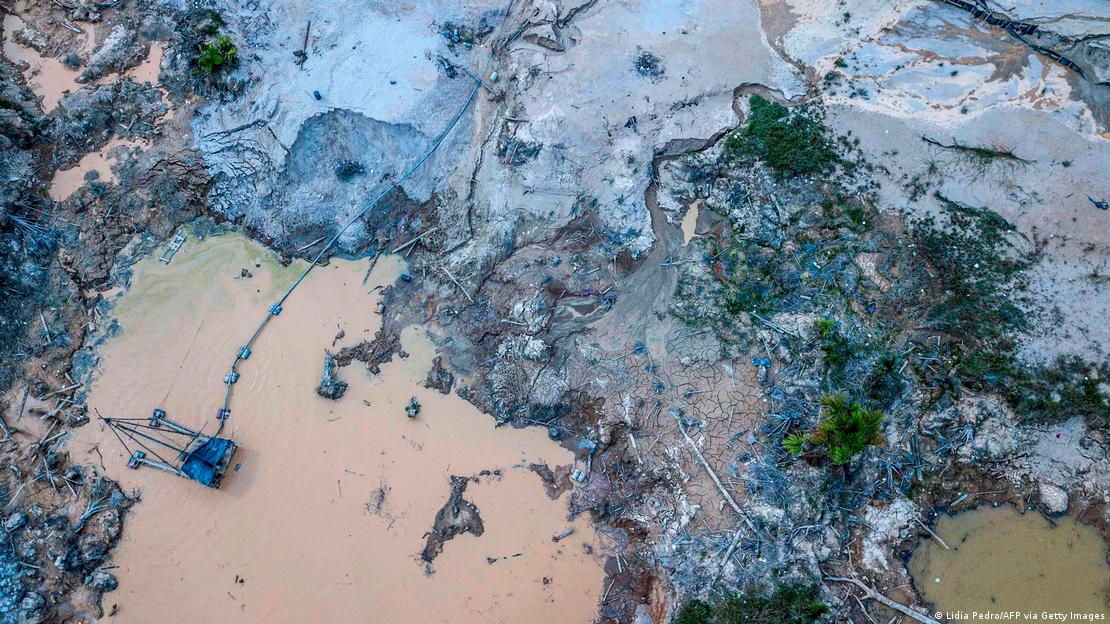
As the World Climate Conference, COP30, is underway in Belem, Brazil, the disastrous consequences of environmental crimes are visible across the Amazon. This highlights an oft-overlooked fact in the fight to combat a warming world: Tackling organized crime is also key to safeguarding the climate.
In the Amazon, criminal groups like the Comando Vermelho (CV), or Red Command in English, control the illegal trade in gold, rainforest wood and drugs.
"The CV is the most important organization involved in illegal mining and also illegal deforestation and drug trafficking," explained Rodrigo Ghiringhelli, professor at the Pontifical Catholic University (PUC) of Rio Grande do Sul and member of the Brazilian Forum for Public Security (FBSP).
The rainforest as a legal vacuum
A study published in October by the Brazilian intelligence service Abin and the Forum for Public Security concludes that drug trafficking, illegal gold mining, and human trafficking pose the greatest threats to the population and environment in the region.
The study highlights how the cartels' lucrative business is abetted by several factors. "These include the rising price of gold, the low level of government presence in the Amazon region, and the permeability of the borders with neighboring countries, which include Brazil, Colombia, Peru, Venezuela, Bolivia, Ecuador, Suriname and Guyana."
The geographic spread of organized crime
Back in December 2024, the Forum for Public Safety pointed out how cartel power was on the rise in its study,Violence in the Amazon.
"The scenario is worrying," it said. "The struggle for control of territories has caused murders and other crimes, as well as irreparable damage."
"Control of legal and illegal economic activities in the Amazon region is no longer just a public safety issue, but also an obstacle to sustainable development."

According to the FBSP, the spread of criminal gangs from southeastern Brazil and their alliances with local groups is progressing at an "astonishing rate." In the Amazon, criminal factions are present in at least 260 municipalities, half of which are controlled by the CV.
Energy suppliers under threat
The Amazon city of Belem is also largely controlled by the criminal group CV. The implications of this are revealed in a recent investigation by the investigative website Intercept_Brasil. According to the report, shortly before the start of COP30, the CV ordered the suspension of expansion work on a substation that supplies the city with electricity every day from 3 p.m. onwards.
According to Intercept_Brasil, Minister of Mines and Energy, Alexandre Silveira, subsequently called for security measures to be stepped up.
This is not the first time something like this has happened. According to media reports, the local energy company, Belem Transmissora de Energia, has been the target of threats and intimidation since May 2025.
Protection money and confidentiality
In some neighborhoods in Belem, residents have to abide by the rules of the "bosses," a local told Brazilian daily newspaper Folha de S. Paulo. Many business owners pay protection money while people have to obey orders circulated via WhatsApp and adhere to a strict "code of silence."
After the massacre in a favela in Rio de Janeiro on October 29, many people in Belem feared retaliation. During the police raid against the Comando Vermelho, over 120 people were killed, many of them with connections to the criminal gang.
A few days after the massacre, President Luiz Inacio Lula da Silva deployed the armed forces during the climate conference in Belem. The military "Operation to Guarantee Law and Order" (Garantia da Lei e da Ordem, GLO) was also used at other major events such as the G20 summit in November 2024 and the BRICS summit in July this year, both of which took place in Rio.
How the CV pushed northward in Brazil
The rapid spread of the Comando Vermelho from Rio to northern Brazil is indirectly linked to major sporting events. In order to curb crime during the World Cup and the Olympic and Paralympic Games in 2014 and 2016, a new security concept was introduced in Rio: the so-called Peace Police (UPP, Unidade de policia pacificadora).
The UPPs are widely seen as a success. The permanent presence of the police in the favelas led to criminal factions leaving the neighborhoods, state institutions such as schools and kindergartens functioning again, and the population no longer being terrorized by rival gangs.
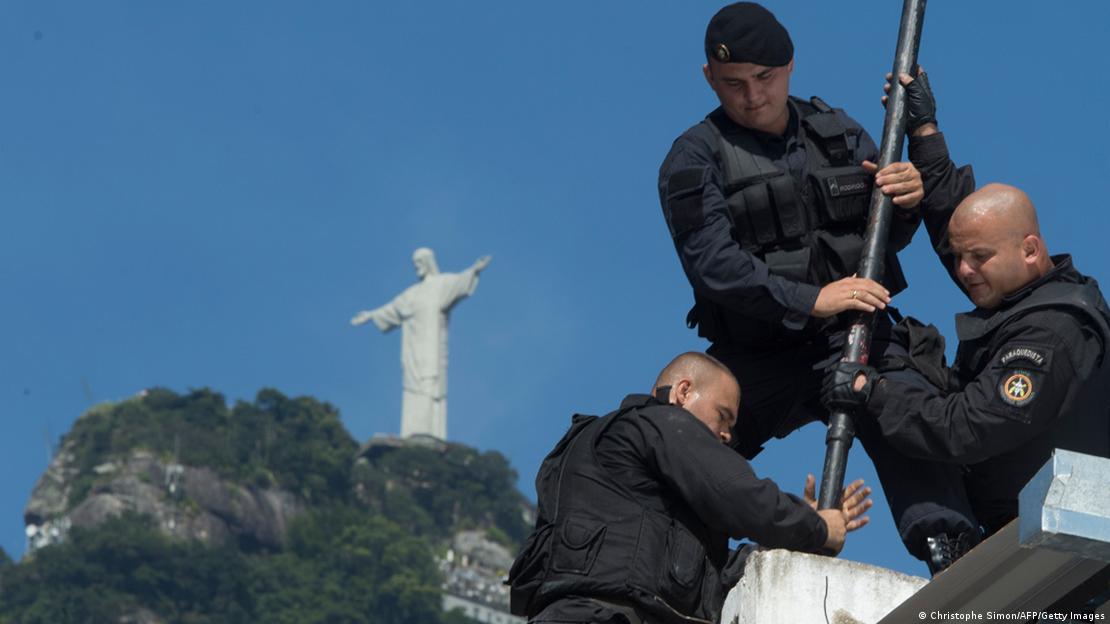
However, according to the Brazilian intelligence service Abin, this successful displacement led to drug gangs moving to other regions of the country.
"When the leaders were forced to leave Rio, they looked for other places where they could operate," Abin coordinator Pedro de Souza Mesquita told the Brazilian press on November 7. "This process began in 2013 and reached its peak in 2024."
Prisoners established the CV while behind bars
The CV was founded over 40 years ago, during the Brazilian military dictatorship, which lasted from 1964 to 1989.
It began when political prisoners and common criminals joined forces in the notorious Candido Mendes prison on an island near Rio de Janeiro. The aim was to prevent crime among inmates and improve prison conditions.
In the meantime, the group has risen to become one of the most powerful criminal syndicates in Brazil and throughout Latin America.
After the massacre in Rio in October, political pressure has increased: on November 4, Brazil's Congress set up a parliamentary commission of inquiry to uncover the network of organized crime and its infiltration into political and social institutions.
According to lawyer Aiala Coutovon of the State University of Para, the CV already has all the characteristics of an international drug cartel: "They control the transport routes of the international cocaine trade and have diversified their illegal activities."
This article was originally published in German.

Astrid Prange de Oliveira DW editor with expertise in Brazil, globalization and religion
By AFP
November 15, 2025

A Munduruku Indigenous man of the Ipereg Ayu movement smokes during a protest outside the COP30 UN Climate Change Conference in Belem - © AFP Mauro PIMENTEL
Facundo Fernández Barrio and Issam Ahmed
Thousands of people are expected to march through the streets of Belem on Saturday, demanding “real solutions” to human-caused global warming as the Brazilian city hosts this year’s UN climate talks.
Branded the “Great People’s March” by organizers, the rally comes at the halfway point of contentious COP30 negotiations and follows two Indigenous-led protests that disrupted proceedings earlier in the week.
The previous three conferences took place in Azerbaijan, the United Arab Emirates and Egypt, where activists feared being arrested.
Marchers — including Indigenous peoples, fishers, youth, and workers — will gather at a local market at 7:30 am (1030 GMT) and walk roughly 4.5 kilometers (2.8 miles), stopping a few blocks short of the COP30 site.
Their demands include “reparations” for damage caused by corporations and governments, especially to marginalized communities.
“Historically, people build the real solutions, so the march aims to denounce the climate crisis but also to present our proposals to the world,” Iury Paulino, part of the march’s coordination team and a member of the Movement of People Affected by Dams, told AFP.
Although the march route does not reach the COP venue itself, security is likely to remain on high alert.
On Tuesday, Indigenous protesters forced their way into the Parque da Cidade — the COP30 compound built on the site of a former airport — clashing with security personnel, some of whom sustained minor injuries.
Then on Friday, dozens of Indigenous protesters blocked the entrance for roughly two hours to spotlight their struggles in the Amazon, prompting high-level interventions to defuse the situation.
– Love letters and therapy –
Inside the venue, talks are delicately poised.
At the close of the first week of negotiations, the Brazilian presidency of COP30 is expected to unveil its strategy on Saturday for reconciling countries’ demands.
The top issues include how to address weak climate goals and how to improve financial flows from rich to poor countries to build resilience against a warming world and transition to low-emission economies.
So-called trade barriers, such as Europe’s carbon border tax, have emerged as a key contention, as has the issue of whether to set timelines and targets for the transition away from fossils.
Several participants believe that negotiators are holding firm to their positions while awaiting the arrival of their ministers next week, who must then reach an agreement by the end of the conference on November 21.
An African negotiator hoped the presidency would take the lead, “otherwise this could turn out to be an empty COP,” he said, contrasting with the optimism expressed by others.
The “parties are here to get a positive outcome of this COP,” German State Secretary Jochen Flasbarth said.
Another Western diplomat said the Brazilian presidency had urged countries to treat their consultations as “therapy sessions” — a safe space to air concerns.
Delegations were also encouraged to send private submissions describing how they felt the talks were progressing, which the Brazilians referred to as “love letters.”
“These negotiations, they are like a roller coaster sometimes, you know, they are up, sometimes they are down,” summarized Brazil’s chief negotiator, Liliam Chagas.
By AFP
November 14, 2025

US Senator Sheldon Whitehouse, Democrat from Rhode Island, speaks during an interview on Capitol Hill on July 8, 2025 in Washington, DC - Copyright AFP/File Oliver Contreras
Issam AHMED
Senator Sheldon Whitehouse, one of only a handful of senior US political leaders attending this year’s UN climate summit, told AFP Friday that President Donald Trump’s America is “deliberately losing” the clean tech race to China.
The 70-year-old lawmaker said he had come to Belem, Brazil, to underline that Trump’s aggressively pro-fossil-fuel policies do “not represent the American people” — and that the United States is forfeiting a vast economic opportunity.
“Right now, we are deliberately losing our competition on solar, on wind, on battery storage, on electric vehicles and all the support technologies that go into that,” he said in an interview.
“It is a huge self-administered blow that Trump is doing, entirely to pay back his fossil fuel donors.”
Whitehouse said that as he arrived in the Amazonian city in the early hours of the morning, he passed numerous Chinese electric vehicle dealerships — a sight that hammered home his message about America falling behind.
The Trump administration declined to send an official delegation to the COP30 summit, leaving only a few prominent Democrats to attend in an unofficial capacity, including California Governor and presumed 2028 presidential-candidate Gavin Newsom.
“The Trump administration does not represent the American people on climate,” said the Rhode Island senator, known for his long-running “Time to Wake Up” speeches on global warming in Congress.
“They are doing political work for the fossil fuel industry and the public very much supports climate action,” he continued, citing a slew of polls to back his point.
For Whitehouse, one of the few remaining pathways to climate safety lies in carbon pricing, which he argued is essential to spark the innovation needed to slash emissions.
“If it’s free to pollute, there’s really no pathway to safety,” he said, reiterating his support for Europe’s carbon border tax — a key point of contention with developing countries at COP30.
Trump, who received hundreds of millions of dollars from oil and gas giants during his presidential campaign, pulled the US out of the Paris climate agreement for a second time on the day he returned to office.
Trump and Republican lawmakers have rolled back clean-energy tax credits and scrapped incentives for electric vehicles, prompting General Motors to scale back production.
Whitehouse’s team said he will meet with “heads of state, lawmakers, private sector leaders, environmental champions, and civil society leaders” during his visit.
But he cannot take part in negotiations on the COP’s outcome.
Attending the conference itself was made more complicated by resistance from the State Department, he said, which forced him to get his badge through a nonprofit organization.
“I’ve never seen the State Department be completely unwilling to support members of Congress traveling on an official Congressional Delegation, even to the point of refusing to help us get badges.”
UN regulator says shipping still wants to decarbonize — despite US threats
By AFP
November 14, 2025

A woman walks past a banner with the COP30 UN Climate Change Conference logo outside the Hangar Convention and Exhibition Center in Belem, Para State, Brazil on November 5, 2025 - Copyright AFP Pablo PORCIUNCULA
Nick Perry
Threats, intimidation, harassment — the tactics deployed by US negotiators to stall a global deal on shipping pollution last month sent chills through climate diplomats ahead of the COP30 summit.
Brazil was confident global unity would prevail at November’s climate talks, but the exceptionally undiplomatic scenes at the International Maritime Organization (IMO), the UN shipping regulator, presented an uglier possibility.
Even with the United States skipping the climate summit, President Luiz Inacio Lula da Silva called for good faith negotiations at COP30 and a rejection of the “pressure and threats” witnessed at the IMO.
Washington’s conduct — threatening sanctions, visa freezes and port levies on nations that didn’t vote its way — was not “typical” of the IMO, Secretary-General Arsenio Dominguez told AFP.

International Maritime Organization (IMO) Secretary-General Arsenio Dominguez says the strongarm negotiation tactics at the October 2025 meeting was not ‘typical’ of the shipping regulator – Copyright AFP/File Adrian Dennis
AFP interviewed Dominguez, a Panamanian nearly halfway through his four-year term as IMO chief, at COP30 in Belem. This interview has been edited for length and clarity.
Q: The shipping carbon price was expected to be approved until US officials threatened retaliation against nations to get the vote delayed. Is this normal conduct at the IMO?
A: “In my 28 years I have never experienced that kind of meeting at the IMO. It was not a typical IMO meeting. Geopolitical situations around the world right now are different to where they were in the past. We all know that.
“But for me, the task is to keep the momentum, maintain the approach, and whenever we come back to the negotiations in future, I call on everyone to do it in the normal spirit of compromise and cooperation that we carry out at IMO.”
Q: How can the IMO’s 176 member states rebuild trust after this?
A: “I can tell you that multilateralism is very much alive at IMO. And that’s what I told everyone — not to judge the organization, or come too quickly to conclusions, from the outcome of one specific topic in one specific meeting.
“For us, we need to learn from it. I am very much in support of multilateralism. We have had conversations and discussions about how to deal with geopolitical aspects.”
Q: US President Donald Trump called the shipping emissions deal a “scam” and pressure from Washington clearly influenced its delay. Is the scheme dead?
A: “The negotiations continue, and they are ongoing. It is by no means a done deal. The process will continue ahead.
“It is important to take their comments and concerns on board, and have further bilateral and multilateral conversations ahead of the next session. They may have proposals to put on the table for us to consider as well. And that’s how we make progress.
“I work with all countries, and all governments, at any given time. My job is to listen to what everybody is saying and see how we can accommodate and find those common areas that might allow us to make progress.”
Q: Is the industry still committed to decarbonizing?
A: “Our goal — that we all agree at IMO back in 2023 — is to decarbonize the sector by around 2050. And we all maintain that goal, regardless of the state of play right now. We continue to make progress… and I am convinced actually that the organization is serious about decarbonizing by around 2050.”
Issued on: 15/11/2025 - FRANCE24
As countries gather in Brazil for the COP 30 climate change conference, FRANCE 24 travels to East Timor, where global warming is wreaking havoc on the fishing industry. The isolated island nation and its 1.4 million people face coastal erosion, rising sea levels and dwindling marine resources. In response, local people are using imaginative methods to tackle overfishing.

No comments:
Post a Comment