COMMENT: The realignment marking Bangladesh's political battlefield
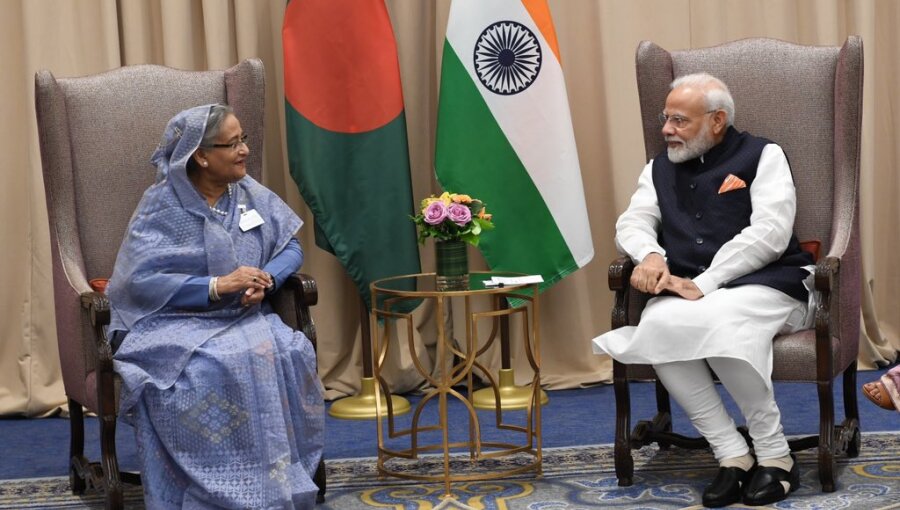
Bangladesh’s Chief Election Commissioner has announced February 12 2026 as the date for the country’s upcoming polls. The polls will see elected representatives take over office from the interim government which has ruled the country ever since the ousting of former Prime Minister Sheikh Hasina in August 2024.
The elections are shaping up to be a contest fundamentally different from what the nation has experienced in several decades. Where once a bifurcated system pitted the now outlawed Awami League of Hasina against the Bangladesh Nationalist Party(BNP) in a predictable cycle of power, the country now confronts a transformed political ecosystem defined by three competing blocs, fractured alliances, and a population clearly signaling that familiar power arrangements are no longer acceptable.
The most consequential shift revolves around public perception of the interim government. According to a report by The Print citing an assessment by US based think tank International Republican Institute(IRI), approval ratings hovering near the 70% mark for the caretaker administration, a metric that fundamentally challenges the old political narrative in ways that should unsettle traditional power brokers.
This level of institutional confidence represents a dramatic departure from the cynicism that had calcified in foreign sponsored coup narratives spun by Awami League, suggesting that Bangladeshi voters genuinely perceive the interim arrangement as representing something distinct from the oligarchic contestation that preceded it. The approval trajectory reveals something more profound than mere satisfaction with day to day governance.
According to more granular numbers in the IRI report, 53% of respondents believe the country is functioning adequately across multiple dimensions. The trend is a reversal from the pervasive pessimism that had settled across the nation ever since the disruption in the garment industry which is a major source of employment in the country, due to the COVID 19 pandemic in 2020.
Household finances have reportedly improved for segments of the population, and access to essential goods and sources of income to afford them has become more reliable between September 2024 and December 2025. This material improvement, however modest in absolute terms, carries significant psychological weight in an electorate that had experienced years of perceived stagnation, graft by the government and deteriorating institutional performance.
The diminishment of the Awami League presents perhaps the starkest illustration of the realignment. Support for the party that governed for much of the past two decades has reportedly collapsed into single digits, with only marginal segments expressing even tentative backing. The once dominant machinery that orchestrated national politics has splintered beyond repair, and the party's leadership appears trapped in a narrative loop that increasingly disconnects from observable reality.
However, this does not mean that the Awami League has no way to make its presence felt as evident from several violent incidents, including grenade attacks and explosions, both before and after a death sentence was announced against Hasina. That sentence came in a case related to the use of excessive force during the 2024 uprising, which toppled her regime and forced her into exile in India, where she has remained ever since.
Awami League's main rival, the BNP has emerged as the primary beneficiary, with polling suggesting it commands roughly one third of the electorate's preference. The BNP's position reflects a vote block shift for most people away from Awami League, as it is the only other major non-ilsalmist political affiliation in Bangladesh traditionally.
Yet the most analytically interesting development concerns the Jamaat-e-Islami, which has accumulated support at levels that place it firmly as a genuine contender rather than a marginal player.
The Islamist party's capacity to consolidate support approaching 30% indicates that voters have genuinely fractured away from the old AL-BNP binary that had constrained political competition for decades, and that a good part of the Bangladeshi populace is now ready to endorse certain radical elements. The coalition architecture now taking shape accelerates this realignment.
The announced alliance between the National Citizens Party(NCP), a political formation that has emerged from the violent student led protests in 2024, and an offshoot of Jamaat-e-Islami signals that the boundaries between previously incompatible constituencies are becoming permeable. The NCP itself emerged from Students Against Discrimination(SAD), the main group of protesters in the uprising against Hasina's administration.
That this student-led formation is now aligning with an Islamist party represents a fascinating contradiction in ideological terms, yet it mirrors the 1979 anti-monarchy revolution in Iran.
As in Iran in 1979, more moderate and ideologically distinct groups may form temporary alliances with a theocratically inclined Islamist entity that could ultimately take power and then persecute those same moderates, despite earlier alignment under the banner of shared objectives. However the fragmentation within Jamaat compounds the dynamics further.
The emergence of a separate Jamaat-affiliated faction willing to partner with student-movement-rooted formations indicates that the traditionally monolithic Islamist bloc has internally differentiated. This internal fracturing, while not yet splitting the party apparatus formally, reveals genuine disagreement about coalition strategy and electoral partnerships.
Such divisions within what previously appeared as unified blocs will inevitably create unpredictability in final electoral outcomes and coalition negotiations in the post election period. Public sentiment regarding the electoral timeline itself merits careful attention.
According to the IRI report, 72% of respondents are calling for elections to proceed without delay, while 41% explicitly demand immediate electoral contests. This is not an electorate content with extended caretaker administration or drawn out transition timelines.
The mandate is decidedly for rapid democratic restoration, and any perceived deviation from this expectation risks undermining the institutional legitimacy that the interim government has carefully cultivated. The hierarchies of institutional trust that structure public consciousness also deserve analysis.
Citizens accord substantial confidence to the military, viewing it as a stabilising force rather than a potential authoritarian instrument. The student movement retains deep moral authority as the civic catalyst that challenged alleged despotism.
Media institutions, despite their own institutional vulnerabilities, occupy positions of relative trust. Conversely, law enforcement agencies, the formal election apparatus, and various militant formations occupy the basement levels of public confidence, burdened by reputational debts accumulated through years of perceived malfeasance and politicized operations.
Yet beneath the apparent optimism lurks a darker current. Citizens simultaneously identify corruption, personal insecurity, political instability, commodity price shocks, and employment crises as their preoccupying anxieties.
These are not ephemeral frustrations, they are structural grievances that propelled the nation toward collision with entrenched power arrangements in the first place. Unless the next government demonstrates mate

No comments:
Post a Comment