Opinion
You can't deal your way to peace on earth. Trump should know that by now.
(RNS) — Trump claims he's a peacemaker. The death toll tells a different story.
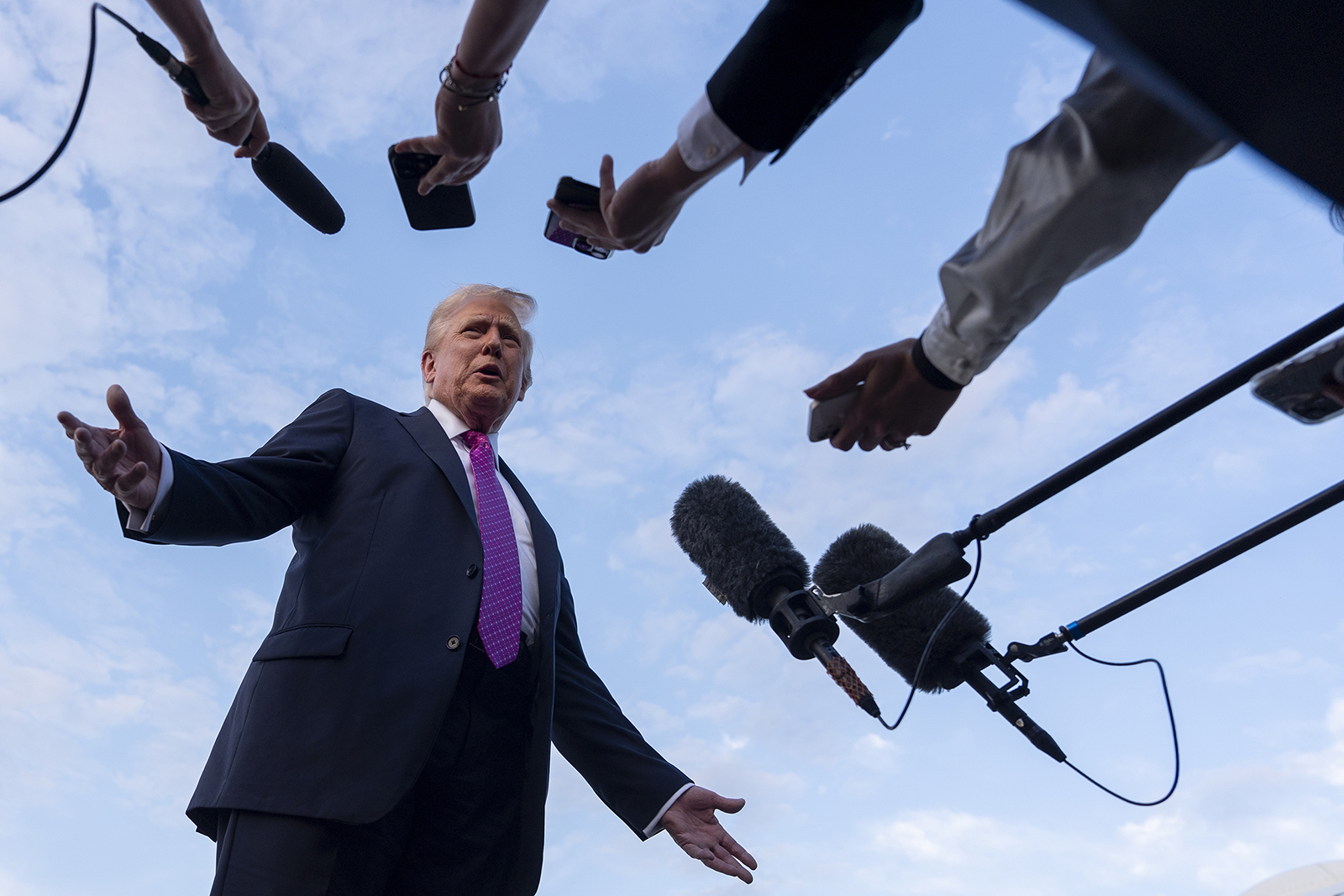
President Donald Trump speaks with reporters before he departs on Air Force One at Morristown Airport, Sunday, Sept. 14, 2025, in Morristown, N.J. (AP Photo/Alex Brandon)
Bridget Moix
December 15, 2025
RNS
(RNS) — In the garden outside our office on Capitol Hill sits a simple plaque that reads: “War is not the answer. Peace is possible.” As a Quaker peace lobbyist with the Friends Committee on National Legislation (FCNL), those two short sentences are something of a spiritual and professional mantra for me.
For over 80 years, FCNL has advocated with Congress to not only prevent wars, but also to actively pursue peace through diplomacy and policies that address the root causes of conflict in the U.S. and around the world.
But looking at that plaque recently, I felt my faith being tested as I wondered, “Is peace really possible? And can the U.S. government really play a positive role in building it?”
President Trump often declares that he has already helped end multiple wars and is a great peacemaker, deserving of the Nobel Peace Prize. The facts on the ground tell a different story.
This past year, conflict continued to escalate worldwide. The International Institute for Strategic Studies (IISS), which tracks global data annually on armed conflicts, reports that nearly 240,000 people were killed in violent events between July 2024 and June 2025. Civilian deaths rose by 40%, with the most violent wars occurring in Ukraine and Palestine.
The data represents a devastating toll on individual lives and our collective humanity. As a person of faith, I believe every life is sacred. War not only violates our human dignity — it defies the divine spark that lives in each of us. Peacemaking is sacred work.
We can and should appreciate some of the administration’s diplomatic efforts to end wars. Trump’s 20-point Gaza Plan was long overdue, and every pause in fighting saves lives. But reality for Palestinians in Gaza and the West Bank still very much resembles an active war.
Israeli forces occupy large parts of Gaza, while bombing of civilian targets continues. In the West Bank, settler violence against Palestinian families is rampant, and Israeli military offensives are escalating. Aid access remains significantly lower than agreed upon. Even if the fighting ceases, the road to a just and lasting peace for all people in the Middle East will require years of serious diplomacy, accountability, peacebuilding and development.
If the U.S. really wants to end the genocide in Gaza and prevent additional violence from spreading across the region, Congress and the White House should ensure a massive, free-flowing surge of humanitarian aid, end offensive weapons sales to Israel, hold the Netanyahu government accountable for its war crimes and support a serious peace process led by those most impacted and inclusive of all people in the region. One immediate step Congress could take would be to pass the Block the Bombs Act (H.R. 3565), which already has 58 cosponsors in the House.
The prospects for peace in Ukraine also remain elusive despite high-level diplomatic engagement by the White House. The Trump administration continues to push a plan that would do little to bring long-term peace or address the root causes of the war, while sidelining European partners and Ukraine itself. As in much of President Trump’s international engagements, the goal of his Russia-Ukraine diplomacy appears to be to cut a deal quickly that will serve U.S. and his personal interests first. But a lasting diplomatic solution will require robust humanitarian aid, accountability and long-term economic, political and security arrangements that center community needs alongside regional stability.
The Trump administration’s transactional approach to diplomacy may occasionally yield short-term gains, but it rarely ends entrenched conflicts for good or prepares the ground for the hard, long-term work of real peacebuilding. History and research show peace processes are most successful when they engage a broad range of actors, including women, religious leaders and civil society. Deals struck only between the “guys with guns” rarely create just and lasting peace, often only redistributing power and resources to a select few.
Despite the realities of war and violence in our world, recognizing how far the world has come in understanding root causes of conflict, and some of its solutions, restores my faith in the possibility of peace. We know what works to help halt hostilities between enemies, establish durable peace processes and foster long-term positive relations across divided societies. That work is not easy, but it is happening, and the U.S. can still be part of it.
Also in urgent need of correction is U.S. military action against civilian boats and threats of war against Venezuela. Whatever claims President Trump is making about being a peacemaker, his actions in waging illegal summary executions speak much louder than any words. Dozens of people have been killed without any evidence of threat to the United States, and under the guise of addressing drug trafficking. Yet, he also just pardoned former Honduran President Juan Orlando Hernández of U.S. drug trafficking charges. The hypocrisy cannot be overstated.
Congress finally appears to be waking up to the White House’s violations of domestic and international law. Investigations are underway into the administration’s actions, including a second strike against a boat and its survivors that experts have said likely violates the laws of war. Lawmakers in both the House and Senate have introduced measures to restrict or end these unauthorized strikes and to force greater transparency around them. Congress should quickly pass the measures to help rein in Trump’s runaway militarism and prevent another forever war.
Finally, Congress should also reassert a real U.S. commitment to diplomacy and peacebuilding through appropriations bills that are moving through the House and Senate this month. In his first months in office, President Trump discarded some of our most effective tools for ending wars and building peace by cutting roughly 80% of foreign assistance, dismantling the U.S. Agency for International Development and reframing the State Department’s mission around “America First.”
President Trump also dismantled the U.S. Institute of Peace, an independent, nonpartisan agency created to promote peace globally and address international conflict. FCNL played a role in its development. Despite ongoing court disputes over its control, the president recently renamed it after himself in an act of brazen ego. His racist policies, dehumanizing rhetoric and militarized approaches both at home and abroad far outweigh his claims of being a great peacemaker.
Still, Congress can salvage some U.S. peace capacities by passing a State Department appropriations bill that includes vital funding for peacebuilding, refugee and migration, climate, and other international programs that were helping prevent and mitigate violent conflict and are still urgently needed. These investments save lives and human dignity abroad. They also save U.S. taxpayer dollars and lives by avoiding costly interventions and preventing deployment of our troops into endless wars.
Believing in peace right now is not easy. But I still have faith. We are blessed at FCNL to advocate alongside people who have lived the realities of war and yet persist in building peace every day. They understand the problems our world faces and know there are solutions — if we work together to find them. They remind me the mantra on that plaque still holds a spiritual truth for us all: War is not the answer. Peace is possible.
(Bridget Moix is the general secretary of the Friends Committee on National Legislation and leads two other Quaker organizations, Friends Place on Capitol Hill and the FCNL Education Fund. The views expressed in this commentary do not necessarily reflect those of Religion News Service.)
Thailand and Cambodia: A Trump-Brokered Truce Falls Apart

When the hastily confected Fifa world peace prize was bestowed on Donald Trump last week, the ceasefire in the Thai-Cambodian border dispute was among the achievements cited. Mr Trump also boasted of having ended war in the Democratic Republic of the Congo. He brags of having brought eight conflicts to a close and has just had the US Institute of Peace renamed in his honour.
Yet the truce between Thailand and Cambodia has already fallen apart. Half a million residents along the border have fled renewed fighting and civilians are among at least 27 people killed. Meanwhile, in the east of the Democratic Republic of the Congo, at least 200,000 people have fled the advance of Rwanda-backed M23 rebels – days after a peace deal was signed in Washington.
On Friday, Mr Trump declared that the two sides had agreed to put down arms again. But they disagreed and fighting continued over the weekend. Bangkok reluctantly agreed to the July deal because the US wielded tariffs as leverage. Phnom Penh, in the weaker position, was happier for it to intercede. Thailand then accused Cambodia – with good evidence – of laying new landmines in border areas, injuring several Thai soldiers. The conflict reignited in early December, with each side blaming the other.
The territorial dispute between Thailand and Cambodia is more than a century old and centred on disagreements over colonial-era maps. The two countries have clashed before over an ancient temple and seen unrest over who can claim other aspects of heritage. Thailand has also attacked the proliferation of criminal online scam centres in Cambodia. What gives the disagreement such potency, however, is that in both countries nationalist feeling has been weaponised for domestic purposes. In Cambodia, where the longstanding ruler Hun Sen has given way to his son Hun Manet in a dynastic dictatorship, whipping up anger against its neighbour helps to legitimise a regime that has little to offer its people.
In Thailand, the long-running clash between the powerful military and royalist elites and the politician Thaksin Shinawatra, his family and proxies has been key. In August, a court dismissed his daughter Paetongtarn Shinawatra as prime minister for failing to protect the country’s interests, after a recording of her discussing the border dispute with Hun Sen was leaked. It captured her addressing him as “uncle”, promising to “take care of it”, and denigrating a key military commander – prompting a storm of outrage. It played to political opponents’ claims that the Shinawatra family were happy to sell the country’s interests for personal benefit.
The caretaker prime minister appointed in her stead has courted popularity by giving the military free rein in its stated aim of crippling the Cambodian army. Ahead of promised elections, the clashes are distracting from governmental woes – including a poor response to deadly floods – as well as positioning the army as national champions.
Mr Trump, who predicted that he could settle the renewed conflict “pretty quickly”, wants instant wins and photo opportunities. Leaders who fear alienating him may provide handshakes and promises when pushed to it. But while pressure from powerful external players can help to push the parties in regional disputes to the negotiating table, there is a big difference between quick fixes and lasting peace – as the airstrikes and rocket attacks along the Thai-Cambodian border demonstrate.
Phnom Penh (AFP) – Cambodia accused Thailand on Monday of striking deep inside its territory, bombing the province that is home to the centuries-old Angkor temples -- the country's top tourist draw -- for the first time in a reignited border conflict.
Issued on: 15/12/2025 - RFI
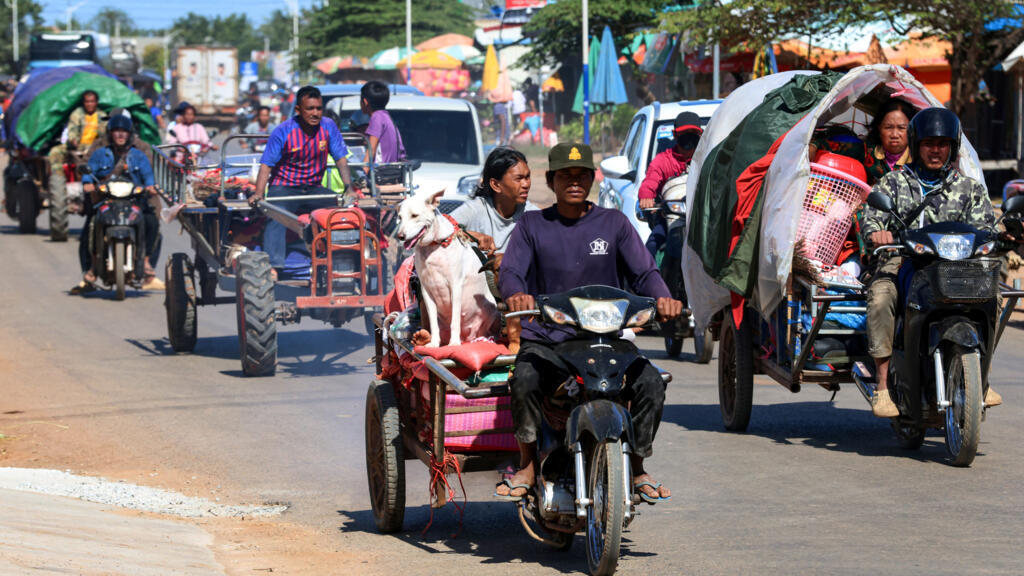
Five days of fighting in July killed dozens of people before a truce was brokered and then broken within months, part of a long-standing conflict rooted in the colonial-era demarcation of the countries' 800-kilometre (500-mile) frontier.
Renewed fighting between the Southeast Asian neighbours this month has killed at least 31 people, including soldiers and civilians, and displaced around 800,000, officials said.
Each side has blamed the other for instigating the fighting, claiming self-defence and trading accusations of attacks on civilians.
Cambodia, which is outgunned and outspent by Bangkok's military, said Thai forces had expanded their attack "deep into" Cambodian territory on Monday.
Cambodia's defence ministry said in a statement that a Thai fighter jet had bombed "near a displaced civilians camp in the area of Srei Snam district, Siem Reap province".
The area is located less than a two-hour drive from the the Angkor temple complex and its top tourist attraction, the UNESCO heritage site Angkor Wat.
Cambodia's Information Minister Neth Pheaktra told AFP it was the "furthest that the Thai military has struck into Cambodian territory" during the renewed clashes -- more than 70 kilometres (43 miles) from the border and far from a disputed area.
The minister said it was also the first time Thailand's military had bombed areas of Siem Reap province.
The bombing forced hundreds of already displaced families to flee an evacuation site, he added.
Tourists 'worry very much'
Cambodia relies heavily on its tourism sector, which, as in many nations, is still recovering from the Covid-19 pandemic years.
Foreign tourist arrivals to Cambodia last year topped 6.7 million, the highest annual total on record, tourism ministry data showed.
But arrivals from July to September this year were down by about a third compared to 2019, the year before the pandemic.
Monthly ticket sales to the Angkor archaeological park were down at least 17 percent year-on-year from June to November, according to data from operator Angkor Enterprise.
Chhay Sivlin, president of the Cambodia Association of Travel Agents, told AFP that some tourists who planned to visit Cambodia via a Thai border crossing have cancelled plans or changed routes to go through neighbouring Vietnam or Laos.
She said the reports of bombing in Siem Reap province made "some tourists who have booked their trips already worry very much".
Some have cancelled travel plans while others have asked to delay their trip, she added.
US President Donald Trump, who intervened in the conflict earlier this year, said last week the two countries had agreed to a ceasefire beginning Saturday night.
But fighting raged over the weekend and into Monday, and Bangkok denied Trump's claim of a truce.
Thai Prime Minister Anutin Charnvirakul -- who dissolved parliament last week, paving the way for elections next year -- posted on Facebook on Sunday that his government would keep up the fight.
Military officials on both sides said clashes and strikes along the border were ongoing on Monday.
© 2025 AFP

No comments:
Post a Comment