Tsarist warriors revival: Putin sends Cossacks to Ukraine’s front lines
KOSSACKS ARE UKRAINIANS FROM THE DON REGION OF EASTERN UKRAINE
EXPLAINER
Once prized fighters under the Tsars, Russia’s Cossack population was ostracised by authorities during the Soviet era. Under President Vladimir Putin, they have reintegrated into Russian society, acting as a supplementary police force and restoring their military status on the front lines in Ukraine.
Issued on: 15/12/2025 - 19:12
By:Matei DANES
Once prized fighters under the Tsars, Russia’s Cossack population was ostracised by authorities during the Soviet era. Under President Vladimir Putin, they have reintegrated into Russian society, acting as a supplementary police force and restoring their military status on the front lines in Ukraine.
Issued on: 15/12/2025 - 19:12
By:Matei DANES
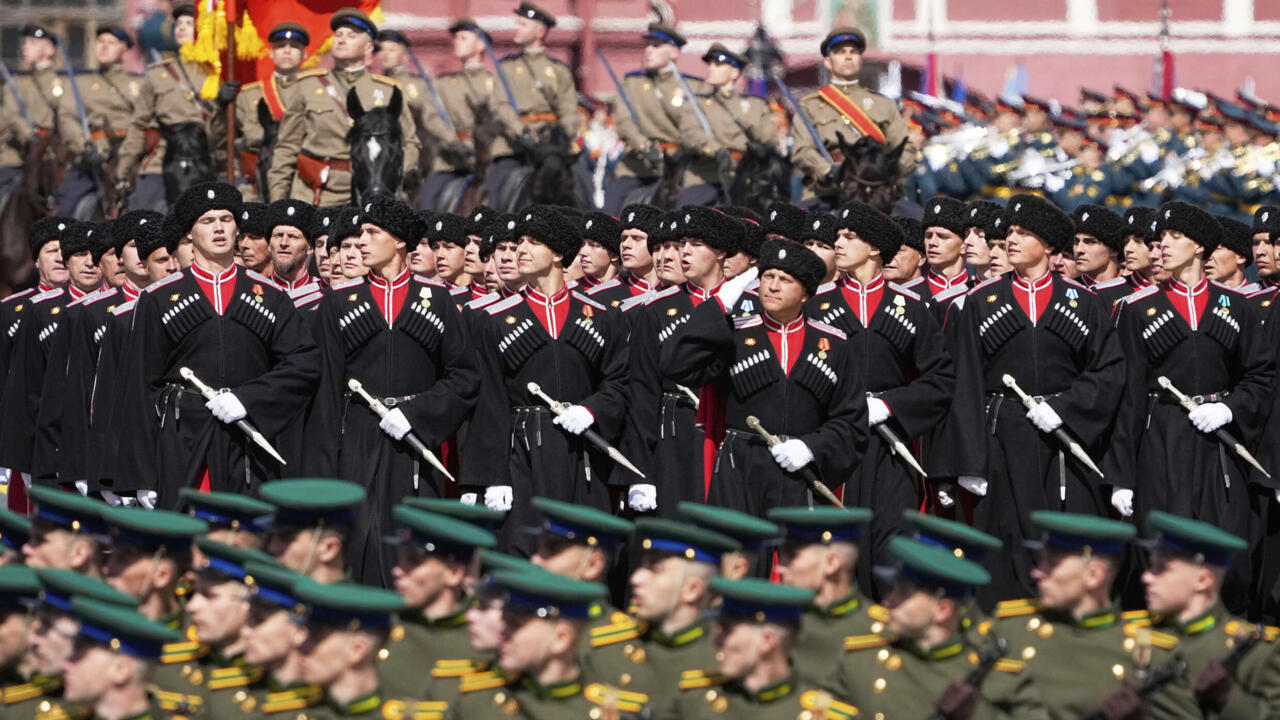
Cossack soldiers attend the Victory Day military parade in Moscow on May 9, 2025, marking the 80th anniversary of the Soviet Union's victory over Nazi Germany. © Alexander Zemlianichenko, AP
The popular image of the Cossacks lends itself to folklore: fearsome soldiers galloping on horseback across the steppes of Eastern Europe, sabres drawn to fight enemies of the Tsar.
But in Russia today, the Cossacks have reemerged as familiar figures in the public sphere. They work as uniformed authorities alongside the police, carrying out street patrols and helping to maintain order at sports games, religious gatherings and cultural events.
They are also being mobilised by the Kremlin to bolster numbers on the battlefield – of around 180,000 registered Cossacks, more than 60,000 have fought in Ukraine since 2022.
‘Guardians of Russia’s soul’
The Cossacks’ reintegration into Russian society under Putin has been a gradual process.
Historically, they have gone from being semi-nomadic horsemen who lived in autonomous communities in present-day Ukraine and southwest Russia to subjects of the Tsars under the expansion of the Russian Empire in the 18th century.
They fought for the imperial army in exchange for a high degree of self-governance, and also for Emperor Nicholas II during the 1917 revolution, for which they were ostracised and persecuted under communism.
Traditionally, the Cossack identity is hereditary, but it is also an administrative status that can be obtained by registration with the authorities.
After the Soviet Union was dissolved in 1991, the Cossack population began to gradually regain its place in Russian society.
“In the 1990s, there was an anarchic, grassroots revival of Cossack culture,” says Pierre Labrunie, a specialist in Russia’s Cossacks at Paris's École des hautes études en sciences sociales (EHESS).
“Some Cossacks emphasised the ethnic aspect of Cossack identity and demanded greater autonomy, while others wanted Cossack culture to regain its social standing.”
The Russian state was aware of the potential threat the group posed – along with its strong military history, the majority of Cossacks were armed – and coopted this revival to begin a formal reintegration of the Cossacks in the 2000s.
Russian leadership formalised the Cossacks' work as border guards and urban militia – functions which the group had performed under the Tsars.
“For the Russian state, this had the dual advantage of responding to the Cossacks' demands for reintegration by drawing on their tradition of service and filling a void left by the failure of the state, as Russia had been terribly weakened by the ‘shock therapy’ of transitioning to a market economy in the 1990’s,” Labrunie says.
Ever since then, the Cossacks have operated as auxiliaries to the police force while also playing a large role in the national imagination.
A popular Russian saying states that “a Cossack without faith is not a Cossack”, and the group has close links with the Russian Orthodox church.
“They are the guardians of Russia’s soul, its traditions and its good character,” says Labrunie.
The Kremlin “presents them as a model of what the perfect Russian citizen should be”, he adds. “They represent loyal commitment and voluntary service, and they are a counter-model to the ‘decadent’ West.”
There is “deliberate ambiguity” over exactly how the roles of the police and the Cossacks intersect, Labrunie says, but the Cossacks' informal role as moral police was made clear during the 2014 Winter Olympics in the southern Russian town of Sochi.
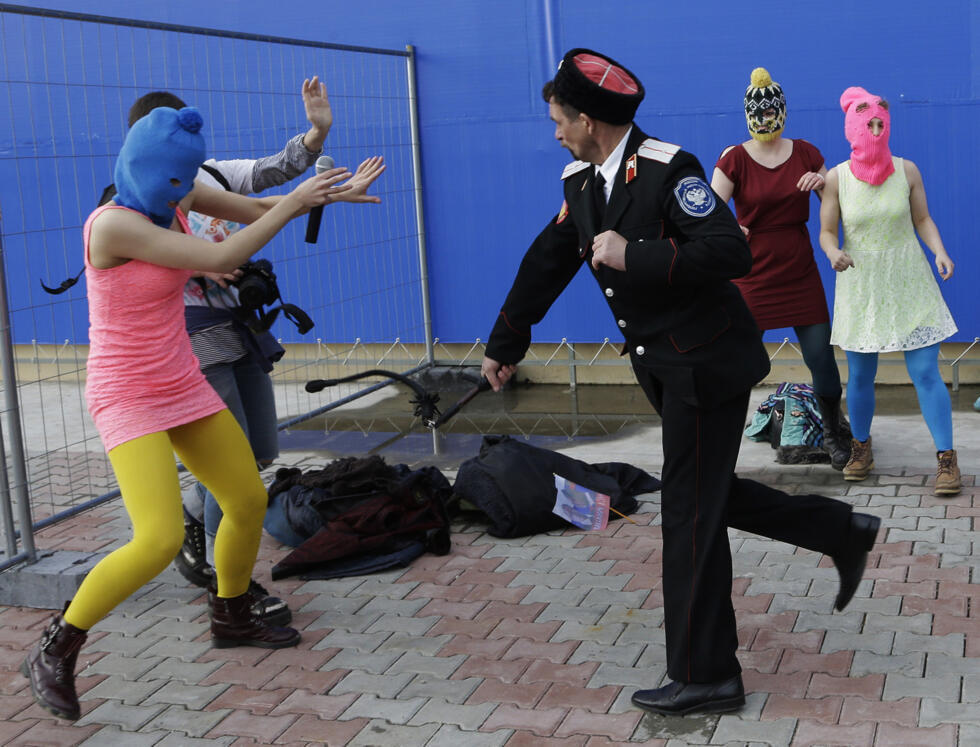
On the sidelines of the event, members of the feminist group Pussy Riot staged a protest, singing a song that was hostile to Putin. Rather than the police, it was a Cossack patrol who led a violent confrontation beating the activists with whips – the traditional weapon used to maintain order in imperial Russia.
The popular image of the Cossacks lends itself to folklore: fearsome soldiers galloping on horseback across the steppes of Eastern Europe, sabres drawn to fight enemies of the Tsar.
But in Russia today, the Cossacks have reemerged as familiar figures in the public sphere. They work as uniformed authorities alongside the police, carrying out street patrols and helping to maintain order at sports games, religious gatherings and cultural events.
They are also being mobilised by the Kremlin to bolster numbers on the battlefield – of around 180,000 registered Cossacks, more than 60,000 have fought in Ukraine since 2022.
‘Guardians of Russia’s soul’
The Cossacks’ reintegration into Russian society under Putin has been a gradual process.
Historically, they have gone from being semi-nomadic horsemen who lived in autonomous communities in present-day Ukraine and southwest Russia to subjects of the Tsars under the expansion of the Russian Empire in the 18th century.
They fought for the imperial army in exchange for a high degree of self-governance, and also for Emperor Nicholas II during the 1917 revolution, for which they were ostracised and persecuted under communism.
Traditionally, the Cossack identity is hereditary, but it is also an administrative status that can be obtained by registration with the authorities.
After the Soviet Union was dissolved in 1991, the Cossack population began to gradually regain its place in Russian society.
“In the 1990s, there was an anarchic, grassroots revival of Cossack culture,” says Pierre Labrunie, a specialist in Russia’s Cossacks at Paris's École des hautes études en sciences sociales (EHESS).
“Some Cossacks emphasised the ethnic aspect of Cossack identity and demanded greater autonomy, while others wanted Cossack culture to regain its social standing.”
The Russian state was aware of the potential threat the group posed – along with its strong military history, the majority of Cossacks were armed – and coopted this revival to begin a formal reintegration of the Cossacks in the 2000s.
Russian leadership formalised the Cossacks' work as border guards and urban militia – functions which the group had performed under the Tsars.
“For the Russian state, this had the dual advantage of responding to the Cossacks' demands for reintegration by drawing on their tradition of service and filling a void left by the failure of the state, as Russia had been terribly weakened by the ‘shock therapy’ of transitioning to a market economy in the 1990’s,” Labrunie says.
Ever since then, the Cossacks have operated as auxiliaries to the police force while also playing a large role in the national imagination.
A popular Russian saying states that “a Cossack without faith is not a Cossack”, and the group has close links with the Russian Orthodox church.
“They are the guardians of Russia’s soul, its traditions and its good character,” says Labrunie.
The Kremlin “presents them as a model of what the perfect Russian citizen should be”, he adds. “They represent loyal commitment and voluntary service, and they are a counter-model to the ‘decadent’ West.”
There is “deliberate ambiguity” over exactly how the roles of the police and the Cossacks intersect, Labrunie says, but the Cossacks' informal role as moral police was made clear during the 2014 Winter Olympics in the southern Russian town of Sochi.
On the sidelines of the event, members of the feminist group Pussy Riot staged a protest, singing a song that was hostile to Putin. Rather than the police, it was a Cossack patrol who led a violent confrontation beating the activists with whips – the traditional weapon used to maintain order in imperial Russia.
A Cossack militiaman attacks Nadezhda Tolokonnikova and a photographer as she and fellow members of punk group Pussy Riot stage a protest in Sochi, Russia, on February 19, 2014. © Morry Gash, AP
A military force in Ukraine
Russia has undergone rapid militarisation under Putin’s rule, ramping up to the full-scale invasion of Ukraine in 2022. Faced with a protracted conflict, the Kremlin is keen to avoid another wave of general mobilisation and has turned to paramilitary forces to fuel its war effort.
If the Africa Corps, formerly known as the Wagner Group, has played a leading role in providing “cannon fodder” on the front lines in Ukraine, the Cossack Cadet force is not far behind.
“There are specialised schools where cadets study the national curriculum alongside Cossack and military components. They teach the history of the Cossacks, traditional songs, horse riding, fighting and how to handle weapons,” says Labrunie.
In 2023 there were known to be 31 of these institutions in Russia preparing thousands of young Russians to fight the nation’s enemies.
Although the Cadet Corps is most active in southwest Russia (the historical home of the Cossacks, and where most still live today), there are units across the country.
Two new Corps have recently been introduced in Ukraine’s Luhansk region, which has been occupied by Russia since 2014.
Others are being created in Donetsk, Zaporizhia and Kherson – regions currently or partially occupied by Russia – as part of an ongoing effort by the Kremlin to colonise and indoctrinate Ukrainian inhabitants.
Cossack communities are also active in “humanitarian” efforts to support soldiers on the front lines by organising collections of food, clothes and equipment from the local population.
Since their reintegration in the 1990s, Cossack volunteers have fought in all of Russia’s wars: Chechnya in the 1990s, Ukraine’s Donbas and Crimea in 2014, and again in Ukraine in 2022 – this time on a much larger scale and under increased control by Moscow.
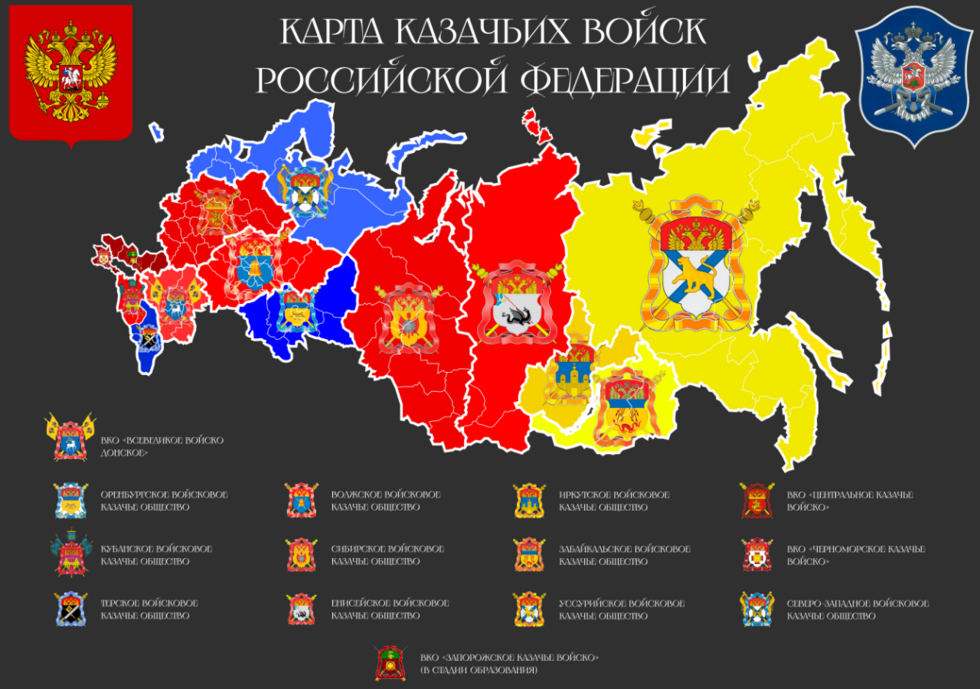
Under Putin's leadership, 11 registered Cossack armies have been consolidated under a single authority, the All-Russian Cossack Society, of which Putin has the exclusive right to appoint the leader.
A military force in Ukraine
Russia has undergone rapid militarisation under Putin’s rule, ramping up to the full-scale invasion of Ukraine in 2022. Faced with a protracted conflict, the Kremlin is keen to avoid another wave of general mobilisation and has turned to paramilitary forces to fuel its war effort.
If the Africa Corps, formerly known as the Wagner Group, has played a leading role in providing “cannon fodder” on the front lines in Ukraine, the Cossack Cadet force is not far behind.
“There are specialised schools where cadets study the national curriculum alongside Cossack and military components. They teach the history of the Cossacks, traditional songs, horse riding, fighting and how to handle weapons,” says Labrunie.
In 2023 there were known to be 31 of these institutions in Russia preparing thousands of young Russians to fight the nation’s enemies.
Although the Cadet Corps is most active in southwest Russia (the historical home of the Cossacks, and where most still live today), there are units across the country.
Two new Corps have recently been introduced in Ukraine’s Luhansk region, which has been occupied by Russia since 2014.
Others are being created in Donetsk, Zaporizhia and Kherson – regions currently or partially occupied by Russia – as part of an ongoing effort by the Kremlin to colonise and indoctrinate Ukrainian inhabitants.
Cossack communities are also active in “humanitarian” efforts to support soldiers on the front lines by organising collections of food, clothes and equipment from the local population.
Since their reintegration in the 1990s, Cossack volunteers have fought in all of Russia’s wars: Chechnya in the 1990s, Ukraine’s Donbas and Crimea in 2014, and again in Ukraine in 2022 – this time on a much larger scale and under increased control by Moscow.
Under Putin's leadership, 11 registered Cossack armies have been consolidated under a single authority, the All-Russian Cossack Society, of which Putin has the exclusive right to appoint the leader.
Map showing the various Cossack armies of Russia, with their emblems. © the All-Russian Cossack Society
In March 2023, the president began a process for establishing a “Cossack reserve army”. It is estimated that this reserve force could provide an additional 60,000 Cossack troops to fight in Ukraine.
A ‘new elite’ – but how loyal?
During his televised speeches, Putin has repeatedly called for the emergence of a “new Russian elite” to replace the technocrats and oligarchs, whom he considers selfish and corrupt.
According to the president, this new upper class should possess military skills, respect for the law and absolute loyalty.
The Cossacks tick all the boxes for this militarised form of patriotism – but their loyalty to Putin may not be guaranteed.
After previously experiencing rapid growth, the number of Cossacks registered in Russia fell by 9,000 in 2024.
The decline could be partly explained by losses suffered in Ukraine or by demographics. It could also be a sign the of Cossacks' “disenchantment” with their status as auxiliaries of the Russian State, Labrunie says.
In Ukraine, Cossack fighters are mostly grouped in 18 battalions, whose insignia and names refer to Cossack – rather than Russian – history.
Ironically, there are also Cossacks on the other side of the front line fighting in the ranks of the Ukrainian army.
Russia’s Cossack fighters are theoretically controlled by Russian military command, but there are reports that they have become uncontrollable in Ukraine, particularly during fighting in the separatist republics of Donetsk and Luhansk.
There, the Cossacks’ dreams of setting up an independent state conflicted with the goals of pro-Russian Ukrainian proxies and Putin's imperialist project.
This article was adapted from the original in French.
In March 2023, the president began a process for establishing a “Cossack reserve army”. It is estimated that this reserve force could provide an additional 60,000 Cossack troops to fight in Ukraine.
A ‘new elite’ – but how loyal?
During his televised speeches, Putin has repeatedly called for the emergence of a “new Russian elite” to replace the technocrats and oligarchs, whom he considers selfish and corrupt.
According to the president, this new upper class should possess military skills, respect for the law and absolute loyalty.
The Cossacks tick all the boxes for this militarised form of patriotism – but their loyalty to Putin may not be guaranteed.
After previously experiencing rapid growth, the number of Cossacks registered in Russia fell by 9,000 in 2024.
The decline could be partly explained by losses suffered in Ukraine or by demographics. It could also be a sign the of Cossacks' “disenchantment” with their status as auxiliaries of the Russian State, Labrunie says.
In Ukraine, Cossack fighters are mostly grouped in 18 battalions, whose insignia and names refer to Cossack – rather than Russian – history.
Ironically, there are also Cossacks on the other side of the front line fighting in the ranks of the Ukrainian army.
Russia’s Cossack fighters are theoretically controlled by Russian military command, but there are reports that they have become uncontrollable in Ukraine, particularly during fighting in the separatist republics of Donetsk and Luhansk.
There, the Cossacks’ dreams of setting up an independent state conflicted with the goals of pro-Russian Ukrainian proxies and Putin's imperialist project.
This article was adapted from the original in French.
Centuries ago, Ukrainian Cossack leader Ivan Mazepa founded multiple settlements in modern Russia’s Kursk region. Now they’re within miles of the front line.

Taras Bulba (1962) ORIGINAL TRAILER
Directed by J. Lee Thompson. With Tony Curtis, Yul Brynner and Christine Kaufman
Taras Bulba The Cossack 1962 English version complete rare movie
This is the very rare English version of the Italian film Taras Bulba Il cosacco. The film was released in 1962 and immediately fell into obscurity being overshadowed by the popular American film, with the same title, released the same year. Taras Bulba Il cosacco was a widescreen Italian costume drama and did not make it to the US until about 1970 and then only in this "pan and scan" version for late night TV. In the US, it was known as The Plains of Battle or The Fighting Cossacks. Popular European actor, at the time, Vladimir Medar, is Taras Bulba.
The Rebel's Son (1938) Cossack Tarus Bulba Epic Full Movie | Harry Baur, Roger Livesey
Nicolai Gogol's novel about a 16th Century Cossack, Taras Boulba (Harry Bauer) seeks to regain control of his Ukraine homeland by sending his son to secretly study under the occupying Poles. Complications ensue when the young man falls in love with a Polish girl. This British version of the 1936 French film, “Tarrass Boulba,” utilizes much of the non-dialogue footage from the earlier production.
The Death of Ukraine’s Dream of NATO Membership
by Ted Snider | Dec 15, 2025 | ANTIWAR.COM
Ukraine’s dream of NATO membership is dead. It died, surprisingly, not on the battlefields of Ukraine nor at the negotiating table with Russia. It died in a document written in the White House to be sent to Congress to explain America’s national security vision.
The 2025 National Security Strategy of the United States of America, dated November 2025, was released on December 4. Embedded unimposingly, without fanfare, in a section on The Regions called Promoting European Greatness, and not even in the section that discusses the war in Ukraine, the Security Strategy quietly states the priority policy of “Ending the perception, and preventing the reality, of NATO as a perpetually expanding alliance.” Those fourteen words seem to have pulled the plug on a dream that was already on life support.
That policy priority found expression in point 7 of Trump’s 28 point peace plan that states that “Ukraine agrees to enshrine in its constitution that it will not join NATO, and NATO agrees to include in its statutes a provision that Ukraine will not be admitted in the future.”
Since it was first promised at the 2008 NATO summit in Bucharest that Ukraine and Georgia “will become members of NATO,” the dream has been an unrealistic one. It did not take into account the real wishes of Ukraine, NATO or Russia, and it did not take into account previous promises already made by NATO and Ukraine. At the time of the Bucharest summit, the U.S. may have wanted NATO membership for Ukraine, but only 20% of Ukrainians did.
In 1990 and 1991, at the end of the Cold War, NATO promised Gorbachev and the Soviet Union that NATO would not expand any further east. But it was not just NATO that promised to stay out of Ukraine, it was also Ukraine that promised to stay out of NATO. Article IX of the 1990 Declaration of State Sovereignty of Ukraine, “External and Internal Security,” says that Ukraine “solemnly declares its intention of becoming a permanently neutral state that does not participate in military blocs…” That promise was later enshrined in Ukraine’s constitution, which committed Ukraine to neutrality and prohibited it from joining any military alliance: that included NATO. Moscow has recently reminded that Russia “recognized the sovereignty of Ukraine back in 1991, on the basis of the Declaration of Independence” and added that one of the main points for [Russia] in the declaration was that Ukraine would be a non-bloc, non-alliance country; it would not join any military alliances.”
Ukraine’s constitution was only amended to include a mandate for all future governments to seek NATO membership in 2019, five years after the U.S. supported coup. The amendment was made with neither vote nor referendum. At the time, public support in Ukraine for NATO membership hovered around a tepid 40%.
That that amendment could be reversed, and that Ukraine could be willing to do so, was signaled by Ukrainian officials, including President Volodymyr Zelensky, in the early days of the war. At the start of the war, Zelensky said he has “understood that NATO is not prepared to accept Ukraine.” In March 2022, he said “For years we have been hearing about how the door is supposedly open [to NATO membership] but now we hear that we cannot enter. And it is true, and it must be acknowledged.”
In April 2022, after the war had begun, polling indicates that only 24%-39% of Ukrainians wanted NATO membership. At that time, the tentative agreement arrived at in Istanbul included that “Ukraine would promise not to seek NATO membership…” The draft reportedly stipulated that “permanent neutrality” be enshrined in Ukraine’s constitution.
Ukraine was pushed off that path by the U.S. for their own policy reasons, including the “core principle” that Ukraine has the right to choose their alliances and that NATO has the right to expand.
On December 14, Zelensky seemed, again, to yield to the impossibility of Russia surrendering the demand that Ukraine never join NATO. He said that he is prepared to surrender Ukraine’s demand for NATO membership in exchange for NATO Article 5-like security guarantees. Zelensky called this “a compromise on our part.” But it is unlikely that Russia will agree to Article 5-like guarantees from NATO countries any more than it would agree to Article 5 guarantees.
The right that Ukraine has to choose its own alliances, which was never consistent with the NATO treaty’s statement that a state “may be invited to join by the unanimous agreement of all existing members,” has now been laid to rest by the new National Security Strategy. Neither Russia nor the United States will permit Ukraine to join NATO. So, it is time to stop Ukrainians from dying for that ghost. Neutrality is one concession that Ukraine should accept. It has accepted it before and has been willing to accept it since. And it no longer has the choice. To ask Ukrainians to go on fighting for something that the National Security Strategy of the United States of America suggests they can never have is unconscionable. For Ukraine’s European “partners” to insist upon it can serve no other purpose than to continue the war.
Ted Snider is a regular columnist on U.S. foreign policy and history at Antiwar.com and The Libertarian Institute. He is also a frequent contributor to Responsible Statecraft and The American Conservative as well as other outlets. To support his work or for media or virtual presentation requests, contact him at tedsnider@bell.net.
by Ted Snider | Dec 15, 2025 | ANTIWAR.COM
Ukraine’s dream of NATO membership is dead. It died, surprisingly, not on the battlefields of Ukraine nor at the negotiating table with Russia. It died in a document written in the White House to be sent to Congress to explain America’s national security vision.
The 2025 National Security Strategy of the United States of America, dated November 2025, was released on December 4. Embedded unimposingly, without fanfare, in a section on The Regions called Promoting European Greatness, and not even in the section that discusses the war in Ukraine, the Security Strategy quietly states the priority policy of “Ending the perception, and preventing the reality, of NATO as a perpetually expanding alliance.” Those fourteen words seem to have pulled the plug on a dream that was already on life support.
That policy priority found expression in point 7 of Trump’s 28 point peace plan that states that “Ukraine agrees to enshrine in its constitution that it will not join NATO, and NATO agrees to include in its statutes a provision that Ukraine will not be admitted in the future.”
Since it was first promised at the 2008 NATO summit in Bucharest that Ukraine and Georgia “will become members of NATO,” the dream has been an unrealistic one. It did not take into account the real wishes of Ukraine, NATO or Russia, and it did not take into account previous promises already made by NATO and Ukraine. At the time of the Bucharest summit, the U.S. may have wanted NATO membership for Ukraine, but only 20% of Ukrainians did.
In 1990 and 1991, at the end of the Cold War, NATO promised Gorbachev and the Soviet Union that NATO would not expand any further east. But it was not just NATO that promised to stay out of Ukraine, it was also Ukraine that promised to stay out of NATO. Article IX of the 1990 Declaration of State Sovereignty of Ukraine, “External and Internal Security,” says that Ukraine “solemnly declares its intention of becoming a permanently neutral state that does not participate in military blocs…” That promise was later enshrined in Ukraine’s constitution, which committed Ukraine to neutrality and prohibited it from joining any military alliance: that included NATO. Moscow has recently reminded that Russia “recognized the sovereignty of Ukraine back in 1991, on the basis of the Declaration of Independence” and added that one of the main points for [Russia] in the declaration was that Ukraine would be a non-bloc, non-alliance country; it would not join any military alliances.”
Ukraine’s constitution was only amended to include a mandate for all future governments to seek NATO membership in 2019, five years after the U.S. supported coup. The amendment was made with neither vote nor referendum. At the time, public support in Ukraine for NATO membership hovered around a tepid 40%.
That that amendment could be reversed, and that Ukraine could be willing to do so, was signaled by Ukrainian officials, including President Volodymyr Zelensky, in the early days of the war. At the start of the war, Zelensky said he has “understood that NATO is not prepared to accept Ukraine.” In March 2022, he said “For years we have been hearing about how the door is supposedly open [to NATO membership] but now we hear that we cannot enter. And it is true, and it must be acknowledged.”
In April 2022, after the war had begun, polling indicates that only 24%-39% of Ukrainians wanted NATO membership. At that time, the tentative agreement arrived at in Istanbul included that “Ukraine would promise not to seek NATO membership…” The draft reportedly stipulated that “permanent neutrality” be enshrined in Ukraine’s constitution.
Ukraine was pushed off that path by the U.S. for their own policy reasons, including the “core principle” that Ukraine has the right to choose their alliances and that NATO has the right to expand.
On December 14, Zelensky seemed, again, to yield to the impossibility of Russia surrendering the demand that Ukraine never join NATO. He said that he is prepared to surrender Ukraine’s demand for NATO membership in exchange for NATO Article 5-like security guarantees. Zelensky called this “a compromise on our part.” But it is unlikely that Russia will agree to Article 5-like guarantees from NATO countries any more than it would agree to Article 5 guarantees.
The right that Ukraine has to choose its own alliances, which was never consistent with the NATO treaty’s statement that a state “may be invited to join by the unanimous agreement of all existing members,” has now been laid to rest by the new National Security Strategy. Neither Russia nor the United States will permit Ukraine to join NATO. So, it is time to stop Ukrainians from dying for that ghost. Neutrality is one concession that Ukraine should accept. It has accepted it before and has been willing to accept it since. And it no longer has the choice. To ask Ukrainians to go on fighting for something that the National Security Strategy of the United States of America suggests they can never have is unconscionable. For Ukraine’s European “partners” to insist upon it can serve no other purpose than to continue the war.
Ted Snider is a regular columnist on U.S. foreign policy and history at Antiwar.com and The Libertarian Institute. He is also a frequent contributor to Responsible Statecraft and The American Conservative as well as other outlets. To support his work or for media or virtual presentation requests, contact him at tedsnider@bell.net.

No comments:
Post a Comment