It’s possible that I shall make an ass of myself. But in that case one can always get out of it with a little dialectic. I have, of course, so worded my proposition as to be right either way (K.Marx, Letter to F.Engels on the Indian Mutiny)
Saturday, August 08, 2026
Iron ore mine depletion to underpin prices next decade, Rio Tinto says
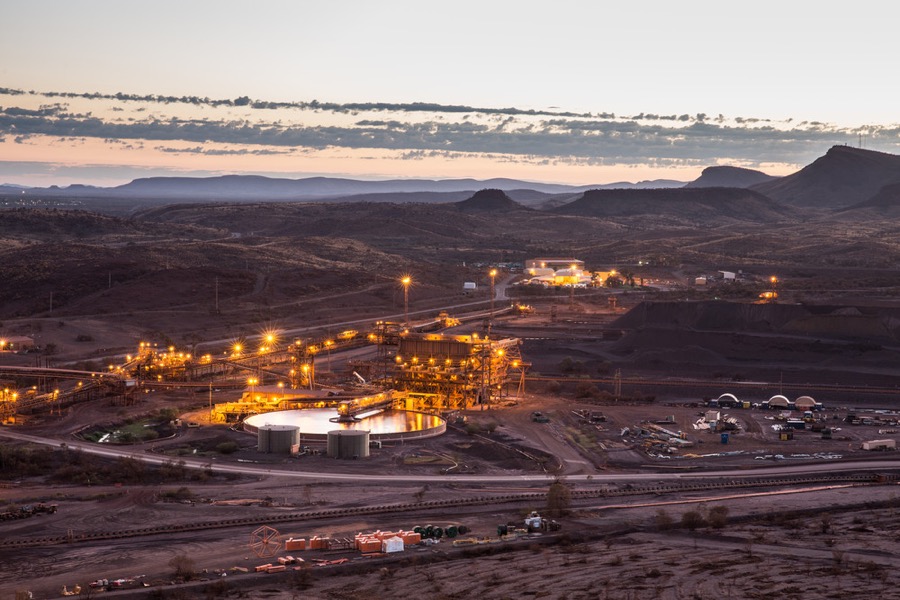
(Image of the Paraburdoo operation, in the Pilbara, courtesy of Rio Tinto)
Supply pressure stemming from the depletion of iron ore mines built earlier this century, such as those in Australia, is set to underpin the iron ore market and prices over the coming decade, a Rio Tinto (ASX: RIO) executive said on Wednesday.
Rio expects to invest more than $13 billion on new mines, plant and equipment in the Pilbara region from 2025 to 2027 while estimating that 800 million tonnes needs to be added globally across the next decade to maintain supply.
Only 300 million tonnes has been committed.
“It feels like every year, the demise of iron ore is very much being exaggerated,” Matthew Holcz, Rio’s iron ore chief executive, told a lunch event at the Melbourne Mining Club.
“While I think the demand story has been reasonably well understood, I really think it’s been on the supply side, so disruptions have been underestimated,” he said, pointing to annual cyclones that strike Western Australia’s Pilbara coast from November to April.
“I think the rate of depletion is very much underestimated,” Holcz added.
“If we look at when the industry really boomed, 2005, 2010, 2015, a lot of those assets are now 15, 20 years old, and the scale of the iron ore industry … has increased.”
Investment in new supply is only a fraction of that seen at the start of last decade, Holcz said.
“Marginal costs are a lot higher … so we think there’s good price support around the levels that we’re enjoying in recent years.”
China’s demand is expected to be stable until 2030 before declining slightly, but the Global South will bolster demand, particularly India, which Rio expects to be a net iron ore importer around 2035.
Change in leverage
On China’s state buyer, now more assertive in price talks with suppliers, Holcz said tension between buyers and sellers always prevailed but Rio was focused on long term ties and “win-win” opportunities.
“The supply-demand balance has shifted,” he told media in remarks on the sidelines. “You’ve got a market that is much more in balance, and certainly that’s shifted some of the leverage.”
Referring to union matters in the Pilbara, where workers are set to strike this weekend at BHP’s (ASX: BHP) Port Hedland operations, Holcz favoured a “direct relationship” with workers that he said has historically led to better outcomes.
Future capital spending decisions would hinge on competition, industrial relations and tax provisions elsewhere, areas in which Australia is falling behind.
Rio Tinto has no major exposure to iron ore trader Radiant World, Holcz added.
Trading houses Vitol Group and Cargill have stopped trading with Radiant World over concerns that invoices provided to its banks may not have been valid, Bloomberg News said last week, which Radiant world denies.
“From a Rio Tinto perspective, there isn’t any exposure there that we’re concerned about,” Holcz said.
(Reporting by Melanie Burton in Melbourne; Editing by Clarence Fernandez)
CMRG tells some steel mills to halt talks with Rio Tinto, sources say
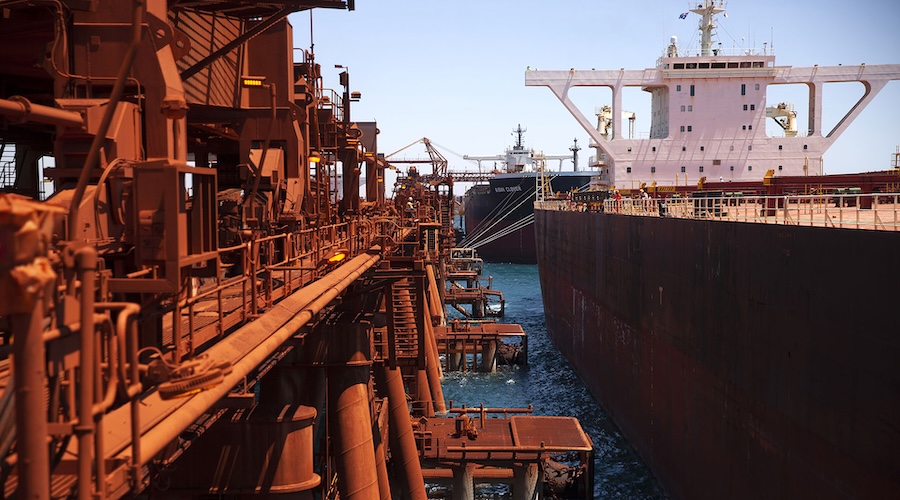
Rio operates 4 independent shipping terminals at 2 locations, Cape Lambert (pictured) and Dampier. (Image courtesy of Rio Tinto.)
China’s state iron ore buyer has directed some steel mills to halt negotiations with Rio Tinto (ASX, LON: RIO) for shipments from September, two sources with knowledge of the matter said, escalating pressure on the world’s top iron ore producer during annual supply talks.
China Mineral Resources Group (CMRG) has increasingly used its buying power to wrest better terms for its steel makers by restricting purchases from big iron ore miners while contract talks are underway.
In the run-up to the expiry of annual supply deals, miners typically discuss with customers their desired volumes and specific cargo and shipment dates for the next year, a trader said. CMRG has asked some mills not to settle those details, they said.
Larger procurement volume
CMRG is negotiating for more than half of China’s annual import volumes, according to commodity research group Wood Mackenzie’s estimates.
The push to stall talks with Rio Tinto was aimed at pressuring mills that have not given up negotiation rights to CMRG to do so, two traders and an analyst said, which would hand the state-run trader a larger procurement volume and boost its bargaining power.
The most active iron ore contract on China’s Dalian Commodity Exchange (DCE) DCIOcv1 closed daytime trade up by 2.57% to the highest since July 31 at 719 yuan ($106.54) per metric ton, while the benchmark September iron ore SZZFU6 on the Singapore Exchange jumped 2.15% to $96.45 a ton as of 0823 GMT, also the highest since July 31.
CMRG has already targeted Australia’s other top iron ore producers — (ASX: BHP), Fortescue (ASX: FMG) and privately held Hancock Prospecting, owned by Australia’s richest person, Gina Rinehart.
Australia supplies more than half of China’s iron ore imports, making it by far its largest source of the steelmaking ingredient, and the material is Australia’s most valuable commodity export.
CMRG did not immediately reply to a request for comment. Rio Tinto declined to comment.
Under pressure
BHP faced progressive purchasing bans on some products through late 2025 and early 2026 as its annual term contract negotiations dragged on. Restrictions were lifted following a visit by its then incoming CEO Brandon Craig in April.
Meanwhile, a top executive at Fortescue last week said CMRG’s actions were undermining China’s stable iron ore supply.
Rio Tinto had been seen as insulated from some of that pressure given its largest shareholder is China’s state-owned Chinalco, which also leads the consortium partnering Rio Tinto in the Simandou iron ore project in Guinea.
However, this week its chief executive of iron ore, Matthew Holcz, said negotiating leverage has shifted away from iron ore producers as growing supply has balanced the market.
Holcz said tension was always present between buyers and sellers, but Rio was focused on long-term ties and “win-win” opportunities.
Australia’s major miners and their lobbyists have asked Canberra for help in pushing back against Beijing’s efforts, including raising the prospect of a single selling desk for the country’s most valuable commodity export.
But the view from at least one miner was that Canberra has been trying to repair its relationship with China so might not want to take up this fight right now. China unofficially banned a swathe of Australia’s commodity exports, including coal, wine and beef, between 2020 and 2023.
($1 = 6.7489 Chinese yuan renminbi)
(Reporting by Melanie Burton and Reuters staff; Editing by Sonali Paul and David Holmes)
India’s Odisha state warns iron ore miners, steelmakers over grade manipulation
India’s top iron ore producing state of Odisha has warned steelmakers and miners of strict action over alleged grade manipulation and misdeclaration, according to documents reviewed by Reuters and three sources, a crackdown that analysts say could tighten domestic iron ore supplies.
India, the world’s second-largest crude steel producer after China, is expected to produce 340 million to 345 million metric tons of iron ore, the key raw material used in steelmaking, in 2026-27, up from about 316 million tons a year earlier, commodities consultancy BigMint said.
Any disruption to supplies from resource-rich Odisha could scupper those production targets.
The warning follows inspections that “revealed a consistent grade manipulation by the lessees,” which include major steel producers, resulting in a “substantial loss” of state revenues, according to a July 6 government document reviewed by Reuters.
The companies named in the July 6 letter included JSW Steel, Tata Steel, state-run Steel Authority of India (SAIL), Jindal Steel and ArcelorMittal Nippon Steel India.
A Tata Steel spokesperson denied any discrepancies, saying it pays royalties as per prescribed norms and that most of its iron ore dispatches are in the highest royalty grade.
JSW declined to comment. SAIL and Jindal Steel did not respond to Reuters‘ emails seeking comment. Odisha’s Directorate of Mines and Geology also did not respond to requests for comment.
Government officials met steel and mining associations and company executives last month to discuss the findings, according to July 13 meeting minutes and a source familiar with the matter.
“Any deliberate grade manipulation, misdeclaration or suppression of mineral value affecting government revenue shall be viewed very seriously and strictly dealt with,” the meeting minutes showed.
Odisha’s steel and mines department directed lessees to revise mining plans and seek approval from the Indian Bureau of Mines where actual ore grades differ from approved grades, according to the minutes.
Analysts say stricter inspections are already affecting lower grade ore availability.
Offers for lower grade ore have become limited in the merchant market over the past month because of intensified inspections by Odisha authorities, BigMint said.
“Since Odisha is the largest producer of iron ore in the country, if the issue escalates, it might impact the overall availability of iron ore in the country,” said B.K. Bhatia, a mining expert and former director general of the Federation of Indian Mineral Industries.
Industry representatives disputed the state’s allegations.
“Industry has raised concerns that the grades extracted are as per the geology and that is not under anyone’s control,” one industry representative said, declining to be identified because they were not authorized to speak to the media.
(By Neha Arora, Jatindra Dash and Arpan Chaturvedi; Editing by Mayank Bhardwaj and Saad Sayeed)

 Steel mill in India. Stock image.
No comments:
Post a Comment