LI
Lithium mining for green power triggers eco-outcry from South African farmers

Mining lithium for batteries is a growing part of South Africa’s plan to use the global shift towards green energy to revive its economy, but now it faces a challenge from thousands of angry farmers who fear losing productive land to open-pit mines.

On the southeast coast, where a lithium mine operates and more than a dozen prospecting licences have been granted since 2023, scores of generations-old farming communities are relocating.
A coalition of activists is launching objections to the prospecting, which according to one group, the South Coast Guardians Association (SCGA), threatens 30,000 jobs in farming, labouring or services in this sugar-exporting and tourism hub.
Data from South Africa’s mines department reviewed by Reuters show lithium prospecting licences laying claim to some 73,000 hectares (282 square miles), an area slightly larger than the city of Pretoria.
Most of it is farmland spanning 117 farms, but also beaches.
The existing lithium mine, which also plans to expand, covers 150 hectares of pits and 180 hectares of waste dumps.
“Should all these prospecting licences be granted mining licences, the impact would be catastrophic,” SCGA General Manager Heather McLoed said.
“It affects the small-scale farmers directly, their communities, their shops, and … the sugar mill” handling their harvests, she said at the mill, which crushes 2 million metric tons of cane a year from 2,000 small-scale and 600 commercial growers.
As the climate crisis and disrupted oil shipments from the U.S.-Iran war propel investment in clean energy, South Africa has made critical minerals key to its economic revival plans.
President Cyril Ramaphosa in February told parliament South Africa had 40 trillion rand ($2.39 trillion) worth of critical minerals, describing them as a “sunrise industry” with potential to create jobs and strengthen the industrial base.
SOME VILLAGERS ALREADY LOSING HOMES TO LITHIUM
On an afternoon in June, Albert Mthembu, 62, was examining the fissures in his brick bungalow in the hillside village of Magog, in the eastern KwaZulu-Natal province, the largest of the country’s three lithium hotspots.
He told Reuters the fissures were caused by blasting from the mines.
An excavator on the adjacent hill was kicking up clouds of dust as it shifted rocks; Mthembu had visited the doctor twice for lung issues.
Having lived in Magog since he was 6, he wanted his children to inherit the house and neat lawn occupied by chickens.
Now, he sees no option but to move.
“The blasting isn’t good. We’ve got kids, we’ve got animals, the trees are even being damaged,” he said on the slopes of the village, where dying trees drooped.
Mthembu’s friend has already left, his house reduced to rubble by workers expanding the mine, according to three villagers. Seven other houses were visibly dismantled.
Reuters interviewed 11 farmers in the area, all of whom shared similar concerns.
A spokesperson for the mineral resources department did not respond to Reuters’ request for comment.
The privately owned mining company was relocating villagers, but many were unhappy with the new land, Mthembu said, as it was remote and less suitable for planting.
SA Lithium Director Ian Harbottle said it had relocated 150 farmers, all willingly.
“If there’s one challenge, I’m unable to move them fast (enough) because everybody is significantly better off,” he said.
LOW CARBON MEANS LESS MINERAL EXTRACTION
Clean energy requires less material extraction than the fossil fuel industry it is replacing.
A 2024 Breakthrough Institute paper showed that coal, South Africa’s power-generation staple, extracts 1,180 tons of material per gigawatt, on average, compared with 59 tons for wind and 45 tons for solar, including all the minerals for battery storage in an average installation.
Yet landscape-scarring mining remains a contentious part of the transition in countries from Portugal to the United States. Rock waste can degrade land quality, as has happened in Australia and China.
“Yes, it … does make a hole. Yes, there are dumps, but we’ve done extensive (anti-pollution) work. We are more than compliant,” Harbottle said, adding that the mine had created over a thousand jobs.
According to one farmers’ submission on SA Lithium’s plans to expand over 6,000 hectares, the mine could “permanently degrade water quality, soil quality and reduce the long-term viability of farming”.
Harbottle disputes that.
“No water from the mine ever goes into any of the rivers” but into dams to be used for processing or dust suppression, he said.
SA Lithium’s operations are tiny compared with the area being prospected, where farmers grow an annual million tons of cane and macadamia nuts.
That worries locals more than the existing mine.
“The future of farming here is gone,” said Joe Nkala, 51, a cane-growing consultant to small farmers, on a hilltop with sugar farms down one side and a black-grey gash on the other.
“My kids will have to find a new life.”
(By Tim Cocks)
($1 = 16.7264 rand)
Albemarle quarterly profit surges on rising lithium prices
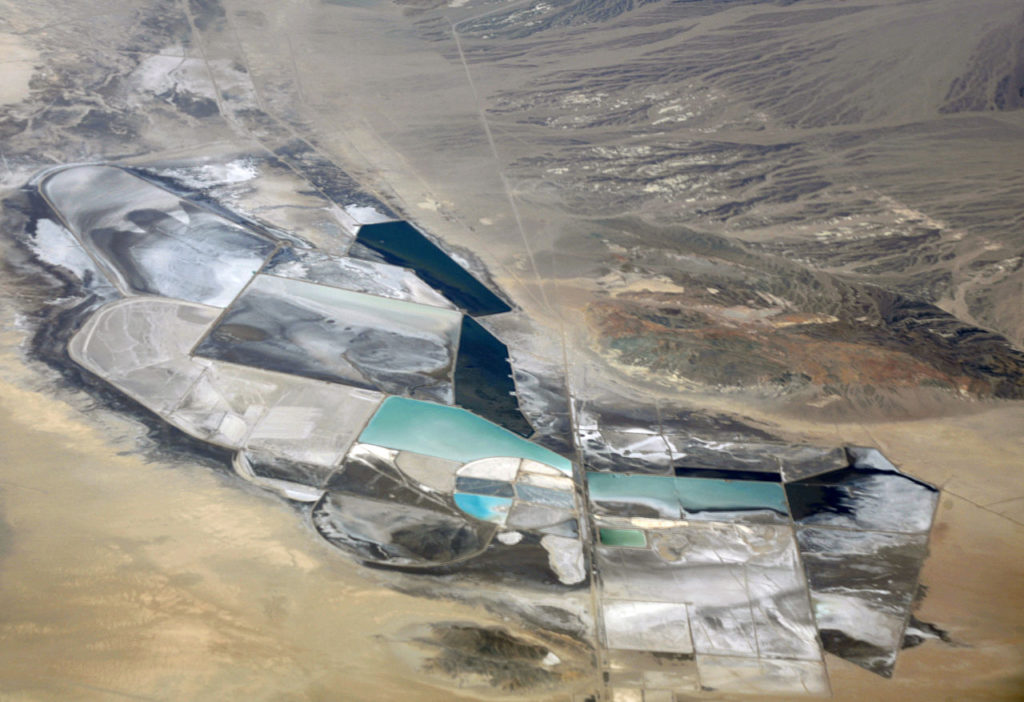
Albemarle (NYSE: ALB), the world’s largest producer of lithium for batteries, posted a spike in quarterly profit on Wednesday due to a jump in prices for the ultralight metal.
The results reflected an improvement in the lithium market after a supply glut forced the company and peers last year to cut staff and curtail growth projects.
Albemarle said the average price it received for its lithium rose 61% during the quarter and its sales volumes increased 11%.
“We continue to see resilient demand fundamentals across our core markets, including energy storage, electric vehicles, and semiconductors,” CEO Kent Masters said in a statement.
The company, which operates across the Americas, Australia, Asia and Europe, reported second-quarter net income of $480 million, or $3.52 per share, compared to $22.9 million in the year-ago quarter.
Excluding one-time items, Albemarle earned $3.75 per share. By that measure, analysts expected earnings of $3.24 per share, according to IBES data from LSEG.
Shares gained 1% to $120 in after-hours trading on Wednesday.
The Charlotte, North Carolina-based company plans to hold a conference call on Thursday to discuss the results.
(Reporting by Ernest Scheyder; Editing by Nia Williams and Jamie Freed)
Stardust Power signs lithium supply deal with Charge CCCV
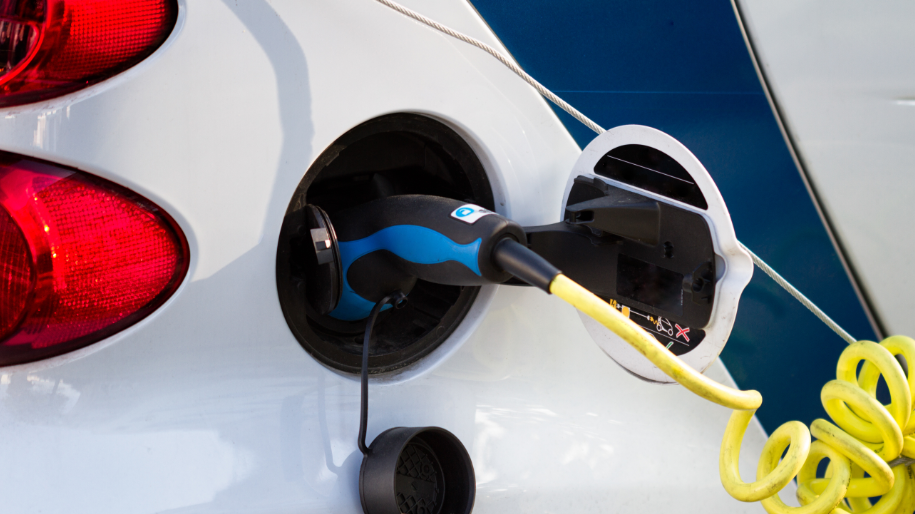
US lithium developer Stardust Power (NASDAQ: SDST) announced Wednesday it has entered into a non- binding Letter of Intent with battery technology company Charge CCCV LLC, (CV4) for the supply of battery-grade lithium carbonate from Stardust Power’s lithium refinery in Muskogee, Oklahoma to support C4V’s battery manufacturing joint ventures in the US.
C4V provided a preliminary lithium carbonate demand forecast showing a phased approach for the potential offtake of 3,000 MT in 2028; 10,000 MT in 2029 and 20,000 MT by 2030.
Stardust said the agreements, if finalized, could cover a large share of its planned lithium production and could generate billions of dollars in sales if lithium prices remain at current levels.
The deal comes as the US races to secure domestic sources of lithium amid growing concerns over reliance on imports from China.
In February, the refiner inked a deal to supply Japan’s Sumitomo Corporation with at least 20,000 tonnes of lithium carbonate a year when its refinery in Oklahoma enters production.
In June, Stardust Power was selected for a US Department of Energy-funded research program to develop next-generation electrochemical technology for the extraction of lithium from waste.
“C4V is one of the few gigafactory platforms currently operating in the United States, and their forecasted demand profile highlights the scale of domestic battery manufacturing now taking shape,” Stardust Power CEO Roshan Pujari said in a news release.
Stardust Power stock closed the day down 8.5% on the Nasdaq. The company has a $6.6 million market capitalization.
CATL’s Jianxiawo lithium mine remains closed pending environmental approval
 Credit: Millennial Lithium Corp.
Chinese battery maker CATL’s Jianxiawo lithium mine remains pending environmental approval, state media reported on Friday.
The mine, in the city of Yichun in Jiangxi Province, is also undergoing maintenance, and no ore transportation or crushing is taking place, Shanghai Securities News reported, citing the Yifeng County Ecology and Environment Bureau.
CATL has been asked to complete environmental impact assessment approval procedures as soon as possible, the news outlet cited the bureau as saying.
The bureau comments came amid speculation over the mine’s reopening and expectations it could quickly return to full production, Shanghai Securities News reported.
The project’s mineral designation was changed to lithium ore from ceramic clay containing lithium, requiring CATL to prepare a new environmental impact assessment report, which was published for public consultation on July 27.
CATL suspended operations at Jianxiawo in August 2025 after its mining licence expired.
The company obtained a safety production permit on June 29, clearing a key regulatory hurdle towards restarting the mine after a nearly year-long suspension.
The most-active September lithium carbonate contract on the Guangzhou Futures Exchange gained 1.36% as of 0615 GMT. Shares of CATL were little changed, dipping 0.02%.
(Reporting by Joe Cash in Beijing and Dylan Duan in Shanghai; Editing by Muralikumar Anantharaman and Christopher Cushing).
Chinese battery maker CATL’s Jianxiawo lithium mine remains pending environmental approval, state media reported on Friday.
The mine, in the city of Yichun in Jiangxi Province, is also undergoing maintenance, and no ore transportation or crushing is taking place, Shanghai Securities News reported, citing the Yifeng County Ecology and Environment Bureau.
CATL has been asked to complete environmental impact assessment approval procedures as soon as possible, the news outlet cited the bureau as saying.
The bureau comments came amid speculation over the mine’s reopening and expectations it could quickly return to full production, Shanghai Securities News reported.
The project’s mineral designation was changed to lithium ore from ceramic clay containing lithium, requiring CATL to prepare a new environmental impact assessment report, which was published for public consultation on July 27.
CATL suspended operations at Jianxiawo in August 2025 after its mining licence expired.
The company obtained a safety production permit on June 29, clearing a key regulatory hurdle towards restarting the mine after a nearly year-long suspension.
The most-active September lithium carbonate contract on the Guangzhou Futures Exchange gained 1.36% as of 0615 GMT. Shares of CATL were little changed, dipping 0.02%.
(Reporting by Joe Cash in Beijing and Dylan Duan in Shanghai; Editing by Muralikumar Anantharaman and Christopher Cushing).
ENAMI says China antitrust review of Rio Tinto lithium project delayed

The Chinese antitrust regulator review into a lithium project involving Chile’s state-run ENAMI and miner Rio Tinto (ASX: RIO) will be delayed by a few months, the head of the South American company said on Thursday.
ENAMI Executive Vice President Juan Carlos Saez told a legislative session that once approval is secured, the company will proceed with Rio Tinto to develop the Salares Altoandinos project, which requires an estimated investment of over $3 billion.
“They have just delayed it; it was supposed to be delivered around July or August. I believe they are going to delay it a few more months,” he told lawmakers.
ENAMI projects the initiative will begin operations in 2032 with an annual output of 35,000 metric tons, gradually increasing to 75,000 tons over three years.
(Reporting by Fabian Cambero, Editing by Iñigo Alexander)

No comments:
Post a Comment