It’s possible that I shall make an ass of myself. But in that case one can always get out of it with a little dialectic. I have, of course, so worded my proposition as to be right either way (K.Marx, Letter to F.Engels on the Indian Mutiny)
Sunday, August 30, 2026
We asked Canadians if they intend to boycott U.S. products. We heard a lot more than that.
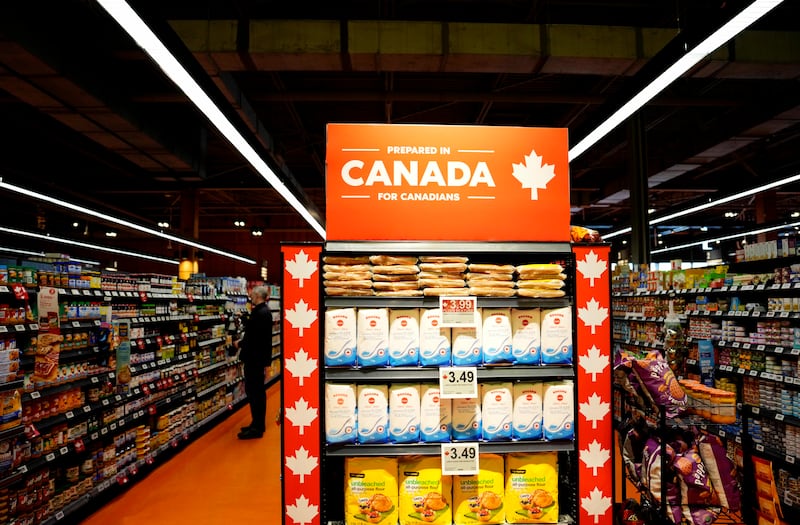
Products prepared in Canada are displayed prominently at the end of an aisle at a grocery store in Ottawa on April 2, 2025. (Justin Tang / The Canadian Press)
When Tom Holder watched Donald Trump become U.S. president for the second time, it was the last straw.
For years, he and his wife would winter in South Carolina, in a villa they rented months in advance. By the time Trump won the U.S. election in 2024, they had already put down deposits for their stays in 2025 and 2026.
“We were besides ourselves,” the Ontario resident described in an interview with CTVNews.ca.
“We could see the way things were going.”
The couple cancelled their bookings, foregoing US$4,000 in deposits. Last year, they stayed in Barrie, Ont., for the winter.
“It’s not great,” he said, adding that the experience didn’t change their plans.
This year, Holder said they are closing on a condo on Prince Edward Island.
“We loved going down south,” he said. “We loved the warm weather and the beaches.”
“But under the circumstances, I can’t see us ever going back down,” he added.
He isn’t the only one.
CTV News asked readers if they would boycott American goods due to the escalating trade war and, if so, what products are they boycotting and how are they coping as consumers.
More than 200 readers responded to the callout, the majority of whom said they have been boycotting U.S. goods, services and travel.
A few say they continue to purchase U.S.-made products, so as to not impact American residents and businesses.
Others say they’ve had enough of Trump’s behaviour towards Canada and, in some cases, say U.S. citizens bear some accountability for choosing him as their leader.
“We cannot and will not support the American government or the people who allowed this to happen again as they no longer can claim they didn’t know what might happen,” wrote David Hackney, an Ontario resident.
“It is clear that Trump is attempting a takeover of Canada by economic warfare which cannot be tolerated and we cannot idly stand by and allow these attacks to happen.”
Products prepared in Canada are displayed prominently at the end of an aisle at a grocery store in Ottawa on April 2, 2025. (Justin Tang / The Canadian Press)
Paying more for groceries
Many who responded to the callout say that boycotting American goods has meant having to pay more for domestic products.
“If we can’t find a non-USA product, we go without,” wrote Sara Crockett, who lives in the Similkameen Valley in southern B.C.
She added that she boycotted Amazon and Amazon Prime for a year. “But being rural, I eventually had to purchase some items,” she wrote.
She added that she and her friends share updates on where to find hard-to-purchase non-U.S. items, like Canadian cauliflower or celery.
Brenda Moore said she would rather pay more than purchase products from the U.S.
“Even if products are more expensive, I am so done with the Americans that I will pay more rather than support them and their companies,” her emails read.
Canadian goods only
Some readers say they have moved away from old shopping habits and even returned mistakenly bought U.S. goods to stores out of Canadian patriotism.
“I mistakenly bought a few American items such as caulk and a garbage can but returned them the next day,” wrote Larry and Lynn Whitty.
They added that they will travel more than an hour to source Canadian-made goods despite locally available access to American items.
Marlene Gagne, who lives in Ottawa, wrote that she had her home renovated solely with Canadian furniture and materials.
She said her stairs were recarpeted with carpeting made by a Quebec firm and she bought new living room furniture made by a company in Toronto.
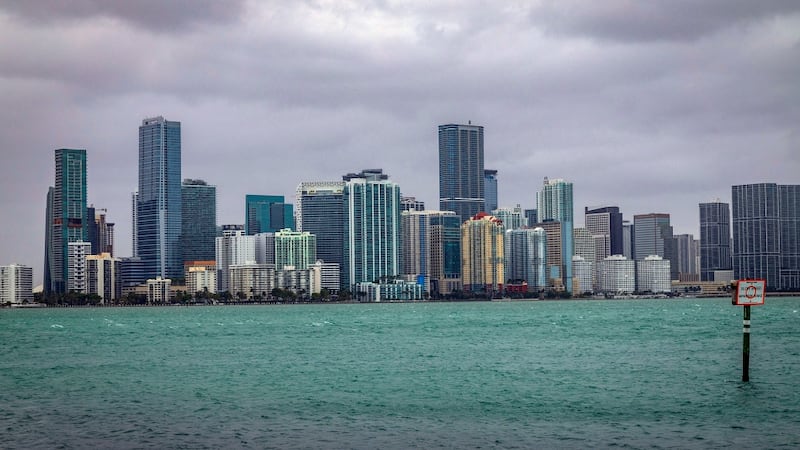
The Miami skyline is viewed from the Rickenbacker Causeway in South Florida, Dec. 15, 2023. (Pedro Portal/Miami Herald via AP)
Snowbirds no more
Many residents, especially seniors stated that they will not be travelling to the U.S. anymore, despite having visited during the winter months for years.
Several also said that they sold their properties in Florida and Arizona and have opted to remain in Canada or go elsewhere.
Lindsay Marijan, who lives in Markham, Ont., said she and her family sold their Florida condo, boat and dock.
“Who wants to support a country that wants to take our sovereignty away?” her email reads.
After Donald Trump was elected the first time in 2016, Holder said he noticed a change in local attitudes.
“Openly Trump-ist,” he described to CTVNews.ca.
“The arrogance was already underneath ... Trump brought out all that,” he said.
Crockett said she and her husband would spend up to a month in the U.S. every year.
They chose not to travel south in 2025, the first time in almost seven years.
“Why would we spend our money in a country that’s threatening us on multiple levels?” she said. Instead they have decided to travel domestically, with plans to go to Europe next fall.
“It’ll be a long time before we go back to the U.S.,” she said.
Against boycotting
A few Canadians say they continue to purchase U.S. groceries and items, citing lower costs and wanting to be fair towards American residents and businesses.
“I look at the cost first and not the country of origin,” Ashley Taylor, who lives in Ontario, wrote.
One Toronto resident said he has been buying more U.S.-made goods.
“Canadian leaders are working against the interest of the people,” Carter Lewis opined in his email.
Paula Marshall stated that her first instinct was to boycott, but opted against to avoid impacting “everyday citizens who have nothing to do with the presidentOpens in new window
Tourists from Ontario smile after a boat tour on Newfoundland's Southern Shore on Monday. (Garrett Barry/CTV News)
Canadian travellers pulled hundreds of millions of dollars out of the United States in the first part of 2026, according to new data released by Statistics Canada.
The agency’s regular National Travel Survey released Tuesday showed Canadians cut back on trips, average visit length and spending on trips into the United States during the first three months of 2026, when compared to the same period a year prior.
Canadians made nearly 500,000 fewer trips into America and spent about $800 million less on those trips year over year, according to preliminary numbers gathered by Statistics Canada.
The spending total accounts for the total costs of the trips made between January and March, which includes money spent in Canada and on airfare for travel.
The data shows a continued decline in Canadian interest in U.S. travel, even before the latest round of trade tensions between the two countries.
“There’s nothing I really want to see in the States,” said Patti Page, an Ontario tourist travelling in St. John’s this week. “I’d rather see more of Canada.”
“I think we’re just wanting to support Canada and Canadian businesses and Canadian tourism,” said her travel partner Donna Richardson.
The National Travel Survey suggests that Canadian businesses are benefiting — spending on internal trips, within the country, increased to $14.5 billion in the first quarter of 2026, up from $13.8 billion in the same period for 2025.
That data includes business and leisure travel.
“Now, I’m just travelling Canada,” said Micheline Charette, a Quebec resident visiting Newfoundland and Labrador on Tuesday.
“I go to the Rockies, I go everywhere, Halifax, I’m travelling everywhere.”
There’s been an increase in in-country visits overall, which have benefited tourism operators in Newfoundland and Labrador and helped those business weather other high costs — like jumps in the cost of diesel and gasoline.
“More trips, which does help on the other side of the scale of things to balance it out,” said Luke Gatherall, who helps run the Gatherall’s boat tour company on Newfoundland’s Southern Shore.
“I think this year was a great year, things were really busy,” said Craig Foley, the CEO of Hospitality Newfoundland and Labrador. “We’ve heard that the season started very early. We’ve also…made a concerted effort around extending the shoulder season [as] we call it.”
There are also signs that despite Canadians turning away from their southern border, American visitors are still interested in crossing into Canada.
The National Travel Survey shows American visitors spent nearly $3 billion on visits to Canada between January and March 2026, an increase of about $500 million from the same period the year prior.
Some Canadian tourists say they’ve soured on U.S. travel long-term, and are unlikely to return so long as U.S. President Donald Trump remains in office.
“It’s not an age question, I’m fit,” said Charette, “It’s just Canada has so much to offer.”
Prepared in Canada signage at a store in the town of St. Andrews, New Brunswick on Tuesday, May 6, 2025. THE CANADIAN PRESS/Graham Hughes
Toronto resident Josh Balon was shopping for meat at his local grocery store when he decided it may be a good time to look at supporting a local butcher shop.
“I think if anyone has the means to support local… those small businesses, I think those are really important because they’re going to hurt,” he told CP24.com.
“They (grocery chains) have a lot more room to weather the storm compared to a local butcher.”
Balon is one of a number of Torontonians who have set their sights on buying more local products as the trade war between Canada and the United States heats up.
New U.S. tariffs on billions of dollars of Canadian goods were implemented on Aug. 22, prompting the Canadian government to announce dollar-for-dollar retaliatory tariffs. Those counter-tariffs on hundreds of U.S. products range from 15 to 50 per cent and come into effect after Labour Day.
The trade dispute has dominated headlines in the country in recent days and retail expert Bruce Winder said it is top of mind for Canadians, who are assessing the ways in which they can support businesses in the country.
“(They) are talking about it at the water cooler, they’re talking about it at the dinner table,” he said.
He noted that Loblaw has recently re-introduced ‘T’ labels on products to indicate what products are impacted by tariffs, as well as a maple leaf symbol to identify Canadian products.
“That’ll sort of help guide the consumer for (those) who really want to buy Canadian and who really want to maybe avoid some of the products that have been impacted because of the tariffs,” he said.
He said Canadians have also shifted toward supporting other Canadian retailers outside the grocery segment, opting to shop at Canadian Tire, Rona, or Dollarama over other U.S. or multinational businesses.
‘Do what we can within our means’
Winder said that not everyone is affluent enough to go all in on the buy Canadian movement.
“I think that’s probably the biggest impact a consumer can make is to shop at a Canadian grocer and also try to look on the labels and buy Canadian where possible,” he said.
Balon said over the past year, he has made sure to shift his grocery purchases to Canadian producers when possible.
One U.S. product he has switched out for a Canadian alternative is ice cream.
“I’ve completely shifted away and stopped buying those U.S. brands and gone fully into Chapman’s,” he said.
He noted that he also makes a point to shop at Canadian grocery chains.
“Different people are going be able to go different lengths to supporting Canadian businesses,” he said. “I think we should all do what we can within our means.”
Speaking to CTV News last week, Brydon Parker, who founded the website MadeInCanada.dev, said he has seen a “surge in traffic” over the past few days.
According to Parker, the site gets anywhere from 10 to 100 visitors on the average day. This week, that jumped to around 1,000 at peak traffic.
“There are a lot of great Canadian companies that Canadians do not even know about,” Parker told CTV News.
“If they did know about them, they would be excited to be shopping for those rather than other alternatives.”
He said he thinks the patriotic purchasing will likely stick around.
“We all want to band together in times of challenge, try to support each other and figure out how we prosper through it all,” he said.
‘Not a perfect science’
While Balon told CP24 that he sees a lot of opportunity to support local, he isn’t boycotting U.S. companies who employ thousands of Canadian workers.
“Those companies, you know, they have head offices, they have employees here in Canada,” he said.
Winder noted that globalism has made it much more complicated to simply buy 100 per cent Canadian products.
“You don’t want to sort of throw the baby out with the bathwater. It’s a nuanced discussion, and it’s a nuanced way of thinking about it,” he said.
“What I try to do, and I think what a lot of Torontonians try to do, is just try to support Canadian as much as possible, knowing it’s not a perfect science.”
With files from CTV News Video Journalist Allison Bamford




No comments:
Post a Comment