Trump Gives Putin an ‘Economic Lifeline,’ Waives Sanctions on Russia
“These waivers have nothing to do with our national security, and everything to do with sucking up to Vladimir Putin,” said US Sen. Richard Blumenthal.
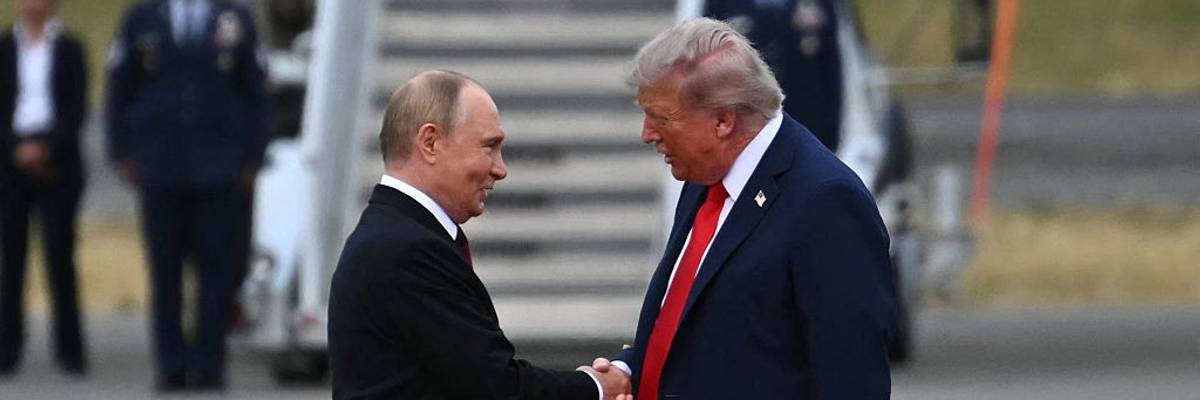
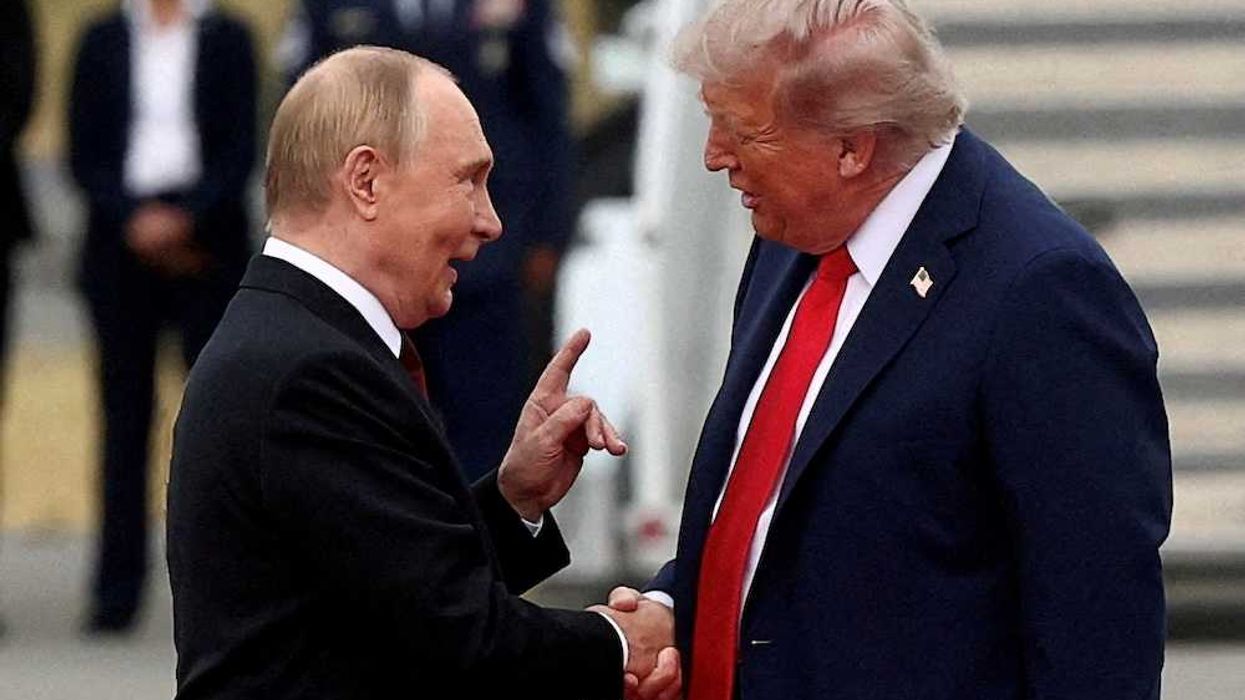
US President Donald Trump greets Russian President Vladimir Putin on the tarmac in Anchorage, Alaska, on August 15, 2025.
(Photo: Andrew Caballero-Reynolds/AFP via Getty Images)
Brad Reed
Oct 17, 2026
COMMON DREAMS
President Donald Trump on Friday signed an executive order that waived new sanctions on Russia that were set to take effect thanks to bipartisan legislation signed into law by the president last month.
Trump justified the decision by claiming the sanctions waiver “is in the national interests of the United States,” without offering further details. The president said he submitted a report to Congress elaborating on his reasons for waiving the sanctions.
A Friday report in The New York Times described the waiver as “another economic lifeline to Russian President Vladimir V. Putin,” as the sanctions had been designed “to target Russian officials, oligarchs, and financial institutions” and “squeeze the financial lifelines sustaining Russia’s war against Ukraine.”
Ukrainian President Volodymyr Zelenskyy condemned the sanctions waiver, and urged US lawmakers and voters to speak out against the US president’s actions.
“It is important that everyone in America... sees what is really happening,” Zelenskyy wrote in a Saturday social media post. “At a time when the Russians have carried out such a massive attack on our energy sector, a decision was unfortunately made in America to completely disregard the [sanctions law], which was supposed to impose truly effective pressure on Russia to bring this war to an end.”
Zelenskyy emphasized that the sanctions package could still do a lot of good, but “it needs to actually work, and every voice in support of it matters.”
Trump in recent weeks has been pressuring Ukraine to stop its attacks on Russian energy infrastructure in a bid to lower global prices of gas and diesel, both of which have skyrocketed in recent months because of the president’s illegal war with Iran.
In addition to pressuring Ukraine, Trump also struck a deal with Russia to import diesel into the US, drawing a bipartisan rebuke from lawmakers who accused the president of funding Putin’s war machine.
Rep. Don Beyer (D-Va.) ripped Trump’s decision to waive the Russia sanctions in a Friday social media post.
“Trump’s latest surrender to Putin again betrays our Ukrainian partners,” Beyer wrote, “and defies clear congressional intent of legislation designed to punish Russia for its illegal war of aggression.”
Beyer also pointed to flaws in the sanctions bill that he said gave Trump too much discretionary power to not only waive sanctions on Russia, but to impose further tariffs on US allies.
“Congress must fix this flawed law,” he said, “to stop Trump from capitulating to Putin and ensure that it truly supports Ukraine.”
Sen. Thom Tillis (R-NC) on Saturday slammed Trump’s sanctions waiver as “beyond irresponsible.”
“What part of enforcing a law passed 86-11 by the Senate does the President and his advisors not understand?” Tillis asked. “It’s unconscionable that this administration is capitulating to a Russian dictator who illegally invaded Ukraine and butchers innocent civilians every single day.”
Sen. Richard Blumenthal (D-Conn.), who co-authored the sanctions law with the late Sen. Lindsey Graham (R-SC), said Trump has shown “that he stands on the side of a bloodthirsty thug and the enablers of Russia’s war machine and against the majority of Americans, their representatives in both houses of Congress, and our European allies.”
“These waivers have nothing to do with our national security, and everything to do with sucking up to Vladimir Putin,” Blumenthal added. “I hope my Republican colleagues will join me in condemning this craven, cowardly action.”
'Wow': Shock as Volodymyr Zelenskyy 'trolls Trump' with 'clear message' in just five words
By:David McAfee
Ukrainian President Volodymyr Zelenskyy posted a five-word tribute to the late Sen. Lindsey Graham on Saturday. Plenty of people took it as a jab at President Donald Trump.
“Thank you for everything, Lindsey!” Zelenskyy wrote on X, in English and Ukrainian. He attached a photo of himself shaking hands with Graham, who is giving a thumbs-up.
Zelenskyy didn’t mention Trump. But the timing stood out. The post went up hours after Trump put on hold the sweeping Russia sanctions law named for Graham, a South Carolina Republican and longtime Russia hawk who died in July.
“Late last night, President Trump waived the financial punishments on buyers of Russian oil that Congress had enacted to stop funding Putin’s war machine,” wrote Margaret Brennan, moderator of CBS’ “Face the Nation.” “Passing that bipartisan bill was meant to honor Lindsey Graham’s legacy, as he had pushed for those sanctions.”
She added that Zelenskyy said Saturday “it is harder now without Senator Lindsey Graham in Ukraine’s corner.”
Caitlin Doornbos, a foreign policy and war reporter who founded the outlet The Correspondent, also pointed to the timing.
“Wow. President Zelensky posts this hours after Trump announced waivers of the new Lindsey Graham sanctions law on Russia,” she wrote.
Christopher Miller, the Financial Times’ chief Ukraine correspondent, shared the post with a one-word reaction: “Wow.”
Others read it as a deliberate shot.
“Zelenskyy is basically just trolling Trump at this point, and I’m all for it,” wrote Vatnik Soup, a popular pro-Ukraine account.
Finnish geopolitical analyst Joni Askola called it “a clear message from Zelensky to Trump.” Nicolas Tenzer, a senior French civil servant and senior fellow at the Center for European Policy Analysis, wrote: “This is the message.”
John O’Brennan, a professor of European politics, called it “master trolling.”
Fox News co-host Jessica Tarlov brought up Graham’s sister, Darline Graham, who was appointed to finish his term.
“Wonder what Darline would say about who she stands with,” Tarlov wrote.
The post comes during a rough stretch between the two leaders. Trump said last week that Ukraine needs “a new president.” He also blamed Zelenskyy’s strikes on Russian refineries for high U.S. diesel prices, and Thursday he said he finds Zelenskyy “more difficult to deal with than Putin.”
By:David McAfee
Oct 17, 2026
RAW STORY
Ukrainian President Volodymyr Zelenskyy posted a five-word tribute to the late Sen. Lindsey Graham on Saturday. Plenty of people took it as a jab at President Donald Trump.
“Thank you for everything, Lindsey!” Zelenskyy wrote on X, in English and Ukrainian. He attached a photo of himself shaking hands with Graham, who is giving a thumbs-up.
Zelenskyy didn’t mention Trump. But the timing stood out. The post went up hours after Trump put on hold the sweeping Russia sanctions law named for Graham, a South Carolina Republican and longtime Russia hawk who died in July.
“Late last night, President Trump waived the financial punishments on buyers of Russian oil that Congress had enacted to stop funding Putin’s war machine,” wrote Margaret Brennan, moderator of CBS’ “Face the Nation.” “Passing that bipartisan bill was meant to honor Lindsey Graham’s legacy, as he had pushed for those sanctions.”
She added that Zelenskyy said Saturday “it is harder now without Senator Lindsey Graham in Ukraine’s corner.”
Caitlin Doornbos, a foreign policy and war reporter who founded the outlet The Correspondent, also pointed to the timing.
“Wow. President Zelensky posts this hours after Trump announced waivers of the new Lindsey Graham sanctions law on Russia,” she wrote.
Christopher Miller, the Financial Times’ chief Ukraine correspondent, shared the post with a one-word reaction: “Wow.”
Others read it as a deliberate shot.
“Zelenskyy is basically just trolling Trump at this point, and I’m all for it,” wrote Vatnik Soup, a popular pro-Ukraine account.
Finnish geopolitical analyst Joni Askola called it “a clear message from Zelensky to Trump.” Nicolas Tenzer, a senior French civil servant and senior fellow at the Center for European Policy Analysis, wrote: “This is the message.”
John O’Brennan, a professor of European politics, called it “master trolling.”
Fox News co-host Jessica Tarlov brought up Graham’s sister, Darline Graham, who was appointed to finish his term.
“Wonder what Darline would say about who she stands with,” Tarlov wrote.
The post comes during a rough stretch between the two leaders. Trump said last week that Ukraine needs “a new president.” He also blamed Zelenskyy’s strikes on Russian refineries for high U.S. diesel prices, and Thursday he said he finds Zelenskyy “more difficult to deal with than Putin.”
Darline Graham rebukes Trump over gutting late brother’s signature law: NYT
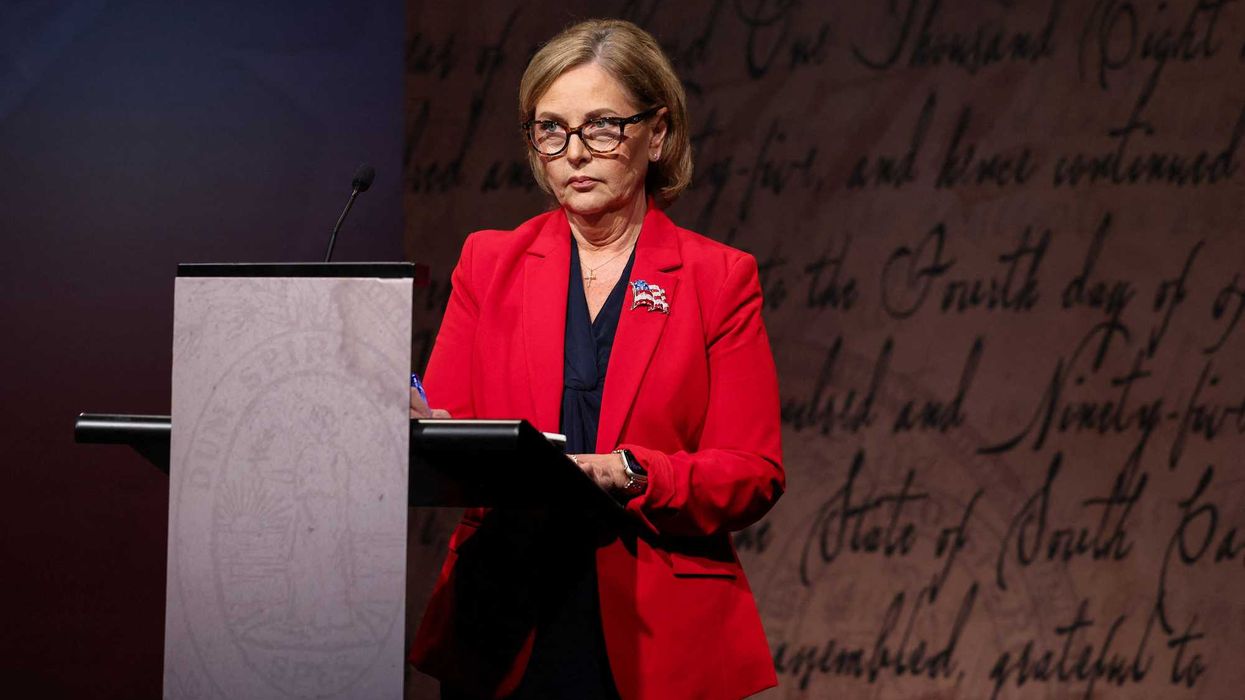
US Senate Republican candidate Darline Graham takes notes at the podium before a debate with US Senate candidates Democrat Annie Andrews and Libertarian Kasie Whitener in Columbia, South Carolina, US, October 11, 2026. REUTERS/Sam Wolfe
By: Bennito L. Kelty
Sen. Darline Graham (R-SC) is splitting with President Donald Trump over his decision to gut her late brother's signature law imposing sanctions on Russia.
Graham pushed back on Saturday against Trump's move to exempt Russia from the Lindsey O. Graham Sanctioning Russia and Iran Act, The New York Times reported. Her brother, a longtime Russia hawk, had worked for over a year to line up votes for the measure before he died.
"Personally, I would choose to put the pressure on Russia to end the war and get gas prices down," Graham told reporters at a campaign stop. "Because I don't trust Putin, and I don't trust Russia."
The comments mark a rare bit of daylight between Trump and the South Carolina Republican, who was appointed in July and is now running for a full term with his endorsement. Graham, who had never held office before joining the Senate, has touted her role in passing the law as one of her biggest accomplishments.
"I was so proud to get the Lindsey O. Graham Sanctioning Russia and Iran Act passed," she said during a debate earlier this week, adding that the law "gives the president tools he can use if he so chooses to end the war through economic sanctions."
Trump opted not to use them. The president has offered no explanation for the waiver, which came one week after his administration briefly eased penalties on Russian diesel amid soaring diesel prices that have turned into a major midterm issue. The law, signed in September, targeted Russia's energy sector along with oligarchs, officials and banks, but it gave the White House wide latitude to grant exemptions.
Graham said she plans to raise the issue with Trump next week, when he is scheduled to hold a rally for her in South Carolina. She also noted that her brother and the president didn't always agree.
"They had that relationship where they could agree to disagree sometimes," she said.
According to The Times, Trump released a video Saturday endorsing Graham in the general election, saying she would be "an incredible, really an unbelievable senator" and crediting "good genetics" shared with her brother.
US Senate Republican candidate Darline Graham takes notes at the podium before a debate with US Senate candidates Democrat Annie Andrews and Libertarian Kasie Whitener in Columbia, South Carolina, US, October 11, 2026. REUTERS/Sam Wolfe
By: Bennito L. Kelty
Oct 17, 2026
RAW STORY
Sen. Darline Graham (R-SC) is splitting with President Donald Trump over his decision to gut her late brother's signature law imposing sanctions on Russia.
Graham pushed back on Saturday against Trump's move to exempt Russia from the Lindsey O. Graham Sanctioning Russia and Iran Act, The New York Times reported. Her brother, a longtime Russia hawk, had worked for over a year to line up votes for the measure before he died.
"Personally, I would choose to put the pressure on Russia to end the war and get gas prices down," Graham told reporters at a campaign stop. "Because I don't trust Putin, and I don't trust Russia."
The comments mark a rare bit of daylight between Trump and the South Carolina Republican, who was appointed in July and is now running for a full term with his endorsement. Graham, who had never held office before joining the Senate, has touted her role in passing the law as one of her biggest accomplishments.
"I was so proud to get the Lindsey O. Graham Sanctioning Russia and Iran Act passed," she said during a debate earlier this week, adding that the law "gives the president tools he can use if he so chooses to end the war through economic sanctions."
Trump opted not to use them. The president has offered no explanation for the waiver, which came one week after his administration briefly eased penalties on Russian diesel amid soaring diesel prices that have turned into a major midterm issue. The law, signed in September, targeted Russia's energy sector along with oligarchs, officials and banks, but it gave the White House wide latitude to grant exemptions.
Graham said she plans to raise the issue with Trump next week, when he is scheduled to hold a rally for her in South Carolina. She also noted that her brother and the president didn't always agree.
"They had that relationship where they could agree to disagree sometimes," she said.
According to The Times, Trump released a video Saturday endorsing Graham in the general election, saying she would be "an incredible, really an unbelievable senator" and crediting "good genetics" shared with her brother.
Throttling of Ukraine’s Starlink Access Heightens Concerns Over Government Reliance on Elon Musk
“If Musk is going to... assist Putin’s invasion of Ukraine, Ukraine’s allies should sanction Starlink, X, and Tesla,” said one expert.
A double exposure photograph shows a portrait of Elon Musk and the Starlink company logo on March 1, 2025.
(Photo: Vincent Feuray/Hans Lucas/AFP via Getty Images)
Brad Reed
Oct 14, 2026
COMMON DREAMS
The Ukrainian government on Tuesday night said that its access to the SpaceX-owned Starlink satellite internet service was throttled, prompting critics to question the wisdom of depending on any company owned by far-right billionaire Elon Musk.
According to a Wednesday report in The New York Times, Ukrainian officials suspect that orders to restrict their access to Starlink “had come from Washington,” as President Donald Trump has been pressuring the country to stop attacking Russian energy infrastructure ahead of the 2026 midterm elections.
Musk, who was Trump’s single biggest donor in the 2024 presidential campaign, has spent at least $276 million since July to help Republicans maintain their congressional majorities.
In a Wednesday social media post, Ukrainian military expert Serhiy Beskrestnov revealed that Ukrainian military forces “have not received any warnings about this restriction” to Starlink, which he said “has led to the failure of several missions.”
“Obviously, this action cannot be a coincidence,” Beskrestnov added, “and is related to the current political situation.”
As noted by the Kyiv Independent on Wednesday, Ukraine depends on Starlink for “several military applications including operating its mid-strike campaign in Russian-occupied Ukraine, as well as interceptor drones that defend against Russia’s new jet-powered attack drones.”
The sudden restrictions on Starlink drew the ire of Polish Foreign Affairs Minister Radosław Sikorski, who directly called out Musk in a social media post.
“Hey, Elon Musk, big man, are you playing politics with your products again?” Sikorski asked. “As your European customers, we are watching you.”
Ian Bond, deputy director of the Center for European Reform think tank, wrote that the sudden Starlink restrictions “should set off a siren in every defense ministry in Europe.”
“There needs to be much more urgency about developing autonomous capabilities,” Bond added, “not subject to US caprices, for early warning of attacks, countering ballistic missiles, communicating with forces or controlling offensive weapons.”
Gideon Rachman, chief foreign affairs commentator for the Financial Times, expressed a similar view, arguing that “the Starlink restriction over Ukraine is a perfect illustration of the danger of relying on US technology.”
Steve Peers, professor of EU law and human rights law at Royal Holloway, University of London, argued that democratic nations must start viewing Musk and his companies as geopolitical adversaries.
“If Musk is going to (in effect) assist Putin’s invasion of Ukraine,” wrote Peers, “Ukraine’s allies should sanction Starlink, X, and Tesla.”
Nicholas Grossman, professor of international relations at the University of Illinois, pointed out that he has been calling for governments to end their dependence on Musk and his companies for the last three years.
“The problem is too much power, especially for an enemy of democracy,” Grossman wrote.
Grossman also took a shot at former President Joe Biden’s administration for not taking Musk’s threat to democracy seriously, as it continued to award SpaceX lucrative contracts even as its owner used his vast fortune to power Trump’s 2024 comeback.
“Big mistake,” he wrote.

“If Musk is going to... assist Putin’s invasion of Ukraine, Ukraine’s allies should sanction Starlink, X, and Tesla,” said one expert.
A double exposure photograph shows a portrait of Elon Musk and the Starlink company logo on March 1, 2025.
(Photo: Vincent Feuray/Hans Lucas/AFP via Getty Images)
Brad Reed
Oct 14, 2026
COMMON DREAMS
The Ukrainian government on Tuesday night said that its access to the SpaceX-owned Starlink satellite internet service was throttled, prompting critics to question the wisdom of depending on any company owned by far-right billionaire Elon Musk.
According to a Wednesday report in The New York Times, Ukrainian officials suspect that orders to restrict their access to Starlink “had come from Washington,” as President Donald Trump has been pressuring the country to stop attacking Russian energy infrastructure ahead of the 2026 midterm elections.
Musk, who was Trump’s single biggest donor in the 2024 presidential campaign, has spent at least $276 million since July to help Republicans maintain their congressional majorities.
In a Wednesday social media post, Ukrainian military expert Serhiy Beskrestnov revealed that Ukrainian military forces “have not received any warnings about this restriction” to Starlink, which he said “has led to the failure of several missions.”
“Obviously, this action cannot be a coincidence,” Beskrestnov added, “and is related to the current political situation.”
As noted by the Kyiv Independent on Wednesday, Ukraine depends on Starlink for “several military applications including operating its mid-strike campaign in Russian-occupied Ukraine, as well as interceptor drones that defend against Russia’s new jet-powered attack drones.”
The sudden restrictions on Starlink drew the ire of Polish Foreign Affairs Minister Radosław Sikorski, who directly called out Musk in a social media post.
“Hey, Elon Musk, big man, are you playing politics with your products again?” Sikorski asked. “As your European customers, we are watching you.”
Ian Bond, deputy director of the Center for European Reform think tank, wrote that the sudden Starlink restrictions “should set off a siren in every defense ministry in Europe.”
“There needs to be much more urgency about developing autonomous capabilities,” Bond added, “not subject to US caprices, for early warning of attacks, countering ballistic missiles, communicating with forces or controlling offensive weapons.”
Gideon Rachman, chief foreign affairs commentator for the Financial Times, expressed a similar view, arguing that “the Starlink restriction over Ukraine is a perfect illustration of the danger of relying on US technology.”
Steve Peers, professor of EU law and human rights law at Royal Holloway, University of London, argued that democratic nations must start viewing Musk and his companies as geopolitical adversaries.
“If Musk is going to (in effect) assist Putin’s invasion of Ukraine,” wrote Peers, “Ukraine’s allies should sanction Starlink, X, and Tesla.”
Nicholas Grossman, professor of international relations at the University of Illinois, pointed out that he has been calling for governments to end their dependence on Musk and his companies for the last three years.
“The problem is too much power, especially for an enemy of democracy,” Grossman wrote.
Grossman also took a shot at former President Joe Biden’s administration for not taking Musk’s threat to democracy seriously, as it continued to award SpaceX lucrative contracts even as its owner used his vast fortune to power Trump’s 2024 comeback.
“Big mistake,” he wrote.

Top historian explains Russia's magic grip on the GOP
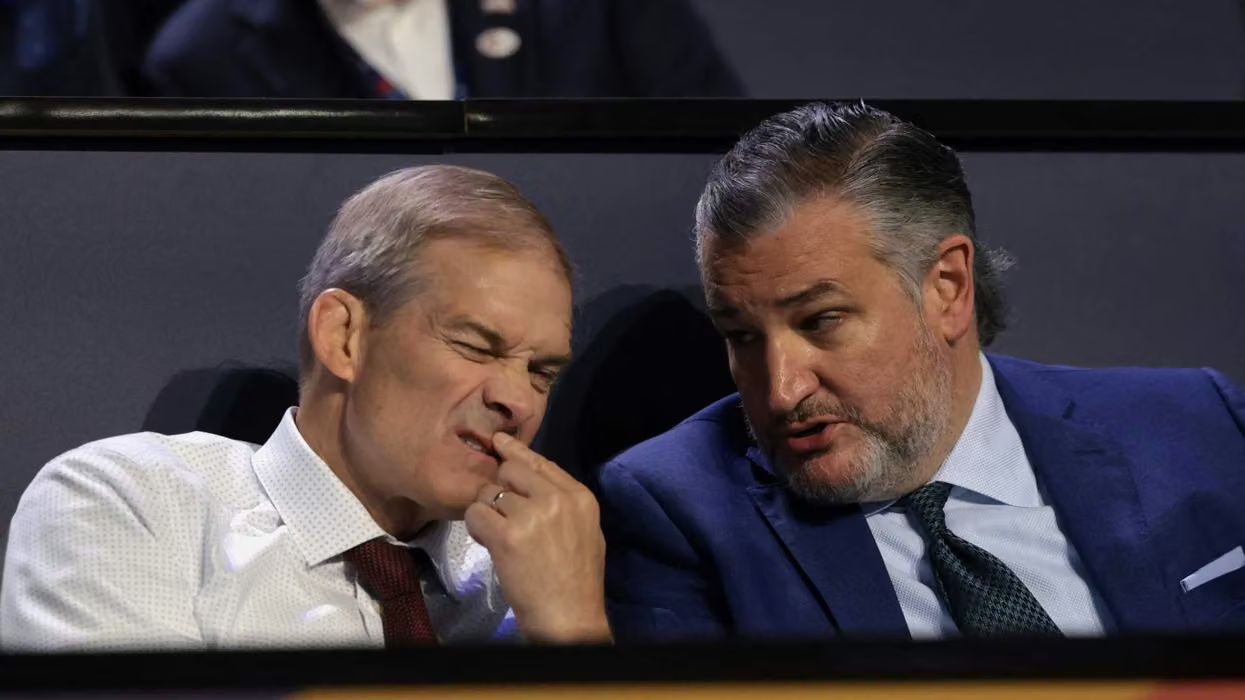
REUTERS/Jessica Koscielniak
Matthew Rozsa
President Donald Trump's Republican Party acts less like a traditional political party than a cult of personality, according to a historian who specializes in fascism — and he points a finger of blame at Russia.
"How does the party go along, in lockstep with that?" podcaster Shane Smith asked historian Timothy Snyder in a video that dropped on Thursday. "I get that, and I probably agree with that, but that’s one person. How do you get the whole party, if not the whole country, to just overnight agree with you in lockstep?"
Snyder replied, "I’m going to answer that, but I’m going to qualify it first, because it’s not the whole country. The polling on the Russia-Ukraine war is actually pretty good. Even Republicans are about fifty-fifty, independents are mostly pro-Ukraine, and Democrats are overwhelmingly pro-Ukraine. So I wouldn’t say the whole country. There has been a seismic shift in the American right. And I think there are a couple of causes beyond Trump, who has a lot of influence. Opinion polls on Russia among certain people change because of him. He does have a lot of influence on, let’s say, half the Republican electorate."
He continued, "But in addition to that, there’s the fact that a lot of Americans on the far right really like Putin’s ideology. They like the notion of civilization. They like the sexism. They like the racism. They like the conspiracy thinking. They like the anti-gay stuff. And then, to make matters a little more practical, Putin’s Russia shares money around with the far right. I worked on this in Europe. I’ve never worked on it in the US, but I’d be stunned if it weren’t true in the US as well. They support individual right-wing actors with money, and they also platform them. And they also coach them, like with Tucker Carlson."
Snyder later pointed out that Russia is no longer left-wing, as it was under the Soviet Union, but is right-wing under President Vladimir Putin.
"There’s the fact that Russia is no longer the communist Soviet Union; it’s right-wing Russia, which is naturally attractive to certain right-wing people," Snyder told Smith. "And then there are all the ops. The way we run social media in the US is basically laissez-faire: anybody can do what they want to do. And under Trump, that’s basically policy, which means that not just the Russians, but the Chinese and everybody else, are all over our social media. I think that’s some of the answer."
He added, "And then let’s not overestimate the American memory, or underestimate the American capacity for contradiction. Right now, the Republicans are trying to claim that the current midterm election is about anti-communism, when their guy admires a former KGB officer, fawns over the head of the Chinese Communist Party, and couldn’t say nicer things about the communist dictator of North Korea. So part of it is just an American capacity to not remember things and to embrace contradiction. I wrote a book that was largely about the 2015–2016 Russian operations in the US. I’m forgetting now who said this, but he had his finger on something important. One of the Russian operatives was actually in the United States trying to figure out what they were going to do with the social media ops. He said, 'These people believe in anything they want, and I admire them for that.' That’s of course not true of all Americans, but there is a certain fluidity around the way we remember politics sometimes, which means the Cold War doesn’t really last as long as one might think."
REUTERS/Jessica Koscielniak
Matthew Rozsa
October 15, 2026
ALTERNET
President Donald Trump's Republican Party acts less like a traditional political party than a cult of personality, according to a historian who specializes in fascism — and he points a finger of blame at Russia.
"How does the party go along, in lockstep with that?" podcaster Shane Smith asked historian Timothy Snyder in a video that dropped on Thursday. "I get that, and I probably agree with that, but that’s one person. How do you get the whole party, if not the whole country, to just overnight agree with you in lockstep?"
Snyder replied, "I’m going to answer that, but I’m going to qualify it first, because it’s not the whole country. The polling on the Russia-Ukraine war is actually pretty good. Even Republicans are about fifty-fifty, independents are mostly pro-Ukraine, and Democrats are overwhelmingly pro-Ukraine. So I wouldn’t say the whole country. There has been a seismic shift in the American right. And I think there are a couple of causes beyond Trump, who has a lot of influence. Opinion polls on Russia among certain people change because of him. He does have a lot of influence on, let’s say, half the Republican electorate."
He continued, "But in addition to that, there’s the fact that a lot of Americans on the far right really like Putin’s ideology. They like the notion of civilization. They like the sexism. They like the racism. They like the conspiracy thinking. They like the anti-gay stuff. And then, to make matters a little more practical, Putin’s Russia shares money around with the far right. I worked on this in Europe. I’ve never worked on it in the US, but I’d be stunned if it weren’t true in the US as well. They support individual right-wing actors with money, and they also platform them. And they also coach them, like with Tucker Carlson."
Snyder later pointed out that Russia is no longer left-wing, as it was under the Soviet Union, but is right-wing under President Vladimir Putin.
"There’s the fact that Russia is no longer the communist Soviet Union; it’s right-wing Russia, which is naturally attractive to certain right-wing people," Snyder told Smith. "And then there are all the ops. The way we run social media in the US is basically laissez-faire: anybody can do what they want to do. And under Trump, that’s basically policy, which means that not just the Russians, but the Chinese and everybody else, are all over our social media. I think that’s some of the answer."
He added, "And then let’s not overestimate the American memory, or underestimate the American capacity for contradiction. Right now, the Republicans are trying to claim that the current midterm election is about anti-communism, when their guy admires a former KGB officer, fawns over the head of the Chinese Communist Party, and couldn’t say nicer things about the communist dictator of North Korea. So part of it is just an American capacity to not remember things and to embrace contradiction. I wrote a book that was largely about the 2015–2016 Russian operations in the US. I’m forgetting now who said this, but he had his finger on something important. One of the Russian operatives was actually in the United States trying to figure out what they were going to do with the social media ops. He said, 'These people believe in anything they want, and I admire them for that.' That’s of course not true of all Americans, but there is a certain fluidity around the way we remember politics sometimes, which means the Cold War doesn’t really last as long as one might think."
Russian troll farms are back —and they're boosting the GOP: NYT
(REUTERS)
The New York Times reports signs are emerging that Russia and other foreign governments are once again seeking to influence American voters — in favor of Trump and Republicans.
An online influence operation backed by the Russian government has been ramping up efforts to use Israel as a political wedge and sow division among U.S., according to a new study by an independent company that tracks digital threats and foreign propaganda campaigns.
The “Doppelgänger” influence operation created a flood of social media posts amplifying perceptions that Democrats have retreated from supporting Israel.
“In appearing to target Democrats with negative content, the Doppelgänger push is just the latest effort by Russia to harm the party and support President Trump since his first run for office in 2016,” reported the Times. “… Doppelgänger is run by Russia’s Social Design Agency, a public relations firm. Both the U.S. government and the European Union have imposed punitive sanctions upon it.”
Sources speaking with the Times said U.S. intelligence officials tried to provide a classified briefing to state officials on the midterm election threats on Thursday—the first of its kind in more than two years. However, Trump administration officials were unable to establish a secure virtual connection to the election personnel, said the sources.
On Wednesday, social media platform X announced it banned 13,000 accounts linked to Iran, Russia and China, said the Times. But, nothing stops Russian and Chinese-backed trolls and software from simply opening new accounts from which to sow division and animosity among voters.
The Times reports international operations have “grown more difficult to track” thanks to a broad pullback by many social media firms. That reversal of fake site subversion happened after condemnation and outcry from conservatives and MAGA elements, who accused the companies of collaborating with the U.S. government to stifle free expression.
Lisa Kaplan, the founder of Alethea, told the Times that the volume of posts in the current campaign, and replies under postings that had high engagement, “indicated that the messaging was likely getting in front of people.”
The campaign included more than 50 fake personas, posing as Israeli women, that posted in “synchronized waves” beginning on Oct. 7, the three-year anniversary of the Hamas attack on Israel. The Ties reports a separate network of more than 1,000 accounts then inserted those posts into high-traffic conversations, creating an estimated stack of 150,000 posts.
The Times added that U.S. intelligence findings and numerous reviews have “consistently found that President Vladimir V. Putin of Russia has favored Trump over Democrats, most of whom are more sympathetic to Ukraine as it battles Russia’s invasion.”
In September, for example, a network linked to Kremlin trolls posted a series of AI slop social media videos churning out baseless claims against Democrats running in closely contested Senate races.
The campaigns “give us a glimpse of what their objectives are,” said Jean le Roux, a senior researcher at Graphika. “They’re not targeting Republican candidates in the same way.”
(REUTERS)
October 16, 2026
COMMON DREAMS
The New York Times reports signs are emerging that Russia and other foreign governments are once again seeking to influence American voters — in favor of Trump and Republicans.
An online influence operation backed by the Russian government has been ramping up efforts to use Israel as a political wedge and sow division among U.S., according to a new study by an independent company that tracks digital threats and foreign propaganda campaigns.
The “Doppelgänger” influence operation created a flood of social media posts amplifying perceptions that Democrats have retreated from supporting Israel.
“In appearing to target Democrats with negative content, the Doppelgänger push is just the latest effort by Russia to harm the party and support President Trump since his first run for office in 2016,” reported the Times. “… Doppelgänger is run by Russia’s Social Design Agency, a public relations firm. Both the U.S. government and the European Union have imposed punitive sanctions upon it.”
Sources speaking with the Times said U.S. intelligence officials tried to provide a classified briefing to state officials on the midterm election threats on Thursday—the first of its kind in more than two years. However, Trump administration officials were unable to establish a secure virtual connection to the election personnel, said the sources.
On Wednesday, social media platform X announced it banned 13,000 accounts linked to Iran, Russia and China, said the Times. But, nothing stops Russian and Chinese-backed trolls and software from simply opening new accounts from which to sow division and animosity among voters.
The Times reports international operations have “grown more difficult to track” thanks to a broad pullback by many social media firms. That reversal of fake site subversion happened after condemnation and outcry from conservatives and MAGA elements, who accused the companies of collaborating with the U.S. government to stifle free expression.
Lisa Kaplan, the founder of Alethea, told the Times that the volume of posts in the current campaign, and replies under postings that had high engagement, “indicated that the messaging was likely getting in front of people.”
The campaign included more than 50 fake personas, posing as Israeli women, that posted in “synchronized waves” beginning on Oct. 7, the three-year anniversary of the Hamas attack on Israel. The Ties reports a separate network of more than 1,000 accounts then inserted those posts into high-traffic conversations, creating an estimated stack of 150,000 posts.
The Times added that U.S. intelligence findings and numerous reviews have “consistently found that President Vladimir V. Putin of Russia has favored Trump over Democrats, most of whom are more sympathetic to Ukraine as it battles Russia’s invasion.”
In September, for example, a network linked to Kremlin trolls posted a series of AI slop social media videos churning out baseless claims against Democrats running in closely contested Senate races.
The campaigns “give us a glimpse of what their objectives are,” said Jean le Roux, a senior researcher at Graphika. “They’re not targeting Republican candidates in the same way.”
Six-figure foreign secret ties an Idaho campaign to Russia
October 16, 2026 | 08:20AM ET
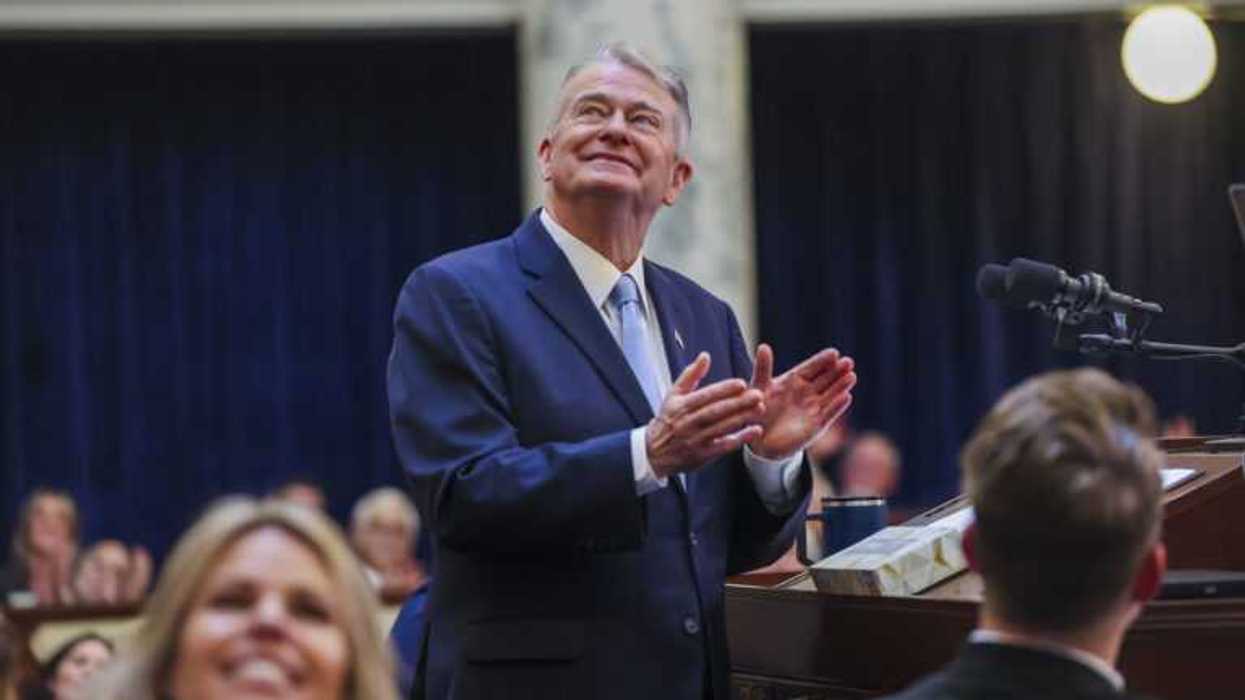
One of the political consultants who the New York Times recently reported received hundreds of thousands of dollars to advise the Russia-aligned government of Republika Srpska was previously named a senior adviser to Idaho Gov. Brad Little’s campaign in February.
On Oct. 6, the New York Times reported LaCivita and another adviser traveled to Republika Srpska in Bosnia and Herzegovina to advise the country’s government before its recent election.
The Times and other national reports identified LaCivita as the co-manager of President Donald Trump’s 2024 election campaign and a senior adviser to the MAGA Inc. super PAC.
While LaCivita is more well-known for his work for Trump and MAGA Inc., he has also worked in Idaho.
In February, Little announced that LaCivita joined the Brad Little for Governor campaign as a senior adviser.
“Chris’ immense experience and understanding of political campaigns and strategy in races all across the country will be a huge asset to our campaign operation,” Little said in a written statement issued Feb. 26. “His insight and ability to deliver winning messages and tactics are unparalleled. I am glad to have him on the team.”
Efforts to reach LaCivita this week were unsuccessful.
Little’s campaign manager, Joan Vargas, did not respond to multiple requests from the Idaho Capital Sun asking if LaCivita still serves as a senior adviser to Little, and whether Little knew about the trip.
Back when he joined Little’s campaign in February, LaCivita issued a written statement saying he was excited to help Little get re-elected in Idaho.
“Joining the Brad Little for Governor campaign is a great honor and opportunity,” LaCivita said. “Gov. Little has been delivering results for Idahoans, and he is just getting started. I look forward to working with his team to keep Idaho one of the best states in the country.”
It was not immediately clear what work LaCivita did for Little’s campaign or if LaCivita still serves as a senior adviser on Little’s campaign.
In its story, the New York Times said it is common for political consultants to also work with foreign candidates and governments. However, the New York Times said LaCivita’s trip to Republika Srpska was notable because it occurred while LaCivita is working to help Trump-aligned candidates in the Nov. 3 midterm elections.
One of the political consultants who the New York Times recently reported received hundreds of thousands of dollars to advise the Russia-aligned government of Republika Srpska was previously named a senior adviser to Idaho Gov. Brad Little’s campaign in February.
On Oct. 6, the New York Times reported LaCivita and another adviser traveled to Republika Srpska in Bosnia and Herzegovina to advise the country’s government before its recent election.
The Times and other national reports identified LaCivita as the co-manager of President Donald Trump’s 2024 election campaign and a senior adviser to the MAGA Inc. super PAC.
While LaCivita is more well-known for his work for Trump and MAGA Inc., he has also worked in Idaho.
In February, Little announced that LaCivita joined the Brad Little for Governor campaign as a senior adviser.
“Chris’ immense experience and understanding of political campaigns and strategy in races all across the country will be a huge asset to our campaign operation,” Little said in a written statement issued Feb. 26. “His insight and ability to deliver winning messages and tactics are unparalleled. I am glad to have him on the team.”
Efforts to reach LaCivita this week were unsuccessful.
Little’s campaign manager, Joan Vargas, did not respond to multiple requests from the Idaho Capital Sun asking if LaCivita still serves as a senior adviser to Little, and whether Little knew about the trip.
Back when he joined Little’s campaign in February, LaCivita issued a written statement saying he was excited to help Little get re-elected in Idaho.
“Joining the Brad Little for Governor campaign is a great honor and opportunity,” LaCivita said. “Gov. Little has been delivering results for Idahoans, and he is just getting started. I look forward to working with his team to keep Idaho one of the best states in the country.”
It was not immediately clear what work LaCivita did for Little’s campaign or if LaCivita still serves as a senior adviser on Little’s campaign.
In its story, the New York Times said it is common for political consultants to also work with foreign candidates and governments. However, the New York Times said LaCivita’s trip to Republika Srpska was notable because it occurred while LaCivita is working to help Trump-aligned candidates in the Nov. 3 midterm elections.


No comments:
Post a Comment