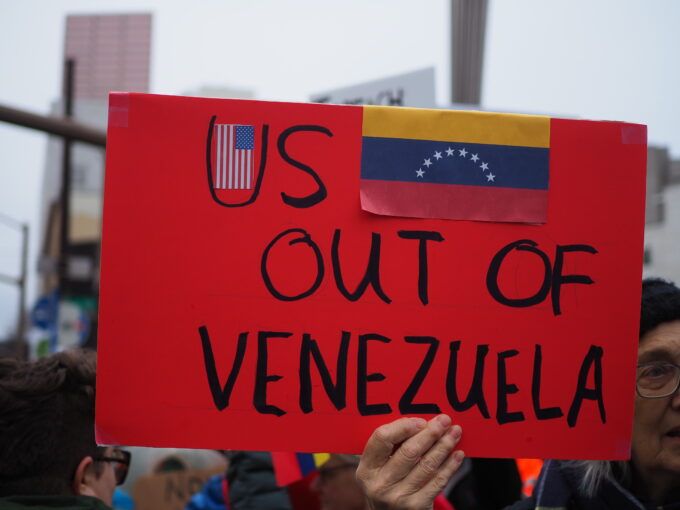
Photograph by Nathaniel St. Clair
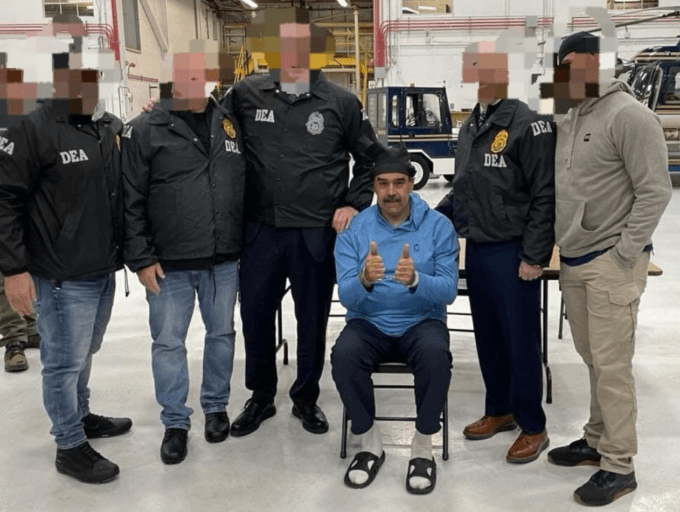
The USA is descending into a state of general lawlessness, at home and abroad. From using domestic special ops paramilitary units (ICE) to kidnap people off the streets of America and send them abroad, the US government is now deploying secret special ops military units (Delta Force) to snatch foreign heads of governments from their homes and sending them to jail in the US.
Political human trafficking has become the rule of law in America under the current Trump administration!
Before 2025, the two political parties engaged in a crescendo of lawfare actions against each other, employing the FBI, the courts and even the CIA behind the scene to destroy each other. Both parties engaged in abuse of the rule of law, pardoning family, rich friends, and business partners to protect themselves and their personal relations, rendering a travesty of the fiction that in America no one is above the law. Senior politicians of both enriched themselves, becoming multi-millionaires after leaving office after arranging special deals while in.
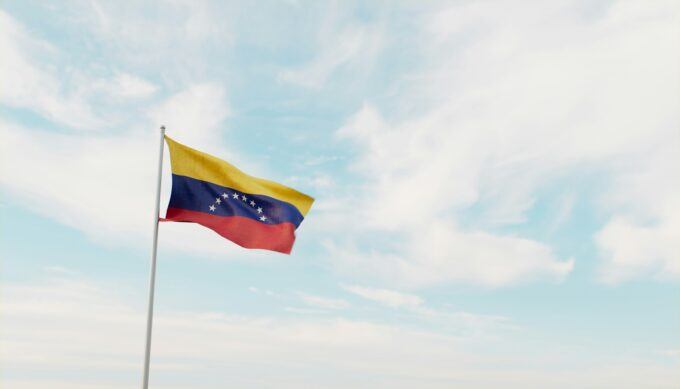
The recent US invasion of Venezuela a gross violation of international law. A hypocritical disrespect for sovereign boundaries that US neocon ideologues and their echo chamber captured US media have leveled at Russia in Ukraine the past four years.
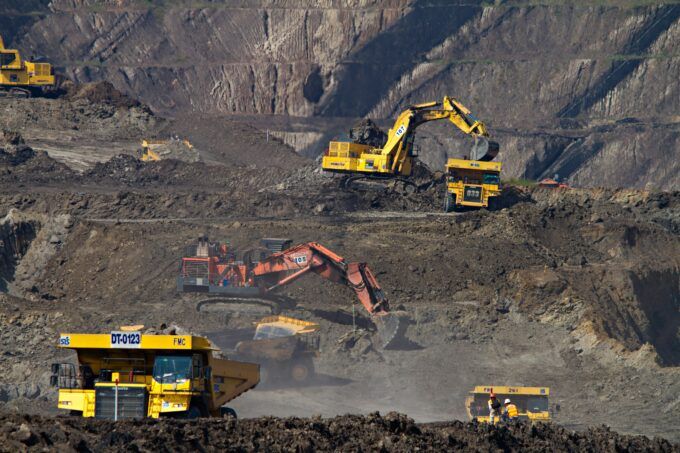
Trump himself has publicly admitted the invasion of Venezuela was intended to secure US economic control of Venezuela’s natural resources, especially its oil reserves. In other words, good old fashion naked US imperialism, intended to grab another country’s natural resources.
The excuse was the nonsense charges of narco drug trafficking—i.e. the US neocons’ substitute excuse for WMD’s, weapons of mass destruction, used before in Iraq, Syria, Libya to justify US military intervention.
WMDs couldn’t be levied at Venezuela. Wouldn’t work. Nor would past excuses for US imperial intervention like ‘Remember the Maine’. ‘Tonkin Gulf’. Or ‘Killing Incubator Babies’. The neocons needed a new fake excuse for US imperial military intervention in Venezuela. So they looked into their magic bag of false flags, fake excuses, and CIA lies and pulled out ‘Narco drug trafficking’. That works better for Latin America imperial interventions—as former president of Panama, Noriega, found out in 1989.
Watch out Colombia president Gustavo Petro who defended Venezuela sovereignty and criticized Trump’s Venezuela action. And heed the warning Mexico president, Sheinbaum! You’re the next Trump targets. Ditto Cuba.
Does Greenland have a president Trump can threaten? Wonder what that excuse will be. Maybe the US must invade because ‘Chinese ships are melting the ice cap’.
And make no mistake. Trump’s not only engaged in naked military imperialism in Venezuela to enact regime change. His big mouth ‘spilled the beans’ that the US plans to install a new colonialism as well. Within 24 hrs. he declared publicly the US intends to ‘rule’ Venezuela directly until such time as a proper puppet regime can be put in place. Direct rule constitutes a colonial form of imperialism.
As the saying goes, the truth is often spoken from the mouth of a drunkard. And Trump is a big mouth bragger, drunk with power. And he’s saying directly what the US neocon imperialist elite behind him (Rubio, Walz, Graham, CIA spooks, etc.) are really thinking and planning.
In an attempt to cover up Trump’s careless blurting out the blunt truth, Trump neocon cronies like Rubio quickly rushed to the US media echo chamber to try to put lipstick on the ‘US will rule’ pig, saying the US has no such plans.
Another Trump neocon, Walz, former NSA to Trump and now ambassador to the UN, in his emergency speech to the UN argued the kidnapping of Venezuela president, Maduro, was not about creating colonial rule; it wasn’t even a military operation—according to Walz. It was just a police operation. Some police operation, accompanied by a fleet of 17 US warships, aircraft carriers, submarines, and 10,000 marines stationed in nearby Trinidad island!
Rubio added the US only wants to bring Maduro to New York to stand trial, as he conveniently avoided any mention that the USnavy is continuing to blockade all shipping from Venezuela. The US has no further military plans! Really? Anyone wanna buy a bridge from the man?
This is crass, US gunboat imperialism reminiscent of the early 20th century when the US invaded Latin American countries by the dozens. It is also a harbinger of US plans to impose some new form of colonialism on Venezuela, and who knows what other Latin American countries who dare to try to walk an independent path from the US Empire.
Trump and his crony neocons will try to cover up their plans for some new kind of colonialism if they can with CIA managed new elections this spring, the outcome of which is already pre-determined. The US designated next president, Machado, is already packing her bags and on her way to Caracas, no doubt with an escort of US agents of course who’ll accompany her throughout the forthcoming phony election campaign.
US imperialism has never given up on regime change in Venezuela for the past quarter century. Just like it has never with Iran for nearly half a century. Nor Cuba for the past 65 years.
The Bush administration in 2002 thought it had achieved regime change deposing then Venezuelan president, former General Chavez. He nationalized US oil interests in the country. The most unholy of capitalist sins! But the deposing of Chavaz was short lived as he was rescued and re-installed as president by the people and Armed forces of Venezuela quickly.
Under Obama the CIA continued deep financial and other aid to opposition movements to overturn Venezuelan elections, to little avail. Venezuelan public support was too great despite the US launching a classic economic war on Venezuela, wrecking its currency, stoking inflation, preventing its sale of oil exports and receipt of necessary medical and food imports. Their candidates kept losing national elections nonetheless.
Under Trump in 2018-19 the CIA efforts intensified, seizing Venezuelan gold in western banks and Venezuela’s CITGO oil distribution company in the US and giving the money from its sale to Venezuelan opposition movements. Still no success in regime change via electoral intervention.
US CIA and regime change ops were temporarily put on hold with the arrival of the Covid recession in the US in 2020, followed by US chaotic exit from Afghanistan in 2021, and implementation in 2022 of bigger US plans to engineer a proxy war in Ukraine against Russia.
Once Trump returned to office in January 2025, however, Venezuelan regime change was placed on the US foreign policy front burner once again. This time the Empire planned to do it right—which meant not relying solely on CIA electoral interference in Venezuela, as in the past, but taking the gloves off and doing regime change by means of US special ops intervention and direct US military action!
The Emperor removed his clothes and waded in waist deep. Perhaps over his head, as time will only tell!
One should not lose sight of the bigger picture behind the Venezuelan invasion.
It is not a standalone, one off operation. I’m sure the governments of Colombia, Mexico and Cuba will agree. The Venezuela operation is part of US neocon forces and imperialists refocusing on the Empire’s western hemisphere base that it had partly neglected while preoccupied in the middle east and eastern Europe (Ukraine and Caucasus). The Empire had let the western hemisphere go unattended. In the interim, when it was preoccupied on the other side of the world, and while planning long term to engage China in Taiwan, other challengers to Empire intervened quietly in Latin America. China in particular.
In the past decade, China invested heavily as part of its global ‘Belt and Road’ infrastructure building program in Latin America. It bought up ports in Panama and started other projects there. It struck deals in Mexico to build the largest EV auto plant in north America that might then export under free trade to the US auto market. It started building ports in Ecuador and Peru. It had plans to build a railroad link from that latter country through the Amazon to Brazil. And it loaned Venezuela more than $100 billion for infrastructure projects and oil infrastructure modernization. Most important, it also started buying large quantities of Venezuela oil.
The US imperialists want that oil. The US pumps 13m barrels a day, the most in the world, and is sucking its own fracking wells dry in the next decade. Moreover, it needs more oil to sell to its European allies since the US chased the Russians out of Europe. Where to get it? Next door Venezuela of course.
The Trump administration, and US neocon imperialists’, have turned back to the western hemisphere to try to restore US economic hegemony over the region. That meant driving China and its investments out of Latin America, and especially Venezuela to secure its future oil supplies.
In the first year of Trump’s term in office, the US threatened Mexico with US drones and special ops; in response Mexico canceled its EV deal with China.
It threatened Panama with a repeat of the US 1989 invasion; Panama canceled its projects with China and US private equity took over its ports.
It threatened Ecuador and Peru. Propped up its client in Argentina with a new $40 billion loan, supported recent right wing government shifts in Chile and Boliva, threatened Brazil if it prosecuted Trump’s buddy, Bolsonaro for his attempting a coup, and threatened Venezuela continually, amassing military forces offshore, blowing up more than 80 fishing boats in the region, and sending in more CIA forces on the ground into that country. The US delta force special ops snatching of Maduro and his wife is just the latest tactic. Stand by. There’s more to come!
Lawless operations by Trump in the hemisphere are only beginning. I predict he will ‘seize’ Greenland one way or another, and soon. The objective there is the same as throughout Latin America. In the case of Greenland it’s about preventing China (and Russia) arctic shipping access down Greenland’s western coast on the way to the Atlantic ports and trade. Panama was quickly cut off for the Chinese. Now the Arctic passage will be as well.
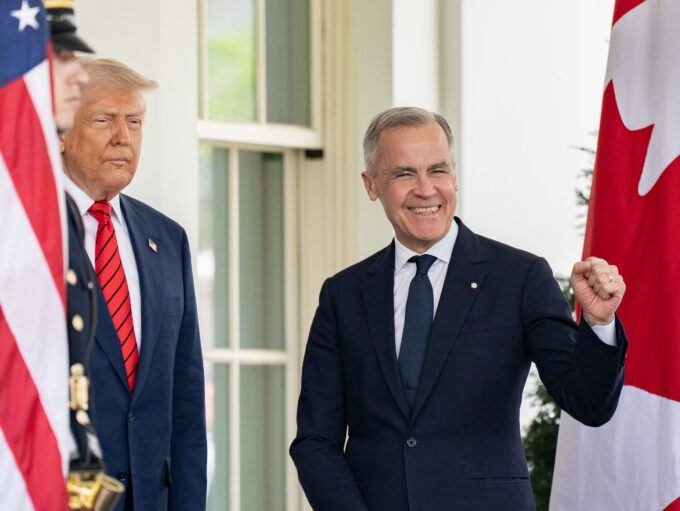
All the Trump intimidation and insulting of Canada is also about the US shoring up its Arctic strategy which has lagged badly in competition with Russia. The latter’s arctic strategy development and implementation is well ahead of the US’s. Russia has a fleet of more than 40 advanced icebreakers. The US has two. Trump’s ridiculing of Canada has been about forcing that country to develop an arctic military presence and strategy—along with the US in Greenland and Alaska. Trump wants Canada to pay part of the US cost. Canada’s new prime minister, in his first visit to the White House earlier in 2025, pledged to do so. The Trump ridicule and intimidation immediately stopped.
Trump’s and the US empire’s plans to refocus more to the western Hemisphere is not this writer’s conjecture. It’s been obvious as Trump’s 2024 election campaign. The strategic shift was recently spelled out clearly in the Trump administration’s recently publication, ‘National Security Strategy of the United States of America, November 2025. It’s on the White House website. Read it. Especially discussion about the western hemisphere.
Trump says it’s all about Making America Great Again. What he really means it’s about Making American the Great Bully Again. That other American imperialist president, Teddy Roosevelt, bragged about ‘speak softly and carry a big stick’? Trump is a perverted facsimile of Roosevelt. His motto is ‘brag boldly and carry a stick’ so long as it’s against someone smaller than you.
The US Empire is restructuring and refocusing its resources—immediately on the western hemisphere and longer term on the western Pacific where it’s now rearming and shoring up its allies to contain and confront China. That’s a longer term objective. Western hemisphere comes first.
Japan has been encouraged and has begun to remilitarize. The US is pumping military arms at an accelerating rate into the key countries—Taiwan, Philippines, Australia, New Zealand, and South Korea. Four years ago, these countries purchased less than $1 billion a year each in US military equipment. In 2024, all were buying more than $4 billion a year, and in 2025 no doubt the data will show that’s accelerated further, especially for Taiwan. US imperial plans are longer term in that region. The western Hemisphere is shorter term.
Why the Trump administration wants to reduce its presence in Europe and NATO and extricate from its former commitment in Ukraine should be viewed in the context of this more fundamental shift to the hemisphere and the western Pacific. That’s also spelled out in the ‘National Security Strategy’ document.
So what’s the deeper reason for the Empire’s strategic shift now accelerating under Trump?
The answer to that most fundamental question is to be found in the accelerating costs of maintaining the US global empire as previously structured. It can no longer afford it, simply put.
According to its own budget data, the US now spends more than $1 trillion a year on the Pentagon alone. But that’s not all its ‘defense’ spending. At least as much ‘defense’ spending is squirreled away in other parts of the budget. When adding other defense cost like Veterans affairs, Homeland Security, nuclear weapons development, CIA and intelligence ops, foreign military aid, foreign military base expenses, rising pay for its1.4m military forces and top heavy, bloated senior officer corps, plus the defense share of interest payments on the US national debt, the total actual US defense spending in 2025 was more than $2.1 trillion!
With US annual budget deficits of $1.5 trillion a year, a national debt of $38 trillion, and interest payments on the latter already $1.1 trillion a year and rising—the US empire can no longer continue its costs as previously structured.
So it’s consolidating—back to the western Hemisphere and the Pacific basin.
That’s the bigger picture and context for the current events in Venezuela and what’s yet to come there—and throughout the western hemisphere—as the US resorts to direct military action to re-establish direct control and unchallenged hegemony in its back yard once again.

.jpg)

.jpg)
.jpg)