THE EPSTEIN CLASS

How Britain's right wing is benefiting from the Epstein scandal
(REUTERS)
February 22, 2026
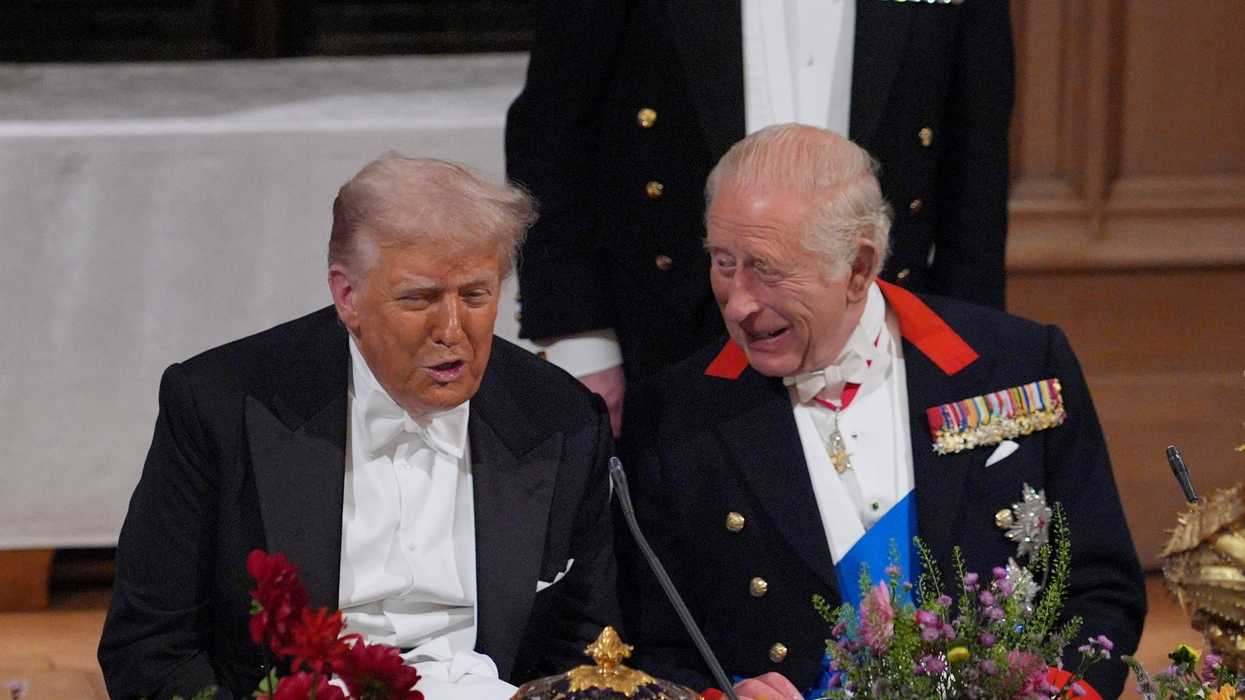
The arrest of Andrew Mountbatten-Windsor on suspicion of misconduct in public office will heap yet more pressure on the beleaguered government of Prime Minister Keir Starmer.
Mountbatten-Windsor’s arrest over allegations he passed government documents to sex offender Jeffrey Epstein comes directly on the heels of the resignation of Peter Mandelson, Starmer’s ambassador to the United States, due to his own alleged associations with Epstein.
The fallout from the scandal is hugely damaging to public trust in both the political establishment and institutions in the United Kingdom, including the royal family.
Trust in the royals already declining
It’s hard to separate the fate and popularity of the royal family from the institutions of British governance because they’re very much part of it.
The monarchy, specifically the Crown, is part of the British constitution. The monarch gives assent to all legislation that’s passed by parliament (in other words, he or she has to sign it for it to pass). While that might seem like a rubber-stamping exercise and that the monarch is a mere symbol in British politics, King Charles and, in slightly different ways, Queen Elizabeth II certainly have had their political preferences.
And despite the impression you get during royal occasions like weddings, funerals and coronations, the royals don’t enjoy unanimous support in Britain. In fact, public support has been declining in recent years, especially among the young.
In an Ipsos survey released this week, just 47% of Britons said they had a favourable opinion of the royal family on the whole (a seven-point decline from November). And just 28% of Britons believe the royal family has handled the allegations against Mountbatten-Windsor well, compared to 37% in November.
Importantly, there’s been a long-term trend of steady decline in support for the monarchy since 1983, when the British Social Attitudes survey first asked about this.
More broadly, and in common with many other liberal democracies, there is a pervasive sense the Epstein scandal is more evidence of the existence of a self-serving, corrupt elite making good for itself and harming others, while many people in the “left behind” and “squeezed middle” of society are struggling.
Politically, this perception adds further fuel to the notion that the inequality between the rulers and the ruled has become unjustifiable. Something has to change.
Pressure mounting on Labour
Starmer’s Labour government was already deeply unpopular before Mandelson’s alleged ties to Epstein were revealed. Now, it has entered some sort of permanent crisis mode.
Mandelson was one of the key figures behind the so-called “New Labour” project associated with the leadership of Prime Minister Tony Blair from 1997–2007.
New Labour has a dual legacy in British politics. On one level, it was the most electorally successful Labour government ever. But that electoral success seemed to come at the expense of a clearly defined sense of what a Labour Party stood for. Key players like Mandelson courted wealthy backers and moved Labour to the centre of British politics to, not unreasonably, win elections.
As such, many Labour supporters started to drift away from the party and towards other, at times diametrically opposed, political parties. In Scotland, this benefited the pro-independence parties. In England, it benefitted the radical-right Reform UK.
Reform has precious little governing experience, but that is its appeal. Its radical messages are finding traction with a large number of voters, many of whom formerly supported Conservative or Labour.
So in this context, when Mandelson, an already divisive figure, was named ambassador to the US in the belief he could help manage President Donald Trump, Starmer’s political gamble to reinstate him to a public role backfired.
Reform could ultimately benefit
The British government’s travails represent another gilt-edged opportunity for Reform UK to capitalise on the unpopularity of Starmer, Labour and politics more broadly. But there is a risk for Reform, too.
Radical-right parties tend to place a great emphasis on the figure of the leader. For Reform UK, this is Nigel Farage.
Farage has had an incredible impact on British politics, especially since Brexit. But Farage, a former merchant banker, is also part of this global elite, despite pitching his politics at the “left behinds”. He has spent years courting Trump’s friendship. So, while there are no allegations against him related to Epstein, the public anger towards elites in general may eventually rebound on Farage, too.
Reform UK, however, is positioning itself successfully as an alternative to the two major parties in the UK, and could form a minority government at the next UK-wide elections in 2029.
The Conservative Party has shot its bolt as a result of its 14 years in government. And Labour came to power more as a rejection of the Conservatives than an endorsement of its policies. It has thus far excelled in failing to meet these low expectations, to Reform’s benefit.
Excluding a by-election in February, the first major political test will be local government elections in England, and elections to the Scottish Parliament and Welsh Senedd in May. A poor Labour showing will quite possibly lead to a leadership challenge against Starmer, whose government seems incapable of stemming the rise of support for an emboldened Reform.
A boost to republicanism
“Unprecedented” is an over-worn term. However, the arrest of a member of the royal family is the first in England since 1647 (it didn’t end well).
Prince William is still very popular. But there could still be very serious consequences for support for the monarchy in the various nations of the United Kingdom.
There isn’t the same sort of support for republicanism in England as there is in Australia, where republicans can de-legitimnise the king as a “foreign” monarch. Although this argument is made by republicans in Northern Ireland, English republicanism needs to be driven by some other sentiment.
And the Epstein crisis could be it, given it is drawing attention to gross inequality and damaging entitlement. It’s hard to see where exactly all this will end up, but it is quite possible this will give the greatest boost to anti-monarchical sentiment in England for some centuries.
It is important not to forget the women and girls who were victims of this rich man’s cabal. Yet, one great harm of the Epstein scandal in Britain is the further damage done to trust in institutions of governance and the boost it provides for the illiberal critics of what seems like a decaying order.

Ben Wellings, Associate Professor in Politics and International Relations, Monash University
This article is republished from The Conversation under a Creative Commons license. Read the original article.
OPINION
Bannon's crusade to expose gays in the Catholic church didn't die with Epstein
"War Room" host Steve Bannon in Las Vegas, Nevada on January 30, 2024 (Gage Skidmore/Flickr)
February 22, 2026
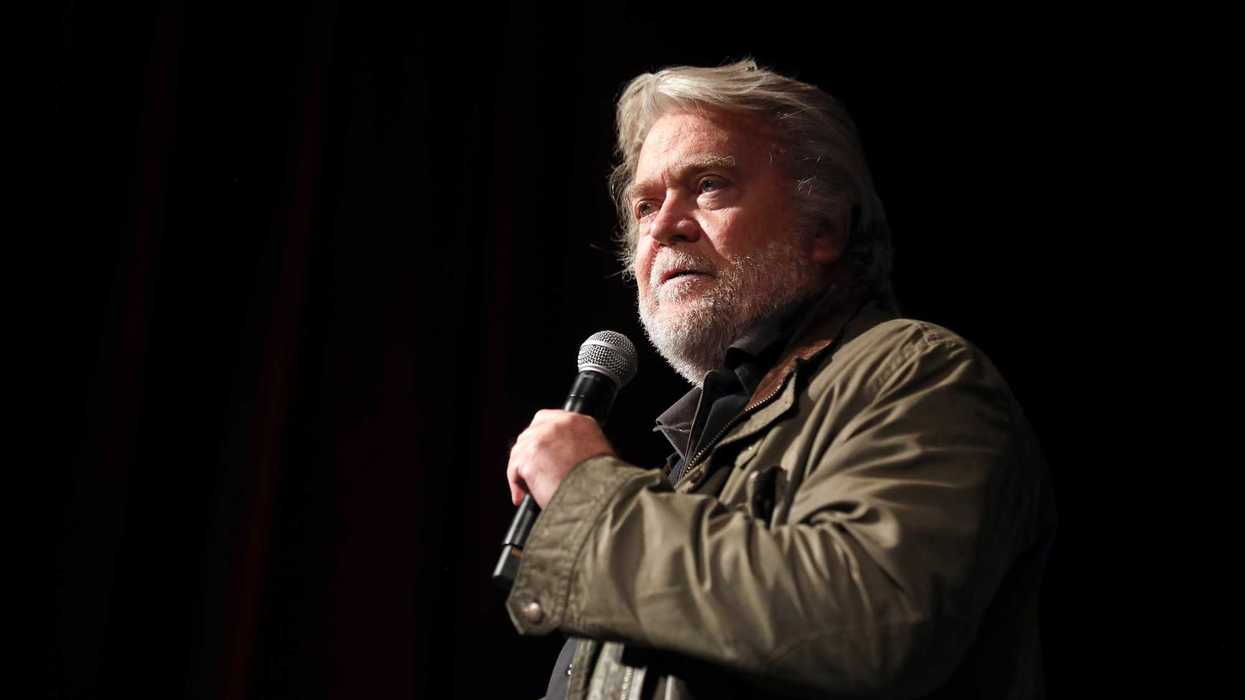
Frédéric Martel, the author of the 2019 international bestseller, “In the Closet of the Vatican: Power, Homosexuality, Hypocrisy,” told me over the weekend about the time he was invited to lunch by Steve Bannon, who asked him to come to Bannon’s palatial Paris hotel suite shortly after his book was published.
“I didn’t know why he asked me to come,” he said.
The meeting was arranged via one of Martel’s right-wing Catholic sources who was allied with Bannon. Martel, a journalist who covers the far right in Europe and is working on a new book focused on it, certainly had a professional interest in meeting Bannon.
“It was at the Hotel Bristol,” he explained to me by phone from Paris, “in a suite that costs 8,000 euros per night.” Per the exchange rate at that time, that would have been about $8950 per night. Forbes reports suites at the hotel begin at $3200 per night and go up to as high as $46,000 per night.
It was June of 2019. And he was surprised about what Bannon wanted from him.
“He said during the lunch that he wanted to make a movie about my book,” Martel explained, noting that he “wouldn’t have ever given that [permission] to Bannon.” But he offered Bannon a more polite truth. “I don’t have the rights to the book [for a film],” Martel said he told Bannon, as his publisher had already sold those rights.
That was the end of the discussion on the book, and Martel was perplexed because, as he explained, the book is “probably the most pro-Francis” book, and Bannon, a Catholic “traditionalist” connected to all of the most extreme radical right elements of the church, was working with his allies to take down Francis because of his progressive reforms and his criticism of populist right-wing governments, including Donald Trump’s.
“In the Closet of the Vatican” exposes the hypocrisy of a church hierarchy built up over many decades—including under the virulently homophobic Pope Benedict—which included many powerful closeted gay priests, monsignors, and cardinals who were publicly working against gay rights while privately leading lives counter to their pronouncements and harmful actions.
While exposing all of that might bring down some of the very people on the Catholic right Bannon was courting—many inside the church itself, among the clergy and the hierarchy—he clearly didn’t see the nuance. Bannon is all about chaos and destruction, and was laser-focused on hurting Francis’ leadership and influence. He asked his good friend Jeffrey Epstein for help in his project.
In the Epstein files there are thousands of text message exchanges between Bannon and Epstein, as Bannon sought the help of Epstein—a true globalist within the uber-wealthy elite—to promote his faux populist, supposedly anti-globalist movement across Europe.
As CNN reports:
Bannon had been highly critical of Francis whom he saw as an opponent to his “sovereigntist” vision, a brand of nationalist populism which swept through Europe in 2018 and 2019. The released documents from the DOJ appear to show that Epstein had been helping Bannon to build his movement.
Bannon, after being pushed out in 2017 as Trump’s national security adviser, was living in Rome, traveling to Paris, London, and throughout Europe, and asking Epstein to connect him to powerful people. Epstein offered the use of his jet and homes for Bannon’s travels, while Bannon offered media training and advice for Epstein to grotesquely help clean up the convicted pedophile’s reputation. And Bannon recorded many hours of interviews, 12 hours of which have been released among the files, for a documentary film he was making on Epstein, the aim of which no doubt was to promote a media makeover for Epstein.
Epstein’s jet, per the files, was unavailable when Bannon asked if he could use it to fly from Rome to Paris in one instance, but there is evidence in the files that Bannon stayed at a grand apartment where Epstein was living near the Arc de Triomphe in Paris on that trip. Epstein invited Bannon to stay in a March 29th, 2019 text; Bannon said he was “Enroute,” and then Epstein texted someone else the next morning: “Steve Bannon is here with me.”
Bannon’s spokesperson told The New York Times that Bannon didn’t stay there (and that he never stayed at Epstein’s homes or flew on his plane) and decided to stay at a hotel instead. But the Times noted the spokesperson didn’t provide a receipt. My question would have been, even if that’s so, who paid for the hotel—again, Bannon’s spokesperson didn’t show the Times any receipt—and was it in fact the lavish Hotel Bristol, the same place where he met Martel later in June? After all, per the files, Epstein did offer to pay for a charter flight for Bannon when Epstein said his jet was unavailable. (There’s no indication as to whether he did or didn’t pay for a charter flight.)
Around that same time, Bannon expressed to Epstein his interest in making Martel’s book into a film and having Epstein fund it as executive producer.
“Have you read ‘in the closet of the vatican’ yet,” Bannon wrote, to which Epstein appears to reply ‘yes,’ amid chats about getting Bannon connected to global players.
“You are now exec producer of ‘ITCOTV’ (In the closet of the Vatican),” Bannon continued. “Will take down (Pope) Francis.The Clintons, Xi, Francis, EU – come on brother.”
It’s not clear whether Epstein was taking seriously the idea of the film—which Martel had already told Bannon was not going to happen—but Epstein, on April 1, 2019, did email himself “in the closet of the vatican,” and later, in June of 2019, he sent Bannon an article headlined, “Pope Francis or Steve Bannon? Catholics must choose.”
The two were planning to meet in New York weeks later, on the first weekend of July. But on July 6th, 2019, Epstein would be arrested on sex trafficking charges in New York. On August 10th he’d be found dead in his jail cell. And obviously no film was made.
Bannon continued in his war against the pope, but a split developed that very summer of Epstein’s arrest and death between Bannon and some of his far-right allies. Cardinal Raymond Burke, an angry American MAGA foe of Francis’ (whom Francis would eventually kick out of his massive Vatican apartment, in 2023), had collaborated with Bannon in an organization working against Francis, Dignitatis Humanae Institute, a Rome-based think tank that aimed to create a “populist academy” in a monastery in Trisulti, Italy.
But Burke broke with Bannon in June of 2019, after he learned that Bannon wanted to make a film out of Martel’s book. Martel had gone public about his lunch with Bannon, and it didn’t sit well with Burke, who is portrayed in an entire chapter as a scheming and unrepentant nemesis of Pope Francis.
Burke and many of his allies in the church had much to fear about any film outing prominent homophobic closet cases in the church, bringing the book to a much wider audience. Burke put out a statement, resigning from DHI, where he’d collaborated with Bannon:
I have been made aware of a June 24 LifeSiteNews online article…entitled ‘Steve Bannon hints at making film exposing homosexuality in the Vatican’…
I do not, in any way, agree with Mr. Bannon’s assessment of the book in question, Furthermore, I am not at all of the mind that the book should be made into a film.
But other Bannon compatriots would later appear to draw both on the information in Martel’s book and on his research methods. In “In the Closet of the Vatican,” Martel discusses gay dating and sex apps like Grindr, Scruff, and Tinder, and how prevalent users were in and around the Vatican, even carrying out his own experiments with his researchers, using Grindr and other apps.
“According to several priests, Grindr has become a very widespread phenomenon in seminaries and priests’ meetings,” Martel reports in the book.
It may be a coincidence, but two years later, in July of 2021, in a story I covered extensively, a right-wing Catholic site here on Substack, The Pillar, used geolocation data from Grindr to force the resignation of Monsignor Jeffrey Burrill, the General Secretary of the U.S. Conference of Catholic Bishops.
As I wrote at the time, the right-wing editors of The Pillar:
“obtained” geolocation data of Grindr interactions from his phone — even claiming to have located him in a bathhouse in Las Vegas at one point — over a period of time going back to 2018.
And then they went to the Catholic bishops with the information — dates and times of Burrill allegedly connecting with various men on Grindr, and locations, including the bathhouse. Soon after, the USCCB announced Burrill had resigned because of “impending media reports alleging possible improper behavior.”
There was much speculation about where The Pillar got its funding and also about who purchased the geolocation information for it—information that would cost a lot of money. Grindr had previously sold information to third parties for advertising purposes (and stopped after it was criticized), believing there was no identifying information. But as I explain in my piece of the time in depth, technology experts say there’s a way for that identifying information to be found, and there’s no guarantee that third parties don’t turn around and sell geolocation data to more nefarious entities.
Almost two years after The Pillar’s actions, in March of 2023, The Washington Post indeed revealed that it was wealthy Catholics on the far right, the people in the same circles as Bannon, who paid for the geolocation data that The Pillar had “obtained.” They also sent the information to Catholic bishops:
A group of conservative Colorado Catholics has spent millions of dollars to buy mobile app tracking data that identified priests who used gay dating and hookup apps and then shared it with bishops around the country.
The secretive effort was the work of a Denver nonprofit called Catholic Laity and Clergy for Renewal, whose trustees are philanthropists Mark Bauman, John Martin and Tim Reichert, according to public records, an audio recording of the nonprofit’s president discussing its mission and other documents…
…The Post has seen copies of two different reports presented to bishops. One is from the Renewal group to a diocese and the other is the one that the Pillar presented to the USCCB about Burrill. The information in both is mostly about Grindr, although the reports also say they have used data from other gay dating apps Growlr, Scruff and Jack’d, as well as OkCupid.
Reichert is a former GOP congressional candidate. Jayd Henricks, executive director of the group Reichert and his rich buddies founded and which bought the geolocation information it gave to The Pillar, had, like Bannon, been a fierce critic of Francis.
All of these men are aligned in efforts against church reforms, whether working together directly or not. Hendricks has written for the orthodox World Catholic Report, which has also written glowingly about Bannon and his “populist nationalism” effort in Europe, describing it as “renewed appreciation for the nation-state and national sovereignty—and growing suspicion of the managerial elites in Washington, London, and Brussels.”
It’s not a stretch to believe that the Colorado wealthy right-wing Catholics got their ideas on using Grindr to help bring down church leaders from the attention brought to “In the Closet of the Vatican.” Nor is it a stretch to believe that they even worked directly or indirectly with fellow traveler Bannon, who was very much focused on the book and who had by then lost the convicted pedophile billionaire he was hoping would bankroll weaponizing the ideas within the book in the way The Pillar outrageously did.
Frédéric Martel, the author of the 2019 international bestseller, “In the Closet of the Vatican: Power, Homosexuality, Hypocrisy,” told me over the weekend about the time he was invited to lunch by Steve Bannon, who asked him to come to Bannon’s palatial Paris hotel suite shortly after his book was published.
“I didn’t know why he asked me to come,” he said.
The meeting was arranged via one of Martel’s right-wing Catholic sources who was allied with Bannon. Martel, a journalist who covers the far right in Europe and is working on a new book focused on it, certainly had a professional interest in meeting Bannon.
“It was at the Hotel Bristol,” he explained to me by phone from Paris, “in a suite that costs 8,000 euros per night.” Per the exchange rate at that time, that would have been about $8950 per night. Forbes reports suites at the hotel begin at $3200 per night and go up to as high as $46,000 per night.
It was June of 2019. And he was surprised about what Bannon wanted from him.
“He said during the lunch that he wanted to make a movie about my book,” Martel explained, noting that he “wouldn’t have ever given that [permission] to Bannon.” But he offered Bannon a more polite truth. “I don’t have the rights to the book [for a film],” Martel said he told Bannon, as his publisher had already sold those rights.
That was the end of the discussion on the book, and Martel was perplexed because, as he explained, the book is “probably the most pro-Francis” book, and Bannon, a Catholic “traditionalist” connected to all of the most extreme radical right elements of the church, was working with his allies to take down Francis because of his progressive reforms and his criticism of populist right-wing governments, including Donald Trump’s.
“In the Closet of the Vatican” exposes the hypocrisy of a church hierarchy built up over many decades—including under the virulently homophobic Pope Benedict—which included many powerful closeted gay priests, monsignors, and cardinals who were publicly working against gay rights while privately leading lives counter to their pronouncements and harmful actions.
While exposing all of that might bring down some of the very people on the Catholic right Bannon was courting—many inside the church itself, among the clergy and the hierarchy—he clearly didn’t see the nuance. Bannon is all about chaos and destruction, and was laser-focused on hurting Francis’ leadership and influence. He asked his good friend Jeffrey Epstein for help in his project.
In the Epstein files there are thousands of text message exchanges between Bannon and Epstein, as Bannon sought the help of Epstein—a true globalist within the uber-wealthy elite—to promote his faux populist, supposedly anti-globalist movement across Europe.
As CNN reports:
Bannon had been highly critical of Francis whom he saw as an opponent to his “sovereigntist” vision, a brand of nationalist populism which swept through Europe in 2018 and 2019. The released documents from the DOJ appear to show that Epstein had been helping Bannon to build his movement.
Bannon, after being pushed out in 2017 as Trump’s national security adviser, was living in Rome, traveling to Paris, London, and throughout Europe, and asking Epstein to connect him to powerful people. Epstein offered the use of his jet and homes for Bannon’s travels, while Bannon offered media training and advice for Epstein to grotesquely help clean up the convicted pedophile’s reputation. And Bannon recorded many hours of interviews, 12 hours of which have been released among the files, for a documentary film he was making on Epstein, the aim of which no doubt was to promote a media makeover for Epstein.
Epstein’s jet, per the files, was unavailable when Bannon asked if he could use it to fly from Rome to Paris in one instance, but there is evidence in the files that Bannon stayed at a grand apartment where Epstein was living near the Arc de Triomphe in Paris on that trip. Epstein invited Bannon to stay in a March 29th, 2019 text; Bannon said he was “Enroute,” and then Epstein texted someone else the next morning: “Steve Bannon is here with me.”
Bannon’s spokesperson told The New York Times that Bannon didn’t stay there (and that he never stayed at Epstein’s homes or flew on his plane) and decided to stay at a hotel instead. But the Times noted the spokesperson didn’t provide a receipt. My question would have been, even if that’s so, who paid for the hotel—again, Bannon’s spokesperson didn’t show the Times any receipt—and was it in fact the lavish Hotel Bristol, the same place where he met Martel later in June? After all, per the files, Epstein did offer to pay for a charter flight for Bannon when Epstein said his jet was unavailable. (There’s no indication as to whether he did or didn’t pay for a charter flight.)
Around that same time, Bannon expressed to Epstein his interest in making Martel’s book into a film and having Epstein fund it as executive producer.
“Have you read ‘in the closet of the vatican’ yet,” Bannon wrote, to which Epstein appears to reply ‘yes,’ amid chats about getting Bannon connected to global players.
“You are now exec producer of ‘ITCOTV’ (In the closet of the Vatican),” Bannon continued. “Will take down (Pope) Francis.The Clintons, Xi, Francis, EU – come on brother.”
It’s not clear whether Epstein was taking seriously the idea of the film—which Martel had already told Bannon was not going to happen—but Epstein, on April 1, 2019, did email himself “in the closet of the vatican,” and later, in June of 2019, he sent Bannon an article headlined, “Pope Francis or Steve Bannon? Catholics must choose.”
The two were planning to meet in New York weeks later, on the first weekend of July. But on July 6th, 2019, Epstein would be arrested on sex trafficking charges in New York. On August 10th he’d be found dead in his jail cell. And obviously no film was made.
Bannon continued in his war against the pope, but a split developed that very summer of Epstein’s arrest and death between Bannon and some of his far-right allies. Cardinal Raymond Burke, an angry American MAGA foe of Francis’ (whom Francis would eventually kick out of his massive Vatican apartment, in 2023), had collaborated with Bannon in an organization working against Francis, Dignitatis Humanae Institute, a Rome-based think tank that aimed to create a “populist academy” in a monastery in Trisulti, Italy.
But Burke broke with Bannon in June of 2019, after he learned that Bannon wanted to make a film out of Martel’s book. Martel had gone public about his lunch with Bannon, and it didn’t sit well with Burke, who is portrayed in an entire chapter as a scheming and unrepentant nemesis of Pope Francis.
Burke and many of his allies in the church had much to fear about any film outing prominent homophobic closet cases in the church, bringing the book to a much wider audience. Burke put out a statement, resigning from DHI, where he’d collaborated with Bannon:
I have been made aware of a June 24 LifeSiteNews online article…entitled ‘Steve Bannon hints at making film exposing homosexuality in the Vatican’…
I do not, in any way, agree with Mr. Bannon’s assessment of the book in question, Furthermore, I am not at all of the mind that the book should be made into a film.
But other Bannon compatriots would later appear to draw both on the information in Martel’s book and on his research methods. In “In the Closet of the Vatican,” Martel discusses gay dating and sex apps like Grindr, Scruff, and Tinder, and how prevalent users were in and around the Vatican, even carrying out his own experiments with his researchers, using Grindr and other apps.
“According to several priests, Grindr has become a very widespread phenomenon in seminaries and priests’ meetings,” Martel reports in the book.
It may be a coincidence, but two years later, in July of 2021, in a story I covered extensively, a right-wing Catholic site here on Substack, The Pillar, used geolocation data from Grindr to force the resignation of Monsignor Jeffrey Burrill, the General Secretary of the U.S. Conference of Catholic Bishops.
As I wrote at the time, the right-wing editors of The Pillar:
“obtained” geolocation data of Grindr interactions from his phone — even claiming to have located him in a bathhouse in Las Vegas at one point — over a period of time going back to 2018.
And then they went to the Catholic bishops with the information — dates and times of Burrill allegedly connecting with various men on Grindr, and locations, including the bathhouse. Soon after, the USCCB announced Burrill had resigned because of “impending media reports alleging possible improper behavior.”
There was much speculation about where The Pillar got its funding and also about who purchased the geolocation information for it—information that would cost a lot of money. Grindr had previously sold information to third parties for advertising purposes (and stopped after it was criticized), believing there was no identifying information. But as I explain in my piece of the time in depth, technology experts say there’s a way for that identifying information to be found, and there’s no guarantee that third parties don’t turn around and sell geolocation data to more nefarious entities.
Almost two years after The Pillar’s actions, in March of 2023, The Washington Post indeed revealed that it was wealthy Catholics on the far right, the people in the same circles as Bannon, who paid for the geolocation data that The Pillar had “obtained.” They also sent the information to Catholic bishops:
A group of conservative Colorado Catholics has spent millions of dollars to buy mobile app tracking data that identified priests who used gay dating and hookup apps and then shared it with bishops around the country.
The secretive effort was the work of a Denver nonprofit called Catholic Laity and Clergy for Renewal, whose trustees are philanthropists Mark Bauman, John Martin and Tim Reichert, according to public records, an audio recording of the nonprofit’s president discussing its mission and other documents…
…The Post has seen copies of two different reports presented to bishops. One is from the Renewal group to a diocese and the other is the one that the Pillar presented to the USCCB about Burrill. The information in both is mostly about Grindr, although the reports also say they have used data from other gay dating apps Growlr, Scruff and Jack’d, as well as OkCupid.
Reichert is a former GOP congressional candidate. Jayd Henricks, executive director of the group Reichert and his rich buddies founded and which bought the geolocation information it gave to The Pillar, had, like Bannon, been a fierce critic of Francis.
All of these men are aligned in efforts against church reforms, whether working together directly or not. Hendricks has written for the orthodox World Catholic Report, which has also written glowingly about Bannon and his “populist nationalism” effort in Europe, describing it as “renewed appreciation for the nation-state and national sovereignty—and growing suspicion of the managerial elites in Washington, London, and Brussels.”
It’s not a stretch to believe that the Colorado wealthy right-wing Catholics got their ideas on using Grindr to help bring down church leaders from the attention brought to “In the Closet of the Vatican.” Nor is it a stretch to believe that they even worked directly or indirectly with fellow traveler Bannon, who was very much focused on the book and who had by then lost the convicted pedophile billionaire he was hoping would bankroll weaponizing the ideas within the book in the way The Pillar outrageously did.
Epstein files reveal ties to Catholic conservatives' anti-Francis campaign
VATICAN CITY (RNS) — The newly released Epstein files show that Jeffrey Epstein and Steve Bannon discussed opposition to Pope Francis, including a move that Bannon claimed would ‘take down Francis.’
Former White House senior adviser Steve Bannon, second from left, in the East Room at the White House on April 12, 2017, in Washington. (AP Photo/Andrew Harnik)
Claire Giangravé
February 11, 2026
VATICAN CITY (RNS) — The newly released Epstein files show that Jeffrey Epstein and Steve Bannon discussed opposition to Pope Francis, including a move that Bannon claimed would ‘take down Francis.’
Former White House senior adviser Steve Bannon, second from left, in the East Room at the White House on April 12, 2017, in Washington. (AP Photo/Andrew Harnik)
Claire Giangravé
February 11, 2026
RNS
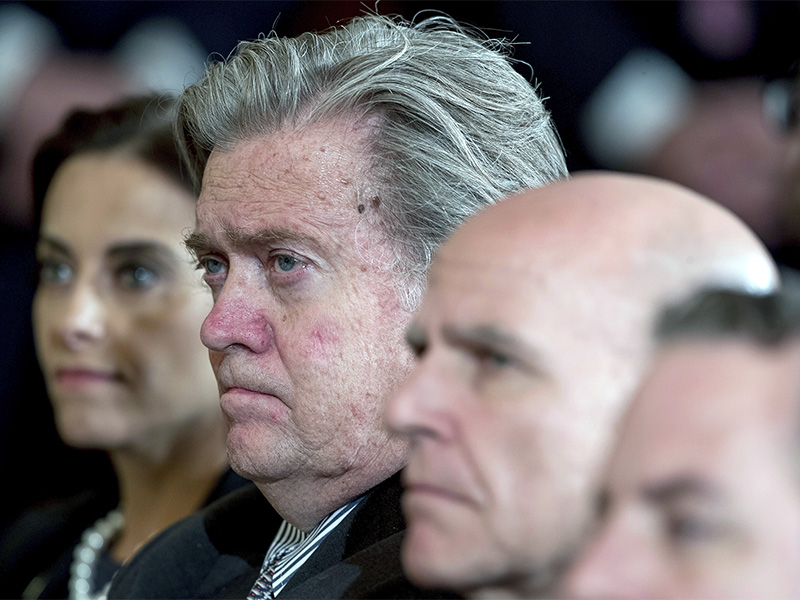
VATICAN CITY (RNS) — Newly released files by the U.S. Department of Justice show that convicted sex offender and financier Jeffrey Epstein and former Trump aide Steve Bannon discussed strategies to undermine Pope Francis, revealing how the Vatican was viewed as a geopolitical pressure point by Epstein’s network of political and financial leaders.
In text messages between Bannon and Epstein from June 2019, Bannon seems to suggest that Epstein was an executive producer of a documentary film that never got made, based on a 2019 book by French journalist and researcher Frédéric Martel, “In the Closet of the Vatican.”
“Will take down Francis,” Bannon writes about the film. “The Clintons, Xi, Francis, EU — come on brother.”
Martel’s book delves into the culture of secrecy and hypocrisy regarding homosexuality at the Vatican. When it was published, the book galvanized conservative outrage because it included claims stating that 80% of Vatican clergy are gay.
RELATED: Cardinal Cupich says feds stopped priests, demanded citizenship proof
Martel told Religion News Service that he had several meetings with Bannon, who told Martel that he “loved” the book. The two met in Paris, in the penthouse suite of the Hôtel Bristol, where Bannon first floated the idea of adapting the book into a film. “He told me that he would like to do a movie about it,” Martel said, adding that “he was very enthusiastic.”
Martel clarified that he never accepted Bannon’s offer and never received any payment from him, as his French publisher controlled the rights to the book. Martel said he had no contact with Epstein.

A text thread between Bannon and Epstein including reference to Pope Francis that was released as part of the larger collection of Epstein files. Screenshot
Bannon’s interest in Martel’s book was enough to lead U.S. Cardinal Raymond Burke to cut ties with the Dignitatis Humanae Institute, a conservative Catholic organization that Burke felt had become too identified with Bannon. “I am not at all of the mind that the book should be made into a film,” Burke wrote in a letter dated June 25, 2019.
The correspondence between Epstein and Bannon took place at the height of concerted conservative efforts to oppose Francis, who had signaled his openness toward LGBTQ Catholics and divorced or remarried Catholics and who expressed concern for migrants and the environment in his public statements and written documents.
Overall, Francis had shifted the church’s tone from his immediate predecessors’ emphasis on enforcing doctrine, toward inclusion. The 2014-15 Synod on the Family, a meeting of Catholic bishops in Rome, broadened the church’s views on family life and ended with an apostolic exhortation that preached about “a church of mercy.” In its wake, conservative cardinals — including Burke — issued a challenge, known as a dubia, to Francis’ teaching.
The dissent reached its climax when the former papal representative to the United States, Archbishop Carlo Maria Viganò, published a scathing public letter accusing Francis of covering up the abuse by former Cardinal Theodore McCarrick.
“There’s a clear concerted campaign among a number of traditionalist figures and institutions to bring down Francis in the name of some sort of ‘purification,’ which culminates in the Viganò letter,” said Francis biographer Austen Ivereigh, who said the connections revealed in the Epstein files were an interesting new element. “What obviously is clear, though, is that they had formed an alliance of sorts.”
Emails between Bannon and Epstein dating to 2018 lament the Vatican’s push against xenophobia, racism and populism, as well as the Holy See’s relationship with China.
Epstein is often dismissive toward the papacy and Francis in the released correspondence. When Francis visited the U.S. in 2015, Epstein noted that the pope was staying near Epstein’s residence in New York. “I thought id invite him for a massage,” Epstein wrote in an email to his brother, Mark Epstein, followed by lewd remarks.
Jeffrey Epstein also seems to have had an interest in the Vatican’s finances. He was familiar with the book “Who Killed God’s Banker?: A 30 Year Investigation” by Edward Jay Epstein, detailing the financial structure of the Institute for Works of Religion, commonly referred to as the Vatican bank. In particular, the book comments on the 1982 collapse of Banco Ambrosiano, after which its president, Roberto Calvi, was found hanging from a noose under London’s Blackfriars Bridge.
In an email to Epstein in August 2014 about blockchain and digital currency, the Italian cybersecurity researcher Vincenzo Iozzo pointed to “the Vatican and Monaco” as small sovereign states that could be “viable” grounds for experimentation. “You said you like great hacks — selling companies and/or big western countries a currency that doesn’t actually exist is probably the ultimate hack in the world,” Iozzo wrote.
At the time, Francis had launched a major effort to reform the Vatican’s troubled and often opaque finances and appointed Cardinal George Pell to lead the newly formed Secretariat for the Economy. Francis also closed thousands of suspect accounts by non-Vatican City citizens.
An FBI report included in the DOJ’s release includes a source who claims that an Italian cybersecurity figure described as “Epstein’s Hacker” may have held a Vatican City passport.
VATICAN CITY (RNS) — Newly released files by the U.S. Department of Justice show that convicted sex offender and financier Jeffrey Epstein and former Trump aide Steve Bannon discussed strategies to undermine Pope Francis, revealing how the Vatican was viewed as a geopolitical pressure point by Epstein’s network of political and financial leaders.
In text messages between Bannon and Epstein from June 2019, Bannon seems to suggest that Epstein was an executive producer of a documentary film that never got made, based on a 2019 book by French journalist and researcher Frédéric Martel, “In the Closet of the Vatican.”
“Will take down Francis,” Bannon writes about the film. “The Clintons, Xi, Francis, EU — come on brother.”
Martel’s book delves into the culture of secrecy and hypocrisy regarding homosexuality at the Vatican. When it was published, the book galvanized conservative outrage because it included claims stating that 80% of Vatican clergy are gay.
RELATED: Cardinal Cupich says feds stopped priests, demanded citizenship proof
Martel told Religion News Service that he had several meetings with Bannon, who told Martel that he “loved” the book. The two met in Paris, in the penthouse suite of the Hôtel Bristol, where Bannon first floated the idea of adapting the book into a film. “He told me that he would like to do a movie about it,” Martel said, adding that “he was very enthusiastic.”
Martel clarified that he never accepted Bannon’s offer and never received any payment from him, as his French publisher controlled the rights to the book. Martel said he had no contact with Epstein.
A text thread between Bannon and Epstein including reference to Pope Francis that was released as part of the larger collection of Epstein files. Screenshot
Bannon’s interest in Martel’s book was enough to lead U.S. Cardinal Raymond Burke to cut ties with the Dignitatis Humanae Institute, a conservative Catholic organization that Burke felt had become too identified with Bannon. “I am not at all of the mind that the book should be made into a film,” Burke wrote in a letter dated June 25, 2019.
The correspondence between Epstein and Bannon took place at the height of concerted conservative efforts to oppose Francis, who had signaled his openness toward LGBTQ Catholics and divorced or remarried Catholics and who expressed concern for migrants and the environment in his public statements and written documents.
Overall, Francis had shifted the church’s tone from his immediate predecessors’ emphasis on enforcing doctrine, toward inclusion. The 2014-15 Synod on the Family, a meeting of Catholic bishops in Rome, broadened the church’s views on family life and ended with an apostolic exhortation that preached about “a church of mercy.” In its wake, conservative cardinals — including Burke — issued a challenge, known as a dubia, to Francis’ teaching.
The dissent reached its climax when the former papal representative to the United States, Archbishop Carlo Maria Viganò, published a scathing public letter accusing Francis of covering up the abuse by former Cardinal Theodore McCarrick.
“There’s a clear concerted campaign among a number of traditionalist figures and institutions to bring down Francis in the name of some sort of ‘purification,’ which culminates in the Viganò letter,” said Francis biographer Austen Ivereigh, who said the connections revealed in the Epstein files were an interesting new element. “What obviously is clear, though, is that they had formed an alliance of sorts.”
Emails between Bannon and Epstein dating to 2018 lament the Vatican’s push against xenophobia, racism and populism, as well as the Holy See’s relationship with China.
Epstein is often dismissive toward the papacy and Francis in the released correspondence. When Francis visited the U.S. in 2015, Epstein noted that the pope was staying near Epstein’s residence in New York. “I thought id invite him for a massage,” Epstein wrote in an email to his brother, Mark Epstein, followed by lewd remarks.
Jeffrey Epstein also seems to have had an interest in the Vatican’s finances. He was familiar with the book “Who Killed God’s Banker?: A 30 Year Investigation” by Edward Jay Epstein, detailing the financial structure of the Institute for Works of Religion, commonly referred to as the Vatican bank. In particular, the book comments on the 1982 collapse of Banco Ambrosiano, after which its president, Roberto Calvi, was found hanging from a noose under London’s Blackfriars Bridge.
In an email to Epstein in August 2014 about blockchain and digital currency, the Italian cybersecurity researcher Vincenzo Iozzo pointed to “the Vatican and Monaco” as small sovereign states that could be “viable” grounds for experimentation. “You said you like great hacks — selling companies and/or big western countries a currency that doesn’t actually exist is probably the ultimate hack in the world,” Iozzo wrote.
At the time, Francis had launched a major effort to reform the Vatican’s troubled and often opaque finances and appointed Cardinal George Pell to lead the newly formed Secretariat for the Economy. Francis also closed thousands of suspect accounts by non-Vatican City citizens.
An FBI report included in the DOJ’s release includes a source who claims that an Italian cybersecurity figure described as “Epstein’s Hacker” may have held a Vatican City passport.

No comments:
Post a Comment