Wednesday, May 25, 2022


Deadline

Michael Moore Tells MSNBC’s Chris Hayes, “It’s Time To Repeal The Second Amendment”

Tom Tapp - 
© MSNBC via Twitter

“Who will say on this network or any other network in the next few days, ‘It’s time to repeal the Second Amendment’?” Michael Moore asked MSNBC host Chris Hayes today.

“Oh, you can’t say that,” he imagined Americans replying.

“Well why not?” asked Moore.
The Oscar-winning Bowling for Columbine filmmaker posed the question as the nation was still reeling from the school massacre in Uvalde, Texas yesterday in which 19 children and two adults were killed.

“Look, I support all gun control legislation. Not sensible gun control. We don’t need the sensible stuff. We need the hardcore stuff that’s going to protect ourselves and our children,” he said.

“We won’t acknowledge that we are a violent people to begin with. This country was birthed in violence with the genocide of the native people at the barrel of a gun. This country was built on the back of slaves with a gun to their back…We do not want to acknowledge our two original sins here that have a gun behind our ability to become who we became,” he told Hayes.

“I truly believe if Jefferson, Madison and Washington if they all knew that the bullet would be invented — some 50 years after our revolution, I don’t know if they would have written it that way. They didn’t even know what a bullet was. It didn’t exist until the 1830s. [If] they had any idea that there would be this kind of carnage, you have to believe that the Founders of the country would not support it.”


‘American Pie’ Singer Don McLean Pulls Out Of NRA Gig Following Texas Shooting


ET Canada

Brent Furdyk - 
© Photo by Jason Kempin/Getty Images

The upcoming National Rifle Association conference can say bye bye to Don McLean, who was scheduled to perform at the event but has announced he's cancelling in light of the horrific school shooting in Uvalde, Texas.

In a statement to TMZ, the "American Pie" singer explained why he couldn't, in good conscience, perform at the NRA event to be held in Houston this weekend, just 250 miles away from Uvalde.

"In light of the recent events in Texas, I have decided it would be disrespectful and hurtful for me to perform for the NRA at their convention in Houston this week," said McLean.

"I’m sure all the folks planning to attend this event are shocked and sickened by these events as well. After all, we are all Americans," he added.

"I share the sorrow for this terrible, cruel loss with the rest of the nation," McLean concluded.

Other performers scheduled to entertain attendees at the NRA conference include Larry Gatlin, Lee Greenwood and Danielle Peck.

Avian influenza’s arrival in Alaska signals danger for other parts of the world

BY:  - MAY 22, 2022      

 A bald eagle perched in a tree in Sitka National Historical Park is lethargic and drooping. Sitka resident Larry Pouliot called the Alaska Raptor Center about the bird, which died a couple of hours later of highly pathogenic avian influenza. (Photo by Larry Pouliot/Courtesy of Alaska Beacon)

When Larry Pouliot went on a morning walk in Sitka National Historical Park on May 9, he spotted a lethargic, unresponsive bald eagle perched in a tree, its eyes bloodshot and its neck drooping.

“I realized he was not doing great,” said Pouliot, who got video footage and photos of the ailing bird.

He called the Alaska Raptor Center, a local bird rescue and rehabilitation facility. Within a couple of hours, Pouliot said, center responders who had been summoned to the site watched the eagle fall from the tree. It then died.

That was a confirmed case of the highly pathogenic avian influenza that has swept through poultry farms and wild bird populations worldwide and moved westward from the Atlantic coasts of Canada and the United States.

The arrival in Alaska of this unusually lethal strain, first confirmed last month by a case in a backyard chicken flock in the Matanuska-Susitna Borough and later documented among wild birds from the Aleutians to southeast Alaska, is a potentially ominous sign for the rest of the world.

Why avian influenza in Alaska is a problem

Alaska is both a reservoir and a distribution hub for avian influenza viruses. Each year, millions of birds migrate here from Asia, North America, South America, Australia and even Antarctica, converging to feed and breed in the near-continuous daylight. They crowd together, creating opportunities for viruses to exchange genetic material and get rearranged.

“Mutations can mix things up, quite literally, so that’s a concern,” said Andy Ramey, a U.S. Geological Survey wildlife geneticist who is an expert on avian influenza. Come fall, “as birds disperse, they can bring viruses with them, leading to outbreaks in new areas or new regions.”

The part of the world that scientists call Beringia – which encompasses the spot where Alaska nearly touches Siberia – is the usual pathway for Asian avian influenza viruses to enter North America. That was the case in 2014 and 2015, the last time a wave of highly pathogenic virus swept through U.S. and Canadian bird populations.

This time, the virus – linked to the Guangdong strain first identified in China in 1996 — appears to have moved west and been carried to the East Coast over the Atlantic. It was documented last year in the eastern Canadian provinces and possibly carried through an unusual assemblage of birds in that part of the world. By now, Ramey said, it is likely that the virus is moving around the world through various pathways and in various directions.

Along with Alaska’s geographic position as the bullseye for several migratory bird flyways, the state has other characteristics that make it a globally significant avian influenza site.

“The one thing about influenza viruses, especially avian influenza viruses, is they like a wet and cold environment,” said Bob Gerlach, Alaska’s state veterinarian.

Ramey’s research has found that influenza viruses can survive for more than a year in Alaska’s wetlands.

While wild birds in Alaska and elsewhere commonly carry low-pathogenic virus strains, which generally cause little harm, the spread within the wild population of high-pathogenic viruses is a significant change from the past, Ramey said.

Until now, only one case of a wild Alaska bird

Until about 20 years ago, highly pathogenic avian influenza viruses were thought to be solely a problem for domestic poultry. Before 2002, there was only one documented case of a wild bird infected with a highly pathogenic virus, he said. And until now, the sole documented case of a wild Alaska bird infected with a highly pathogenic virus came from a mallard found in 2016 in Creamer’s Field in Fairbanks.

“So this is kind of new territory,” Ramey said. “Now we have high-path influenza that’s persisting and being maintained in wild birds.”

Just why that is happening is the subject of much research. Some scientists have warned that climate change, which is accentuated in Alaska, is shifting migration patterns and creating new assemblages of bird species in their Beringian summer gathering sites, thus increasing the risks of influenza spread.

For now, it appears unlikely that this influenza will have population-level effects on Alaska’s wild birds, Ramey said.

So far, known infections in Alaska are mostly among eagles and Canada geese. Raptors seem to be vulnerable, in Alaska and elsewhere, possibly because they are eating sick or dead birds that carry the virus, Ramey said.

Avian influenzas are generally more common among waterbirds found in freshwater systems – geese, ducks and swans – than in seabirds, including those species that have been hit by successive years of die-offs in the Bering Sea region, he said.

There are 28 Alaska species that the USGS, though its past work on avian influenza, has designated as high priority for monitoring.

Species of special concern worldwide, Ramey said, are those with relatively low numbers. In Alaska, that includes two species listed as threatened, Steller’s eiders and spectacled eiders, he said.

As for the sightings of sick and dead birds to date, eagles and geese may be dominating simply because they are the most visible birds, Gerlach said. “Some of these other dabbling ducks are small, and if they do die and get swept to the side they may not be as noticeable,” he said.

The arrival of highly pathogenic influenza right after the bird die-offs is unfortunate, even if some species are more vulnerable than others, Gerlach said. “In this case, this is another stressor on the population, and what impacts it’s going to have will be really unknown,” he said.

Jumping across species

Also yet unknown is how this strain might spread beyond birds.

Avian influenzas have jumped across species in the past, including to marine mammals, Gerlach pointed out. This year, federal biologists will be looking for the virus in Alaska’s marine mammals, he said.

There is already precedent for this virus to spill over into mammals. Foxes in the upper Midwest and Canada have been found with this virus, including a kit found dead in Ontario.

In Alaska, biologists will be watching this year for potential spread to marine mammals, among other animals, Gerlach said.

As for humans, so far only two people have tested positive for this avian influenza, one in the United Kingdom and one in the U.S., according to the Centers for Disease Control and Prevention.

It is rare for avian influenza viruses to harm human health, experts say. But when that happens, the results can be devastating.

The deadly pandemic that started in 1918 and killed at least 50 million people was caused by a virus that originated in birds, scientists say. More recent severe influenza pandemics have also been caused by avian viruses, including the 1957 Asian flu and the 1968 Hong Kong flu, according to the CDC.

About this story

This story was originally published by the Alaska Beacon. The Beacon is part of States Newsroom, a network of news bureaus supported by grants and a coalition of donors as a 501c(3) public charity. Alaska Beacon maintains editorial independence. Contact Editor Andrew Kitchenman for questions: info@alaskabeacon.com. Follow Alaska Beacon on Facebook and Twitter.

Fraser Valley turkeys to be put down as another case of ‘bird flu’ confirmed in B.C.

By Staff The Canadian Press
Posted May 21, 2022

B.C. farmers are taking extra precautions to protect their birds from a highly contagious strain of avian flu. B.C. egg farmer and president of the B.C. Egg Producer Association Mark Seimens talks to Global News Morning about the protective measures being put in place to prevent the virus from spreading further. – May 11, 2022


About 4,000 turkeys are expected to be euthanized on a farm in British Columbia’s Fraser Valley on Saturday after the highly pathogenic avian flu spread among the flock, says a spokesman for the B.C. Poultry Association.


Ray Nickel said a quarantine zone has been established for three kilometres around the infected operation in Abbotsford, where he also has several farms producing chickens, turkeys and eggs.

“This is not a virus you trifle with. It’s very deadly for poultry and birds die very, very fast. When we actually notice it, we want the (Canadian Food Inspection Agency) to act quickly and put the flock down because it’s the best thing that can happen,” he said.

The agency confirmed the presence of H1N1 on the farm this week.

READ MORE: Avian flu detected on Vancouver Island in small Comox Valley poultry flock

On Friday, it issued a statement saying a small flock of poultry in Richmond, B.C., had also been infected with so-called bird flu though it did not provide information on how many animals were involved, or the type of poultry.

Nickel said a 10-kilometre control zone is expected to be set up around the infected farm in the coming days and nearby poultry farmers will need a permit to move product in and out of their operations.

The Fraser Valley, where the commercial turkey farm is affected, is the location of about 80 per cent of the province’s poultry farms.

Farmers have already endured a drought, labour shortages due to the pandemic and feed costs that have jumped by as much as 60 per cent, Nickel said.

“It’s painful because it involves an enormous amount of resources and timing. In some cases flocks have to be moved around,” he said.

Avian flu cases on the rise in Saskatchewan, Canada – May 8, 2022

The inspection agency said while the so-called bird flu is not a food safety concern, it is spreading across the globe and anyone with birds must use preventive measures like securing their property by a fence.

Small flocks are at risk of contracting viruses like avian influenza, especially if they have access to ponds or bodies of water known to be used by wild birds, the agency said.

H1N1 can also be spread on the clothing and shoes of visitors and employees moving from flock to flock, through contaminated feed, water, bedding and farm equipment as well as via airborne particles and dust blown by the wind.

Avian flu cases have been confirmed in several other provinces, but no infections have been detected in humans.
Nationwide bird flu outbreak leads to online conspiracies

BY: HENRY REDMAN
- MAY 20, 2022 10:53 AM

Hens in cages

A nationwide outbreak of highly pathogenic avian influenza, or bird flu, has struck poultry farms, backyard chicken coops and wild flocks of birds. Nearly 38 million birds have been culled in 35 states, according to data from the U.S. Department of Agriculture.

Yet despite the horrific effects the disease has had on the state’s flocks, the wallets of poultry farmers and, potentially, on already rising food prices, conspiracy theories have popped up online that it’s a hoax or a biological weapon.

“You just want to beat your head against the wall,” Iowa turkey farmer Brad Moline told the Associated Press. “I understand the frustration with how COVID was handled. I understand the lack of trust in the media today. I get it. But this is real.”

Posts on mainstream social media platforms such as Twitter and Facebook, as well as online message boards have alleged the outbreak is designed to reinstitute COVID lockdowns or blame 5G cell towers for the disease.

“There is no ‘bird flu’ outbreak,” one post on Reddit stated. “It’s just Covid for chickens.”

The first confirmed cases of bird flu in Iowa were reported in Pottawattamie County in March. Since then, more than 13.3 million birds have been culled from 15 affected flocks.

The outbreak has led to the quarantine of bird populations. Poultry shows and exhibitions were been canceled, ahead of summer fair season. In Iowa, the virus has been waning, with the last confirmed outbreak on May 2 in a backyard flock in Bremer County.


HENRY REDMAN
 is a staff reporter for the Wisconsin Examiner who focuses on covering Wisconsin's towns and rural areas. He previously covered crime and courts at the Daily Jefferson County Union. A lifelong Midwesterner, he was born in Cleveland, Ohio and graduated from Loyola University Chicago with a degree in journalism in May 2019.
Bird Flu Outbreaks: When Will We Learn Our Lesson?

Experts say previous outbreaks should have taught us how to avoid new ones, like the one that’s killing millions of birds right now.


Turkeys being raised on a turkey farm. USDA photo by Scott Bauer.


May 18, 2022 - by Erica Cirino

Last month a man in Colorado became the first human known to have contracted a new, highly infectious strain of avian flu.

The man — a prisoner culling infected poultry while on a work-release program — only experienced a case of mild fatigue.

The birds contracting this new version of the H5N1 flu have not been so lucky.

Since it first turned up, this highly transmissible and lethal new strain of avian flu has circulated at high rates among domestic fowl on backyard and commercial farms, resulting in the deaths of a reported 37 million birds on farms in the United States alone. Some died directly from the infection, while many others were culled as part of the country’s response to the disease outbreak. Bird flu has spread to at least 176 commercial farms and 134 backyard bird farms, housing mainly poultry like chickens and turkeys, across 34 states. It has hit especially hard in the Midwest and Central United States, regions with intensive commercial poultry operations.

The disease has also turned up in wild birds, with fatal consequences never previously observed. The first confirmed case was reported in a wild bird killed by a hunter and tested in January as part of routine U.S. wildlife-disease surveillance efforts. As of this month, more than 1,000 wild birds across the country have died after being infected.

Wild birds, including many waterfowl species, are often carriers of low-pathogenic or mild bird flu viruses. These viruses rarely cause severe disease in their natural hosts. But lethal bird flu viruses can and do kill wildlife, and this year’s hybrid H5N1 is proving especially deadly to wild birds in the United States and Europe.

It’s also spreading fast: While people have been busy navigating the second year of the global Covid-19 pandemic, this worrying bird virus outbreak has spread in more than 60 countries across Europe, Africa, Asia and the Americas. Many European countries face record-high levels of lethal bird flu.

Repeat Offender


“This clade [family] of H5 viruses has been with us since 1996,” says Bryan Richards, emerging disease coordinator at the U.S. Geological Survey’s National Wildlife Health Center in Madison, Wisconsin. Much of the government’s research on bird flu impacts on wild birds is done by the Geological Survey at the National Wildlife Health Center. “As with all viruses, it has changed over time, as have its relative impacts. Over the past two years or so, this specific H5N1 lineage has had increasing impacts in Europe and Asia. Now that this lineage of virus is here in North America, our experience is similar to that in Europe.”

As the virus rages and government workers deal with the gruesome task of killing infected birds and disposing of the corpses, experts have stood up with one key question:

Why have we allowed this to happen again?

Photo: Ella Mullins (CC BY 2.0)

The last time a bird flu epidemic hit this hard in the United States was in 2014-2015. That event, considered the worst-ever animal disease outbreak in U.S. history, struck 211 commercial farms and 21 backyard farms, mainly in the West and Midwest. The government responded by killing tens of millions of domestic birds to try to stop the spread, at huge cost to the federal budget and with no clear beneficial results — the same way it’s responding to the present lethal outbreak.

Then and now, bird flu proves that a reaction-oriented approach to serious viruses emerging at the intersection of human and nonhuman health is inadequate for stopping the spread of disease. Many animal-health and infectious disease experts now underscore the need to prevent rather than fight the next animal disease epidemic.
The Previous (But Not the Last) Outbreak

The 2014-2015 outbreak cost the federal government nearly $900 million to respond to and provide indemnity (financial security) to farmers forced to kill their flocks. Still, U.S. poultry farmers reported economic losses of $1.6 billion, and the poultry industry lost at least $3.3 billion from that single epidemic.

Government staff and scientists examined the outbreak and response strategy to see if they could shed any light to help the country avoid another epidemic. Their final report found that “despite” the government’s massive effort to stop the spread by killing all birds on infected farms, while also using quarantine and disinfection, bird flu continued to swiftly infect huge numbers of domestic birds.

USDA Photo by Preston Keres.

We’re now seeing a repeat of that failed strategy. During the current outbreak, government employees and contractors are again tasked with culling tens of millions of infected domestic birds, mainly poultry like chickens and turkeys. Paying for that plus indemnity to farmers for lost birds has cost the government $400 million in emergency funding since March.

One reason why this response doesn’t work is that wild birds spread bird flu but cannot be contained.

Research shows bird flu can live in the natural environment for extended periods, and healthy wild birds can become infected by living in proximity to those who are ill.
Watching for Danger

As a country we’re constantly on the outlook for warnings of possible new disease outbreaks.

The U.S. Department of Agriculture and Geological Survey, along with their state and Tribal partners, have for decades collaborated to test deceased, hunter-caught and live wild birds for bird flu, especially at areas popular for congregating birds like lakes and wetlands.

That kicked into overdrive this past year. When bird flu cases surged in Europe in 2021, these partners coordinated testing of thousands of additional birds outside their usual quota of about 3,000 samples per year.

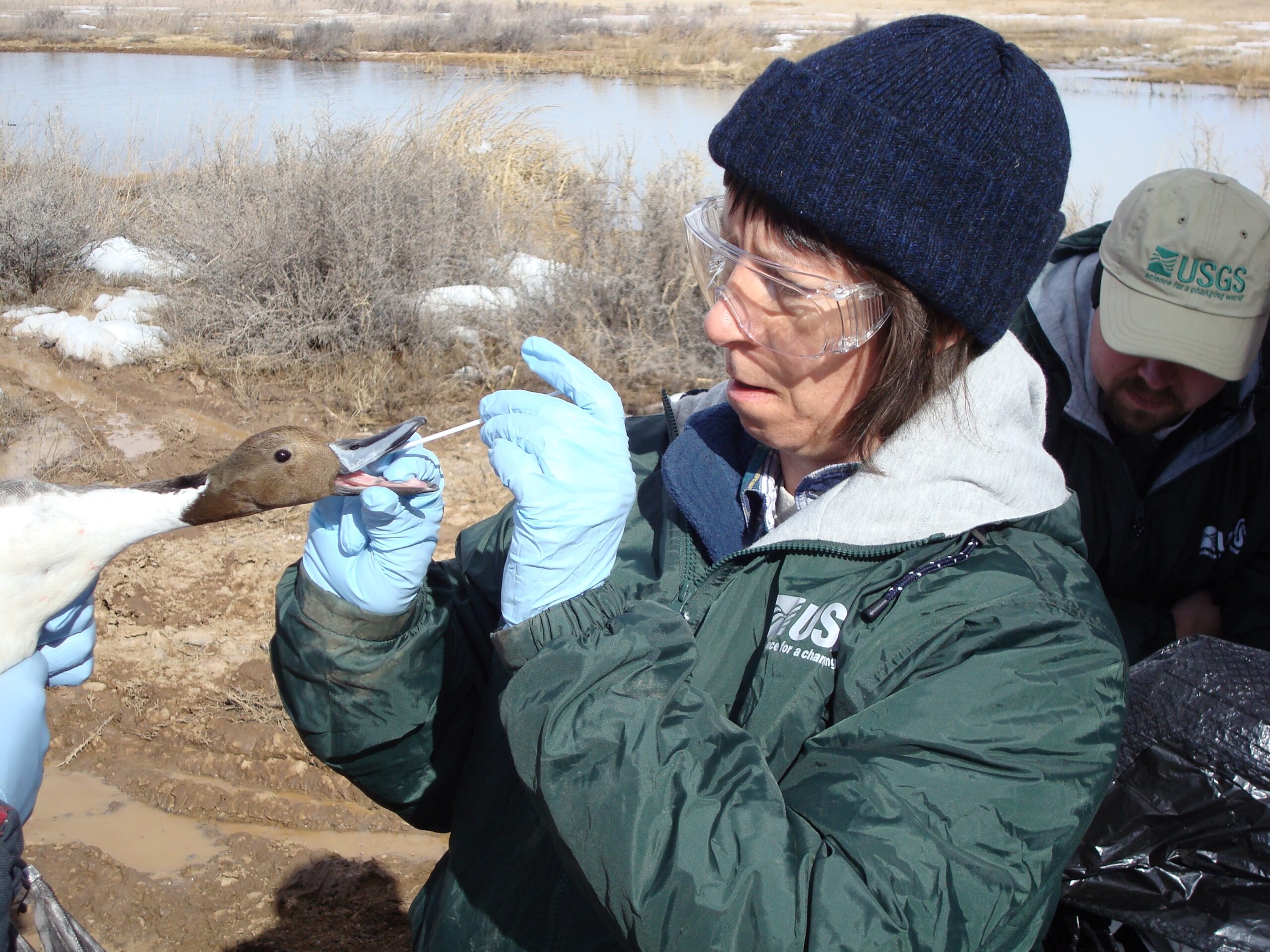
USGS scientist Dede Goldberg swabs a pintail duck for avian influenza at Monte Vista National Wildlife Refuge in Colorado. 
Photo: Robert Dusek/USGS

“This year’s surveillance was extremely effective,” says Richards of the USGS. “It provided situational awareness, early detection and warning. We did a dramatic amount surveillance in fall and winter based on the increased activity in Europe. We’ve been watching.”

But watching for outbreaks is not the same as preventing them.
Failure by Design

Some lethal bird flu cases seem to spring from direct interactions between wild and domestic birds. This can happen in backyards and on poultry farms that have full or partial outdoor access.

On farms where birds are kept exclusively indoors, the movement of farmworkers and equipment outdoors and among farms — common practice on some of the biggest poultry operations — can allow lethal bird flu to enter.

While wild birds carry disease, large commercial farms act as super-spreaders and disease incubators.

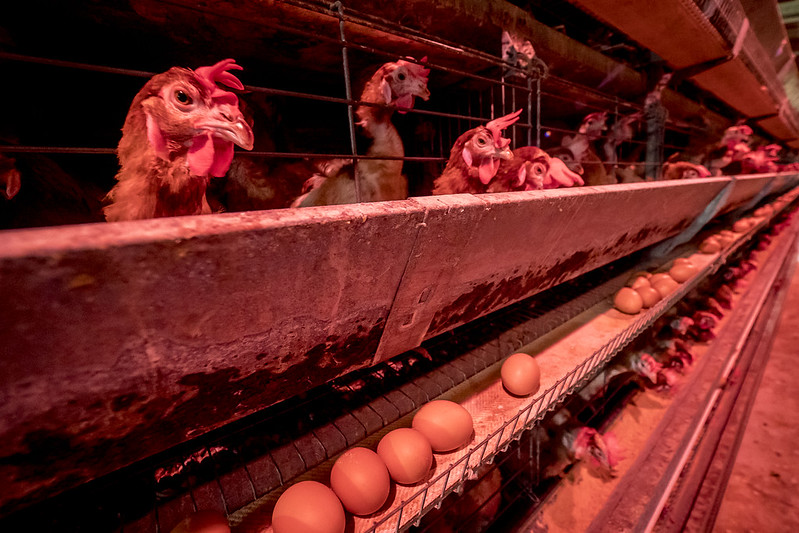
Laying hens are housed with other birds in wire battery cages, each allotted a space with a footprint smaller than the width of a single sheet of letter-sized paper. Birds are stacked side by side and sometimes on top of one another.

Meanwhile chickens and turkeys raised to be slaughtered and sold for their meat can live in flocks of 10,000 or more birds, who spend their entire lives indoors.

The more birds on a farm, the less natural the living conditions, the lower the costs to keep each bird — and the higher the potential profits in today’s commercial-dominated food landscape.

“As a general principle, once avian influenza outbreaks are present in farms, the disease can spread easily within and between farms when biosecurity measures are not applied properly,” said a spokesperson from World Organisation for Animal Health, an intergovernmental group focused on animal disease control. “On larger farms, where many birds are kept in close contact with one another, the virus can be amplified as more and more birds get infected. With more infections there is also greater opportunity for the virus to mutate.”

Sometimes the virus spreads beyond close contact, as scientists found when they studied the 2014-2015 outbreak in Iowa, which boasts the nation’s highest egg production and has a high density of commercial poultry farms. The researchers discovered a pattern of farm-to-farm spread within the state and possibly even to nearby states, with the virus carried from neighbor to neighbor through the air. It seems disease builds up in the air on large commercial farms, particularly those with poor ventilation and crowded animal conditions — suggesting these farms played a key role in the spread of avian influenza in 2014 and 2015.

All of this has taken avian flu to the next level in terms of infectiousness and time between outbreaks.

Lethal bird flu viruses arose alongside modern agriculture and globalization and continue to emerge at an increasingly rapid pace, along with animal-rearing rates and farm size. Globally, from 1959 to 1995, lethal bird flu viruses broke out at a rate of once every 2.6 years. From 1996 to 2008, outbreaks arose at a rate of once every 1.2 years.

“Industrial livestock production plays an important part in the emergence, spread and amplification of pathogens, some of which can be transmitted to people,” said Peter Stevenson, OBE, chief policy advisor at Compassion in World Farming, a global movement working to advance farm animal welfare and whose work has helped ban some industrial-farming practices seen as unethical and unhealthy, like keeping hens in battery cages, in Europe. He pointed out that the United Nations Environment and the International Livestock Research Institute identified “unsustainable agricultural intensification and increasing demand for animal protein as major drivers of zoonotic disease emergence.”


Unintended Consequences

In the wild, the 2014-2015 outbreak mainly killed waterfowl and birds of prey that had eaten waterfowl. This time around a much wider range of species — about 50 — has been affected, including many kinds of ducks and geese, birds of prey like eagles, hawks and owls, shorebirds like sanderlings and gulls, and vultures, crows and grackles.

When infected, wild birds typically exhibit neurological abnormalities such as lethargy or seizures before succumbing to disease.

“In 2015 there were no major ‘wild bird mortality events,’ ” or situations where masses of birds are found dead in one area,” says Richards. “But now we’ve seen a few: 1,000 lesser scaup dead in Florida, 50 Canada geese dead in New Hampshire; huge numbers of snow geese, Ross’s geese, and Canada geese in the Midwest.”

Wildlife scientists will continue to monitor lethal bird flu and keep track of its spread. What they’ve seen so far is unprecedented, but — having studied bird flu’s seasonal patterns — scientists expect at least somewhat of an ebb and flow of disease in the coming months.

“Now it is moving north, but we expect it will come back south in the fall with migration again,” says Richards. “It’s a safe bet there will be a lot of surveillance as they migrate south in the fall.”
An Uncertain Future

U.S. agencies and the international OIE reiterate in their lethal bird-flu communications that it’s essential farms and farm employees take disease-preventing precautions — termed “biosecurity” — to slow and ultimately help stop the spread.

However, biosecurity measures — including changing clothes before and after interacting with poultry and frequent disinfecting of boots, tools, and other equipment — are all voluntary and so not easily enforced, especially on large farms with many employees and many birds. That needs to be addressed, experts say.
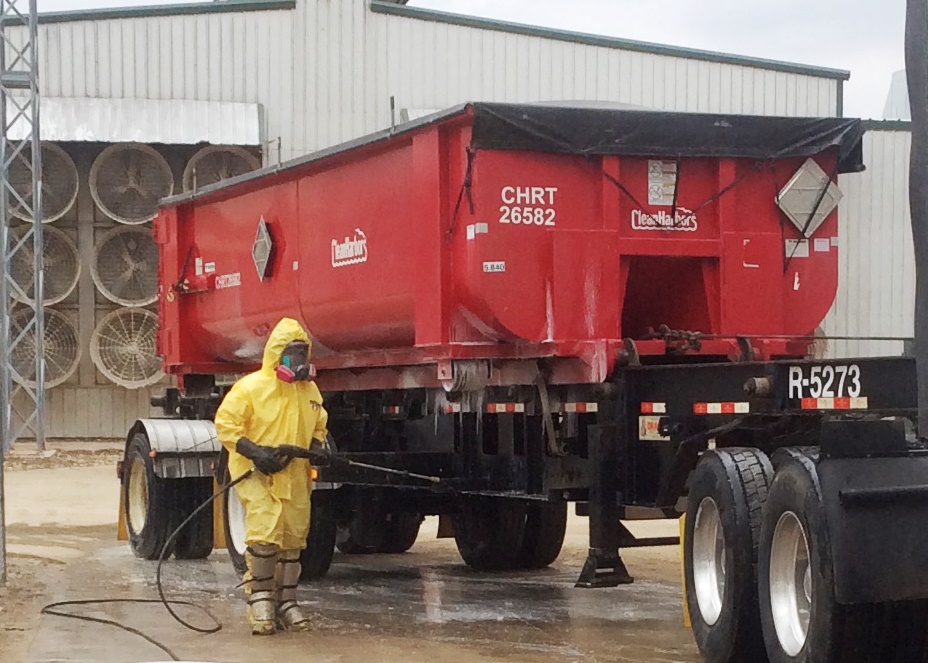
Biosecurity: USDA and contract workers wear personal protective gear that does not leave a premises without proper cleaning. 
USDA APHIS photo Mike Milleson.

Another lesson that’s come out of the past few outbreaks is this: We need to rethink our farms and food systems.

“A certain way to reduce risk of zoonosis and emerging infectious diseases globally … is to reduce dependence on intensive animal-based food production systems,” says Stevenson, pointing to findings in a recent report by the International Union for Conservation of Nature.

That involves eating less meat as a society, as well as using well-planned approaches to growing plants and raising domestic animals in ways that are considered ethical, ecologically sound, fair and humane. Experts also point out that it’s vitally important to protect nature so that wild animals stay healthy and aren’t forced to interact with people — a common effect of deforestation and development.

Reducing our dependence on industrial farms is not always cheap, but it saves major costs in the long run as farmers create life-sustaining systems that keep animals healthy and best prevent disease. According to an international team of animal disease and ecology experts, “Even a one percent reduction in risk of viral zoonotic disease emergence would be cost-effective.” In contrast, conventional commercial poultry farms are owned by major corporations that appear to give little thought to any tasks other than maximizing profits. On these major farms, which are prevalent in the United States, birds are commonly sick, crowded and in constant pain.

Besides causing major animal welfare concerns, industrial farming has hugely negative effects on the environment, creating serious pollution and contributing to the climate crisis through generation of greenhouse gases. U.S. farmworkers are often people of color and are often exploited.

Experts say shifting our ideas of what we accept as normal in our food system, both nationally and globally, could significantly transform the way we value people, nonhuman animals, and the planet, and in turn could prevent the next pandemic — to which we’re all vulnerable.

But is there hope for achieving that? The experts we spoke with aren’t too sure.

“These companies have immense political power, which they use to influence policymakers and to obstruct reforms,” says Stevenson. “They are able to shape the narratives that entrench the status quo.”

Until we learn from the lessons of this and other outbreaks, it seems the status quo will continue to involve lethal bird flu and devastating impacts on domestic and wild birds.


Erica Cirino is a freelance science writer and artist exploring the intersection of the human and nonhuman worlds. She is author of the book Thicker Than Water: The Quest for Solutions to the Plastic Crisis.
http://www.ericacirino.com/

The Revelator Newsletter
An initiative of the Center for Biological Diversity


Story image

Alarming surge in Conti Ransomware Group activity - report


By Shannon Williams
Fri 20 May 2022


A new report has identified a 7.6 per cent increase in the number of vulnerabilities tied to ransomware in Q1 2022, with the Conti ransomware group exploiting most of those vulnerabilities. 

Ivanti has announced the results of the Ransomware Index Report Q1 2022 that it conducted with Cyber Security Works, a Certifying Numbering Authority (CNA) and Cyware, a provider of the technology platform to build Cyber Fusion Centres. 

The report uncovered 22 new vulnerabilities tied to ransomware (bringing the total to 310) and connected Conti, a prolific ransomware group that pledged support for the Russian government following the invasion of Ukraine, to 19 of those new vulnerabilities.

The report also revealed a 7.5 per cent increase in APT groups associated with ransomware, a 6.8 per cent increase in actively exploited and trending vulnerabilities and a 2.5 per cent increase in ransomware families. To further break down those numbers, the analysis revealed that three new APT groups (Exotic Lily, APT 35, DEV-0401) started using ransomware to attack their targets, 10 new active and trending vulnerabilities became associated with ransomware (bringing the total to 157) and four new ransomware families (AvosLocker, Karma, BlackCat, Night Sky) became active in Q1 2022.

Additionally, the report revealed that ransomware operators continued to weaponise vulnerabilities faster than ever before and target those that create maximum disruption and impact. This increased sophistication by ransomware groups has resulted in vulnerabilities being exploited within eight days of patches being released by vendors. 

It also means that any minor laxity in security measures by third-party vendors and organisations is sufficient for ransomware groups to enter and infiltrate vulnerable networks. To make matters worse, some of the most popular scanners are not detecting several key ransomware vulnerabilities. 

The research revealed that over 3.5 per cent of ransomware vulnerabilities are being missed, exposing organisations to grave risks.

"The fact that scanners are not detecting critical ransomware vulnerabilities is a huge problem for organisations," says Aaron Sandeen, CEO of Cyber Security Works. 

"CSW experts are continuously tracking this as a part of our research and analysis. The good news is that in this quarter, we saw the number coming down. This means that scanner companies are taking this seriously," he says. 

"That said, there are still 11 ransomware vulnerabilities that the scanners are not detecting where five are rated critical and associated with notorious ransomware gangs like Ryuk, Petya and Locky."

Further handicapping security and IT teams is the fact that gaps exist within the National Vulnerability Database (NVD), the Common Attack Pattern Enumeration and Classification (CAPEC) list by The MITRE Corporation and the Known Exploited Vulnerabilities (KEVs) catalogue by the US Cybersecurity and Infrastructure Security Agency (CISA). The report revealed that the NVD is missing Common Weakness Enumerations (CWEs) for 61 vulnerabilities, while the CAPEC list is missing CWEs for 87 vulnerabilities. And on average, a ransomware vulnerability is added to the NVD a week after being disclosed by a vendor. 

At the same time, 169 vulnerabilities with ransomware associations have yet to be added to the CISA KEV list. Meanwhile, hackers worldwide are actively targeting 100 of these vulnerabilities, scouting organisations for one unpatched instance to exploit.

Srinivas Mukkamala, senior vice president & general manager of security products at Ivanti, adds, "Threat actors are increasingly targeting flaws in cyber hygiene, including legacy vulnerability management processes. 

"Today, many security and IT teams struggle to identify the real-world risks that vulnerabilities pose and therefore improperly prioritise vulnerabilities for remediation," he says.

"For example, many only patch new vulnerabilities or those that have been disclosed in the NVD. Others only use the Common Vulnerability Scoring System (CVSS) to score and prioritise vulnerabilities. 

"To better protect organisations against cyberattacks, security and IT teams need to adopt a risk-based approach to vulnerability management. This requires AI-based technology that can identify enterprise exposures and active threats, provide early warnings of vulnerability weaponisation, predict attacks and prioritise remediation activities."

The report also analysed 56 vendors that supply healthcare applications, medical devices and hardware used in hospitals and healthcare centres and uncovered 624 unique vulnerabilities in their products. Forty of those vulnerabilities have public exploits and two vulnerabilities (CVE-2020-0601 and CVE-2021-34527) are associated with four ransomware operators (BigBossHorse, Cerber, Conti and Vice Society). Unfortunately, this could indicate that the healthcare industry may be targeted more aggressively by ransomware attacks in the coming months.

Anuj Goel, co-founder and CEO at Cyware, says, "Ransomware is now one of the most predominant attack vectors affecting the bottom line of organisations globally. 

"The Q1 report underscores the fact with new numbers that show an increase in the number of ransomware vulnerabilities and the APTs using ransomware," he says. 

"However, one of the major concerns that has surfaced is the lack of complete threat visibility for security teams owing to cluttered threat intelligence available across sources.

"If security teams have to mitigate ransomware attacks proactively, they must tie their patch and vulnerability response to a centralised threat intelligence management workflow that drives complete visibility into the shape-shifting ransomware attack vectors through multi-source intelligence ingestion, correlation and security actioning."


SECURITY
Costa Rica’s president says country ‘at war’ with Conti ransomware gang


BY MARIA DEUTSCHER

Costa Rican President Rodrigo Chaves has said that his country is “at war” with the Conti ransomware gang, according to local media.

The Conti ransomware gang, which is believed to be based in Russia, launched a series of cyberattacks against Costa Rican government agencies last month. In April, the country’s Ministry of Finance was the first agency to report a data breach. More than two dozen other government institutions are affected as well.

Conti is demanding a ransom payment of $20 million from the Costa Rican government. The hackers originally demanded $10 million when the cyberattacks began last month. Conti said that “we are determined to overthrow the government by means of a cyber attack, we have already shown you all the strength and power.”

“We’re at war and this is not an exaggeration,” Chaves told local media. “The war is against an international terrorist group, which apparently has operatives in Costa Rica. There are very clear indications that people inside the country are collaborating with Conti.”

Chaves declared a state of emergency over the ransomware attacks earlier this month, just a few days after he was sworn in as president of Costa Rica. Chaves said the cyberattacks have affected 27 government institutions. Those institutions include multiple municipalities and state-run utilities.

Earlier this week, the Costa Rican government stated that the hack has affected automatic payment services in the country. The government warned that civil servants will not be paid on time and must apply for their salaries by email, or on paper by hand.

“Due to the temporary downturn of the institutional systems, the service of issuing certificates regarding the amounts of salaries owed to the civil servants of the Central Administration is suspended,” the Costa Rican Treasury said in a statement on Wednesday. “All applications received via email or in the windows of the National Accountancy will be attended to once systems are restored.”

Other Finance Ministry systems were also affected by the hack, AP reported this week. Some of the government systems that were targeted have not yet been fully restored.

Conti is believed to have carried out hundreds of ransomware attacks over the years. The group has launched cyberattacks against companies, as well as public sector organizations such as Ireland’s healthcare system.

“The FBI estimates that as of January 2022, there had been over 1,000 victims of attacks associated with Conti ransomware with victim payouts exceeding $150,000,000, making the Conti Ransomware variant the costliest strain of ransomware ever documented,” the U.S. State Department said in a statement earlier this month.
 
Photo: Pixabay
UP: Not Provided With Safety Equipment, Another Sanitation Worker Dies Cleaning a Sewer

ARYAN CASTEISM; DALITS ARE SANITATION WORKERS

Tension prevailed on the premises of the Bareilly Municipal Corporation as hundreds of sanitation workers employed on a contract basis went on a strike on Wednesday, seeking action against the contractor and demanding compensation to the deceased family.

Abdul Alim Jafri
25 May 2022

Image Courtesy: The Financial Express


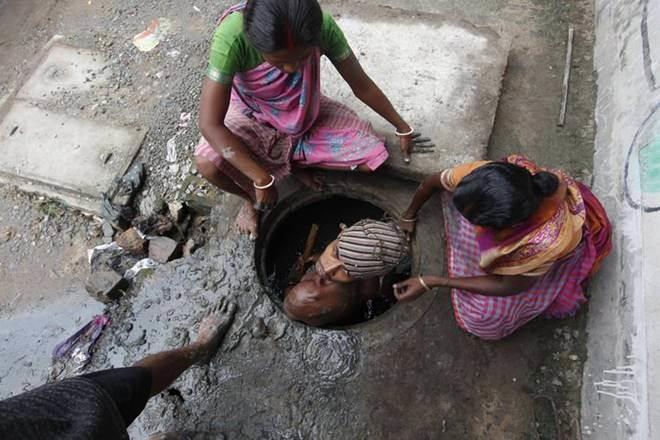
Lucknow: In yet another incident of death of a sanitation worker, a 28-year old working as a contractual sanitation employee, working under a private contractor of the Bareilly Municipal Corporation, allegedly died Tuesday after stepping into a sewer to clean it.

According to the police, the victim, Rajeev, who lived in Katra Chand Khan area of Bareilly district, was sent inside a sewage line in the Harunagla area allegedly without any gear or safety equipment.

Tension prevailed on the premises of the municipal corporation as hundreds of sanitation workers employed on a contract basis went on a strike on Wednesday, seeking action against the contractor and demanding compensation to the deceased family.

Protesting at the premises, the union raised the issue of inadequate supply of safety equipment for cleaning the sewerage tanks. “We have been demanding masks and gloves for many years now, but no one pays attention to it. Earlier last month also, four of the workers had died after inhaling poisonous gas from a manhole,” said Arjun Gautam, president of Safai Karamchari Union.

Rajeev was hired by a contractor named Ratan Singh to clean the sewer line as 226 small, and big drains in the municipal limits are being cleaned while 23 drains are being cleaned on a contract basis. The deceased was hired on a contract basis to clean the sewer. On Monday morning, the contractor took him to work. While cleaning in front of Gulabbari crematorium, he drowned in the drain after he slipped. He pulled it out of the drain with the help of the other labourers working there. But until a lot of dirty water went into his lungs.

His brother Ravi Kumar said that he was immediately admitted to the nearest hospital. When his condition did not improve, he was referred to a private hospital in Bhojipura. Rajiv died late in the night on the way to the hospital.

However, the contractor denied the allegation and claimed the employee had been fired four days ago since he was already ill and used to drink alcohol a lot.

Meanwhile, the deceased wife, Sangeeta, accused the contractor. She said, “I have lost my husband because of the contractor’s carelessness. We live in a 10×10 room, and I cannot even afford the rent now. My 6-year-old daughter started school last month. Our future is in jeopardy now,” an inconsolable Sangeeta said, adding that “Had the safety kit been provided by the contractor, perhaps Raju’s (Rajeev’s) life would have been saved.”

The relatives of the deceased have filed a complaint against the contractor in the Baradari police station and held the contractor responsible for the death.

The Valmiki Dharma Samaj of India officials expressed their indignation at the municipal authorities for not taking any cognizance. The union has demanded a government job and a compensation of Rs 50 lakh for one person in the deceased’s family.

The incidents come just a week after a person died due to asphyxiation when he, along with his two colleagues entered a sewage treatment plant in the Siyana area of Bulandshahr district. Last month, four sanitation workers were killed in separate incidents after they allegedly inhaled toxic gases while cleaning sewers in Lucknow and Rae Bareli.

The deaths have brought to the fore the appalling disregard for safety norms for sanitation workers.

Commenting on the continued deaths of sanitation workers due to a lack of safety equipment in the state, Raja Valmiki, who has worked for three decades as a sanitation worker in Lucknow, said, “According to the rule, it is strictly forbidden to take sanitation workers in the sewer line. The rule of cleaning is only by machine. But, even today, they are being forced to go inside the sewer line without any protection and equipment.”

Valmiki added that “A provision has been made in the Act to provide 48 types of safety resources to the safai karamcharis, in which there are air compressors for the blower, gas mask, oxygen cylinder, hand gloves etc., but nothing is being provided to them, leading to deaths.”