Activists hang banner welcoming Biden, featuring Israeli, Palestinian flags
It’s possible that I shall make an ass of myself. But in that case one can always get out of it with a little dialectic. I have, of course, so worded my proposition as to be right either way (K.Marx, Letter to F.Engels on the Indian Mutiny)

Activists hang banner welcoming Biden, featuring Israeli, Palestinian flags
Biden is set to arrive in Israel on Wednesday and leave for Saudi Arabia on Friday. He will hold meetings with Prime Minister Yair Lapid and Palestinian Authority President Mahmoud Abbas.
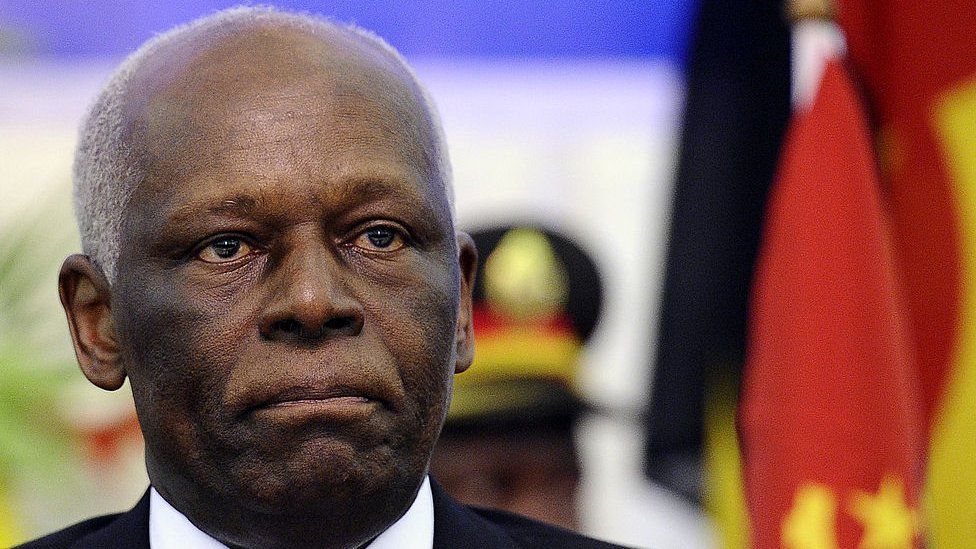
José Eduardo dos Santos: Spain approves autopsy for ex-Angola leader
IMAGE SOURCE,AFPA Barcelona court has authorised an autopsy on former Angolan President José Eduardo dos Santo who died in the city on Friday after his family alleged a conspiracy to kill him.
His daughter, Tchize dos Santos, had requested the autopsy.
Political enemies did not want him to back the opposition in forthcoming Angolan elections, she said.
Dos Santos, 79, was in Spain for medical treatment and died after a cardiac arrest.
He had been in power for 38 years when he stepped down in 2017.
Lawyers for the Dos Santos family have also denounced moves by the Angolan government to return the body there for a state funeral, against the ex-president's expressed wish to be buried privately in Spain. He is said to have been afraid his death would be politicised because his children would not be able to travel to Angola for his funeral or to visit his grave.
His death has reportedly worsened relations between his family and the Angolan government.
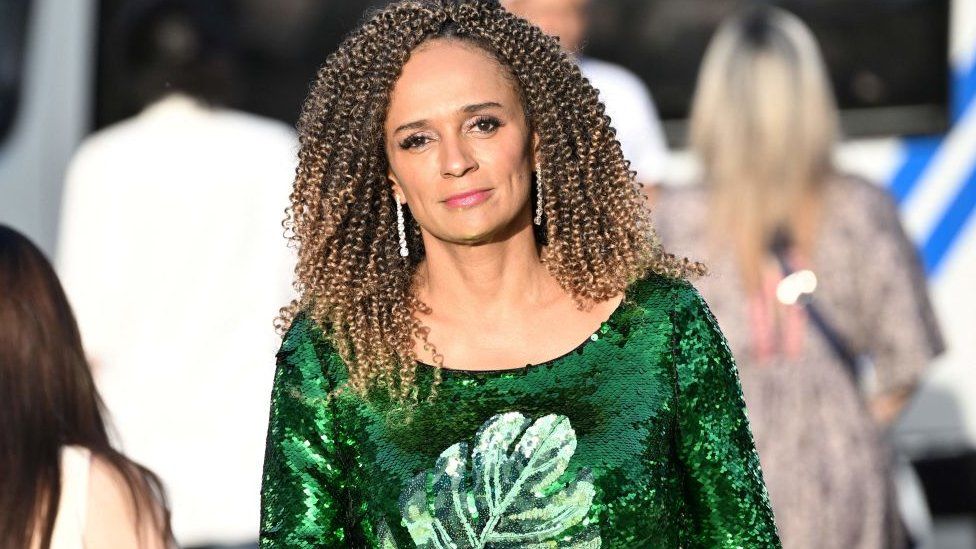
Another of his daughters, Isabel dos Santos, has been charged with mismanagement and embezzling public funds when she headed the state oil firm, Sonangol. She has denied the charges and says she is the target of political persecution.
IMAGE SOURCE,AFPPresident João Lourenço, who was hand-picked by Dos Santos to succeed him and is from the same party, the MPLA, has denied accusations that the government had any link to the former president's death.
He stated that the Angolan government had a duty to organise a state funeral for the country's long-time leader. He also said any Angolan citizen who wanted to travel to Angola for Dos Santos' funeral would be able to do so.

Analysis by Israel Campos, BBC News
The death of the former president during an election year has represented a great challenge for the governing MPLA and its current leader, João Lourenço.
Sacking Dos Santos' eldest daughter, Isabel dos Santos, from the state oil-firm as soon as he came to power in 2017, and the arrest of another son, Jose Filomento dos Santos in 2018, considerably worsened relations between President Lourenço and the Dos Santos family.
Dos Santos and President Lourenço met for the last time over Christmas last year at the late president's official residence in Luanda. But it seems that not even this move by President Lourenço was enough to repair the already damaged relations.
President Lourenço's desire to hold a state funeral for Dos Santos in Angola has faced fierce opposition, notably from Tchizé dos Santos, the third daughter of Dos Santos and a former MPLA MP.
Isabel and Tchizé dos Santos have been exiled in Europe since the end of their father's 38-year presidency.
In an Instagram live over the weekend, Tchizé dos Santos was categorical in saying that her father "should only be buried in Angola when João Lourenço is no longer president of the country".
President Lourenço's government is still trying to negotiate with the Dos Santos family about sending their father's body to Luanda.
For President Lourenço, bringing Dos Santos' body back home as soon as possible is needed to reunite the MPLA.
He needs to show a united front to the general public even though there is now a clear division within the party ahead of what could be a difficult election next month.

Dos Santos, who was just 37 when he became head of state, will be remembered for ending a long-running civil war in the early 2000s, with his supporters dubbing him the "architect of peace".
The war lasted for 27 years and ravaged the country. About 500,000 people are believed to have died in the conflict.
But his legacy is marred by corruption and human rights violations during his time in power.


Image by Jon Tyson.
Hundreds of Democratic candidates on federal ballots this November have tethered themselves to President Joe Biden’s political fortunes. The Democrats’ chances of keeping a majority in the U.S. House and Senate have been as weak as he is.
According to new polls, Biden has now become a first-term lame duck. Since he will not be the party’s standard-bearer in 2024, Democratic Congressional candidates can focus on winning in 2020 even if it means straying from Biden’s policies.
1. New polls
The President’s current job approval rating is down to 38.4%, from 55.8% on Inauguration Day.
A bracing new Harvard-Harris Poll finds that registered voters have now written Biden off, with 60% having “doubts about his fitness for office,” 64% saying he is “showing he is too old to be president,” and 71% concluding he “should not run for a second term.”
2. Getting worse
Things are likely to get worse as the midterm elections approach. Of course, every consumer purchase brings new evidence of inflation. Within a few weeks, we may be in a recession, too. The U.S. economy shrank by 1.6% in the first quarter of 2022. The Atlanta Federal Reserve Bank is projecting another drop, of 2.1%, when second quarter estimates come out on July 28. When the economy declines for two quarters in a row, a recession has begun, according to the common rule of thumb.
Registered voters see inflation as the “most important issue facing the country today,” and only 28% approve of Biden’s job performance at handling inflation, according to the Harvard-Harris poll.
These findings should not come as a surprise. Instead of tackling inflation, Biden has spent months trying to blame a certain someone for it.
On June 30, after a NATO meeting in Madrid, Biden told a press conference, “The reason gas prices are up is because of Russia. Russia, Russia, Russia.”
He added, “We are going to support Ukraine as long as it takes.” Later the same day, CNN’s Victor Blackwell asked White House spokesman Brian Deese, “What do you say to those families who say, ‘Listen, we can’t afford to pay $4.85 a gallon for months, if not years. This is just not sustainable.’?” Deese dug in: “What you heard from the president today was a clear articulation of the stakes. This is about the future of the liberal world order, and we have to stand firm.”
This doesn’t make sense. On the one hand, inflation is supposed to be all the fault of Russian President Vladimir Putin. But “supporting Ukraine” and “standing firm” refer to the U.S./European decisions to sanction Russia, which is what made world food, fuel, and other commodity prices soar this year. The countries that created the sanctions can also end them. And that depends on them abandoning the fantasy of sanctions leading to Putin’s downfall.
3. What can a Congressional candidate tell voters about how to get inflation under control?
Step One: The place to start is in Ukraine, by ending the fighting and dying there. The Ukrainian government should sit down with negotiators from Russia and the Lugansk and Donetsk republics and agree to peace terms. Moscow has said it is willing to negotiate. Kyiv is currently refusing to do so, but the U.S. Congress could make genuine peace talks a condition for further aid of any kind.
Step Two: Based on a negotiated peace, Congress should lift the sanctions on Russia. This would let food, fuel, and other commodities be traded freely around the world, and let international markets — and prices — settle down.
These steps are difficult but necessary. They are not the Biden policy or the Democratic party line. But for Democratic candidates, proposing a way out of inflation and war might help win an uphill race in November.
Paul Ryder has been research assistant to attorney Leonard Weinglass, Pentagon Papers Legal Defense; national staff, Indochina Peace Campaign; policy director for Ohio Governor Richard Celeste; and organizing director for Ohio Citizen Action. He is the principal author and editor of “The Good Neighbor Campaign Handbook” (2006) and co-editor with Susan Wind Early of “Tom Hayden on Social Movements” (2019). pryder888@gmail.com.