A Bloodstained Anniversary of the Revolution in Iran
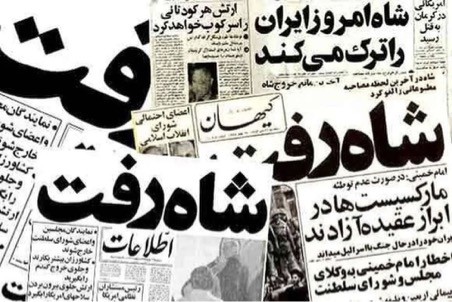
The Shah of Iran, Mohammad Reza Pahlavi, left the country on a journey to exile on January 16, 1979. Less than a month later, on February 11, the popular revolution triumphed and closed the book of monarchy. The day the Shah left was perhaps the happiest day in my life up to that point. I was at my university campus, Tehran Polytechnic, when the news arrived. I lit a cigarette, another bad habit of teenage years, and left the campus aimlessly just to join the joyous crowds. I had never seen an entire nation so exceptionally jubilant, deeply ecstatic, profoundly euphoric. People were holding up the front page of various newspapers, all of which read, in the largest font that could fit the page, the words “Shah Raft” (The Shah is Gone!).
Traffic was at a total halt, many turned on their wipers with wiper arms separated from the front windshield in a dancing mode. Many cut out the image of the Shah from the Riyal bills, looking at the festive marches from the hole they had cut in the money. There were no guns on the streets. Soldiers held their fire, facing the unremitting flood of the masses with smiles on their faces, hoping that the martial law and their deployment to the streets of big cities was inching to an end. Strangers hugged each other in solidarity and with the realization that they, we, had done the impossible, forced the man who commanded the fifth largest army in the world into exile. After that day, we all waited for the final collapse of the regime, which came with the military’s declaration of neutrality on this day, forty-seven years ago.
A few weeks ago, a considerable number of demonstrators in Iran chanted Long Live the Shah! and called for the return of his exiled son to the throne. Although from its reflection in the mediascape one might conclude otherwise, the call was not by any measure all-encompassing on the ground. Nevertheless, reconciling the mass euphoria of the Shah’s departure with the call for his return under the barrage of bullets, regardless of how extensive or small the call, after almost half-a-century seems impossible to comprehend. Especially since the call for the return of monarchy sounds unapologetically fascist, with the promise of a bloodbath of all those who raise voices against their agenda.
In late December 2025, peaceful protests against the rising cost of living, skyrocketing inflation, and the free fall of the exchange rate of the Iranian currency spiraled into calls for regime change and, thereafter, into bloody encounters between the state security forces and the demonstrators around the country. By all accounts, over two nights of bloody massacre, the anti-riot police and the revolutionary guards killed thousands of people, mostly under the age of 30, by shooting indiscriminately into the crowds of angry, frustrated protesters. Although some Kurdish armed resistance groups and the Mossad have claimed that they participated in the protests, it remains uncertain how many of the casualties were indeed in response to those armed encounters. The two-night bloodshed was an unprecedented catastrophe in Iranian history. Nothing in the history of the country has ever produced a shockwave this grave, a blow this destructive that, for days after the bloodshed, many inside and outside of the country remained numb, paralyzed, stunned.
On Friday, September 8, 1978, the Shah declared martial law to check the growing revolutionary movement that called for the overthrow of the monarchy. On that day, the army opened fire into the crowd of people who were gathered in Tehran’s Jaleh Square, many of whom were unaware of the declaration of martial law. They killed 87 people. Rumors abound that 4000 to 10000 people were massacred. Many who write about the Iranian revolution, including myself, believe that after that day, the Shah could no longer save his throne. Neither was the society governable after that day, nor was the state capable of exercising its authority with any degree of legitimacy.
During the two nights of January 8 and 9, 2026, the security forces killed thousands of people who poured into the streets of Tehran and dozens of other towns and cities around the country. Many of those responded to a call from the deposed Shah’s son, Reza Pahlavi, to storm the government buildings, police, and radio and television stations. No one knows whether the cries of Long Live the Shah were mere expressions of negation of the existing order or they were affirmative demands for the return of the monarchy.
The wound of the unprecedented loss of life became more demoralizing when the government released images of piled-up body bags of the dead in front of inundated mortuaries. Sobbing parents, siblings, and partners searching for their loved ones, all broadcast on social media with the consent of the state. Was this an attempt by the regime to terrorize the rest of the population into submission? Was it simply a shameful mismanagement of a catastrophe? Those images have scarred the conscience of the nation, an unfathomable strike at their sense of nationhood. That very sense of nationhood that they displayed with conviction only a few months earlier during the Israeli/American military attacks, despite their unresolved political, economic and social grievances.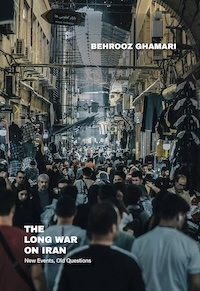
Our nation has endured close to a century of repression and injustice. The revolution was the expression of a desire to build a society in which justice thrives, and people pass one another in the neighborhoods and workplaces with a smile on their faces and heads held high with dignity. We did not anticipate a civil war in Kurdistan, the Iraqi invasion of the country, the Mojahedin (MEK) campaign of mass assassination of state officials, the Reign of Terror and the execution of thousands of political prisoners, the enforcement of strict social norms and rules of behavior, draconian sanctions imposed by Western powers, rapidly growing gap between the haves and have nots, economic corruption and a vast network of crony capitalism, etc. etc. We also did not anticipate witnessing the acts of a nation that keeps the core principle of the revolution, that of the right of self-determination, so close to its heart. If justice and liberty became rare commodities, the demand for self-determination remained the pulse of that revolution in this spiritless world. The state held on to the principle of sovereignty and independence and society remained defiant in protecting its right of self-determination. Two sides of the same coin, the state cannot remain sovereign if it fails to recognize and protect its citizens’ right of self-determination. Today, many of those who mockingly call my generation of revolutionaries the disastrous 57ers (a reference to the date of the revolution in the Iranian calendar 1357), are strangers to the feeling of jubilance that comes with the acts of transformation of the self and society.
Before returning to Iran from his exile, Ayatollah Khomeini told the skeptics about the demands of the Iranian revolution:
Let’s assume that the Shah is an honest man, a man with integrity who wants to serve his people. But when the people do not want him, he needs to step down. We assume that he observes the expediencies of the country, that he promotes freedom, that he maintains the country’s independence, that he wants to lead us toward a new civilization. Let us assume that all those are true. But the inhabitants of this country say that they no longer accept him as their ruler, the fate of the nation must be in their own hands. People are saying that they no longer consent to his leadership, he needs to step down and the people will replace him with their own choices. We assume that like other human beings, he possesses some degree of humanity, people still have the right to say that they do not want him, this righteous, decent man who wants to turn this country into a heavenly paradise, people do not want him to turn this land into a heavenly paradise. Don’t people have the right to say that? Isn’t that the core of human rights, the right of self-determination? People want to hold their fate in their own hands.
– Ayatollah Khomeini, December 16, 1978, Paris.
I quote Ayatollah Khomeini to revisit the spirit of the time. To show what people so bravely continue to enact today is an inheritance of the same revolution that many question its wisdom. Holding your fate in your own hands is something that we all learn by practicing it. Today, the rulers of the country must heed the words of the leader of a revolution that made their rule possible.
It is hard to imagine how the Islamic Republic can survive with an iota of legitimacy if there is no serious and determined attempt to hold those responsible for the tragedy that descended upon our nation. This tragedy is not limited to the two-day massacre of protesters, though surely the state must answer for killing its own people. The responsible are those who turned the cruelty of sanctions into an economic opportunity to enrich themselves and their cronies. Those who betrayed the most basic principles of social justice and stole from the nation not only their means of livelihood, but also, and perhaps more devastating, their dignity. Those who rendered people voiceless and left the sound of feet marching on the streets as the only possible way to be heard. Exhausted, frustrated people are not culpable if their marches are instrumentalized by the Israelis or Americans. Maggots appear when the wound is deep. Heal the wound.
By AFP
February 14, 2026

Iranian demonstrators hold flags and posters depicting Iran's former crown prince and now key opposition figure Reza Pahlavi in Munich - Copyright AFP Michaela STACHE
Elizabeth Striy and Ralf Isermann, Elizabeth Striy and Ralf Isermann
Cheered by a massive crowd under a sea of flags, the son of Iran’s toppled monarch told a mass rally in Munich on Saturday he wants to lead the country into a democratic future.
Police said some 250,000 pro-monarchist opponents of the Islamic republic’s leadership travelled from across Europe to take part in the demonstration held while world leaders met nearby at the Munich Security Conference.
Anger has grown at Tehran’s leaders after the bloody crackdown on protesters last month, while US President Donald Trump has been massing warships in the Middle East and declared Friday that a change of government in Iran would be the “best thing that could happen”.
“We are here today to support the people in Iran that were murdered by the mullah regime,” one protester, 40-year-old Ali Farzad, told AFP.
“And we are here to support Reza Pahlavi as our leader through the transition for a period.”
Braving a cold drizzle, the protesters cheered loudly when Pahlavi took the stage and told the crowd: “I am here to guarantee a transition to a secular democratic future”.
“I am committed to be the leader of transition for you so we can one day have the final opportunity to decide the fate of our country through a democratic, transparent process to the ballot box.”
Many waved flags with a lion and a sun against horizontal green, white and red stripes, the emblem of the monarchy overthrown in 1979.
Speakers chanted slogans including “Javid shah” (long live the shah), “Pahlavi bar migarde” (Pahlavi is coming back) and “Reza II”, in a call for Pahlavi to become the successor to the founder of the Pahlavi dynasty, his grandfather Reza Shah.
“The Iranian regime is a dead regime,” said a 62-year-old protester originally from Iran who gave his name only as Said.
“It must be game over.”
– ‘Iranians will have their freedom’ –
US Senator Lindsey Graham also addressed the rally, pumping his fist in the air as he told the protesters: “The Iranian people are going to have their freedom”.
“It is a matter of time, help is on the way — make Iran great again,” added the Republican senator.
Rallies calling for international action against Tehran were also planned in Toronto and Los Angeles on Saturday.
Pahlavi earlier spoke at the Munich Security Conference and called on Trump to “help” the Iranian people.
Pahlavi, who has lived in exile since his father was overthrown and replaced by Ayatollah Ruhollah Khomeini, urged an outside “humanitarian intervention to prevent more innocent lives” being lost in Iran.
Several demonstrators who spoke with AFP denounced US-led international negotiations with Iran, saying that Iran’s leaders do not have legitimacy.
“They shouldn’t talk to them because they are not actually a government. We don’t like them, we don’t accept them,” said Riana, a 40-year-old doctor in Germany who declined to give her last name out of concern for her family’s safety.
“When a government kills their people on the street, they are not (trustworthy),” she said, adding that the world should know that “too many people have been killed and too many people have been injured”.
“The people that you are negotiating with are not representative of the Iranian people,” Farzad said.
The rally was held at the Theresienwiese, which hosts the huge annual Oktoberfest folk gathering, located less than three kilometres (1.8 miles) from the security conference venue.
Last week, an estimated 10,000 people rallied in Berlin in response to a call from the MEK, an exiled Iranian opposition group considered “terrorist” by Tehran.
1953 Redux – Neocons Want To Saddle Iran With the Son of the Persian Stalin
It’s getting a little old at this point, but as the Deep State log rolls for another U.S. attack on Iran, it is promoting a new Iranian national savior, one with a familiar name.
Here’s a graphic seen on X, much like others showing up on social media, championing Reza Pahlavi as “the legitimate national leader of Iran.”
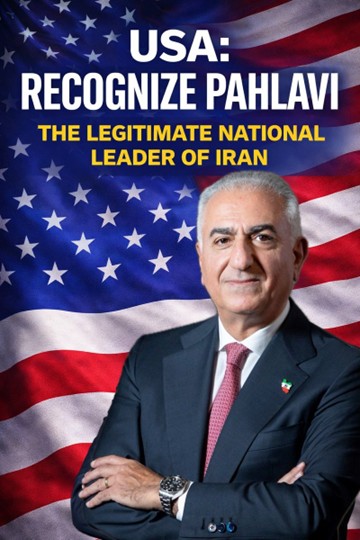
Because Pahlavi calls for more U.S. intervention in Iran including airstrikes, his champions are a midnight choir of failed voices from prior regime change calamities: Richard Perle, Michael Ledeen, James Woolsey. He is featured frequently in the warmongering of the Empire’s lapdog press, in The New York Times, The Wall Street Journal and on Fox News.
Pahlavi’s only claim to legitimacy is that he is the son of the late-Shah Mohammad Reza Pahlavi who was driven from Iran in the 1979 revolution.
So here we go again. Another “enlightened” leader courtesy of the Deep State. The same machinations are at work that installed al Sharaa, the terrorist head chopper formerly known as Julani, as the president of Syria. It is already slipping down the memory hole that until recently al Sharaa carried a $10 million dollar US bounty on his head. He was a State Department “Specially Designated Global Terrorist.” But now the new president of Syria, having been sanitized and empowered by the Deep State, is fêted by Trump in the Oval Office.
Don’t forget the execrable bank embezzler Ahmed Chalabi, the man the neocons wanted to head Iraq after that regime change. Chalabi’s group received a reported $100 million from the CIA as he helped lie the American people into the Iraq war.
Before easily persuaded member of Congress jump on the Trump war and Pahlavi bandwagon, they should familiarize themselves with the record of his father, installed by a CIA coup in 1953. His misrule is detailed in my new book THE EMPIRE OF LIES: Fragments from the Memory Hole.
In what has become a familiar precedent, the CIA paid for weapons, hired thugs and mercenaries to swarm the streets, and bought off military leaders for its Iran coup. Then, at the moment of maximum chaos, CIA head Allen Dulles personally accompanied Reza Shah Pahlavi to Tehran to occupy the Peacock Throne.
Isn’t it uncanny how often US intelligence officials appear at the scene of a crime when the crime is the overthrow of an elected government? CIA director John Brennan, traveling under a pseudonym, showed up in Kyiv in 2014 shortly after the coup that toppled ousted elected President Viktor Yanukovych.
In Iran the returned Shah was promoted as an enlightened and liberal modern ruler. To no one’s surprise, the Shah quickly awarded a windfall of oil concessions to Western companies, mostly British Petroleum and to American firms.
As for the “enlightened” policies, the Deep State sent General Norman Schwarzkopf, Sr. (the father of General H. Norman Schwarzkopf, Jr., “Stormin’ Norman,” who commanded coalition forces in the 1990-91 Gulf War) to help the CIA and Israeli Mossad train the Shah’s secret police (later the infamous SAVAK) how to torture his opponents, a distinctly unenlightened characteristic of the Shah’s regime.
His rule consisted of a “radical totalitarianism” according to historian Paul Johnson. It included “megalomaniacal social engineering” and eerily Soviet sounding “Seven Year Plans,” central planning, and inflation. The Shah even set loose student thugs on the streets to arrest “profiteers.”
“He tried to be a Persian Stalin,” wrote Johnson.
It may be that Pahlavi’s resemblance to his father will be more than physical. In any case Americans have done enough damage to Iran over the last three generations and have shown no interest in installing another Shah much less sponsoring another bloody regime change conflagration that will cost them dearly and do less than nothing to make America free, prosperous, and great again.
This originally appeared on LewRockwell.com.
New York Times bestselling author Charles Goyette’s new book THE EMPIRE OF LIES: Fragments from the Memory Hole is available on Amazon. The publisher describes it as “The Sorrowful Story of the Deep State’s Warlords, War Lies, and Failed Foreign Interventions.” Charles can be contacted at EMPIREofLIES.com.


No comments:
Post a Comment